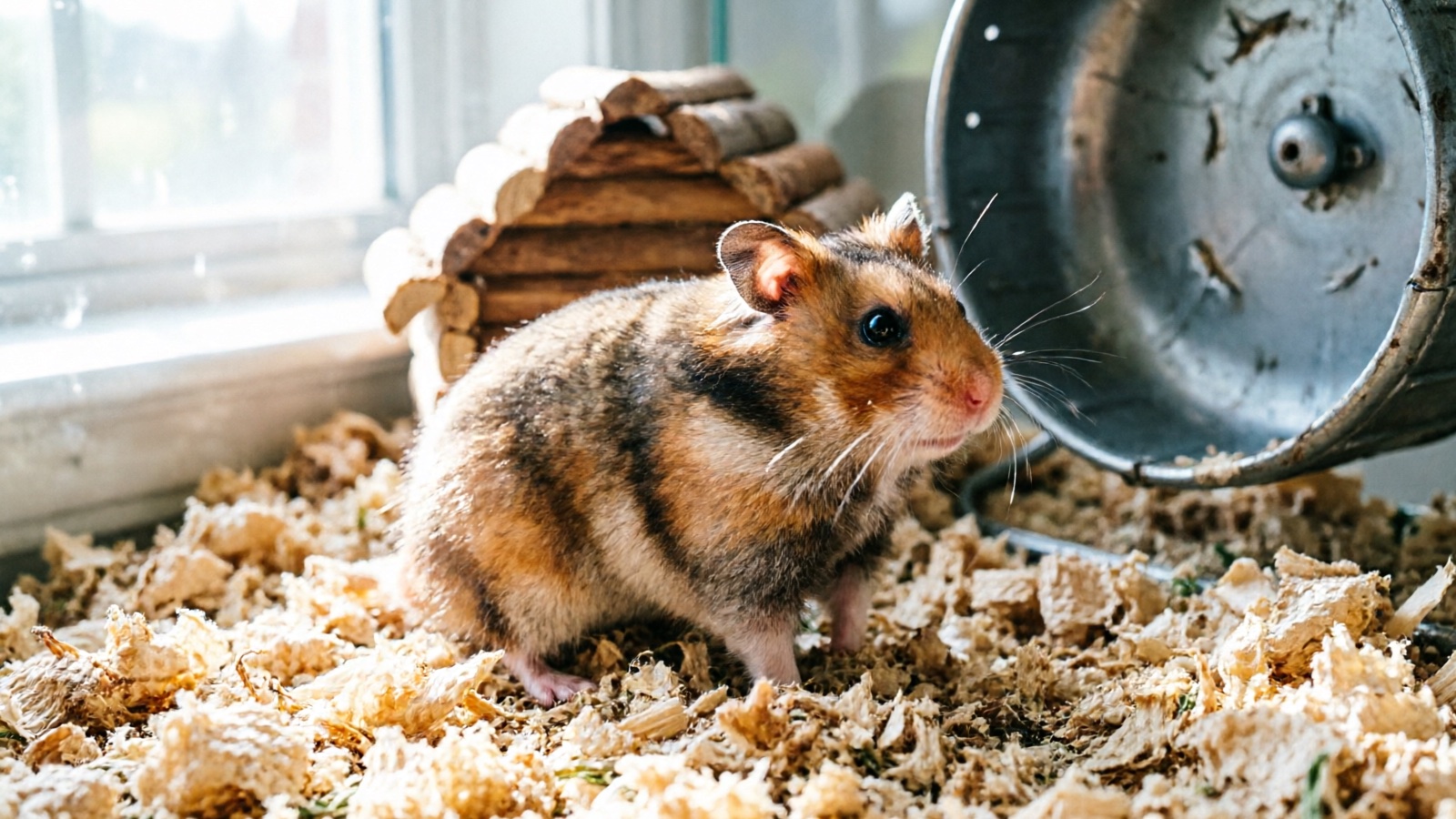
Quick Start: Hamster Care at a Glance
| Category | Syrian Hamster | Dwarf Hamster | Roborovski |
|---|---|---|---|
| Lifespan | 2-3 years | 1.5-2 years | 3-3.5 years |
| Weight | 120-200g | 25-45g | 20-30g |
| Cage size (min) | 600 sq in | 450 sq in | 450 sq in |
| Wheel size | 8+ inch | 6.5+ inch | 6.5+ inch |
| Social | Solitary | Pair (cautious) | Pair preferred |
| Best for | First-time owners | Experienced owners | Observation |
| Active time | Night | Night | Dawn/dusk |
| Handling | Easy-moderate | Moderate | Difficult (fast) |
💡 TL;DR: The three rules most hamster owners get wrong: (1) Syrian hamsters must live alone, (2) cages need to be much bigger than pet stores suggest, and (3) hamsters are nocturnal — don’t expect daytime activity. Get a properly sized cage, a silent wheel, and good bedding, and you’re off to a great start.
This hamster care guide is the central hub for everything you need to know. Whether you’re choosing your first hamster or troubleshooting a problem, this page links to 20+ detailed guides across every topic. I’ve kept and bred hamsters for years, and the difference between a thriving hamster and a stressed one almost always comes down to cage size, wheel quality, and diet.
Choosing the Right Breed
The term “hamster” covers several distinct species, and they differ significantly in size, temperament, and care requirements. Choosing the right breed is the first and most important decision you’ll make.
| Breed | Size | Temperament | Handling | Best For |
|---|---|---|---|---|
| Syrian (Golden) | Large (120-200g) | Docile, friendly, slow-moving | Easy | First-time owners |
| Winter White Dwarf | Small (35-45g) | Friendly, can be nippy | Moderate | Experienced owners |
| Campbell’s Dwarf | Small (30-45g) | More territorial, active | Moderate | Experienced owners |
| Roborovski | Tiny (20-30g) | Fast, skittish, rarely handleable | Difficult | Watching (not handling) |
| Chinese | Medium (30-45g) | Gentle, rat-like, curious | Moderate | Experienced owners |
Chinese hamsters are medium-sized with a distinctive long tail. They’re gentle and curious but less commonly available in pet stores. For more on this unique breed, see our Chinese hamster care guide.
Syrian hamsters are the most popular choice for beginners, and for good reason. They’re the largest breed, which makes them easier to handle and less likely to escape through small gaps. They’re also the most predictably friendly — most Syrians will tame down within a week or two of consistent handling. The tradeoff is that they need more space (600+ sq in minimum) and a larger wheel (8+ inches).
Dwarf hamsters (Winter Whites and Campbell’s) are smaller, faster, and more variable in temperament. Some are incredibly sweet; others are persistent biters. Campbell’s hamsters in particular can be challenging — I’ve seen owners struggle with them for months without making progress on taming. If you’re set on a dwarf, a Winter White is generally the safer bet for temperament.
Roborovski hamsters are the smallest and fastest. They’re fascinating to watch — they zoom around their enclosure like tiny race cars — but they’re essentially unhandleable. Most Robos will never sit still in your hand. If you want a pet to interact with, choose a Syrian. If you want a pet to observe, a Roborovski is incredibly entertaining.
For a deeper comparison, see our hamster breeds guide and Syrian vs Dwarf comparison.
Housing and Cage Setup
Cage Size (Minimum — This Is Not Negotiable)
This is where most beginners go wrong. The colorful cages sold in pet stores (often branded as “hamster starter kits”) are almost always too small. Most are 200-300 sq in — less than half the minimum a Syrian hamster needs. A hamster in a cage that small will develop stereotypic behaviors (bar biting, pacing, backflipping) from the chronic stress of confinement. For breed-specific guidance, see our Syrian hamster care guide.
| Minimum | Recommended | |
|---|---|---|
| Syrian hamster | 600 sq in (24x30 in) | 800+ sq in |
| Dwarf hamster | 450 sq in | 600+ sq in |
Floor space is what matters — not height. Hamsters are ground-dwelling animals. A tall cage with multiple levels doesn’t compensate for insufficient floor area, and hamsters are poor climbers who can fall and injure themselves from heights.
Good options include: glass tanks (20-gallon long minimum for Syrians), DIY bin cages (a large plastic storage bin with a modified lid — extremely cost-effective), and dedicated hamster enclosures. See our hamster cage setup guide, best hamster cage recommendations, bin cage tutorial, and proper hamster enclosure guide for specific options.
Bedding: The Foundation of Comfort
You need 4-6+ inches of bedding depth, minimum. This isn’t optional — hamsters are natural burrowers who create elaborate tunnel systems in the wild. Shallow bedding prevents their most fundamental natural behavior and causes stress.
Safe bedding: paper-based bedding, aspen shavings. Both are absorbent and dust-free when you buy quality brands.
Dangerous bedding: pine and cedar shavings (phenols cause respiratory damage and liver toxicity), cotton wool (can wrap around limbs and cause circulation loss — impaction risk if swallowed), and scented bedding of any kind.
Small Pet Select Premium Paper Bedding is my go-to — the 178L jumbo bag lasts a long time, it’s ultra-absorbent, and virtually dust-free. For more options, see our best hamster bedding guide.
Essential Cage Items
Beyond bedding, every hamster cage needs:
- Silent exercise wheel — this is the single most important accessory. Hamsters run 5-8 miles per night. Without a wheel, they become stressed and obese. Wheel size matters: Syrians need 8+ inches, dwarfs need 6.5+ inches. A wheel that’s too small forces the hamster to arch its back while running, causing spinal problems over time. See our hamster wheel size guide and best hamster wheel recommendations.
- At least 2 hideouts — one in the warm end of the cage, one in the cool end. Hamsters need a dark, enclosed space to feel secure. Wooden or coconut hides work well.
- Water bottle — 8oz size, mounted to the cage wall. Check daily that it’s dispensing properly.
- Food bowl — small, heavy ceramic (so it can’t be tipped over).
- Chew toys — hamsters’ teeth never stop growing. They need wood, cardboard, or safe chew materials to wear them down. See our hamster cage enrichment and best hamster toys guides.
Diet and Nutrition
The Daily Diet
A hamster’s diet is simpler than a guinea pig’s but still requires some thought. The core principle: a high-quality fortified pellet should be the staple, supplemented with fresh foods in moderation.
| Component | Amount | Frequency | Notes |
|---|---|---|---|
| Fortified pellets | 15-20g/day | Daily | Staple food — uniform pellets prevent selective eating |
| Fresh vegetables | 1-2 tsp | 1-2x/week | Carrots, broccoli, cucumber |
| Protein | 1 tsp | 1x/week | Boiled egg white, mealworm (see mealworms guide) |
| Fruit | 1 tsp | 1-2x/month | Treat only — high sugar (see safe fruits) |
| Seeds/nuts | In mix only | Daily | Not as sole food — too high in fat |
I feed Oxbow Essentials Hamster & Gerbil Fortified Food as the daily staple. Uniform pellets prevent the common problem of selective eating — with seed mixes, hamsters pick out the fatty sunflower seeds and leave the nutritious pellets. Oxbow’s formula is vet-recommended and balanced.
Foods to avoid: citrus fruits (too acidic), onion and garlic (toxic), chocolate (theobromine), almonds (cyanide compound), raw potatoes (solanine), apple seeds (cyanide), and any processed or seasoned human food. For dwarf hamsters, extra caution with sugar — they’re prone to diabetes, so fruit should be very limited and high-sugar vegetables like carrots given sparingly.
Water
Fresh water should always be available from a bottle. Change the water daily and clean the bottle weekly with a bottle brush. Most hamsters drink 10-15ml per day — if you notice significantly more or less, it could indicate a health problem (excess drinking is a diabetes symptom in dwarfs).
For more diet detail, see our hamster diet guide and best hamster food recommendations.
Social Needs: Solitary vs Pair Housing
This topic causes more confusion than any other aspect of hamster care. The answer depends entirely on the breed:
| Breed | Can live together? | Notes |
|---|---|---|
| Syrian | No — will fight to death | Always house alone. No exceptions. |
| Winter White | Possibly (same-sex pair) | Needs 800+ sq in, supervised introduction, backup separation plan |
| Campbell’s | Risky | High fighting rate — I’d recommend housing alone |
| Roborovski | Yes — pairs or small groups | Social breed, actually prefer company |
| Chinese | No — territorial | House alone |
The most dangerous myth: “hamsters need friends.” For Syrian hamsters, this is actively harmful advice. Syrians are strictly solitary and territorial — housing two together will almost certainly result in serious injury or death, often within hours. Pet stores that house multiple Syrians together in display tanks are doing so temporarily for retail purposes, not because it’s safe long-term.
For dwarf hamsters, the situation is nuanced. Some same-sex dwarf pairs coexist peacefully for life, but many don’t. If you’re trying to choose between a hamster and another small pet, our hamster vs guinea pig comparison covers the key differences in care requirements, space needs, and temperament. Some same-sex dwarf pairs coexist peacefully for life, but many don’t. Dwarf pairs that have been fine for months can suddenly start fighting — sometimes triggered by something as subtle as a change in cage layout or the onset of puberty. If you house dwarfs together, you must have a second cage ready for immediate separation. In my experience, single housing is safer and less stressful for both the hamster and the owner.
Exercise and Enrichment
In the wild, hamsters travel several miles each night foraging for food. In captivity, that energy needs an outlet.
Exercise wheel (mandatory): this is non-negotiable. A hamster without a wheel is like a dog without a walk — physically and psychologically damaging. The Niteangel Super Silent wheel is a solid choice — it’s genuinely quiet (important since hamster wheels are in your bedroom), comes in multiple sizes, and has a solid running surface that won’t trap feet.
Tunnels and tubes: hamsters naturally create and navigate tunnel systems. PVC pipe connectors, cardboard tubes, and commercial tunnel systems all work. Avoid tubes with sharp internal ridges.
Chew toys: essential for dental health. Hamster teeth grow continuously — without chewing material, teeth can overgrow to the point of piercing the jaw. Safe options include untreated apple wood, hazelnut branches, and cardboard. See our best hamster chew toys guide.
Scatter feeding: instead of putting all food in a bowl, scatter it around the cage. This simulates natural foraging behavior and provides mental stimulation. Most hamsters visibly enjoy hunting for food.
Digging box: a container filled with safe soil or coconut fiber where the hamster can dig freely. This is especially enriching if your main cage doesn’t have enough bedding depth for burrowing.
For more enrichment ideas, see our hamster exercise guide, cage enrichment tips, best hamster treats for training rewards, and best hamster toys guide.
Handling and Taming
Hamsters are prey animals — they start out fearful of hands. Taming is a gradual process of building trust. Here’s the approach that’s worked best for me over the years:
-
Days 1-3: Leave the hamster alone. Let it settle into its new cage. Don’t try to handle it. Just be present nearby so it learns your voice and scent.
-
Days 4-7: Offer treats from your fingers. Place a small piece of vegetable or a sunflower seed in your open palm inside the cage. Don’t grab — let the hamster come to you. Wash your hands first (food smells on fingers cause accidental bites).
-
Week 2: Start gently scooping the hamster up with both hands. Approach from the side, not from above. Cup your hands to create a secure space. Keep sessions to 3-5 minutes.
-
Week 3+: Gradually extend handling time. Most Syrians will be comfortable with 10-15 minutes of handling by this point. Dwarfs and Robos may take longer.
Critical rules: never grab a hamster from above (looks like a bird of prey), never wake a sleeping hamster (startled hamsters bite hard), and never squeeze — their bones are fragile. For children under 8, always have adult supervision.
For detailed handling techniques, see our hamster handling guide.
Health and Common Problems
Hamsters are generally healthy when properly housed and fed, but they’re small animals that can deteriorate quickly. The most important health principle: learn what normal looks like for your hamster (eating, drinking, activity level, droppings) so you can spot changes early.
| Issue | Symptoms | Action |
|---|---|---|
| Wet tail | Wet, soiled tail area, severe diarrhea, lethargy, hunched posture | Vet immediately — often fatal within 24-48 hours. Most common in young Syrians under stress. |
| Respiratory infection | Sneezing, clicking sounds, nasal/eye discharge, labored breathing | Vet + antibiotics. Often caused by dusty bedding or pine/cedar exposure. |
| Dental problems | Drooling, weight loss, difficulty eating, protruding teeth | Vet tooth trim. Caused by insufficient chew material. |
| Diabetes (dwarfs) | Excess drinking and urinating, cataracts, weight changes | Diet management — reduce sugar. See hamster diabetes. |
| Mites | Intense scratching, hair loss (especially around tail and back) | Vet treatment. Can spread from other pets or bedding. |
| Impaction | Swollen belly, no droppings, straining, loss of appetite | Vet immediately — can be fatal. Often caused by unsafe bedding ingestion. |
| Colds | Sneezing, mild lethargy, slightly decreased appetite | Keep warm, monitor closely. Vet if symptoms worsen or persist >48 hours. |
Wet tail deserves special emphasis because it’s the most dangerous common hamster illness. It’s not simply “a wet bottom” — it’s a bacterial infection (proliferative ileitis) that causes rapid, severe diarrhea and dehydration. Young hamsters (under 12 weeks) are most susceptible, especially when stressed by transport or new environments. If you notice a wet tail area combined with lethargy, you have hours — not days — to get to a vet. See our wet tail guide for detailed information.
For general health guidance, see our hamster health guide and hamster lifespan information.
Daily and Weekly Care Routine
Daily (5-10 minutes)
- Check food bowl — refill pellets as needed
- Fresh water — check bottle is working, refill
- Quick spot-clean — remove visible soiled bedding
- 15-30 minutes of interaction or observation
- Brief health check: is your hamster active? Eating? Breathing normally?
Weekly
- Partial bedding change (replace soiled areas, leave some old bedding to preserve scent)
- Health check: eyes clear, coat smooth, no lumps or bumps
- Weigh-in (track on a chart — weight changes are an early warning system; our free hamster weight tracker makes it easy to log weekly weights and spot trends)
- Clean water bottle with bottle brush
Bi-weekly
- Nail trim (use small animal clippers, have styptic powder ready)
Monthly
- Full cage clean with fresh bedding (but save a handful of old bedding to mix in — the familiar scent reduces stress)
- Deep clean of accessories (hideouts, wheel, food bowl)
- Overall health assessment
Cost Breakdown
Initial Setup
| Item | Syrian | Dwarf |
|---|---|---|
| Cage (600+ sq in) | $50-120 | $40-100 |
| Exercise wheel | $20-30 | $15-25 |
| Bedding (first supply) | $15-25 | $15-20 |
| Food (first bag) | $8-15 | $8-15 |
| Water bottle + food bowl | $10-15 | $10-15 |
| Hideouts (x2) | $10-20 | $10-15 |
| Chew toys | $5-10 | $5-10 |
| Total | $128-235 | $103-200 |
Monthly Costs
| Item | Cost |
|---|---|
| Food (pellets) | $5-8 |
| Bedding refill | $8-15 |
| Fresh vegetables | $2-5 |
| Treats and enrichment | $3-5 |
| Monthly total | $18-33 |
2-year total cost (Syrian, average lifespan): approximately $560-1,030. Hamsters are one of the most affordable pets to maintain — the real investment is your time and attention to getting their environment right. For more on startup costs, see our first-time hamster owner guide.
Frequently Asked Questions
Are hamsters hard to take care of?
Hamsters are relatively low-maintenance compared to dogs or cats, but they have specific needs that are often overlooked. They need a properly sized cage (not the tiny pet store ones — minimum 600 sq in for Syrians), a silent exercise wheel, and an understanding of their nocturnal schedule. Daily care takes about 10 minutes, plus interaction time. Monthly costs run $15-30. The biggest mistake I see is housing Syrian hamsters together — they’re strictly solitary and will fight, often fatally. Get the cage size and solitary housing right, and the rest is manageable.
Do hamsters need a friend?
It depends entirely on the breed. Syrian hamsters are strictly solitary and must be housed alone — they will fight to the death if paired. Dwarf hamsters (Winter Whites and Campbell’s) can sometimes coexist in same-sex pairs, but they need a very large cage (800+ sq in) and even then, fighting can break out without warning. Roborovski hamsters are social and do well in pairs. My honest recommendation: if you want a guaranteed peaceful setup, house any breed alone. The risk of pair housing isn’t worth it for most owners.
What do hamsters need in their cage?
Every hamster cage needs: a properly sized enclosure (600+ sq in for Syrians, 450+ for dwarfs), 4-6+ inches of safe bedding for burrowing, a silent exercise wheel (8+ inches for Syrians, 6.5+ for dwarfs), at least two hideouts, a water bottle, a heavy ceramic food bowl, and chew toys for dental health. The bedding depth is particularly important — shallow bedding is one of the most common welfare issues I see. Hamsters are natural burrowers, and denying them that ability causes chronic stress.
What should I feed my hamster?
A high-quality fortified pellet as the staple (15-20g daily — I use Oxbow because uniform pellets prevent selective eating), supplemented with small amounts of fresh vegetables 1-2 times per week (carrots, broccoli, cucumber), occasional protein like a tiny piece of boiled egg white or mealworm once a week, and very occasional fruit as a rare treat. Avoid sunflower seeds as the main food — they’re too high in fat and hamsters will selectively eat only those. For dwarf hamsters, be extra cautious with sugar due to diabetes risk.
How long do hamsters live?
Syrian hamsters live 2-3 years. Dwarf hamsters (Winter White and Campbell’s) live 1.5-2 years. Roborovski hamsters live 3-3.5 years, making them the longest-lived breed. Chinese hamsters live 2-3 years. Good care — proper cage size, quality diet, stress-free environment — can help them reach the upper end of their natural lifespan. Genetics play a significant role too, which is why adopting from a reputable breeder rather than a pet store can make a difference.
Can hamsters be left alone for a weekend?
Yes — healthy adult hamsters can be left alone for a 2-day weekend. Add extra food portions and make sure the water bottle is full before you leave. Don’t leave them for more than 48 hours, and ideally have someone check in even for short trips. If your hamster has any health issues, is very young or very old, or is on medication, arrange for daily check-ins. The main risk of weekend absences isn’t food or water — it’s that if something goes wrong (wheel malfunction, water bottle jam, illness), there’s no one there to intervene.
How much does a hamster cost per month?
Expect $15-30 per month for ongoing costs: food ($5-8), bedding ($8-15), treats and enrichment ($3-5), and occasional replacement supplies. Initial setup costs $80-200 depending on cage choice and accessories. Over a typical 2-3 year lifespan, total cost is approximately $500-1,100. Hamsters are one of the most affordable pets — the biggest upfront investment is the cage itself, and good bedding is the main ongoing expense. See our first-time hamster owner guide for a complete startup checklist.
Why is my hamster biting?
Hamsters bite for several reasons: fear (if not properly tamed yet — this is the most common cause), pain (dental issues or illness), food smell on your fingers (hamsters have poor eyesight and rely heavily on smell), territorial behavior (reaching into their cage feels like an invasion), or being woken up suddenly (nocturnal animals don’t like being disturbed during their sleep cycle). Solutions: wash hands before handling, approach from the side (not above — looks predatory), use treats to build positive associations, and never wake a sleeping hamster. See our Why Does My Hamster Bite? 7 Reasons and How to Stop It and hamster handling guide for detailed taming techniques.