Syrian hamsters are the easiest hamster species to care for, but they have specific needs that many new owners get wrong — especially cage size (minimum 450 square inches of floor space), solitary housing (one per cage, always, no exceptions), and proper diet. When these basics are handled correctly, the syrian hamster care guide you’re about to read will be all you need to keep your pet healthy and happy for its full lifespan.
How to take care of a hamster properly starts with understanding that Syrian hamsters — also known as golden hamsters — are fundamentally different from dwarf species. They need larger cages, bigger exercise wheels (8.5 inches or more), and must never be housed with other hamsters. Juvenile Syrians also have a significantly higher risk of wet tail, a potentially fatal gastrointestinal disease that requires immediate veterinary attention.
This syrian hamster care guide covers everything you need: daily care tasks, weekly routines, monthly health checks, taming steps, and diet specifics. Whether you’re a first-time owner or looking to improve your Syrian hamster’s quality of life, this syrian hamster care guide gives you a clear, actionable routine that covers everything from daily care to health monitoring.
Before You Bring Your Syrian Hamster Home — Syrian Hamster Care Guide Setup
For the complete breed profile, see our Syrian Hamster breed info. A proper syrian hamster care guide starts before the hamster even arrives. Setting up the cage correctly on day one prevents most common health and behavioral problems later. Here is exactly what you need — this is the foundation of every effective care routine.
Pre-setup shopping list:
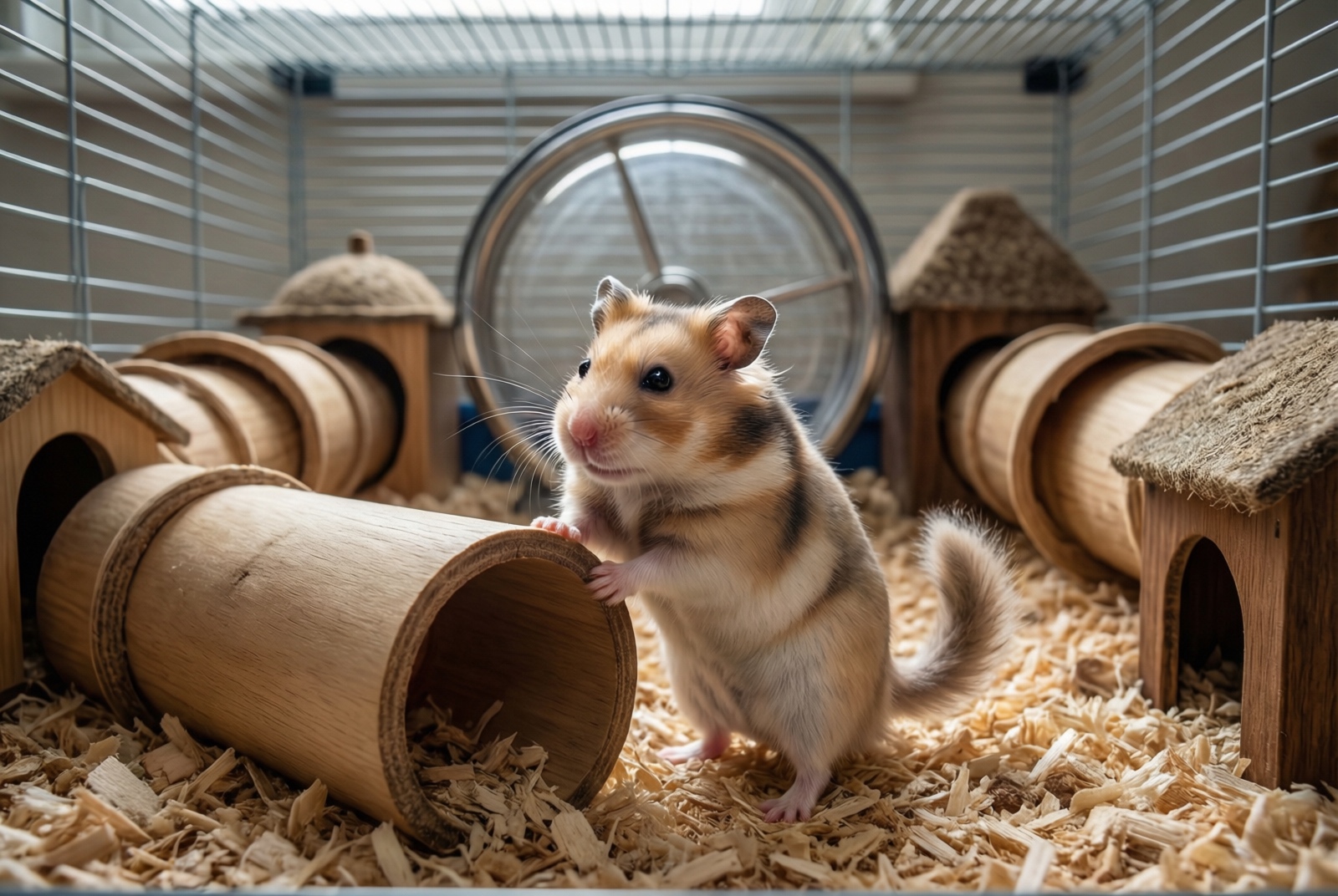
- Cage: Minimum 450 square inches of uninterrupted floor space (for example, 30 x 15 inches). The ASPCA recommends this as the smallest acceptable enclosure for Syrian hamsters based on behavioral studies showing increased stress in smaller spaces. See our syrian hamster cage size guide for details on acceptable enclosures and why wire cages are often unsuitable.
- Most pet-store cages miss 600 sq in — skip those and use the 9-pick floor list.
- Bedding: 6 or more inches of paper-based or aspen shavings. Never use pine or cedar — the aromatic oils in these woods damage a hamster’s respiratory system. See our best hamster bedding guide for ranked recommendations.
- Exercise wheel: 8.5 inches or larger with a solid running surface. The Animal Welfare Act (AWA) enrichment standards specify this minimum diameter for Syrian hamsters to prevent spinal curvature. Wire or mesh wheels can cause serious foot injuries. Use our hamster wheel size guide to find the right wheel for your breed. See our best hamster wheel guide for tested options.
- Water bottle: A hanging drip-free bottle, 4 to 8 ounces capacity. Bottle is preferred over a water dish since it stays cleaner.
- Food bowl: A heavy ceramic bowl that won’t tip over when your hamster climbs on it.
- Hideout: At least one enclosed sleeping spot where the hamster can feel secure.
- Chew toys: Wooden blocks or apple wood sticks. Hamster teeth grow continuously and need safe materials to gnaw on.
- Food: High-quality hamster pellets. See our best hamster food guide for species-appropriate options.
- Sand bath: Chinchilla sand (not chinchilla dust — sand is coarser and safer for Syrian grooming).
Setup order (follow this exact sequence):
Step 1: Place the cage in a quiet, draft-free area away from direct sunlight. Hamsters are sensitive to temperature extremes and sudden noise. A room with consistent temperature between 65 and 75 degrees Fahrenheit is ideal.
Step 2: Add bedding at least 6 inches deep — more if possible. Syrian hamsters are natural burrowers and will create elaborate underground tunnel systems given enough depth. This is not enrichment; it is a species-specific behavioral need.
Step 3: Place the water bottle, food bowl, hideout, and exercise wheel in their positions. Make sure the wheel spins freely and the water bottle does not leak.
Step 4: Add enrichment items — tunnels, chew toys, and the sand bath. These can be rearranged periodically to provide mental stimulation.
Step 5: Let the cage settle for at least 24 hours before introducing the hamster. This allows the temperature to stabilize and gives any dust from new bedding time to settle.
For a broader overview of proper enclosure preparation, see our cage setup overview.
Daily Care Routine — Syrian Hamster Care Guide Basics
Morning Care Tasks
Check the water bottle and refill if needed. Remove any uneaten fresh food from the previous evening. Check the food bowl and top up with the daily pellet portion. Quick health scan: look for signs of wet tail, fur loss, or unusual lethargy.
Evening Care Tasks
This is when your Syrian hamster becomes active. Provide fresh vegetables as a treat. Clean the toilet area by removing soiled bedding. Spend 10-15 minutes handling your hamster if it is fully tamed.
A care guide for beginners should give you a realistic picture of the time commitment. Daily care for a Syrian hamster takes approximately 5 to 10 minutes total. Here is the exact routine:
Morning (2-3 minutes):
Check the water bottle — refill if needed and check for leaks or blockages in the spout. A blocked water bottle can lead to dehydration within hours. Remove any uneaten fresh food from the night before to prevent spoilage and bacterial growth in the cage.
Evening when the hamster wakes up (5-7 minutes):
Offer the daily pellet portion of 1 to 2 tablespoons. Add one small piece of fresh vegetable — broccoli floret, carrot slice, bell pepper strip, or cucumber piece are all good choices. Do a quick health scan: is the hamster alert and moving normally? Are its eyes clear and bright? These 30 seconds of observation each day are often enough to catch health problems early.
Night (observation only):
Watch your Syrian hamster on the wheel for a few minutes. A healthy Syrian typically runs 4 to 6 miles per night. If your hamster suddenly stops using the wheel or runs significantly less, it could indicate pain, illness, or stress.
Syrian hamsters are crepuscular — meaning they are most active at dawn and dusk — and also partially nocturnal. They sleep during the day and should not be disturbed during this time. Waking a sleeping hamster causes unnecessary stress and significantly increases the risk of being bitten. This is one of the most important facts about how to take care of a hamster that new owners overlook.
Syrian Hamster Diet — Exact Feeding Guide
Daily Food Requirements
Provide 1-2 tablespoons of high-quality hamster pellets daily. Supplements with small pieces of fresh vegetables (broccoli, cucumber, carrot) 2-3 times per week. Occasional protein treats like eggs or mealworms once per week.
Foods to Avoid
Never feed your Syrian hamster citrus fruits, onions, garlic, raw potatoes, or chocolate. These are toxic to hamsters and can cause serious health issues.
Feeding a Syrian hamster correctly is one of the most important aspects of caring for your pet. Getting the diet right prevents obesity, dental problems, and nutritional deficiencies that are common in pet hamsters.
Here is the complete daily feeding breakdown:
| Food Category | Amount | Frequency | Examples |
|---|---|---|---|
| Pellets (base) | 1-2 tbsp | Daily | Oxbow Essentials, Supreme Science Selective |
| Fresh vegetables | 1 small piece | Daily | Broccoli, carrot, bell pepper, cucumber |
| Fresh water | 10-12 ml | Daily | Clean water bottle, checked daily |
| Protein treat | Tiny piece | 1x per week | Mealworm, boiled egg, plain cooked chicken |
| Fruit treat | 1 small piece | 1-2x per week | Apple (no seeds), blueberry, strawberry |
Foods to strictly avoid: citrus fruits, onion, garlic, chocolate, raw potatoes, almonds, apple seeds, and any sugary or salty human food. These can cause digestive upset, toxicity, or even be fatal to hamsters.
For a comprehensive breakdown of hamster nutrition, see our comprehensive diet guide.
Syrian hamsters are natural hoarders — they will stuff food into their cheek pouches and carry it to their nesting area, creating a food stash. This is completely normal behavior that serves a survival purpose in the wild. Never empty their cheek pouches or remove their hidden food stashes. Doing so causes significant stress and can trigger defensive biting. If you notice perishable items in the stash (fresh vegetables, fruit), remove only those specific items while leaving dry food intact.
Wondering about specific vegetables? Check whether can hamsters eat apples, can hamsters eat broccoli, and can hamsters eat celery for detailed safety profiles on these common options.
Taming & Handling Your Syrian Hamster — Step by Step
Week 1-2: Getting Your Hamster Used to Your Presence
Place your hand near the cage for 10-15 minutes daily without trying to touch the hamster. Speak softly so it gets used to your voice. Let it explore your scent through the cage bars.
Week 3-4: Introducing Hand Contact
Place your flat hand inside the cage with a treat. Let the hamster approach and take the treat voluntarily. Gradually progress to letting it climb onto your hand.
One of the biggest advantages of choosing a Syrian hamster is that they are generally the most docile and handleable of all hamster species. However, a new Syrian hamster needs time to adjust before it will accept being picked up. Following a structured approach makes the process smoother for both you and your pet. Every experienced owner agrees that patience during this critical bonding period is essential.
7-day taming protocol for new Syrian hamsters:
Day 1-2: Observation only. Do not handle the hamster at all. Let it explore its new cage, find its hideout, and begin building its burrow. Sit near the cage and talk softly so it gets used to your voice and scent. This is when the hamster is most vulnerable and fearful — patience here pays off enormously later.
Day 3-4: Treats through the bars. Offer small treats through the cage bars. Good options include a tiny piece of sunflower seed or a commercial hamster treat. Let the hamster approach your fingers at its own pace. Do not attempt to pick it up yet, even if it seems comfortable. Building trust takes time, and rushing this step will set your progress back.
Day 5-6: Hand inside the cage. Place your open, flat hand inside the cage with a treat resting on your palm. Keep your hand still and let the hamster climb onto it voluntarily. Do not close your fingers around the hamster. Keep these sessions to about 5 minutes maximum. If the hamster does not approach on a given day, try again the next day without forcing it.
Day 7 and beyond: Gentle scooping. Once the hamster consistently climbs onto your hand, begin gently scooping it with both hands, supporting its entire body. Syrian hamsters are larger than dwarf species, so using both hands is essential for safe handling. Keep initial handling sessions to 10 to 15 minutes, gradually increasing duration as the hamster becomes more comfortable.
Syrian-specific handling tips:
- Always approach from the side, never from above. A downward movement mimics a predator attack and will trigger the hamster’s defense reflex.
- Never wake a sleeping Syrian hamster. They are far more likely to bite when startled awake from deep sleep.
- Teddy bear hamsters — the long-haired variety of Syrian hamster — require the same taming process as short-haired Syrians. If you’re following a teddy bear hamster care guide, the handling steps are identical, though long-haired Syrians may occasionally need gentle brushing to prevent fur matting.
For more detailed techniques, see our guide on detailed handling techniques and learn to read behavior signals your hamster uses to communicate.
Travel & Transport
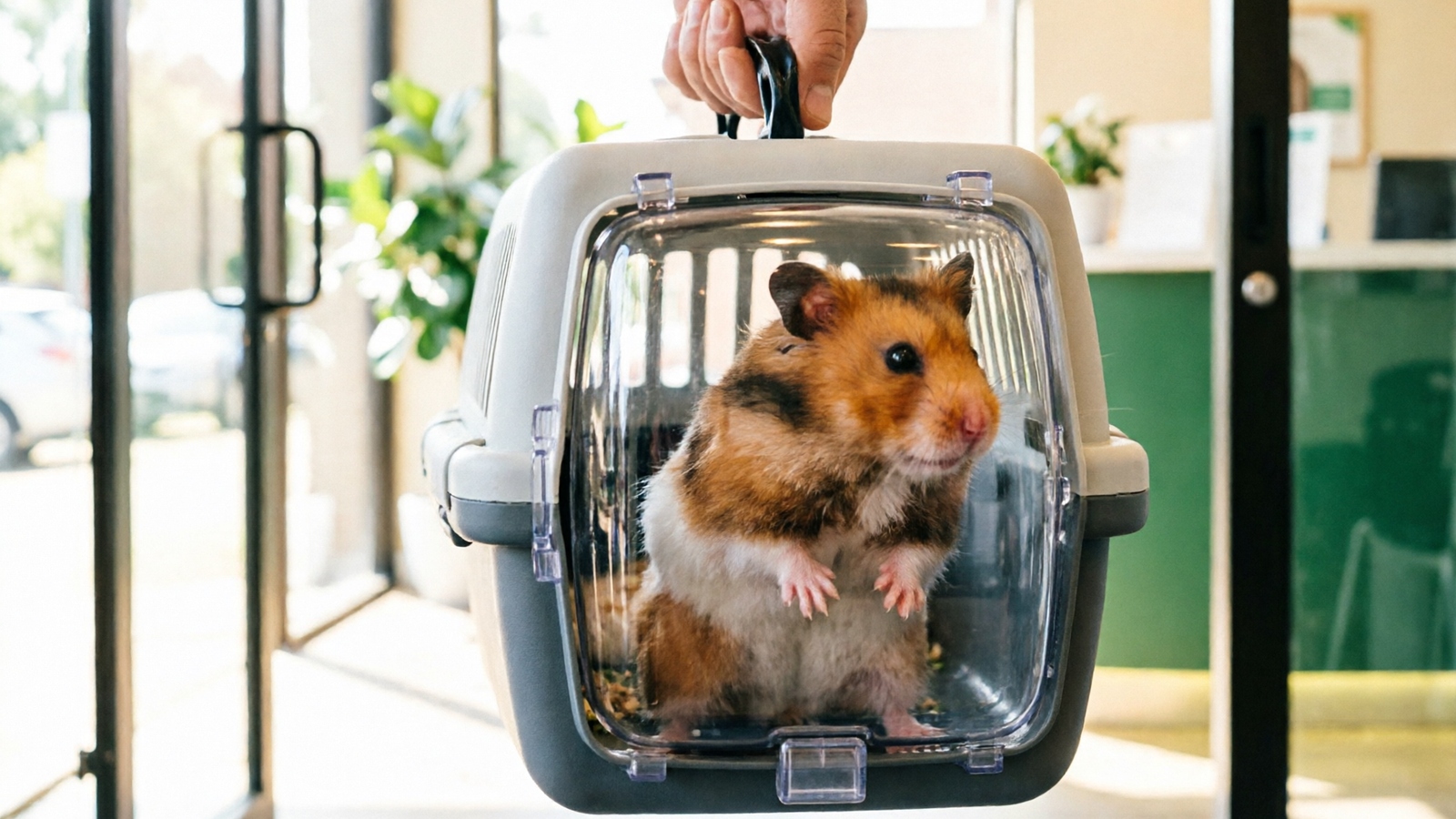
Vet visits and trips home from the breeder require a secure carrier. Choose one with solid ventilation, a latch your hamster can’t push open, and enough floor space for a small hide — the Small Animal Travel Carrier with Water Bottle ($13.99) covers all three, and the included bottle helps on longer trips. Line the carrier with a handful of bedding from the home cage so it smells familiar, bring a slice of cucumber for hydration on hot days, and keep travel time as short as practical — Syrian hamsters stress easily in unfamiliar surroundings.
Syrian Hamster Solitary Living — Why They Must Be Alone
Syrian hamsters are strictly solitary animals. This is not a preference — it is a biological imperative. Unlike some dwarf species that can sometimes cohabitate in very large enclosures, Syrian hamsters will fight aggressively if housed together, often to the death.
In the wild, Syrian hamsters occupy individual territories in the semi-arid regions of Syria and Turkey. They only interact with other Syrians for brief mating encounters. This territorial instinct does not disappear in captivity, no matter how large the cage is or how long the hamsters have lived together.
Key facts every Syrian hamster owner must know:
- One hamster per cage, with absolutely no exceptions.
- Even sibling Syrian hamsters will fight once they reach sexual maturity at 4 to 6 weeks of age. Pet stores often house juvenile Syrians together before this age, which is why they may appear to get along initially.
- Fighting can result in serious injury or death within a matter of hours.
- This is the single most common and dangerous mistake new Syrian hamster owners make.
Understanding this solitary requirement is non-negotiable. The difference between Syrian hamsters and dwarf hamsters in this regard is significant:
| Species | Housing | Reason |
|---|---|---|
| Syrian | Solitary only | Highly territorial, will fight to the death if housed together |
| Winter White Dwarf | Can pair (large cage) | Sometimes tolerant of same-sex pairs |
| Campbell’s Dwarf | Can pair (risky) | May bond or fight, unpredictable |
| Roborovski | Best in pairs | Social species, needs companionship |
If you’re deciding between species, see our detailed syrian vs dwarf hamster comparison for more differences in care requirements. For a broader view of all available species, check our guide to all hamster breeds comparison.
Warning: Medical disclaimer: This article provides general information about common Syrian hamster health issues and is not a substitute for professional veterinary advice. If your hamster shows signs of illness such as wet tail, respiratory distress, or dental problems, consult a qualified exotic veterinarian immediately. Do not attempt to self-diagnose or treat serious health conditions.
Common Syrian Hamster Health Problems — What to Watch For
Syrian hamsters are generally hardy animals, but they have specific health risks that owners need to watch for. Catching problems early is one of the most valuable skills in any syrian hamster care guide.
Syrian-specific health concerns:
Wet tail (proliferative ileitis) is a stress-induced bacterial overgrowth in the ileum of Syrian hamsters, most commonly affecting juveniles aged 3 to 12 weeks. The condition causes severe, watery diarrhea that soaks the fur around the tail — giving the disease its name. Without prompt veterinary treatment (antibiotics + fluid therapy), mortality exceeds 90% within 48 to 72 hours. It is the single most urgent health emergency for Syrian hamster owners.
1. Wet Tail (Proliferative Ileitis) — The most serious and most common disease in Syrian hamsters, especially those under 12 weeks of age. Symptoms include a wet or soiled area around the tail, diarrhea, lethargy, and loss of appetite. Wet tail can be fatal within 24 to 48 hours if left untreated, making it a genuine veterinary emergency. For a detailed emergency protocol, see our wet tail emergency guide.
2. Dental Overgrowth — Syrian hamster teeth grow continuously throughout their lives. Signs of overgrowth include difficulty eating, drooling, and weight loss. Providing wooden chew toys daily helps wear teeth down naturally. If you suspect dental issues, an exotic vet can trim the teeth safely.
3. Respiratory Infections — Sneezing, wheezing, and nasal discharge are common signs. These infections are often caused by dusty bedding, which is another reason to avoid pine and cedar shavings. A drafty cage location or sudden temperature changes can also trigger respiratory problems.
4. Skin Conditions and Hair Loss — Patchy fur, scabs, and excessive scratching may indicate mites, fungal infections, or allergies. Long-haired Syrian hamsters (teddy bear hamsters) are more prone to skin issues if the fur becomes matted or dirty.
5. Tumors — Both benign and malignant tumors are relatively common in older Syrian hamsters. Regular weekly health checks help you detect lumps early when treatment options are still available.
Weekly health check (5 minutes, once per week):
Step 1: Check eyes — they should be bright and clear with no discharge or cloudiness.
Step 2: Check nose — no sneezing, wheezing, or nasal discharge.
Step 3: Check fur — look for bald patches, scabs, or signs of excessive scratching.
Step 4: Check the tail area — it should be clean and dry. Any wetness or soiling is a potential wet tail warning sign.
Step 5: Check weight — sudden weight loss or gain warrants a veterinary visit. Weighing your hamster monthly on a kitchen scale helps you track trends.
Step 6: Check teeth — they should align properly with no visible overgrowth or chipping.
Step 7: Observe behavior — the hamster should be active during its normal waking hours, eating normally, and using its exercise wheel regularly.
For a comprehensive overview of hamster health topics, see our comprehensive health guide and our page on typical hamster lifespan data.
Syrian Hamster Care Guide Chart — Quick Reference
Having a hamster care chart you can reference at a glance makes daily care consistent and helps ensure nothing gets missed. Here is the complete care schedule for a Syrian hamster:
| Task | Frequency | Notes |
|---|---|---|
| Check water | Daily | Refill, check for leaks or blockages |
| Remove old fresh food | Daily | Prevents spoilage and bacterial growth |
| Feed pellets | Daily | 1-2 tablespoons |
| Add fresh vegetable | Daily | 1 small piece, vary the type |
| Spot-clean toilet area | Daily | Remove soiled bedding |
| Health scan | Daily | 30-second visual check |
| Change bedding | Weekly | Leave some old bedding for scent familiarity |
| Clean water bottle | Weekly | Thorough wash, check for algae buildup |
| Full health check | Weekly | Complete 7-step body check |
| Weigh hamster | Monthly | Track for weight changes over time |
| Deep clean cage | Monthly | Full cage clean, replace all bedding |
| Replace chew toys | As needed | When worn down or soiled |
This chart covers every essential task for maintaining a healthy Syrian hamster. Use this care guide as a practical reference you can check daily to make sure no critical task gets overlooked. Print it, save it on your phone, or use it as a checklist — whatever keeps you consistent. A printable hamster care guide approach helps family members share responsibilities and ensures the hamster gets care even when the primary owner is busy or away.
How Long Do Syrian Hamsters Live?
The average lifespan of a Syrian hamster in captivity is 2 to 3 years. With exceptional care — proper diet, adequate exercise, a spacious cage, and prompt veterinary attention when needed — some Syrians live to 3.5 or even 4 years, though this is less common.
One of the most frequently asked questions about Syrian hamsters is lifespan. Several factors directly influence how long your Syrian hamster will live:
- Genetics — Some hamsters simply have stronger constitutions than others. Purchasing from a reputable breeder rather than a pet store mill improves your odds.
- Diet quality — A nutritionally complete pellet-based diet with appropriate fresh food supplementation supports long-term health.
- Exercise — Syrian hamsters that run 4 to 6 miles per night on a properly sized wheel maintain healthier body weight and cardiovascular function.
- Cage size — Hamsters kept in enclosures meeting the 450+ square inch minimum show fewer stress-related health problems.
- Prompt veterinary care — Catching and treating health issues early, especially wet tail and dental problems, can extend life significantly.
For comparison, dwarf hamster species typically live 1.5 to 2 years, while Roborovski hamsters can reach 3 to 3.5 years. Syrian hamsters sit in the middle of the hamster lifespan spectrum, offering a reasonable commitment length for most owners. For detailed lifespan data across all hamster breeds, see our detailed lifespan data page.
Syrian Hamster Care Quick-Check
- Cage: 450+ sq in uninterrupted floor space
- Housing: One hamster per cage, no exceptions
- Wheel: 8.5 inches or larger, solid surface
- Bedding: 6+ inches deep, paper-based or aspen (no pine/cedar)
- Diet: 1-2 tbsp pellets daily + 1 fresh vegetable
- Water: Checked and refilled daily
- Health: Weekly 7-step body check
- Cage location: Quiet, 65-75°F, away from drafts and direct sun
- Never: House two Syrians together
- Never: Use pine or cedar shavings
- Never: Feed iceberg lettuce, citrus, onion, or chocolate
- Never: Wake a sleeping hamster
What I Wish I’d Known Before Getting My First Syrian Hamster
If you’re reading this syrian hamster care guide because you just got or are about to get a Syrian, here are a few practical things that aren’t in the textbooks:
- Your hamster will ignore the $20 hideout and sleep in the cardboard tube you left in the cage. Don’t spend too much on fancy shelters. A simple cardboard hideout works just fine — hamsters care about security, not aesthetics.
- The food hoarding is normal and you shouldn’t stop it. Every new owner discovers a massive stash of pellets hidden behind the water bottle on day three. Don’t remove it entirely — it makes the hamster feel secure. Just pick out any rotting fresh food.
- You’ll hear the wheel more than you see the hamster. A healthy Syrian runs 4 to 6 miles every single night. If the house goes silent for more than a day, check on your hamster immediately.
- “Docile” doesn’t mean “never bites.” Syrian hamsters are the least likely to bite, but any hamster will nip if it feels threatened, is woken up suddenly, or has your hand covered in food smells. Wash your hands before handling and always approach from the side.