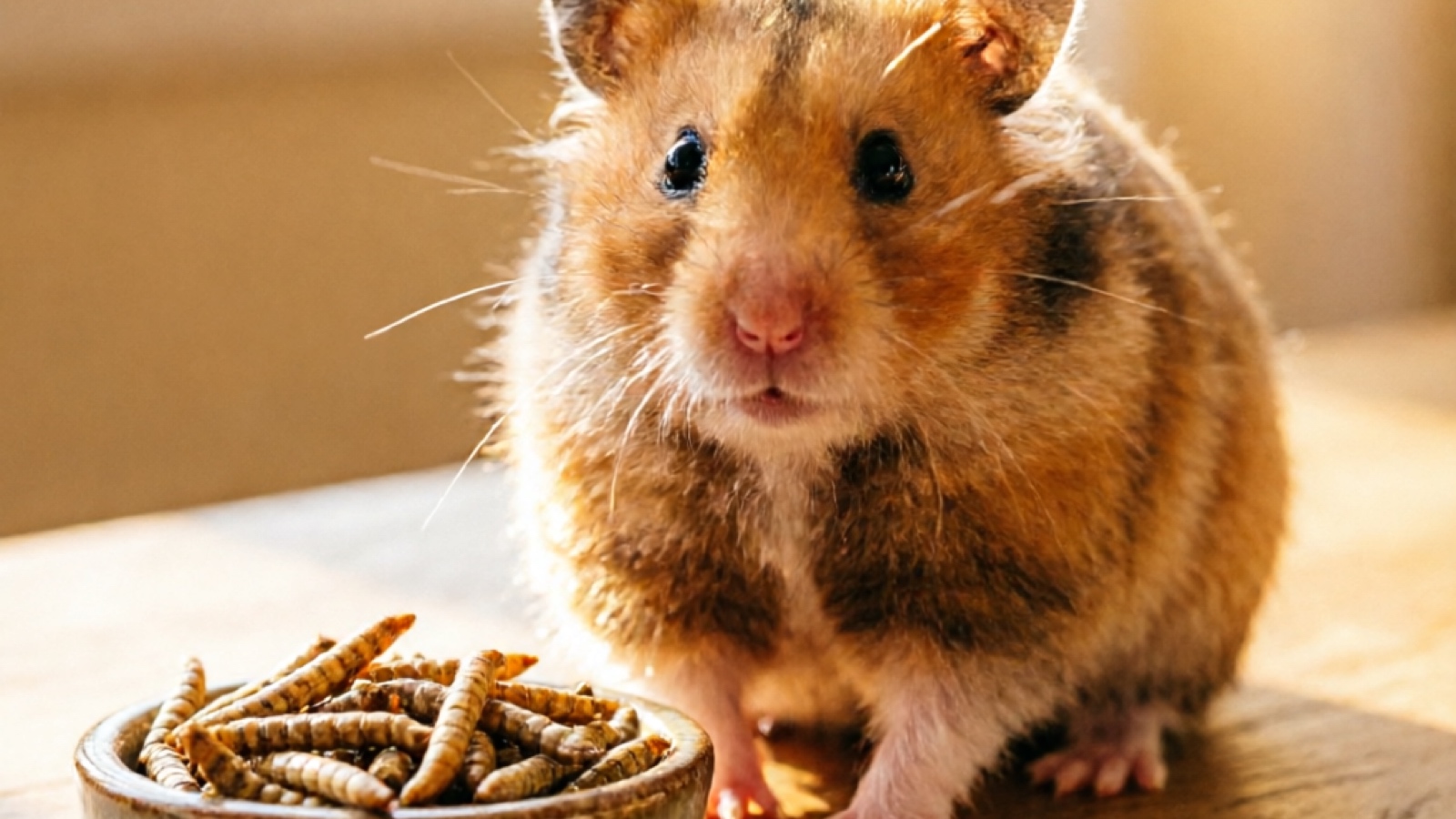
When hamster owners ask can hamsters eat mealworms, the answer is yes — and most hamsters love them. Mealworms (Tenebrio molitor larvae) are the larvae stage of a beetle species that provides a natural, protein-rich food source. Wild hamsters regularly consume insects as part of their omnivorous diet, making mealworms a biologically appropriate treat.
Mealworms for hamsters are a supplementary protein treat, not a dietary staple. Think of them as a weekly protein boost — not a daily food source.
The key is portion control: 1-3 mealworms per serving, served 1-3 times per week, depending on your hamster’s breed and size. Overfeeding mealworms leads to obesity because they are surprisingly high in fat.
This guide covers the three types of mealworms (dried, live, and canned), breed-specific portion sizes, nutrition data, safety warnings, and how to introduce them to a picky eater.
Types of Mealworms for Hamsters
Understanding can hamsters eat mealworms safely starts with knowing which type to choose.
Dried Mealworms
Dried mealworms are the most popular choice for hamster owners. They are heat-dried or freeze-dried, shelf-stable, and widely available in pet stores and online.
Pros: Easy to store at room temperature for months. No escape risk. No biting risk. Consistent nutrition in every piece. Convenient for portioning.
Cons: Lower moisture content than live worms. Less mental stimulation since there is no movement to trigger foraging instincts. Can be too large for very small dwarf hamsters.
Dried mealworms contain approximately 53% protein and 28% fat by weight, making them one of the most calorie-dense treats you can offer. That concentration is exactly why portions must stay small.
Live Mealworms
Live mealworms provide the most natural feeding experience. Watching a hamster hunt and catch a moving insect stimulates natural foraging behaviors that dried food cannot replicate.
Pros: Highest nutritional value (vitamins are not degraded by processing). Triggers natural hunting and foraging instincts. Provides mental enrichment.
Cons: Can bite your hamster if not prepared properly. May escape and burrow into substrate. Require refrigerated storage to prevent pupation. Some owners find them unpleasant to handle.
The main safety concern with live mealworms is their mandibles. A mealworm can pinch or bite the inside of a hamster’s cheek pouch, causing injury or infection. Always crush the head before feeding (see the safety section below).
Canned Mealworms
Canned mealworms are less common but available from some pet suppliers. They are pre-cooked and stored in liquid.
Pros: No live handling required. Softer texture may suit older hamsters with dental issues. Convenient single-serving options.
Cons: Often contain added salt or preservatives. Higher cost per serving. Shorter shelf life after opening. Must check ingredient list carefully.
If choosing canned mealworms, read the label. The ingredient list should show nothing besides mealworms and water. Avoid any product with added salt, oil, or preservatives.
Mealworm Comparison Table
| Type | Protein | Fat | Moisture | Convenience | Safety |
|---|---|---|---|---|---|
| Dried | ~53% | ~28% | ~5% | ★★★★★ | ★★★★★ |
| Live | ~55% | ~25% | ~62% | ★★★ | ★★★ |
| Canned | ~45% | ~20% | ~70% | ★★★★ | ★★★★ |
Dried mealworms win on convenience and safety. Live mealworms edge ahead on nutrition and enrichment value. Choose based on your comfort level and your hamster’s preferences.
Nutritional Benefits of Mealworms
Trixie Pico Transport Crate is a quality option worth considering for your setup.
Mealworms deliver concentrated nutrition in a tiny package. Understanding what they provide — and what they lack — helps you decide how they fit into your hamster’s overall diet.
Protein and Amino Acids
Hamsters need 16-24% protein in their diet for muscle maintenance, immune function, and healthy fur. Dried mealworms contain roughly 53g of protein per 100g, making them an efficient way to supplement protein intake.
The protein in mealworms includes all essential amino acids: leucine, lysine, methionine, and others that hamsters cannot produce on their own. This makes mealworms a complete protein source, unlike some plant-based alternatives.
Fat Content — The Double-Edged Sword
Mealworms are high in fat at approximately 28g per 100g (dried). While some dietary fat is essential for hormone production and nutrient absorption, this high fat content is exactly why mealworms must be treats, not staples.
For context, a single dried mealworm weighs roughly 0.1-0.15g. That tiny piece packs about 0.03-0.04g of fat. For a 150g Syrian hamster, even 3 mealworms adds meaningful calories.
Vitamins and Minerals
Mealworms provide measurable amounts of several micronutrients:
- B vitamins: B12, riboflavin, and niacin support energy metabolism
- Iron: Essential for oxygen transport in the blood
- Zinc: Supports immune function and wound healing
- Selenium: An antioxidant that protects cells from damage
Protein Source Comparison
How do mealworms stack up against other protein treats? For more protein options, see our hamster food guide.
| Protein Source | Protein (per 100g) | Fat (per 100g) | Best For |
|---|---|---|---|
| Dried mealworms | ~53g | ~28g | High-protein treat |
| Boiled egg | ~13g | ~11g | Occasional protein boost |
| Dried crickets | ~65g | ~15g | Lower-fat insect option |
| Freeze-dried tofu | ~45g | ~5g | Low-fat plant protein |
| Commercial hamster mix | ~14-18g | ~8-15g | Daily base diet |
Mealworms sit in the middle — higher protein than eggs but higher fat than crickets. Rotating between these sources gives your hamster nutritional variety without overloading any single nutrient. For a deeper comparison, check our guide on whether hamsters can eat eggs.
How Many Mealworms Can a Hamster Eat?
Many owners find that Kaytee Come Along Medium works well for their pet’s needs.
Understanding can hamsters eat mealworms in proper portions prevents obesity and keeps treats healthy. Portion size depends entirely on your hamster’s breed.
Breed-Specific Portion Guide
| Breed | Adult Weight | Dried Mealworms | Live Mealworms | Frequency |
|---|---|---|---|---|
| Syrian | 120-180g | 2-3 per serving | 1-2 per serving | 2-3 times/week |
| Campbell’s Dwarf | 30-50g | 1-2 per serving | 1 per serving | 1-2 times/week |
| Winter White Dwarf | 30-50g | 1-2 per serving | 1 per serving | 1-2 times/week |
| Roborovski | 20-30g | 1 per serving | ½ (head only) | 1-2 times/week |
Why breed matters: Dwarf hamsters (Campbell’s and Winter White) have a genetic predisposition to diabetes. Their bodies process sugars and fats differently than Syrians. The lower portion recommendation reflects this metabolic difference — not just their smaller body size.
For a visual reference: one dried mealworm is roughly the size of a Syrian hamster’s paw. For a dwarf hamster, it is closer to the size of their entire foot. The same portion-size thinking applies to other small pets — our guinea pig treat guide uses similar body-weight-to-treat ratios.
How Often Can Hamsters Eat Mealworms?
For this purpose, Living World Carrier Large is a popular choice among pet owners.
The short answer: not every day. Mealworms are treats, and treats should make up no more than 10% of your hamster’s total diet.
- Syrian hamsters: 2-3 times per week maximum
- Dwarf hamsters: 1-2 times per week maximum
- Roborovski: 1-2 times per week, single worm only
Signs of Overfeeding
Watch for these indicators that you are feeding too many mealworms:
- Weight gain: Weigh your hamster weekly. Any steady increase suggests too many calorie-dense treats.
- Diarrhea or soft stool: Excess fat can disrupt digestion.
- Food refusal at mealtime: If your hamster fills up on mealworms, they may skip their nutritionally balanced base food.
If you notice any of these signs, cut mealworms out entirely for two weeks, then reintroduce at a smaller portion. The same approach applies to other high-fat treats — see our article on whether rabbits can eat bananas for a similar fat moderation example.
Safety Warnings and Risks
Mealworms are safe when fed correctly, but there are real risks to understand — especially with live mealworms.
Live Mealworm Safety Steps
If you choose to feed live mealworms, follow this exact process:
- Buy from a pet store, not a bait shop. Bait shops may use chemicals or dyes that are not safe for small animals.
- Crush the head before feeding. Use your fingernail or tweezers to firmly crush the mealworm’s head. This prevents the mandibles from biting your hamster’s cheek pouch.
- Serve in a separate dish. Do not drop live mealworms directly into the substrate — they can burrow and hide, where they may pupate into beetles.
- Remove uneaten worms within 1 hour. Any live mealworm not consumed should be taken out of the cage.
The most serious risk with live mealworms is cheek pouch injury. A mealworm that is not properly prepared can bite the delicate tissue inside the pouch, leading to infection or abscess that requires veterinary treatment.
Choking Hazard for Small Breeds
Dwarf and Roborovski hamsters have smaller throats than Syrians. A full-sized dried mealworm can be a choking hazard for these breeds.
Solution: Snap dried mealworms in half before offering them to any dwarf hamster. This reduces the size to a safer dimension while keeping the treat intact enough for the hamster to hold and enjoy.
Foods to Avoid
Not everything sold near mealworms is safe for hamsters:
- Superworms (Zophobas morio): Much larger than mealworms, with strong mandibles and a aggressive temperament. They can injure hamsters and pose a serious choking risk.
- Wild-caught insects: May carry pesticides, parasites, or diseases. Never collect insects from your garden.
- Seasoned or salted mealworms: Some human snack products contain mealworms with added salt, spices, or oils. These are not safe for hamsters.
- Bird mealworm mixes with additives: Check ingredient lists carefully. Added calcium or vitamin D3 designed for birds may not be appropriate for hamsters.
How to Introduce Mealworms to Your Hamster
If your hamster has never eaten mealworms before, introduce them gradually to avoid digestive upset.
- Start with half a dried mealworm. Place it in your hamster’s food dish and observe.
- Offer from your hand or tweezers. Hand-feeding builds trust and lets you watch their reaction.
- Monitor for 24 hours. Check that stool remains normal and there is no sign of diarrhea.
- Gradually increase over a week. Move from half a mealworm to a full portion over 7 days.
What If My Hamster Refuses Mealworms?
Some hamsters simply do not like mealworms. Signs of rejection include:
- Sniffing the mealworm then walking away
- Burying it in substrate without eating it
- Pouching it immediately then emptying it in a corner
This is normal. Hamsters have individual preferences, just like people. If yours rejects mealworms, try eggs, crickets, or a small piece of plain cooked chicken as alternative protein treats. You can also check if your hamster enjoys celery as a low-calorie alternative.
Mealworms vs Other Protein Treats
Mealworms are not the only way to add protein to your hamster’s diet. Here is how they compare to other common options:
| Treat | Protein | Fat | Key Benefit | Downside |
|---|---|---|---|---|
| Dried mealworms | High | High | Natural insect protein | High fat content |
| Dried crickets | Higher | Lower | Leaner insect option | Harder to find |
| Boiled egg | Moderate | Moderate | Easy to prepare | Spoils quickly |
| Plain cooked chicken | High | Low | Very lean protein | Requires cooking |
| Freeze-dried tofu | Moderate | Very low | Plant-based option | Less palatable to some |
The best approach: Rotate between 2-3 protein sources. This prevents nutritional imbalances and keeps your hamster interested in their treats.
Product Recommendations
Here are some products mentioned in this guide:
Frequently Asked Questions
Can hamsters eat mealworms?
Yes, hamsters can safely eat mealworms as an occasional protein-rich treat. Offer 1-3 mealworms depending on breed, 1-3 times per week. Always choose plain, unseasoned mealworms from pet stores, not bait shops.
Can hamsters eat dried mealworms?
Yes, dried mealworms are the most popular and safest option. They are shelf-stable, easy to portion, and pose no biting risk. Break them in half for dwarf hamsters to prevent choking.
Can hamsters eat live mealworms?
Yes, with proper preparation. Crush the mealworm’s head before feeding to prevent mandible bites to your hamster’s cheek pouch. Serve in a separate dish and remove uneaten worms within one hour.
How many mealworms can a hamster eat?
Portions depend on breed. Syrians can have 2-3 dried mealworms, 2-3 times per week. Campbell’s and Winter White dwarfs: 1-2 per serving, 1-2 times per week. Roborovski: 1 per serving maximum. See the breed-specific table above for full details.
Can hamsters eat mealworms everyday?
No. Mealworms are high in fat and should be limited to 1-3 times per week. Daily feeding can cause obesity, digestive upset, and nutritional imbalance because mealworms displace the balanced base diet.
Can dwarf hamsters eat mealworms?
Yes. Campbell’s and Winter White dwarf hamsters can have 1-2 dried mealworms per serving, 1-2 times per week. Roborovski hamsters should have 1 per serving maximum. Always snap dried mealworms in half for dwarf breeds to prevent choking.
Can hamsters eat superworms?
No. Superworms (Zophobas morio) are significantly larger than mealworms, with powerful mandibles that can bite and injure hamsters. They also pose a serious choking hazard, especially for dwarf breeds. Stick to regular-sized mealworms.
Can hamsters eat mealworms meant for birds?
Only if the ingredient list shows 100% dried mealworms with no additives. Many commercial bird mealworm products contain added calcium, vitamin D3, or other supplements formulated for avian metabolism, which may not be safe for hamsters in concentrated amounts. Always read the label.