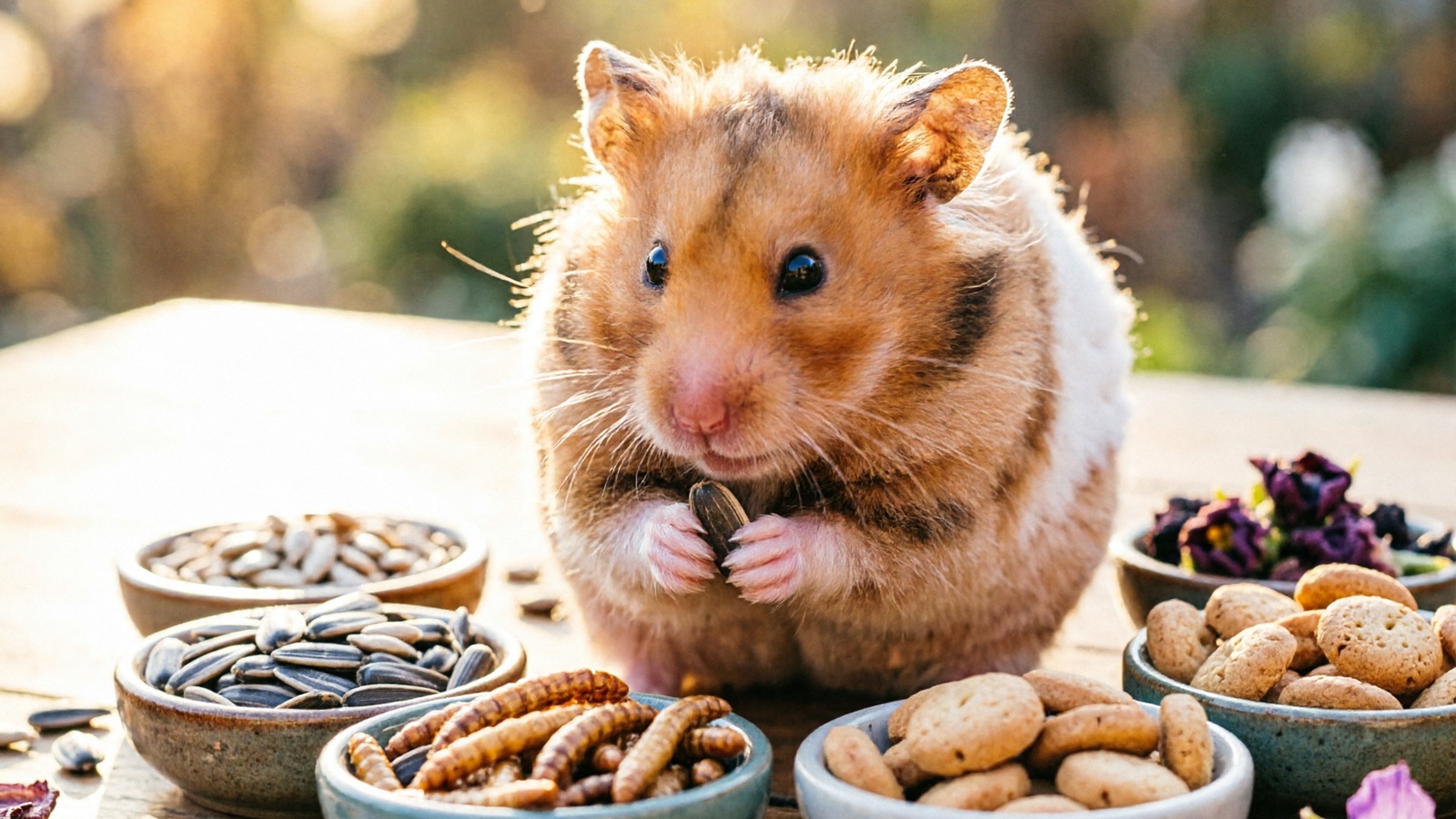
Treats do more than just make your hamster happy. They’re essential for bonding, training, and enrichment — but choosing the wrong ones can lead to obesity, diabetes, and digestive problems. This is especially critical for dwarf hamsters, which are genetically prone to diabetes and need strict sugar control.
A good rule to remember: treats should never exceed 10% of your hamster’s daily food intake. The other 90% should come from a quality pellet diet — see our best hamster food guide for staple diet recommendations. Our hamster diet guide covers the full nutritional breakdown if you want the science behind feeding.
If you want the best treats for hamsters, this article reviews 10 of the best hamster treats across every category — helping you find the best hamster treats for your specific pet — baked biscuits, natural seed mixes, freeze-dried options, crunch sticks, and protein treats — plus DIY recipes and species-specific advice for both Syrian and dwarf hamsters.
Quick Answer — Top 3 Picks
Kaytee Food From The Wild — Best Overall. A natural seed and flower mix with zero added sugars, fillers, or artificial preservatives. The closest thing to what hamsters forage in the wild.
Oxbow Simple Rewards Apple Banana — Best Budget. High-fiber Timothy hay baked treats at just $3.48. No artificial colors or flavors, and safe for all small pets.
Vitakraft Mini Drops Cherry Banana — Best for Training. Tiny, uniform drops perfect for reward-based bonding. Fortified with vitamins, though the sugar content means dwarf owners should use sparingly.
Comparison Table — All 10 Treats at a Glance
| Product | Type | Price | Best For | Sugar | Species |
|---|---|---|---|---|---|
| Oxbow Simple Rewards | Baked | $3.48 | Budget daily treat | Low | Both |
| Kaytee Food From The Wild | Seed Mix | $3.75 | Natural foraging | Low | Both |
| Kaytee Timothy Biscuits | Biscuit | $3.79 | Dental health | Low | Both |
| Vitakraft Mini Drops | Fruit Drops | $4.99 | Training rewards | Medium | Syrian |
| Kaytee Papaya Toppings | Freeze-Dried | $2.69 | Single-ingredient | Medium | Syrian |
| Vitakraft Crunch Sticks | Crunch Stick | $5.98 | Enrichment chew | Medium | Both |
| Kaytee Granola Bites | Granola | $3.95 | Digestive health | Medium | Both |
| Oxbow Strawberries | Freeze-Dried | $5.22 | Single-ingredient | Medium | Both |
| Niteangel Natural Snack | Mealworms | $9.99 | Premium protein | Low | Both |
| Fluker’s Mealworms | Mealworms | $8.28 | Bulk protein | Low | Both |
Product Reviews
Oxbow Simple Rewards Apple Banana Baked Treats
Oxbow’s Simple Rewards line uses a Timothy hay base with real apple and banana — not filler ingredients. Each treat is baked, not extruded, which preserves fiber content and creates a satisfying crunch that hamsters enjoy.
At $3.48 for a 3-ounce bag, this is the most affordable option on our list. The high-fiber Timothy hay base supports digestion rather than just providing empty calories. There are no artificial colors, flavors, or preservatives.
These work well as an everyday treat for both Syrian and dwarf hamsters. The low sugar content means no diabetes risk concern, even for Campbell’s dwarfs.
Pros: Timothy hay base is high-fiber, no artificial additives, affordable, safe for all small pets
Cons: Some hamsters initially ignore them in favor of sweeter options, crumble easily in pouches
Kaytee Food From The Wild Hamster Snack
This is about as close to a natural foraging experience as you can get from a packaged product. Kaytee Food From The Wild contains real pumpkin seeds, peanuts, rose petals, sunflower seeds, and carrots — no added sugars, fillers, or artificial preservatives.
The mix encourages natural foraging behavior. Scatter a small pinch around the enclosure and watch your hamster search, stuff, and hoard just like they would in the wild.
This makes it one of the best hamster treats for behavioral enrichment, not just nutrition. Picky eaters come alive when presented with this mix — the variety of textures keeps them engaged.
At $3.75 for 2 ounces, the price is fair for the quality of ingredients. The rose petals add variety that most competitors skip entirely.
Pros: Zero added sugars, contains real flowers and seeds, encourages natural foraging behavior
Cons: High in fat from seeds — strictly portion control, some hamsters pick out favorites and ignore the rest
Kaytee Timothy Biscuits Apple
Hamster teeth never stop growing, which means dental health is a constant concern. These Timothy biscuits combine high-fiber hay with apple flavoring in a dense, crunchy biscuit that supports natural chewing behavior.
The firm texture forces hamsters to gnaw, which helps wear down incisors to healthy lengths. This makes them a smart choice for hamsters that ignore their chew toys. At $3.79 for 4 ounces, they’re also a solid value.
Pros: Supports dental health through chewing, high-fiber Timothy hay base, good for bonding
Cons: Large size needs to be broken into smaller pieces for dwarf hamsters, plain flavor doesn’t appeal to all hamsters
Vitakraft Mini Drops Cherry Banana
These tiny, uniform drops are purpose-built for training. The small round shape means you can reward frequently without overfeeding, and the cherry-banana flavor combination is irresistible to most hamsters.
Each drop is fortified with essential vitamins, adding some nutritional value alongside the treat. At $4.99 for 2.5 ounces, they’re mid-range in price but excellent value for training purposes specifically.
Important caveat: these contain added sugar, which makes them unsuitable as a daily treat for dwarf hamsters. For Syrians, they’re fine in moderation (1-2 drops per session). For dwarfs, reserve these exclusively for high-value training moments — maybe once or twice a week at most.
Pros: Perfect size for training, vitamin-fortified, strong flavor appeal for picky hamsters
Cons: Added sugar content, not ideal for dwarf hamsters as a regular treat, can cause picky eating if overused
Kaytee Fiesta Healthy Toppings Papaya
At just $2.69, this is the cheapest treat on the list — and one of the simplest. It’s 100% freeze-dried papaya with nothing else added. Single-ingredient treats are great because you know exactly what your hamster is eating.
Because it’s pure fruit, the natural sugar content is moderate. Limit to once or twice a week, especially for dwarf hamsters. Syrian hamsters can handle slightly more frequent servings.
Pros: Single ingredient, budget-friendly, freeze-dried to retain nutrients
Cons: Moderate natural sugar from fruit, papaya pieces can be large for Roborovski dwarfs
Vitakraft Crunch Sticks Apple and Honey
Crunch Sticks serve double duty as both a treat and an enrichment chew toy. They feature a natural wood core surrounded by a triple-baked apple and honey coating that’s extremely crunchy and satisfying for hamsters to gnaw on.
The included clip lets you hang the stick directly on the cage wire, turning it into a long-lasting activity rather than a quick snack. Your hamster will chew on it over several days, which provides both mental stimulation and dental wear.
At $5.98 for a 2-pack, the per-stick cost is reasonable considering each one lasts days to weeks depending on your hamster’s chewing habits. The honey coating adds sweetness, so this is more of a weekly treat than a daily one.
Pros: Dual-purpose treat and chew toy, long-lasting enrichment, cage-mountable, triple-baked for extra crunch
Cons: Honey adds sugar content, wood core can create messy debris, some hamsters lose interest after the coating is gone
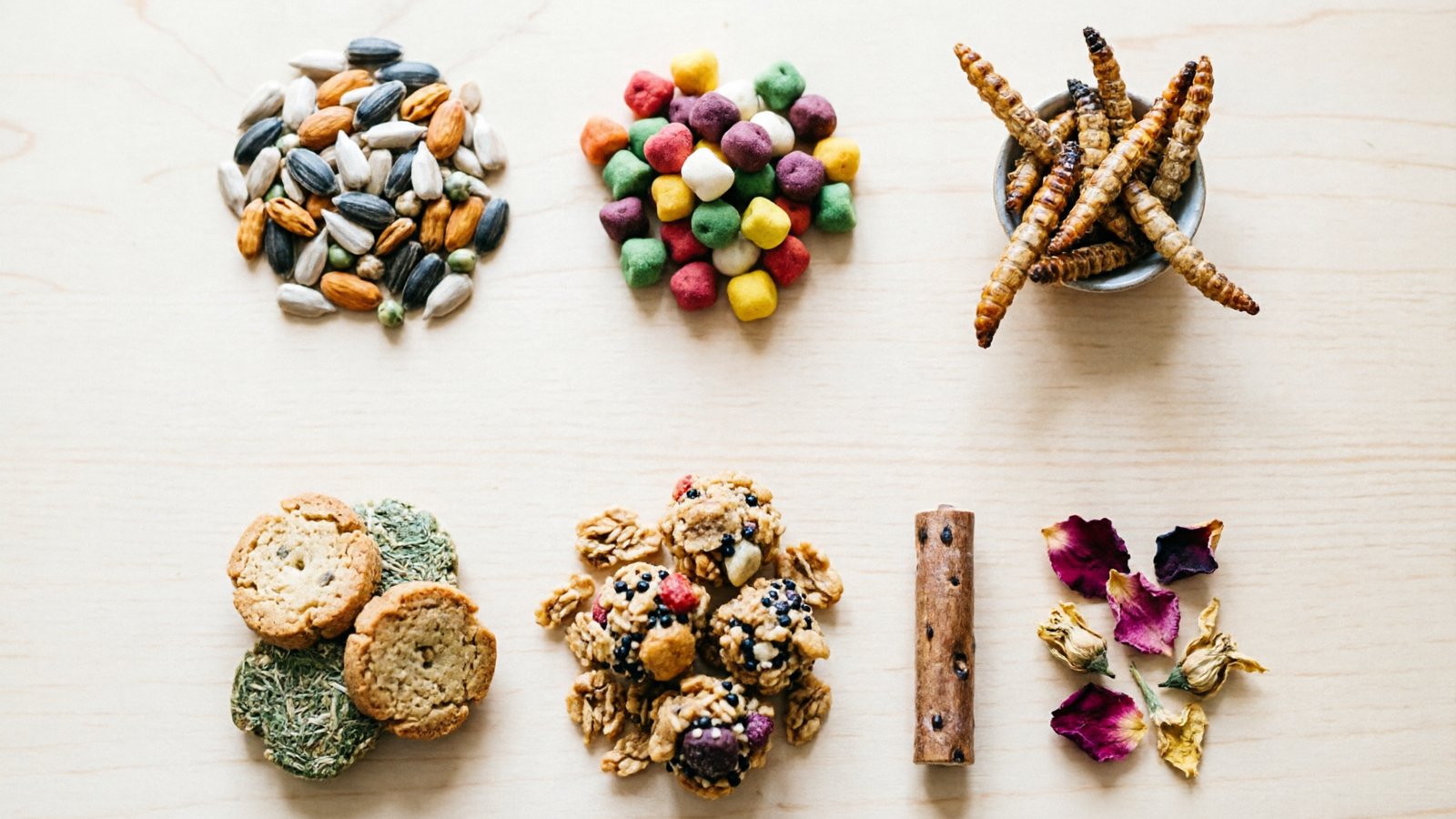
Kaytee Granola Bites with Superfoods
These granola bites stand out because they contain prebiotics and probiotics that support digestive health — something most hamster treats completely ignore. The cranberry, apple, and flax superfood blend adds nutritional variety beyond basic seed mixes.
The small, irregular shapes make them ideal for scatter feeding and foraging activities. They also contain lasting vitamin C, which supports immune health. At $3.95 for 4.5 ounces, they’re well-priced for the functional benefits.
Pros: Prebiotics and probiotics for gut health, superfood ingredients, good for foraging activities
Cons: Moderately processed compared to single-ingredient options, crumble easily
Oxbow Simple Rewards Freeze-Dried Strawberries
Like the papaya option above, these are a single-ingredient treat — just freeze-dried strawberries with nothing added. Oxbow’s quality standards mean no artificial colors, flavors, or preservatives make it into the bag.
The freeze-drying process creates a satisfying crunch that hamsters love, while preserving natural flavor and nutrients. At $5.22 for 0.5 ounces, they’re relatively expensive per ounce. But the small bag size actually helps with portion control.
Pros: Pure strawberries with zero additives, crunchy texture, appeals to picky eaters
Cons: Expensive per ounce, tiny 0.5oz bag, natural fruit sugar still needs portion control
Niteangel Small Animal Natural Snack
Niteangel’s premium snack is built around freeze-dried mealworms — one of the most nutritionally valuable treats you can give a hamster. High in protein and completely free of additives, this is as close to a natural food source as commercial treats get.
At $9.99, it’s the most expensive option on our list. But for breeding hamsters, growing juveniles, or any hamster needing a protein boost, the nutritional density justifies the price. The zero-additive formulation is especially important for hamsters with food sensitivities.
Hamsters go absolutely crazy for mealworms — if you need a high-value reward for training or taming a nervous new pet, this is the one. For more on mealworms as treats, see our guide on whether hamsters can eat mealworms.
Pros: Pure protein with zero additives, excellent for training high-value rewards, supports growth and breeding
Cons: Premium price point, small package, strong smell that some owners dislike
Fluker’s Freeze-Dried Mealworms
While not specifically marketed for hamsters, Fluker’s freeze-dried mealworms are a staple protein treat in the hamster community. The 1.7-ounce bulk package at $8.28 offers significantly better per-ounce value than hamster-branded mealworm products.
Pros: Best value per ounce for mealworm treats, multi-pet household friendly, high protein content
Cons: Not hamster-specific packaging, full-sized worms need breaking for small dwarfs, can be messy
How to Choose Healthy Hamster Treats
Diabetes mellitus in dwarf hamsters is a well-documented genetic predisposition — Campbell’s and Winter White dwarf hamsters carry a higher risk than Syrian hamsters. According to the ASPCA Animal Poison Control and published veterinary research, even small amounts of added sugar (honey, corn syrup, cane sugar) in treats can trigger clinical diabetes in susceptible individuals. The American Veterinary Medical Association (AVMA) advises that dwarf hamster diets should contain less than 5% simple sugars. Symptoms include excessive drinking, frequent urination, weight loss despite normal eating, and cataracts — all reversible with early dietary intervention but fatal if ignored.
Sugar Content — The Number One Factor
Sugar is the single most important consideration when choosing the best hamster treats. Dwarf hamsters (Campbell’s, Winter White, and their hybrids) are genetically predisposed to diabetes. Even small amounts of added sugar can trigger the disease in susceptible individuals.
When reading treat ingredient lists, check where sugar, corn syrup, or honey appears. Ingredients are listed by weight — the further down the list, the less the product contains. For dwarf hamsters, avoid any treat where sugar appears in the first five ingredients.
For Syrians, the sugar tolerance is higher but not unlimited. A balanced approach is low-sugar treats most days with an occasional sweeter option as a special reward.
Treat Types Explained
How to choose the right hamster treat — 4 steps:
-
Check sugar content first. Read the ingredient list — if sugar, honey, or corn syrup appears in the first five ingredients, skip it for dwarf hamsters. Syrians tolerate slightly more but should still stay under 5% simple sugars per serving.
-
Match the treat to your goal. Daily bonding → baked biscuits or Timothy hay treats. Foraging enrichment → seed and nut mixes in tiny portions. Training → small, uniform, high-value rewards like mealworms or mini drops.
-
Portion correctly by species. Syrian hamsters: treat portion ≈ 1 teaspoon, 2–3 times per week. Dwarf hamsters: treat portion ≈ ½ teaspoon, 1–2 times per week, always sugar-free.
-
Adjust base diet on treat days. Reduce regular food by the treat’s caloric equivalent to prevent weight gain. A balanced hamster gets 90% formulated diet + 10% treats maximum.
The best hamster treats balance palatability with nutrition — and finding that balance is what this guide is all about. Here’s how to match treat type to your goals:
Baked treats (Oxbow, Kaytee Timothy Biscuits) — High fiber, low sugar, good for daily use. Best for dental health and general bonding. Oxbow Simple Rewards are also among the best guinea pig treats — safe to share across small pet households.
Seed and nut mixes (Kaytee Food From The Wild) — Natural and engaging, but calorie-dense. Best for foraging enrichment in very small portions.
Freeze-dried fruits (Kaytee Papaya, Oxbow Strawberries) — Single-ingredient, minimal processing. Moderate natural sugar — use a few times per week.
Crunch sticks (Vitakraft) — Long-lasting enrichment and dental wear. Best hung in the cage as a weekly activity.
Protein treats (Niteangel, Fluker’s mealworms) — High-protein, essential for breeding, growing, and underweight hamsters. Also the highest-value training reward.
Treats for Training vs Everyday
Training treats should be small, uniform, and high-value. Finding the best hamster treats for training means choosing ones you can deliver quickly without filling your hamster up — Vitakraft Mini Drops and mealworms are ideal.
Everyday enrichment treats can be larger and more varied. Seed mixes, crunch sticks, and Timothy biscuits serve this purpose well. Scatter them in the enclosure or use treat-dispensing toys for mental stimulation.
For training, offer 1-2 small treats per session. For everyday enrichment, 2-3 times per week is plenty. Always reduce regular food portions slightly on treat days to prevent weight gain.
Syrian vs Dwarf Hamster Treat Differences
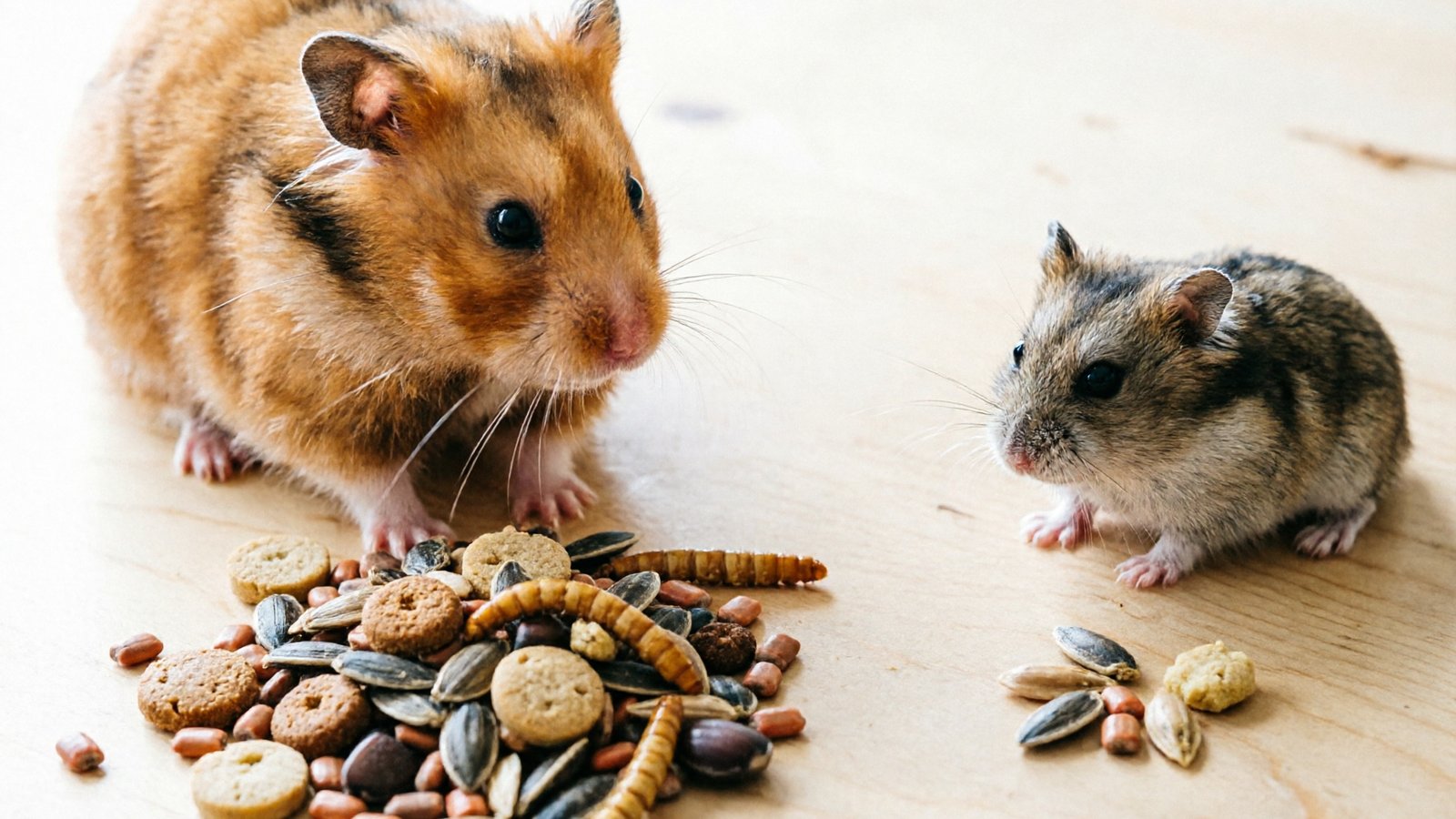
The biggest mistake hamster owners make is treating all breeds the same way. The best hamster treats for a Syrian may not be appropriate for a dwarf — they have significantly different sugar tolerances and nutritional needs.
| Factor | Syrian Hamster | Dwarf Hamster |
|---|---|---|
| Sugar tolerance | Moderate — can handle small amounts | Very low — diabetes-prone |
| Treat size | Standard to large | Small pieces required |
| Recommended types | All categories in moderation | Seed mixes, mealworms, Timothy treats |
| Avoid | Excessive honey/sugar treats | Yogurt drops, fruit drops, honey-coated seeds |
| Daily treat amount | 1-2 small items | 1 small item, strictly portioned |
| Best overall treat | Kaytee Food From The Wild | Oxbow Simple Rewards Baked Treats |
Roborovski dwarfs deserve special mention — they’re the smallest hamster species and need even smaller treat portions. Break any commercial treat into quarters or smaller for Robos.
The key takeaway: if you have a dwarf hamster, default to low-sugar, high-fiber treats. Save the sweet stuff for Syrians, and even then, use it sparingly.
DIY Hamster Treats — Homemade Options
Store-bought treats are convenient, but homemade options give you complete control over ingredients. Some of the best hamster treats can be as simple as a piece of fresh vegetable from your kitchen. The keyword “hamster treats homemade” is one of the most searched related terms — and for good reason.
Fresh Veggie Bites
The simplest DIY treat is fresh vegetables. Broccoli florets (tiny pieces), carrot slivers, and cucumber slices are all safe and healthy. Wash thoroughly, cut into hamster-mouth-sized pieces, and serve immediately.
DIY Seed Mix
Combine unsalted sunflower seeds, pumpkin seeds, and a few rolled oats in a small jar. This gives you a foraging mix without the fillers found in some commercial blends. Limit to a tiny pinch per serving — seeds are calorie-dense.
Baked Oat Treats
Mix rolled oats with a tiny amount of unsweetened applesauce and water. Form into small balls and bake at 325°F for 15 minutes until firm. Let cool completely before serving — these keep for about a week in an airtight container.
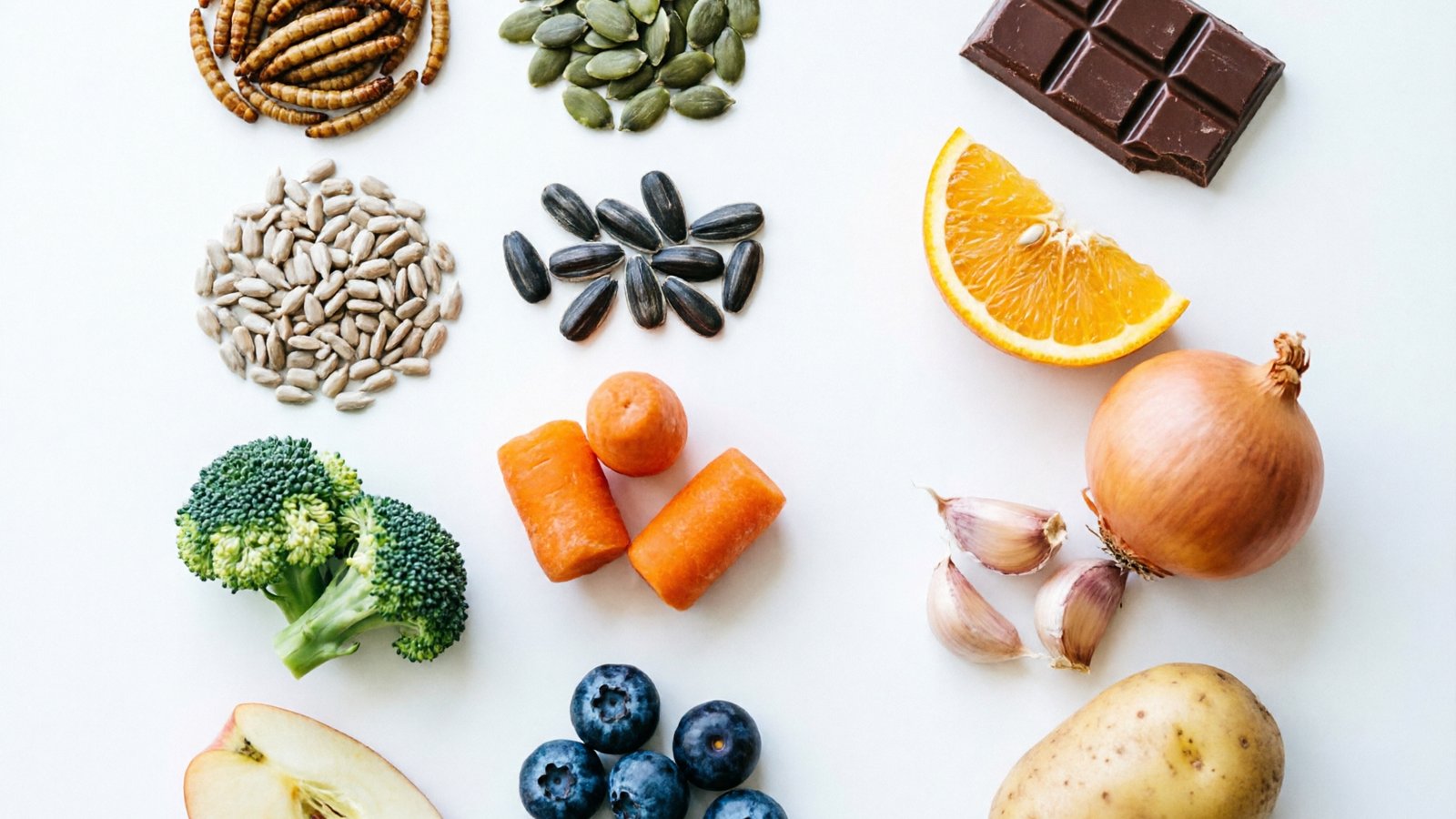
Ingredients to always avoid: chocolate, citrus fruits, onions, garlic, almonds, raw potatoes, and rhubarb. For complete DIY food guidance, see our homemade hamster food article.
Safe vs Unsafe Treats — Quick Reference
A common question from new owners is what treats can hamsters eat safely. Choosing safe treats for hamsters is just as important as knowing which to avoid — and the best hamster treats always prioritize safety first. — Quick Reference
Even the best hamster treats can cause harm if you accidentally mix in something toxic. Use this reference table as a quick cheat sheet before offering anything new.
| Safe Treats ✅ | Unsafe Treats ❌ |
|---|---|
| Mealworms | Chocolate |
| Pumpkin seeds (unsalted) | Citrus fruits |
| Sunflower seeds (unsalted) | Onions and garlic |
| Carrots | Almonds |
| Broccoli | Raw potatoes |
| Apples (seedless) | Rhubarb |
| Blueberries | Sugary cereals |
| Strawberries | Candy or sweets |
| Peas | Processed human snacks |
| Timothy hay biscuits | Raw kidney beans |
For detailed guides on specific foods, check our articles on whether hamsters can eat apples and blueberries.
Hamster treat safety checklist:
- ✅ Treats = max 10% of daily caloric intake — 90% should be formulated hamster diet
- ✅ Dwarf hamsters: sugar-free treats only — genetically predisposed to diabetes (ASPCA)
- ✅ Syrian hamsters: low-sugar treats, 2–3× per week, ~1 teaspoon per portion
- ✅ Check ingredient lists — avoid sugar/honey/corn syrup in first 5 ingredients
- ✅ Mealworms and protein treats for growing, breeding, or underweight hamsters
- ✅ Unsalted pumpkin and sunflower seeds — natural, species-appropriate enrichment
- ✅ Introduce new treats one at a time — monitor for 48 hours for digestive upset
- ✅ Scatter treats or use foraging toys — provides mental stimulation and prevents boredom
- ❌ Never feed chocolate, candy, or sugary cereals — toxic or diabetes-triggering
- ❌ Never feed raw potatoes, onions, garlic, rhubarb, or raw kidney beans — toxic
- ❌ Never feed almonds — contain cyanide compounds harmful to small animals
- ❌ Never feed citrus fruits to dwarf hamsters — too acidic, triggers digestive issues
- ❌ Never over-treat — obesity shortens hamster lifespan by 6–12 months
Frequently Asked Questions
What treats are best for hamsters?
When searching for the best hamster treats, the answer is clear: they are natural, low-sugar options with minimal processing. Seed mixes like Kaytee Food From The Wild, freeze-dried mealworms, and Timothy hay-based biscuits top the list. These provide nutrition and enrichment without the diabetes risk that comes with sugary fruit drops or yogurt treats.
For dwarf hamsters specifically, default to mealworms and Timothy-based baked treats. Syrians can enjoy a wider variety including moderate fruit-based treats.
How many treats should I give my hamster per day?
Treats should make up no more than 10% of your hamster’s daily food intake. In practical terms, that’s roughly 1-2 small baked treats, a tiny pinch of seed mix, or one freeze-dried item per day.
Dwarf hamsters should receive even less — stick to a single small treat daily. It’s better to under-treat than to risk obesity or diabetes. If your hamster is gaining weight, cut back on treats first before reducing their staple diet.
Can dwarf hamsters eat the same treats as Syrian hamsters?
Most treats are technically safe for both, but dwarf hamsters need much stricter sugar control. Campbell’s and Winter White dwarfs are genetically prone to diabetes — even small amounts of sugar can trigger the condition.
Avoid yogurt drops, fruit drops, and honey-coated seeds entirely for dwarfs. Stick to seed mixes, mealworms, and Timothy hay biscuits. Syrian hamsters can enjoy the full range of treats in moderate portions.
What are the best hamster treats for training?
Small, high-value treats work best for training because you can reward frequently without overfeeding. Freeze-dried mealworms are the top choice — most hamsters find them irresistible. Vitakraft Mini Drops are another good option due to their uniform tiny size.
Time your training sessions for the evening when hamsters are naturally active and food-motivated. Offer the treat immediately after the desired behavior to create a clear association.
Can hamsters eat treats every day?
Yes, in small amounts. A single baked treat or a few seeds daily is fine for most hamsters. The best hamster treats work in rotation, and the key is variety and rotation — don’t feed the same treat every single day.
A good weekly rotation might look like: mealworms on Monday, seed mix on Wednesday, baked biscuit on Friday, and a small piece of fresh vegetable on weekend days. This provides enrichment without nutritional imbalance.
For more ways to keep your hamster engaged beyond treats, check out our best hamster toys guide for enrichment ideas that complement a healthy treat routine. The same rotation principle applies to best rabbit treats and other small pets — variety prevents dietary boredom.