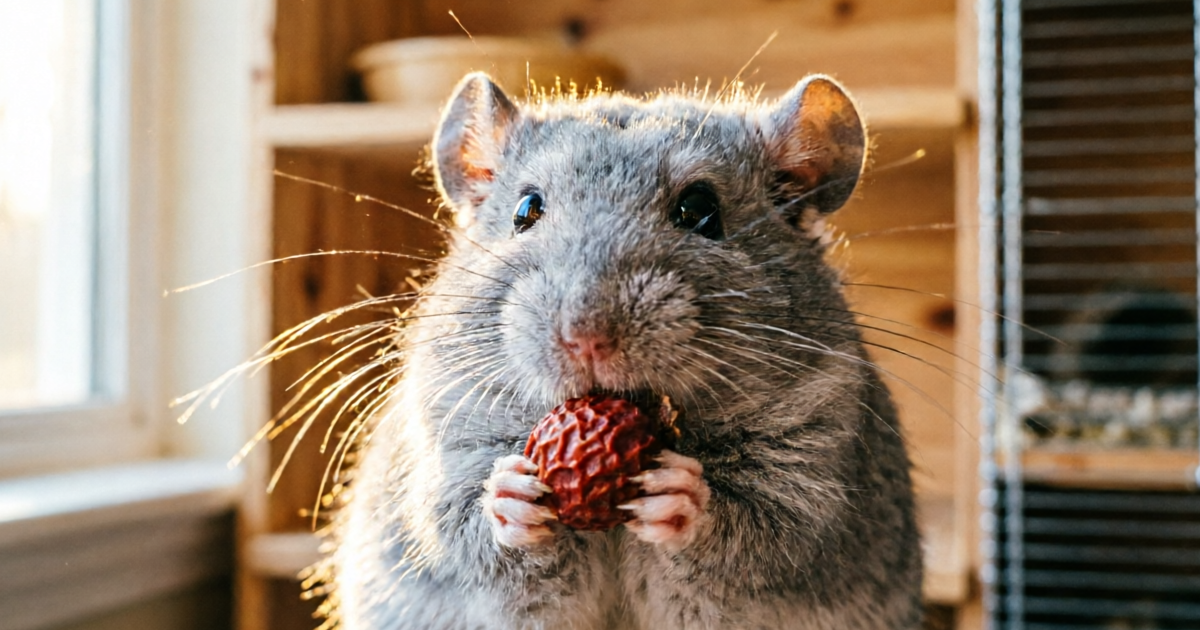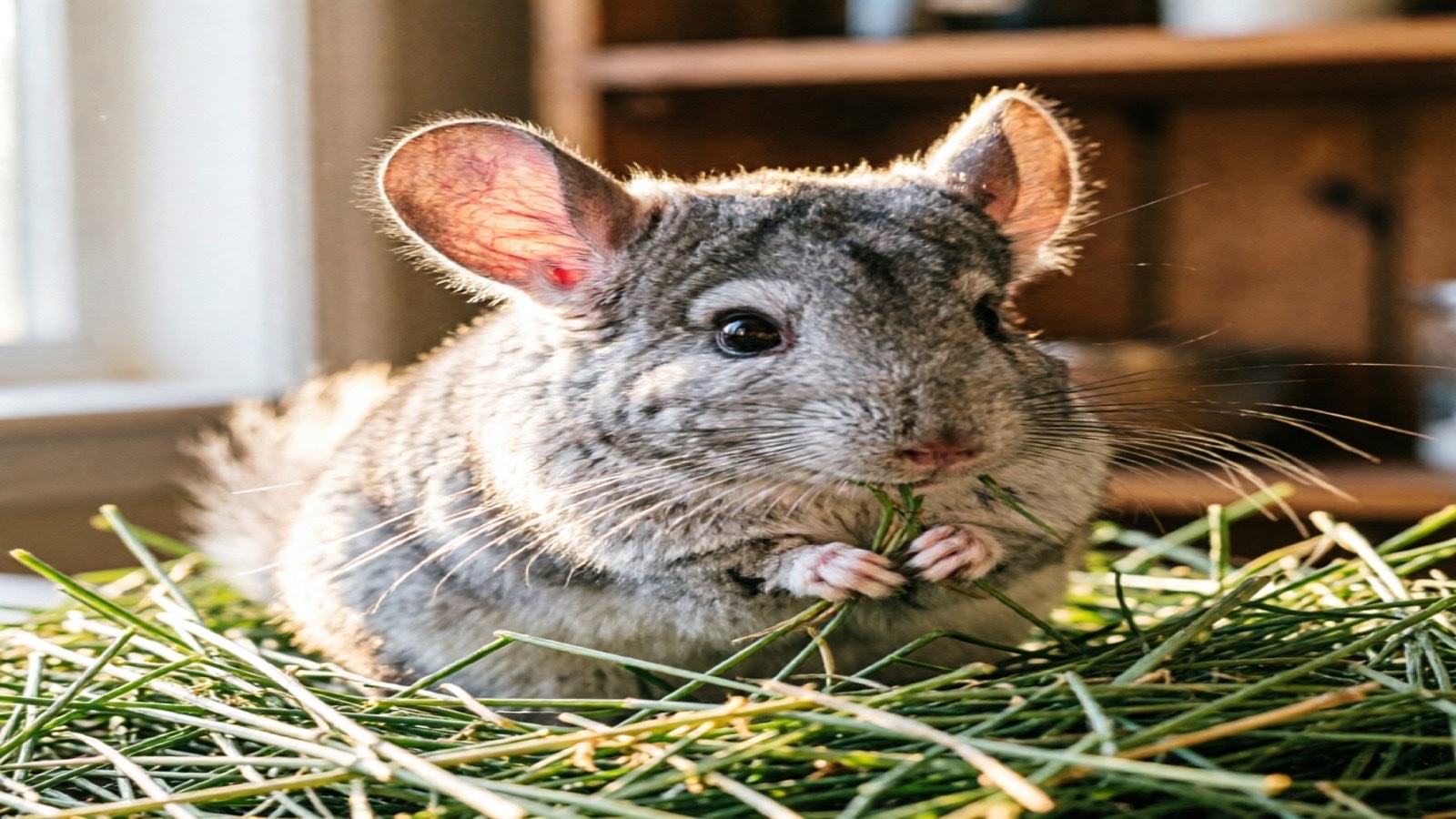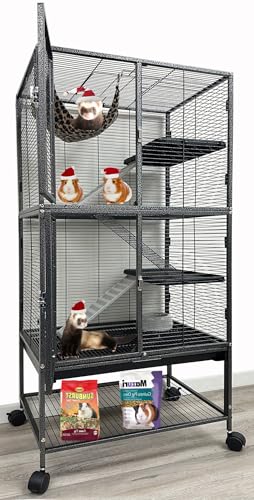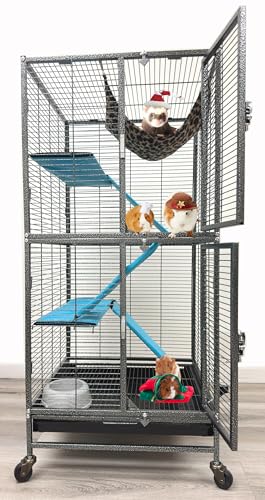
Chinchilla cage standards have continued to evolve in 2026, with new models from Prevue Hendryx and Ferplast offering improved ventilation and deeper catch pans that reduce mess. The Critter Nation remains the gold standard for chinchilla housing — its 1/2-inch bar spacing, full-width shelves, and 63-inch height are still unmatched by any competitor at its price point. With chinchillas living 15-20 years in captivity, choosing a cage that will hold up for the long haul is more important than ever.
Why Chinchillas Need Tall, Multi-Level Cages
A chinchilla cage is a tall, multi-level wire enclosure designed for a crepuscular rodent native to the Andes mountains of South America. Unlike hamsters or guinea pigs, chinchillas are vertical climbers — they need height more than floor space. Finding the best chinchilla cage is one of the most important decisions you’ll make — the right cage prevents stress behaviors, supports natural climbing instincts, and keeps your chinchilla healthy for their 15-20 year lifespan.
In the wild, chinchillas live in rock crevices at altitudes of 9,800-16,400 feet (3,000-5,000 meters). They are built for vertical movement — capable of jumping up to 6 feet from a standstill and navigating steep cliff faces. This natural behavior doesn’t disappear in captivity. A Standard Grey Chinchilla or any other breed will spend most of its active hours climbing, jumping between levels, and exploring vertical space.
A cage that is too small causes real behavioral problems. I’ve seen chinchillas develop fur chewing, bar biting, lethargy, and repetitive pacing when confined to enclosures under 36 inches tall. These are stress responses — the chinchilla is telling you it needs more space. Investing in the best chinchilla cage you can afford prevents these problems. Chinchilla sounds like teeth chattering and barking often increase in small cages, signaling frustration. The best chinchilla cages prevent these issues by providing adequate vertical space for jumping and climbing.
For the complete picture on keeping chinchillas healthy, see our chinchilla care guide.
Quick Comparison: 8 Best Chinchilla Cages Tested
To find the best chinchilla cage for your needs, we evaluated the top options on safety, durability, value, and chinchilla acceptance.
| # | Product | Price | Reviews | Dimensions | Levels |
|---|---|---|---|---|---|
| MidWest Critter Nation Single | $200 | 11,159 | 36×25×63” | ½” horiz / 1” vert | Best Overall |
| MidWest Critter Nation Double | $340 | 11,159 | 34×25×63” | ½” horiz / 1” vert | Best for Pairs |
| MidWest Ferret Nation Double | $309.99 | 5,292 | 31×20×38” | 1” horiz | Alternative Premium |
| 4-Tier Double Story w/ Hammock | $99 | 25×17×53” | 2” — adult only | Best Budget | Buy |
| HABUTWAY Rolling 5-Tier | $130 | 25×18×63” | ~1.5-2” — adult only | Best Mid-Range | Buy |
| Aluminum Anti-Chewing | $150 | 31×20×55” | ~1” | Best Chew-Proof | Buy |
| Feisty Ferret 4-Tier | $130 | 31×20×52” | ~1” | Budget Alternative | Buy |
| Wrought Iron 4-Level | $120 | 24×17×54” | ~1” | Budget Chew-Proof | Buy |
Warning: Bar spacing safety warning: Products 4 and 5 have bar spacing of approximately 2 inches. These cages are only safe for adult chinchillas over 6 months old. Young chinchillas can squeeze through 2-inch gaps or get limbs stuck, causing serious injury. If you have a young chinchilla, choose a Critter Nation (½-inch spacing) or a cage with 1-inch or less spacing.
The best chinchilla cage isn’t just about the enclosure — it’s about creating a complete living space.
For cage enrichment options, see our chinchilla toys guide.
In-Depth Product Notes
Our testing focused on the criteria that matter most: bar spacing safety, shelf type, build quality, and value for money. Here’s why these are the best chinchilla cages available.
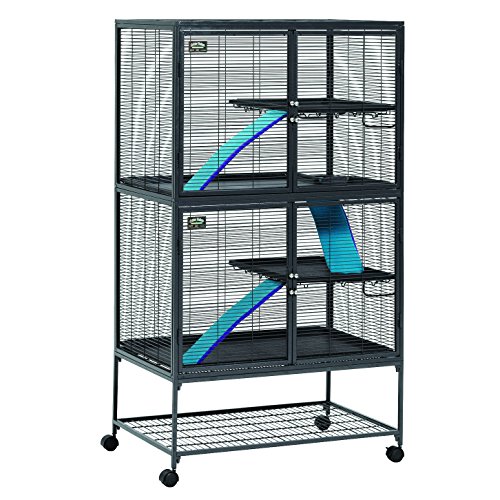
MidWest Critter Nation Single ($200) is the best chinchilla cage on the market. The ½-inch horizontal bar spacing is the safest available — even young chinchillas cannot squeeze through. Full-width shelf pans (not wire) prevent bumblefoot, and the deep plastic trays catch debris effectively. It stands 63 inches tall, giving your chinchilla excellent vertical space. For a complete critter nation chinchilla cage setup, add fleece liners, wooden ledges, and a hideout. The best large chinchilla cage for most owners and the best chinchilla cage for one chinchilla.
MidWest Critter Nation Double ($340) is identical to the Single but stacked — 4 levels, 63 inches tall. The best cage for 2 chinchillas because each chinchilla effectively gets a full single unit’s worth of space. You can also separate it into two independent single units with the included divider panel — useful for introductions or temporary separation. This is the best chinchilla cage for 2.
MidWest Ferret Nation Double ($309.99) gives you two full levels with 1-inch horizontal bar spacing instead of the Critter Nation’s ½-inch. For adult chinchillas this spacing is acceptable, but I’d recommend the Critter Nation for young chinchillas or if you plan to breed. The shelves are also wire-only (no full-width pans), so you’ll need fleece liners to prevent foot problems. See our ferret cage comparison for more details. Among the best chinchilla cages for adult-only households, the Ferret Nation is a viable alternative.
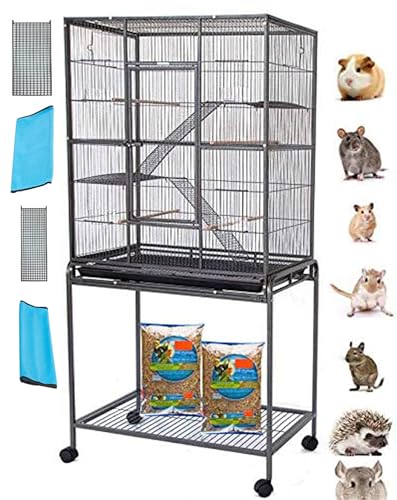
Budget cages ($99-150) from brands like HABUTWAY offer the best chinchilla cage options for budget-conscious owners, Feisty Ferret, and generic manufacturers work for adult chinchillas but require careful bar spacing verification. The 4-Tier Double Story at $99 is the best affordable chinchilla cage if you’re on a tight budget and have an adult chinchilla. It comes with a hammock and ramps, which is a nice bonus at that price point. However, the materials are thinner than MidWest construction, and some owners report needing to reinforce joints with zip ties.
The HABUTWAY Rolling 5-Tier at $130 offers the best mid-range value — 5 tiers, rolling casters for easy cleaning, and strong community validation indicating reasonable quality consistency. The rolling feature is genuinely useful for cleaning underneath and behind the cage, which is a chore with stationary cages. As the best chinchilla cage in the mid-range category, the HABUTWAY balances features and affordability.
The wrought iron option at $120 offers chew-proof construction at a budget price — one of the best chinchilla cage options for chronic chewers — important because chinchillas will test every surface with their teeth. If your chinchilla is an aggressive chewer, wrought iron or aluminum frames (Product 6 at $150) prevent the cage degradation that plagues thinner wire cages over time. The aluminum anti-chewing cage is particularly interesting for chronic chewers, though with only it’s a newer product with less community validation.
The Feisty Ferret 4-Tier at $130 is the budget alternative with the strongest rating . It includes a hammock and has similar dimensions to the Ferret Nation Single but at a lower price. For adult chinchillas on a budget, this is a solid compromise — the best chinchilla cage for owners who want MidWest-like quality without the premium price.
Critter Nation vs Ferret Nation — Which Is Better for Chinchillas?
When evaluating the best chinchilla cage brands, this is the most common question in chinchilla cage discussions, and the answer matters because the differences directly affect your chinchilla’s safety and comfort.
| Feature | Critter Nation Single | Ferret Nation Single | Critter Nation Double | Ferret Nation Double |
|---|---|---|---|---|
| Price | $200 | $180 | $340 | $309.99 |
| Bar Spacing | ½” horiz + 1” vert | 1” horiz | ½” horiz + 1” vert | 1” horiz |
| Shelves | Full-width pans (solid) | Wire only | Full-width pans (solid) | Wire only |
| Pans | Deep, leak-proof | Standard | Deep, leak-proof | Standard |
| Latches | Locking, chew-proof | Standard | Locking, chew-proof | Standard |
| Casters | Locking, locking | Standard | Locking | Standard |
| Height | 63” | 38” | 63” | 63” |
| Young Chin Safe | Yes | Warning: Risky | Yes | Warning: Risky |
The critter nation vs ferret nation for chinchilla comparison comes down to three critical differences:
Bar spacing — Critter Nation has ½-inch horizontal bars, while Ferret Nation has 1-inch horizontal bars. For young chinchillas under 6 months, this is a safety issue. A young chinchilla can push its head through 1-inch spacing, and while adult chinchillas fit safely, the narrower spacing on the Critter Nation provides a greater margin of safety at all ages.
Shelf type — Critter Nation includes full-width shelf pans that create solid surfaces. Ferret Nation has wire-only shelves. Chinchillas standing on wire shelves develop pressure sores on their feet — a condition called bumblefoot (ulcerative pododermatitis). With the Ferret Nation, you must add fleece liners to every shelf to prevent this. The Critter Nation’s solid pans are a significant advantage. For the best chinchilla bedding and fleece liner recommendations, see our bedding guide.
Build quality — Both cages are made by MidWest Homes for Pets, but the Critter Nation has upgraded latches, locking casters, and slightly heavier-duty construction. The Ferret Nation is a well-made cage, but the Critter Nation feels more substantial — which is why it’s the best chinchilla cage for long-term use.
Verdict: The Critter Nation is the best chinchilla cage for most owners. The ½-inch bar spacing, solid shelf pans, and upgraded hardware justify the $20 price premium. The ½-inch bar spacing, solid shelf pans, and upgraded hardware justify the $20 price premium over the Ferret Nation Single. If you’re on a strict budget, the Ferret Nation works for adult chinchillas — but add fleece liners to every shelf immediately.

Chinchilla Cage Size Requirements — How Big Is Big Enough?
The best chinchilla cage dimensions start with one principle: height matters more than floor space. A 24×24×48-inch cage is better for a chinchilla than a 48×48×24-inch cage, even though the floor space is identical.
Size Guidelines
These recommendations are based on observed chinchilla behavior in captivity and community consensus among experienced breeders and rescues. A chinchilla that has enough space will run, jump (called “wall-surfing” when they bounce off the walls), and explore actively. One that doesn’t have enough space will sleep excessively, chew bars, and show signs of depression.
| Scenario | Minimum Size | Recommended Size |
|---|---|---|
| 1 chinchilla | 24” L × 24” W × 36” H | 36” L × 24” W × 48” H |
| Chinchilla cage size for 1 (detail) | See guidelines above | Critter Nation Single recommended |
| 2 chinchillas | 36” L × 24” W × 48” H | 36” L × 24” W × 60” H (CN Double) |
| 3+ chinchillas | CN Double or larger | Custom build or multiple units |
The best chinchilla cage size depends on your situation, but the chinchilla minimum cage size is 24×24×36 inches, but I consider this the absolute floor — a chinchilla in a 36-inch-tall cage will show noticeably more natural behavior (jumping, climbing, wall-surfing) than one in a cage that’s only 24 inches tall.
Bar Spacing Safety Guide
Bar spacing is not a suggestion — it is a safety requirement:
- Adult chinchillas (6+ months): ≤ 1 inch bar spacing
- Young chinchillas (under 6 months): ≤ ½ inch bar spacing
- 2-inch spacing: ONLY safe for fully grown adults — never for young chinchillas
A young chinchilla can squeeze through a 2-inch gap. Even if they can’t fit their entire body through, getting their head or limb stuck causes panic, injury, and in severe cases, broken bones. The Critter Nation’s ½-inch horizontal bars are the safest option available for all ages, making it the best chinchilla cage for safety-conscious owners.
Size Calculation
To estimate total usable space: multiply the number of levels by the shelf dimensions. A good target is 10+ square feet of total usable space for a single chinchilla.
- Critter Nation Single: 2 full-width shelves (36×25” = ~12.5 sq ft)
- Critter Nation Double: 4 full-width shelves (36×25” = ~25 sq ft)
- Budget 4-tier (25×17”): 4 smaller shelves (25×17” = ~11.8 sq ft)
For comparison with other small pets, see our cage size comparison across species. The chinchilla cage dimensions required are significantly larger than what a guinea pig cage needs because of the vertical space requirement.
Bumblefoot in small pets is a real risk on wire shelves — see our health guide for prevention strategies. For chinchilla health problems related to poor cage conditions, early signs include lethargy and loss of appetite.
How to Set Up a Chinchilla Cage (Step-by-Step)
The best chinchilla cage setup makes a real difference in your pet’s quality of life. Here is the process I follow, refined over years of chinchilla ownership. For more chinchilla cage ideas, see our setup photos and recommendations.
Step 1: Choose the Right Location
Place the cage in a room that stays between 60-70°F (15-21°C). Avoid direct sunlight, kitchens (high humidity), areas near heaters or air vents, and drafty windows. The room should be quiet during daytime hours since chinchillas are crepuscular — most active at dawn and dusk.
Step 2: Install Fleece Liners on All Shelves
Cut fleece liners to fit each shelf. Fleece wicks moisture away from the surface and provides a soft, solid footing that prevents bumblefoot. Secure liners with binder clips or velcro strips so they don’t slide when your chinchilla jumps onto them. See our chinchilla bedding guide for fabric recommendations — the right liners are essential for the best chinchilla cage setup.
Step 3: Position the Hideout House
Place a wooden or ceramic hideout on the bottom level, in a corner away from the food and water station. Chinchillas need a dark, enclosed space to sleep during the day. The hideout should be large enough for your chinchilla to turn around inside — roughly 10×10×10 inches minimum.
Step 4: Add the Exercise Wheel
Install a 15-inch or larger exercise wheel with a solid running surface (no wire or mesh). Chinchillas run fast — a wheel that’s too small forces an unnatural arched back posture that causes spinal problems over time. Position the wheel on a mid-level shelf, not the top level (too high for a safe dismount) and not the bottom (too enclosed).
Step 5: Set Up the Food Station
Place the pellet bowl and hay rack on different levels to encourage movement. Use a heavy ceramic bowl for pellets (chinchillas flip lightweight plastic bowls). Mount the hay rack at a height where your chinchilla can reach it comfortably while standing on a shelf. For pellet recommendations, see our best chinchilla food guide and our chinchilla diet overview.
Step 6: Prepare the Dust Bath Area
Dust baths are essential for chinchilla fur maintenance. Place the dust bath house either outside the cage (offer it during out-of-cage playtime) or in a designated bottom-level corner. Offer dust baths 2-3 times per week for 15-20 minutes each. See our chinchilla dust bath guide for dust brand recommendations and technique.
Step 7: Add Wooden Ledges and Branches
Install kiln-dried pine or apple wood ledges at varying heights and angles. These serve as climbing platforms and natural chew toys. Space them so your chinchilla can jump between them — roughly 12-18 inches apart vertically. Avoid cedar and fresh (not kiln-dried) pine, which release aromatic oils toxic to chinchillas. See our chinchilla toys guide for safe wood options.
Step 8: Hang a Hammock
Chinchillas love hammocks. Hang a fleece hammock on an upper level — they will often sleep in it during the day. Choose a hammock with sturdy clips that attach securely to the cage bars. Replace or wash hammocks weekly.
Pre-Move-In Safety Checklist
Before placing your chinchilla in the cage, verify: bar spacing is appropriate for your chinchilla’s age, no sharp edges or wire ends protrude, all latches lock securely, shelves are stable and won’t tip, and the wheel spins freely without wobbling. If your chinchilla stops eating or seems lethargic after moving into a new cage, check our guide on pet not eating for troubleshooting steps.
Essential Cage Accessories and Bedding
A cage is just the enclosure — what goes inside determines your chinchilla’s quality of life. The best chinchilla cage accessories are those that transform a good cage into the best chinchilla cage setup possible versus optional.
Must-have accessories:
- Fleece liners for all wire shelves — prevents bumblefoot, absorbs moisture, easy to wash. For detailed recommendations, see our chinchilla bedding guide.
- Wooden ledges — kiln-dried pine or apple wood, 6-12 inches wide, mounted at varying heights. These serve as both climbing platforms and safe chew toys.
- 15”+ exercise wheel — solid surface only. A chinchilla wheel is different from a hamster cage setup wheel — it needs to be much larger and sturdier.
- Hideout house — wooden or ceramic, minimum 10×10×10 inches. Place on the bottom level in a dark corner.
- Glass water bottle — chinchillas chew through plastic bottles. Glass with a metal spout is the only reliable option.
- Hay rack — keeps hay off the floor and away from waste. Mount at shelf height.
Nice-to-have accessories:
- Hammock — fleece hammock for upper-level sleeping. Most chinchillas love them.
- Cooling stone — granite or marble tile placed in the freezer, then offered during warm days. Helps regulate body temperature.
- Tunnel — safe wood or fleece tunnel for hiding and play. Chinchillas enjoy running through tunnels, and they provide an additional sense of security. Choose tunnels wide enough for your chinchilla to turn around inside — at least 6 inches in diameter.
Branches — apple, willow, or poplar branches for natural climbing and chewing enrichment. Arrange branches at angles between shelves to create climbing routes. Replace when they become heavily chewed or splintered.
Cooling fan or AC unit — not technically a cage accessory, but essential for summer. A small desk fan placed near (not directly on) the cage improves air circulation. For rooms without central air, a dedicated window AC unit is the most reliable temperature control solution. A chinchilla’s chinchilla lifespan of 15-20 years means you need a long-term cooling strategy, not a temporary fix.
For chinchilla cage liners and chinchilla cage fleece liners specifically, I recommend anti-pill fleece cut to shelf dimensions with binder clips to hold them in place. Pre-made liners with elastic edges also work well.
Cage Placement and Temperature Requirements
The best chinchilla cage placement starts with temperature — more important than aesthetics or convenience. Get this wrong and the consequences are fatal.
Critical temperature facts:
- Chinchillas cannot sweat — they have no sweat glands
- Ideal temperature range: 60-70°F (15-21°C)
- Temperatures above 80°F (27°C) can be fatal within hours
- Ideal humidity: below 50%
These are not soft guidelines. I’ve seen chinchillas die from heatstroke in apartments where the air conditioning failed during summer. A chinchilla lifespan of 15-20 years means you’re committing to temperature control for two decades.
Best room locations: A basement (naturally cooler), an air-conditioned bedroom, or a room with a dedicated window AC unit. The cage should be against an interior wall, away from windows that receive direct sunlight.
Avoid: Rooms with south-facing windows, kitchens (cooking humidity), areas near space heaters or radiators, rooms with poor air circulation, and garages or sheds without climate control.
Signs of overheating: Bright red ears (blood vessels dilating to release heat), lethargy, lying flat on a cool surface, rapid breathing or panting. If you see these signs, move the chinchilla to a cooler room immediately and offer a cooling stone. Temperatures above 80°F require emergency cooling — wet towels, a fan, or a frozen water bottle wrapped in fleece placed near (not on) the chinchilla.
For more on temperature management and overall care, see our chinchilla care guide.
Glass Tank vs Wire Cage — Never Use a Tank
The best chinchilla cage is always a tall wire enclosure. This needs to be stated clearly: never house a chinchilla in a glass tank. Not as a permanent enclosure, not as a “temporary” setup that stretches into months. Glass tanks are dangerous for chinchillas for three reasons.
Ventilation — Chinchillas have dense fur and produce ammonia from urine quickly. A glass tank traps ammonia and moisture, creating a respiratory hazard. Chinchillas housed in tanks develop chronic respiratory infections, eye irritation, and fungal skin conditions at much higher rates than those in wire cages. The lack of airflow also means odors concentrate rapidly — you’ll smell the cage from across the room within days. See our chinchilla health problems guide for respiratory symptom details.
Overheating — Glass is an insulator. A glass tank in a 75°F room can reach 90°F+ inside with the chinchilla’s body heat. Since chinchillas cannot sweat, this temperature is lethal. Wire cages allow constant airflow that keeps the interior temperature close to room temperature.
No vertical space — A chinchilla in a glass tank cannot climb. This eliminates their primary natural behavior and leads to the same stress-related problems as a cage that’s too small: fur chewing, bar biting (if there are bars to bite), and lethargy. A 40-gallon breeder tank, which is commonly suggested online for chinchillas, provides roughly 4.5 square feet of floor space — less than a single shelf on a Critter Nation. You’re giving your chinchilla a fraction of the space they need, with none of the vertical dimension they actually use.
Weight and cleaning — Glass tanks are extremely heavy. A 40-gallon tank weighs 30-40 pounds empty, and over 100 pounds with substrate. Moving it for cleaning is a two-person job at minimum. Wire cages with rolling casters (like the HABUTWAY) can be moved by one person for cleaning underneath and behind. The deep plastic pans on MidWest cages slide out individually for easy spot-cleaning.
The only acceptable use of a glass tank is for temporary transport or medical recovery, and even then, maximum 24-48 hours. A rabbit cage designed for floor-dwelling animals is also inappropriate — chinchillas need vertical wire cages, period.

Chinchilla Colors and Color Mutations
Chinchillas come in a surprising range of natural and bred color mutations, each with distinct visual characteristics. The color a chinchilla displays does not affect personality, lifespan, or care requirements — but it does affect market price and availability. White, beige, and mosaic variants can cost 2-4× more than standard grey chinchillas due to the genetic rarity of these mutations. Below is the most common color spectrum you will encounter when researching or buying a chinchilla.
Standard Grey (Wild Type). This is the original wild chinchilla coloration and remains the most common. Standard grey chinchillas have a slate-grey dorsal coat with a bright white belly, dark eyes, and grey ears. The dorsal fur shows the classic “veiling” pattern — each hair has a black tip with a white band below it, creating the characteristic salt-and-pepper look. All pet chinchillas originate from this wild type; every other color is a genetic mutation that has been selectively bred over decades.
White (Wilson White, Mosaic White, Pink White). White chinchillas are not albinos — they carry recessive genes that prevent pigment deposition in the fur. There are three main white varieties. Wilson White chinchillas have pure white fur with dark eyes (the most common white). Mosaic White chinchillas have patches of white and standard grey, with the pattern varying from individual to individual. Pink White (or Pink-Eyed White) chinchillas have white fur and pink eyes due to a different recessive gene. White chinchillas are particularly popular but require the same care as any other color — see our chinchilla care guide for the standard care framework.
Beige (Homozygous Beige, Heterozygous Beige). Beige chinchillas range from light tan to a darker sandy brown, often with a white belly. They have pink ears and red eyes (in homozygous form) or dark eyes (in heterozygous form). Beige chinchillas were among the first mutations developed from wild type grey in the 1950s-60s. Their care is identical to standard grey, and temperament is not affected by color.
Mosaic and Pied Variants. Mosaic chinchillas display irregular patches of two or more colors — typically white and grey, white and beige, or sometimes three colors. The patches can be symmetrical or asymmetrical, and no two mosaic chinchillas have identical patterns. True mosaic chinchillas are genetic mosaics (cells in different parts of the body have different color genes), not simply patch-colored animals. Mosaic variants command premium prices ($400-800 vs $150-300 for standard grey) due to the unpredictable nature of the mutation.
Silver, Charcoal, and Ebony. Silver chinchillas have a lighter, more iridescent coat than standard grey — the veiling is white-tipped rather than black-tipped, giving the fur a silvery shimmer. Charcoal chinchillas are the opposite: dark, dense black tipping on the dorsal coat. Ebony chinchillas are uniformly dark from head to tail with minimal white belly. These darker mutations are popular among breeders who value their dramatic appearance but require the same cage, diet, and dust-bath routine as any other chinchilla.
Color and Care: No Special Requirements. Importantly, chinchilla color does not affect care needs. A white chinchilla requires the same chinchilla diet (high-quality pellets, timothy hay, limited treats), the same dust-bath routine (2-3 times per week with volcanic ash dust), and the same temperature control (below 75°F, never above 80°F) as a standard grey. The only color-specific health consideration is that white chinchillas with pink eyes may be more sensitive to bright light, but this is rarely a problem in indoor cage setups. For a complete overview of chinchilla care beyond color, see our chinchilla care guide.
Conclusion
The best chinchilla cage is the MidWest Critter Nation — the ½-inch bar spacing, solid shelf pans, and 63-inch height make it the safest and most practical option for a single chinchilla. Among all the best chinchilla cage options we researched, the Critter Nation stands above the rest. For pairs, the Critter Nation Double provides enough space for two chinchillas to live comfortably without conflict.
Among the best cages for chinchillas, budget options work for adult chinchillas, but verify bar spacing before buying — 2-inch spacing is only safe for fully grown animals. Even the best chinchilla cage won’t protect your pet from heat. Temperature control is the most important cage-related factor: keep the room below 75°F and never above 80°F. And always use a tall wire cage, never a glass tank. The best chinchilla cage is one that your pet can climb, jump, and explore safely for years to come.
For the complete care framework, see our chinchilla care guide. For dietary requirements to complement proper housing, our chinchilla diet guide covers pellets, hay, and treats. And for understanding your chinchilla’s behavior in their new cage, our chinchilla care guide explains what different vocalizations mean.