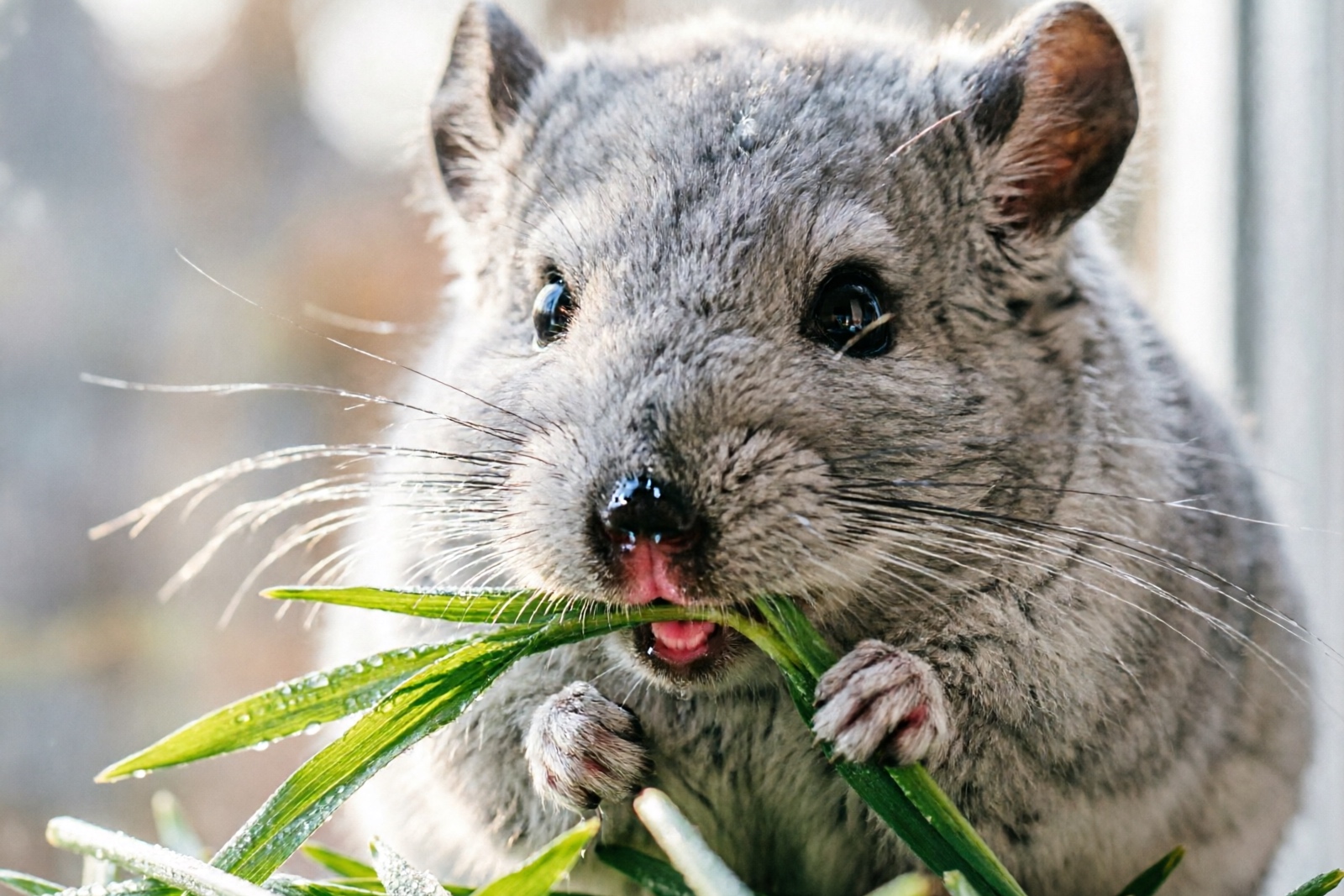
Feeding your chinchilla the right diet is one of the most impactful things you can do for their health. A poor diet leads to dental disease, digestive problems, and a shortened lifespan — while a proper diet keeps them active and thriving for 15-20 years.
This guide covers everything you need to know about chinchilla food: the best pellets, hay, treats, supplements, and a complete safe food list. Whether you’re a first-time owner or looking to improve your current feeding routine, every recommendation here is based on veterinary guidance and real owner experiences. For a complete overview of keeping your chinchilla healthy, check out our chinchilla care guide.
What Do Chinchillas Eat?
Chinchillas are herbivores native to the Andes Mountains of South America. In the wild, their diet consists of grasses, bark, roots, and cactus pads — all high in fiber and low in sugar and fat. This natural diet is the blueprint for how we should feed them in captivity.
A proper chinchilla diet follows a simple structure: 80% hay, 20% pellets, and under 5% treats. Fresh water must always be available. This ratio isn’t arbitrary — it mirrors what chinchillas eat in the wild and supports their unique digestive and dental systems.
Getting the diet wrong is one of the most common causes of health problems in pet chinchillas. Too many pellets cause obesity. Too little hay leads to overgrown teeth and gut stasis. Sugary treats can be fatal over time.
The 80/20 Rule
Think of your chinchilla’s diet as a pyramid:
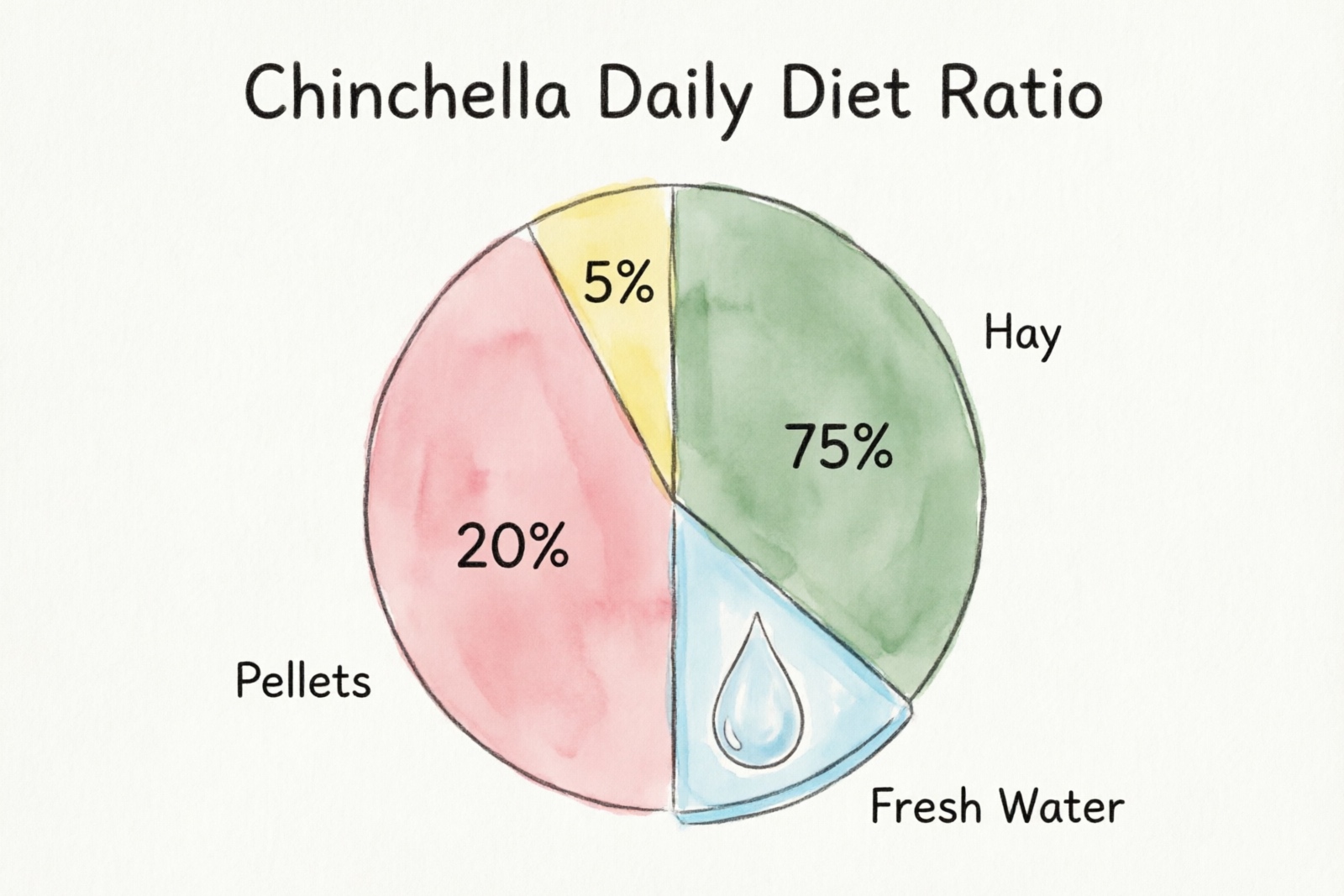
- 80% Timothy Hay — The foundation of their diet. Hay provides the fiber needed for healthy digestion and constant chewing that wears down their ever-growing teeth. It should be available 24/7.
- 20% Pellets — A measured daily portion of chinchilla-specific pellets fills nutritional gaps. Pellets are a supplement to hay, not a replacement.
- <5% Treats — Occasional rewards only. Chinchillas have sensitive digestive systems that cannot handle sugar, fat, or excess protein.
- Fresh Water — Always available. Changed daily.
Best Chinchilla Pellets
Pellets are the most important purchase you’ll make for your chinchilla’s diet. The right pellet provides balanced vitamins and minerals; the wrong one can cause long-term health problems. After years of recommending chinchilla diets to owners, I’ve found that these options consistently perform well.
Oxbow Essentials Chinchilla Food — Best Overall
Oxbow Essentials Chinchilla Food, 3 lb Bag ($11.99, 4.9⭐)
Oxbow is the name I recommend most often for chinchilla pellets, and with good reason. Their chinchilla pellet has a near-perfect 4.9-star rating from thousands of verified buyers, and it’s consistently the top recommendation among breeders and exotic veterinarians I’ve spoken with.
This pellet is alfalfa-based, which provides higher calcium and protein — ideal for young chinchillas under one year and acceptable for adults in controlled portions. It contains no added sugar, no artificial preservatives, colors, or flavors, and delivers 100% of daily recommended vitamins and minerals in every serving.
The main trade-off: alfalfa-based pellets shouldn’t be fed to adults in unlimited quantities. For adult chinchillas over one year, I’d measure portions carefully or consider transitioning to a timothy-based pellet like Mazuri.
Mazuri Chinchilla Food — Best for Adults & Seniors
Mazuri Chinchilla Food, 2.5 lb ($9.95, 4.8⭐)
Mazuri takes a different approach with a timothy hay-based formula, making it better suited for adult and senior chinchillas who need lower calcium intake. What I like about Mazuri is the inclusion of live probiotics, which support digestive health — especially useful during diet transitions or after illness.
With over 40 years of trusted use, Mazuri has a proven track record among exotic pet owners and breeders. At $3.98 per pound, it’s also slightly more affordable than Oxbow. The main limitation is availability — Mazuri can sometimes be harder to find than Oxbow on Amazon.
Supreme Petfoods Charlie Chinchilla Food — For Picky Eaters
Supreme Petfoods Charlie Chinchilla Food, 2 lb ($18.99, 4.4⭐)
Made in England, Charlie Chinchilla is specifically formulated for chinchillas with a focus on palatability. If your chinchilla refuses other pellets, this is worth trying — I’ve seen multiple owners report it’s the only food their picky eaters will touch.
The formula is complete and balanced with all essential vitamins and minerals, and it’s high in fiber for digestive support. At $9.50 per pound in a 2 lb bag, it’s the most expensive option here. I’d suggest it only if your chinchilla genuinely won’t eat Oxbow or Mazuri.
Pellet Comparison Table
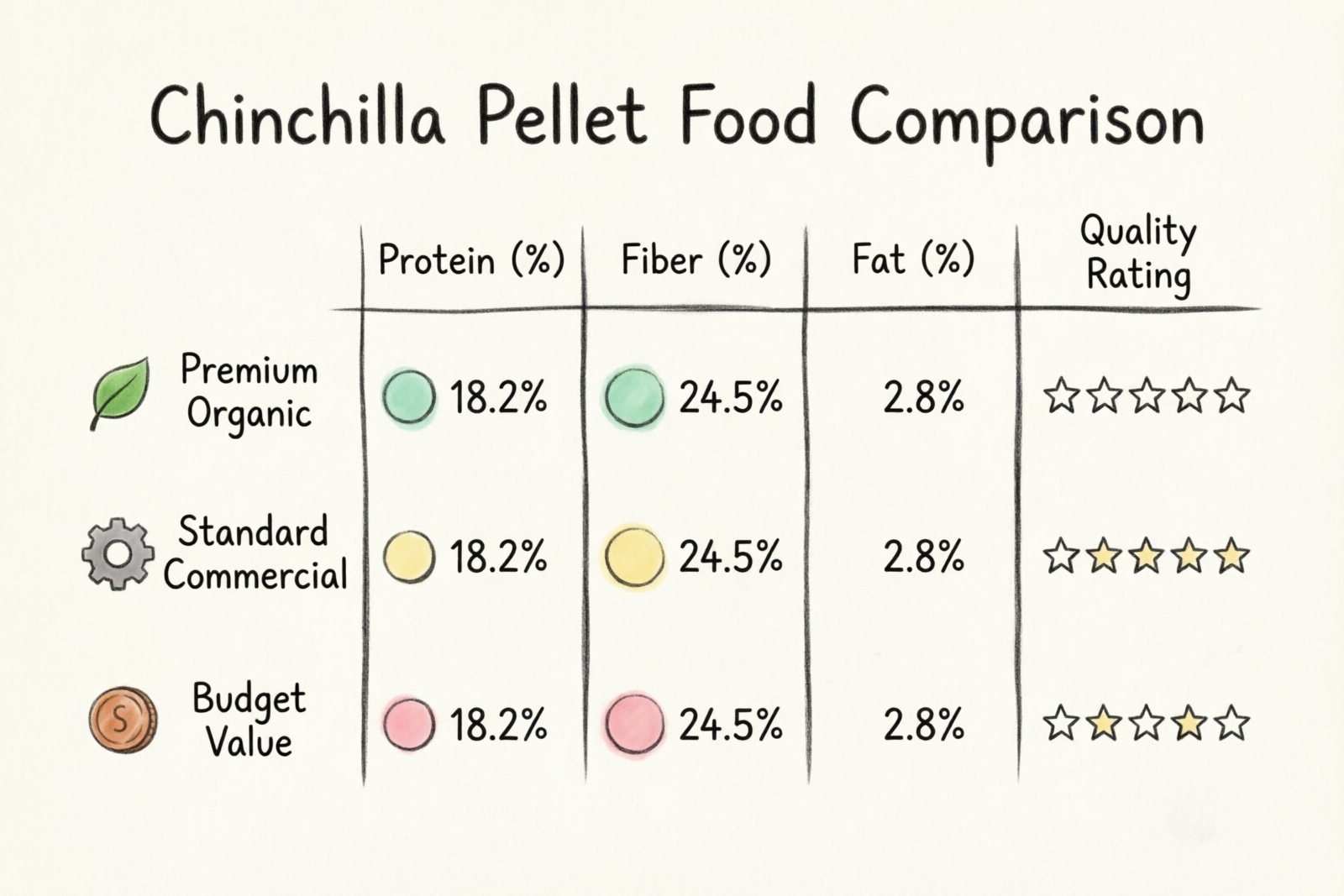
| Pellet | Price/lb | Base Hay | Rating | Best For |
|---|---|---|---|---|
| Oxbow Essentials | $4.00 | Alfalfa | 4.9⭐ | Overall best |
| Mazuri | $3.98 | Timothy | 4.8⭐ | Adult/senior chinchillas |
| Supreme Charlie | $9.50 | Mixed | 4.4⭐ | Picky eaters |
Adult vs Baby Chinchilla Pellets
The age of your chinchilla matters when choosing pellets. Baby chinchillas under 6 months benefit from alfalfa-based pellets like Oxbow Essentials — the higher calcium and protein support rapid growth. Adult chinchillas over 1 year should transition to timothy-based pellets like Mazuri to prevent calcium buildup, which can lead to bladder stones.
If you’re transitioning an adult chinchilla from alfalfa to timothy pellets, mix the two gradually over 2-3 weeks. Start with 75% old / 25% new, then 50/50, then 25/75, until fully switched.
Chinchilla Hay Guide: The 80% Foundation
Hay isn’t just food for chinchillas — it’s the most critical component of their entire diet. Chinchillas need constant access to hay for three reasons: dental health (their teeth never stop growing), digestive health (fiber keeps their gut moving), and psychological enrichment (chewing is a natural behavior that reduces stress).
Oxbow Western Timothy Hay — Best Hay
Oxbow Western Timothy Hay, 40 oz ($11.89, 4.6⭐)
Oxbow’s Western Timothy Hay is the hay I recommend most often for adult chinchillas. It’s premium quality, high in fiber, and supports both digestive and dental health. The 40 oz bag offers good value and should last a single chinchilla roughly 4-6 weeks.
When buying hay, look for batches that are green, smell fresh, and have minimal dust. Avoid hay that’s yellow, brown, or has a musty smell — these are signs it’s past its prime. Quality can vary between batches with any brand, so don’t be afraid to try a different supplier if you get a bad bag.
Timothy vs Alfalfa: Which Hay When?
- Timothy Hay — The standard for adult chinchillas. Low in calcium and protein, high in fiber. Should be available 24/7 for chinchillas over 6 months old.
- Alfalfa Hay — Higher in calcium and protein. Suitable only for young chinchillas under 6 months to support growth. Feeding alfalfa to adults long-term can cause bladder stones.
- Orchard Grass — A good alternative if your chinchilla doesn’t like timothy hay. Similar nutritional profile, softer texture, slightly sweeter smell.
How to Store Hay
Proper hay storage extends freshness and prevents mold. Keep hay in a dry, cool, well-ventilated area — a paper bag or cardboard box works better than plastic, which traps moisture. Check hay daily: it should smell like dried grass, not musty or sour. Discard any hay that shows signs of mold (white/grey patches, dampness, or unusual smell).
Safe & Unsafe Chinchilla Food List
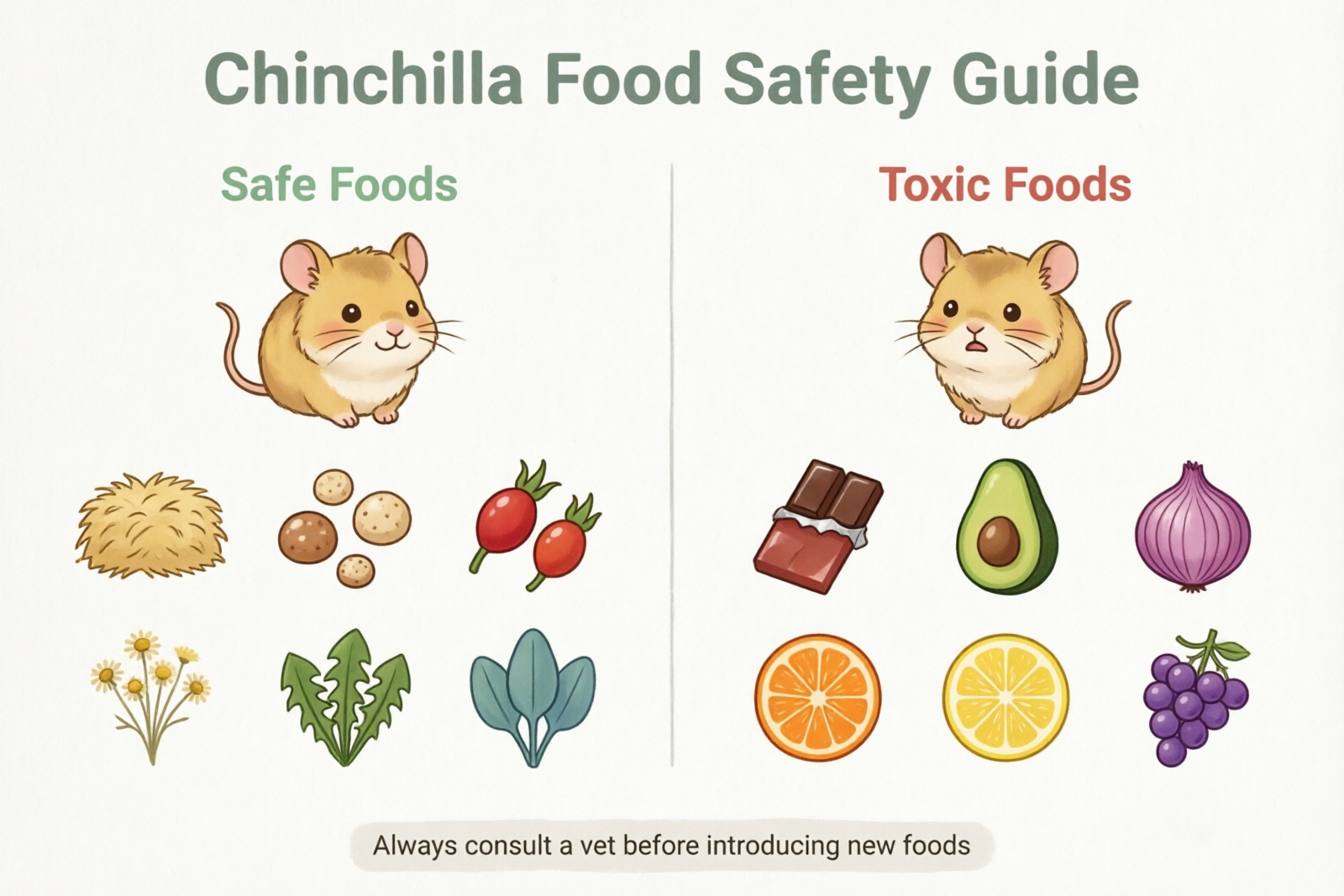
Knowing which foods are safe and which are dangerous is essential for any chinchilla owner. Their digestive systems are extremely sensitive — even a small amount of the wrong food can cause serious illness. When choosing a food bowl, ceramic is best since it’s chew-proof.
✅ Safe Foods (Feed Occasionally)
| Food | Frequency | Notes |
|---|---|---|
| Apple (seedless) | Once per week | Remove all seeds and core |
| Blueberries | 1-2x per week | 2-3 berries max |
| Carrot | Once per week | Small piece only (high sugar) |
| Rolled oats | Once per week | Plain oats, not instant |
| Rose petals | 1-2x per week | Pesticide-free only |
| Dried dandelion leaves | 2-3x per week | Natural and healthy |
| Dried rose hips | Once per week | High in vitamin C |
Key rule: All fresh foods should be introduced gradually in tiny amounts. Watch for changes in stool — soft or runny droppings mean you’re feeding too much or something that doesn’t agree with your chinchilla.
❌ Toxic Foods (Never Feed)
Some foods are dangerous or potentially fatal to chinchillas. Their digestive systems cannot process high fat, high sugar, or certain compounds found in common foods.
- Chocolate — Contains theobromine, which is toxic and can be fatal
- Onions and garlic — Can cause hemolytic anemia (destruction of red blood cells)
- Avocado — Too high in fat, chinchillas cannot digest it
- Nuts and seeds — Too high in fat and protein, can cause liver damage
- Dairy products — Chinchillas are lactose intolerant
- Meat and processed foods — Completely incompatible with their herbivore digestive system
- Any human junk food — Candy, chips, bread, crackers — all dangerous
Important: Chinchillas cannot vomit. Once they eat something toxic, it stays in their system. This makes prevention critical.
Chinchilla Treats
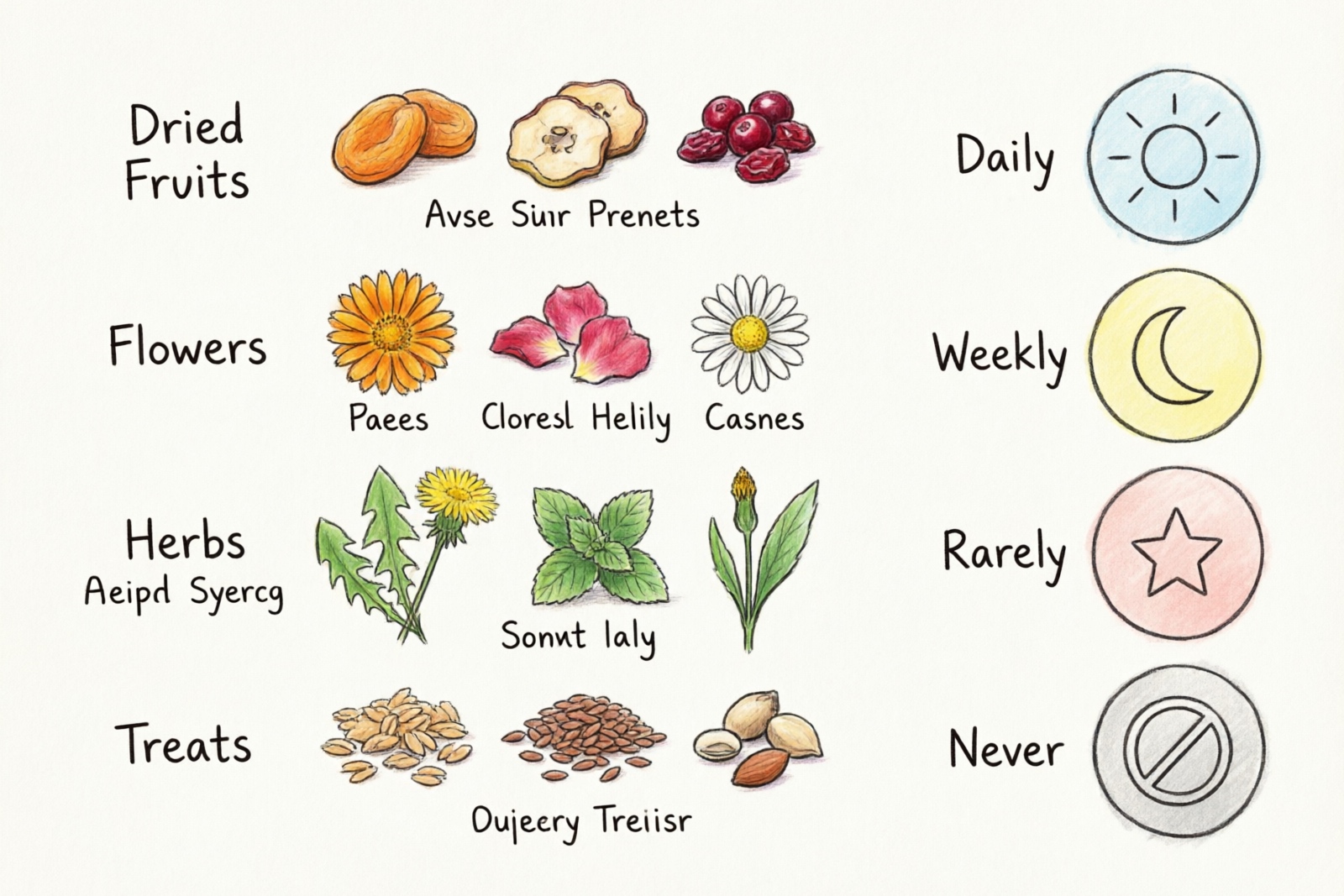
Treats serve an important purpose beyond just being tasty — they’re valuable tools for training, bonding, and enrichment. However, treats should never exceed 5% of your chinchilla’s total diet. That means 1-2 small pieces per day at most.
Vitakraft Cocktail Mixed Fruit — Popular Choice
Vitakraft Cocktail Mixed Fruit Chinchilla Treat, 4.5 oz ($5.98, 4.8⭐)
This dried fruit mix is one that chinchillas genuinely love, making it excellent for bonding and training. At under $6, it’s affordable and comes in a resealable bag. I’d be upfront about the sugar content, though — this treat contains higher sugar than is ideal for chinchillas. I’d limit it to 2-3 small pieces per week maximum and use it as a special reward, not a daily snack.
Oxbow Simple Rewards Freeze Dried Strawberry — Healthiest Option
Oxbow Simple Rewards Freeze Dried Strawberry Treat ($5.22, 4.7⭐)
If you want to give treats without the sugar guilt, this is the one I’d choose. Oxbow’s freeze-dried strawberry is a single-ingredient treat with no added sugar — just pure strawberry. The only downside is limited variety (strawberry only) and a small package size, but for health-conscious owners, this is the treat to reach for.
Exotic Nutrition Flower Treat 3 Pack — Natural Variety
Exotic Nutrition Flower Treat 3 Pack — Hibiscus, Calendula, Rose ($18.99, 4.6⭐)
This unique treat pack contains three types of 100% natural dried flowers: hibiscus, calendula, and rose. No processing, no additives, just dried flowers. Chinchillas enjoy the variety, and flowers provide a different texture and enrichment experience. At $18.99 for three small packs, it’s the most expensive option. Some chinchillas may ignore certain flower types, so I’d suggest trying one type before committing to the three-pack.
Treat Comparison Table
| Treat | Price | Rating | Best For |
|---|---|---|---|
| Vitakraft Fruit Mix | $5.98 | 4.8⭐ | Bonding and training rewards |
| Oxbow Freeze Dried | $5.22 | 4.7⭐ | Healthiest choice |
| Flower Treat 3 Pack | $18.99 | 4.6⭐ | Natural variety |
Feeding Schedule & Daily Portions
Consistency is key with chinchilla feeding. They thrive on a predictable routine with measured portions. Here’s a practical daily schedule that works for most adult chinchillas.
Daily Feeding Schedule
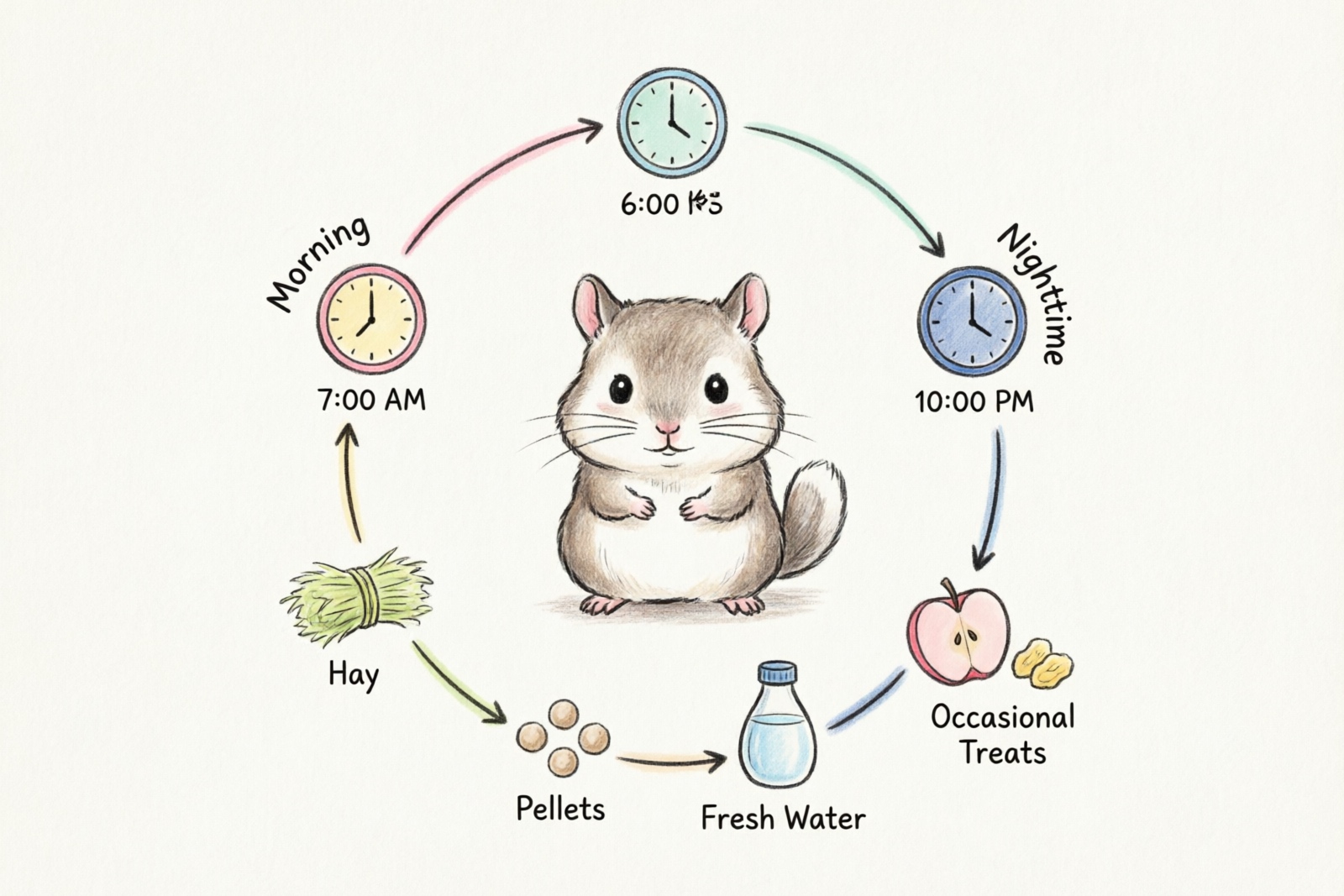
- Morning: Check hay supply — refill if low. Hay must always be available.
- Evening: Provide 1-2 tablespoons of pellets. This is when chinchillas are most active and likely to eat.
- Treats: Offer 1 small treat piece as a reward (training, bonding, or enrichment). Never more than once daily.
- Water: Check water bottle daily. Refill with fresh water. Rinse the bottle every 2-3 days.
Portion Guide by Age
| Age | Pellets | Hay | Treats |
|---|---|---|---|
| Baby (<6 months) | 2 tablespoons | Unlimited Timothy + Alfalfa | None |
| Adult (6 months–8 years) | 1-2 tablespoons | Unlimited Timothy | 1-2 pieces/week |
| Senior (8+ years) | 1 tablespoon | Unlimited Timothy | 1 piece/week |
Proper feeding directly impacts your chinchilla’s longevity. A well-fed chinchilla can live 15-20 years, while poor nutrition is one of the leading causes of premature death. Learn more about how diet affects longevity in our chinchilla lifespan guide.
A Note on Water Bottles
Chinchillas should never drink from water bowls. Their dense fur absorbs moisture quickly, creating a breeding ground for fungal infections. A chew-proof glass water bottle is essential — plastic bottles will be destroyed in days. Look for a flat-sided glass bottle with a 16 oz capacity that sits flush against the cage.
Supplements for Digestive Health
Most chinchillas on a proper diet of hay and pellets don’t need supplements. However, certain situations call for additional support — especially when dealing with digestive issues, stress, or aging.
When Does Your Chinchilla Need Supplements?
Consider supplements during these situations:
- Digestive problems — soft stool, constipation, or reduced appetite
- Stress periods — moving, new environment, travel, or introduction to a cage mate
- Senior chinchillas — older chinchillas may absorb nutrients less efficiently
- Diet transitions — switching pellet brands or introducing new foods
For digestive support, I’ve seen Oxbow Natural Science Digestive Support tablets work well. They contain timothy hay, prebiotics, and enzymes that support healthy gut function. The tablet form can be crumbled and sprinkled on pellets. While designed for rabbits and guinea pigs, it’s safe and effective for chinchillas.
For a general multivitamin, Exotic Nutrition makes a chinchilla-specific powder supplement that you sprinkle directly on food. It supports overall health, immune function, and coat condition. I’d consider this optional for chinchillas on a complete diet, but worth having on hand for picky eaters or those recovering from illness.
What Foods Are Toxic to Chinchillas?
We covered the safe and unsafe food list above, but it’s worth emphasizing just how sensitive chinchillas are to certain foods. Their digestive systems evolved to process tough, fibrous vegetation — not the rich, processed foods that humans eat.
Most Dangerous Foods
- Chocolate — Theobromine is a stimulant that chinchillas cannot metabolize. Even small amounts can cause seizures, heart failure, and death.
- Onion and garlic — These contain compounds that destroy red blood cells, leading to anemia, weakness, and potentially death.
- Avocado — Extremely high in fat. A chinchilla’s digestive system cannot process this much fat, leading to severe gastrointestinal distress.
- Dairy — Chinchillas lack the enzyme lactase. Dairy causes bloating, diarrhea, and painful gas.
Signs of Poisoning
If you suspect your chinchilla has eaten something toxic, watch for these symptoms:
- Diarrhea or bloating — the most common first sign
- Loss of appetite — refusing food or hay
- Lethargy — unusual inactivity or hiding
- Seizures or twitching — indicates serious neurological involvement
If you notice any of these signs, contact an exotic pet veterinarian immediately. Do not wait to see if symptoms improve — chinchillas can deteriorate rapidly.
FAQ: Common Chinchilla Food Questions
What is the best chinchilla food?
Oxbow Essentials Chinchilla Food is the best overall choice — 4.9⭐, no added sugar, and vet-recommended. For adults preferring a timothy-based option, Mazuri Chinchilla Food is the best alternative.
Can chinchillas eat apples?
Yes, but with strict precautions. Remove all seeds (they contain trace amounts of cyanide) and the core. Cut a small slice — no more than once per week. Apples are high in sugar, so this is an occasional treat only.
Can chinchillas eat carrots?
Yes, in very small amounts. Carrots contain more sugar than most vegetables, so limit to a small piece once per week. Never feed carrot tops in large quantities — they can cause gas.
How much should I feed my chinchilla?
An adult chinchilla needs 1-2 tablespoons of pellets per day, unlimited timothy hay, and no more than 1-2 small treats per week. Fresh water should always be available. Avoid free-feeding pellets — measured portions prevent obesity.
Can chinchillas eat rabbit food?
No. While rabbit pellets may look similar, their nutritional profile is different. Rabbit food often contains ingredients that are inappropriate for chinchillas, and the vitamin and mineral ratios are formulated for a different species. Always use chinchilla-specific pellets.
Why won’t my chinchilla eat pellets?
Several possible causes: you may be transitioning too quickly (mix old and new pellets over 2-3 weeks), the pellets may be stale (check the expiration date), or your chinchilla may have a dental problem making chewing painful. If the issue persists beyond a few days, consult an exotic pet veterinarian.
How do I transition to a new food?
Never switch chinchilla food abruptly — sudden changes cause digestive upset and potentially fatal gut stasis. Instead, follow this transition schedule over 2-3 weeks:
- Days 1-3: 75% old food, 25% new food
- Days 4-7: 50% old food, 50% new food
- Days 8-10: 25% old food, 75% new food
- Day 11+: 100% new food
Monitor your chinchilla’s stool throughout the transition. If droppings become small, dry, or infrequent, slow down the transition. If you notice soft stool or diarrhea, revert to the previous ratio and hold for a few days before continuing.
Common feeding mistakes I see
The mistakes I encounter most often when talking to chinchilla owners are simple to fix but can have serious consequences:
- Free-feeding pellets — Leaving pellets available 24/7 leads to selective eating (chinchillas pick out the tasty pieces and ignore hay). Measure portions and remove uneaten pellets after a few hours.
- Forgetting hay — Hay should make up 80% of the diet but is the first thing some owners overlook. If hay isn’t available 24/7, dental and digestive problems are almost inevitable.
- Over-treating — It’s tempting to give treats daily because chinchillas get excited about them. But more than 1-2 pieces per week pushes sugar intake to dangerous levels.
- Switching foods suddenly — Even if the new food is better quality, a sudden switch can cause gut stasis. Always transition gradually.
This guide represents current best practices in chinchilla nutrition based on veterinary guidance, exotic animal research, and verified owner experiences. Individual chinchillas may have different needs — always consult with an exotic pet veterinarian for specific dietary concerns.