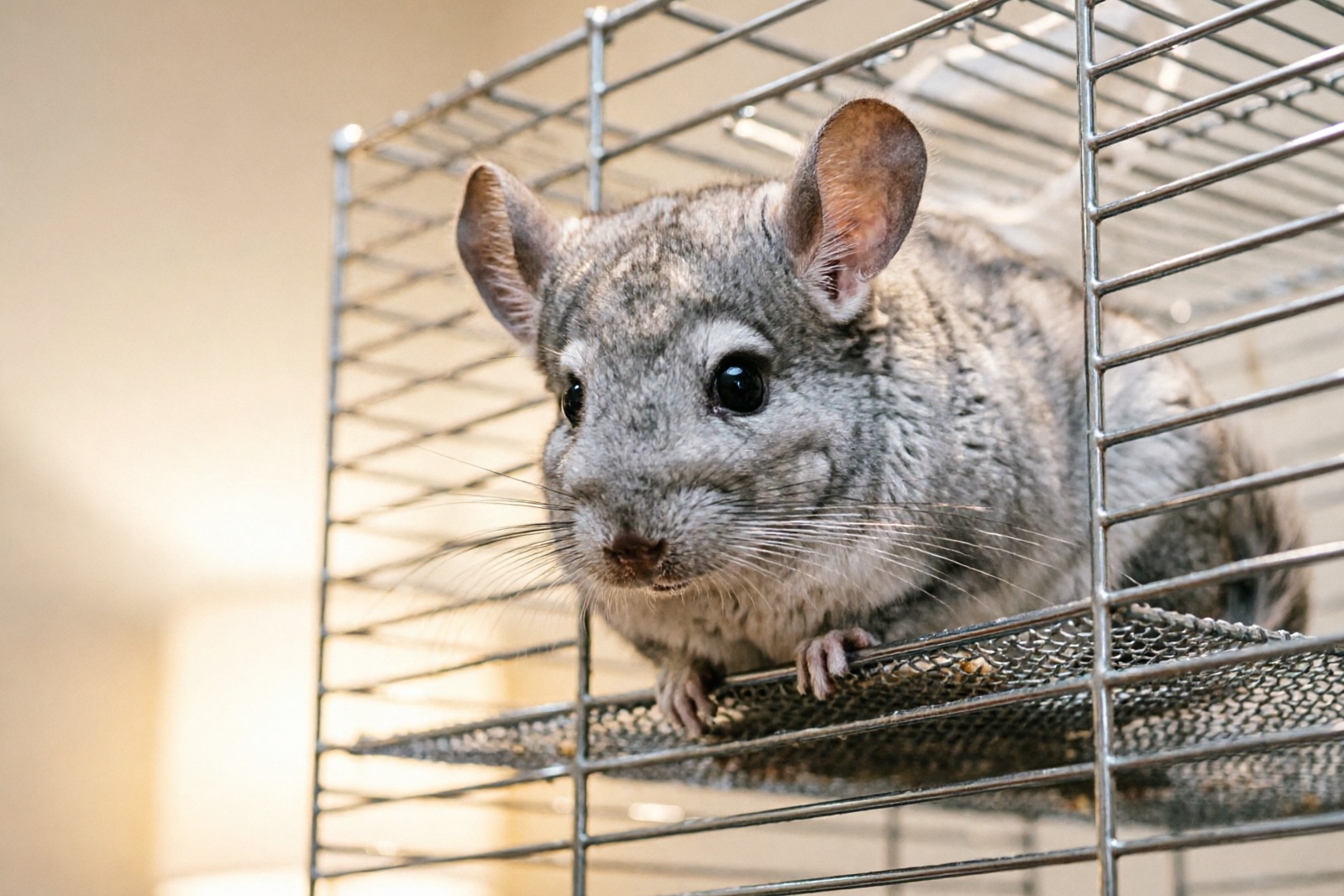
The cage you choose for your chinchilla is arguably the most important purchase you’ll make. Chinchillas spend most of their lives inside their enclosure, and the wrong cage leads to stress, health problems, and behavioral issues. The right cage provides vertical climbing space, proper ventilation, and room for essential accessories.
This guide covers everything you need to know about choosing and setting up a chinchilla cage: size requirements, the best options at every price point, essential accessories, and a complete setup walkthrough. For foundational care tips beyond housing, see our chinchilla care guide.
Why Chinchillas Need Large, Multi-Level Cages
Chinchillas are semi-arboreal rodents native to the Andes Mountains. In the wild, they live in rock crevices and leap between cliffs — vertical activity is their natural behavior. A cage that doesn’t accommodate this instinct is a cage that compromises their welfare.
Chinchilla Behavior in the Wild
Wild chinchillas are active at dawn and dusk, navigating rocky terrain with leaps that can cover several feet vertically. They’re agile climbers that use vertical space for safety, exploration, and exercise. This natural behavior doesn’t disappear in captivity — a chinchilla in a small, flat cage will become frustrated and stressed.
Proper vertical space allows chinchillas to jump, climb, and explore, which is essential for both physical health (preventing obesity) and mental well-being (preventing boredom and destructive behaviors).
Signs of a Cage That’s Too Small
If your chinchilla’s cage is inadequate, you’ll notice these behaviors:
- Repeatedly jumping against the cage ceiling — Not enough headroom
- Bar chewing and fur pulling — Stereotypic stress behaviors caused by confinement
- Weight gain and lethargy — Insufficient space for exercise
- Aggression toward cage mates — Territorial behavior from overcrowding
If you see any of these signs, upgrading to a larger multi-level cage should be your first priority.
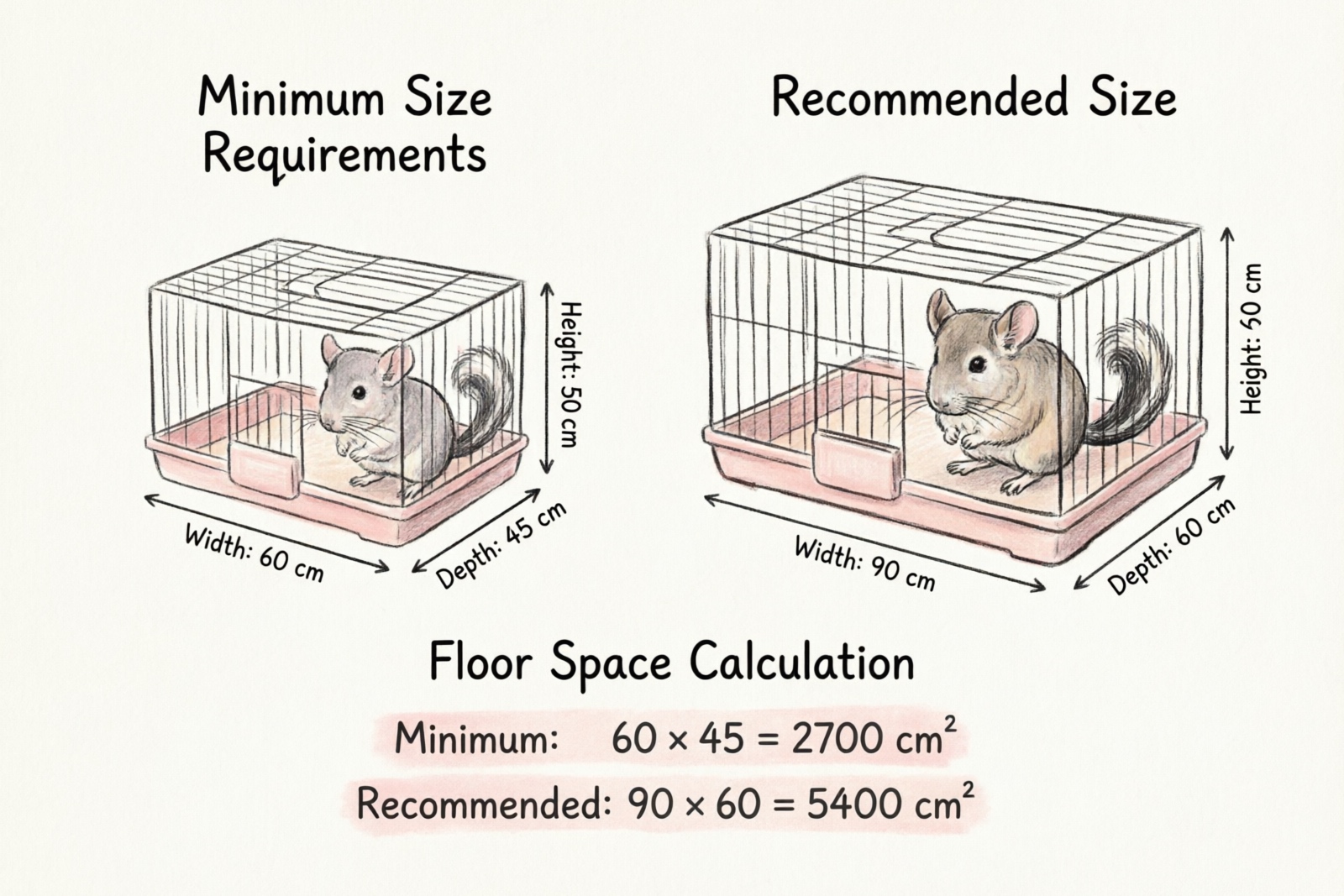
Chinchilla Cage Size Requirements
Size matters more than most new owners realize. A cage that’s too small causes chronic stress and health problems, while a properly sized cage promotes natural behaviors and longevity.
Minimum vs Recommended Size
| Standard | 1 Chinchilla | 2 Chinchillas |
|---|---|---|
| Absolute minimum | 24” × 24” × 36” | 36” × 24” × 36” |
| Recommended | 36” × 24” × 48” | 48” × 24” × 48” |
| Ideal | Critter Nation Double Unit | Double Unit × 2 |
The minimum sizes listed above are survivable — not optimal. Chinchillas thrive in larger spaces. A Critter Nation Double Unit (approximately 36” × 25” × 63”) is widely considered the gold standard for single or paired chinchillas.
Bar Spacing — Critical Safety Requirement
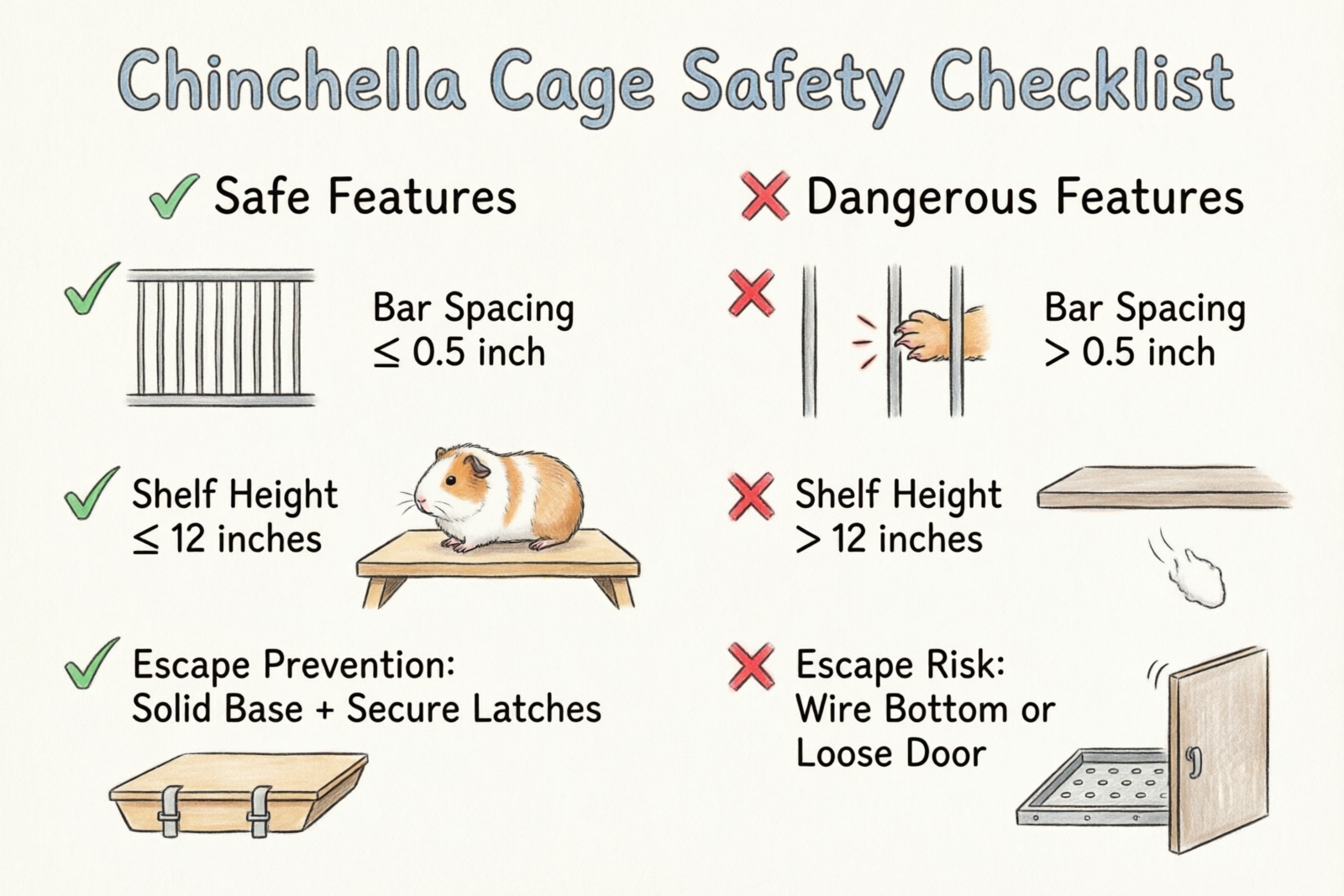
Bar spacing is a non-negotiable safety factor. Bars that are too wide allow escapes or, worse, your chinchilla getting stuck and injured.
- 0.5-inch spacing — Safest option. Found on the MidWest Critter Nation. Prevents even the smallest juvenile chinchillas from squeezing through.
- 1-inch spacing — Acceptable for adult chinchillas only. Found on the Ferret Nation and Prevue cages. Juvenile chinchillas under 6 months may squeeze through or get stuck.
- Over 1 inch — Never acceptable. Serious escape and injury risk.
When choosing a cage, always verify bar spacing. This single factor determines whether the cage is safe for your chinchilla.
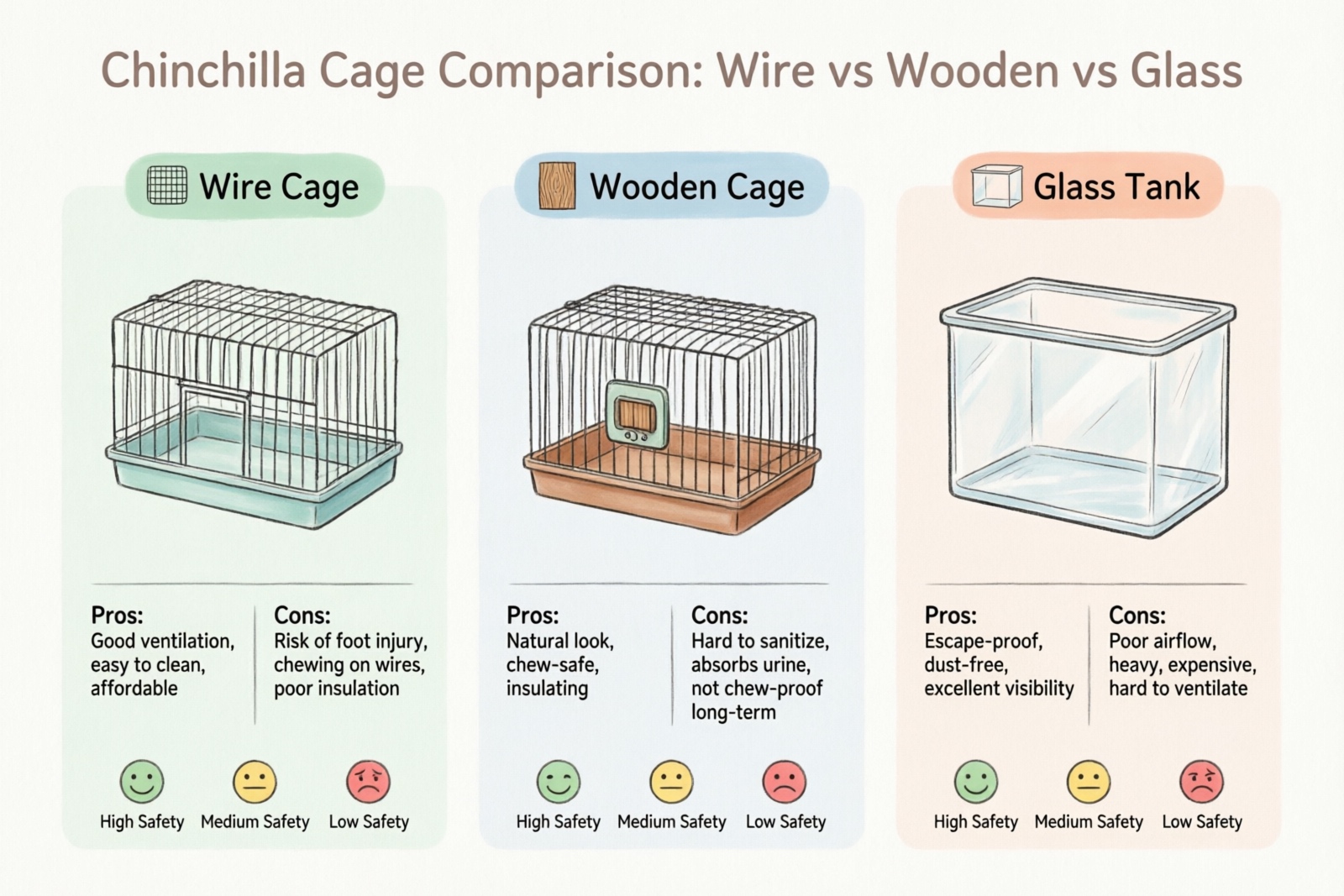
Glass Tank vs Wire Cage — Which Is Better?
Some pet stores sell glass tanks as small animal enclosures, and new owners sometimes assume they’re suitable for chinchillas. They’re not. Here’s why a wire cage is always the better choice.
Why Glass Tanks Are Bad for Chinchillas
- Poor ventilation — Glass tanks trap moisture, heat, and ammonia from waste. This creates a humid environment that promotes fungal infections — the same reason chinchillas can’t be bathed in water.
- Insufficient vertical space — Chinchillas need to climb and jump. Even the tallest glass tank doesn’t provide the vertical territory a wire cage offers.
- Temperature problems — Glass heats up quickly in sunlight and retains heat. Chinchillas are extremely heat-sensitive and can suffer fatal heatstroke at temperatures above 80°F (27°C).
- Stress from reflections — Glass reflections can cause confusion and stress in chinchillas.
When a Tank Might Be Acceptable
The only appropriate use for a glass tank is temporary isolation — for a sick chinchilla recovering from surgery, or during transport to the vet. This should never exceed 1-2 days, and the tank must have a secure lid and adequate ventilation.
For regular grooming, a wire cage allows you to place a chinchilla dust bath inside — something that’s impractical in a glass tank due to dust containment issues.
Glass Tank vs Wire Cage Comparison
| Feature | Wire Cage | Glass Tank |
|---|---|---|
| Ventilation | ✅ Excellent | ❌ Poor |
| Vertical space | ✅ Multi-level | ❌ Limited |
| Temperature control | ✅ Good airflow | ❌ Retains heat |
| Climbing support | ✅ Bars for climbing | ❌ Smooth walls |
| Cleaning | ⚠️ Moderate | ✅ Easy wipe-down |
| Price | ⚠️ $150–330 | ✅ $50–100 |
Verdict: Wire cage wins on every health and welfare metric. The slightly higher cost is worth it.
Premium Cages — Worth the Investment
If budget allows, these premium cages deliver the space, safety, and durability that chinchillas need to thrive. In my experience, the cage is not the place to cut corners — a quality enclosure lasts 15+ years and directly impacts your chinchilla’s daily quality of life.
MidWest Critter Nation Double Unit — The Cage to Beat
MidWest Critter Nation Double Unit Small Animal Cage, 4 Tiers ($327.99, 4.6⭐)
I’ve recommended the Critter Nation to more chinchilla owners than any other cage, and I’d do it again without hesitation. It’s the standard for a reason. The 4-tier design gives chinchillas massive vertical space to jump and climb. The 0.5-inch bar spacing is the safest you’ll find — even young kits can’t squeeze through — and the full-width double doors on both levels make cleaning and reaching your chinchilla genuinely easy.
The Critter Nation is also expandable: you can stack additional units on top if you’re housing multiple chinchillas or want to give a single animal even more room. Assembly doesn’t require tools, and the rolling stand with locking casters lets you move the cage for cleaning without disassembling anything.
At $327.99, it’s a significant upfront cost. But spread over the 15-20 year lifespan of a chinchilla, it works out to less than $20 per year — and it holds its value well if you ever need to rehome it. If you can afford it, I’d skip the compromises and go straight for this one.
Critter Nation Single Unit — Same Quality, Smaller Footprint
MidWest Critter Nation Single Unit Small Animal Cage, 2 Tiers ($194.99, 4.6⭐)
The single unit is the same cage, just with two tiers instead of four. It’s adequate for a single chinchilla, and I’ve seen plenty of happy chinchillas living in one. The advantage here is that it’s expandable — you can add a second unit on top later if you get a second chinchilla or decide your pet needs more room.
The trade-off is that buying a single unit now and adding another later costs more than buying the double unit upfront ($195 + $195 = $390 vs. $328). If you’re fairly certain you’ll stick with one chinchilla, the single unit is a perfectly good choice. If there’s any chance you’ll add a second, buy the double from the start.
Ferret Nation Double Unit — Good, But Know the Difference
MidWest Ferret Nation Double Unit Small Animal Cage, 4 Tiers ($309.99, 4.6⭐)
The Ferret Nation is the Critter Nation’s sibling — same manufacturer, similar design, comparable build quality. It costs slightly less and provides the same four tiers of vertical space. But there’s one difference that matters: 1-inch bar spacing instead of 0.5-inch.
For adult chinchillas, this isn’t a problem. But if you’re bringing home a young chinchilla under six months old, I’d choose the Critter Nation instead. Juveniles can squeeze through 1-inch gaps, and the risk of getting stuck is real. If you’re choosing between the two at a similar price, the Critter Nation is the safer pick for chinchilla owners specifically.
| Feature | Critter Nation | Ferret Nation |
|---|---|---|
| Bar spacing | 0.5 inch ✅ | 1 inch ⚠️ |
| Safe for juveniles | ✅ Yes | ❌ No |
| Price (double unit) | $327.99 | $309.99 |
| My recommendation | First choice for chinchillas | Fine for adults only |
Budget & Mid-Range Options
Not everyone can spend $300+ on a cage, and that’s completely fine. These options provide reasonable quality at lower price points — you’ll just need to accept some trade-offs.
A Solid Budget Pick Under $150
HABUTWAY 50”H Metal Small Animal Cage, Rolling Chinchilla Cage ($143.26, 4.0⭐)
At under $150, this is the most affordable cage I’d consider functional for a chinchilla. The 50-inch height provides decent vertical space, and the rolling wheels make it easy to move for cleaning. Multiple levels with removable ramps let you customize the layout.
That said, I’d be honest about the compromises. Build quality is noticeably below the Critter Nation — the bottom tray is fragile, some owners report wobbly legs, and a few welding points may have sharp edges that need filing down. The 1-inch bar spacing means this cage is only safe for adult chinchillas. I’d recommend this if your budget is tight and you’re housing a single adult chinchilla, but plan to upgrade when you can.
A Reliable Mid-Range Choice
Prevue Pet Products 485 Feisty Ferret Home with Stand ($183.47, 4.5⭐)
The Prevue 485 has been around for over a decade, and there’s a reason it’s still selling. The 3-level design with stand provides good height, and the black hammertone finish holds up well over time. Multiple access doors including a top-opening door make interaction and cleaning straightforward.
The drawbacks are worth knowing about: 1-inch bar spacing (adults only), plastic shelves that chinchillas will likely chew, and cleaning isn’t as convenient as the Critter Nation’s full-width double doors. I’ve seen owners replace the plastic shelves with wood or metal ones to solve the chewing issue, which extends the cage’s useful life significantly. It’s a good middle ground if you want something sturdier than the budget options without paying Critter Nation prices.
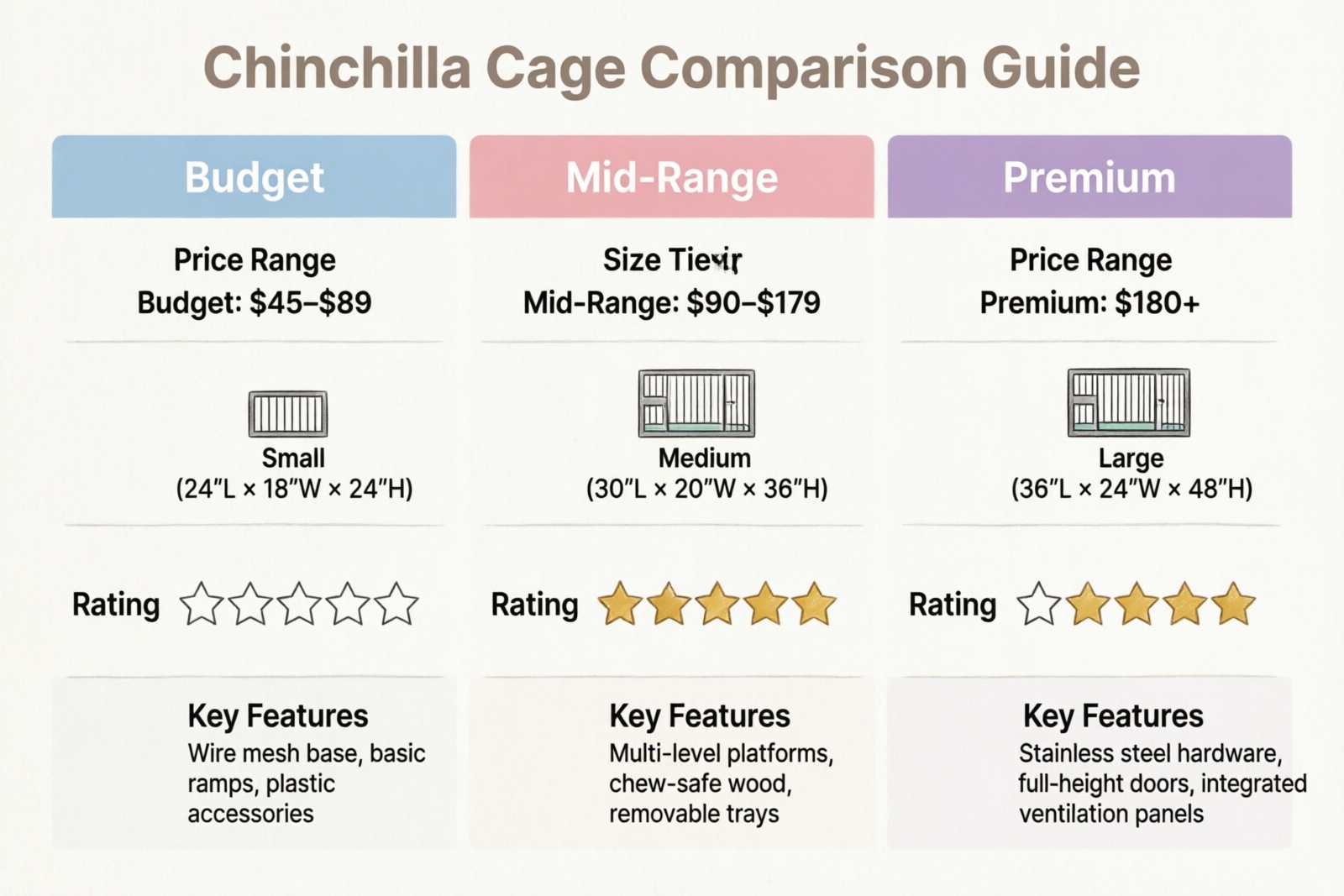
Price Tier Summary
| Budget Tier | Cage | Price | Best For |
|---|---|---|---|
| Premium | Critter Nation Double | $328 | Long-term, multi-chin homes |
| Entry premium | Critter Nation Single | $195 | Single chinchilla, expandable |
| Mid-range | Prevue Feisty Ferret | $183 | Good build quality, less cost |
| Budget | HABUTWAY 50” | $143 | Tight budget, single adult |
Essential Cage Accessories
A cage without accessories is just an empty box. Your chinchilla needs four things beyond the cage itself: a hiding spot, comfortable flooring, an exercise wheel, and something to sleep in. You don’t need to buy anything fancy — functional is better than expensive here.
A Safe Place to Hide
Chinchillas are prey animals — they need a dark, enclosed space where they can sleep undisturbed during the day. A wooden hideout house works well: it’s safe for chewing (and your chinchilla will chew it, which is normal and healthy for their teeth). Look for one with a window opening for ventilation. Niteangel makes a popular wood house with a window that chinchillas seem to enjoy, and at around $25-27, it’s affordable enough to replace every 6-12 months as it gets chewed down.
Comfortable Flooring
Instead of disposable bedding, I’d recommend fleece liners. They’re softer on your chinchilla’s feet, washable, and cheaper over time than buying paper or wood bedding every week. Paw Inspired makes a fitted fleece liner designed specifically for Critter Nation and Ferret Nation pans — buy two or three so you can swap them on laundry day. If you use a different cage, look for any anti-pill fleece cut to fit your tray dimensions.
An Exercise Wheel
Chinchillas need significant daily exercise, and a wheel is one of the best ways to provide it inside the cage. The minimum recommended diameter for chinchillas is 14 inches. A 13.8-inch metal wheel with a silent bearing design is the closest commonly available size. Metal construction is important because chinchillas will destroy plastic wheels quickly. Expect to spend around $80-100 on a quality wheel — it’s not cheap, but I’d consider it essential for chinchillas that don’t get several hours of supervised free-roam time daily.
A Sleeping Hammock
Chinchillas love sleeping in elevated, enclosed spaces, and a fleece hammock clipped to an upper cage bar is one of the easiest ways to provide that. They’re inexpensive (under $15), machine washable, and chinchillas consistently use them. Place it on an upper level — that’s where they prefer to sleep. Your chinchilla will chew on it eventually, so keep a spare on hand.
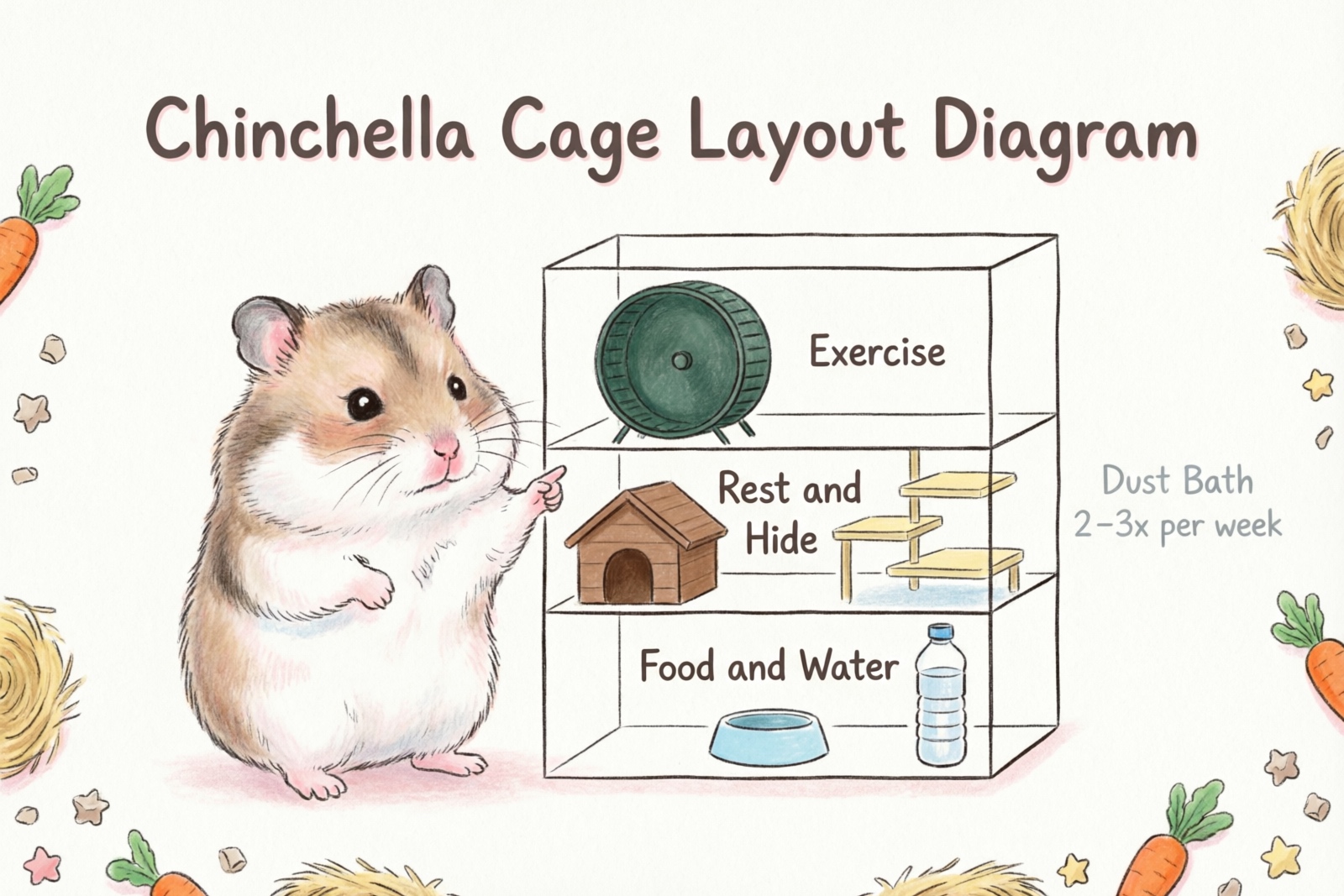
Don’t forget to place a chinchilla dust bath inside the cage several times per week for grooming.
How to Set Up Your Chinchilla Cage
Proper cage setup maximizes comfort, safety, and usability. Here’s how to arrange each level of a multi-level cage for optimal chinchilla living.
Ideal Layout for a Multi-Level Cage
- Top level — Quiet resting zone. Place the hideout and hammock here. Chinchillas prefer sleeping in elevated, enclosed spaces.
- Middle level — Activity and feeding zone. Position the exercise wheel, food bowl, and water bottle here. This keeps eating and exercising separate from sleeping.
- Middle/lower level — Grooming zone. Place the dust bath house here during scheduled bath times, then remove it afterward to prevent over-bathing.
- Bottom level — Open play space with fleece liner. Leave this area relatively clear for general movement and floor time activities.
Safety Checklist Before Moving In
Before your chinchilla enters the cage for the first time, verify every item:
- Bar spacing is ≤1 inch (0.5 inch preferred for juveniles)
- No sharp edges, loose screws, or protruding wire ends
- All shelves and platforms securely fastened (chinchillas are heavy — shelves must bear weight)
- Bottom pans properly installed (prevent waste from falling outside)
- Thermometer placed inside (verify temperature stays below 75°F / 24°C)
- Cage positioned away from direct sunlight, air vents, and drafts
- All accessories securely attached (no wobbly hideouts or falling hammocks)
For feeding setup, check our chinchilla diet guide for food bowl placement tips and dietary requirements.
Cage Placement & Temperature Requirements
Where you put the cage matters as much as which cage you choose. Chinchillas are native to cool, dry mountain environments — they cannot tolerate heat or humidity.
Temperature — The #1 Priority
Chinchillas cannot sweat. They have no effective mechanism for cooling down, making them extremely vulnerable to overheating.
- Safe range: 60–75°F (15–24°C)
- Danger zone: Above 80°F (27°C) — heatstroke risk
- Fatal: Above 85°F (29°C) without intervention — can be rapidly fatal
Place a digital thermometer inside the cage and check it daily. During summer months, air conditioning is non-negotiable in most climates. Signs of heatstroke include lethargy, red ears, panting, and lying flat on their side. If you see these signs, cool your chinchilla immediately with a fan or cool (not cold) tiles and contact a vet.
Best Room Locations
Good locations:
- Temperature-controlled rooms with consistent climate
- Quiet areas away from high foot traffic (chinchillas sleep during the day)
- Rooms with natural light but no direct sunlight on the cage
Bad locations:
- Kitchens and bathrooms (humidity from cooking and showering)
- Garages (extreme temperature fluctuations)
- Near windows with direct sunlight (greenhouse effect heats the cage)
- Near air conditioning vents or heaters (temperature swings)
Proper cage placement and temperature control directly impact your chinchilla’s lifespan. A chinchilla in a well-maintained, appropriately sized cage can live 15-20 years.
FAQ: Common Chinchilla Cage Questions
What is the best cage for a chinchilla?
The MidWest Critter Nation Double Unit is the best overall chinchilla cage. Its 0.5-inch bar spacing is safest for all ages, 4 tiers provide excellent vertical space, and it’s expandable for multi-chinchilla homes.
How big should a chinchilla cage be?
Minimum size for one chinchilla is 24” × 24” × 36”. Recommended size is 36” × 24” × 48”. For more chinchilla cage ideas, a Critter Nation Double Unit (approximately 36” × 25” × 63”) is ideal for most situations.
Can chinchillas live in glass tanks?
No. Glass tanks have poor ventilation, insufficient vertical space, and temperature control problems. They’re only acceptable for temporary isolation (1-2 days maximum) during illness or transport.
Do chinchillas need a multi-level cage?
Yes. Chinchillas are natural climbers and jumpers. Multi-level cages provide the vertical space they need for exercise and mental stimulation. A single-level enclosure cannot meet their behavioral needs.
How much does a good chinchilla cage cost?
Expect to spend $143–$330 on the cage itself. A Critter Nation Single Unit at $195 is the best value entry point. With essential accessories (hideout, liner, wheel, hammock), budget an additional $160 for a total of approximately $355 for a complete setup.
Can two chinchillas share one cage?
Yes, but they need at least a Double Unit size cage. Same-sex pairs (especially female-female) have higher success rates. Introductions should be gradual — start with side-by-side cages, then supervised meetings, before moving them in together.
This guide represents current best practices in chinchilla housing based on veterinary guidance, exotic animal research, and verified owner experiences. Always consult with an exotic pet veterinarian for specific care concerns.