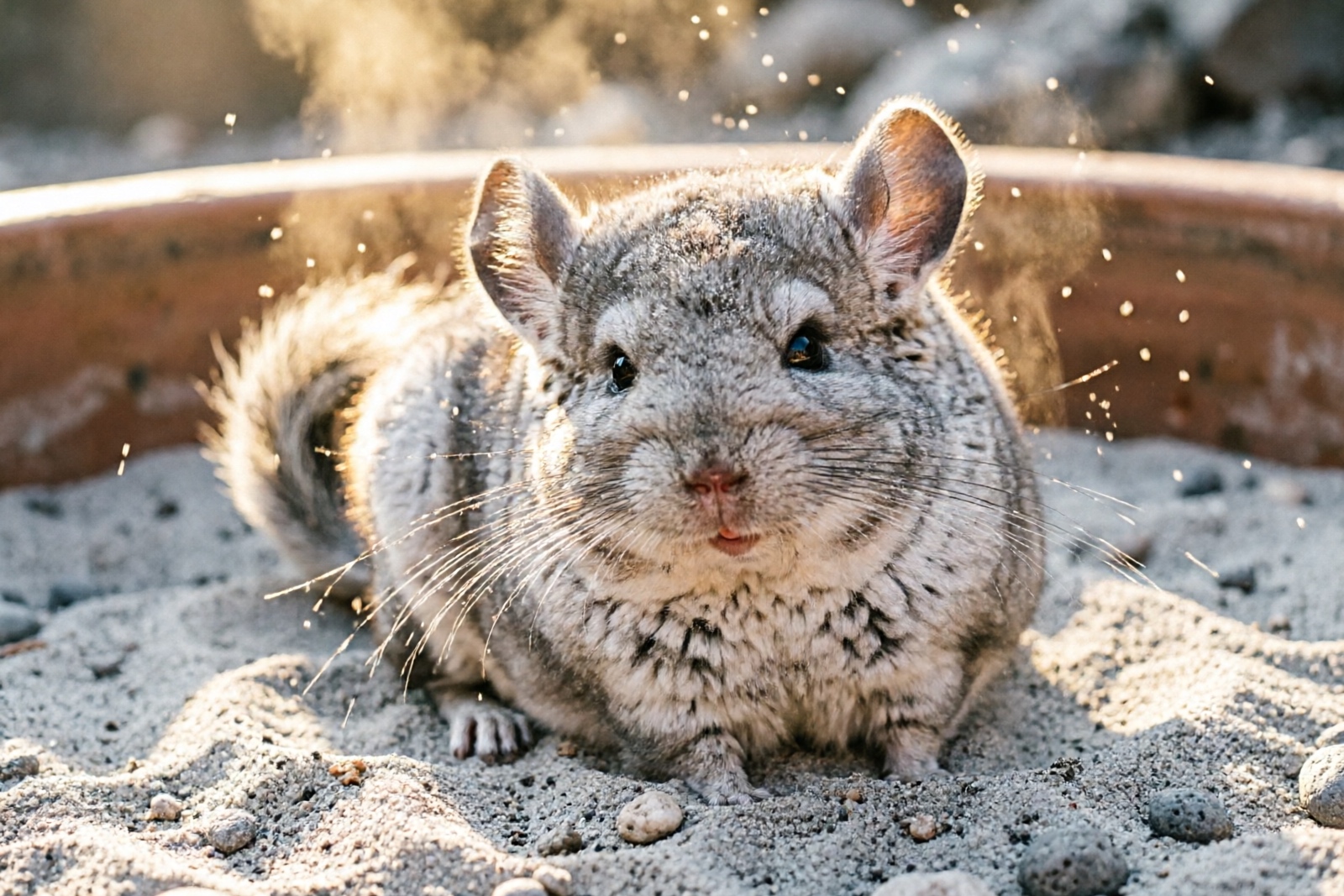
Dust bathing is one of the most fascinating behaviors of chinchillas — watching your pet happily roll and flip in fine volcanic dust is pure joy. But dust baths aren’t just entertainment. They’re essential for your chinchilla’s health, keeping their incredibly dense fur clean, oil-free, and soft.
Unlike most pets, chinchillas cannot be bathed with water. Their fur is so dense that water becomes trapped, leading to fungal infections that can be fatal. This guide covers everything you need to know about chinchilla dust baths: why they need them, how often, the best products, and a step-by-step bathing routine that works.
For more foundational information on keeping your chinchilla healthy and happy, see our complete chinchilla care guide.
Why Chinchillas Need Dust Baths (Not Water)
Chinchillas evolved in the harsh, arid environment of the Andes Mountains in South America. In the wild, they clean themselves by rolling in volcanic dust — a behavior that’s been essential to their survival for millions of years. This natural cleaning method works because of their unique fur structure.
How Dust Bathing Works
A chinchilla’s fur is one of the densest in the animal kingdom — approximately 60-80 hairs per follicle, compared to just 1-2 for humans. This incredible density means:
- Oil and moisture get trapped deep in the fur
- Self-cleaning by licking is impossible (the tongue cannot reach the fur base)
- Water penetrates but cannot easily escape
Volcanic dust, specifically Blue Cloud dust from certain mineral deposits, contains extremely fine particles that penetrate to the fur’s base. These particles absorb excess oils, moisture, and debris, then fall away when the chinchilla shakes — leaving the coat clean and fluffy without any moisture.
Dust bathing is instinctive. Chinchillas don’t need to be taught how to do it. When you provide fresh dust, they’ll immediately dive in, flip, and roll with obvious enthusiasm.
Why Water Is Dangerous for Chinchillas
The single most important rule of chinchilla care: never give your chinchilla a water bath. Here’s why this is so critical:
- Extreme fur density — When wet, the fur becomes extremely heavy and waterlogged
- Very slow drying — Complete drying can take hours even with a blow dryer
- Fungal paradise — Warm, damp, dense fur is the perfect breeding ground for fungus
- Hypothermia risk — Wet fur loses insulating ability; chinchillas can become dangerously cold
- Skin infections — Ringworm and other fungal infections spread rapidly through damp fur
Fungal infections in chinchillas are difficult to treat and can be fatal if not caught early. The risk simply isn’t worth it.
The only exception: A veterinarian may recommend a medicated bath for severe skin conditions. This should only be done under veterinary supervision with specific instructions on drying and monitoring.
How Often Should You Give a Dust Bath?
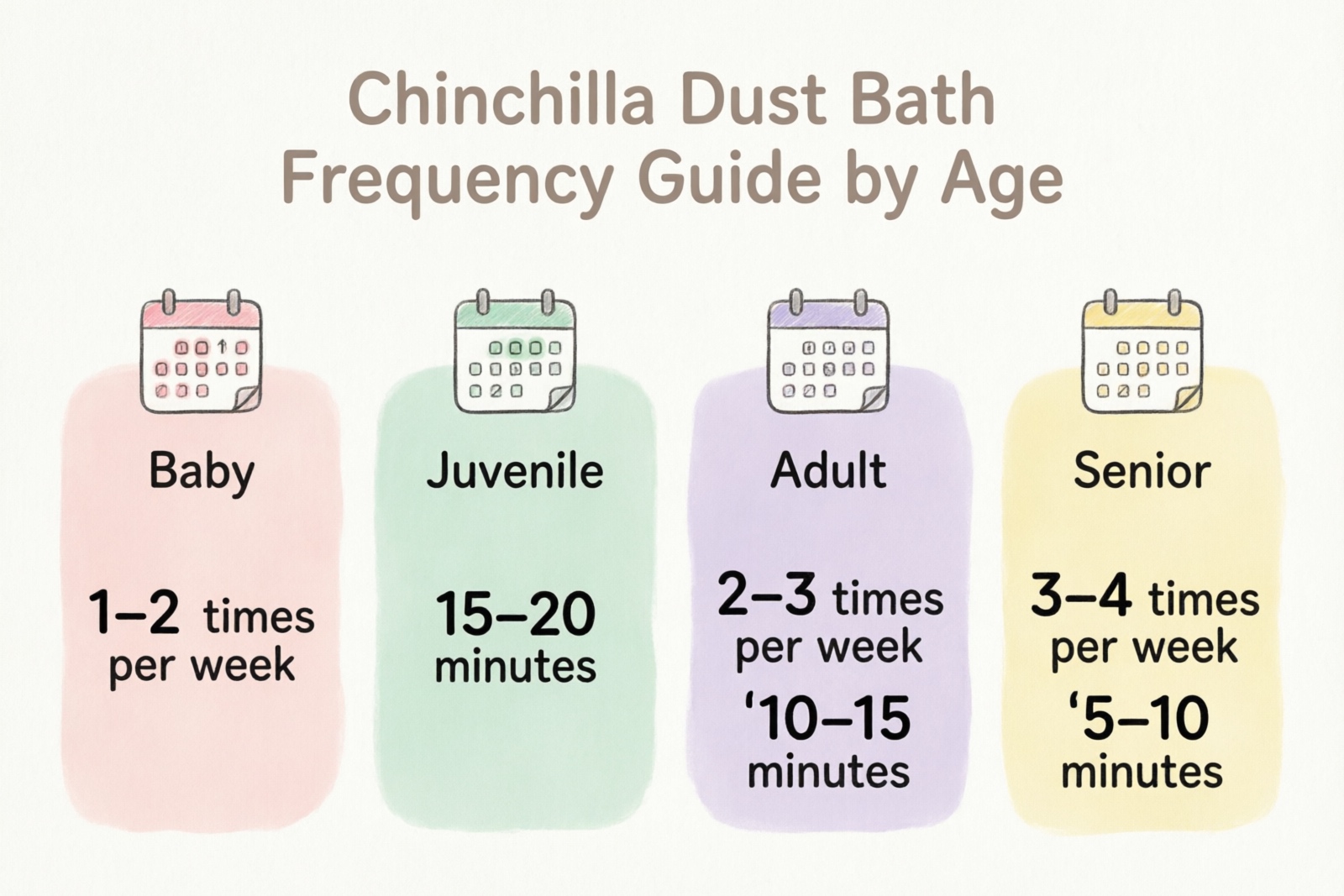
The ideal frequency for healthy adult chinchillas is 2-3 times per week, with each session lasting 15-20 minutes. This is enough to keep their coat clean without over-drying their skin.
Frequency Guide by Situation
| Situation | Frequency | Duration |
|---|---|---|
| Healthy adult chinchilla | 2-3 times per week | 15-20 minutes |
| Young chinchilla (<6 months) | 1-2 times per week | 10-15 minutes |
| High humidity environment | 3-4 times per week | 15-20 minutes |
| Dry skin or skin irritation | Once per week or pause | 10 minutes |
| Pregnant or nursing | 1-2 times per week | 10-15 minutes |
If you live in a humid climate or your chinchilla’s fur looks oily between baths, you can increase frequency. Conversely, if you notice dry, flaky skin or your chinchilla seems irritated after bathing, reduce frequency or pause bathing temporarily.
Signs of Over-Bathing
Too much dust bathing can be as problematic as too little. Watch for these warning signs:
- Dry, flaky skin — Visible white flakes on the skin surface
- Red, irritated eyes — Dust particles can cause eye irritation with excessive exposure
- Rough or brittle fur texture — The coat loses its soft, silky quality
- Excessive scratching — Your chinchilla scratches more than usual
If you notice these signs, reduce bathing frequency to once per week and check your dust quality. Cheaper dust products contain larger particles that can irritate skin — I’d switch to a quality Blue Cloud dust if you’re using a budget brand. For multi-chinchilla households, bulk sizes of quality dust offer better value per ounce.
Best Chinchilla Dust Bath Powder
The quality of dust directly affects bathing effectiveness and your chinchilla’s health. Not all “chinchilla dust” is created equal — some products are too coarse, contain additives, or simply don’t absorb oil effectively. After years of recommending dust products, these are the ones I trust.
Oxbow POOF! Chinchilla Dust Bath — Best Overall
Oxbow POOF! Chinchilla Dust Bath, 100% Natural Blue Beauty Dust ($11.99, 4.8⭐)
Oxbow is a brand I trust across their entire small pet product line, and their dust bath product lives up to that reputation. This is 100% natural Blue Beauty dust with no additives, fragrances, or chemicals — exactly what chinchillas need.
The dust is fine enough to penetrate deep into the fur coat without being irritatingly powdery. It effectively absorbs excess oils and moisture, leaving fur clean and soft. The main trade-off is price — at roughly $0.86 per ounce, it’s more expensive per ounce than some alternatives. The container can also be difficult to reseal properly, which I’d fix by transferring it to an airtight container.
Kaytee Chinchilla All Natural Dusting Powder — Best Value
Kaytee Chinchilla All Natural Dusting Powder, 2.5 lb ($13.98, 4.6⭐)
Kaytee’s dusting powder offers excellent value at approximately $0.35 per ounce in the 2.5 lb (40 oz) size. For regular use with a single chinchilla, this is the most practical option — the bag lasts months, and the quality is consistently good.
The all-natural formula promotes clean, healthy fur without additives. Kaytee is a well-established brand in small pet supplies, so availability is reliable. Some owners note that particle size can vary between batches, with occasional coarser particles. If you get a batch that seems too coarse, I’d contact the manufacturer — I’ve seen them send replacements.
Lixit Blue Beauty Chinchilla Dust Powder — Blue Cloud Standard
Lixit Blue Beauty Chinchilla Dust Powder, 3 lb ($18.99, 4.8⭐)
Lixit’s Blue Beauty dust is sourced from natural Blue Cloud deposits in the Mojave Desert — considered the gold standard for chinchilla dust. This is the same volcanic dust that chinchillas would use in their natural habitat.
The 3 lb (48 oz) size is generous, offering approximately $0.40 per ounce. Made in the USA, it contains no additives and consistently receives praise for quality. I’d recommend this if you want genuine Blue Cloud dust from a known source and don’t mind paying slightly more per ounce than Kaytee.
Dust Powder Comparison Table
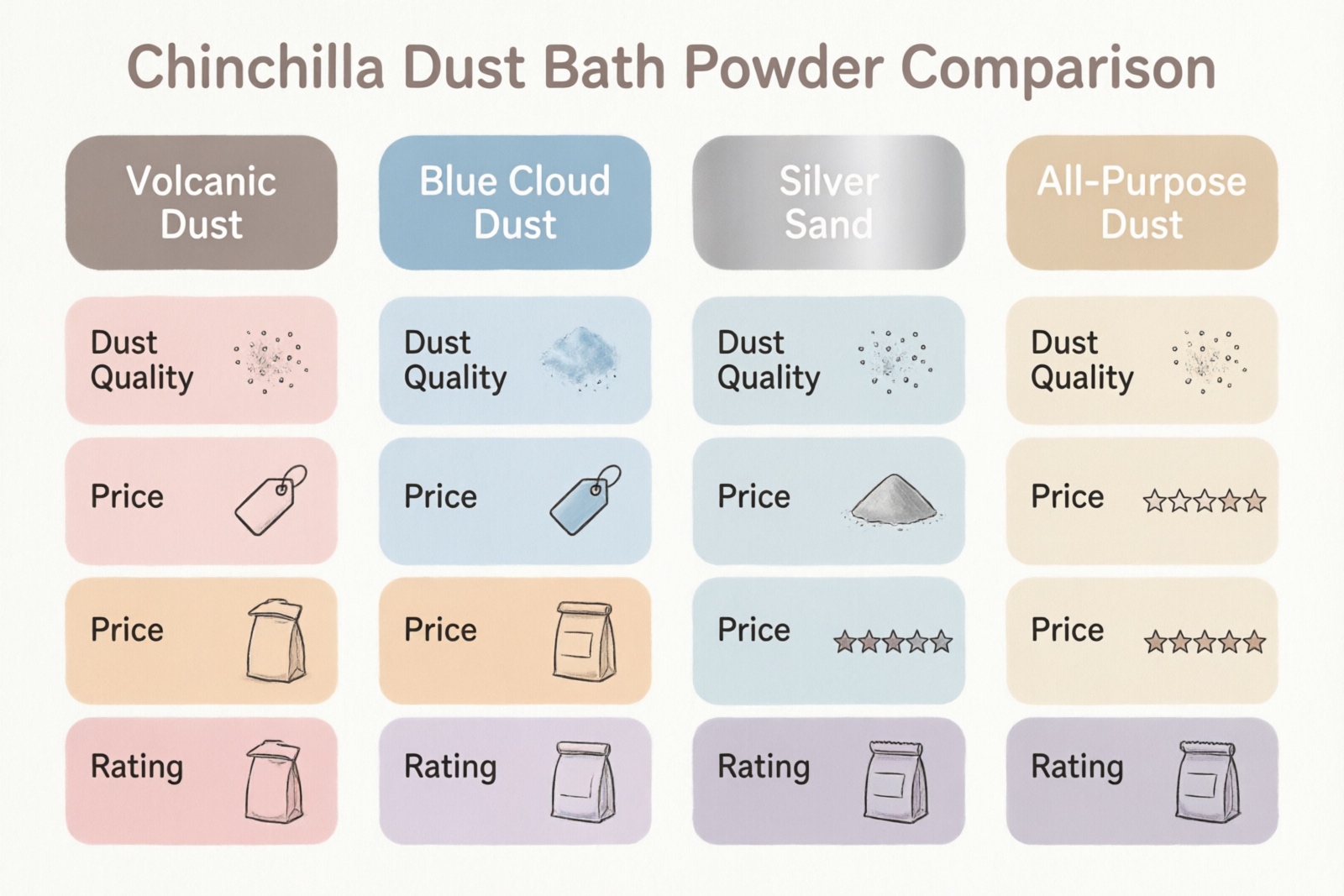
| Dust | Price | Size | $/oz | Rating | Best For |
|---|---|---|---|---|---|
| Oxbow POOF! | $11.99 | ~14 oz | $0.86 | 4.8⭐ | Overall best quality |
| Kaytee Powder | $13.98 | 40 oz | $0.35 | 4.6⭐ | Best value, regular use |
| Lixit Blue 3 lb | $18.99 | 48 oz | $0.40 | 4.8⭐ | Blue Cloud from Mojave |
My recommendation: For first-time owners, start with Oxbow POOF! to ensure quality. For regular long-term use, Kaytee offers the best value. If you want genuine Blue Cloud dust from the Mojave Desert, go with Lixit.
Best Chinchilla Bath Houses
A proper bath house makes bathing cleaner, safer, and more enjoyable for both you and your chinchilla. Without a contained space, dust will scatter across your room — chinchillas are enthusiastic bathers who flip and scatter dust liberally.
What to Look for in a Bath House
Before purchasing, consider these essential features:
- Enclosed design — Contains dust and reduces mess
- Translucent or transparent walls — Lets you watch your chinchilla bathe (it’s entertaining)
- Adequate size — Your chinchilla must be able to fully flip and roll; cramped houses prevent proper bathing
- Easy to clean — Smooth interior surfaces wipe clean easily
- Secure opening — A lid or door that stays closed but opens easily for cleaning
Kaytee Chinchilla Bath House — Classic and Trusted
Kaytee Chinchilla Bath House, Assorted Colors ($23.99, 4.4⭐)
This is the classic chinchilla bath house that’s been on the market for decades. The enclosed design features translucent sides that let you watch your chinchilla roll and flip. At approximately 8.64” × 9” × 8.5”, it fits most standard adult chinchillas, and some chinchillas even like sleeping in it between baths.
I’ve used this bath house for years and it does the job, but there are a couple of things I’d flag: it may be too small for larger chinchillas (especially pregnant females), and the plastic can scratch over time. If your chinchilla is on the larger side, I’d look for a bigger option.
Large Chinchilla Sand Bath Container Kit — Extra Roomy
Large Chinchilla Sand Bath Container Kit with Sand Cup and Shovel ($27.99, 4.6⭐)
This newer option addresses the biggest complaint about standard bath houses: size. Owners report it’s big enough for two chinchillas to bathe together comfortably. The transparent design offers excellent viewing, and the kit includes a sand cup for pouring and a small shovel for cleaning.
At $27.99, it’s more expensive than the Kaytee option, and the brand is less established. But if your chinchilla needs more room or you have multiple chinchillas, the extra space is worth it.
Step-by-Step Dust Bath Guide
Now that you have the right dust and bath house, here’s exactly how to give your chinchilla a proper dust bath.
Preparation
Before starting, gather everything you need:
- Bath house (clean and dry)
- Fresh dust bath powder (2-3 inches deep)
- A towel or mat under the bath house (to catch scattered dust)
- A sifter or scoop for cleaning (optional but recommended)
Choose a location for bathing. Many owners place the bath house inside the cage during bath time, then remove it afterward. Others prefer bathing outside the cage in a controlled area. Either approach works — the key is having a dust-free space afterward.
A healthy diet contributes to healthy fur. Chinchillas with poor nutrition may have dull, oily coats that require more frequent bathing. See our chinchilla diet guide for proper feeding recommendations.
5-Step Bathing Process
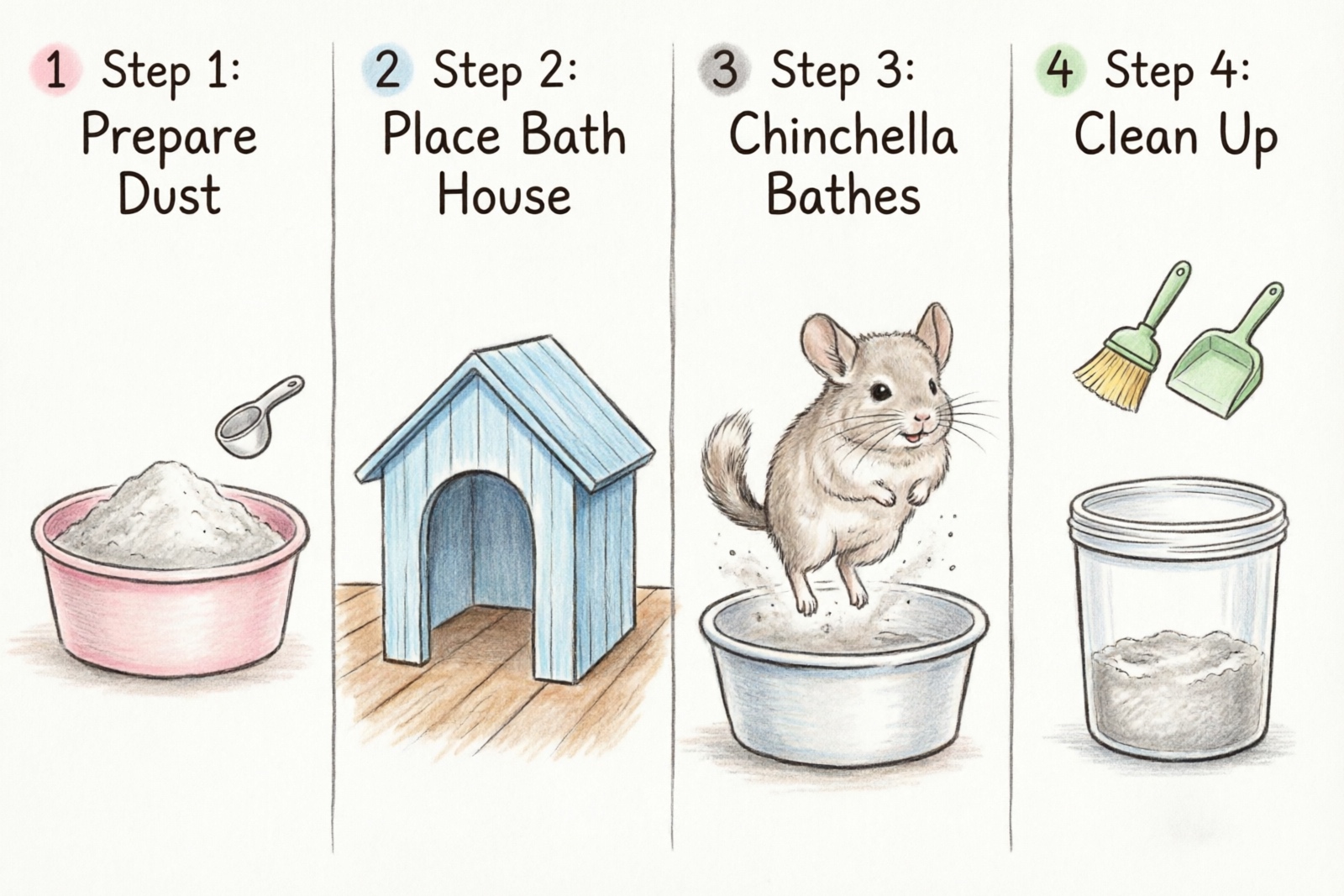
Step 1: Add Dust Pour 2-3 inches of fresh dust bath powder into the bath house. The dust should be deep enough that your chinchilla can fully submerge and roll — less than 1 inch prevents proper cleaning.
Step 2: Introduce Your Chinchilla Place your chinchilla near or inside the bath house. Most chinchillas will immediately dive in. If your chinchilla is hesitant, gently place them inside — they’ll understand what to do.
Step 3: Let Them Bathe (15-20 Minutes) Watch your chinchilla roll, flip, and wiggle in the dust. This is instinctive behavior they enjoy. Don’t interrupt or rush them — let them bathe for the full 15-20 minutes. Some chinchillas will leave earlier if satisfied; others need the full time.
Step 4: Remove and Shake After bathing, lift your chinchilla out and gently shake or brush off excess dust. A light pat works — don’t rub hard. Most dust will fall away naturally as your chinchilla moves around.
Step 5: Clean and Store Remove the bath house from the cage or bathing area. Use a scoop or sifter to remove any waste (feces, urine clumps, or shed fur). Fresh dust can be reused 2-3 times if properly sifted. Store dust in an airtight container in a dry location.
Cleaning Tip
A stainless steel sifter designed for small pet sand baths is worth having. The fine mesh sifts out feces, urine clumps, and debris while letting clean dust pass through — extending the life of each dust batch by 2-3 uses. I’ve found this saves money on dust over time since you’re not throwing away usable powder.
Common Dust Bath Mistakes to Avoid
Even experienced chinchilla owners make bathing errors. Here are the six most common mistakes and how to fix them.
Top 6 Mistakes New Owners Make
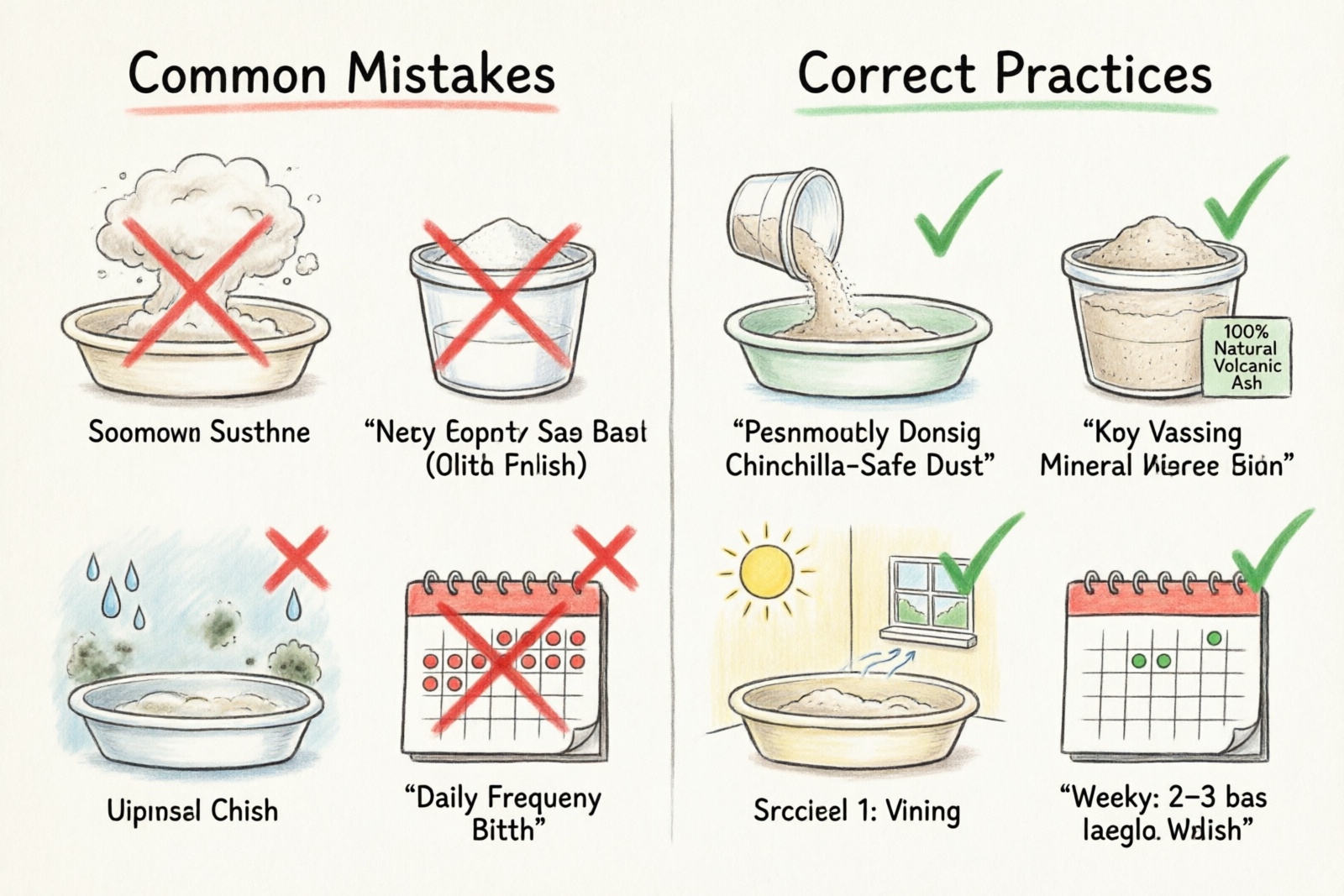
1. Attempting Water Baths This is the most dangerous mistake. Water baths can cause fatal fungal infections. Never bathe your chinchilla with water unless explicitly instructed by a veterinarian for medical treatment.
2. Over-Bathing More than 4 times per week causes dry, irritated skin. Stick to 2-3 times weekly for healthy adults. Reduce frequency if you notice flaky skin or scratching.
3. Using Scented Dust Some products add fragrances or additives. These can irritate your chinchilla’s sensitive respiratory system. Always choose 100% natural dust without additives — Oxbow, Lixit, and Kaytee are all safe choices.
4. Not Cleaning Dust Between Uses Dirty dust contains feces and clumps that spread bacteria. Use a sifter to clean dust after each use, or discard and replace if too contaminated.
5. Too Little Dust Less than 1 inch of dust prevents effective bathing. Your chinchilla can’t properly roll and penetrate the fur. Always provide 2-3 inches.
6. Bathing in Humid Conditions Dust loses effectiveness in high humidity — it clumps and won’t absorb oils properly. Store dust in a dry place and avoid bathing on extremely humid days if possible.
Quick Fix for Each Mistake
| Mistake | Quick Fix |
|---|---|
| Water bathing | Immediately dry with towel + low-heat blow dryer; monitor for fungal signs |
| Over-bathing | Reduce to once weekly until skin improves |
| Scented dust | Switch to 100% natural (Oxbow, Lixit, Kaytee) |
| Dirty dust | Buy a sifter or discard and use fresh dust |
| Too shallow | Add more dust — minimum 2 inches |
| Humid bathing | Store dust airtight; bathe during drier hours |
Can Chinchillas Get Wet?
This question deserves its own section because the consequences of water exposure are so serious.
Why Water Is So Dangerous (Detailed Explanation)
Chinchilla fur density is approximately 60-80 hairs growing from each follicle, while humans have just 1-2 hairs per follicle. This creates several problems when wet:
- Water absorption — The dense fur absorbs water like a sponge, becoming extremely heavy
- Trapped moisture — Water gets locked deep in the fur layers and cannot evaporate easily
- Drying time — Even with blow dryer assistance, complete drying takes hours
- Fungal incubator — Warm, damp, dense fur creates ideal conditions for fungal growth
- Temperature regulation loss — Wet fur stops insulating; chinchillas can become hypothermic
Fungal infections spread rapidly through chinchilla fur. Within days, a damp chinchilla can develop severe ringworm or other skin infections that require veterinary intervention. In worst cases, untreated fungal infections can be fatal.
Emergency: What If My Chinchilla Gets Wet?
Accidents happen. If your chinchilla accidentally gets wet:
- Absorb moisture immediately — Use soft towels to gently press and absorb water. Do not rub — rubbing can damage delicate skin.
- Use low-heat blow drying — Hold a blow dryer at least 12 inches away on the lowest heat setting. High heat can burn skin. Dry for at least 30-45 minutes.
- Keep warm — Place your chinchilla in a warm, dry area until completely dry.
- Monitor for infection — Watch for red skin, hair loss, unusual odor, or scratching over the next 1-2 weeks.
- Seek veterinary care — If any fungal symptoms appear, contact an exotic pet veterinarian immediately.
Prevention is far easier than treatment. Proper grooming through regular dust baths supports your chinchilla’s overall health and contributes to their full chinchilla lifespan. Keep water away from chinchillas entirely.
FAQ: Common Dust Bath Questions
What dust is best for chinchillas?
Blue Cloud Dust is considered the gold standard — volcanic dust with the perfect particle size for penetrating chinchilla fur. Top products include Oxbow POOF! and Lixit Blue Beauty.
Can I use regular sand for chinchilla dust bath?
No. Regular sand has much larger particles that cannot penetrate chinchilla fur properly. It can also irritate skin and eyes. Only use chinchilla-specific volcanic dust that’s formulated for their unique fur structure.
How long should a dust bath be?
15-20 minutes is ideal. Shorter baths may not clean effectively. Longer baths (over 30 minutes) can over-dry skin. Most chinchillas naturally stop bathing when they’re satisfied.
Can chinchillas get wet?
No — water baths are dangerous. Chinchilla fur is too dense to dry properly after water exposure, leading to fungal infections. See the “Can Chinchillas Get Wet?” section above for detailed explanation.
Can I reuse dust bath powder?
Yes, with proper cleaning. Use a sifter to remove feces, urine clumps, and debris. Clean dust can be reused 2-3 times over 1-2 weeks. Replace when dust becomes dark, clumpy, or contaminated.
I’ve found that keeping a second container of fresh dust makes this process easier — you can swap out the used dust for fresh immediately rather than waiting to sift and clean. A small airtight container is ideal for storage; plastic bags work but don’t seal as tightly.
How do I get my chinchilla to use the dust bath?
Most chinchillas take to dust baths immediately because the behavior is instinctive. If your chinchilla seems unsure, try placing them directly into the dust rather than just near the bath house. Sometimes the texture under their paws is what triggers the bathing response. If they still seem hesitant after a few tries, check that the dust isn’t too deep or too shallow — 2-3 inches is the sweet spot.
Should I bathe my chinchilla outside the cage?
Either location works. Bathing inside the cage is less stressful for your chinchilla since they’re already in a familiar space. Bathing outside the cage makes cleanup easier for you. If you bathe outside, limit sessions to 15 minutes and return your chinchilla to the cage promptly — they may get cold if left outside too long.
Why does my chinchilla sneeze during dust baths?
Light sneezing is normal — dust particles can irritate nasal passages temporarily. However, if your chinchilla sneezes excessively, coughs, or shows respiratory distress, stop bathing immediately and try a different dust brand with finer particles. Persistent respiratory issues require veterinary attention.
This guide represents current best practices in chinchilla care based on veterinary guidance, exotic animal research, and verified owner experiences. Always consult with an exotic pet veterinarian for specific health concerns.