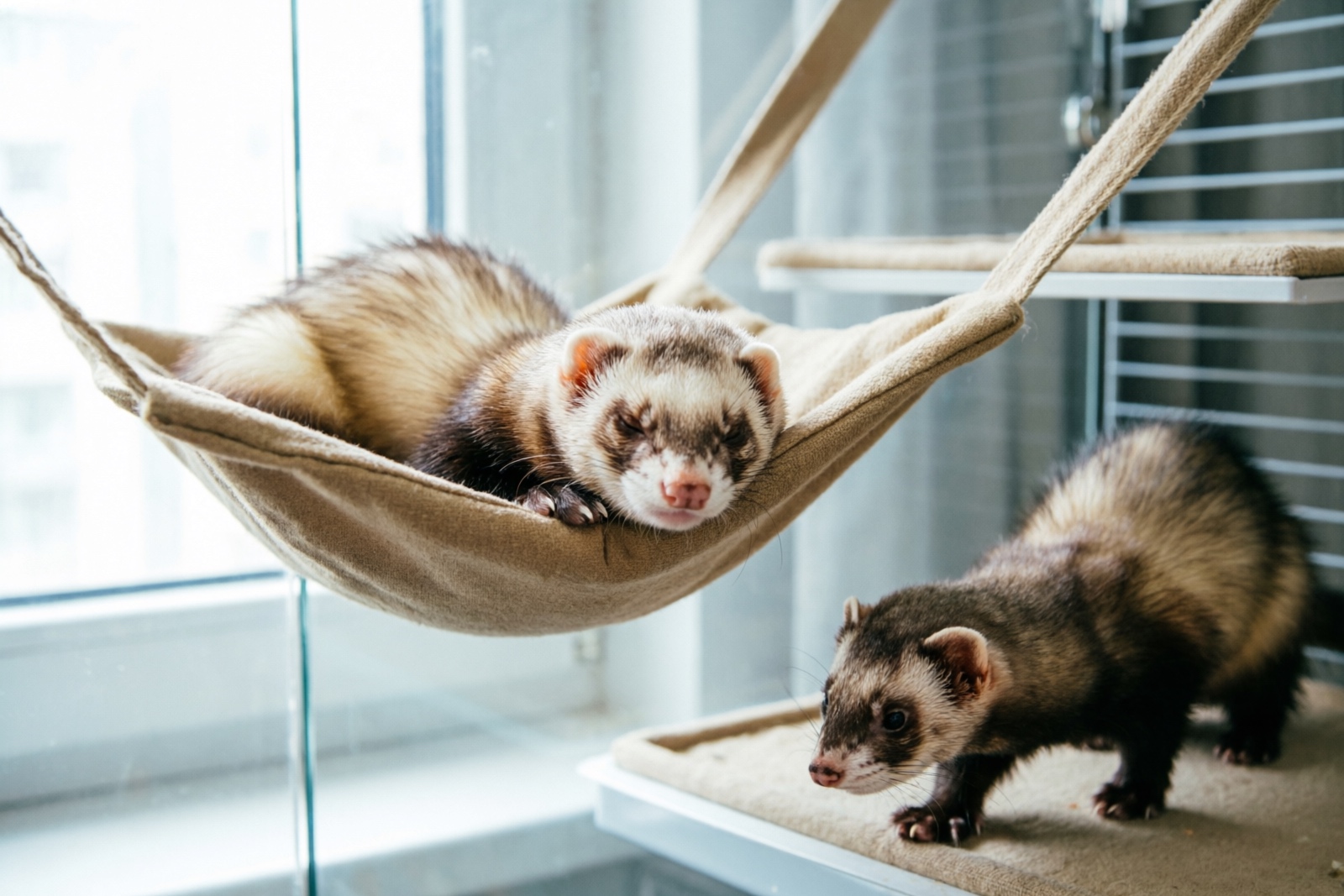
At a Glance: My Top Cage Picks
| Cage | Price | Size (L×W×H) | Bar Spacing | Best For | |
|---|---|---|---|---|---|
| Best Overall | Ferplast Ferret Tower | $320-340 | 29.5”×31.5”×63.4” | 0.5” | 2-4 ferrets, long-term |
| Best Expandable | Midwest Ferret Nation | $300-320 | 36”×25”×63” | 0.5” | Modular growth, breeders |
| Best Mid-Range | Kaytee My First Home | $130-150 | 30”×18”×29” | 0.5” | Single ferret, apartments |
| Best Budget | Yaheetech 52” 6-Level | $120-140 | 36”×24”×52” | 0.9” | Grown ferrets, tight budgets |
I’ve helped dozens of ferret owners choose cages over the years, and I keep seeing the same mistake: people buy too small, too cheap, or with bar spacing that’s just wide enough for a clever ferret to squeeze through. A ferret cage isn’t something you want to cheap out on — your ferret will spend a significant portion of their life in it, and the wrong setup leads to boredom, stress, and health problems that cost far more to fix than upgrading your ferret cage.
This guide covers everything I’ve learned about choosing and setting up the right ferret cage — from size and safety features, to proper setup, liners, DIY builds, and maintenance routines. Whether this is your first ferret or you’re upgrading from a starter setup, I’ll walk you through what actually matters and what’s just marketing noise.
What this guide covers:
- What to look for in a ferret cage (and what to avoid)
- My top ferret cage recommendations for different budgets
- Ferret cage liner options — fleece, paper, or aspen
- Ferret cage setup, cleaning, and DIY ideas
- Size requirements and safety essentials
For complete ferret care beyond housing, see our ferret care guide.
What Makes a Good Ferret Cage
Before getting into specific recommendations, let me share what I’ve found actually matters after years of working with ferret owners and testing different setups.
Ferrets are naturally curious and active. In the wild, they explore burrows and tunnels for hours. A ferret cage needs to satisfy that same drive to climb, explore, and exercise. In my experience, the cages that work best share these traits:
Multi-level design. Ferrets are climbers. A single-level ferret cage, even a large one, rarely provides enough stimulation. I’ve seen ferrets in single-level setups develop repetitive behaviors — pacing, bar biting, excessive sleeping — that disappear almost immediately when they’re moved to a multi-level cage. Aim for at least 2-3 platforms, and ideally a full second story. Our large ferret cage guide covers the best extra-large and multi-level options for multiple ferrets.
Escape-proof bar spacing. This is non-negotiable when choosing any ferret cage. Ferrets can squeeze through gaps you wouldn’t believe. For adult ferrets, bar spacing should be 1” maximum. For kits (young ferrets), I’d insist on 0.5” spacing — I’ve seen kits escape through 0.75” gaps that looked perfectly safe. If you’re bringing home a baby ferret, buy for their current size, not their adult size.
Solid floors and ramps. Wire mesh floors and ramps cause a condition called bumblefoot — painful sores on the bottom of ferret feet. Bumblefoot and other ferret health problems are often caused by poor cage design. Every ferret cage should have solid surfaces on all platforms and ramps. I always add fleece covers to ramps for extra grip.
Full-width doors. You’ll be cleaning this cage, rearranging accessories, and reaching in to grab your ferret. Narrow doors make everything harder. Full-width doors that open the entire front panel are worth paying extra for.
Ferret-proof latches. Ferrets are problem solvers. I’ve watched them figure out simple spring latches in under a minute. Look for slide bolts or barrel bolts — something that requires deliberate human action to open.

My Cage Recommendations
I’ve narrowed this down to four cages that I’d actually recommend, based on owner feedback, build quality, and long-term durability. I skipped several popular budget cages because the bar spacing or build quality just isn’t safe enough.
Best Overall: Ferplast Ferret Tower
Ferplast Ferret Tower | $320-340
The Ferplast Ferret Tower is the ferret cage I recommend most often, and for good reason. It’s a two-story design standing 63.4” tall with 0.5” bar spacing that’s safe even for kits. The Italian build quality is noticeably better than most alternatives — the latches feel solid, the epoxy coating doesn’t chip easily, and the whole thing feels like it’ll last for years.
What I particularly like is that it comes with everything you need to get started: water bottle, food dish, hammock, litter pan, two play tubes, and two ramps. When you factor in the cost of buying those accessories separately (easily $50-80), the price becomes more reasonable.
The downsides of this ferret cage are straightforward: it’s expensive, it takes up significant floor space (29.5” x 31.5”), and assembly takes 1-2 hours. But if you have the budget and space, I don’t think there’s a better option on the market right now. It’s especially good for owners with 2-4 ferrets who want something that won’t need replacing.
Best Expandable System: Midwest Ferret Nation
Midwest Ferret Nation Double Unit | $300-320
The Midwest Ferret Nation is probably the most popular ferret cage among experienced owners, and the reason is simple: it’s modular. You can start with a single unit and add the Model 183 expansion whenever you need more space. I know several breeders who chain multiple units together to create elaborate multi-room setups.
At 36” x 25” with a 63” height, this ferret cage provides excellent floor space per level. The full-width double doors are genuinely useful for cleaning and rearranging. Bar spacing is a safe 0.5”, and the locking casters make it easy to move for deep cleaning.
The main trade-off is weight — at 98 pounds, it’s not something you want to move frequently. Assembly also takes 1-2 hours. But the modular design means this is likely the last cage you’ll ever need to buy, and that long-term value is hard to beat.
Best Mid-Range Ferret Cage: Kaytee My First Home Multi-Level
Kaytee My First Home Multi-Level Habitat | $130-150
For first-time ferret owners or anyone on a tighter budget, the Kaytee My First Home is a solid choice. It includes a fun spiral slide that ferrets genuinely seem to enjoy, four climbing shelves, three ramps, and both top and front access doors. The 0.5” bar spacing is escape-proof even for kits.
The catch is that it’s smaller than I’d like — only 29” height limits vertical climbing space, and the 30” x 18” footprint is tight for more than one ferret. The plastic base can also absorb odors over time. I’d recommend this ferret cage for a single ferret in an apartment, or as a temporary setup while you save up for something larger.
Best Budget Ferret Cage: Yaheetech 52-inch 6 Level
Yaheetech 52-inch 6 Level Ferret Cage | $120-140
I have mixed feelings about the Yaheetech. On paper, it looks great — six levels, 52” height, rolling casters, and a slide-out litter tray, all for $120-140. And it does work for many ferret owners, especially those with multiple small animals.
The issues are quality-related. The ramps are corrugated plastic rather than solid, and they don’t last as long as metal or wood alternatives. The 0.9” bar spacing is fine for adult ferrets but not for kits. Build quality is noticeably lower than the Ferplast or Midwest — more wobble, thinner wire, cheaper latches.
If you’re on a strict budget and your ferret is fully grown, this ferret cage will work. Just be prepared to replace it within a couple of years if your ferret is hard on their cage. I’ve seen some owners reinforce the weaker spots with zip ties and extra hardware, which extends the lifespan considerably.
Large Multi-Level Ferret Cages: What to Look For
Beyond the specific models above, here are the principles I use when evaluating any large ferret cage:
Floor space matters more than height. A tall ferret cage with tiny platforms isn’t useful. Each level should have enough room for your ferret to turn around comfortably — at least 8 sq ft total floor space per ferret.
Ramp safety is critical. I always check that ramps have a solid surface (not wire mesh), a grip material (fleece or carpet), secure attachment with no wobbling, and a moderate angle — no steeper than 30-45°. Ferrets can be clumsy climbers, and a fall from 18” or more can cause injuries.
Separate zones. A well-designed cage has distinct sleeping, eating, and bathroom areas. Ferrets are clean by nature and don’t want to eat next to their litter box. If a cage doesn’t naturally separate these zones, I add shelves or dividers to create them.
Cage Liners: Fleece, Paper, or Aspen?
Ferret cage liners might seem like a minor detail, but I’ve found they make a huge difference in both cleaning effort and ferret comfort. The right choice depends on your schedule, budget, and tolerance for laundry.
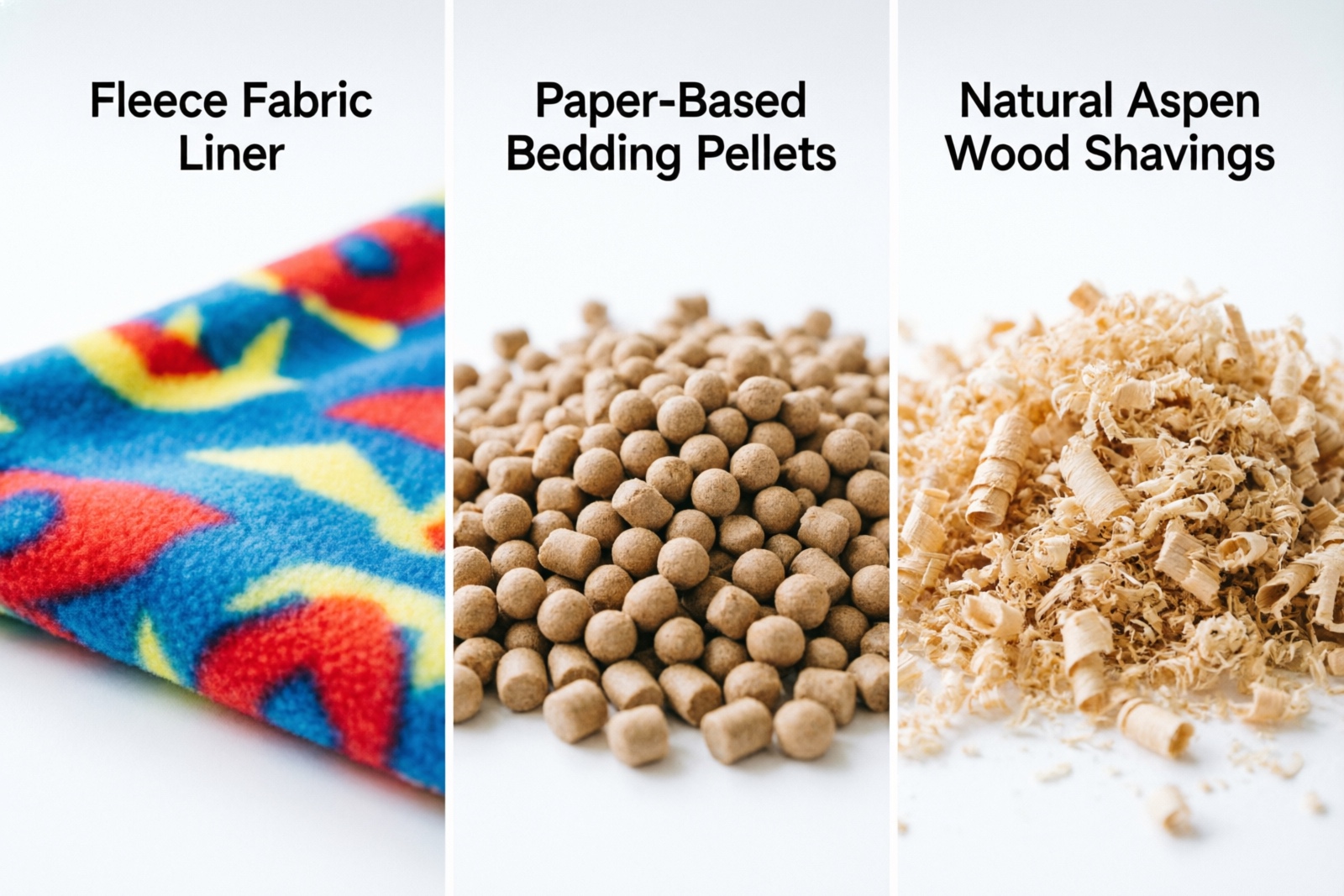
Fleece Liners for Your Ferret Cage
Fleece is what I use personally for my ferret cage and what I recommend to most owners. It’s soft on ferret feet, reusable (just throw it in the washing machine), environmentally friendly, and cost-effective over time. After the initial investment of $20-30 per liner, your ongoing cost is basically zero.
The trade-off is maintenance. You need to shake off debris daily and wash liners every 2-3 days in hot water. Use unscented detergent and avoid fabric softeners — they reduce absorbency. I always keep 2-3 sets in rotation so there’s always a clean one ready.
One issue I see frequently: ferrets who like to dig or bunch up their liners. If your ferret does this, try adding corner elastic or Velcro to keep the liner in place. Some owners use binder clips, which works in a pinch.
Brands I’d suggest: Piddle Pads ($20-30 per liner, waterproof backing) or Bedsore Beauty ($15-25, multi-layer with anti-slip bottom). If you’re crafty, DIY fleece liners cost about $10-15 in materials and you can customize the size exactly.
Paper-Based Bedding for Ferret Cages
Paper bedding (compressed pellets or shredded paper) is the most convenient option if you don’t want to deal with laundry. It’s highly absorbent, controls odor well, and is safe if ingested. I’ve had good results with Carefresh Natural Paper Bedding and Yesterday’s News. Carefresh is 99% dust-free, which is important for ferrets’ sensitive respiratory systems, and it controls odor better than most paper bedding options.
The downside is the ongoing cost and waste. You’ll need to replace bedding weekly (or more often for heavy soilers), and that adds up. Some ferrets also track paper pellets outside the cage. It’s not as comfortable for ferret feet as fleece, though most ferrets don’t seem to mind.
I’d recommend paper bedding for owners who travel frequently, maintain multiple ferret cages, or simply can’t keep up with a laundry rotation.
Aspen Shavings for Ferret Cage Bedding
Aspen shavings are the budget-friendly natural option. They’re affordable, biodegradable, and provide decent odor control. I used aspen for years before switching to fleece, and it works fine.
However, aspen is less absorbent than paper, can be messy (tracked outside the cage), and some ferrets develop allergies to it. If you go with aspen, make sure it’s specifically aspen — cedar and pine shavings contain toxic phenols that cause respiratory damage.
What to avoid entirely: Cedar shavings (toxic), pine shavings (toxic), sawdust (respiratory hazard), and clay cat litter (dusty and dangerous if ingested).
Cage Setup & Size Requirements
Minimum Cage Size
Here’s what I consider the minimum for healthy ferret housing:
| Number of Ferrets | Minimum Floor Space | Minimum Dimensions | Recommended Height |
|---|---|---|---|
| 1 ferret | 8 sq ft | 24”L x 24”W | 36”+ |
| 2 ferrets | 12 sq ft | 30”L x 24”W | 48”+ |
| 3-4 ferrets | 16+ sq ft | 36”L x 24”W | 54”+ |
| 5+ ferrets | 24+ sq ft | 48”L x 24”W | 60”+ |
Key measurements to check:
- Bar spacing: Maximum 1” for adults, 0.5” for kits
- Wire gauge: Minimum 12-14 gauge (thicker = more durable)
- Door size: Large enough to fit a litter box through
I can’t stress this enough: bigger is always better. I’ve never met a ferret owner who said “I wish I’d gotten a smaller cage.” But I’ve met plenty who regretted going too small.
Multi-Level Cage Setup
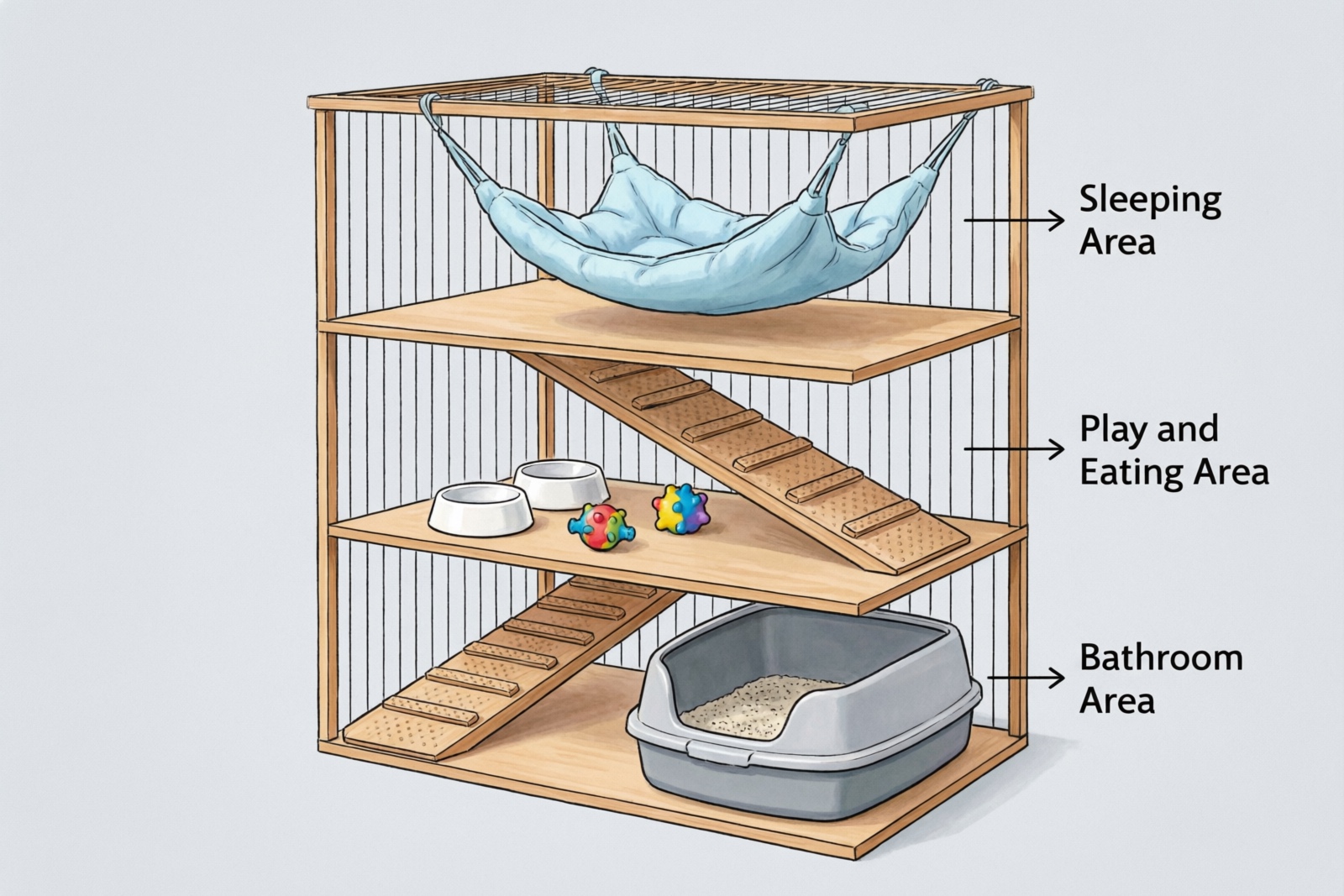
I set up multi-level ferret cages with three distinct zones:
Top level: Sleeping area. Ferrets like to sleep suspended and in dark, enclosed spaces. I put a hammock or sleep sack at the top, away from food and litter. Provide at least 2-3 sleeping options per ferret — they like to rotate.
Middle level(s): Play and eating area. Food and water dishes go here, along with toys and tunnels. Heavy ceramic bowls (1-2 cup capacity) won’t tip over. See our ferret diet guide for feeding setup tips.
Bottom level: Bathroom area. A large corner litter box (at least 12” x 12”) with paper-based litter goes in the corner where your ferret naturally eliminates. Proper litter training keeps the cage cleaner and reduces odor. Keep it separate from sleeping and eating areas.
Essential Ferret Cage Accessories
Must-haves:
- Hammock or sleep sack (1-2 per ferret) — they love sleeping suspended
- Heavy ceramic food bowl — won’t tip over
- Water bottle (16oz+ capacity) — check daily for clogs
- Corner litter box (high-backed, at least 12” x 12”) with paper-based litter
- Tunnels (2-3) — PVC or fabric, ferrets can’t get enough of tunnels
- Fleece blankets — for nesting and comfort
Recommended products:
- Niteangel Hanging Hammock Nap Sack ($13.99) — I’ve had great results with this hammock in my own ferret cage. It’s reversible (fleece for winter, cool fabric for summer), machine washable, and my ferrets consistently choose it over every other sleeping spot. The hooks are easy to attach to any bar spacing.
- Marshall High Back Litter Pan ($14.95) — The high-back design (12” x 14”) prevents messes from spraying outside the box, and it’s the right size for one to two ferrets. Marshall is a trusted ferret brand, and this litter pan fits neatly into most cage corners.
Nice-to-haves:
- Dig box — a container filled with rice, pasta, or plastic balls for digging
- Hanging toys — swings and hanging tunnels
- Chew toys — hard plastic or wood
Ferret Cage Safety Checklist
Before introducing your ferret to any cage, run through this list:
Wire and structure:
- Bar spacing ≤ 1” (0.5” for kits)
- No sharp edges or broken wires
- Wire coating intact (no chipping or rust)
- No gaps where a ferret could escape
Floors and ramps:
- Solid surfaces (no wire mesh — causes foot injuries)
- Platforms securely attached
- No fall heights greater than 18”
- Ramps have grip surface
Location:
- Away from direct sunlight
- Away from drafts and heating vents
- Temperature 60-75°F (ferrets are heat-sensitive)
- Away from other pets and young children
- Stable surface that won’t tip
DIY Ferret Cage Ideas
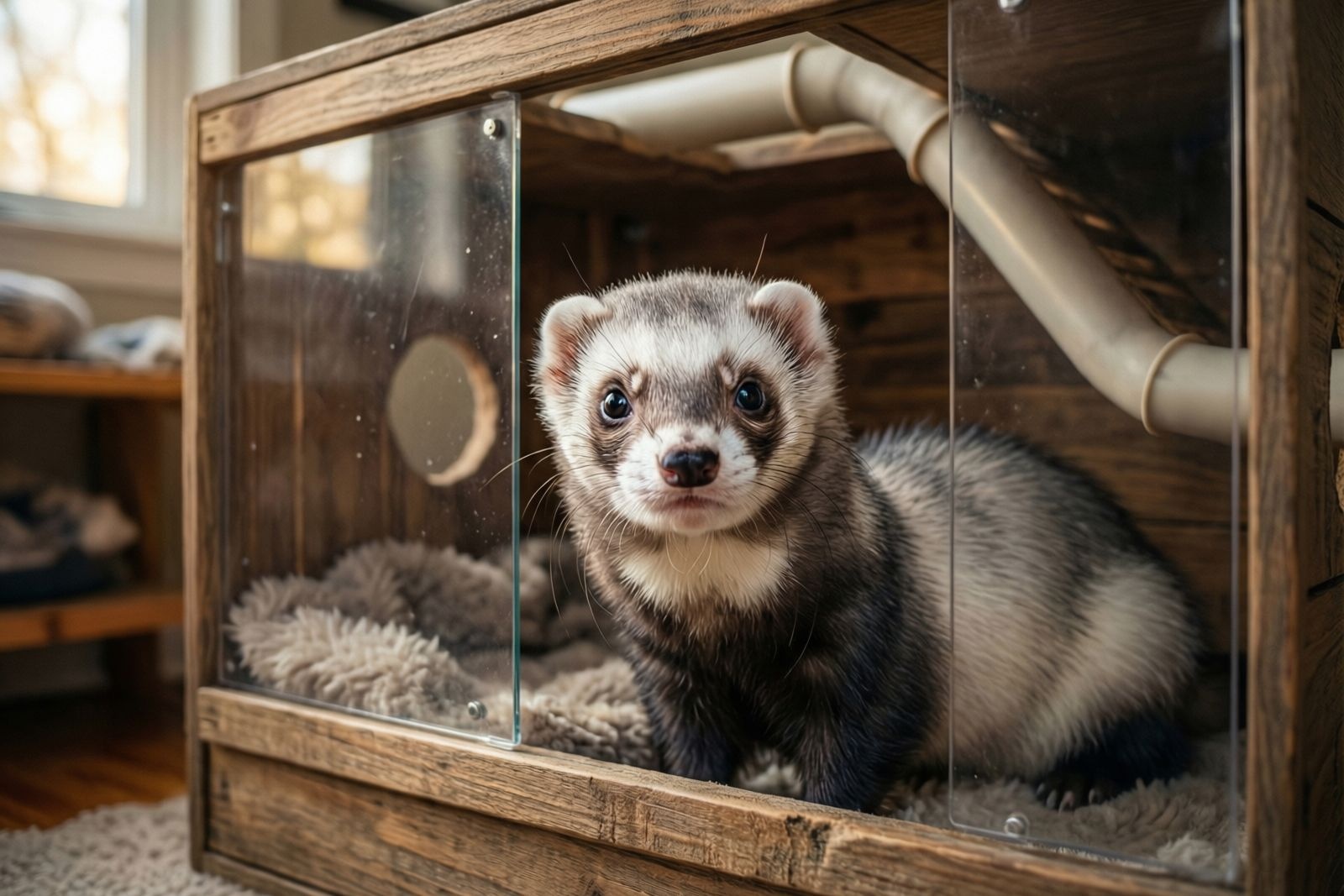
Building your own ferret cage has become increasingly popular, and I’ve seen some impressive custom builds. For more creative inspiration, check out our ferret cage ideas gallery with real owner setups. It can save money and allow customization, but safety needs to be your top priority throughout the process.
Plan 1: Converted Furniture Cage
If you have an old dresser, wardrobe, or bookshelf in solid wood, you can convert it into a ferret cage. The basic process: remove drawers or shelves, cut openings for levels and doors, attach wire mesh (1” x 1” hardware cloth, 12-14 gauge) to the back and sides for ventilation, install plexiglass or acrylic ramps between levels, and add ferret-proof latches.
Cost: $50-150 depending on the furniture source. Time: 8-12 hours. This works best for owners who want a custom size or a cage that doubles as furniture.
Plan 2: PVC and Wire Cage
This is lighter and more portable than a furniture conversion. Build a PVC pipe frame (1” diameter), attach wire mesh with zip ties, create levels with corrugated plastic (coroplast) shelves, and add fleece-wrapped PVC ramps.
Cost: $80-150. Time: 4-6 hours. Good for temporary housing or situations where you need to move the cage frequently.
Plan 3: Modified Rabbit Cage
Start with a large rabbit cage as a base, add wire panels to increase height, install additional levels and ramps, and secure everything with zip ties. This is the fastest DIY option.
Cost: $100-200 (including the base cage). Time: 2-4 hours.
DIY vs. Buying a Ferret Cage: My Take
I’d recommend buying a commercial cage for your first ferret. Once you understand ferret behavior and safety requirements (and you’ve dealt with a few escape attempts), DIY becomes a viable option. The cage I’d skip DIY for: anything involving wire mesh floors, toxic materials, or bar spacing wider than 1”. No cost savings are worth a ferret injury.
Materials and Tools for Building a Ferret Cage
Essential materials:
- Wire mesh: Hardware cloth (1” x 1” spacing), 12-14 gauge
- Frame material: PVC pipes, untreated pine, or metal
- Flooring: Coroplast, plexiglass, or linoleum tiles
- Fasteners: Zip ties, wire, or wood screws
- Latches: Slide bolts or barrel bolts (ferret-proof)
Essential tools:
- Wire cutters, drill, saw, measuring tape
- Sandpaper (smooth all rough edges)
- Safety gloves and glasses
Where to Buy Ferret Cages
When shopping for a ferret cage, I generally recommend buying online for the best selection and pricing. Amazon typically has the widest range and competitive prices, especially with Prime shipping. Petco and local pet stores are worth visiting if you want to see a cage in person before committing — being able to inspect the build quality and bar spacing firsthand is valuable.
If you’re buying online, check reviews specifically mentioning ferrets (not just general small animal reviews) and verify the bar spacing in the product specifications. I’ve seen cages marketed as “ferret cages” with 1.5” bar spacing that a ferret could walk right through.
Price ranges to expect:
- Budget cages: $90-150 (basic, smaller)
- Mid-range cages: $150-200 (good quality, decent size)
- Premium cages: $200-350 (large, multi-level, durable)
For ongoing cage care and maintenance, see our complete ferret care guide.
How to Clean & Maintain Your Ferret Cage
Ferrets have a natural musky odor, but proper ferret cage maintenance keeps it manageable. I’ve found that a consistent cleaning routine prevents most odor problems before they start.
Daily Ferret Cage Cleaning (5-10 minutes)
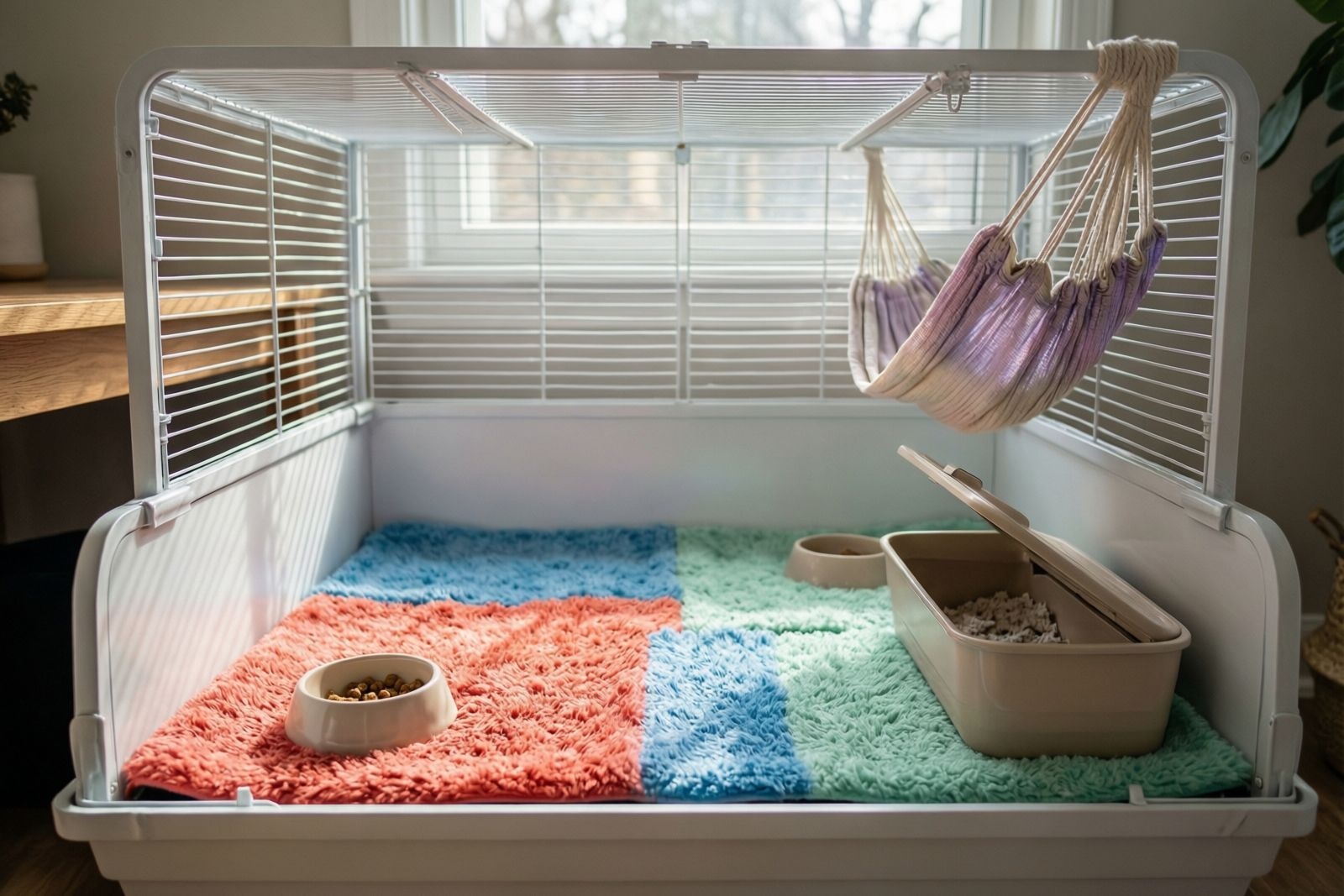
- Scoop litter box and remove waste from cage floor
- Remove soiled bedding and food debris
- Check water bottle for clogs, refill if needed
- Wipe food area with a pet-safe wipe
- Discard uneaten fresh food (after 4 hours)
- Quick visual inspection of your ferret cage for damage or escape attempts
Weekly Ferret Cage Deep Cleaning (30-60 minutes)
Step 1: Relocate your ferret to a safe temporary enclosure.
Step 2: Remove everything — accessories, bedding, litter.
Step 3: Wash accessories in hot soapy water. Wash or shake out hammocks and blankets.
**Step 4: Clean the ferret cage with pet-safe cleaner. I use a 1:1 vinegar and water solution, which is cheap, effective, and safe. Dawn dish soap works too. Avoid bleach, ammonia, and scented cleaners — they’re toxic to ferrets and can irritate their respiratory system.
Step 5: Rinse thoroughly and dry completely before adding fresh bedding.
Step 6: Reassemble with fresh bedding/litter, return accessories, refill food and water.
Monthly Ferret Cage Maintenance
- Inspect cage for rust, broken wires, loose parts
- Replace worn hammocks, ramps, or damaged toys
- Check that all latches still close securely
- Evaluate whether the layout needs adjustment
Ferret Cage Odor Control Tips
Odor is the number one complaint I hear from ferret cage owners, and it almost always comes down to one of these issues:
Litter box management. Scoop daily. Replace litter completely 2-3 times per week. Use paper-based litter — it controls odor better than clay or wood-based options.
Diet. High-quality food reduces waste odor. Avoid fish-based ingredients, which noticeably increase smell. See our ferret diet guide for dietary recommendations.
Bedding. Fleece liners need washing every 2-3 days. Paper bedding needs weekly replacement. Never use cedar or pine — they don’t control odor and they’re toxic.
Airflow. Place the cage in a well-ventilated area. An air purifier with a HEPA filter near the cage helps significantly.
Ferret hygiene. Bathe only when necessary — over-bathing strips natural oils and actually increases odor production. Clean ears regularly and check anal glands for impaction.
What doesn’t work: Scented candles, air fresheners, and perfumed sprays. These just mask the odor and irritate ferret respiratory systems. Enzymatic cleaners like Nature’s Miracle actually break down odor-causing molecules rather than just covering them up.
Ferret Cage Frequently Asked Questions
What size cage do ferrets need?
Every ferret cage should provide minimum 8 sq ft of floor space per ferret, with multi-levels. For one ferret, that’s at least 24”L x 24”W x 36”H. For two ferrets, 30”L x 24”W x 48”H. Always buy the largest cage your space and budget allow — I’ve never met an owner who regretted going bigger.
How much does a ferret cage cost?
Expect to spend $100-250 for a quality cage. Budget options start around $90-150 but may need replacing sooner. Premium cages ($200-350) last longer and provide better housing. Factor in another $50-100 for accessories (hammocks, toys, food bowls, litter box) and $15-30/month for bedding and litter.
Can I use a rabbit cage for a ferret?
Sometimes, with modifications. You need bar spacing ≤ 1” (many rabbit cages have wider spacing), solid floors (no wire mesh), and ideally some added ramps and levels. Large rabbit cages can work, but purpose-built ferret cages are generally safer and better designed for ferret behavior.
How often should I clean the ferret cage?
Daily spot cleaning (5-10 minutes) plus weekly deep cleaning (30-60 minutes). Monthly, inspect for damage and replace worn items. Skipping daily cleaning is the fastest way to odor problems and bacterial growth.
Do ferrets need multi-level cages?
Yes, I’d consider it essential. Ferrets are natural climbers and need vertical space for exercise and mental stimulation. A single-level cage, even a large one, often leads to boredom and behavioral issues. If you must use a single-level setup, provide at least 3 hours of daily out-of-cage play time.
What should I put in the bottom of a ferret cage?
Fleece liners with waterproof backing are my top recommendation — comfortable, reusable, and cost-effective long term. Paper bedding (Carefresh or Yesterday’s News) is the best disposable option. Aspen shavings work but are less absorbent. Avoid cedar, pine, sawdust, and clay cat litter.
Can ferrets escape from wire cages?
Absolutely, if the bar spacing is too wide or the cage is damaged. Adult ferrets can squeeze through 1” gaps, kits through 0.75” gaps. Ferrets also learn to open simple latches — use slide bolts or barrel bolts. Inspect your cage weekly for bent wires, gaps, or chewed areas.
Where should I place the ferret cage?
A quiet area with stable temperature (60-75°F), away from direct sunlight, drafts, heating vents, and other pets. Living rooms and family rooms work well because ferrets enjoy being near activity, but they also need quiet during daytime sleep. With a ferret lifespan of 6-10 years, choosing a durable cage that lasts is a smart investment. Easy-to-clean flooring (tile or hardwood) underneath is ideal.
Conclusion
A good ferret cage is the foundation of responsible ferret ownership. After working with ferrets for years, my advice comes down to this: invest in the largest, best-built cage you can afford, set it up with proper zones for sleeping, eating, and bathroom, and maintain a consistent cleaning routine. The cage you choose directly affects your ferret’s health, behavior, and quality of life.
Key takeaways:
- Minimum 8 sq ft per ferret with multi-levels — bigger is always better
- Bar spacing ≤ 1” for adults, 0.5” for kits
- Solid floors and ramps only (no wire mesh)
- Fleece liners are the most practical bedding option for most owners
- Daily spot cleaning + weekly deep cleaning prevents odor and health issues
- DIY cages can work, but buy commercial for your first ferret
For complete ferret care beyond housing, see our ferret care guide. For enrichment ideas, check out our ferret toys guide.