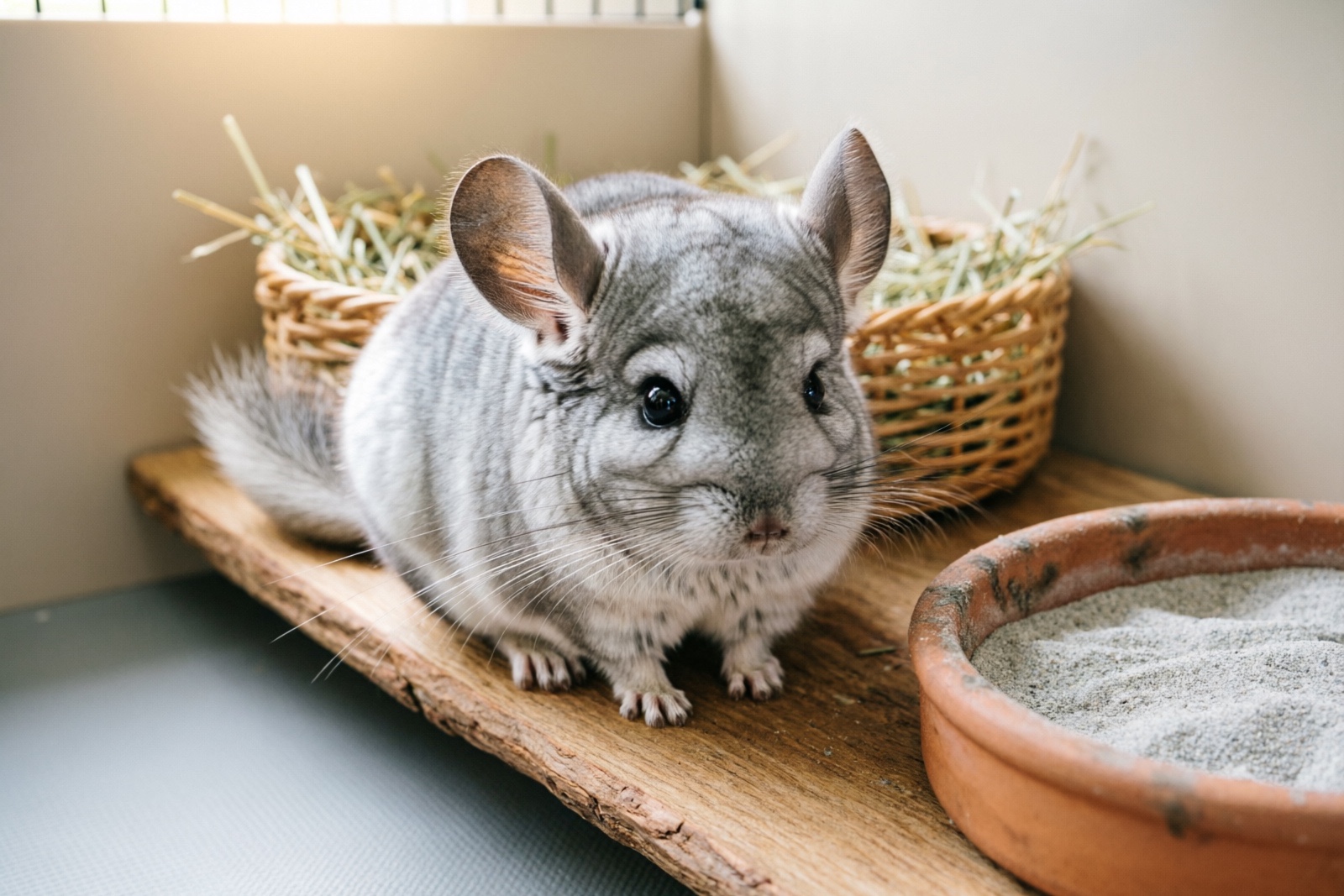
Introduction to Chinchilla Care
Chinchillas are extraordinary pets that can live 15-20 years with proper care, making them a long-term commitment comparable to caring for a dog or cat. Native to the Andes Mountains in South America, these adorable, fluffy creatures have captured the hearts of pet owners worldwide with their soft fur, playful personalities, and gentle nature.
However, keeping a chinchilla is nothing like caring for other small pets. These unique animals have very specific requirements that set them apart from hamsters, rabbits, or guinea pigs. Temperature control is critical—chinchillas cannot tolerate temperatures above 75°F (24°C) and thrive best in environments between 60-70°F (16-21°C). Unlike other pets, they cannot get wet and require specialized dust baths to maintain their incredibly dense fur. Their digestive systems are also highly sensitive, requiring a strict diet of high-fiber hay and specialized pellets.
This comprehensive guide will walk you through everything you need to know, from creating the perfect habitat to understanding their unique nutritional needs. Whether you’re a first-time chinchilla owner or looking to improve your current routine, this guide covers all the essential aspects of keeping your chinchilla healthy and happy.
For general small pet housing principles, check out our guide on small pet cage basics.
Chinchilla Cage Setup: Creating the Perfect Habitat
Setting up the right environment is the foundation of keeping your chinchilla healthy. In the wild, chinchillas are active, jumping, and climbing creatures that need plenty of vertical space. A proper cage setup directly impacts your chinchilla’s physical health and mental wellbeing, so it’s worth investing the time and money to get it right from the start.
Best Chinchilla Cages Compared
When selecting a cage, prioritize height over floor space—chinchillas are natural climbers and jumpers who need multiple levels to stay active and healthy. The minimum recommended cage size for a single chinchilla is at least 3 feet tall with multiple platforms, though bigger is always better.
| Feature | MidWest Critter Nation | HABUTWAY Metal Cage |
|---|---|---|
| Price | $327.99 | $128.18 |
| Rating | ⭐ 4.6 | ⭐ 5.0 |
| Levels | 4-tier design | 5-tier design |
| Dimensions | 36”L x 24”W x 63”H | 25.2”L x 17.3”W x 50”H |
| Best For | Premium, multi-chinchilla homes | Budget-conscious owners |
| Special Features | Easy assembly, durable construction | Rolling wheels, includes hammock |
Premium Choice: MidWest Critter Nation Double Unit Cage
The MidWest Critter Nation Double Unit Cage ($327.99, 4.6 stars, 🔥) is widely considered the gold standard for chinchilla housing. Its spacious 4-tier design provides ample room for multiple chinchillas to exercise and explore. Users consistently praise its durability, easy-to-clean design, and the fact that chinchillas love the vertical space. While the price point is higher, most owners find it’s worth the investment for a long-term habitat.
Budget-Friendly Option: HABUTWAY 50”H Metal Small Animal Cage
For those on a tighter budget, the HABUTWAY 50”H Metal Small Animal Cage ($128.18, 5.0 stars, 🔥) offers excellent value. This 5-tier cage includes rolling wheels for easy movement and even comes with a hammock. While the metal gauge is thinner than premium cages, users report it’s sturdy enough for active chinchillas and perfect for beginners.
For more housing insights, see our guides on rabbit housing basics and ferret cage setup.
Cage Setup Checklist
A properly equipped cage should include these essential items:
Essential Equipment:
- ✅ Multi-level cage (minimum 3 feet tall)
- ✅ Safe bedding (kiln-dried pine shavings or fleece liners)
- ✅ Ceramic food bowl (heavy to prevent tipping)
- ✅ Water bottle (glass preferred, 16oz minimum)
- ✅ Hay feeder or rack
- ✅ Dust bath house
- ✅ Multiple wooden platforms and ledges
- ✅ Chew toys (apple wood, untreated pine)
- ✅ Hiding house (wooden or ceramic)
- ✅ Exercise wheel (solid surface, 15+ inch diameter)
Recommended Layout:
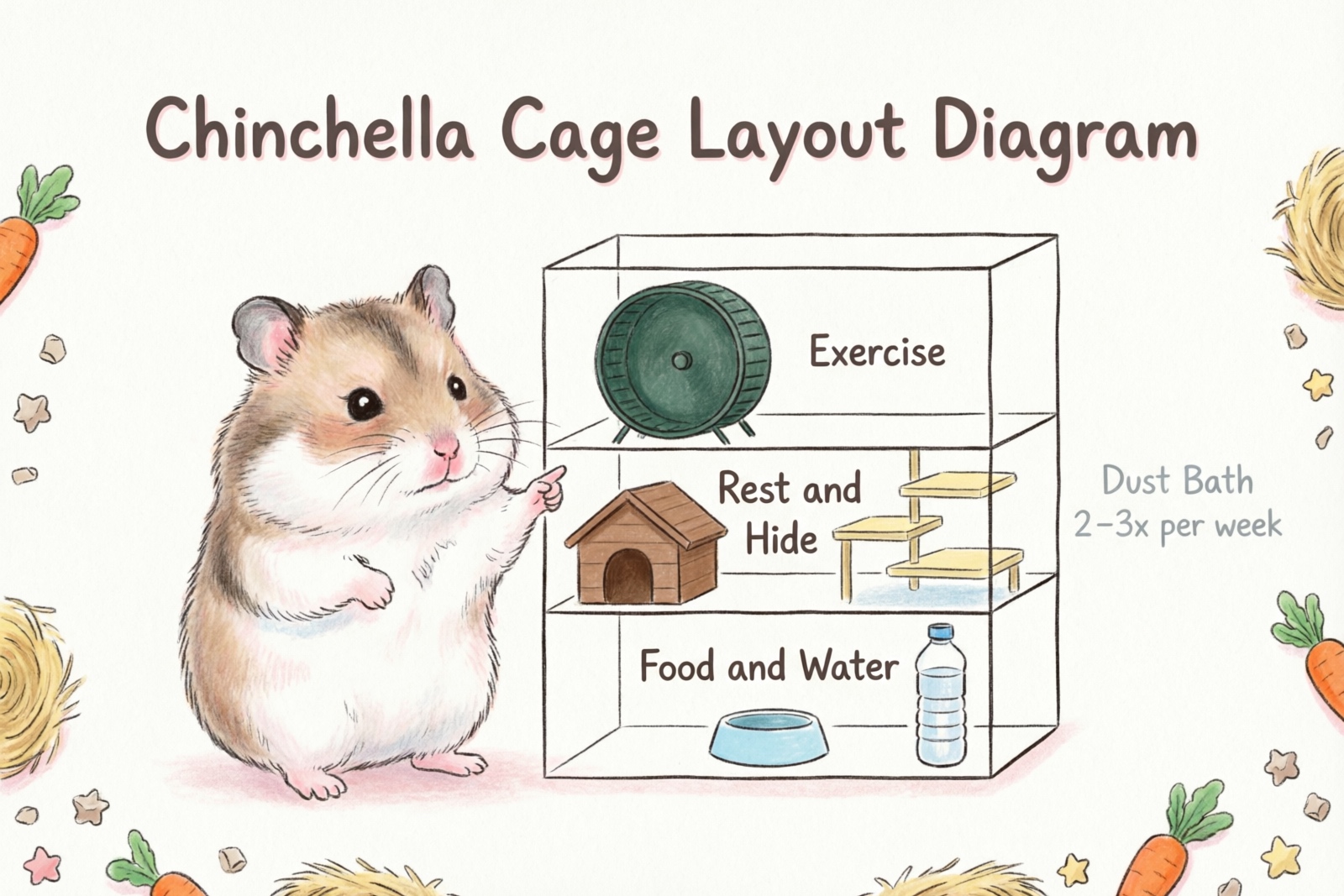
- Bottom level: Bedding, food, and water
- Middle levels: Platforms, ledges, and hiding spots
- Top level: Exercise wheel and play area
- Dust bath: Placed in cage 2-3 times per week (not permanent)
Temperature Control Essentials
Why 60-70°F Is Critical
Chinchillas have extremely dense fur (60 hairs per follicle compared to 1 hair per follicle in humans) that makes them highly susceptible to heat stress. Temperatures above 75°F (24°C) can lead to heatstroke, which can be fatal. Signs of overheating include lethargy, drooling, rapid breathing, and red ears.
How to Maintain Safe Temperatures:
- Air Conditioning: Most reliable method for hot climates
- Fans: Improve air circulation (but don’t blow directly on the cage)
- Temperature Monitors: Place digital thermometers near the cage
- Cooling Stones: Granite or marble slabs kept in the refrigerator
- Proper Ventilation: Keep cage away from windows and direct sunlight
Summer Precautions:
- Never place the cage near windows or in direct sunlight
- Monitor temperature multiple times daily during heat waves
- Consider a portable AC unit if central air is insufficient
- Have a backup plan (cooler basement, friend’s house) if power goes out
Chinchilla Diet: Nutrition for a Healthy Life
Proper nutrition is crucial for your chinchilla’s health. Their sensitive digestive systems require a very specific diet, and getting it right is one of the most important things you can do to prevent serious health problems down the road. In the wild, chinchillas eat tough, fibrous grasses and plants, and replicating this diet in captivity is essential.
The Perfect Chinchilla Diet
The ideal chinchilla diet consists of approximately 70% high-quality hay and 30% pelleted food, with treats making up no more than 5% of total intake.
Hay (70% of diet):
- Timothy Hay: The foundation of chinchilla nutrition—provide unlimited access
- Orchard Grass: Good variety and often more palatable
- Alfalfa Hay: Only for young, growing chinchillas (under 1 year) or pregnant females; too high in calcium for adults
- Quality Indicators: Fresh, green color, sweet smell, minimal dust
Pellets (30% of diet):
- Choose high-fiber, low-fat pellets specifically formulated for chinchillas
- Avoid “mix” foods with seeds, nuts, or colorful pieces—chinchillas will pick out the unhealthy parts
- Limit to 1-2 tablespoons per day for adults
Our Recommendation: Oxbow Essentials Chinchilla Food
The Oxbow Essentials Chinchilla Food ($18.39, 4.4 stars, 🔥) is veterinarian-recommended and specifically formulated for chinchilla nutritional needs. This high-fiber formula contains alfalfa-based pellets fortified with essential vitamins and minerals. Users consistently report improved coat quality and overall health, with many noting that their veterinarians specifically recommend this brand. The 10-pound bag provides excellent value for long-term feeding.
Safe Treats (5% maximum):
- Dried rose hips
- Dried hibiscus flowers
- Dried herbs (oregano, parsley, dandelion)
- Small pieces of dried apple or pear (very occasionally)
- Commercial chinchilla treats (check ingredients carefully)
For more small pet nutrition information, see our guides on guinea pig diet and hamster nutrition.
Foods to Avoid
Knowing what foods to avoid is just as important as knowing what to feed. Chinchillas have extremely sensitive digestive systems, and feeding inappropriate foods can lead to serious health problems or even death.
Dangerous Foods:
- ❌ Seeds and Nuts: Too high in fat, can cause liver disease
- ❌ Fresh Fruits: Too high in sugar and water content
- ❌ Dairy Products: Chinchillas are lactose intolerant
- ❌ Chocolate: Toxic to chinchillas
- ❌ Avocado: Can be fatal
- ❌ Iceberg Lettuce: Too much water, causes diarrhea
- ❌ Rhubarb: Contains oxalates that are toxic
- ❌ Processed Human Foods: Chips, crackers, bread, etc.
Why These Foods Are Dangerous:
Chinchillas evolved in the arid Andes Mountains where they ate dry, fibrous vegetation. Their digestive systems are not designed to process high-sugar, high-moisture, or high-fat foods. Inappropriate foods can cause:
- GI Stasis: Potentially fatal condition where digestion stops
- Bloat: Painful and dangerous gas buildup
- Diarrhea: Can lead to dehydration and death
- Dental Problems: Sugary foods contribute to tooth issues
- Obesity: Leads to numerous health problems
Feeding Schedule and Portions
Establishing a consistent feeding routine is essential. It helps you monitor your chinchilla’s health and ensures they’re eating properly.
Daily Feeding Schedule:
| Time | Food | Amount |
|---|---|---|
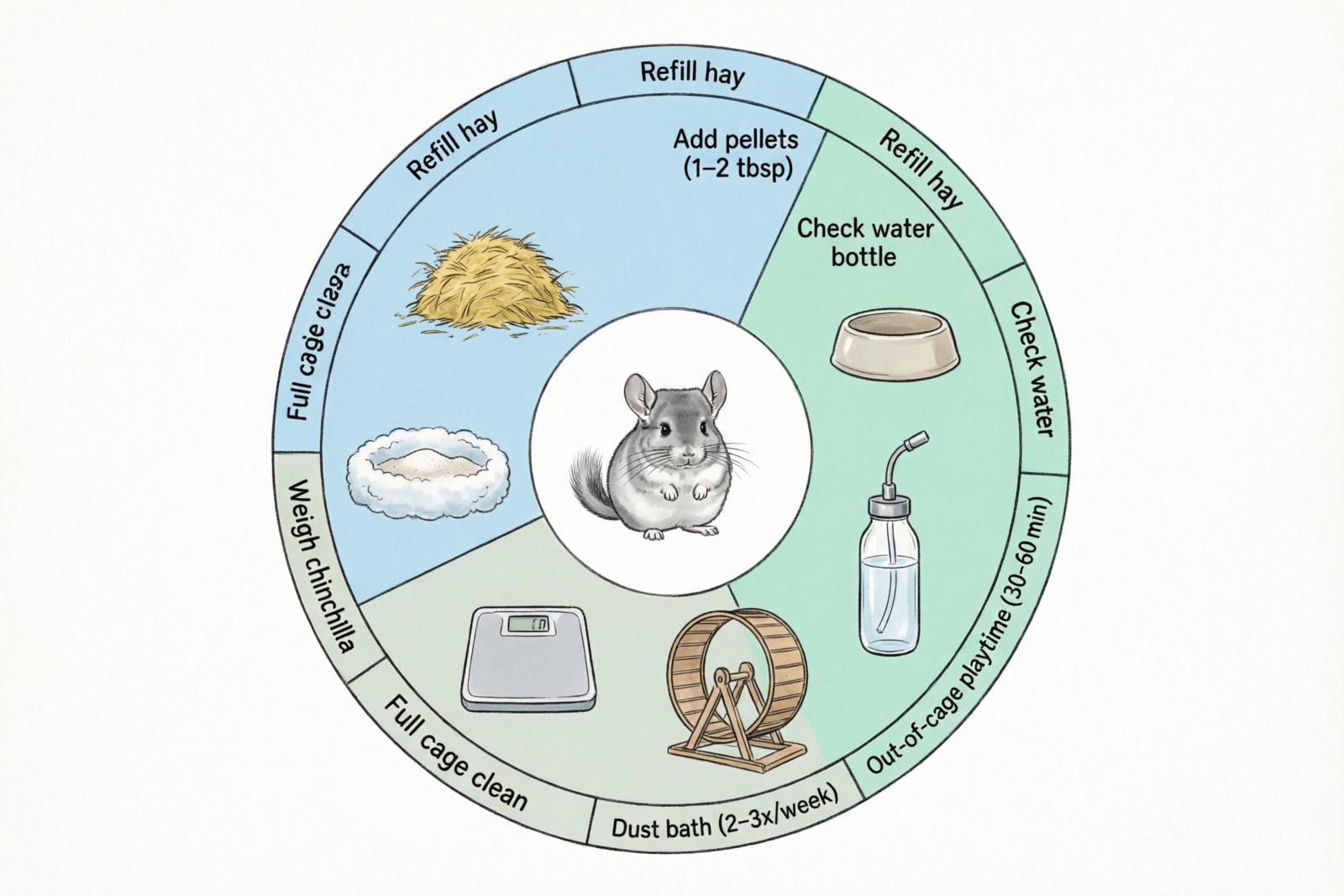
| Morning | Fresh hay | Refill to ensure unlimited access |
| Morning | Pellets | 1-2 tablespoons |
| Evening | Fresh hay | Refill as needed |
| Evening | Fresh water | Check and refill bottle |
| 2-3x Weekly | Dust bath | 10-15 minutes |
| Occasional | Treats | 1-2 small pieces maximum |
Feeding Tips:
- Feed at the same times daily to establish routine
- Remove uneaten pellets after 24 hours
- Never let hay run out—chinchillas need constant access
- Monitor water intake (average: 1.5-2.5 oz daily)
- Weigh your chinchilla weekly to track health
Chinchilla Dust Bath: Grooming and Hygiene
One of the most unique aspects of owning a chinchilla is their grooming method. Unlike other pets, chinchillas cannot get wet—their incredibly dense fur traps moisture, leading to fungal infections and other serious problems. Instead, they require regular dust baths to keep their fur clean and healthy.
Best Chinchilla Dust Baths Compared
Not all dust bath products are created equal. The right dust bath should be made from natural volcanic ash or pumice, finely ground to penetrate the chinchilla’s dense fur and absorb oils and dirt.
| Feature | Oxbow POOF! Dust Bath | Kaytee Dusting Powder |
|---|---|---|
| Price | $11.99 | $13.98 |
| Rating | ⭐ 4.7 | ⭐ 4.4 |
| Size | 2.5 lbs | 2.5 lbs |
| Texture | Very fine, premium quality | Medium texture |
| Material | 100% natural Blue Beauty dust | All-natural volcanic ash |
| Best For | Premium coat care | Budget-friendly option |
Premium Choice: Oxbow POOF! Chinchilla Dust Bath
The Oxbow POOF! Chinchilla Dust Bath ($11.99, 4.7 stars, 🔥) uses 100% natural Blue Beauty dust, known for its exceptionally fine texture. Users consistently report that their chinchillas’ coats become incredibly soft and silky after using this product. While it does create some dust, most owners find the quality worth the mess for the superior grooming results.
Budget-Friendly Option: Kaytee Chinchilla All Natural Dusting Powder
The Kaytee Chinchilla All Natural Dusting Powder ($13.98, 4.4 stars, 🔥) offers effective cleaning at an affordable price point. While the texture is slightly coarser than premium brands, many chinchillas enjoy it just as much, and it effectively removes oils and dirt from the fur. This is a great option for multi-chinchilla households where dust bath use is higher.
For more small pet grooming tips, see our guide on rabbit grooming basics.
Dust Bath Tips and Tricks
Best Practices:
-
Frequency: 2-3 times per week is ideal. Too frequent bathing can dry out the skin, while too infrequent leads to oily, matted fur.
-
Timing: Offer dust baths in the evening when chinchillas are most active (they’re crepuscular/nocturnal).
-
Duration: Allow 10-15 minutes of bathing time. Remove the bath house after to prevent excessive dust exposure.
-
Bath Container: Use a dedicated dust bath house or container that’s large enough for the chinchilla to roll around comfortably. Ceramic or heavy plastic containers work well.
-
Dust Reuse: You can reuse dust 2-3 times if you remove any waste. Replace entirely when it becomes clumpy or discolored.
-
Location: Place the bath house inside the cage during bath time, or use a separate playpen. The dust will get everywhere, so choose your location wisely.
Signs Your Chinchilla Needs a Bath:
- Fur appears oily or clumped
- Chinchilla seems less interested in grooming
- Visible dirt or debris in fur
- Fur has lost its usual softness
Why Chinchillas Can’t Get Wet
Understanding why water is dangerous helps explain the importance of dust baths:
Fur Density: Chinchilla fur is incredibly dense—with approximately 60 hairs growing from each follicle. This density means that if a chinchilla gets wet, the fur holds moisture against the skin and cannot air dry.
Health Risks of Water Exposure:
- Fungal Infections: Moisture trapped in the dense fur creates an ideal environment for fungal growth
- Hypothermia: Wet fur loses its insulating properties
- Skin Problems: Prolonged dampness causes irritation and infection
- Stress: Water exposure is highly stressful for chinchillas
If Your Chinchilla Gets Wet (Emergency):
- Gently blot excess moisture with towels
- Use a hair dryer on the lowest, coolest setting at least 12 inches away
- Keep the chinchilla warm until completely dry
- Monitor for signs of illness
- Consult a veterinarian if you notice any skin changes or lethargy
Chinchilla Toys and Enrichment: Keeping Them Happy
Providing mental stimulation is essential for a happy, healthy chinchilla. These intelligent, active animals require both mental engagement and physical exercise to thrive. Without proper enrichment, chinchillas can become bored, depressed, and may develop destructive behaviors or health problems.
Essential Chinchilla Toys
Toys are vital for a chinchilla’s wellbeing. The most important function of chinchilla toys is satisfying their natural chewing instinct. A chinchilla’s teeth never stop growing, and without proper chew toys, their teeth can overgrow and cause serious health problems.
Our Recommendation: ERKOON 11 Pack Chinchillas Chew Toys
The ERKOON 11 Pack Chinchillas Chew Toys ($15.99, 4.5 stars, 🔥) provides excellent variety for chinchilla enrichment. This set includes multiple types of chew toys made from natural apple wood—ladders, bells, rollers, and chew sticks—giving chinchillas different textures and shapes to explore. Users report that the variety keeps chinchillas engaged, and the natural wood is safe for their teeth.
Types of Essential Toys:
- Chew Toys (Most Important):
- Apple wood sticks
- Untreated pine blocks
- Willow balls
- Pumice stones
- Natural loofah
- Climbing and Exercise:
- Wooden ledges and platforms
- Climbing branches (apple, pear, willow)
- Exercise wheel (solid surface, 15+ inch diameter)
- Hammocks
- Hiding Places:
- Wooden houses
- Ceramic hideaways
- Fleece tunnels
- Foraging Toys:
- Hay balls
- Treat-dispensing toys (chinchilla-safe)
- Scattered treats in bedding
Materials to Avoid:
- ❌ Plastic (can cause blockages if ingested)
- ❌ Treated wood (contains toxic chemicals)
- ❌ Cedar or pine shavings (contain harmful oils)
- ❌ Fabric with loose threads (entanglement risk)
- ❌ Small parts that could be swallowed
For more toy ideas and exercise tips, see our guides on hamster toys and small pet exercise.
DIY Toy Ideas
Creating your own chinchilla toys can be fun and cost-effective:
Safe DIY Options:
- Apple Wood Branches: Collect from untreated apple trees, bake at 250°F for 2 hours to sterilize
- Untreated Pine Blocks: Cut into various shapes and sizes
- Paper Rolls: Empty toilet paper or paper towel rolls (remove all glue)
- Cardboard Boxes: Unprinted cardboard for hiding and chewing
- Fleece Strips: Braid into toys (no loose threads)
- Woven Baskets: Natural wicker or willow baskets (no dyes or varnish)
DIY Safety Rules:
- Always use untreated, natural materials
- Bake wooden items to kill bacteria and parasites
- Remove any staples, glue, or tape
- Supervise initial use to ensure safety
- Replace when worn or damaged
Exercise and Playtime
Chinchillas need daily exercise outside their cage to maintain physical and mental health.
Daily Exercise Requirements:
- Minimum: 30 minutes of out-of-cage time daily
- Ideal: 1 hour or more
- Frequency: Every day, preferably at the same time
Creating a Safe Play Environment:
Chinchilla-Proofing a Room:
- Block Electrical Cords: Chinchillas will chew through cords instantly
- Remove Toxic Plants: Many houseplants are toxic
- Seal Small Spaces: Block access behind furniture, appliances
- Remove Small Objects: Anything that could be chewed or swallowed
- Protect Furniture: Cover wooden legs and corners
- Close Doors and Windows: Prevent escape
Best Play Activities:
- Free exploration in a chinchilla-proofed room
- Climbing on safe furniture or play structures
- Chasing and playing with owners
- Exploring cardboard boxes and tubes
- Jumping between platforms
Supervision is Essential: Never leave chinchillas unsupervised during playtime. Their curiosity and chewing instincts can quickly lead to dangerous situations.
Chinchilla Health and Lifespan: What to Expect
One of the most remarkable aspects of chinchilla ownership is their long lifespan. With proper care, chinchillas can live 15-20 years, making them one of the longest-lived small pets. This longevity means owning a chinchilla is a serious, long-term commitment that shouldn’t be taken lightly.
Chinchilla Lifespan and Aging
Average Lifespan: 15-20 years in captivity with proper care
Life Stages:
- Baby (Kit): 0-6 months
- Young Adult: 6 months - 2 years
- Adult: 2-10 years
- Senior: 10+ years
Keys to Longevity:
- Proper Diet: High-fiber hay and quality pellets
- Temperature Control: Maintaining 60-70°F
- Regular Exercise: Daily out-of-cage time
- Stress Reduction: Consistent routine, gentle handling
- Preventive Care: Regular veterinary checkups
- Dental Health: Plenty of chew toys
Signs of Aging:
- Decreased activity levels
- Weight loss or gain
- Changes in eating habits
- Arthritis or mobility issues
- Vision or hearing changes
- Thinning fur
Caring for Senior Chinchillas:
- Provide softer bedding and lower platforms
- Adjust diet if needed (consult veterinarian)
- Increase veterinary checkups to twice yearly
- Monitor for health changes closely
- Maintain comfortable temperature
- Reduce stress and handle gently
For more small pet health information, see our guide on small pet health.
Common Health Issues
Understanding common health problems is essential for proactive ownership—it helps you catch issues early and seek veterinary care promptly.
1. Dental Problems
Chinchilla teeth grow continuously throughout their lives. Without proper wear from hay and chew toys, teeth can overgrow and cause serious problems.
Signs of Dental Issues:
- Difficulty eating or dropping food
- Weight loss
- Excessive drooling
- Swollen face or jaw
- Changes in droppings
Prevention: Provide unlimited hay and plenty of chew toys
2. Respiratory Infections
Chinchillas are susceptible to respiratory infections, especially when exposed to temperature fluctuations, poor ventilation, or dusty bedding.
Signs of Respiratory Infection:
- Sneezing or nasal discharge
- Labored breathing
- Wheezing or clicking sounds
- Lethargy
- Loss of appetite
Prevention: Maintain stable temperatures, good ventilation, and low-dust bedding
3. Digestive Problems (GI Stasis)
GI stasis is a serious, potentially fatal condition where the digestive system stops working properly. It can be caused by inappropriate diet, stress, or dehydration.
Signs of GI Stasis:
- Small or no droppings
- Loss of appetite
- Lethargy
- Hunched posture
- Teeth grinding (pain sign)
Prevention: Proper diet, unlimited hay, fresh water, stress reduction
4. Heat Stroke
Heat stroke is a life-threatening emergency that occurs when chinchillas are exposed to temperatures above 75°F.
Signs of Heat Stroke:
- Red ears
- Heavy panting
- Drooling
- Lethargy
- Collapse
Prevention: Maintain 60-70°F temperature at all times
5. Fungal Skin Infections
Often caused by moisture or poor hygiene, fungal infections can cause fur loss and skin irritation.
Signs of Fungal Infection:
- Patchy fur loss
- Red or irritated skin
- Excessive scratching
Prevention: Keep chinchilla dry, maintain clean cage, proper dust baths
When to See a Vet
Emergency Situations (Seek immediate care):
- No eating or drinking for 12+ hours
- No droppings for 12+ hours
- Labored breathing
- Severe lethargy
- Signs of heat stroke
- Injuries or bleeding
- Seizures
Schedule Veterinary Visit (Within 24-48 hours):
- Changes in eating or drinking habits
- Diarrhea or unusual droppings
- Weight loss
- Respiratory symptoms
- Behavioral changes
- Dental concerns
Annual Veterinary Care:
- Comprehensive physical examination
- Dental check
- Weight monitoring
- Fecal examination for parasites
- Discussion of diet and care
Finding a Chinchilla-Savvy Veterinarian:
Not all veterinarians are experienced with chinchillas. Find an exotic pet veterinarian who specializes in small mammals. Ask about:
- Experience with chinchillas specifically
- Emergency availability
- Typical costs for checkups and common procedures
- Recommended diet and care
For comprehensive care information for another small pet, see our ferret care guide.
Signs of a Healthy Chinchilla
Regularly monitoring your chinchilla is a key part of responsible ownership. A healthy chinchilla should exhibit:
Physical Signs:
- ✅ Bright, clear eyes with no discharge
- ✅ Clean nose, no discharge or crusting
- ✅ Soft, dense, even fur with no bald patches
- ✅ Clean ears with no redness or odor
- ✅ Normal, firm droppings (consistent size and shape)
- ✅ Healthy weight (not too thin or overweight)
- ✅ Clean bottom area
- ✅ White, healthy teeth (not overgrown)
Behavioral Signs:
- ✅ Active and curious during awake periods
- ✅ Good appetite and normal eating habits
- ✅ Normal drinking patterns
- ✅ Responsive to stimulation
- ✅ Normal grooming behavior
- ✅ Regular dust bath activity
Weekly Health Check:
- Weigh your chinchilla and track the number
- Check eyes, ears, nose for discharge
- Examine teeth (front incisors should be orange/yellow, not white)
- Check fur for bald spots or matting
- Monitor droppings for changes
- Observe eating and drinking behavior
Chinchilla Care FAQ: Common Questions Answered
Is a chinchilla easy to take care of?
Chinchilla ownership is moderately difficult compared to other small pets. They have specific requirements that make them more challenging than hamsters or guinea pigs:
Challenges:
- Strict temperature control (60-70°F) is essential
- Cannot get wet, requiring dust baths
- Long lifespan (15-20 years) is a major commitment
- Need large, multi-level cages
- Sensitive digestive systems require careful diet management
- Can be noisy at night (crepuscular/nocturnal)
- Require daily out-of-cage exercise time
Rewards:
- Incredibly soft fur and adorable appearance
- Can bond closely with owners
- Entertaining and playful personalities
- No odor when properly cared for
- Generally clean animals
- Long companionship
Bottom Line: While chinchillas require effort, these pets are rewarding for dedicated owners willing to meet their specific needs. See the full guide above for detailed requirements.
What are the downsides of chinchillas?
Before committing to a chinchilla, consider these potential challenges:
Long-Term Commitment: With a 15-20 year lifespan, chinchillas are long-term companions. Many owners don’t realize they’re signing up for nearly two decades of care.
Temperature Sensitivity: You’ll need to keep your home between 60-70°F year-round, which may increase air conditioning costs and limit where you can live.
Nighttime Activity: Chinchillas are crepuscular (active at dawn and dusk) and often nocturnal, meaning they can be noisy when you’re trying to sleep.
Chewing: Chinchillas chew constantly. They will damage furniture, baseboards, and electrical cords if not properly supervised during playtime.
Veterinary Costs: Finding chinchilla-savvy veterinarians can be difficult, and exotic pet care is often more expensive than traditional pets.
Space Requirements: Chinchillas need large, tall cages and daily out-of-cage exercise time in a chinchilla-proofed space.
Initial Cost: Setup costs (cage, supplies, chinchilla) can range from $300-$600+ for proper equipment.
Can chinchillas be left alone for 2 days?
No, chinchillas should not be left alone for 2 days without someone checking on them.
While chinchillas are relatively independent, they require daily monitoring for:
Daily Requirements:
- Fresh food and water check
- Temperature monitoring
- Health observation
- Social interaction (they’re social animals)
Risks of Leaving Alone:
- Water bottle could malfunction or empty
- Temperature could spike (dangerous)
- Health emergencies could occur
- Stress from isolation
For Short Trips:
- Have a trusted person check on your chinchilla daily
- Provide extra hay and water
- Leave detailed care instructions
- Maintain temperature control
For Longer Trips:
- Board with an exotic pet sitter
- Take your chinchilla to a trusted caregiver
- Some veterinarians offer boarding services
How bad do chinchilla bites hurt?
Chinchilla bites are generally not severe, but they can be painful.
Biting Behavior:
- Chinchillas are not naturally aggressive
- Biting is usually defensive, not offensive
- They may nip when frightened or mishandled
- Some chinchillas nip to explore (tasting)
Pain Level:
- Most bites feel like a sharp pinch
- Can break skin but rarely causes serious injury
- Less painful than bites from larger rodents
Prevention:
- Handle gently and support their body
- Let chinchillas come to you rather than grabbing
- Move slowly and speak softly
- Don’t startle them
- Learn to read body language
Note: The real danger is that chinchillas may chew electrical cords or furniture when out of their cage, not their bites.
Are chinchillas good pets for beginners?
With proper research and preparation, chinchillas can be good pets for dedicated beginners, but they’re not ideal for everyone.
Good for Beginners Who:
- Have thoroughly researched chinchilla needs
- Can afford the setup costs ($300-$600+)
- Have space for a large cage and play area
- Can maintain 60-70°F temperature consistently
- Are committed to 15-20 years of care
- Have time for daily interaction and exercise
- Can find an exotic pet veterinarian nearby
Not Ideal for Beginners Who:
- Want a low-maintenance pet
- Live in very hot climates without reliable AC
- Are frequently away from home
- Have limited space
- Are sensitive to nighttime noise
- Have young children (chinchillas are fragile)
Recommendation: If you’re a beginner considering a chinchilla, volunteer at a rescue or spend time with someone who owns chinchillas to understand the commitment before getting one.
Do chinchillas smell?
No, chinchillas themselves have almost no odor when properly cared for.
Why They Don’t Smell:
- Very dry droppings with minimal odor
- Dense fur that doesn’t hold smells
- Regular dust baths keep them clean
- No scent glands like ferrets
What Can Cause Odors:
- Dirty cage (should be cleaned weekly)
- Old or soiled bedding
- Unchanged dust bath
- Poor diet causing digestive issues
Odor Prevention:
- Spot clean cage daily (remove soiled bedding)
- Full cage cleaning weekly
- Replace dust bath regularly
- Use quality bedding (kiln-dried pine or fleece)
- Feed appropriate diet
- Good ventilation
Bottom Line: A well-maintained chinchilla area shouldn’t smell. If it does, it’s likely a cage cleaning issue, not the chinchilla. Properly maintained chinchillas are among the least smelly pets you can own.
Conclusion
Keeping a chinchilla requires dedication and attention to detail, but the reward is 15-20 years of companionship with one of the most unique and charming pets available. By providing the right environment—a temperature-controlled habitat with multiple levels—a proper diet of hay and pellets, regular dust baths, plenty of safe chew toys, and routine veterinary care, your chinchilla can live a long, healthy, and happy life.
Remember the fundamentals:
- Temperature: Keep between 60-70°F (16-21°C) at all times
- Diet: 70% hay, 30% pellets, minimal treats
- Grooming: Dust baths 2-3 times per week, never water
- Exercise: Daily out-of-cage time in a chinchilla-proofed space
- Health: Regular veterinary checkups with an exotic pet specialist
Whether you choose the premium MidWest Critter Nation cage or the budget-friendly HABUTWAY option, feed Oxbow Essentials pellets, and provide Oxbow POOF! or Kaytee dust baths, investing in quality products and consistent routines will pay off in your chinchilla’s health and happiness.
Chinchillas are not pets for everyone, but for those willing to meet their specific needs, they offer unparalleled companionship and joy. If you’re prepared for the commitment, a chinchilla can become a beloved member of your family for decades to come.