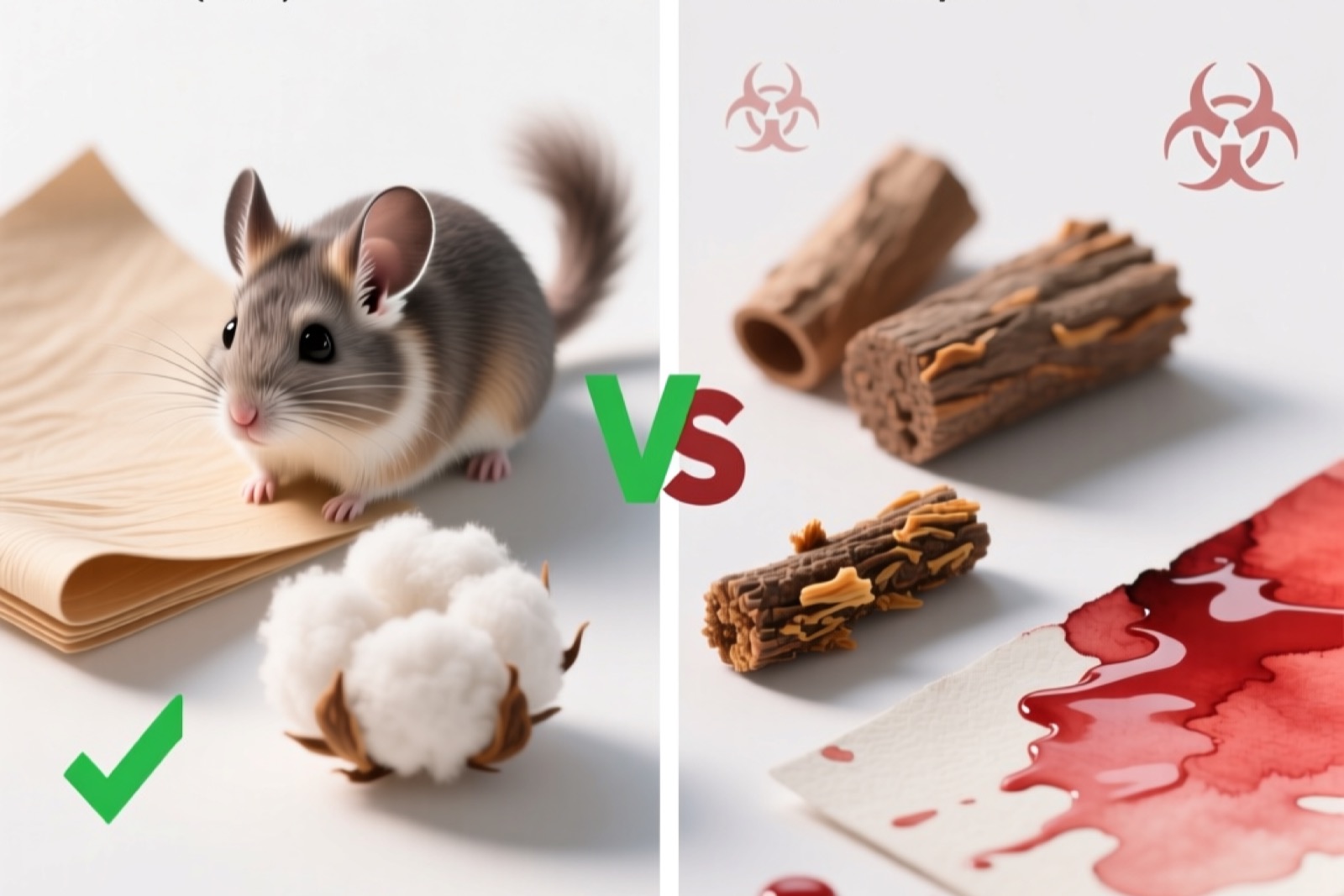
Why Bedding Choice Matters More Than You Think
Chinchillas spend 14 to 18 hours a day in contact with their cage flooring. That constant exposure makes bedding one of the most consequential choices you’ll make — more than most new owners realize. Respiratory infections, foot sores, skin irritation, and chronic stress can all trace back to the wrong material.
Chinchillas have respiratory systems far more sensitive than most small pets. Their native Andes mountain habitat is cool, dry, and essentially dust-free. Put them on dusty or aromatic bedding — cedar, non-kiln-dried pine, sawdust — and chronic respiratory inflammation develops quickly. Ammonia from accumulated urine compounds the problem, damaging lung tissue at concentrations that wouldn’t bother a rabbit.
For cage environment and cleaning guidance, see our chinchilla care guide. For another aspect of cage hygiene, our chinchilla dust bath guide covers how regular dust baths complement a clean bedding setup.
What “kiln-dried” means: Kiln-drying heats wood shavings to 350–400°F (175–200°C), which burns off volatile organic compounds like phenols and aromatic oils. In fresh pine and cedar, these compounds cause liver damage and respiratory disease. Kiln-drying removes them. Aspen is naturally phenol-free, so it’s safer even without kiln-drying — but the process still helps by reducing dust and moisture.
Quick Comparison: 7 Best Chinchilla Bedding Options
| # | Product | Type | Price |
|---|---|---|---|
| Kaytee Aspen Bedding | Aspen Shavings | $17.99 | Best Overall |
| Carefresh Paper Bedding | Paper Bedding | $22.99 | Best Dust-Free |
| Kaytee Pine Bedding | Pine Shavings | $12.99 | Most Affordable |
| YKD Waterproof Fleece Liners | Fleece Liner | $37.95 | Best Reusable |
| Amakunft Washable Bed Mats | Washable Pad | $13.99 | Best Comfort |
| Niteangel Aspen Shavings | Premium Aspen | $20.99 | Best Quality |
| Newwiee Fleece Blankets 24-Pack | Fleece Blankets | $29.99 | Best Variety |
Fleece Liners vs Loose Bedding: The Big Decision
This is the decision that determines your entire cage maintenance routine, and most chinchilla bedding guides gloss over it. On Reddit’s r/chinchilla community, experienced owners overwhelmingly recommend fleece liners — but fleece has real downsides that beginners should understand before committing.
Fleece liners eliminate dust entirely, which is the single biggest respiratory risk from bedding. No loose particles means no eye irritation, no dust settling in fur, and no particles getting kicked into food bowls. Fleece is reusable — buy a set, wash it weekly, and it lasts 6 to 12 months. It covers wire shelf surfaces in multi-level cages, which is critical because chinchillas on bare wire develop bumblefoot, a painful foot infection. The trade-off is maintenance: fleece needs daily spot cleaning or shaking, and full washing every 3 to 5 days. You need at least two sets so your chinchilla isn’t on a bare floor during laundry. Urine pools on the fleece surface rather than absorbing, so you need to wipe or shake it out daily. The upfront cost is higher — a good fleece setup runs $30 to $40.
Loose bedding (aspen, paper, or kiln-dried pine) is simpler for beginners. Pour it in, spot clean soiled areas, and replace it entirely every week or two. Loose bedding absorbs urine across the entire cage floor rather than letting it sit on the surface. Most chinchillas genuinely enjoy digging and burrowing in loose material — it’s a natural behavior that fleece can’t replicate. The downsides are dust (even “dust-free” products generate some), potential for harboring mites, and the need for more frequent full cage cleanings.
For cage setup guidance and how cage type affects bedding choice, see our chinchilla cage guide.
| Criteria | Fleece Liners | Loose Bedding |
|---|---|---|
| Respiratory safety | No dust | Some dust present |
| Odor control | Needs daily attention | Absorbs across surface |
| Maintenance effort | Wash every 3-5 days | Replace every 7-10 days |
| Upfront cost | $30-40 for set | $13-23 per bag |
| Long-term cost | Low (reusable) | Ongoing (consumable) |
| Natural behavior | No digging | Chinchillas enjoy burrowing |
| Best cage type | Multi-level wire cages | Single-level or solid floor |
In my experience, the decision comes down to two questions: does your chinchilla chew fabric, and are you willing to do laundry twice a week? If the answer to the first is yes, fleece isn’t safe — ingested fibers cause intestinal blockages. If the answer to the second is no, loose bedding is the more practical choice.
Best Loose Bedding for Chinchillas
If you go with loose bedding, the material choice is critical. Aspen is the safest wood option, paper is the most dust-free, and pine is the cheapest — but only if kiln-dried.
Kaytee Aspen Bedding
The Kaytee aspen bedding is the default loose bedding choice for chinchilla owners. With 5 and a , it’s the most-reviewed aspen bedding on Amazon. Aspen is naturally phenol-free — unlike pine, even non-kiln-dried aspen doesn’t contain the compounds that damage chinchilla livers. The kiln-drying further reduces dust and moisture.
At $17.99 for two 19.7L bags, one bag lasts through multiple cleanings. One owner noted it “almost eliminates odor” and another praised it as “dust free, very soft to the touch.”
Quality varies between batches — the main complaint. Some owners receive bags with large stick-like pieces, others get dustier-than-expected contents. One owner called their Amazon order “very, very low quality” compared to pet store versions. This Amazon-versus-retail quality gap shows up across bedding brands, not just Kaytee.
I’d recommend starting here for loose bedding. Freeze new bags for 24 hours before use to kill mite eggs.
Niteangel Aspen Shavings
The Niteangel aspen shavings match Kaytee’s . Multiple owners call it “the best aspen bedding I have ever purchased.” One long-haired hamster owner noted it “rarely gets caught up in her hair like paper bedding” — relevant for chinchillas with their exceptionally dense fur.
At $20.99, it’s a few dollars more than Kaytee, but owners consistently report better consistency and softer texture. One owner said “the bag is a lot larger than I had expected” and confirmed “after three days his cage doesn’t smell at all.”
Concerns include one open bag on arrival (check seals), a mite report after switching (freeze before use), and one owner who claimed “these are pine shavings, not aspen” — visually verify when you receive it. If Kaytee quality has been inconsistent, Niteangel is worth the premium.
Carefresh Paper Bedding
The Carefresh paper bedding is the dust-free option for chinchillas with respiratory sensitivity. With 26 and, it’s the most-reviewed small pet bedding on Amazon. The 99% dust-free claim is confirmed by owners: “the 99% dust-free claim is no joke.” The white color makes soiled areas easy to spot, and Carefresh advertises 10-day odor control — the longest claim of any loose option here.
At $22.99 it’s the priciest loose bedding, and bags are often compressed tighter than expected. Amazon quality sometimes differs from pet store versions — one owner said their Amazon bag “is not as soft as the one I get from my local petco.” For chinchillas, paper fibers can stick to dense fur, though it’s not a major issue. If your chinchilla has respiratory problems, this is the loose bedding I’d choose first.
Best Pine Bedding for Chinchillas
Pine bedding is controversial in the chinchilla community. Fresh pine contains phenols that cause chronic respiratory infections and liver damage. Kiln-dried pine has these compounds removed by heat processing, making it safe — but some owners still avoid it.
The Kaytee pine bedding is the cheapest safe option at $12.99, with 3 and. Kaytee kiln-dries their pine, and the natural scent provides better odor control than aspen.
Downsides: one owner said it “stinks faster than paper shreds,” and some batches are dustier. The community is split — some use kiln-dried pine without issues, others refuse any pine regardless of processing.
My take: safe if genuinely kiln-dried, and Kaytee is trustworthy. But if your chinchilla has any respiratory sensitivity, I’d stick with aspen or paper. Pine is the budget pick for healthy chinchillas in well-ventilated cages.
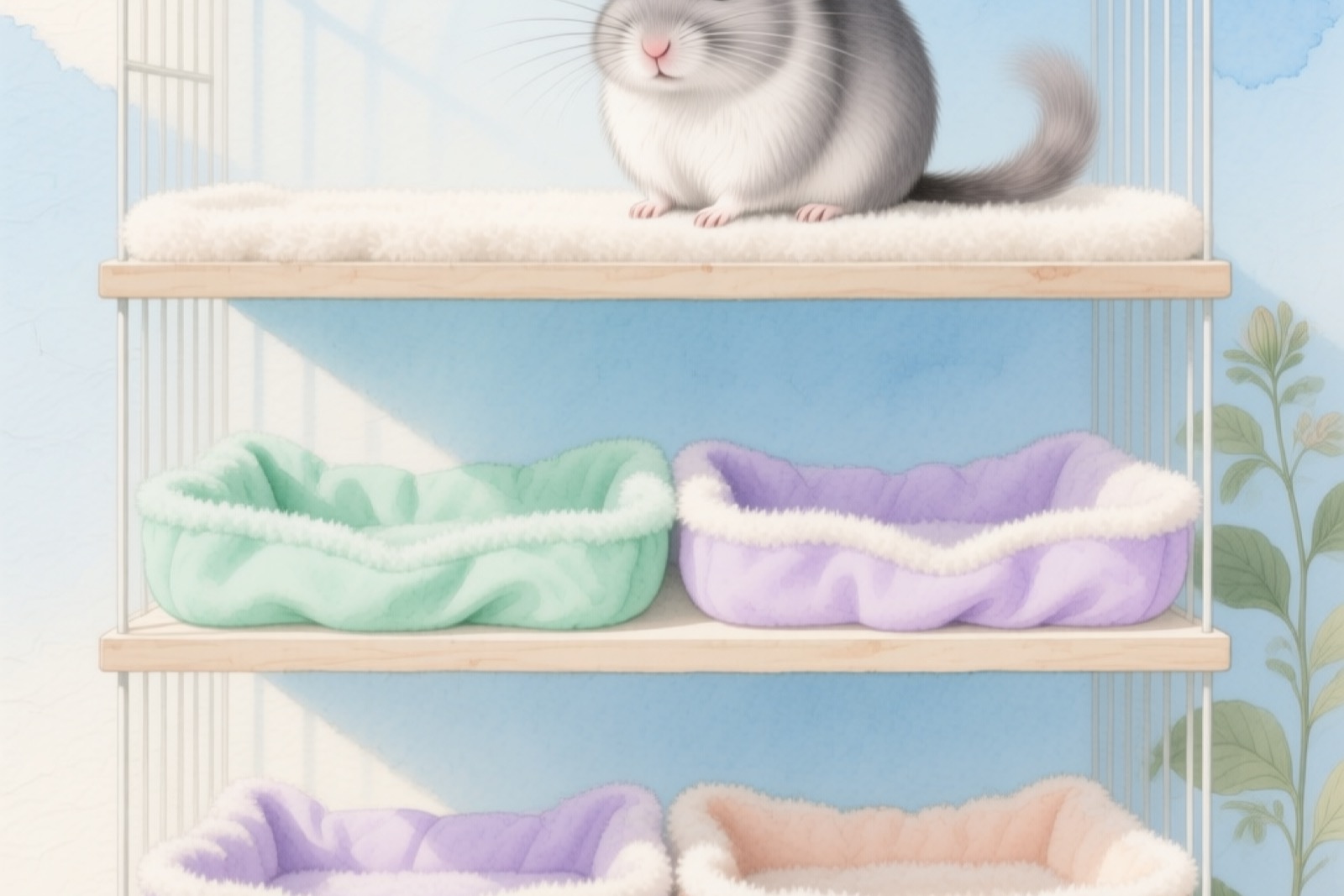
Best Fleece Liners and Washable Bedding for Chinchillas
Fleece is the chinchilla community’s top recommendation, but quality varies enormously. “Fleece” can mean anti-pill polar fleece (ideal) or a thin woven fabric that traps claws (problematic).
The three-layer system is what experienced owners use: anti-pill fleece on top (wicks moisture away), an absorbent middle layer (U-Haul furniture pads work well and are cheap), and a waterproof bottom layer. This costs more upfront but eliminates ongoing bedding purchases and provides the cleanest environment for chinchilla lungs.
For feeding practices that reduce cage mess, our chinchilla food guide covers food-related cleanliness.
YKD Waterproof Fleece Liners
The YKD waterproof fleece liners are designed for Ferret Nation and Critter Nation cages — the most popular chinchilla cages. With one owner said “fits my ferret nation cage perfectly” and they “should have just ordered multiple sets.” The Velcro attachment for the ramp opening is a useful detail.
At $37.95, these are the priciest option but reusable for 6 to 12 months. The three-layer construction (fleece, absorbent middle, waterproof bottom) means no need to build your own layering system.
The problems: one owner reported claws “get stuck on the fabric,” another warned chinchillas “will definitely chew” the non-fleece material, and one owner noted “these aren’t actually fleece” — they received woven fabric rather than anti-pill fleece. The waterproof backing means urine sits on the surface and needs daily wiping.
I’d recommend these for Ferret Nation/Critter Nation cages if your chinchilla isn’t a chewer. Buy two sets for rotation during washing.
Amakunft Washable Bed Mats
The Amakunft washable bed mats serve a different purpose than full cage liners. With 1 and, these are small sleeping pads (roughly 12 by 18 inches) rather than cage-floor coverage. At $13.99 for a two-pack, they’re the cheapest washable option on this list.
One guinea pig owner said “they wash up good and are still nice and fluffy after many washings” and ordered multiple sets for daily rotation. The soft texture makes them genuinely comfortable sleeping spots for shelves and hideouts.
These aren’t waterproof and aren’t designed for full cage coverage. Urine can soak through to whatever’s underneath. Hay sticks to them easily, making laundry day more tedious. Some owners reported quality decline between orders — “they changed, they are thin and flat and not like the first time I purchased.” I’d use these as sleeping pads on shelves and in hideouts, layered over a waterproof base, not as primary bedding.
Newwiee 24-Pack Fleece Blankets
The Newwiee fleece blankets are a bulk set of 24 small (12 by 12 inch) blankets at $29.99 — roughly $1.25 per piece. The concept: place one per shelf, swap daily, wash weekly. At the idea appeals to owners wanting a rotation system without custom liners.
Multiple owners say they’re “not even real fleece” — thin synthetic material. They don’t absorb: “they don’t absorb anything and just kinda stay wet.” Quality varies within the same pack. I’d only use these as supplementary daily-change layers over proper waterproof liners.
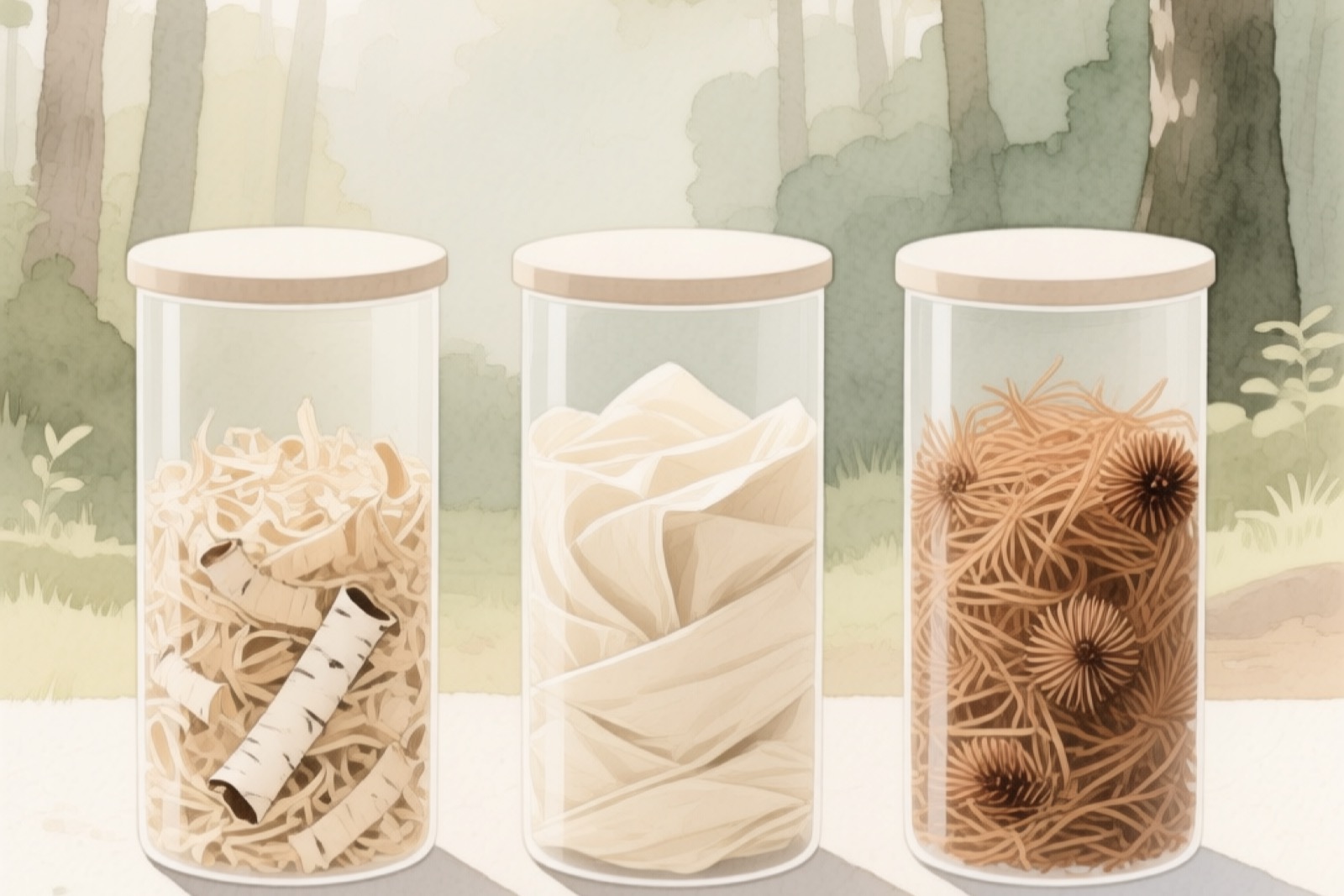
Bedding Safety: What Never to Use
Some bedding materials safe for other pets are dangerous for chinchillas. Their sensitive respiratory systems and tendency to chew make them more vulnerable than rabbits or guinea pigs.
For how housing conditions affect longevity, our chinchilla lifespan guide covers long-term health implications.
Cedar is the worst choice — no exceptions. Cedar contains volatile oils (plicatic acid and thujone) that cause progressive liver damage, respiratory disease, and skin irritation.
Non-kiln-dried pine contains phenols that cause the same organ damage as cedar, just more slowly. Only kiln-dried pine is acceptable.
Cotton or terry cloth is dangerous because chinchillas chew fabric, and ingested fibers cause intestinal blockages. Fleece is different — it doesn’t shed fibers the same way — but only for non-chewing chinchillas.
Cat litter, clay, and clumping litter generate dangerous dust and swell when ingested. Corn cob bedding ferments in the GI tract and causes fatal bloating. Sawdust of unknown type may contain toxic species like yew, oak, or cherry.
| Material | Safe? | Why |
|---|---|---|
| Aspen shavings | Safe | Naturally phenol-free |
| Kiln-dried pine | Safe | Heat process removes phenols |
| Paper bedding (unscented) | Safe | No oils or phenols |
| Fleece liners | Safe | For non-chewing chinchillas |
| Cedar | Never | Liver damage, respiratory disease |
| Non-kiln-dried pine | Never | Phenols cause organ damage |
| Cotton or terry cloth | Never | Fiber ingestion causes blockages |
| Cat litter or clay | Never | Dust and clumping are deadly |
| Corn cob | Never | Fermentation causes fatal bloating |
Freeze any new loose bedding for 24 hours before use — this kills mite eggs that can survive in packaged wood shavings and paper products. It’s a simple step that prevents a surprisingly common problem.