Quick Answer: The 10 Best Canary Food Brands
| # | Product | Type | Price | Best For |
|---|---|---|---|---|
| 1 | Dr. Harvey’s Incredible Canary Blend | Gourmet Blend | $22.95 (4 lb) | Best Overall |
| 2 | Kaytee Forti-Diet Pro Health | Seed Mix | $6.99 (2 lb) | Best Budget |
| 3 | Wild Harvest Advanced Nutrition | Seed Mix | $7.95 (2 lb) | Best Daily Mix |
| 4 | Sweet Harvest Canary Food | Seed Mix | $7.95 (4 lb) | Best Per-Pound Value |
| 5 | Canary Cuisine Canary Food | Premium Seed | $24.99 (4 lb) | Best for Show Birds |
| 6 | Higgins Vita Seed Canary | Seed Mix | $17.98 (2 lb) | Community Pick |
| 7 | Wild Harvest Daily Blend 10 lb | Budget Bulk | $5.95 (10 lb) | Best Multi-Bird Value |
| 8 | RoudyBush Daily Maintenance Mini | Pellets | $24.95 (10 lb) | Best Pellets |
| 9 | Lafeber Premium Daily Diet | Pellets | $12.99 (5 lb) | Best Human-Grade |
| 10 | Vitakraft VitaSmart Egg Food | Egg Supplement | $2.74 (1.1 lb) | Best Supplement |
Canary Diet Guide — What Percentage of What?
Canary food refers to any commercially prepared or fresh food formulated for canaries — among canary food pellets (Serinus canaria), a small songbird species in the finch family Fringillidae. Unlike parrots, canaries are primarily seed-eating birds in the wild, though captive diets benefit from variety. The optimal canary diet follows a ratio backed by veterinary nutritionists at VCA Animal Hospitals. This ratio differs from incorrect guidelines found on some competitor sites that recommend 50% grain, 45% fruit, and 5% dairy — the dairy recommendation is dangerous because birds are lactose intolerant.
| Component | Recommended % | Examples | Role |
|---|---|---|---|
| Seed mix OR pellets | 70% | Daily staple food | Base nutrition |
| Fresh vegetables & fruits | 20% | Broccoli, kale, apple, dandelion greens | Vitamins, hydration |
| Protein supplement | 10% | Egg food, boiled egg, song food | Molting, breeding support |
This 70/20/10 ratio applies to all canary life stages. Similar structured feeding approaches work for other small pets — see our hedgehog diet guide for comparison. During breeding or molting, the protein portion can increase to 15-20% temporarily. This article is part of our bird food hub — see also our best budgie food, best cockatiel food, and best conure food guides for cross-species comparison. For a complete overview of avian nutrition principles, see our bird diet guide.
Seed vs Pellet debate: This is the most discussed topic in the canary community. Seed mixes allow natural foraging behavior — canaries enjoy picking through different seeds. However, seed-only diets risk selective eating where your canary picks out favorites like sunflower seeds and leaves nutrition behind.
Pellets provide complete nutrition in every bite, eliminating selective eating entirely. The drawback is that many canaries resist pellets initially. The same seed vs pellet debate applies across species — hamster diets face identical questions about selective eating in the broader canary diet context — see our best budgie food and best cockatiel food guides for similar nutritional discussions across bird species.
Transitioning from seeds to pellets: Mix 75% seeds with 25% pellets for the first week. Move to 50/50 in week two, then 25/75 in week three, and finally 100% pellets. The full transition takes 2-4 weeks. Monitor weight weekly during transition — if your canary loses more than 10% body weight, slow the transition.
In my experience, the transition goes smoother if you offer pellets in a separate dish from seeds rather than mixing them. Many canaries will eventually try the pellets out of curiosity.
Seed Mixes and Gourmet Blends — The Traditional Staple
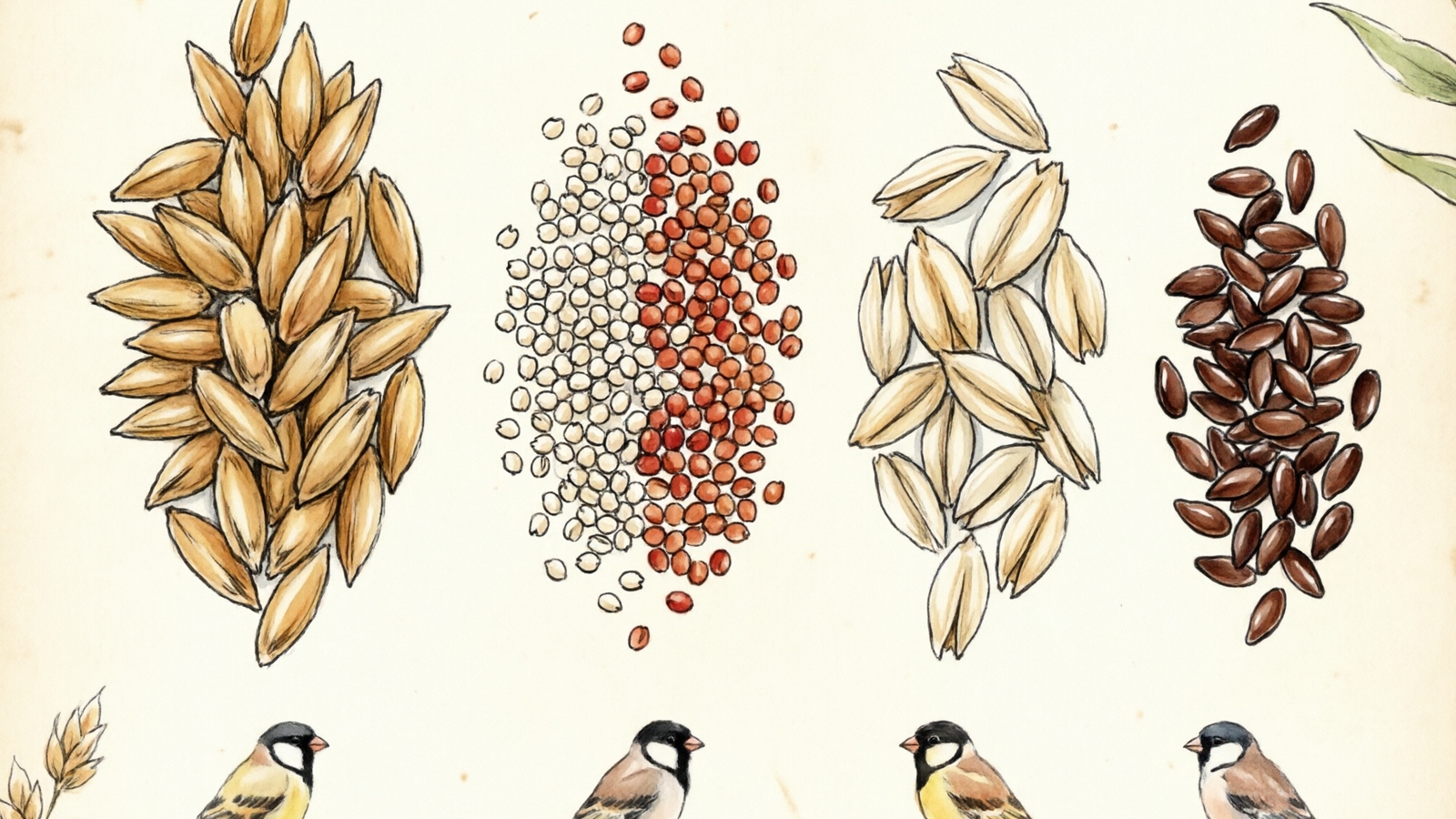
Seed mixes remain the most popular type of canary food. They encourage natural foraging behavior, doubling as enrichment canary treats during cage time. Most canaries accept them eagerly. A quality canary seed mix should include canary grass seed, various millets, oat groats, and flax seed as the base ingredients.
1. Dr. Harvey’s Incredible Canary Blend — Best Overall
Dr. Harvey’s Incredible Canary Blend earns the top spot with human-grade ingredients and remarkable variety. This gourmet blend contains 9 types of seeds and millet, 9 types of nuts, and 10 types of fruits and vegetables — 28+ ingredients in one bag.
At 17% protein and 19% fat, the macronutrient profile supports vibrant plumage and sustained energy. Made in the USA without chemicals, dyes, preservatives, or synthetic additives. The variety encourages natural foraging as canaries pick through different textures.
In my experience, the higher fat content (19%) makes this blend better suited for active or breeding canaries. Sedentary pet canaries may gain excess weight if portions aren’t monitored carefully.
What we like: Consistently high owner ratings on the standalone 4-lb listing. Human-grade ingredients with no artificial additives. 28+ seed, nut, and fruit varieties provide exceptional dietary variety.
What could be better: At $22.95 for 4 lb ($5.74/lb), it’s the most expensive canary food option. No pellets included — this is a gourmet seed blend, not a complete formulated diet. The 19% fat content may be too rich for less active canaries.
2. Kaytee Forti-Diet Pro Health — Best Budget
Kaytee Forti-Diet Pro Health is the most widely purchased canary food available. At $6.99 for 2 lb, it delivers reliable nutrition at the lowest per-bag price on this list.
The omega-3 fortification supports brain function, heart health, skin condition, and feather quality. Kaytee is the most trusted name in small bird food — a veterinarian-recommended brand that’s been the default choice for decades.
I’ve fed Kaytee to multiple canaries over the years. The consistency is reliable across batches, though the brand had some quality complaints in 2022-2023. Recent production has been much improved — always check the freshness date on the bag.
What we like: Widely purchased canary food option. Omega-3 fortified for feather and skin health. Budget-friendly at $3.50/lb with reliable availability.
What could be better: Seed-only formula with no pellets means selective eating is a real risk. Some canaries pick out sunflower seeds and leave the rest. Quality inconsistency was reported in 2022-2023 batches, though recent bags have improved.
3. Wild Harvest Advanced Nutrition — Best Daily Mix
Wild Harvest Advanced Nutrition offers vitamin A and omega-3 fortification in a seed mix designed to replicate a canary’s natural habitat diet. The blend features canary grass seed, oat groats, flax seed, and various millets.
With strong community feedback and consistent quality, this is the a frequently discussed canary food option on the market.
What we like: Well-regarded canary seed mix. Vitamin A plus omega-3 double fortification supports eye health and feather quality. Unique canary grass seed blend mirrors wild canary foraging.
What could be better: Seed-only formula without pellets for complete nutrition. The 2 lb bag runs out quickly for multi-bird households. Multi-species labeling means the same formula is sold for both canaries and finches.
4. Sweet Harvest Canary Food — Best Per-Pound Value
Sweet Harvest Canary Food delivers the best per-pound value at $7.95 for 4 lb — only $1.99/lb. Kaylor of Colorado has manufactured bird food since 1974, bringing decades of experience to this vitamin-enriched natural seed mix.
All colors in the blend are achieved naturally without artificial dyes. The 4 lb bag is the ideal size for single canary owners, lasting approximately 2-3 months with regular feeding. The unique vitamin application process ensures balanced nutrition distributed across individual seeds.
What we like: Best per-pound value at $1.99/lb — nearly half the cost of premium brands. Kaylor of Colorado since 1974 with established manufacturing quality. The 4 lb bag is the right size for one canary.
What could be better: Fewer community feedback data points than Kaytee or Wild Harvest. Multi-species labeling (canaries, finches, lovebirds) means it’s not specifically formulated for canaries alone. Less brand recognition compared to bigger names.
5. Canary Cuisine Canary Food — Best for Show Birds
Canary Cuisine Canary Food is a premium canary seed mix formulated for optimal nutrition. This 4 lb bag combines mixed fruit and birdseed with essential vitamins to support vibrant plumage and overall health.
This canary food is designed for show birds, breeding pairs, and everyday feeding. The mixed fruit and seed blend provides natural foraging enrichment while delivering balanced nutrition.
What we like: Premium 4 lb bag with mixed fruit and birdseed for balanced nutrition. Provides essential vitamins for vibrant plumage and overall health. Good value at $24.99 for a 4 lb bag ($6.25/lb). Natural foraging enrichment from the mixed ingredients.
What could be better: Premium-priced compared to budget seed mixes. Some canaries may pick out preferred seeds. Mixed fruit pieces can create dust if stored for extended periods.
6. Higgins Vita Seed Canary — Community Pick
Higgins Vita Seed Canary carries strong community authority despite being a smaller-brand option. Higgins is recommended by both AI Overview sources and Chewy’s curated list — and the canary community on forums frequently names Higgins as a trusted brand.
Vita Seed is a natural premium seed blend without artificial preservatives or colors. Higgins also produces Sunburst Gourmet and InTune pellets, creating a full product ecosystem for canary owners who want to stick with one brand across food types.
What we like: Strong community and veterinary authority — recommended by AI Overview and Chewy. Natural ingredients without artificial preservatives. Full Higgins ecosystem (Sunburst, InTune) for brand-loyal owners.
What could be better: Review count is below the standard feedback threshold. At $12.99 for 2 lb ($6.50/lb), it’s more expensive per pound than Kaytee or Wild Harvest. Better stocked at Chewy and specialty bird stores.
Pellet Options — Complete Nutrition in Every Bite
Canary food pellets solve the biggest problem with seed-based diets: selective eating. Every pellet contains the same balanced nutrition, so your canary can’t cherry-pick favorite ingredients. The canary food pellets offer a modern approach to complete nutrition — the same strategy used across bird species. See our best cockatiel food guide for a parallel comparison.
7. RoudyBush Daily Maintenance Mini — Best Pellets
RoudyBush Daily Maintenance Mini is frequently recommended by avian specialists for canary food and a well-regarded pellet option. These veterinarian-formulated mini pellets are sized specifically for canary and finch beaks.
The mini pellet size is critical — standard bird pellets are too large for a canary’s small beak. RoudyBush solves this with appropriately sized pieces that canaries can handle easily. The 10 lb bag provides excellent long-term value at $2.50/lb.
What we like: A well-regarded pellet option. Frequently recommended by avian specialists for canary food. Veterinarian-formulated complete nutrition eliminates the need for additional supplementation.
What could be better: Many canaries resist pellet-only diets — the transition from seeds requires 2-4 weeks of gradual mixing. The 10 lb bag is oversized for single canary owners, lasting 6+ months. Some canaries refuse pellets entirely despite extended transition attempts.
8. Lafeber Premium Daily Diet — Best Human-Grade
Lafeber Premium Daily Diet comes from a company with nearly 100 years of avian nutrition expertise — Lafeber has been making bird food since 1926. These non-GMO, human-grade pellets are specifically formulated for canaries.
VCA Animal Hospitals specifically mentions Lafeber in their canary feeding guide, which carries significant veterinary authority. The 5 lb bag at $12.99 ($2.60/lb) offers strong value for human-grade quality. A smaller 1.25 lb bag is also available for owners wanting to test pellet acceptance before committing.
What we like: Lafeber since 1926 — nearly a century of avian nutrition expertise. Non-GMO human-grade ingredients with VCA veterinary endorsement. Available in a trial-friendly 1.25 lb size.
What could be better: Fewer owner reviews than RoudyBush. The community rating sits slightly below RoudyBush’s. Same pellet transition challenge applies — some canaries resist the texture change from seeds.
Budget Bulk and Supplements
9. Wild Harvest Daily Blend 10 lb — Best Multi-Bird Value
Wild Harvest Daily Blend delivers incredible value at $5.95 for 10 lb — only $0.60/lb. It is the most widely discussed small bird food available by a wide margin.
This blend is ideal for multi-bird households with parakeets, finches, and canaries. The sealed-in-freshness resealable bag maintains seed quality over the extended storage period that a 10 lb bag requires. It works well as canary treats scattered in a foraging tray alongside the primary staple food.
What we like: The most widely discussed small bird food. Unbeatable value at $0.60/lb. Orange essence flavor that appeals to multiple species. Resealable bag preserves freshness.
What could be better: Not canary-specific — labeled for parakeets, canaries, and finches. The 10 lb bag is impractical for single canary owners, lasting well over a year. Some owners report excessive dust and empty hulls at the bottom of the bag. Lower ingredient quality compared to premium seed blends.
10. Vitakraft VitaSmart Egg Food — Best Supplement
Vitakraft VitaSmart Egg Food is the most widely used egg food supplement available. Made with real eggs, seeds, and honey, this protein-rich supplement delivers vitamins A, D, and E — critical nutrients for canaries during molting and breeding seasons.
Vitakraft has been in the pet industry since 1835 — over 180 years of experience. The VCA recommends egg food as 10% of a canary diet, making this supplement essential rather than optional for complete canary diet nutrition. It also doubles as effective canary song food, as the protein boost supports the energy demands of singing.
At $2.74 for 1.1 lb, it’s the most affordable item on this best canary food list. The small bag size means frequent repurchasing, but the low price softens that inconvenience. Serve 1 teaspoon 2-3 times per week as a supplement alongside the staple canary food.
What we like: VCA-recommended protein supplement for 10% of canary diet. Consistently strong community feedback. Functions as both egg food supplement and canary song food for singing canaries. Affordable at $2.74.
What could be better: Not a staple food — this is a supplement only (max 10-20% of total diet). Multi-species product not specifically formulated for canaries. The 1.1 lb bag runs out quickly with regular use. Some canaries reject egg food if not introduced at a young age.
Safe vs Toxic Foods for Canaries
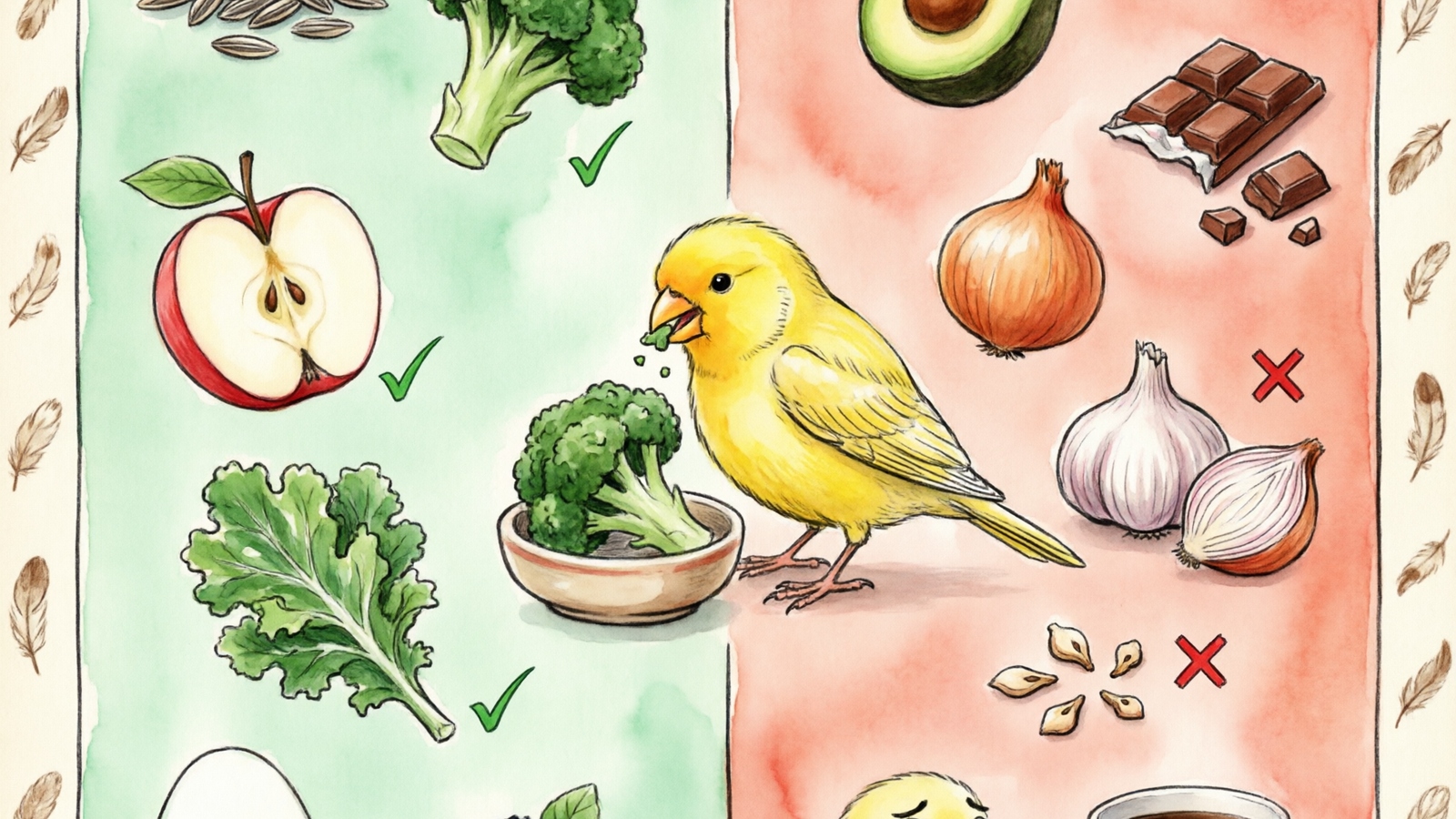
Understanding which foods are safe and which are dangerous is as important as choosing the right canary food. Some commonly recommended foods in older guides are actually harmful — dairy products, for example, should never be fed to birds.
| Safe Foods | Feed Sparingly | Toxic — Never Feed |
|---|---|---|
| Canary grass seed | Apple slices (no seeds) | Avocado |
| Millet varieties | Blueberries, raspberries | Chocolate |
| Oat groats | Broccoli, kale, spinach | Onions and garlic |
| Flax seed | Cooked sweet potato | Fruit seeds and pits |
| Boiled egg (plain) | Dandelion greens | Caffeine and alcohol |
| Egg food supplement | Bananas, mango | Salty or sugary human food |
| Fresh water daily | Song food treats | Dairy (birds are lactose intolerant) |
Critical safety rules: Remove uneaten fresh food and canary treats after 4 hours to prevent bacterial growth. Apple seeds and cherry pits contain amygdalin, a cyanogenic glycoside that converts to cyanide when crushed or chewed — always remove seeds before feeding fruit. No avocado, chocolate, or caffeine — ever. These are toxic to all bird species and can be fatal even in small amounts.
For cage setup and feeding station placement, see our canary cage guide. Proper cage arrangement with separate food stations prevents cross-contamination and supports a healthy canary diet.
Canary Diet Do’s and Don’ts
✅ Safe Feeding Practices
- ✅ Use pellets as the dietary foundation — VCA recommends pellets represent 75-80% of the diet. Seed-only diets are nutritionally incomplete. (VCA Animal Hospitals)
- ✅ Follow the 70/20/10 ratio as a minimum standard — At least 70% staple food (seeds or pellets), 20% fresh vegetables and fruits, 10% protein supplement like egg food.
- ✅ Offer fresh vegetables daily — Broccoli, kale, spinach, and dandelion greens provide essential vitamins that seeds alone lack. Seed diets are “deficient in calcium, vitamin A, and other nutrients.” (Merck Veterinary Manual)
- ✅ Transition from seeds to pellets gradually — Mix 75/25 seeds to pellets, then 50/50, then 25/75, over 2-4 weeks. Monitor weight — if your canary loses more than 10% body weight, slow the transition.
- ✅ Remove uneaten fresh food after 4 hours — Bacterial growth in cages can cause digestive infections.
- ✅ Supplement with egg food during molting and breeding — Protein demands increase during these periods. Vitakraft VitaSmart at $2.74 is a popular option.
❌ Dangerous Feeding Mistakes
- ❌ Feeding avocado in any form — Avocado is potentially toxic to birds and should never be offered. (VCA Animal Hospitals)
- ❌ Relying on seed-only diets long-term — Seeds are “highly palatable and preferentially sought after but nutritionally incomplete.” Long-term seed-only diets cause obesity and vitamin A deficiency. (VCA Animal Hospitals)
- ❌ Offering chocolate, onions, garlic, or caffeine — All toxic to birds and potentially fatal even in small amounts.
- ❌ Feeding apple seeds or cherry pits — These contain amygdalin which converts to cyanide when chewed. Always core apples and remove pits before feeding. (Merck Veterinary Manual)
- ❌ Giving dairy products — Birds are lactose intolerant. Milk, cheese, and yogurt cause digestive upset.
- ❌ Mixing pellets and seeds in the same dish — Your canary will pick out seeds and leave pellets. Offer pellets in a separate dish to encourage consumption.
Frequently Asked Questions
What is the best food to feed a canary?
A high-quality seed mix or pellet-based diet should make up 70% of a canary’s food intake. Dr. Harvey’s Incredible Canary Blend is the best overall canary food product with human-grade ingredients and 28+ varieties of seeds, nuts, and fruits.
For budget-conscious owners, Kaytee Forti-Diet Pro Health offers reliable daily nutrition at $6.99 for 2 lb. Supplement any staple with 20% fresh vegetables and 10% protein from egg food.
What is a canary’s favorite food?
Most canaries love canary grass seed, various millet varieties, and small amounts of fresh broccoli, kale, and dandelion greens. These foods encourage natural foraging and provide essential vitamins.
For treats, song food blends high in hemp seed and egg food are favorites among singing canaries. Boiled egg (plain, no oil or seasoning) is also widely loved and provides essential protein during molting periods.
Should canaries eat pellets or seeds?
Both approaches work well. Seed mixes allow natural foraging behavior — canaries enjoy picking through different seed types. The downside is selective eating, where your bird picks favorites and leaves nutrition behind.
Otherwise, transition to pellets gradually over 2-4 weeks by following the mixing schedule described in the diet guide section above.
What is the healthiest food for canaries?
The veterinary-recommended ratio is 70% quality canary seed mix or pellets, 20% fresh vegetables and fruits (broccoli, kale, apple, dandelion greens), and 10% protein supplement (egg food or boiled egg). This ratio is the standard established by VCA Animal Hospitals.
RoudyBush Daily Maintenance Mini pellets are the healthiest complete option because they eliminate selective eating. Every pellet delivers identical balanced nutrition.
How much egg food should I feed my canary?
Egg food should make up 10-20% of the total canary diet. For a single canary, that’s roughly 1 teaspoon 2-3 times per week. Increase the frequency during breeding season and molting periods when protein demands are higher.
Vitakraft VitaSmart Egg Food is the most popular egg food supplement at $2.74 for 1.1 lb. Remember that egg food is a supplement, not a replacement for your canary’s staple seed or pellet food.
Can canaries eat fruit and vegetables?
Yes, fresh vegetables and fruits should comprise 20% of the canary diet. Safe vegetables include broccoli, kale, spinach, dandelion greens, and cooked sweet potato. Safe fruits include apple slices (always remove seeds), blueberries, raspberries, and banana in small amounts.
Remove all uneaten fresh food after 4 hours to prevent bacterial growth. Introduce one new fruit or vegetable at a time with 48-hour observation for any digestive reactions. Avoid grapes — their safety for birds is debated and the risk isn’t worth it.
Key Takeaways
- Seed vs pellet — both work: If your canary eats seeds happily with vegetable and egg food supplements, seed-based diets are fine. Pellets guarantee complete nutrition but require a 2-4 week transition.
- Follow the 70/20/10 ratio: 70% staple food (seed or pellets), 20% fresh vegetables and fruits, 10% protein supplement. This is the VCA veterinary standard.
- Dr. Harvey’s for premium: Human-grade ingredients with 28+ varieties make it the best overall choice for owners who prioritize ingredient quality.
- Kaytee for budget: At $6.99 for 2 lb, it’s the most reliable budget option for the best canary food available.
- Always supplement with egg food: Vitakraft VitaSmart at $2.74 provides essential protein for molting, breeding, and singing support.
- Know the toxic list: Avocado, chocolate, onions, garlic, fruit seeds, caffeine, and dairy are all dangerous or fatal to canaries.