Canaries have been kept as cage birds for over 500 years, prized for their vivid colors and beautiful songs. They’re one of the most beginner-friendly pet birds available, yet many new owners underestimate what good husbandry actually involves. A seed-only diet, a cramped cage, and zero enrichment are common canary care mistakes that lead to health problems and shortened lifespans.
This canary care guide covers everything a new owner needs to know: choosing the right breed, setting up an appropriate cage, feeding a balanced diet, maintaining a daily care routine, understanding singing behavior, and monitoring for health problems. Whether you’re picking up your first canary or looking to improve your current setup, you’ll find what you need here.
What Does Canary Husbandry Involve?

Canary husbandry means the full care routine for keeping a canary healthy in captivity — from cage setup and diet to bathing, temperature control (65–80°F), and monitoring for common health issues. The domestic canary (Serinus canaria domestica) is descended from the wild Atlantic canary native to the Canary Islands, Madeira, and the Azores.
Why Canaries Make Great Pets
Canaries have a lot going for them compared to other pet birds:
- Beautiful singing — male canaries produce complex, melodic songs that fill a room. A well-trained Roller canary can sing tours of up to 30 seconds with distinct rolling and bubbling notes that no other pet bird can match.
- Low maintenance — they don’t crave human handling the way parrots do. Unlike cockatiels or parakeets, a canary left alone during work hours won’t develop separation anxiety or behavioral problems.
- Small size — roughly 4 to 5.5 inches long, they need less space than most parrot species. This makes them suitable for apartments, smaller homes, and even dorm rooms in some cases.
- Long lifespan — 10 to 15 years with good care, some reaching 20 years. That’s comparable to a dog or cat in terms of commitment.
- Relatively quiet — their singing is pleasant, unlike the screaming of larger parrots. Canaries don’t screech, scream, or make the loud contact calls that parakeets and conures are known for.
Canaries are also among the easiest pet birds for beginners. They don’t need daily out-of-cage interaction, they’re not destructive chewers, and their care routine is simpler than that of parakeets or cockatiels. If you’re considering other beginner-friendly birds, our parakeet care guide and cockatiel care guide offer useful comparisons.
Canary Care Guide — The Essentials at a Glance
Before diving into each topic, here’s a quick-reference summary of a solid canary care routine on a daily and weekly basis. Bookmark this page and come back whenever you need a refresher.
| Care Element | Requirement | Frequency |
|---|---|---|
| Cage | Flight cage, min 24” L × 18” W × 18” H, bar spacing ≤½” | Permanent |
| Seed Mix | High-quality canary seed blend with added vitamins | Daily refill |
| Fresh Greens | Leafy greens and vegetables | Daily |
| Fresh Water | Clean, room temperature | Daily change |
| Cuttlebone | For calcium and beak wear | Always available |
| Bathing | Shallow water bath, lukewarm | 3–4 times per week |
| Light | 10–12 hours daylight, consistent cycle | Daily |
| Temperature | 65–80°F, away from drafts and windows | Continuous |
| Out-of-Cage Time | Supervised free flight | 30–60 min daily |
| Cage Cleaning | Remove droppings, replace liner | Daily spot clean |
| Full Cage Clean | Wash perches, dishes, and tray | Weekly |
| Vet Checkup | Annual wellness exam | Yearly (or if signs of illness) |
The sections below break down each element in detail.
Canary Types and Breeds
There are several distinct canary breeds, each developed for a specific purpose — song, color, or physical appearance. Knowing the differences helps you pick the right bird for your situation.
Popular Canary Breeds
| Breed | Type | Size | Singing | Difficulty |
|---|---|---|---|---|
| Border Fancy | Show bird | 4.5–5.5” | Moderate | Beginner |
| Gloster | Crested (Corona) | 4–4.75” | Moderate | Beginner |
| Roller | Song canary | 4.5–5” | Excellent | Intermediate |
| American Singer | Song canary | 4.5–5” | Good, varied | Beginner |
| Red Factor | Color-bred | 5–5.5” | Moderate | Intermediate |
| Stafford | Show bird | 5–5.5” | Moderate | Beginner |
Choosing the Right Breed

For first-time owners, the Border Fancy or American Singer are solid picks. Both are hardy, adaptable, and readily available from breeders and pet stores. Expect to pay $50 to $150 for a hand-raised bird from a reputable breeder, or $25 to $60 at a pet shop. The American Singer combines good song quality with a calm temperament, which makes it a versatile choice. They tolerate handling better than some other breeds — handy if you need to transport the bird for vet visits or cage cleaning.
Roller canaries are bred specifically for singing and produce some of the most complex songs in the bird world. Their song is divided into distinct tours — deep rolls, hollow rolls, flutes, and water glugs — each judged in competitions. They need more attention to diet and environment to sing at their best, which is why they’re listed as intermediate difficulty. If you live in a noisy household, a Roller may struggle to develop its full song because young males learn by listening to their surroundings. If song is your priority and you’re willing to invest in the right care, a Roller is hard to beat.
Red Factor canaries catch the eye with their deep orange and red plumage. Their color depends on diet — they need foods rich in carotenoids (like beta-carotene supplements and red peppers) to maintain their red coloring. This dietary requirement adds a layer of complexity.
Female canary considerations: female canaries of all breeds chirp but rarely produce the full, elaborate songs that males do. If singing matters to you, choose a male. Females can still make wonderful, active pets — they just tend to be quieter. Females also have specific care needs around egg-laying season. Even without a male present, a female may lay infertile eggs, which drains calcium reserves. That’s why cuttlebone is especially important for female canaries.
Canary Diet and Nutrition
Diet has the biggest impact on your canary’s health and is one of the most important aspects of canary care. A poor diet leads to vitamin deficiencies, fatty liver disease, respiratory problems, and a bird that never reaches its full potential for color or song quality.

Seed Mix — The Staple Diet
Seed mix should form 60 to 70% of your canary’s daily food intake — this is the foundation of proper canary care nutrition. Look for blends specifically formulated for canaries — these contain the right ratio of rapeseed, hemp seed, niger seed, millet, and oats that canaries naturally eat in the wild.
Kaytee Forti-Diet Pro Health Canary & Finch Food is a popular option at $8.99 for a 2-pound bag. It contains omega-3 fatty acids and probiotics for digestive health, and the fortified vitamin blend helps cover nutritional gaps that plain seed mixes leave. Widely available and a reliable daily staple.
Fresh Foods
Fresh foods should make up 15 to 25% of the diet. Offer a small portion of leafy greens or vegetables every day:
- Daily greens: kale, spinach, broccoli florets, dandelion greens, grated carrots
- 2–3 times per week: small pieces of apple (remove seeds), blueberries, melon, cooked sweet potato
- Treats (1–2 times per week): spray millet, a small piece of hard-boiled egg for protein during breeding season
Foods to never feed a canary:
- Avocado — contains persin, which is toxic and potentially fatal to all birds
- Chocolate, caffeine, alcohol — all toxic to birds even in small amounts
- Onion, garlic, chives — contain compounds that damage red blood cells in birds
- Fruit seeds and pits — apple seeds, cherry pits, and peach pits contain trace amounts of cyanide compounds
- Salty, sugary, or processed human food — birds can’t process high sodium or refined sugar
Introduce new fresh foods gradually. Offer a small piece of one vegetable at a time and watch for adverse reactions. Remove any uneaten fresh food after 2 to 3 hours to prevent bacterial growth. Wash all fruits and vegetables thoroughly to remove pesticide residue.
For a deeper look at safe foods, portion sizes, and feeding schedules, see our complete best canary food guide.
Supplements and Treats
Cuttlebone is a must-have for any canary owner. It provides a constant source of calcium for bone health and egg production, and the rough surface helps keep the beak trimmed through natural wearing.
Prevue Pet Products 5-Inch Cuttlebone at $3.99 is a standard and affordable option. Attach it to the cage bars with the included clip and replace it once your canary has worn it down. Some birds ignore cuttlebone at first — scrape the surface lightly to expose the softer inner layer and make it more appealing.
Spray millet is the top treat for training and bonding with your canary. Canaries are naturally drawn to millet and will work for it during training sessions.
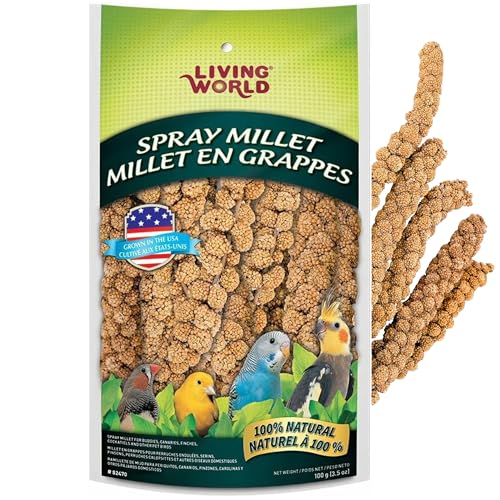
Living World Spray Millet at $12.47 for a 3.5-ounce spray is a high-quality option that stays fresh. Offer a small piece 1 to 2 times per week — not daily, as millet is high in fat and can contribute to obesity if overfed.
Diet Summary
| Food Category | % of Diet | Examples | Frequency |
|---|---|---|---|
| Seed Mix | 60–70% | Kaytee Forti-Diet, Hartz Canary Seed | Daily |
| Pellets (optional) | 10–20% | Lafeber, ZuPreem Canary Pellets | Daily |
| Fresh Greens | 15–25% | Kale, spinach, broccoli, carrots | Daily |
| Fresh Fruit | ≤10% | Apple, blueberry, melon | 2–3x per week |
| Treats | ≤5% | Spray millet, boiled egg | 1–2x per week |
| Cuttlebone | Always available | Prevue Cuttlebone | Replace when consumed |
Setting Up the Right Cage
The cage is where your canary will spend almost all of its life, so getting this right is one of the most important parts of canary care. A good cage prevents escape, injury, and behavioral problems.
Step 1: Choose Your Cage
A single canary needs a minimum cage size of 24 inches long × 18 inches wide × 18 inches tall. Horizontal flight space matters more than vertical height — canaries fly side to side, not straight up. A cramped, tall cage is worse than a wider, shorter one.
Bar spacing must be ½ inch or less. Canaries are small enough to squeeze through wider bars or get their heads stuck, which can be fatal. Always verify bar spacing before purchasing any cage.
For a pair of canaries or a single bird with extra room to fly, a flight cage is the best investment.
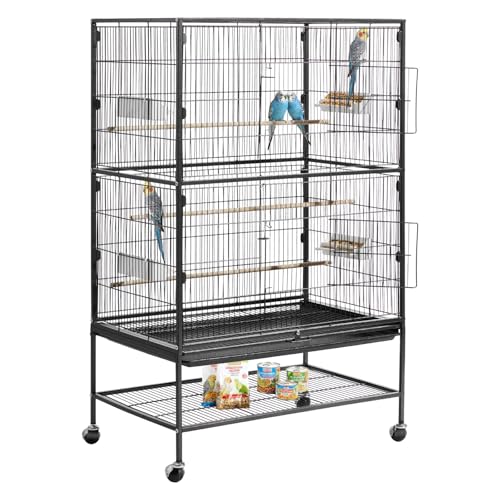
Yaheetech 52-Inch Bird Cage at $104.90 is a flight cage that gives canaries serious room to move. At 52 inches wide with a rolling stand, pull-out cleaning tray, and multiple feeding stations, it’s spacious enough for 1 to 2 canaries to fly naturally. The wrought iron construction holds up well over years of use. Assembly takes roughly 30 minutes.
For detailed cage comparisons across multiple brands and sizes, see our best canary cage guide.

Step 2: Place the Cage
Where you put the cage matters as much as the cage itself — proper cage placement is an often-overlooked element of canary care. Many health and behavioral problems trace back to poor cage placement. Follow these placement rules:
- Away from drafts — windows, air conditioning vents, and exterior doors
- Away from direct sunlight — prolonged sun exposure causes overheating
- Away from the kitchen — Teflon fumes from non-stick cookware are lethal to birds
- Eye level or slightly above — canaries feel more secure at height
- In a social area — canaries enjoy observing household activity, even if they don’t want to be handled
Avoid placing the cage near televisions or speakers — constant loud noise causes chronic stress. A calm, well-lit corner of a living room or family room is ideal. Avoid laundry rooms (detergent fumes), garages (carbon monoxide risk), and bathrooms (humidity fluctuations). The cage should be against a wall rather than in the center of the room — this gives the canary a sense of security with one protected side. For general bird cage advice, our best bird cage guide covers placement in more detail.
Step 3: Add Accessories
- Perches: 2 to 3 perches at different heights, varying diameters. Natural wood perches are better than uniform plastic dowels because they exercise the feet differently.
- Food and water dishes: Stainless steel cups that clip to the bars are more durable and easier to clean than plastic.
- Cage liner: Paper towels or newspaper — avoid cedar and pine shavings, which contain toxic aromatic oils.
- Cuttlebone holder: Keeps the cuttlebone accessible and off the cage floor.
- Toys: A swing, a small bell, and a ladder are plenty. Canaries aren’t heavy chewers like parrots — they prefer open flight space over a cage full of toys.
Bathing, Grooming, and Daily Routine
Canaries are fastidious groomers and enjoy bathing regularly. A consistent daily grooming routine is a cornerstone of good canary care. A consistent daily routine keeps things manageable and prevents most health problems before they start.
Bathing
Canaries love to bathe, and regular bathing keeps their feathers in good condition — an essential part of canary care that many new owners overlook. Offer a shallow bath 3 to 4 times per week using lukewarm water — never hot or cold.
The Yasdyri hanging bird bath at $11.99 is a popular in-cage bath designed for small birds including canaries. It screws onto the cage bars, holds enough water for a good splash, and has a drawer-style water box that’s easy to empty and clean. Many canary owners report their birds using it multiple times per day once they discover it.
Alternatively, place a shallow dish with about 1 inch of water on the cage floor. Remove it after 20 to 30 minutes to prevent the bird from drinking dirty water.
Nail Trimming
Canary nails grow continuously and need trimming — a small but necessary part of routine canary care. Sand perch covers help wear nails down naturally between trims. If you’re uncomfortable trimming nails yourself, an avian vet or an experienced groomer can do it quickly.
Daily Care Routine
A consistent routine makes everything efficient. Here’s a practical checklist:
Morning (5 minutes):
- Check food and water levels, refill if needed
- Remove soiled sections of the cage liner
- Observe the bird briefly — is it active, alert, and eating?
- Offer fresh greens or vegetables
Evening (5 minutes):
- Top off seed and water
- Remove uneaten fresh food to prevent spoilage
- Offer a bath if it’s a bathing day
- Cover the cage if the room doesn’t get 10 to 12 hours of natural darkness
This simple canary care routine takes about 10 minutes total per day.
Canaries need 10 to 12 hours of darkness per night for healthy sleep cycles. In rooms with artificial light, a lightweight cage cover solves this problem. An inconsistent light cycle suppresses singing and can trigger molting at odd times.
Baby Canary Care
Raising baby canaries requires extra attention beyond standard canary care. If you’re hand-rearing chicks or the parents aren’t feeding adequately:
- Temperature: Chicks need 75 to 85°F for the first 3 weeks. A heat lamp with a thermometer is necessary.
- Feeding: Use a commercial hand-feeding formula designed for small passerines. Feed every 2 to 3 hours for the first week, gradually spacing out feedings.
- Weaning: Most canary chicks wean at 6 to 8 weeks. Offer softened seed and small pieces of fruit alongside hand-feeding to encourage independent eating.
- Separation: Once fully weaned and eating on their own, move the young canary to its own cage.
Canary Singing and Behavior
One of the main reasons people choose canaries over other pet birds is their singing — and proper canary care supports healthy vocalization. Understanding why canaries sing — and why they sometimes stop — is an important part of ownership.
Why Canaries Sing
Male canaries sing to attract mates and establish territory. Their songs aren’t instinctive — they learn and refine them by listening to other males, starting around 3 to 4 months of age. A male canary’s song reaches full complexity at roughly 1 year old.
Singing peaks during the spring breeding season when daylight hours increase. This is driven by hormones and is completely natural. Some males sing year-round, while others are seasonal singers.
Female canaries produce short chirps and contact calls but rarely sing the full, elaborate songs that males do. If you want a singing bird, choose a male.
Encouraging Singing
To help your male canary sing at his best, consistent canary care makes a real difference:
- Provide 10 to 12 hours of consistent daylight — use a full-spectrum light on a timer if natural light is unreliable
- Maintain a balanced diet — malnutrition directly affects song quality
- Minimize stress — keep the cage in a calm location away from predators (cats, dogs)
- Avoid mirrors — a canary that sees its reflection may become frustrated or aggressive, thinking there’s an intruder
- Play recordings of other canaries — this can stimulate singing, but don’t overdo it
For basic training techniques that apply to canaries and other small birds, see our bird training guide.
Common Behavioral Concerns
Not singing: If a male canary suddenly stops singing, the most common cause is molting. Canaries molt once or twice a year (usually late summer or fall), replacing old feathers with new ones. During this 6 to 8 week process, the bird redirects energy from singing to feather growth and may appear quieter and less active. Other causes include illness, stress, insufficient daylight, or — in rare cases — the bird may actually be a female misidentified at purchase.
Feather plucking: This is uncommon in canaries but can occur due to poor canary care, stress, boredom, poor diet, or mites. Check for external parasites, improve the diet, and add more enrichment. If the behavior persists, consult an avian vet.
Night thrashing: Canaries sometimes panic at night if startled by sudden noises or flashes of light. A cage cover and a dim night light in the room usually prevent this. Night thrashing can cause injury if the bird flails into cage bars — a padded cage interior or moving perches away from the walls helps.
Health Monitoring and Common Issues
Proactive health monitoring catches problems early and is the most important ongoing aspect of canary care. Canaries are prey animals and hide signs of illness instinctively — by the time a canary looks sick, the condition is often advanced.
Daily Health Checks
Spend a minute each morning observing your canary. Look for:
- Activity level: Is the bird alert and moving normally? A canary sitting puffed up on the bottom of the cage is a red flag.
- Eyes: Bright, clear, and fully open. Discharge, swelling, or half-closed eyes indicate illness.
- Droppings: Normal canary droppings are small, firm, and dark with a white cap. Runny, discolored, or very watery droppings suggest digestive problems or infection.
- Feathers: Smooth, clean, and lying flat. Fluffed, ruffled, or patchy feathers indicate stress or illness.
- Breathing: Should be smooth and barely visible. Tail bobbing (the tail pumps up and down with each breath) is a sign of respiratory distress.
Warning Signs of Illness
Contact an avian vet immediately if you notice any of these:
- Fluffed feathers for extended periods (not just during sleep)
- Lethargy or sitting on the cage floor
- Loss of appetite lasting more than 24 hours
- Tail bobbing or open-mouthed breathing
- Discharge from the eyes or nostrils
- Swelling around the eyes or feet
- Sudden weight loss (feel the keel bone on the chest — it shouldn’t feel sharp)
Common Health Problems
| Condition | Symptoms | Prevention |
|---|---|---|
| Respiratory infection | Tail bobbing, wheezing, nasal discharge | Clean air, no drafts, stable temperature |
| Scaly face mites | Crusty growths around beak and eyes | Quarantine new birds, regular cage cleaning |
| Egg binding | Female straining, fluffed, lethargic | Adequate calcium (cuttlebone), proper lighting |
| Fatty liver disease | Obesity, overgrown beak, lethargic | Balanced diet, limit fatty seeds |
| Feather cysts | Lumps under the skin | Gentle handling, avoid pulling feathers |
Finding an avian veterinarian before you need one is smart — exotic bird specialists are less common than dog and cat vets, and waiting until there’s an emergency limits your options. The Association of Avian Veterinarians maintains a searchable directory of certified avian vets in the US.
Frequently Asked Questions
How long do canaries live?
With good husbandry, pet canaries typically live 10 to 15 years. Some well-cared-for individuals reach 20 years. Diet, environment, and genetics all play a role. A canary on a balanced diet in a clean, stress-free environment will outlive one on a seed-only diet in a cramped cage by several years.
What do canaries eat?
A canary’s daily diet should be 60 to 70% high-quality seed mix formulated specifically for canaries, supplemented with fresh leafy greens daily, small amounts of fruit 2 to 3 times per week, and a cuttlebone available at all times for calcium. Avoid avocado, chocolate, onion, garlic, and fruit seeds — all toxic to birds. See our canary food guide for complete product recommendations.
Are canaries easy to take care of?
Yes. Canaries are one of the easiest pet birds to keep. They don’t require handling or out-of-cage interaction the way parrots do. Their daily care involves fresh food and water, a quick cage check, and 5 minutes of observation. The main requirements are a good cage, a balanced diet, consistent daylight hours, and a calm environment. Compared to parakeets, cockatiels, and larger parrots, canaries demand far less time and attention.
Can canaries be kept in pairs?
Yes, with some caveats. Two males housed together may fight, especially during breeding season. A male and female pair can work well, but be prepared for potential breeding. Two females in a large enough flight cage generally coexist peacefully and is often the safest pairing option. If you keep a pair, provide a cage at least 30 inches wide — cramped quarters increase territorial aggression regardless of sex.
Why is my canary not singing?
Several factors can stop a canary from singing. The most common cause in otherwise healthy males is molting — during the 6 to 8 week feather replacement cycle, most males go quiet. Other causes include insufficient daylight (they need 10 to 12 hours), stress (new environment, predators nearby, loud noises), illness (respiratory issues often suppress singing first), or the bird may be female (females rarely produce full songs). If your male canary has stopped singing and isn’t molting, watch closely for other signs of illness.
Conclusion
Keeping a healthy canary comes down to a few core things: a spacious flight cage with safe bar spacing, a seed-based diet supplemented with fresh greens and cuttlebone, regular bathing, consistent daylight hours, and daily health observation. This canary care guide covers everything you need to establish those fundamentals from day one.
Good canary care doesn’t require advanced expertise — just consistency. Start with a quality cage, invest in good seed mix and supplements, establish a simple daily routine, and find an avian vet in your area. With that foundation in place, your canary will stay healthy and active for a decade or more. For more specific product recommendations, browse our guides on the best canary cages and best canary food.