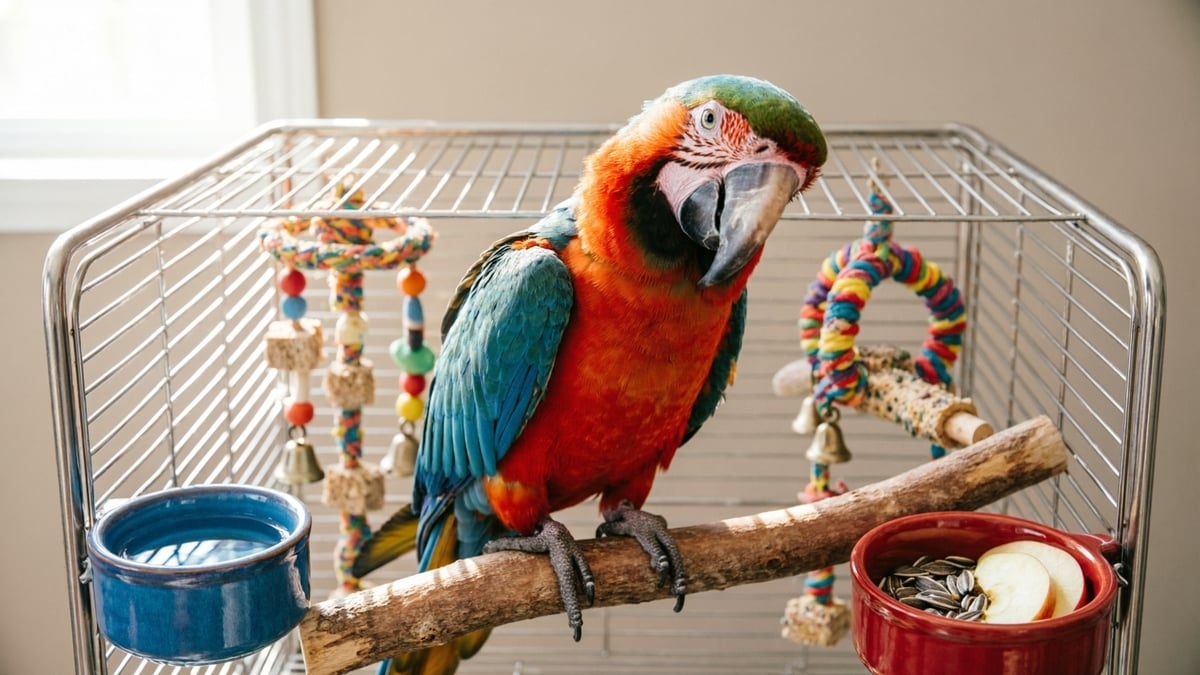
Your bird’s cage is their home, sanctuary, and safe space. Choosing the right cage is one of the most important decisions you’ll make as a bird owner. The cage affects your bird’s physical health, mental well-being, and overall quality of life. This comprehensive guide covers everything you need to know about selecting, setting up, and maintaining the perfect cage for your feathered friend.
Why Cage Selection Matters
Impact on Bird Health
The cage affects:
- Physical health: Space to move, stretch wings, and exercise
- Mental health: Prevents boredom, stress, and behavioral issues
- Safety: Prevents injuries from inappropriate bar spacing or toxic materials
- Longevity: Proper housing contributes to longer lifespan
Time Spent in Cage
- Most pet birds spend 10-16+ hours per day in their cage
- Many spend time alone while owners work
- Cage must accommodate all needs: eating, sleeping, playing, exercising
Key Insight: Your bird’s cage is not just a container—it’s their entire world. Invest in quality and size.
Cage Size Requirements
General Rule: Bigger Is Always Better
Minimum guidelines exist, but larger cages are strongly recommended.
Size by Species
| Species | Minimum Size (Length x Width x Height) | Recommended Size | Bar Spacing |
|---|---|---|---|
| Budgie/Parakeet | 18” x 18” x 18” | 24” x 18” x 24” | 1/2” |
| Canary | 16” x 16” x 16” | 20” x 16” x 20” | 1/2” |
| Finch (pair) | 24” x 16” x 16” | 30” x 18” x 18” | 1/2” |
| Cockatiel | 20” x 20” x 24” | 24” x 24” x 30” | 1/2” - 5/8” |
| Lovebird | 20” x 20” x 24” | 24” x 24” x 30” | 1/2” - 5/8” |
| Conure | 24” x 24” x 24” | 30” x 24” x 36” | 5/8” - 3/4” |
| Quaker Parrot | 24” x 24” x 24” | 30” x 24” x 36” | 5/8” - 3/4” |
| Poicephrus (Senegal) | 24” x 24” x 24” | 30” x 24” x 36” | 5/8” - 3/4” |
| African Grey | 36” x 24” x 36” | 40” x 30” x 48” | 3/4” - 1” |
| Amazon | 36” x 24” x 36” | 40” x 30” x 48” | 3/4” - 1” |
| Eclectus | 36” x 24” x 36” | 40” x 30” x 48” | 3/4” - 1” |
| Cockatoo | 40” x 30” x 48” | 48” x 36” x 60” | 3/4” - 1” |
| Macaw | 48” x 36” x 48” | 60” x 48” x 60” | 1” - 1.5” |
Important: Length and width are more important than height for most birds. Birds fly horizontally, not vertically.
What Size Provides
Minimum size allows:
- Stretch wings without touching sides
- Short flights (hops) between perches
- Turn around comfortably
Larger size allows:
- Flying across cage
- Multiple perch levels
- Room for toys, foraging opportunities
- Exercise and mental stimulation
Pro Tip: If budget allows, always choose the larger cage. Your bird will thank you.
Bar Spacing
Why Bar Spacing Matters
- Too wide: Bird can escape or get head stuck (dangerous!)
- Too narrow: Toes or beak can get caught
- Correct: Bird can climb comfortably, safe from escape or injury
Bar Spacing by Species
| Species | Bar Spacing |
|---|---|
| Budgie, Canary, Finch | 1/2” |
| Cockatiel, Lovebird, Parrotlet | 1/2” - 5/8” |
| Conure, Quaker, Senegal | 5/8” - 3/4” |
| African Grey, Amazon, Eclectus | 3/4” - 1” |
| Cockatoo | 3/4” - 1” |
| Macaw | 1” - 1.5” |
Safety Check: Your bird should not be able to push its head through the bars. When in doubt, choose smaller spacing.
Cage Materials
Material Options
1. Stainless Steel
Best overall choice
Pros
- Non-toxic, bird-safe
- Durable (lasts decades)
- Easy to clean
- Rust-resistant
- No paint or coating to chip
Cons
- Expensive ($300-2000+)
- Heavy
Best For
- Large birds (cockatoos, macaws)
- Long-term investment
- Birds that chew bars
Recommended
- A&E Cage Company Stainless Steel
- Price: $400-1500
- Lifetime durability
- Buy on Amazon - $754.99
- King’s Cages Stainless Steel
- Price: $500-2000
- Premium quality
- [Manufacturer Link Placeholder]
2. Powder-Coated Metal
Most common, good value
Pros
- Affordable ($100-500)
- Durable
- Variety of colors
- Bird-safe (if high-quality powder coat)
Cons
- Coating can chip over time (especially with heavy chewers)
- Not as long-lasting as stainless steel
- Quality varies between brands
Best For
- Medium birds (conures, cockatiels, quakers)
- Budget-conscious owners
- Birds that don’t heavily chew bars
Recommended
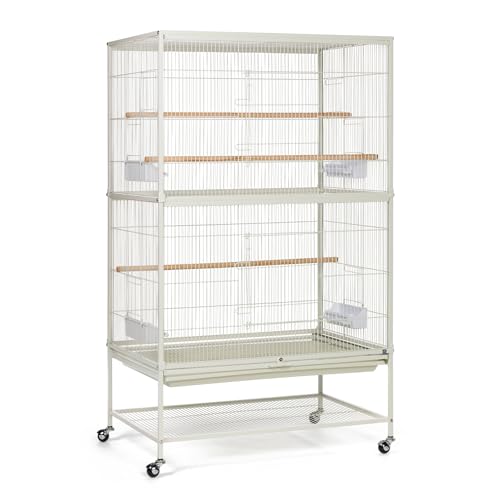
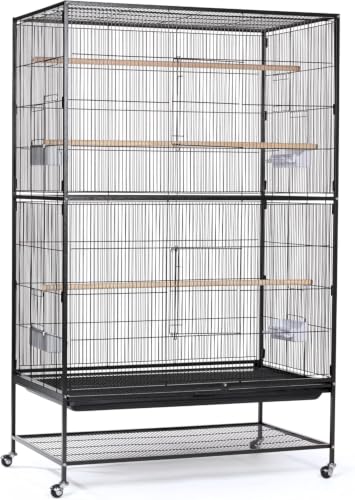
- Prevue Hendryx Pet Products
- Price: $80-300
- Good value
- Various sizes
- Buy on Amazon - $189.99
- A&E Cage Company (Powder-Coated)
- Price: $150-400
- Good quality
- Many styles
- Buy on Amazon
3. Wrought Iron
Budget option
Pros
- Inexpensive ($50-200)
- Strong
Cons
- Can rust if coating chips
- Lower quality paint/coating
- Less durable long-term
Best For
- Small birds (budgies, canaries, finches)
- Temporary housing
- Budget situations
Recommended
- Yaheetech Bird Cages
- Price: $50-150
- Budget-friendly
- Buy on Amazon - $85.04
4. Acrylic / Plexiglass
For specific needs
Pros
- Clear visibility
- Easy to clean
- Draft-free
- Good for disabled or special needs birds
Cons
- Poor ventilation (must have mesh areas)
- Limited climbing opportunity
- Can scratch over time
- Expensive
Best For
- Birds with respiratory issues (draft-free)
- Special needs birds
- Display purposes
Materials to Avoid
- Galvanized wire (zinc toxic if ingested)
- Lead-based paint (toxic)
- Rusty cages (tetanus risk, weak structure)
- Plastic cages (too small, easily broken, not suitable for most birds)
- Wood cages (hard to clean, harbors bacteria, chewed easily)
Cage Shape & Design
Shape Options
Rectangular / Square
Best choice
Pros
- Maximum usable space
- Easy to accessorize
- Fits in corners
- Easy to find
Cons
- Less aesthetic than round
Recommendation: Rectangular cages are best for bird welfare.
Round Cages
Not recommended
Pros
- Aesthetic
Cons
- Wasted space in center
- Hard to find corners (birds feel insecure without corners)
- Limited placement options
- Difficult to hang toys/perches
Avoid: Round cages cause stress and don’t provide adequate usable space.
Dome-Top vs. Play-Top
Dome-Top:
- More interior height
- Traditional look
- Good for flighted birds
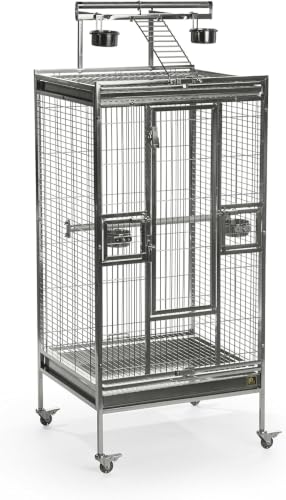
Play-Top :
- Provides out-of-cage play area
- Perch, toys, food cups on top
- Encourages interaction
- Best for social birds
Pro Tip: Play-top cages are excellent for birds that spend significant time outside the cage.
Door Design
Large front door: Essential for access
- Should be large enough for you to reach in easily
- Some have guillotine-style doors (play-top access)
Feeder doors: Allow access to food cups without opening main door
- Good for skittish birds
- Reduces escape risk
Safety locks: Prevent clever birds from escaping
- Many birds learn to open simple latches
- Look for cages with secure, bird-proof locks
Cage Placement
Where to Place the Cage
Ideal Location
- Against a wall (provides security)
- At eye level or slightly below (not above your head—causes dominance issues)
- In a social area (living room, family room) where bird can be part of family
- Near natural light (but not in direct sunlight all day)
- Away from drafts (avoid air conditioning vents, windows with drafts)
Where NOT to Place the Cage
- Kitchen: Cooking fumes (especially Teflon/PTFE) can be fatal to birds
- Direct sunlight all day: Overheating risk
- Near drafts: Air conditioning, fans, drafty windows
- Isolated room: Birds are social, need interaction
- High traffic area: Constant stress from people walking by
- Near TV/speakers: Loud noises cause stress
- Bathroom: Humidity fluctuations, cleaning chemicals
- Garage: Fumes, temperature extremes
Height Considerations
- Too high (above eye level): Bird feels dominant, may become aggressive
- Too low (floor level): Bird feels vulnerable, stressed
- Ideal: At or slightly below eye level when you’re standing
Pro Tip: Place cage in a corner (at least one wall behind) for security. Birds feel safer when not exposed on all sides.
Cage Accessories & Setup
Perches
Essential for foot health and comfort
Types of Perches
- Natural Wood Perches (Best)
- Varying diameters (exercises feet)
- Texture (good for grip)
- Safe woods: Manzanita, java, apple, pear, citrus
- Rope Perches
- Soft, comfortable
- Good for sleeping
- Must be replaced when frayed (nail entanglement risk)
- Concrete / Mineral Perches
- Trims nails naturally
- Use sparingly (too hard for all-day perching)
- Place where bird spends limited time
- Platform Perches
- Flat surface
- Good for older birds or foot problems
- Variety
Perch Placement
- Multiple perches at different heights
- Vary diameters (1/2” to 1” for medium birds)
- Don’t place directly over food/water (contamination)
- Allow space for tail (long-tailed species)
- Avoid overcrowding (leave room to move)
Avoid: Sandpaper perches (too abrasive, cause foot sores)
Recommended
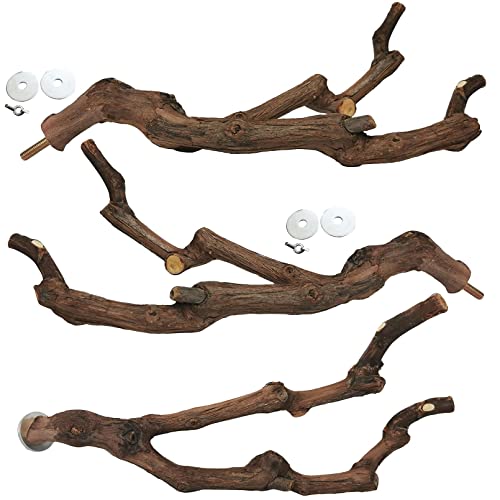
- Grapevine Wood Perches
- Price: $8-15
- Natural, varied texture
- Buy on Amazon - $18.99
- Java Wood Perches
- Price: $10-20
- Durable, interesting shape
- Buy on Amazon
Food & Water Containers
Types
- Stainless Steel Cups
- Durable, easy to clean
- Non-toxic
- Won’t harbor bacteria
- Plastic Cups
- Affordable
- Can scratch and harbor bacteria over time
- Replace periodically
- Ceramic Cups
- Heavy (hard to tip)
- Easy to clean
- Breakable
- Water Bottles (vs. Open Water)
- Pros: Stays clean, can’t be tipped
- Cons: Some birds won’t use, must check daily that it’s working
- Recommendation: Provide both bottle and open water initially
Placement
- Accessible to bird
- Not under perches (contamination from droppings)
- Multiple stations for larger cages
Cage Liners & Tray
Options
- Paper-based (Recommended)
- Newspaper (black & white only, avoid colored ink)
- Paper towels
- Butcher paper
- Cage liner paper
- Corn cob bedding
- Natural
- Can grow mold if wet
- Avoid if bird might ingest
- Wood shavings
- Avoid cedar and pine (respiratory issues)
- Aspen is safe
- Can be messy
Pro Tip: Paper is easiest to clean and allows you to monitor droppings (health indicator).
Cleaning Frequency
- Daily: Remove soiled areas, replace paper if heavily soiled
- Weekly: Full tray clean, replace all liner
- Monthly: Deep clean entire cage
Toys & Enrichment
Essential for mental health
Types of Toys
- Chewing toys: Wood, leather, cardboard
- Foraging toys: Hide treats inside
- Puzzle toys: Problem-solving
- Shredding toys: Paper, palm leaves
- Swings and ladders: Exercise
- Mirrors: Some birds enjoy (avoid if bird becomes obsessed)
Placement
- Don’t overcrowd (leave room to move)
- Rotate weekly (prevent boredom)
- Various heights and locations
- Safe materials only
Safety: Avoid toys with small parts, lead, zinc, or sharp edges.
Recommended
- Prevue Pet Products Natural Wood Toys
- Price: $5-15
- Safe chewing
- Buy on Amazon - $23.87
- Planet Pleasures Bird Toys
- Price: $8-20
- Natural materials
- Buy on Amazon - $13.14
Other Accessories
- Cuttlebone: Calcium supplement + beak conditioning
- Mineral block: Calcium and minerals
- Bath: Birds need bathing opportunities (shallow dish or misting)
- Hideaway / Tent: Some birds like sleeping tents (especially small birds)
- Ladder: Encourages climbing and exercise
Cage Maintenance
Daily Tasks
- Change paper/liner if heavily soiled
- Refresh food and water
- Remove uneaten fresh food
- Quick visual check of bird and cage
Weekly Tasks
- Full tray clean (remove all paper, clean tray)
- Wash food and water cups (hot soapy water, rinse well)
- Wipe down cage bars (damp cloth)
- Rotate toys (replace with different ones)
- Check perches (clean or replace if soiled)
Monthly Tasks
- Deep clean entire cage:
- Remove bird to safe carrier
- Take out all accessories
- Wash cage with bird-safe disinfectant
- Rinse thoroughly
- Dry completely
- Replace all items
- Inspect cage for damage, rust, or wear
- Replace worn perches, toys, cups
Cleaning Products
Safe:
- Hot water + mild dish soap
- White vinegar + water (1:1)
- Bird-safe disinfectants (PetFocus, Aviclean)
Avoid:
- Bleach (fumes toxic)
- Ammonia (toxic)
- Pine-based cleaners (respiratory irritant)
- Any strong chemicals
Safety: Always rinse thoroughly after cleaning. No chemical residue should remain.
Safety Considerations
Cage Safety Checklist
- Bar spacing appropriate (bird can’t escape or get head stuck)
- No sharp edges (check welds, corners)
- Non-toxic materials (stainless steel or quality powder coat)
- Secure locks (bird can’t open doors)
- Stable (won’t tip over)
- No rust
- Appropriate size
- Good ventilation
- Safe toys (no small parts, lead, zinc)
- Perches in good condition (not slippery, broken, or frayed)
Common Hazards
- Escaping: Check locks daily
- Head caught in bars: Verify bar spacing
- Toes caught: Avoid very narrow spacing or frayed rope
- Chewing toxic materials: Remove zinc, lead, painted items
- Drowning: No deep water containers unsupervised
- Entanglement: Trim frayed rope, avoid loose threads
Travel Cages & Carriers
For vet visits, travel, or emergencies
Requirements
- Smaller than regular cage
- Secure, escape-proof
- Good ventilation
- Easy to carry
- Easy to clean
Types
- Travel cages (small wire cages)
- $20-50
- Good for short trips
- Plastic carriers (like cat carriers)
- $15-40
- Secure, enclosed
- Less visibility
- Backpack carriers
- $30-80
- Hands-free
- Good for short outings
Recommended
- Prevue Pet Products Travel Carrier
- Price: $25-40
- Various sizes
- Buy on Amazon - $109.99
Budget Breakdown
Small Bird (Budgie/Cockatiel) Setup
| Item | Budget | Quality |
|---|---|---|
| Cage (24” x 18” x 24”) | $60 (wrought iron) | $120 (powder-coated) |
| Perches (set of 3-4) | $15 (basic wood) | $30 (natural variety) |
| Food/water cups | $10 | $15 (stainless steel) |
| Cage liner (paper) | $5/month | $10/month |
| Toys (3-5) | $20 | $40 |
| Cuttlebone/mineral block | $5 | $8 |
| Total Initial | $115 | $223 |
| Monthly | $10 | $15 |
Medium Bird (Conure/Quaker) Setup
| Item | Budget | Quality |
|---|---|---|
| Cage (30” x 24” x 30”) | $100 | $200 |
| Perches (set of 4-5) | $20 | $40 |
| Food/water cups | $15 | $20 (stainless steel) |
| Cage liner | $8/month | $12/month |
| Toys (5-8) | $30 | $60 |
| Accessories | $15 | $25 |
| Total Initial | $188 | $357 |
| Monthly | $15 | $20 |
Large Bird (African Grey/Amazon) Setup
| Item | Budget | Quality |
|---|---|---|
| Cage (36” x 24” x 48”) | $250 | $500-800 |
| Perches (set of 5-6) | $40 | $60 |
| Food/water cups (stainless) | $20 | $25 |
| Cage liner | $10/month | $15/month |
| Toys (8-10) | $50 | $100 |
| Accessories | $25 | $40 |
| Total Initial | $395 | $740-1040 |
| Monthly | $25 | $35 |
Note: Initial investment is significant, but quality cages last many years.
Species-Specific Considerations
Budgies / Parakeets
- Size: Minimum 18” x 18” x 18” (larger better)
- Bar spacing: 1/2”
- Perch diameter: 3/8” - 1/2”
- Special needs: Horizontal bars for climbing, multiple perches, mirrors (optional)
Canaries
Canaries need width for flight, not height: 24” long with 1/2-inch bar spacing, not a tall parakeet cube.
Cockatiels
- Size: Minimum 20” x 20” x 24”
- Bar spacing: 1/2” - 5/8”
- Perch diameter: 1/2” - 3/4”
- Special needs: Room for tail, variety of perches, no overcrowding
Conures
- Size: Minimum 24” x 24” x 24” (larger for active species like sun conures)
- Bar spacing: 5/8” - 3/4”
- Perch diameter: 5/8” - 3/4”
- Special needs: Lots of toys, durable cage (conures can be chewers)
African Greys
- Size: Minimum 36” x 24” x 36”
- Bar spacing: 3/4” - 1”
- Perch diameter: 3/4” - 1”
- Special needs: Foraging opportunities, sturdy toys, horizontal bars for climbing
Cockatoos
- Size: Minimum 40” x 30” x 48”
- Bar spacing: 3/4” - 1”
- Perch diameter: 3/4” - 1.25”
- Special needs: VERY durable cage (powder-coated or stainless steel), heavy-duty locks (they’re escape artists), lots of chewing toys
Macaws
- Size: Minimum 48” x 36” x 48” (larger for large macaws)
- Bar spacing: 1” - 1.5”
- Perch diameter: 1” - 1.5”
- Special needs: Stainless steel recommended (heavy chewers), large diameter perches, heavy-duty everything
Common Mistakes to Avoid
Mistake 1: Cage Too Small
Problem: No room to exercise, stress, behavioral issues. Solution: Choose largest cage you can afford and accommodate.
Mistake 2: Wrong Bar Spacing
Problem: Escape or injury (head/toes caught). Solution: Verify bar spacing is appropriate for species.
Mistake 3: Placing Cage in Kitchen
Problem: Cooking fumes (Teflon/PTFE) can be fatal. Solution: Place cage in living room or bedroom, away from kitchen.
Mistake 4: Round Cages
Problem: Wasted space, no corners (birds feel insecure). Solution: Choose rectangular or square cages.
Mistake 5: Galvanized Wire Cages
Problem: Zinc toxicity (if ingested from chewing). Solution: Use stainless steel or quality powder-coated cages.
Mistake 6: Not Enough Perches
Problem: Foot problems from standing on same diameter perch. Solution: Provide multiple perches of varying diameters and materials.
Mistake 7: Overcrowding with Toys
Problem: No room to move or stretch wings. Solution: Rotate toys, leave space for movement.
Mistake 8: Neglecting Cleaning
Problem: Bacterial growth, disease risk. Solution: Clean daily (spot), weekly (tray), monthly (deep clean).
Summary: Key Takeaways
- Bigger is always better: Choose the largest cage you can afford/accommodate
- Bar spacing matters: Prevents escape and injury
- Rectangular cages are best: More usable space, corners provide security
- Stainless steel or quality powder-coated: Non-toxic, durable
- Multiple perches of varying diameters: Essential for foot health
- Avoid kitchen placement: Cooking fumes can be fatal
- Regular cleaning: Daily spot clean, weekly tray clean, monthly deep clean
- Rotate toys: Prevents boredom
- At eye level or below: Prevents dominance issues
- Invest in quality: Good cages last years, cheap ones don’t
Next steps: After setup, try bird training basics. Interested in ducks? See our call duck care guide. Feed right with our bird diet guide.
Frequently Asked Questions (FAQ)
1. What size cage do I need for a cockatiel?
Minimum 20” x 20” x 24”, but 24” x 24” x 30” is better. Larger allows for more exercise and toys.
2. Can I use a round cage?
Not recommended. Round cages waste space and don’t provide corners, which make birds feel secure. Choose rectangular or square.
3. What bar spacing do I need for a conure?
5/8” to 3/4”. Too wide and they can escape or get stuck; too narrow and toes can be caught.
4. Is galvanized wire safe for birds?
No. Galvanized wire contains zinc, which is toxic if ingested (from chewing). Use stainless steel or powder-coated cages.
5. Where should I place my bird’s cage?
In a social area (living room), at eye level or slightly below, against a wall for security, away from kitchen, drafts, and direct sunlight.
6. How often should I clean the cage?
Daily: Remove soiled paper, refresh food/water. Weekly: Full tray clean, wash cups. Monthly: Deep clean entire cage.
7. How many perches should I have?
At least 3-4 of varying diameters and materials. More is fine as long as cage isn’t overcrowded.
8. Can birds stay in their cage all day?
They can, but they shouldn’t. Birds need out-of-cage time (2-4+ hours daily) for exercise and socialization.
9. Are play-top cages worth it?
Yes! Play-tops provide an out-of-cage area and encourage interaction. Great for social birds.
10. What’s the best material for bird cages?
Stainless steel (best, most expensive) or quality powder-coated metal (good value). Avoid galvanized wire and plastic.
Recommended Products
Small Bird Cages:
- Prevue Wrought Iron Flight Cage with Stand (31” x 20.5” x 53”) - Best for budgies/cockatiels - Buy on Amazon - $189.99
- Yaheetech Rolling Bird Cage (24” x 18” x 24”) - Budget option - Buy on Amazon - $119.99
Medium Bird Cages:
- A&E Cage Company Corner Cage (32” x 23” x 54”) - Space-efficient - Buy on Amazon - $455.65
- Prevue Hendryx Pet Products Wrought Iron Cage (31” x 23” x 54”) - Good value - Buy on Amazon - $299.99
Large Bird Cages:
- A&E Cage Company Stainless Steel Cage (36” x 24” x 60”) - Premium - Buy on Amazon - $455.65 (similar option)
- King’s Cages European Cage (40” x 30” x 65”) - Luxury [Manufacturer Link Placeholder]
Accessories:
- Natural Wood Perch Set - Foot health - Buy on Amazon - $23.99
- Stainless Steel Food Cups - Durable, safe - Buy on Amazon - $8.97
- Planet Pleasures Bird Toy - Natural, safe - Buy on Amazon - $13.14