Choosing the right pellet matters more than most new owners realize. Guinea pigs, like humans, cannot manufacture their own vitamin C — and pellets are the most reliable daily source of this essential nutrient. A poor-quality pellet means your guinea pig faces deficiencies regardless of how much hay or vegetables you provide.
Unlike other small pets where food choices vary widely, guinea pig pellets follow stricter nutritional standards. The wrong formula can lead to bladder stones from excess calcium, obesity from fillers, or scurvy from degraded vitamin C. Pellets make up roughly 20% of a guinea pig’s daily diet, but that 20% fills nutritional gaps that hay and vegetables alone cannot cover — especially the critical vitamin C requirement.
Comparing nine of the most widely available brands against thousands of owner reviews, this guide breaks down what each pellet actually delivers so you can make an informed choice.
What Makes Good Guinea Pig Pellets?

Guinea pig pellets are fortified, hay-based food formulated to provide essential nutrients — especially vitamin C — that complement unlimited timothy hay and fresh vegetables. Not all pellets are created equal, though. Here’s what separates quality brands from the rest.
Key Nutritional Requirements
Every guinea pig pellet should meet these baseline standards:
- Fiber ≥18% — critical for gut motility and dental health. Timothy hay-based pellets naturally deliver this, while alfalfa-based alternatives often fall short on the fiber-to-calcium ratio that adult guinea pigs need.
- Protein 14–16% — supports muscle maintenance without overloading kidneys. Growing guinea pigs can handle slightly higher protein, but excess protein in adults contributes to kidney strain over time.
- Fat ≤3% — prevents obesity, a common problem in indoor guinea pigs with limited exercise. Many budget brands cut corners by adding cheap fillers that inflate calorie content.
- Stabilized vitamin C — the single most important ingredient, since guinea pigs cannot synthesize it internally. Without adequate daily vitamin C, guinea pigs develop scurvy within two to three weeks — symptoms include lethargy, joint pain, and reluctance to move.
The vitamin C requirement for an adult guinea pig is 30–50mg per day. Quality pellets provide stabilized vitamin C that survives storage, unlike unstabilized forms that degrade within weeks of manufacture.
Ingredients to Avoid
Red flags that signal a low-quality pellet:
- Seeds, nuts, and colored pieces — these are fillers that encourage selective eating, where guinea pigs pick out the treats and leave the fortified pellets behind. This is the number one nutritional problem veterinarians see in guinea pigs.
- Molasses and added sugar — empty calories that promote obesity and dental problems. Guinea pigs naturally eat a low-sugar diet in the wild, and their digestive systems are not adapted to process concentrated sweeteners.
- Artificial preservatives (BHA/BHT) — unnecessary additives with no nutritional benefit that some studies have linked to health concerns in small mammals
- Alfalfa as a primary ingredient — appropriate only for young guinea pigs under 6 months; excess calcium causes bladder stones in adults, which are painful, expensive to treat, and potentially life-threatening if they cause urinary blockages
For a complete breakdown of daily nutrition beyond pellets, including vegetables and hay ratios, see our guinea pig food guide.
Best Guinea Pig Pellets — Full Comparison
| # | Product | Key Feature | Best For |
|---|---|---|---|
| 1. Oxbow Essentials | Uniform timothy pellets, stabilized vitamin C | Best Overall | |
| 2. Oxbow Garden Select | Garden vegetables + herbs blend | Best for Picky Eaters | |
| 3. Kaytee Forti-Diet Pro | Probiotics, large 9.5 lb bag | Best Value | |
| 4. Kaytee Timothy Complete | Simple uniform timothy pellets | Best Uniform Pellets | |
| 5. Wild Harvest Advanced | 8 lb bag, budget-friendly | Best Budget | |
| 6. Vitakraft VitaSmart | Omega-3 fatty acids, DHA | Best for Coat Health | |
| 7. Mazuri Guinea Pig Diet | Zoo-trusted, live probiotics | Best for Rescues | |
| 8. Supreme Science Selective | No molasses, no added sugar | Best Premium | |
| 9. Small Pet Select | Small-batch, farm-direct | Best Small-Batch |
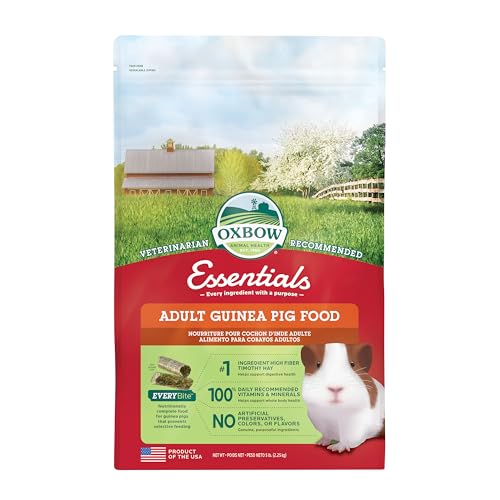
1. Oxbow Essentials — Best Overall
Oxbow Essentials is the most widely vet-recommended guinea pig pellet on the market, and for good reason. It delivers 100% of daily recommended vitamins and minerals in every uniform, Timothy hay-based bite. No artificial colors, no seeds to pick around, no fillers — just consistent nutrition. The formulation was developed specifically for adult guinea pigs with input from exotic animal veterinarians, and it shows in the nutritional profile.
The stabilized vitamin C and prebiotics support both immune function and digestive health. Uniform pellets prevent selective eating, so every serving delivers the same balanced nutrition. One reviewer noted that after years of use, “it has all the nutrition they need and they never get tired of it.”
What owners say: The most common praise is that even picky guinea pigs eat Oxbow willingly. Multiple exotic veterinarians recommend it as their first-choice pellet.
What to watch for: Some owners report occasional quality control issues, including bags arriving unsealed or with an unpleasant smell. A few guinea pigs simply refuse it — one owner noted their pigs “refused to eat these pellets” and had to switch back to Kaytee. Another concern is rising costs, with some long-term users looking for alternatives. Check price on Amazon →
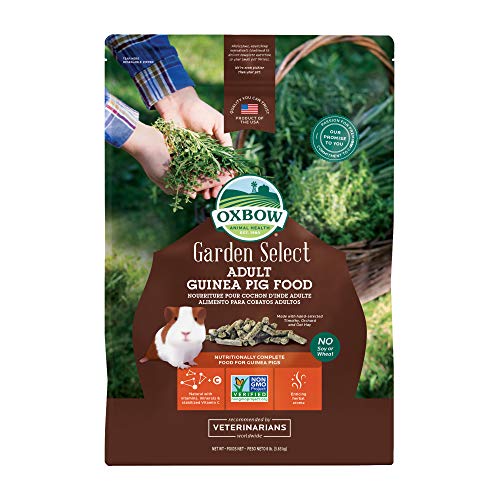
2. Oxbow Garden Select — Best for Picky Eaters
Garden Select takes the Oxbow formula and adds garden-inspired variety: a blend of Timothy, orchard, and oat hays with real vegetables and herbs. The result is a pellet that smells like salad and entices even the most reluctant eaters. It’s made with non-GMO ingredients and manufactured in the USA. The three-hay blend provides more foraging variety than single-hay pellets, which keeps mealtime engaging for guinea pigs that get bored easily.
One owner switched from Essentials when their local store was out of stock and discovered their guinea pig actually preferred Garden Select: “The guinea pig decided she’d rather have this and was picking it out of the mix of the two.” Another called it a “staple for my guinea pigs” because they drop everything when these pellets hit the bowl.
What to watch for: Garden Select costs more per pound than Essentials, and some owners question whether the garden vegetables justify the premium. A few report packaging problems — unsealed bags leading to stale food. One owner reported finding a pellet with plastic inside, which is a concerning quality control issue even though the company refunded the purchase. Check price on Amazon →
3. Kaytee Forti-Diet Pro Health — Best Value
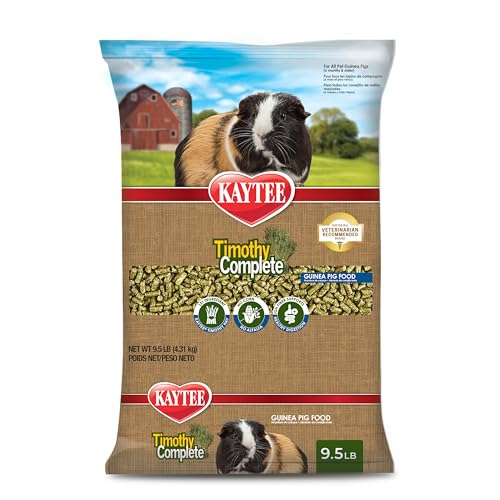
For households feeding multiple guinea pigs, Kaytee Forti-Diet Pro offers the most food for the least money. The 9.5 lb bag with added probiotics delivers solid nutrition at a price point that’s hard to beat. Timothy hay is the first ingredient, and the formula includes long-lasting vitamin C specifically formulated for guinea pig immune health. The added probiotics support digestive health — a real benefit for guinea pigs with sensitive stomachs.
Owners praise it as a reliable “go-to food” that’s “affordable, pigs eat it, and it’s available at most pet stores.” After six months of use, one owner reported their guinea pigs were “healthy, active, with shiny coats.”
What to watch for: Unlike Oxbow’s uniform pellets, Forti-Diet Pro contains colored pieces that many guinea pigs pick around and leave behind — creating waste. Some owners report a strong artificial smell when opening the bag, and a few experienced digestive issues after switching. Check price on Amazon →
4. Kaytee Timothy Complete — Best Uniform Pellets
Timothy Complete solves the main complaint about Forti-Diet: the colored pieces. These are plain, uniform Timothy pellets — no artificial colors, no seeds, nothing to pick around. Every pellet is identical in shape and nutrition, which means zero waste and consistent intake. The formula is backed by over 150 years of Kaytee’s experience in small animal nutrition.
Owners with sensitive guinea pigs report this is the one brand that didn’t cause digestive upset: “After trying several brands this is the one that didn’t cause any problems.” The uniform design also means guinea pigs can’t selectively eat only the tasty bits.
What to watch for: Dust at the bottom of the bag is a common complaint. Some owners feel the bags have gotten smaller over time, and a few guinea pigs simply refuse the taste. One reviewer noted the vitamin C content “seems low compared to Oxbow,” which could be a concern if your guinea pig doesn’t get enough vitamin C from vegetables. Check price on Amazon →
5. Wild Harvest Advanced Nutrition — Best Budget
Wild Harvest provides an 8 lb bag at the lowest cost per pound of any pellet on this list. It’s fortified with vitamin C, fiber, and essential minerals. For owners on a tight budget or those feeding three or more guinea pigs, the economics are hard to argue with. The resealable bag design helps maintain freshness over the longer feeding period that a large bag provides.
“This is the most economical option,” reported one owner of four guinea pigs. “They eat it all.”
What to watch for: Ingredient quality is the tradeoff. Corn and soy appear high on the ingredient list, and several owners flagged vague terms like “plant protein products” and “by-products.” Mold reports and excessive crumbling are recurring quality control complaints. Guinea pigs eat it, but owners note they “don’t get excited about it like with Oxbow.” The pellets crumble easily, creating powder at the bottom of the bag that goes uneaten. Check price on Amazon →
6. Vitakraft VitaSmart — Best for Coat Health
Vitakraft brings European-quality nutrition to the table with added omega-3 fatty acids and DHA. These nutrients support coat condition, which is why owners report visible improvements in fur softness and shine after switching. The formula includes natural probiotics and is fortified for all life stages — making it a versatile option if you have both young and adult guinea pigs.
“Our exotic vet recommended this brand specifically,” shared one satisfied owner. “Pigs have been healthy for over a year on it.” Others praise the clean ingredient list without excessive fillers.
What to watch for: Availability is the main drawback — you won’t find Vitakraft at PetSmart or Petco, so online ordering with shipping delays is standard. The resealable bag strip doesn’t always work properly, requiring transfer to an airtight container. One owner reported a skin reaction in one of their pigs, which the vet attributed to a specific ingredient sensitivity — always monitor your guinea pig closely when introducing any new food. Check price on Amazon →
7. Mazuri Guinea Pig Diet — Best for Rescues
Mazuri is manufactured by Purina’s exotic animal division and is widely used by zoos, rescue organizations, and exotic veterinarians. The Timothy hay-based formula includes live probiotics for digestive support and stabilized vitamin C. It’s particularly effective for malnourished or recovering guinea pigs that need reliable nutrition. The professional-grade formulation reflects decades of exotic animal nutrition research.
“Our rescue organization uses Mazuri exclusively,” shared one rescuer. “Pigs thrive on it.” The consistent quality from a professional-grade manufacturer gives peace of mind.
What to watch for: Mazuri is hard to find at regular pet stores — online ordering from specialty retailers is usually necessary. The pellet size runs larger than Oxbow, which can be challenging for younger guinea pigs. Some owners report needing a full two-week transition period before their pigs accepted the new food. Check price on Amazon →
8. Supreme Science Selective — Best Premium
Science Selective takes a hard line against sugar — no molasses, no added sugar, no artificial anything. The balanced calcium-to-phosphorus ratio (0.6% calcium, 0.5% phosphorus) makes it a smart choice for guinea pigs prone to bladder stones, a painful and potentially dangerous condition. At 16% protein and high fiber, the formula supports healthy weight maintenance without excess calories.
“Finally a pellet without molasses that my pigs actually enjoy eating,” praised one owner. The European-made formula is widely considered one of the cleanest ingredient lists available.
What to watch for: The premium pricing is the obvious drawback — it costs roughly double per pound compared to Oxbow. Availability is inconsistent, with frequent stockouts on Amazon. Not all guinea pigs accept the taste; one owner reported that out of three pigs, only two would eat it. Another received a stale bag, suggesting freshness can vary between shipments. Check price on Amazon →

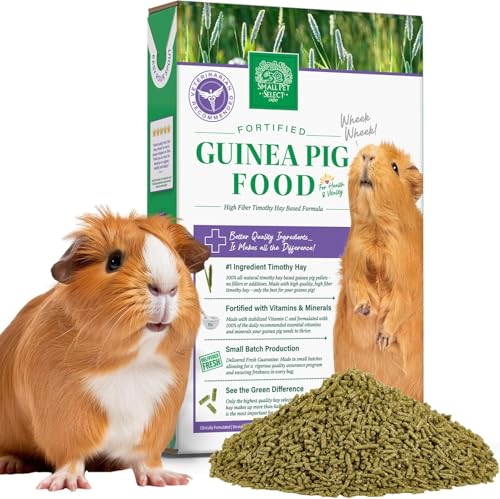
9. Small Pet Select — Best Small-Batch
Small Pet Select is a family-owned company that mills pellets in small batches for maximum freshness. The Timothy hay-based formula uses hand-selected ingredients and comes with a 100% satisfaction guarantee. Owners consistently mention the fresh smell and noticeable difference in quality compared to mass-produced brands.
“You can smell the difference — these pellets are fresh and don’t have that stale pet store smell,” reported one owner. Guinea pigs with digestive issues do well on this gentle formula.
What to watch for: At the highest cost per pound on this list, Small Pet Select is a tough sell for multi-pig households. The small 5 lb bag runs out quickly. Quality consistency between batches varies — some owners report the second order seemed less fresh than the first. Shipping delays are also a recurring complaint. Check price on Amazon →
Which Guinea Pig Pellets Should You Choose?
The right pellet depends on your situation. Here’s a quick decision guide:
- First-time guinea pig owners → Oxbow Essentials. It’s the safest choice with the most vet backing and highest owner satisfaction.
- Multiple guinea pigs on a budget → Kaytee Forti-Diet Pro or Wild Harvest Advanced. The large bags stretch further per dollar.
- Picky eaters → Oxbow Garden Select. The garden vegetable blend entices reluctant guinea pigs.
- Rescue or recovering guinea pigs → Mazuri Guinea Pig Diet. Zoo-trusted formula used by rescue organizations.
- Guinea pigs prone to bladder stones → Supreme Science Selective. Balanced calcium-to-phosphorus ratio with zero added sugar.
The same pellet principles apply whether you’re feeding a single Abyssinian or a herd of American guinea pigs — nutrition is breed-independent. If you’re coming from rabbit care, note that guinea pig pellet requirements are stricter due to the vitamin C dependency.
How Much Should You Feed Your Guinea Pig?
Daily Pellet Amount
Pellets are a supplement, not the main course. Guinea pigs should get roughly 80% of their calories from unlimited Timothy hay, 15-20% from fresh vegetables, and only a small portion from pellets.
- Adult guinea pigs (6+ months): 1/8 cup (about 30 grams) per pig per day
- Young guinea pigs (under 6 months): 1/4 cup to support rapid growth and development
Feeding Schedule
Feed pellets at a consistent time each day — morning and evening work well for most owners. This creates routine, which guinea pigs thrive on. Pair pellet feeding with vegetable portions, but never let pellets replace hay. The best guinea pig hay should always be available 24/7, as it provides essential fiber for digestion and naturally wears down continuously growing teeth.
Transitioning to New Pellets
Switching brands requires patience. Guinea pigs have sensitive digestive systems, and an abrupt change can cause diarrhea, bloating, or GI stasis. Follow this schedule:
- Days 1–3: 75% old pellets, 25% new pellets
- Days 4–6: 50% old pellets, 50% new pellets
- Days 7–9: 25% old pellets, 75% new pellets
- Day 10+: 100% new pellets
Watch for soft stool or reduced appetite during the transition. If problems appear, slow down the schedule.
Also Consider — 3 More Premium & Budget Pellet Picks
The nine ranked picks above cover the mainstream pellet brands at every price point. The three options below add a grain-free premium formula, an organic Oxbow line for owners who want certified organic pellets, and a budget Kaytee 5-pound bag that undercuts most alternatives on cost per ounce. Together with the main picks, they bring the total reviewed to twelve pellet formulas.
Sherwood Pet Health Adult Guinea Pig Food — Timothy Pellet 4.5 lb — Grain-Free Premium ($27.95)
Check Sherwood Pet Health pellet price on Amazon
Sherwood Pet Health is a small-batch, vet-formulated brand that’s earned a following among owners of guinea pigs with sensitive digestion. The Timothy pellet formula is grain-free and soy-free — a meaningful difference for guinea pigs that develop digestive upset on the corn and soy ingredients common in mainstream pellets. At 4.5 stars across 187 reviews, the validation is strong for a premium brand with a smaller review pool.
Pros: 4.5 stars across 187 reviews with consistent reports of digestive improvement, grain-free and soy-free formula suits sensitive guinea pigs, measured Timothy pellets prevent selective eating, vet-formulated by an exotic animal nutrition-focused company.
Cons: The premium price ($27.95 for 4.5 lb) is roughly 2x the per-pound cost of Oxbow. Smaller 4.5 lb bag runs out fast in multi-pig households. Limited availability compared to Oxbow — check Amazon stock before committing.
Best for: Guinea pigs with documented food sensitivities, owners willing to pay the premium for a cleaner ingredient list, and rescue organizations that need a reliable formula for pigs recovering from digestive issues. Pairs well with fresh guinea pig hay for a complete sensitive-stomach diet.
Oxbow Organic Adult Guinea Pig Food — 3 lb — Certified Organic ($13.49)
Check Oxbow Organic pellet price on Amazon
Oxbow’s certified organic line delivers the same trusted nutrition as the standard Essentials formula with organic-certified Timothy hay and ingredients. At 4.8 stars across 768 reviews, the validation is the highest in the entire comparison — and the smaller 3 lb bag is the right size for owners who want to test the formula without committing to a 5 or 10 lb purchase. The 3 lb format is also useful for households with a single guinea pig that won’t finish a larger bag before the vitamin C degrades.
Pros: 4.8 stars across 768 reviews is the highest validation of any pellet in this comparison, certified organic ingredients for owners who prioritize organic sourcing, smaller 3 lb bag is the right size for single-pig households, same Oxbow nutritional standards as the Essentials main pick.
Cons: At $13.49 for 3 lb, the per-pound cost is higher than the 5 lb Oxbow Essentials. “Organic” labeling doesn’t change the actual nutrition — it’s a sourcing choice, not a health upgrade. Smaller 3 lb bag runs out faster.
Best for: Owners who specifically want organic ingredients, single-guinea-pig households that won’t finish a 5 lb bag before vitamin C degrades, and owners who want to try the Oxbow brand with a smaller initial investment.
Kaytee Timothy Complete Guinea Pig Food — 5 lb — Budget Mid-Bag ($9.95)
Check Kaytee Timothy Complete price on Amazon
The 5-pound version of the Kaytee Timothy Complete formula delivers the same uniform Timothy hay-based pellets as the 9.5 lb Forti-Diet main pick at a lower total cost and a more practical size for single or two-pig households. At 4.8 stars across 4,976 reviews, this is the most validated budget option in the entire comparison — the validation rate exceeds every other pellet reviewed.
Pros: 4.8 stars across 4,976 reviews is the second-highest validation rate in the entire comparison, $9.95 for 5 lb is the lowest per-bag cost of any non-Wild Harvest option, uniform Timothy pellets prevent selective eating, 5 lb size is right for single or two-pig households.
Cons: Lower per-bag cost doesn’t beat Wild Harvest’s 8 lb budget option on per-pound pricing. The plain Timothy formula lacks the probiotics and DHA of premium alternatives. Dust at the bottom of the bag is a recurring complaint.
Best for: Single or two-pig households looking for the lowest-cost reliable Timothy pellet. Pair with fresh vegetables for vitamin C supplementation, since stabilized vitamin C in budget formulas can be marginal. See our guinea pig feeding guide for safe daily options.
Frequently Asked Questions
Can guinea pigs eat rabbit pellets?
No. Rabbit pellets lack fortified vitamin C and contain different mineral ratios designed for rabbits. Guinea pigs will develop scurvy within 2-3 weeks on rabbit food. Always use pellets specifically formulated for guinea pigs.
Do guinea pig pellets expire?
Yes. Stabilized vitamin C degrades over time — most pellets should be used within 3-6 months of opening. Store in a cool, dry airtight container and check the best-by date before purchasing.
How do I know if my guinea pig likes their pellets?
Monitor whether your pig finishes their daily portion within a few hours and whether droppings remain firm and oval-shaped. Uneaten pellets or soft stool signal a problem with either taste acceptance or digestive tolerance.
Should I mix different pellet brands?
No. Mixing throws off carefully balanced calcium-to-phosphorus ratios and can cause selective eating. Transition gradually over 7-10 days instead.
Are alfalfa-based pellets OK for adult guinea pigs?
Not recommended. Alfalfa’s excess calcium contributes to bladder stones in adults. Alfalfa-based pellets are appropriate only for guinea pigs under 6 months old.
Conclusion
The right pellet comes down to three things: a Timothy hay base, stabilized vitamin C, and uniform pellets that prevent selective eating. Oxbow Essentials remains the most reliable choice for most owners — vet-recommended, widely available, and accepted by the vast majority of guinea pigs.
For budget-conscious households, Kaytee Forti-Diet Pro delivers solid nutrition at the lowest cost per pound. For guinea pigs with specific health concerns like bladder stones, Supreme Science Selective offers the cleanest formula available with no added sugar and balanced calcium levels.
Whatever pellet you choose, remember that it’s only one part of the equation. Unlimited Timothy hay, daily fresh vegetables, and clean water form the foundation of guinea pig health. Pellets fill the nutritional gaps — especially vitamin C — that hay alone cannot provide. For the complete picture, see our guinea pig care guide and food guide.