Why Hay Is the Most Important Part of Your Rabbit’s Diet
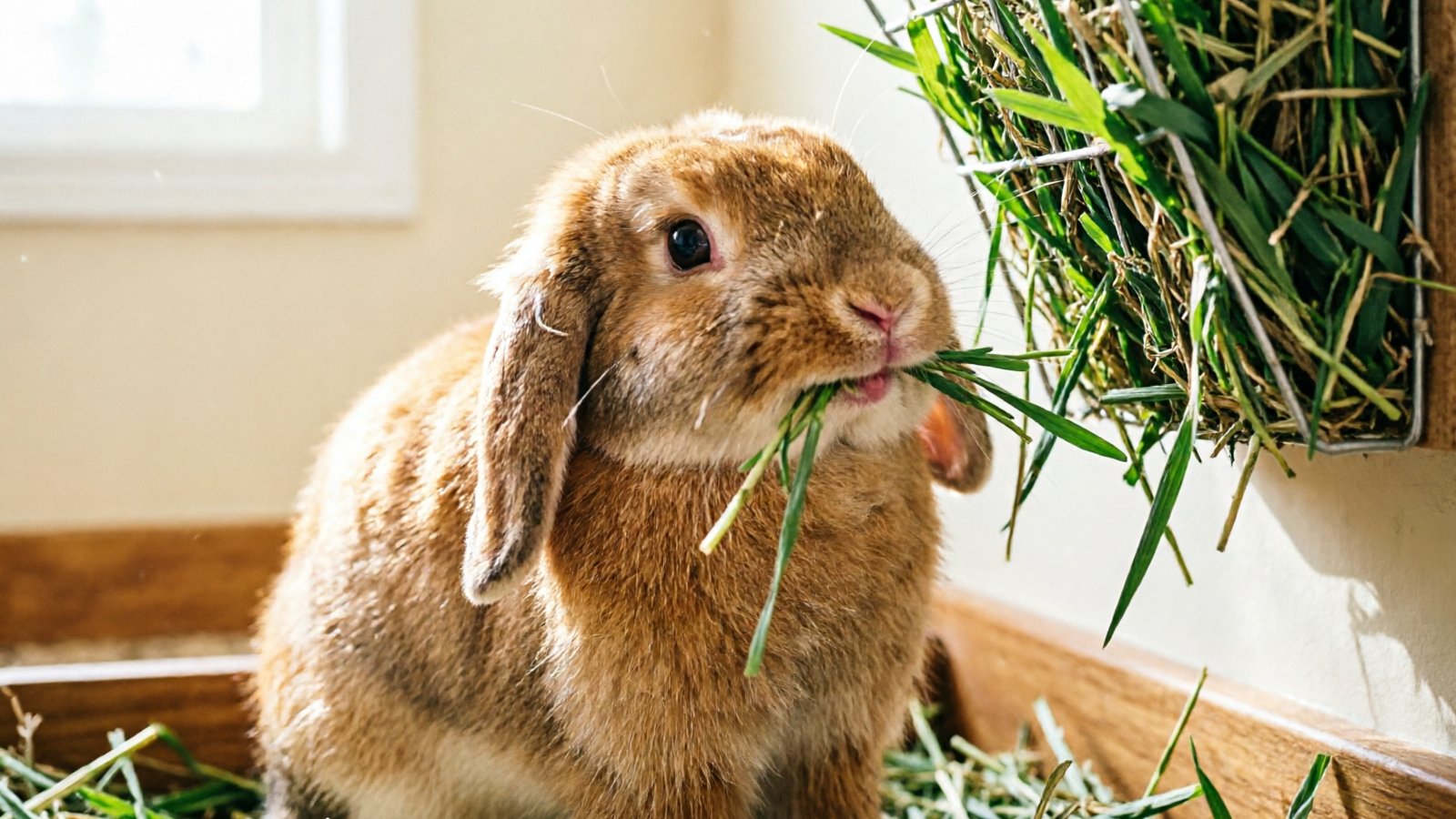
Rabbit hay is dried grass that makes up 80–90% of a rabbit’s daily diet — providing essential fiber for digestive health and the abrasive texture needed to wear down their continuously growing teeth (NC State University Veterinary Hospital; RSPCA).
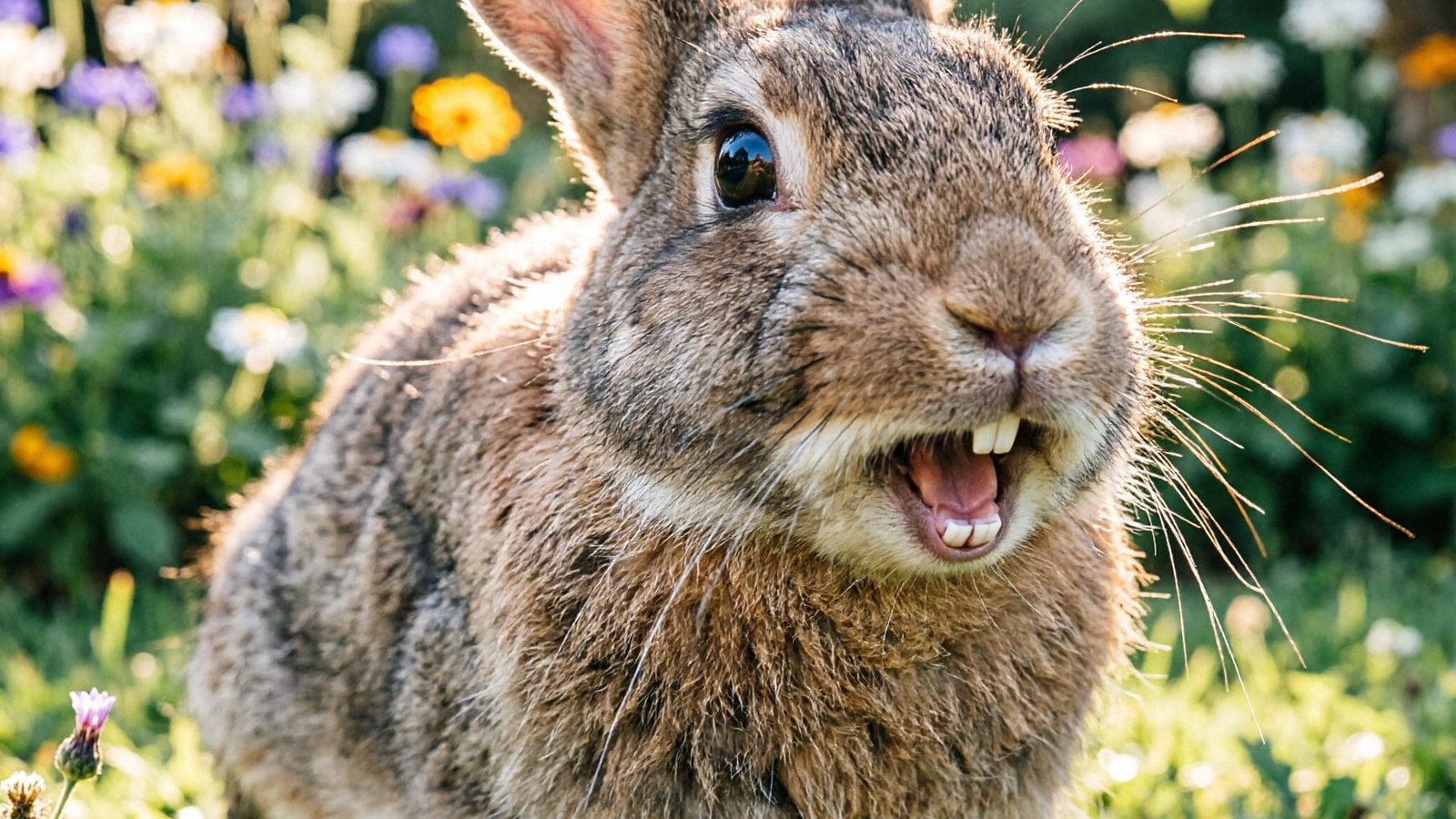
Without unlimited access to the best rabbit hay, rabbits face two life-threatening conditions: GI stasis (the digestive system slows or stops) and dental disease (teeth overgrow and puncture gums). GI stasis alone accounts for approximately 25% of all pet rabbit veterinary visits (Oglesbee BL, 2020, PMC7258705), with survival rates ranging from 63–91% depending on treatment speed. A rabbit’s incisor teeth grow continuously — studies show diet abrasiveness directly regulates eruption rates, with coarse hay stems providing the wear needed to prevent overgrowth (Müller J et al., 2014, PubMed 24700486).
Rabbit hay serves three critical functions beyond basic nutrition:
- Digestive health. The long-strand fiber in hay keeps the gut moving. Without it, harmful bacteria multiply in the cecum, leading to fatal GI stasis. For more on how diet affects digestion, see our rabbit diet guide.
- Dental wear. The physical act of chewing tough hay stalks grinds down molars that never stop growing. Poor hay quality is the leading cause of rabbit dental health problems.
- Mental enrichment. Rabbits naturally forage, dig, and sort through hay for hours. This prevents boredom and destructive behaviors like bar-biting or overgrooming.
Choosing the best rabbit hay is not a minor decision — it is the single most important purchase you will make for your rabbit’s long-term health and wellbeing.
Quick Comparison of Top Rabbit Hay Brands
| Product | Hay Type | Best For | Price | Size | $/lb |
|---|---|---|---|---|---|
| Oxbow Western Timothy | Timothy | Best Overall | $21.68 | 90oz (5.6lb) | $3.87 |
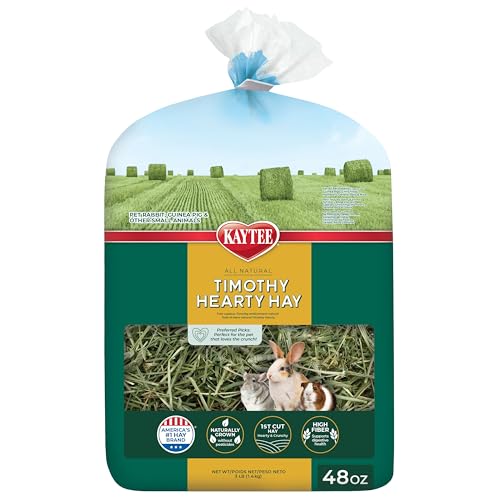
| Kaytee Timothy High Fiber | Timothy | Best Budget | $12.95 | 48oz (3lb) | $3.65 |
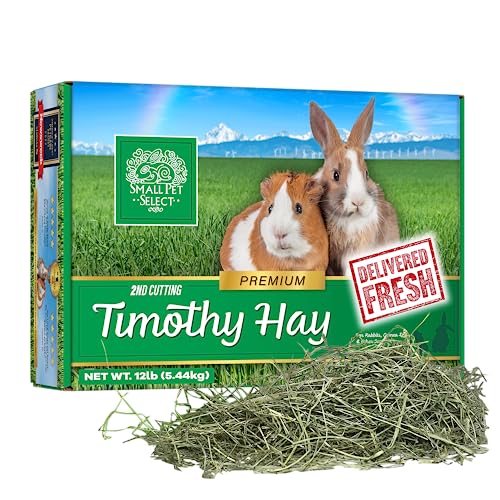
| Small Pet Select 2nd Cut Timothy | Timothy (2nd Cut) | Best Premium | $36.99 | 12lb | $3.08 |
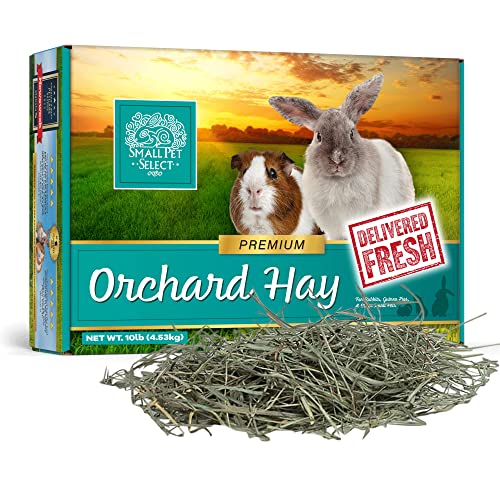
| Small Pet Select Orchard Grass Hay | Orchard Grass | Best for Allergies | $34.99 | 10lb | $3.50 |
| Oxbow Organic Meadow | Meadow (Organic) | Best Organic | $14.39 | 40oz (2.5lb) | $5.76 |
| Kaytee Timothy Hay Cubes | Timothy (Cubes) | Best for Travel | $5.28 | 1lb | $5.28 |
| Kaytee Alfalfa Mini Bale | Alfalfa | Best for Babies | $5.99 | 24oz (1.5lb) | $3.99 |
| Small Pet Select Orchard Grass | Orchard Grass | Best Bulk Value | $54.99 | 20lb | $2.75 |
Best Rabbit Hay — Full Reviews
We compared 8 rabbit hay products to find the best rabbit hay across 5 types — Timothy, Orchard Grass, Meadow, Alfalfa, and oat hay for rabbits, and Compressed. Each rabbit hay product was evaluated for freshness, leaf-to-stem ratio, dust level, and real rabbit-owner feedback.
For a complete diet plan that pairs quality hay with the right pellets, see our guide to the best rabbit food.
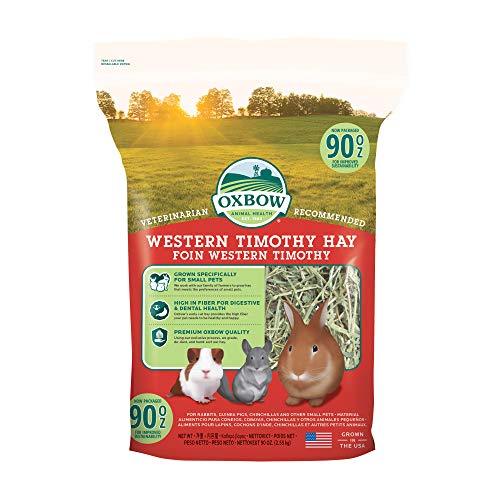
1. Oxbow Western Timothy Hay (90oz) — Best Overall
Oxbow Western Timothy is the most widely purchased rabbit hay on Amazon with consistently positive owner feedback. It earns the top spot for consistent quality, wide availability, and competitive pricing at $3.87/lb for the 90oz bag.
The hay is US-grown and hand-sorted before packaging.
The 90oz (5.6lb) bag lasts a single rabbit approximately 3-4 weeks with daily feeding. This is the default choice for first-time rabbit owners — the easiest brand to find and the hardest to get wrong.
Key features: High-fiber first and second cut blend, veterinarian recommended, and available at Petco, PetSmart, Chewy, and Amazon for same-day delivery. The consistent quality makes it a reliable recurring purchase.
Owners share: “Excellent quality consistently — my rabbits love it and the fiber content keeps their digestion healthy.”
Honest downside: Some batches arrive with brown or yellow strands mixed in. This is a common complaint across all hay brands — quality varies between harvest batches. Pick out discolored pieces before feeding.
Oxbow Western Timothy Hay → Amazon
2. Kaytee Timothy Hay High Fiber (48oz) — Best Budget
Kaytee Timothy Hay is the most widely available rabbit hay brand in the United States. You can find it at Petco, PetSmart, Walmart, and most grocery stores with a pet aisle.
Key features: High-fiber formulation at $12.95 for a 48oz (3lb) bag, with extensive positive owner feedback. The softer texture works well for rabbits who prefer less coarse hay.
Owners note: “Good quality hay — my rabbits eat it readily, and the price is affordable for regular purchases.”
Honest downside: Quality inconsistency is the number one complaint. Reddit’s r/Rabbits community and Facebook’s House Rabbit Society group both report Kaytee bags arriving with “more brown than green” hay. Kaytee also produces more dust at the bottom of the bag compared to Oxbow or Small Pet Select. At $3.65/lb, the price is competitive with other brands, but the quality isn’t always consistent.
3. Small Pet Select 2nd Cutting Perfect Blend Timothy Hay (12lb) — Best Premium
Small Pet Select is Reddit’s most recommended hay brand. The 2nd cutting hay offers the ideal leaf-to-stem balance — soft enough for easy eating but with enough stem texture for dental wear.
Key features: Hand-packed, US-grown, and explicitly labeled as 2nd cutting (unlike Oxbow which does not label cutting grades). The 12lb box costs $36.99 ($3.08/lb) — still better value per pound than Kaytee’s 3lb bag. Each box is hand-packed in small batches, resulting in less dust and more consistent green color.
Reddit users consistently report: “My rabbits won’t eat any other hay — Small Pet Select is always fresh and green.”
Honest downside: Only available online through Amazon or the Small Pet Select website. No same-day pickup at pet stores. The 12lb box is large and requires dedicated storage space. Occasional bags arrive musty from warehouse storage — contact the seller for replacement.
Small Pet Select 2nd Cutting Timothy Hay → Amazon
4. Small Pet Select Orchard Grass Hay — Best for Allergies
Orchard grass hay for rabbits is the top alternative when timothy hay causes allergic reactions in owners. The different grass species avoids the specific allergens that trigger sneezing and watery eyes.
Key features: Softer texture and sweeter smell than timothy hay, making it popular with picky eaters. Extensive owner feedback confirms consistent quality from Oxbow’s orchard grass line. Veterinarians recommend rotating between timothy and orchard grass for dietary variety.
Owners share: “Great alternative for picky eaters — softer than timothy with a nice sweet smell that my rabbit loves.”
Honest downside: At $4.76/lb, orchard grass costs more than loose timothy hay. The 40oz (2.5lb) bag is small for the price. Some rabbits initially reject the different taste — transition gradually by mixing with their current hay over 7-10 days.
Small Pet Select Orchard Grass Hay → Amazon
5. Oxbow Organic Meadow Hay (40oz) — Best Organic
Oxbow Organic Meadow Hay is the highest-rated product in this roundup. As a premium meadow hay for rabbits, it is USDA certified organic and contains a natural blend of different grasses rather than a single hay type.
Key features: Multiple grass species in one bag provide natural texture variety, which prevents feeding boredom and encourages foraging behavior. The organic certification means no pesticides or synthetic fertilizers were used during growing.
Owners praise the quality: “Best quality hay — organic and my rabbits love the variety of textures in each bag.”
Honest downside: At $5.76/lb and only 2.5lb per bag, this is a topping hay, not a primary hay. Use it as a supplement mixed with cheaper timothy hay. Some of the mixed stems are too thick for smaller rabbit breeds like Netherland Dwarfs.
Oxbow Organic Meadow Hay → Amazon
6. Kaytee Timothy Hay Blend Cubes (1lb) — Best for Travel
Kaytee Timothy Hay Blend Cubes turn loose hay into convenient compressed cubes that are easy to portion and travel with. Instead of loose hay that scatters everywhere, you get uniform cubes that deliver the same fiber without the mess.
Key features: Minimal dust production, consistent portion sizing (just drop a handful in the cage), and no loose hay scattered around the carrier or temporary housing. The cube format is ideal for travel, vet visits, boarding, or introducing hay to young rabbits who haven’t figured out loose hay yet.
Owners confirm: “Great for travel — easy to pack and no mess in the carrier. My rabbit eats them just as readily as loose hay.”
Honest downside: At $5.28/lb, cubes cost more than loose timothy hay. Some rabbits prefer the texture of loose hay and may need a gradual transition. This product works best as a supplemental or travel option alongside a regular loose hay diet.
Kaytee Timothy Hay Cubes → Amazon
7. Kaytee Alfalfa Mini Bale (24oz) — Best for Baby Bunnies
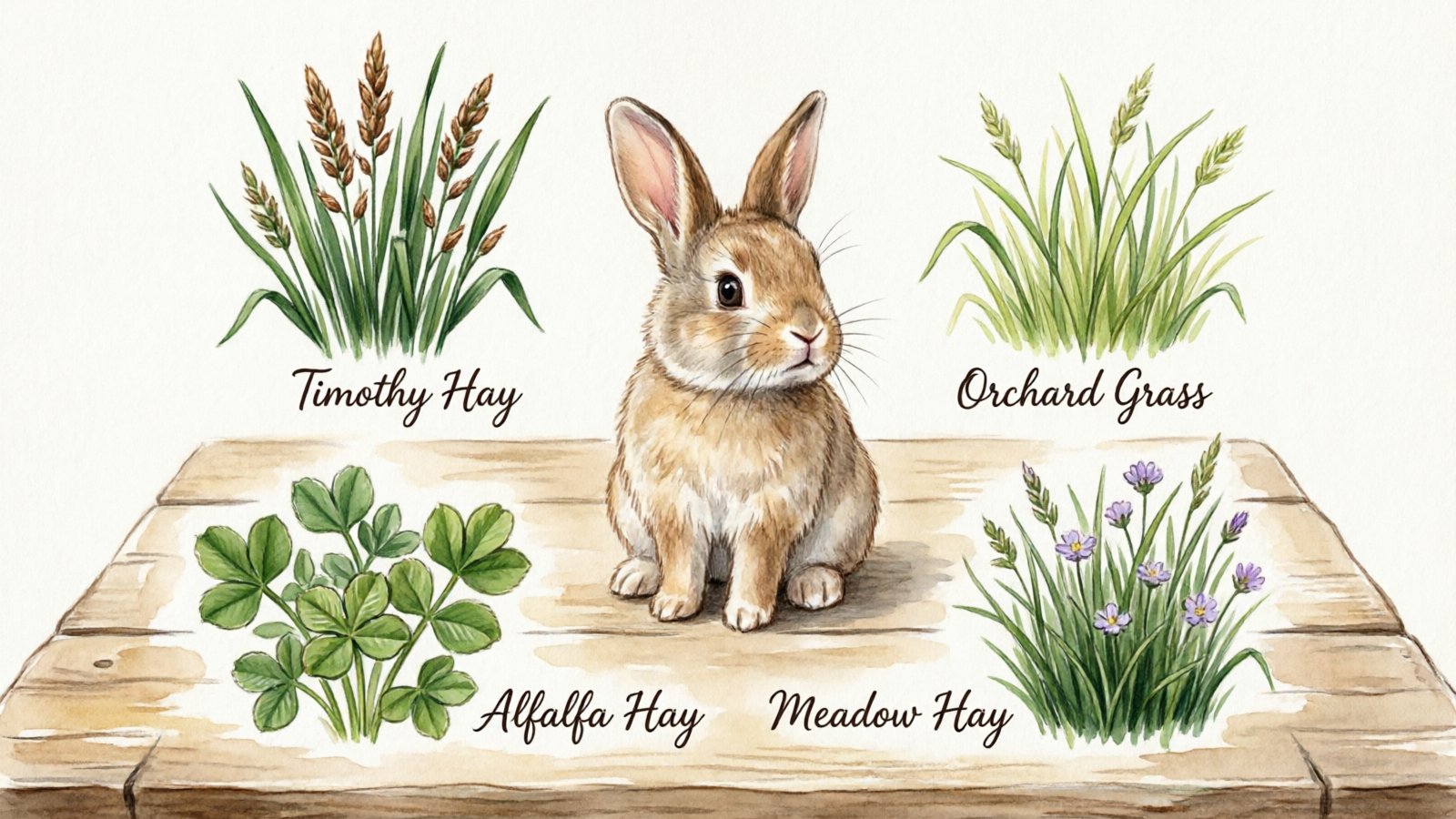
Warning: Only for rabbits under 7 months, pregnant, or nursing. Alfalfa hay is too high in calcium and protein for adult rabbits — it causes bladder stones and obesity in mature rabbits.
Key features: The mini bale format stays fresh longer than loose bag hay. High calcium supports bone development in growing babies. Strong owner feedback confirms palatability for young rabbits.
Owners report: “Baby bunnies love it — great for young growing rabbits with soft, leafy texture they can easily chew.”
Honest downside: At $3.99/lb, the price is mid-range for hay. The 24oz bag is small. You must transition babies to timothy or orchard grass hay between 5-7 months of age to prevent calcium overload.
Kaytee Alfalfa Mini Bale → Amazon
8. Small Pet Select Orchard Grass Hay (20lb) — Best Bulk Value
At $2.75/lb for a 20lb box, this is the best bulk value option. Multi-rabbit households and rescue operations should consider this their go-to option.
Key features: Fresh orchard grass hay at bulk pricing, hand-packed by Small Pet Select with the same quality standards as their timothy line. The 20lb box lasts a single rabbit approximately 2-3 months.
Owners appreciate the value: “Amazing value for 20 pounds — fresh, fragrant, and my rabbits who prefer softer hay love it.”
Honest downside: The 20lb box is physically large and requires significant storage space. Some settling dust accumulates at the bottom during shipping. Not suitable for apartments or homes without a dedicated pet supply storage area.
Small Pet Select Orchard Grass → Amazon
Timothy vs Orchard vs Meadow — Which Hay Type Is Right for Your Rabbit?
Understanding rabbit hay types and cutting grades is essential for finding the best rabbit hay for your pet’s specific needs. Here is a structured comparison of 5 common hay types across 7 criteria.
| Feature | Timothy | Orchard Grass | Meadow | Oat Hay | Alfalfa |
|---|---|---|---|---|---|
| Fiber | Very High | High | High | High | Medium |
| Protein | Medium | Medium | Medium | Medium | Very High |
| Calcium | Low | Low | Low | Low | Very High |
| Texture | Coarse → Soft (by cut) | Soft, Sweet | Mixed | Crunchy, seed heads | Soft, Leafy |
| Best For | Most adult rabbits | Picky eaters, allergies | Enrichment | Variety | Babies under 7mo |
| Dental Wear | Excellent | Good | Good | Very Good | Good |
| Cost/lb | $3.87 | $3.65 | $4.76-5.76 | — | $3.99 |
Understanding Timothy Hay Cutting Grades
Timothy hay is harvested up to three times per growing season, and each cutting produces hay with different characteristics:
- 1st cut. More stems, higher fiber, coarser texture. Best for dental wear and overweight rabbits who need more chewing effort. The stalk-heavy composition forces extended chewing time.
- 2nd cut. The ideal leaf-to-stem balance. This is the most popular cutting and the best all-around choice for healthy adult rabbits. Small Pet Select is one of the few brands that labels cutting grades.
- 3rd cut. Very soft and leafy with minimal stems. Best for picky eaters, underweight rabbits, or seniors with dental issues who struggle with coarse hay. Higher in protein and lower in fiber than other cuts.
For most rabbit owners, 2nd cut timothy hay is the right choice. Only switch to 1st or 3rd cut for specific health reasons.
Best Hay for Baby Bunnies vs Adult Rabbits
The best rabbit hay changes as your rabbit ages.
A rabbit’s hay needs change dramatically with age. Feeding the wrong rabbit hay type can cause serious health problems.
Baby Rabbits (Under 7 Months)
Baby rabbits need unlimited alfalfa hay — the high calcium and protein content supports rapid bone growth and muscle development. The best alfalfa hay for rabbits is the Kaytee Alfalfa Mini Bale (#7 above).
During months 5-7, begin a gradual transition by mixing increasing amounts of timothy rabbit hay or orchard grass hay with the alfalfa. This prevents digestive upset and helps the young rabbit accept grass hay before the full switch at 7 months.
Adult Rabbits (7+ Months)
Adult rabbits need unlimited grass hay — timothy, orchard grass, or meadow hay. Alfalfa is too rich and causes bladder sludge, stones, and weight gain. The best rabbit hay for healthy adults is Oxbow Western Timothy (#1) or Small Pet Select 2nd Cut Timothy (#3).
For the full picture on how hay fits into your rabbit’s overall diet, see our rabbit health guide covering GI stasis prevention and common dietary diseases.
Senior Rabbits (7+ Years)
Senior rabbits benefit from softer hay varieties — 3rd cut timothy or orchard grass. Older rabbits often develop dental issues that make chewing coarse stems painful. Small Pet Select Orchard Grass (#4) provides the soft texture seniors need while maintaining adequate fiber content.
Best Hay for Rabbits with Allergies
Finding the best rabbit hay for sensitive rabbits requires careful selection.
Timothy hay allergy is more common than most rabbit owners realize. Symptoms in humans include sneezing, watery eyes, congestion, and skin irritation after handling hay. If you experience any of these, orchard grass is your solution.
Best choice: Small Pet Select Orchard Grass Hay — a different grass species that avoids the specific proteins causing timothy reactions.
Alternative: Oxbow Organic Meadow Hay — multiple grass species reduce exposure to any single allergen.
Additional tips for allergy sufferers:
- Wear an N95 mask when handling or changing hay.
- Choose low-dust rabbit hay brands — Oxbow and Small Pet Select produce less dust than Kaytee.
- Consider compressed cubes like Kaytee Timothy Hay Cubes (#6), which produce minimal airborne particles.
- Change hay in a well-ventilated area or outdoors when possible.
Oxbow vs Small Pet Select — Which Hay Brand Wins?
These two brands dominate the conversation around the best rabbit hay.
The oxbow vs small pet select hay debate is one of the most active topics in rabbit communities, with Reddit threads regularly reaching 50+ comments. Here is an objective comparison.
| Factor | Oxbow | Small Pet Select |
|---|---|---|
| Availability | Petco, PetSmart, Chewy, Amazon | Online only (Amazon + own site) |
| Price/lb (Timothy) | ~$3.87/lb (90oz) | ~$3.08/lb (12lb) |
| Quality consistency | Good (some batch variation) | Excellent (hand-packed, hand-sorted) |
| Cutting options | Not labeled | 1st, 2nd, 3rd cut available |
| Dust level | Low | Very Low |
| Best for | Convenience, first-time buyers | Quality-focused, multi-rabbit homes |
The verdict: Small Pet Select wins on quality, transparency (labeled cuts), and freshness. Oxbow wins on convenience — available same-day at major pet stores nationwide. Price-wise, both are competitive depending on bag size and where you buy.
Both are excellent brands. Your choice depends on whether you prioritize immediate availability or the freshest possible hay with labeled cutting grades. Many owners use Oxbow as their regular brand and order Small Pet Select for backup.
For more on your rabbit’s complete diet, see our guide to rabbit treats — but remember that hay should be 80% of intake. Many hay brands overlap across species — see our best guinea pig hay guide for cross-species recommendations.
How to Store Rabbit Hay and Keep It Fresh
Even the best rabbit hay loses nutritional value when stored improperly.
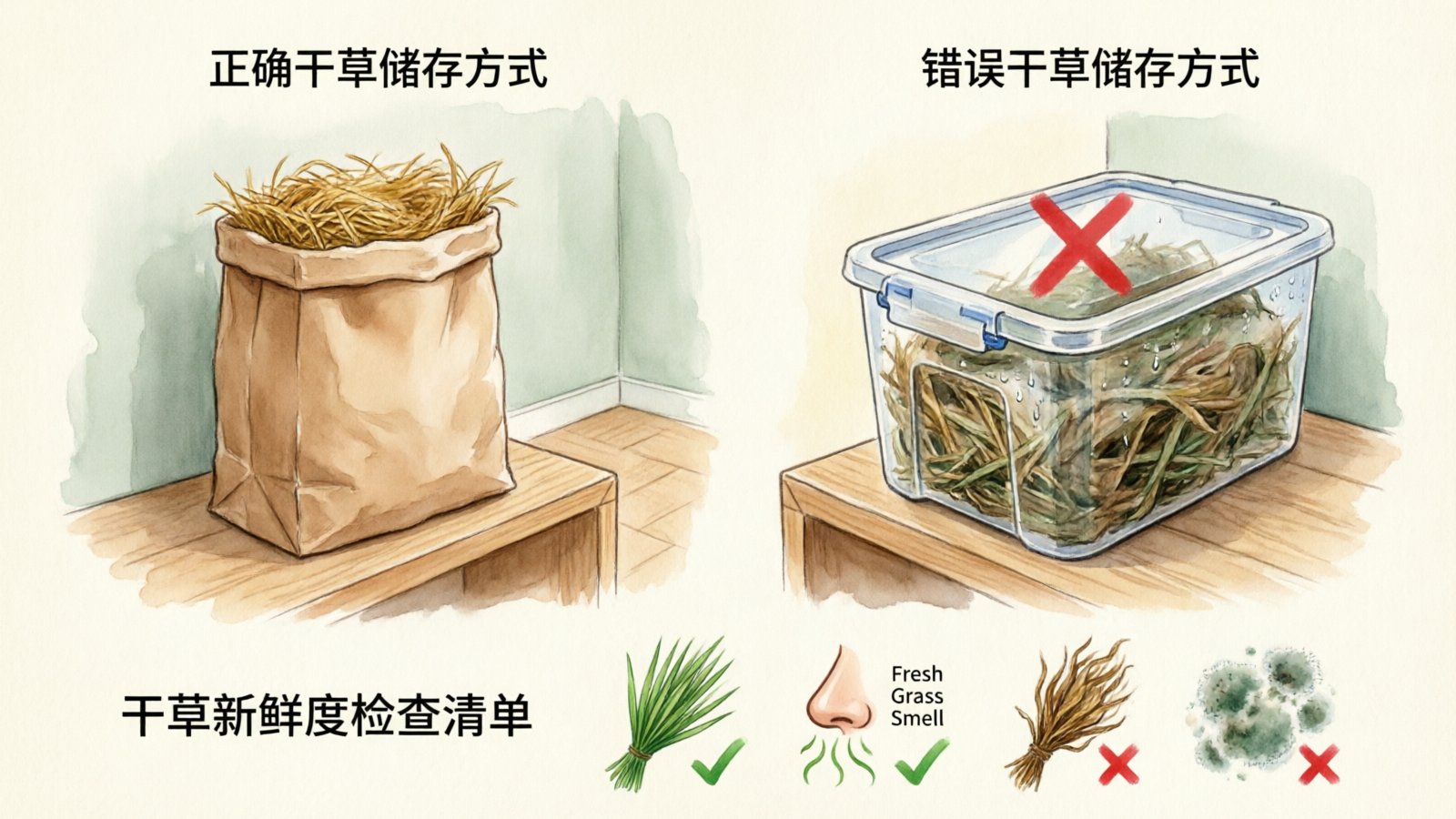
Proper rabbit hay storage preserves freshness and prevents mold — the most dangerous contaminant in rabbit hay.
Storage rules:
- Keep in original bag or cardboard box. Paper and cardboard are breathable, allowing residual moisture to escape.
- Store in a cool, dry place. Avoid direct sunlight and areas with temperature fluctuations like garages or attics.
- Never use airtight plastic containers. Trapped moisture creates mold. A sealed plastic bin turns good hay into a health hazard within days.
- Use within 6-12 months. Hay loses nutritional value and palatability over time, even when stored correctly.
Freshness checklist:
- Green color throughout — not brown or yellow
- Fresh, sweet grass smell
- Minimal dust at the bottom of the bag
- Brown or yellow discoloration — old or poor quality
- Musty or moldy smell — discard the entire bag immediately
Monthly cost estimate: A single-rabbit household spends approximately $12-22/month on timothy hay. Multi-rabbit households spend $25-45/month. Bulk purchases from Small Pet Select (20lb at $2.75/lb) offer the best recurring savings.
How to Choose the Best Rabbit Hay in 2026
With prices shifting across all brands this year, choosing the best rabbit hay comes down to a few key factors. Here’s a quick decision framework:
Match Hay Type to Your Rabbit’s Life Stage
- Baby (under 7 months): Start with alfalfa hay for calcium-rich growth support. At $3.99/lb for Kaytee’s mini bale, it’s affordable and palatable for young rabbits. See our rabbit lifespan guide for the full transition timeline.
- Adult (7 months – 6 years): Timothy hay (2nd cut) or orchard grass is your daily staple. Small Pet Select and Oxbow are the most trusted brands. Budget $12-22/month for a single rabbit.
- Senior (7+ years): Switch to softer hay — 3rd cut timothy or orchard grass. Softer textures reduce chewing effort for rabbits with age-related dental issues. Check our rabbit health guide for diet tips.
Choose Your Price Tier
| Budget | Recommended Hay | Monthly Cost | Best For |
|---|---|---|---|
| Economy ($) | Kaytee Timothy Hay High Fiber | ~$11/month | Owners on a tight budget, multiple rabbits |
| Mid-range ($$) | Oxbow Western Timothy 90oz | ~$13/month | Best balance of quality and availability |
| Premium ($$$) | Small Pet Select 2nd Cut 12lb | ~$15/month | Quality-focused owners who order online |
| Bulk ($$$) | Small Pet Select Orchard Grass 20lb | ~$11/month | Multi-rabbit homes, rescue operations |
Consider Special Needs
- Allergies: Switch from timothy to orchard grass (Small Pet Select Orchard Grass at $4.76/lb). The different grass species avoids timothy-specific allergens. For more on this, read our rabbit health guide.
- Picky eaters: Try 3rd cut timothy or orchard grass — both are softer and sweeter. Mix with their current hay before switching fully.
- Travel: Use compressed hay cubes (Kaytee Timothy Hay Cubes) for mess-free portability.
Look for These Quality Indicators
Every bag of hay you buy should pass this quick check:
| Good Hay | Bad Hay |
|---|---|
| Green or olive color throughout | Brown, yellow, or gray discoloration |
| Fresh, sweet grass smell | Musty, sour, or moldy odor |
| Leafy with visible seed heads | Mostly stems with no leaves |
| Minimal dust at bag bottom | Thick layer of dust and fines |
| Consistent texture within the bag | Mix of over-dry straw and wet clumps |
Avoid These Common Mistakes
- Buying the cheapest option without checking quality. A $10 bag of brown hay with no nutrition value is $10 wasted — your rabbit won’t eat it, and you’ll end up buying another bag.
- Stockpiling too much hay. A 20lb box lasts one rabbit 2-3 months. Hay loses nutritional value after 6-12 months, so don’t overbuy unless you have multiple rabbits.
- Storing hay in plastic bins. Trapped moisture creates mold within days. Always use breathable cardboard or paper bags.
For more feeding tips, see our guides on rabbit diet and best rabbit treats.
Rabbit Hay FAQ
These answers help you choose the best rabbit hay for your specific rabbit’s needs.
What is the best hay for rabbits?
Timothy hay for rabbits is the best choice for most adult rabbits. It provides the ideal fiber content for healthy digestion and the abrasive texture needed to wear down teeth that grow continuously throughout their life.
Oxbow Western Timothy Hay is our top pick overall with widespread owner approval and veterinarian recommendation.
Can rabbits eat orchard grass instead of timothy hay?
Yes, orchard grass hay is nutritionally equivalent to timothy hay and is fully acceptable as a rabbit’s primary hay source. It is softer and sweeter than timothy.
This makes it an excellent alternative for picky eaters or owners with timothy allergies. Many veterinarians recommend rotating between the two for dietary variety.
How much hay should a rabbit eat per day?
A rabbit should eat a pile of rabbit hay roughly the size of their body every day. For a typical 4-6 lb rabbit, that translates to roughly 1-2 cups of compressed hay.
Hay must be available 24 hours a day. Never let your rabbit run out — unlimited access is essential for digestive and dental health.
What is the difference between 1st, 2nd, and 3rd cut timothy hay?
1st cut has more stems and higher fiber, making it best for dental wear and overweight rabbits. 2nd cut offers the best leaf-to-stem balance for most healthy adults.
3rd cut is the softest with more leaves and minimal stems — ideal for picky eaters, underweight rabbits, or seniors with dental issues. Most rabbits do best on 2nd cut as their everyday hay.
Can adult rabbits eat alfalfa hay?
No, adult rabbits should not eat alfalfa hay regularly. It contains too much calcium and protein, which causes bladder stones, urinary sludge, and obesity in mature rabbits.
Alfalfa is only appropriate for baby rabbits under 7 months, pregnant does, or nursing mothers. After 7 months, transition to grass hay.
Should I use a rabbit hay feeder?
A rabbit hay feeder or hay rack keeps hay off the floor and reduces waste. Place it near the litter box since rabbits prefer to eat where they eliminate. A good feeder also keeps hay cleaner and encourages more consistent eating.
How should I store rabbit hay?
Keep hay in its original bag or a breathable cardboard box in a cool, dry place away from direct sunlight. Never use airtight plastic containers.
Trapped moisture causes mold, which is dangerous if ingested. Use hay within 6-12 months of purchase for optimal freshness and nutritional value.
Which is better: Oxbow or Small Pet Select hay?
Small Pet Select wins on quality and cost per pound, with labeled cutting grades and hand-packed freshness. Oxbow wins on convenience with same-day availability at major pet stores.
Both are excellent brands. For the best rabbit hay quality and value, choose Small Pet Select, or Oxbow when you need hay today and cannot wait for shipping.