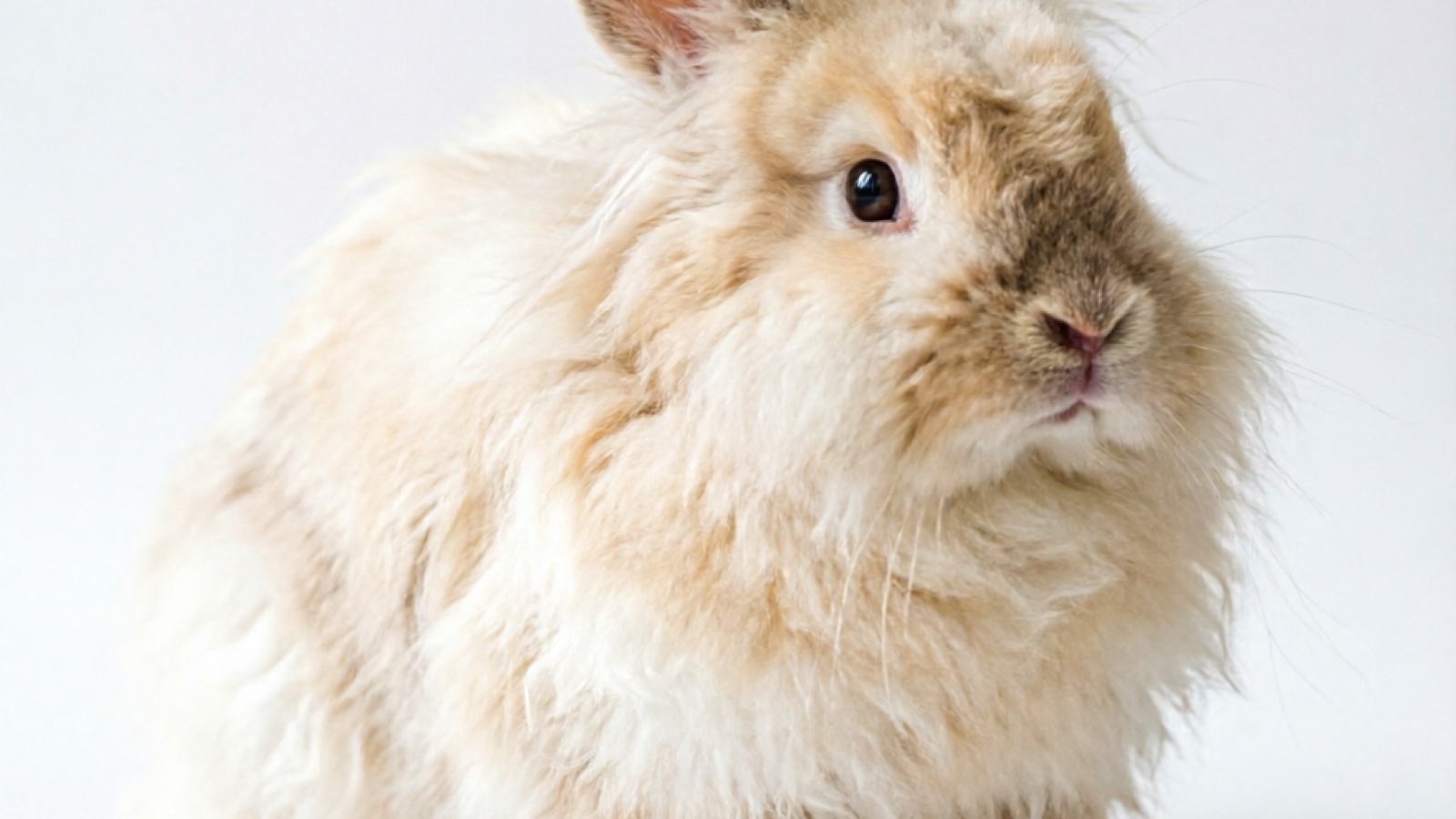
What Is an Angora Rabbit?
Angora rabbit: A long-haired domestic rabbit breed (Oryctolagus cuniculus) originally from Ankara, Turkey (ancient Angora), bred specifically for its soft, continuously growing wool. The Angora is the only rabbit breed developed primarily for fiber production, and it comes in 5 distinct varieties recognized by different breed registries worldwide.
The Angora rabbit has one of the oldest documented histories among domestic rabbit breeds. Wool from Angora rabbits was brought to France from Turkey in the early 18th century and quickly became a luxury fiber prized by French royalty. From France, the breed spread to England and eventually to the United States, where the American Rabbit Breeders Association (ARBA) now recognizes four of the five types: English, French, Giant, and Satin. The German Angora, while popular in Europe for commercial wool production, is not ARBA recognized in the US.
What sets the Angora rabbit apart from every other rabbit breed is its dual purpose: fiber production and pet companionship. No other rabbit produces harvestable wool of comparable quality, and no other breed requires the level of grooming commitment that an Angora demands. For the right owner — someone experienced with rabbits and willing to invest significant time in coat care — an Angora is a gentle, rewarding companion. For first-time owners, I’d strongly recommend starting with a lower-maintenance breed like the Polish rabbit or Holland Lop before considering an Angora.
For a broader overview of rabbit care before diving into breed specifics, see our rabbit care guide and rabbit grooming guide — the grooming section already mentions Angora-specific needs.
Quick Facts
| Attribute | Details |
|---|---|
| Scientific Name | Oryctolagus cuniculus |
| Origin | Turkey (Ankara, ancient Angora) |
| ARBA Recognized Types | English, French, Giant, Satin (German: not recognized in US) |
| Weight Range | 5-12+ lbs (varies by type) |
| Lifespan | 7-12 years |
| Coat Type | Long wool (continuous growth) |
| Grooming | Daily to 3-4× per week (type-dependent) |
| Temperament | Calm, docile, gentle |
| Best For | Experienced owners, fiber enthusiasts |
| Special Care | Wool block prevention, summer heat management |
Angora Rabbit Breeds: 5 Types
The Angora rabbit is not a single uniform breed — it comprises 5 distinct types, each with different size ranges, wool characteristics, grooming requirements, and wool yields. Understanding these differences is critical before choosing which type is right for you.
English Angora
The English Angora rabbit is the smallest of the 5 types, weighing 5-7.5 lbs as an adult. It is also the most visually distinctive: wool covers the entire body including the face and ears, creating a characteristic “pom-pom” appearance. The English Angora’s wool is abundant and floor-length when left untrimmed.
Grooming difficulty is rated HIGH — daily grooming of 15-20 minutes is mandatory, especially around the eyes and ears. Wool yield is approximately 10-16 oz per harvest with 3-4 harvests per year. ARBA recognized and the most popular type for show competition.
Best for: show enthusiasts and experienced owners who can commit to the heaviest grooming schedule.
French Angora
The French Angora rabbit weighs 7.5-10.5 lbs and is distinguished by its clean face — wool grows over the body but NOT on the head, face, or ears. This single difference makes the French Angora significantly easier to groom since there is no facial wool to maintain.
Grooming difficulty is MEDIUM — 3-4 times per week for 10-15 minutes. Wool yield is higher than the English at 12-20 oz per harvest. The French Angora is the most popular type for home wool production. ARBA recognized.
Best for: first-time Angora owners and wool producers who want manageable grooming.
Giant Angora
The Giant Angora rabbit is the largest variety, weighing 9-12+ lbs. It produces the highest wool yield — 30+ oz per harvest from three distinct fiber types: underwool, awn fluff, and awn hair. The Giant Angora’s coat gives a unique texture prized by fiber artists.
Grooming difficulty is HIGH — the massive coat requires daily attention. The ARBA recognizes only white Giant Angoras with ruby eyes; other colors exist but are not show-standard.
Best for: commercial wool production and experienced owners with adequate space.
Satin Angora
The Satin Angora rabbit weighs 6.5-9.5 lbs and carries the satin gene, which produces a translucent hair shaft that reflects light, giving the wool a distinctive silky sheen. The Satin Angora’s wool is prized for softness and luster, making it especially popular among spinners.
Grooming difficulty is MEDIUM — the finer fiber is more prone to tangling, so 3-4 times per week is important. Wool yield is 10-14 oz per harvest. ARBA recognized.
⚠️ Health warning: The satin gene is linked to osteodystrophy (ODB), a metabolic bone disease causing skeletal deformities, lameness, and pain. Not all Satin Angoras develop ODB, but the risk is significant enough that breeding should be carefully managed. Ask breeders about lineage health history.
Best for: fiber artists who prize wool softness and owners who are aware of the satin gene health risks.
German Angora
The German Angora rabbit weighs 7-12 lbs with a wide range because this type was bred for productivity over standardization. The German Angora’s wool is exceptionally dense with the highest commercial yield — 30-40 oz per harvest. Unlike other types, the German Angora does not molt naturally, meaning the wool must be sheared on schedule rather than plucked.
Grooming difficulty is HIGH — the extremely dense coat requires harvesting every 60-90 days. NOT ARBA recognized in the US but popular in Europe for commercial wool.
Best for: commercial wool production and European breeders.
Angora Rabbit Size Comparison
Understanding the size range across all 5 types helps set realistic expectations for housing, handling, and care.
| Type | Weight | Wool Length | Grooming Frequency | Wool Yield/Year | ARBA (US) |
|---|---|---|---|---|---|
| English | 5-7.5 lbs | Floor-length | Daily | 40-64 oz | ✅ |
| French | 7.5-10.5 lbs | Long (clean face) | 3-4×/week | 48-80 oz | ✅ |
| Giant | 9-12+ lbs | Long, 3 fiber types | Daily | 120+ oz | ✅ (white only) |
| Satin | 6.5-9.5 lbs | Medium, silky sheen | 3-4×/week | 40-56 oz | ✅ |
| German | 7-12 lbs | Very dense | Every 60-90 days | 120-160 oz | ❌ |
For context, here is how Angora sizes compare to other popular rabbit breeds:
| Breed | Weight | Coat Type |
|---|---|---|
| Angora (smallest: English) | 5-7.5 lbs | Long wool |
| Lionhead | 2.5-3.75 lbs | Mane only |
| Holland Lop | 2-4 lbs | Short |
| Netherland Dwarf | 1.1-2.5 lbs | Short |
| Flemish Giant | 15+ lbs | Short |
The size range is broader than most rabbit breeds because the 5 types vary so significantly — from a 5 lb English to a 12+ lb Giant.
Angora Rabbit Temperament & Personality
The Angora rabbit temperament is consistently described as calm, docile, and gentle — one of the most laid-back rabbit breeds available. This temperament is actually a practical advantage: rabbits that are calm and tolerant handle the frequent grooming sessions required by their coat much better than more high-strung breeds.
Angoras generally enjoy companionship and can bond closely with their owners. Their activity level is moderate — they are less active than short-haired breeds simply because carrying a heavy wool coat is physically demanding. An Angora rabbit will still enjoy floor time and exploration, but it won’t bounce and zoom around a room with the same energy as a Netherland Dwarf.
Handling
Angoras are typically tolerant of handling, which is a necessity given the grooming frequency their coat requires. However, they still need gentle, confident handling — never grab by the ears or scruff. Support the full body with one hand under the chest and the other under the hindquarters.
Good With Children?
An Angora can be good with older children (age 10+) who understand gentle handling and can participate in grooming sessions under adult supervision. For families with younger children, I’d recommend a lower-maintenance breed — the grooming commitment of an Angora is genuinely overwhelming for most households with small kids.
Angora Rabbit Grooming
The step-by-step Angora rabbit grooming routine below covers how to groom an Angora rabbit from start to finish. Inadequate grooming leads to painful matting, skin infections, and potentially life-threatening wool block. The grooming schedule varies by type:
- English, Giant, German: Daily grooming, 15-20 minutes minimum
- French, Satin: 3-4 times per week, 10-15 minutes
Step-by-Step Grooming Guide
Step 1: Remove debris (2-3 minutes) Gently pull out hay, bedding, and fecal matter from the coat. Wool rabbits collect debris rapidly, and embedded particles create the starting point for mats.
Step 2: Detangle with fingers (3-5 minutes) Work through any large tangles by hand before using tools. Hold the mat at the base (against the skin) to avoid pulling. This step is critical for preventing skin damage during brushing.
Step 3: Brush with slicker brush (5-8 minutes) Work from the skin outward, section by section. Use a slicker brush designed for long-haired rabbits or small dogs. Cover the entire body systematically — don’t skip the belly, under the chin, or behind the ears.
Step 4: Comb with metal comb (3-4 minutes) A metal comb makes the final pass to ensure no remaining tangles. If the comb catches, go back to Step 2 for that section.
Step 5: Check skin (2 minutes) Look for sores, parasites, redness, or matting close to the skin. Weekly skin checks are essential for catching problems early.
Step 6: Clean face and ears (English Angoras only, 2-3 minutes) Clear wool from around the eyes and inside the ears. Wool obscuring the eyes can cause corneal irritation and infection.
Tools Needed
Essential: slicker brush, metal comb, grooming scissors (blunt-tipped, for cutting mats), nail clippers. Optional: blow dryer on low heat (helps fluff wool after grooming), mat breaker for severe tangles.
Mat Removal
Never pull a mat — this causes pain and skin damage. Hold the mat at the base against the skin and carefully cut it out with blunt-tipped scissors, keeping the blade parallel to the skin. If the mat is too close to the skin to cut safely, consult a groomer or veterinarian.
Seasonal Molting
During molting periods (typically spring and fall), all Angora types need daily attention regardless of their usual schedule. Shedding increases dramatically, and loose wool left in the coat will mat within hours. For a broader overview of rabbit grooming practices, see our rabbit grooming guide.
Wool Harvesting: Shearing vs Plucking
Wool harvesting is unique to the angora rabbit — no other rabbit breed produces harvestable wool in comparable quantities. There are two standard methods, each with advantages.
Plucking (Molting Method)
Plucking works only during the rabbit’s natural molt, which occurs approximately every 90 days for most types. During molt, loose wool is gently pulled from the coat — it comes away easily because the hair shaft is already separating from the follicle. Plucking produces longer fibers, which are preferred by hand spinners for smoother yarn. The process is less stressful than shearing when done correctly, as the rabbit is essentially being helped through a natural process.
Limitation: German Angoras do not molt naturally, so plucking is not an option for this type.
Shearing (Clipping Method)
Angora rabbit shearing uses electric clippers or scissors to cut the wool close to the skin. Leave approximately 1 inch of wool on the body to protect against sunburn and temperature extremes. Shearing can be done at any time — it does not depend on the rabbit’s molt cycle — making it more consistent for scheduling. The fibers produced are shorter, which some spinners consider less desirable, but the resulting yarn is still high quality.
Shearing is the required method for German Angoras and is often preferred by commercial wool producers for speed and consistency.
Harvest Frequency
- English, French, Giant, Satin: Every 90 days (aligned with natural molt)
- German: Every 60-90 days (does not molt, requires scheduled shearing)
Ethics of Wool Harvesting
Responsible angora rabbit wool harvesting is not harmful to the animal. Angora wool grows continuously and must be removed regularly to prevent painful matting that can restrict movement and cause skin infections. Shearing and plucking remove dead hair shafts — the rabbit does not feel pain during the process. The ethical concern arises from commercial wool farms with poor welfare standards where rabbits are neglected between harvests. Always source wool from reputable breeders who prioritize animal welfare, or harvest your own rabbit’s wool as part of regular grooming.
Diet & Nutrition
The angora rabbit diet follows the same principles as all rabbit diets, but with one critical addition: fiber intake is especially important for preventing wool block.
Standard Rabbit Diet
- Unlimited Timothy hay (80% of diet) — essential for dental health and digestive motility
- Fresh vegetables (10% of diet, approximately 1-2 cups daily) — leafy greens like romaine, cilantro, parsley
- Fortified pellets (8% of diet, approximately 1/4-1/2 cup daily depending on size)
- Treats (2% of diet) — small amounts of fruit, herbs
Angora-Specific: Wool Block Prevention
Because Angora rabbits ingest wool during self-grooming and cannot vomit to expel it, a high-fiber diet is the first line of defense against wool block. The fiber in Timothy hay helps move ingested wool through the digestive tract. Fresh water must always be available — dehydration is a major risk factor because dry digestive systems cannot move fiber effectively. Some owners feed small amounts of pineapple believing bromelain helps dissolve hair, but scientific evidence is limited. Don’t rely on pineapple — regular grooming and high fiber are the only proven prevention methods.
For detailed dietary guidance, see our rabbit diet guide and recommendations for the best rabbit food.
Housing Requirements
The angora rabbit housing requirements follow standard rabbit guidelines with a few wool-specific additions.
Enclosure Size
Minimum space should be 4 times the rabbit’s length when fully stretched out. Giant Angoras need significantly more space than English Angoras due to their body size. A minimum of 12 square feet of floor space is recommended for a single Angora, with more space strongly preferred.
Floor Type
SOLID floors only. Wire floors cause severe matting (wool gets caught in the mesh) and are a major risk factor for sore hocks — a painful foot pad inflammation. See our rabbit health guide for more on sore hocks prevention and treatment.
Bedding
Low-dust, absorbent bedding is essential. Wool rabbits are more prone to respiratory irritation from dusty bedding because the wool traps particles close to the nose. Paper-based bedding or fleece liners work well. Avoid cedar and pine shavings — the aromatic oils are respiratory irritants.
Temperature
The safe temperature range is 50-75°F (10-24°C). The upper limit of 75°F is critical — wool rabbits overheat far more easily than short-haired breeds. See the Summer Heat Management section below for detailed guidance.
Indoor vs Outdoor
Indoor housing is strongly recommended for all Angora types. Climate control is essential for wool breeds, and indoor housing protects against predators, temperature extremes, and flystrike risk. For cage size specifications, see our guide on rabbit cage size and recommendations for the best rabbit cages. For a complete setup guide, see our rabbit setup guide.
Health & Common Issues
Wool Block — Life-Threatening Condition (P0 Priority)
Wool block is the single most dangerous of all angora rabbit health problems. It occurs when ingested wool accumulates in the digestive tract — a risk often called angora rabbit wool block. Ingested wool causes an intestinal blockage, a variant of GI stasis unique to long-haired breeds. Rabbits groom themselves constantly and ingest loose wool, and unlike cats, they cannot vomit to expel it.
Symptoms: decreased or absent appetite, reduced stool output, lethargy, bloated abdomen, hunched posture. Prevention is critical: regular grooming removes loose wool before ingestion, unlimited Timothy hay keeps the gut moving, fresh water prevents dehydration, and daily exercise stimulates motility.
If you suspect wool block, contact a rabbit-savvy veterinarian immediately. GI stasis can become fatal within 24-48 hours.
Other Health Concerns
| Condition | Risk Level | Notes |
|---|---|---|
| GI stasis | Critical | Wool ingestion increases risk |
| Dental malocclusion | Medium | Unlimited hay prevents; all breeds |
| Flystrike | High (summer) | Soiled wool attracts flies; check rear daily |
| Heat stroke | High | Wool insulation makes overheating deadly |
| Sore hocks | Medium | Wire floors + heavy weight = risk; solid floors only |
| Matting / skin infections | High | Inadequate grooming causes skin problems |
| Osteodystrophy (Satin only) | Medium-High | Satin gene linked to bone deformities |
For comprehensive health information, see our rabbit health guide.
Summer Heat Management
This section is critical — wool breeds genuinely can die from heat stroke, and many new owners underestimate this risk.
Why Angoras Overheat
Rabbits regulate body temperature primarily through their ears — they cannot sweat or pant effectively. The dense wool of an angora rabbit provides excellent winter insulation but becomes life-threatening above 80°F (27°C). Above 85°F (29°C), it is an emergency.
Cooling Strategies
- Air conditioning is the most reliable protection. If unavailable, use fans for indirect airflow — never direct.
- Frozen water bottles wrapped in a towel in the cage.
- Ceramic tiles or marble slabs for the rabbit to lie on.
- Trim wool to ~1 inch in summer — don’t shave completely; a thin layer provides sun protection.
- Increase fresh water — dehydration accelerates heat stroke.
- Monitor during heat waves — check multiple times per day.
Heat Stroke: Signs and Emergency Response
Signs: rapid breathing, lethargy, bright red ears, collapse, drooling. If suspected: wet ears with cool (not cold) water, place on cool surface, call vet immediately. Do not immerse in cold water — temperature shock can cause cardiac arrest.
Cost & Finding Your Angora
The angora rabbit cost is higher than most rabbit breeds, both in initial purchase and ongoing care.
Purchase Price & Monthly Costs
- Pet quality: $40-100 from a breeder
- Show quality: $100-250+ (depends on type, color, and breed standard conformation)
- Rescue: $25-75 (Angoras are rarer in rescue but occasionally available — often surrendered by owners unprepared for the grooming commitment)
Monthly care runs $40-70 — higher than average rabbit breeds. The cost difference comes primarily from grooming supplies: a quality slicker brush, metal comb, and grooming scissors represent an initial $30-50 investment, with brushes needing replacement every 6-12 months.
Finding a Reputable Breeder
The ARBA breeder directory is the best starting point. Fiber associations and rabbit shows are additional resources. Red flags: unsanitary conditions, matted coats on parent rabbits, kits under 8 weeks, no health records. For perspective on long-term commitment, see our rabbit lifespan article.
Angora vs Other Wool & Long-Haired Breeds
How does the angora rabbit vs jersey wooly comparison break down? And what about the Lionhead? Here is a practical comparison to help you choose.
| Feature | Angora | Jersey Wooly | Lionhead |
|---|---|---|---|
| Weight | 5-12 lbs | 2.5-3.5 lbs | 2.5-3.75 lbs |
| Coat | Long wool (continuous growth) | Short wool (no shearing needed) | Mane only (long fur on head/neck) |
| Grooming | Daily to 3-4×/week | 2-3×/week | Daily (mane area) |
| Wool harvest | Yes (every 90 days) | No | No |
| Difficulty | High | Medium | Medium |
| Lifespan | 7-12 years | 7-10 years | 7-10 years |
| Best for | Fiber production, experienced owners | First-timers wanting fluffy rabbit | Appearance, moderate grooming |
Angora vs Jersey Wooly
The Jersey Wooly was partially developed from Angora stock but does not produce harvestable wool and is much smaller and easier to maintain. The Jersey Wooly’s wool is shorter and does not grow continuously, so it never needs shearing. Choose a Jersey Wooly if you want the look of a fluffy rabbit without the commitment of wool harvesting and daily grooming.
Angora vs Lionhead
The Lionhead has long fur only on the mane (head and neck) and a lighter skirt, while the Angora is fully wool-covered head to tail. Lionhead grooming focuses on the mane area; Angora grooming requires whole-body maintenance. The Lionhead is also significantly smaller (2.5-3.75 lbs vs 5-12+ lbs). For owners attracted to long-haired rabbits but intimidated by the Angora’s grooming, the Lionhead is a good intermediate option. See our Lionhead rabbit breed page for details.
Frequently Asked Questions
What is an Angora rabbit?
A long-haired domestic rabbit breed originally from Turkey, bred for its soft, continuously growing wool. There are 5 types: English, French, Giant, Satin, and German. The only rabbit breed developed primarily for fiber production.
How long do Angora rabbits live?
7-12 years on average. Giant Angoras tend toward the lower end (7-9 years) due to their large size, while smaller types like the English can reach 10-12 years. An Angora’s lifespan depends on the quality of care, including diet, housing, and grooming consistency.
Are Angora rabbits good pets?
Yes, for experienced owners who can commit to daily grooming. They are calm, gentle, and tolerate handling well. NOT recommended for first-time rabbit owners.
How often do you groom an Angora rabbit?
English, Giant, and German: daily, 15-20 minutes. French and Satin: 3-4 times per week, 10-15 minutes. All types need daily attention during molting.
Can you shave an Angora rabbit?
Yes — shearing is a standard harvesting method. Leave ~1 inch of wool to protect from sunburn. Required for German Angoras (they don’t molt). Also necessary for severely matted coats.
What do Angora rabbits eat?
80% unlimited Timothy hay, 10% vegetables, 8% pellets, 2% treats. High fiber is especially critical to prevent wool block — a life-threatening intestinal blockage from ingested wool.
How many types of Angora rabbits are there?
5 types: English (5-7.5 lbs, full facial wool), French (7.5-10.5 lbs, clean-faced), Giant (9-12+ lbs, highest yield), Satin (6.5-9.5 lbs, silky sheen), German (7-12 lbs, highest commercial yield, not ARBA recognized in US).
What is wool block in Angora rabbits?
A life-threatening condition where ingested wool blocks the digestive tract. Rabbits cannot vomit. Prevention: regular grooming, high-fiber diet, hydration. Symptoms: decreased appetite, reduced stool, lethargy, bloating. Requires immediate vet care.
How big do Angora rabbits get?
5-12+ lbs depending on type. English is smallest (5-7.5 lbs), French and Satin mid-range (6.5-10.5 lbs), Giant is largest (9-12+ lbs).
Is Angora rabbit wool ethical?
Yes, when harvested responsibly. Wool grows continuously and must be removed to prevent matting. The concern is commercial farms with poor welfare standards — always source from reputable breeders.
How much does an Angora rabbit cost?
$40-100 (pet quality, breeder), $25-75 (rescue), $100-250+ (show quality). Monthly care: $40-70 — higher than average due to grooming supplies.
Do Angora rabbits overheat in summer?
Yes — high heat stroke risk above 80°F (27°C). Use AC, frozen water bottles, ceramic tiles, and trim wool to ~1 inch in summer.
Can Angora rabbits live outside?
Strongly discouraged. Wool makes them vulnerable to heat, dampness, and flystrike. Indoor housing with climate control is the safest option.
How do you harvest Angora rabbit wool?
Two methods: plucking (during natural molt, longer fibers) and shearing (anytime, shorter fibers). Most harvested every 90 days. German Angoras must be sheared every 60-90 days.
Conclusion
The Angora rabbit is a unique breed that combines gentle temperament with the extraordinary ability to produce harvestable wool. Five distinct types offer options ranging from the manageable French Angora to the intensive Giant and German varieties. Regardless of type, every Angora owner must commit to a rigorous grooming schedule, monitor for wool block, and provide summer heat management — these are non-negotiable aspects of the breed.
If you are an experienced rabbit owner ready for the commitment, an Angora rabbit is a rewarding companion that produces beautiful fiber year after year. If you want a fluffy rabbit without the daily grooming burden, consider a Jersey Wooly or Lionhead instead. For a complete overview of all rabbit breeds, see our rabbit care guide and the rabbit grooming guide for detailed coat care information.