Skip because: This page is for owners who already see one or more red flags — no poop for 5+ days, a hard belly, or back leg dragging. If your dragon is eating, basking, and defecating normally, you do not need impaction care right now. Browse our complete bearded dragon care guide for general husbandry instead.
⚠️ Medical Disclaimer: This article is not a substitute for professional veterinary care. If your bearded dragon is showing signs of impaction, consult a qualified exotic veterinarian.
| Symptom | Stage | What to Do at Home | See a Vet? |
|---|---|---|---|
| No poop 3–5 days, still eating | Mild | Warm bath 85–95°F × 15–30 min, 1–2×/day | Only if no relief in 48 hrs |
| Hard belly, lethargic, no poop 5+ days | Moderate | Warm bath 2×/day plus electrolytes | Yes, within 24 hrs |
| Back legs dragging, black beard | Severe | Do not force-feed; keep warm | Yes, emergency |
| Regurgitating food, weight loss | Critical | Keep warm, minimize handling | Yes, emergency surgery risk |
What Is Bearded Dragon Impaction?
A bearded dragon that stops pooping and starts dragging its back legs is dealing with a medical problem — and the wrong substrate, the wrong basking temperature, or one oversized cricket is usually the cause.
This page is not about constipation (where stool is hard to pass) or brumation (where a healthy adult naturally sleeps through cooler months). This page is for gut impaction: a physical blockage in the digestive tract that will not clear on its own. By the end, you will know the 8 signs sorted by severity, the 4 causes behind most cases, and the exact warm-bath protocol most reptile vets recommend before scheduling an exam.
Skip this page if your dragon is eating, basking, and defecating normally.
Definition
Bearded dragon impaction is a physical blockage in the gastrointestinal tract, most often the lower colon, caused by ingested material that cannot pass normally. In a retrospective review of captive bearded dragon cases, ingestion of substrate combined with sub-optimal basking temperatures accounts for the majority of impaction presentations to exotic vets.
The blockage forms in the lower colon because bearded dragons cannot vomit. Once material passes the stomach, it has nowhere to reverse to — it either moves forward or it stops. When it stops, the colon fills, presses on the spinal nerves that run above it, and produces the back leg dragging and lethargy that owners mistake for weakness.
Anatomy — Where the Blockage Forms
The digestive tract runs from mouth to esophagus to stomach to small intestine to colon to cloaca. The colon is where most impactions lodge, because it is the narrowest segment and the last stop before waste exits.
The colon sits directly under the spine. As material backs up, it presses upward on the spinal nerves controlling the hind legs. This is why a moderate-to-severe impaction looks like a mobility problem before it looks like a digestion problem.
Skip this anatomy section if you already know impaction is in the colon — the rest of the page covers what to do about it.
Impaction vs Constipation vs Brumation
These three conditions get confused because they all reduce stool output. The table below shows the key differentiators:
| Condition | Cause | Key Sign | Action |
|---|---|---|---|
| Impaction | Physical blockage (substrate, prey, foreign object) | No poop 5+ days plus dragging legs | Bath plus vet |
| Constipation | Hard stool, dehydration | Straining, dry feces | Hydration plus diet |
| Brumation | Natural winter dormancy (healthy adults only) | Sleeps weeks to months, no weight loss over 10% | Monitor only |
Signs and Symptoms of Bearded Dragon Impaction
Impactions progress through three stages. Catching it at the mild stage saves you a vet bill. Catching it at the severe stage saves your dragon’s life.
Skip this section if you already have a confirmed vet diagnosis — go to treatment.
Mild Stage — First 5 Days (3 signs)
- No poop for 3–5 days despite normal eating
- Slight lethargy but still basking under the heat lamp
- Reduced appetite but still accepting food when offered
A dragon at this stage is uncomfortable but not in crisis. The at-home warm-bath protocol (below) clears most mild cases within 48 hours.
Subtle Early Signs Owners Miss
Bearded dragons are prey animals, so they instinctively hide pain and weakness. By the time obvious signs appear, the impaction is usually a week old. Watch for these subtle cues that show up 1–2 weeks before the visible symptoms:
- Slight asymmetry in the belly — one side bulges slightly more than the other when the dragon is basking flat
- A faint dark patch on the lower belly — bruising or congestion from the pressure of backed-up material
- Slower walking pace — the dragon stops using the back legs with full extension, especially after eating
- Reduced interest in favorite foods — the dragon still eats, but ignores hornworms or treats it normally hunts down
- More time spent in the warm end — the dragon camps on the basking spot rather than thermoregulating normally
These signs do not confirm impaction on their own, but two or more together warrant the warm-bath protocol as a precaution.
Moderate Stage — Days 5–10 (3 signs)
- Hard, swollen belly — you can feel a firm mass when you gently palpate the lower abdomen
- Persistent lethargy with eyes closed most of the day
- Dragging back legs — the dragon pushes forward with its front legs while the back legs trail
Back leg dragging is the sign that separates moderate from mild. The colon has enlarged enough to press on the spinal nerves. This stage needs a vet within 24 hours even if warm baths help.
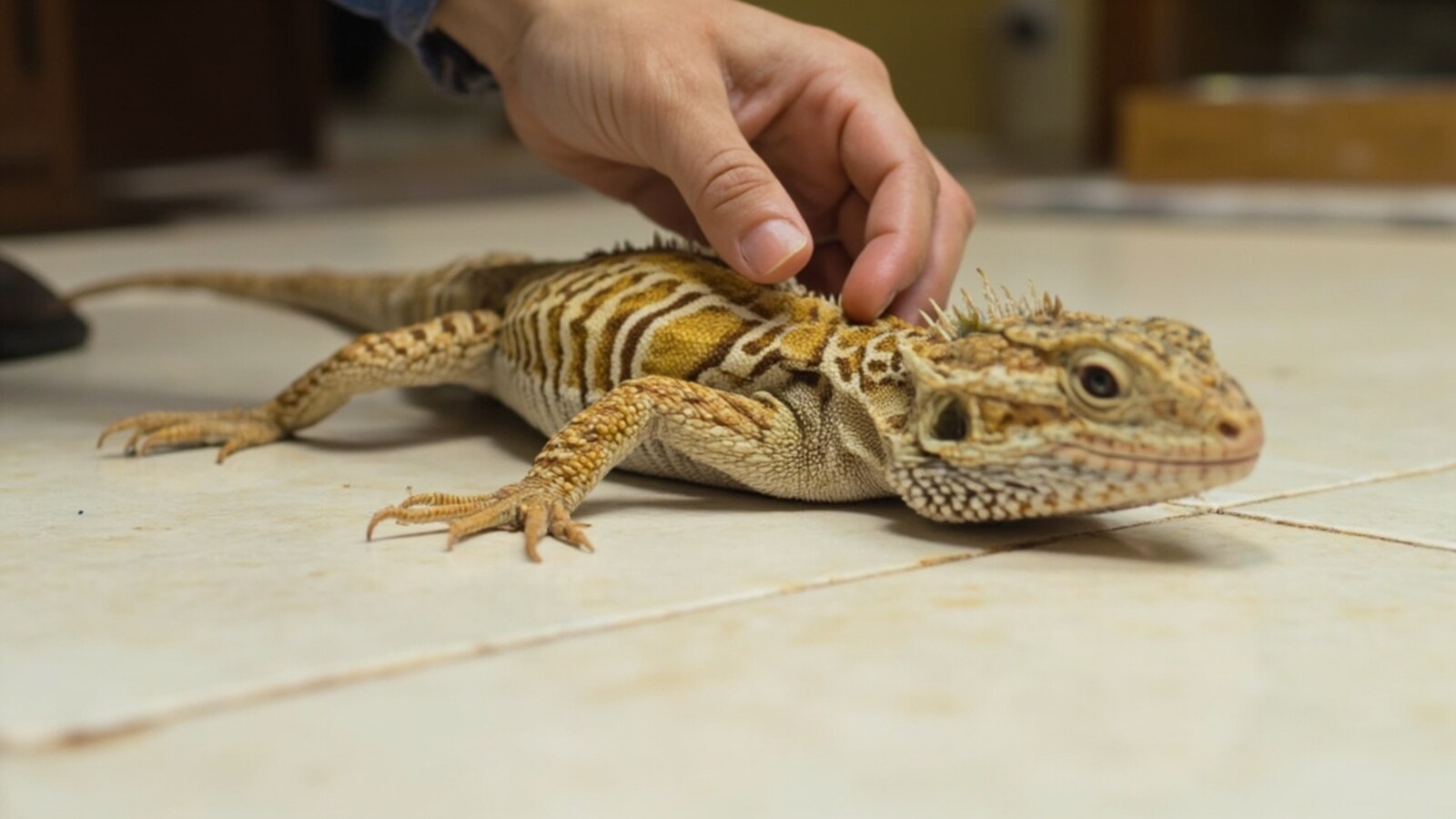
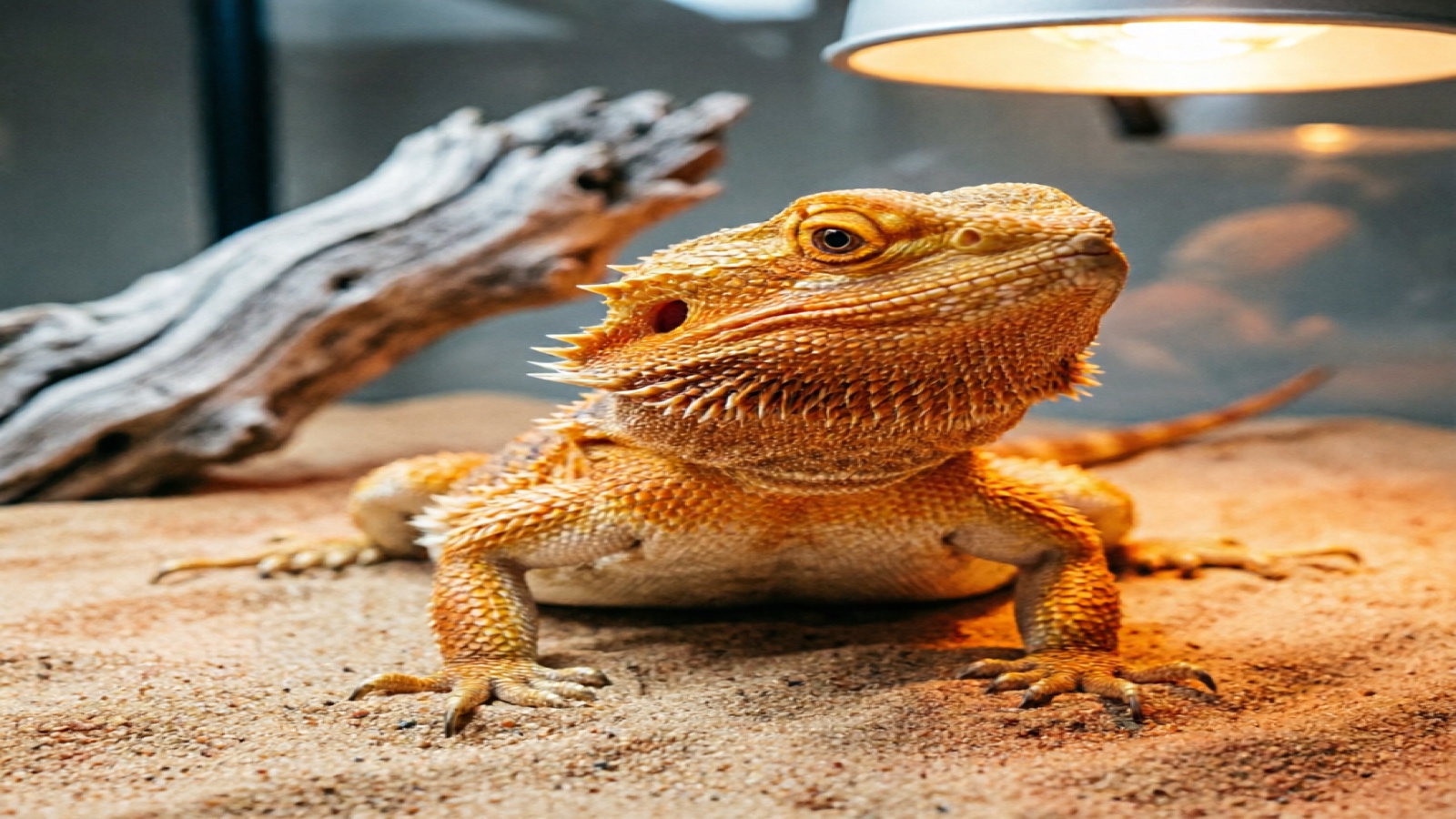
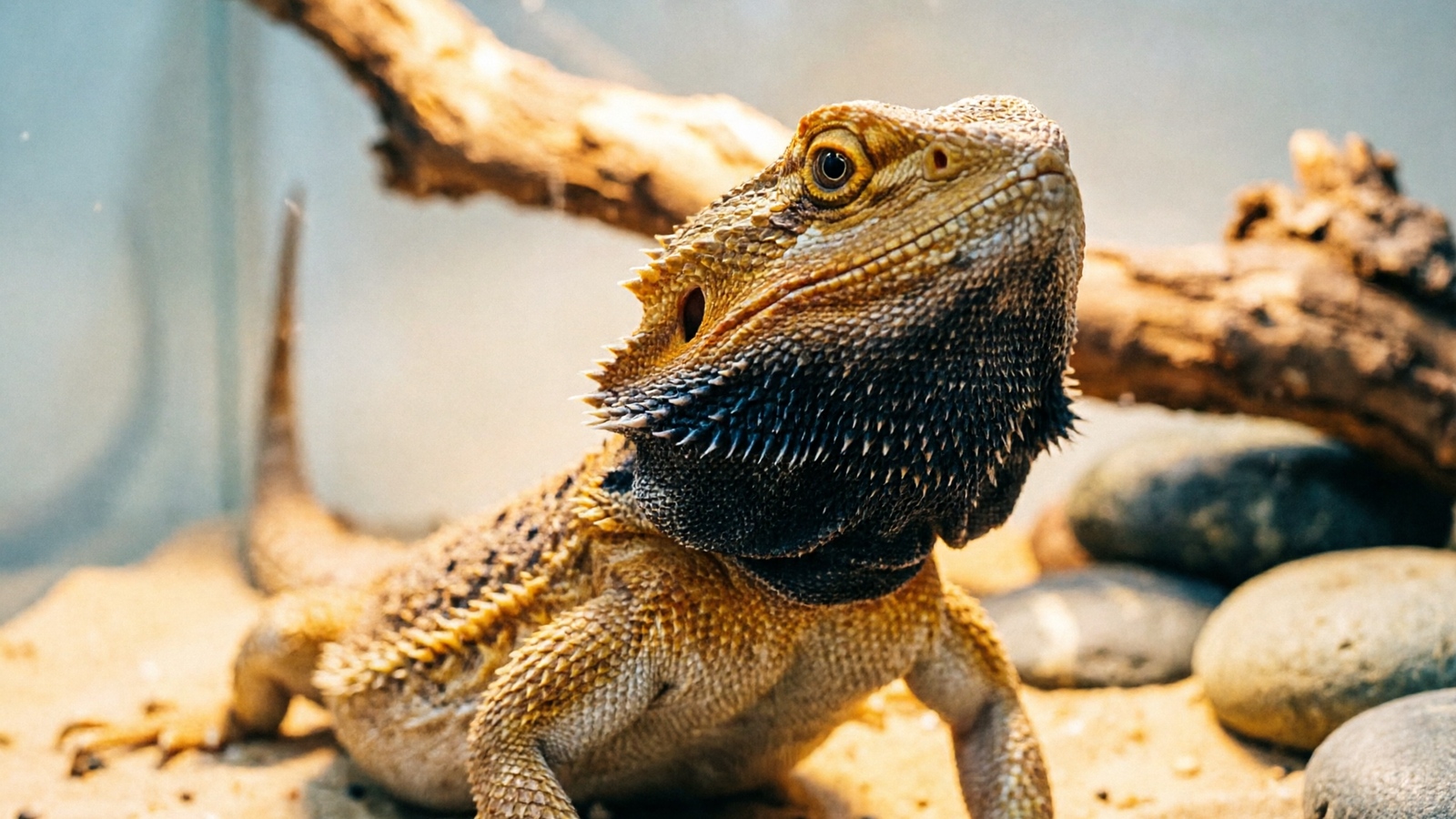
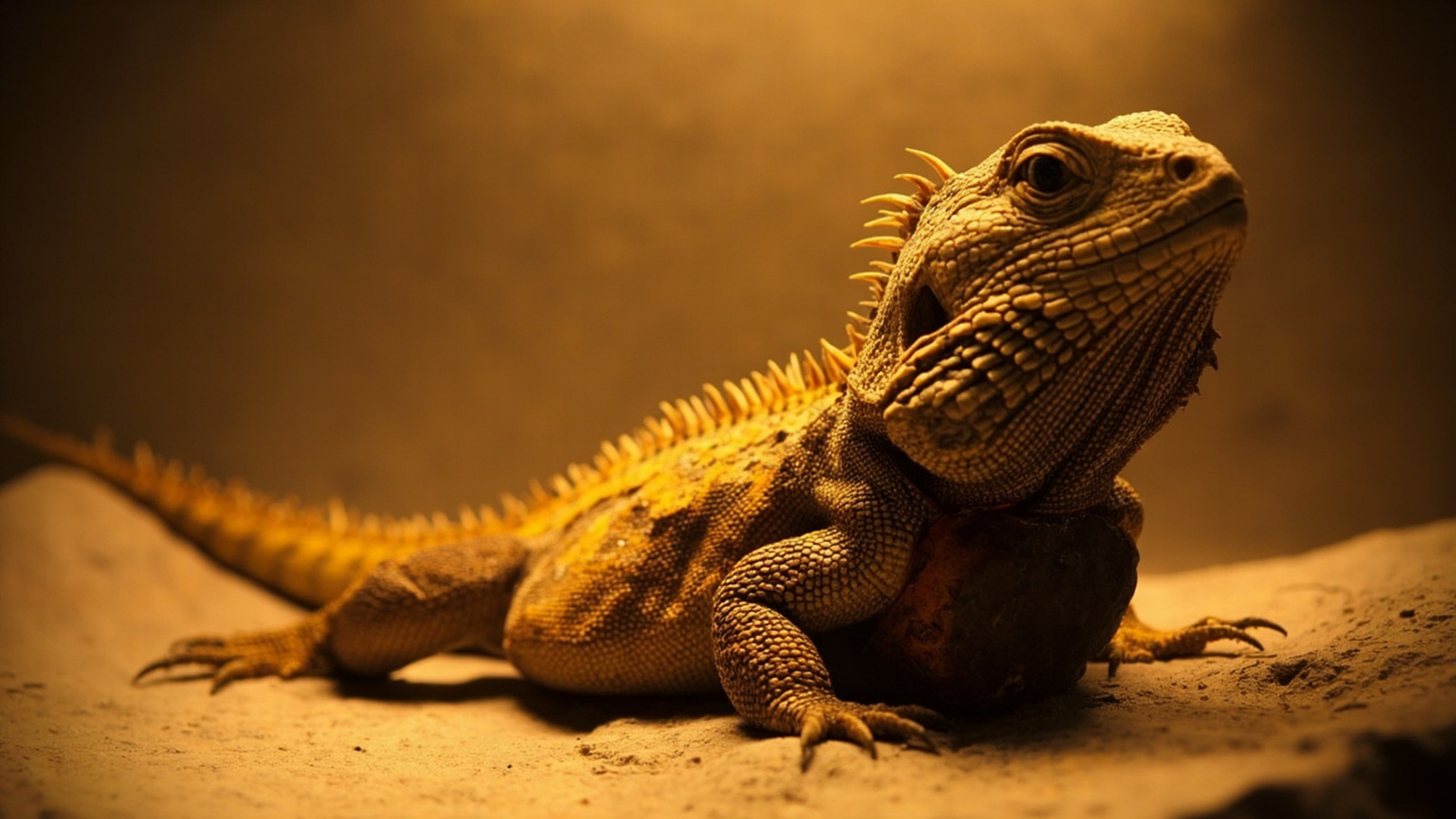
Appearance in a single photo is not a diagnosis. The bearded dragon pictured here shows no visible swelling, discolouration, wounds or deformity, but that cannot rule out impaction — a hard swollen belly is detected by palpation, and lethargy or hind leg dragging only by watching the animal move. Back leg dragging shows as the front legs pushing the body forward while the back legs stay flat and scrape.
Severe Stage (2 signs)
- Black beard plus hissing plus glass surfing — the dragon is in pain and stressed
- Regurgitation of undigested food — the blockage prevents forward passage, so food comes back up
Severe impaction is a same-day vet emergency. At-home treatment will not dislodge a hard blockage at this stage.
Symptom Severity Cheat Sheet
| Stage | Key Sign | Home Action | Vet Timing |
|---|---|---|---|
| Mild | No poop 3–5 days, still eating | Warm bath 1–2×/day | Only if no relief in 48 hrs |
| Moderate | Hard belly, lethargy, no poop 5+ days | Warm bath 2×/day plus electrolytes | Within 24 hrs |
| Severe | Dragging legs, black beard, regurgitation | Keep warm, do not force-feed | Same-day emergency |
When Lethargy Means Impaction vs Brumation
A dragon that sleeps more in winter may be brumating — or may be impacted. The two look similar from the outside.
The differentiator is body condition. A brumating dragon maintains body weight and posture: it rests in a normal sphinx position, breathes evenly, and wakes briefly to drink. An impacted dragon loses posture: it lies flat, eyes half-closed, back legs splayed or trailing. If your dragon has not lost weight and is resting normally, brumation is the more likely explanation. For a deeper dive, see our bearded dragon brumation guide.
Reduced appetite is also a shared symptom. For the full troubleshooting list on appetite loss (including temperature checks, shedding, and stress), see our bearded dragon not eating guide.
What Causes Impaction in Bearded Dragons
Four causes explain the vast majority of impaction cases: loose substrate, low basking temperature, oversized prey, and chronic dehydration. Everything else (parasites, foreign objects, tumors) is uncommon but possible. For an overview of proper husbandry that prevents all of these, see our complete bearded dragon care guide.
Cause #1 — Loose Substrate Ingestion (~60% of cases)
Bearded dragons tongue-test food. When the floor of the enclosure is sand, walnut shell, gravel, wood chips, or crushed corn cob, every feeding pulls a small amount of substrate into the mouth. Over weeks, that material accumulates in the colon.
Brand names to avoid: Vita-Sand, Reptisand, Imigitarium calcium sand, walnut shell substrate, crushed corn cob, and any “digestible” calcium sand. These products are marketed as safe because the calcium sand ones dissolve in theory — in practice, the sand clumps when wet (from saliva during feeding) and forms cement-like masses in the colon.
Solution: Switch to a non-particle substrate. Reptile carpet, ceramic tile, or non-adhesive shelf liner all eliminate ingestion at the source.
Skip this section if your enclosure is already on tile or solid liner — your impaction has a different cause.
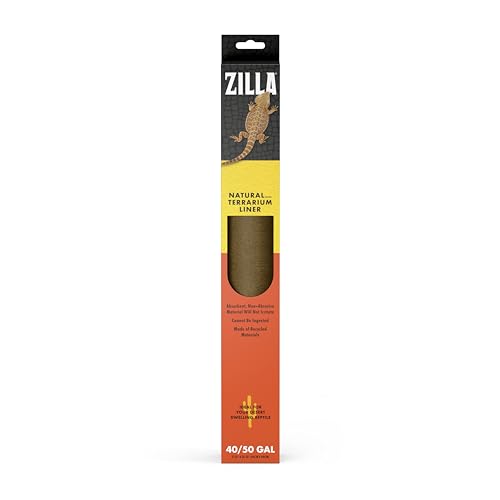
Skip loose substrate entirely. A solid reptile carpet liner — like the Zilla Floor Liner — eliminates ingestion risk at the source. The enzyme-treated surface cuts odor between cleanings, and most owners rinse it weekly in 30 seconds.
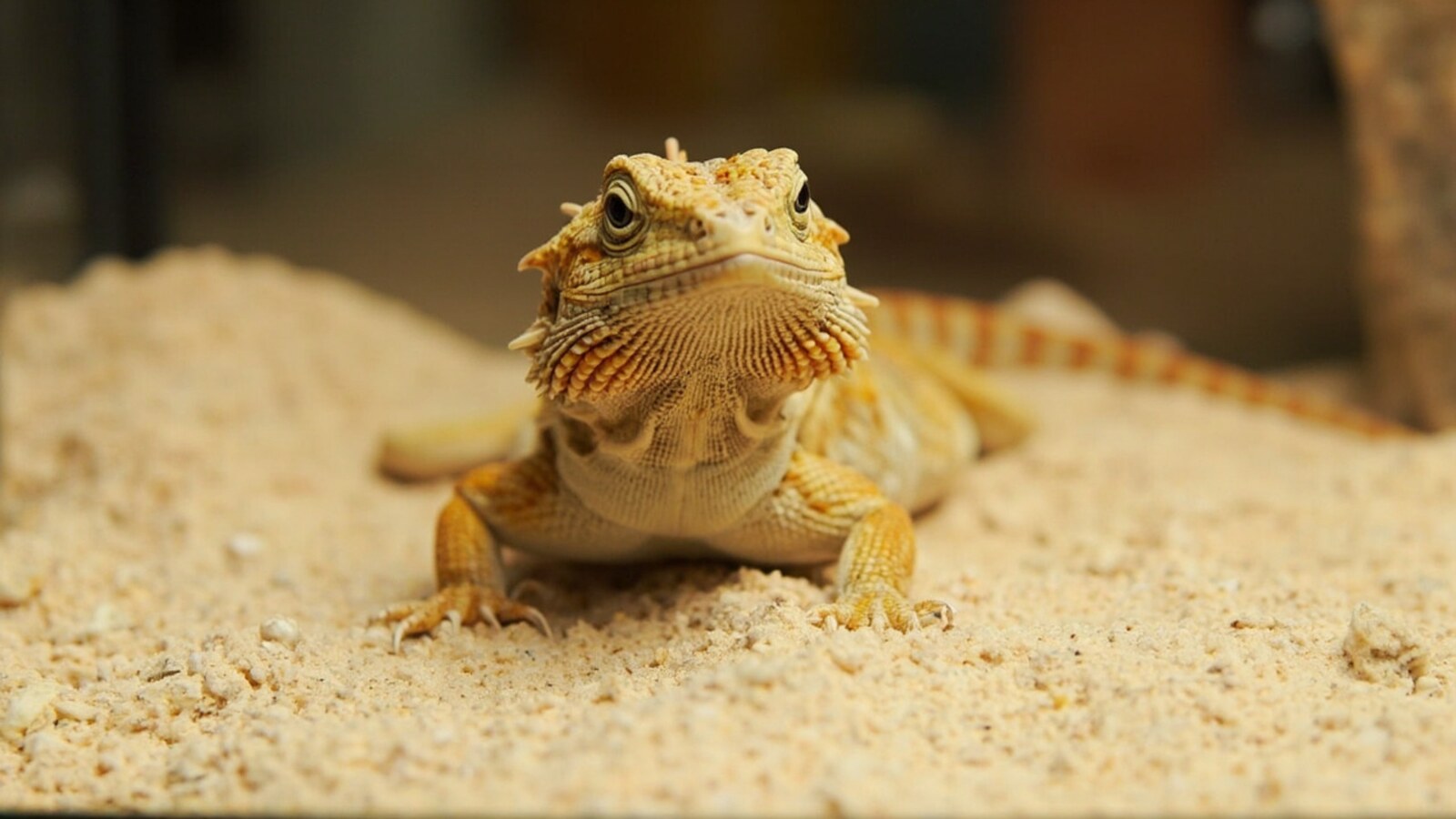
If your dragon is digging obsessively in the substrate, that is itself a warning sign — substrate ingestion often follows. See our guide on why bearded dragons dig.
Cause #2 — Improper Basking Temperature (~20% of cases)
Bearded dragons digest food using external heat. When the basking surface is below 95°F, gut motility slows, food sits longer, and impaction risk climbs. The required range is 95–110°F at the basking surface (measured with a probe thermometer) and 75–85°F on the cool side.
Stick-on strip thermometers can read 15°F off. A digital probe is the only reliable verification tool.
Skip this section if your basking spot is already verified at 95–110°F with a digital probe — your impaction has a different cause.
A digital probe thermometer is the only way to verify basking temp — stick-on strips can be off by 15°F. The Zoo Med Digital Thermometer reads both temp and humidity and runs on a single button-cell battery for over a year.
Cause #3 — Oversized Prey (~10% of cases)
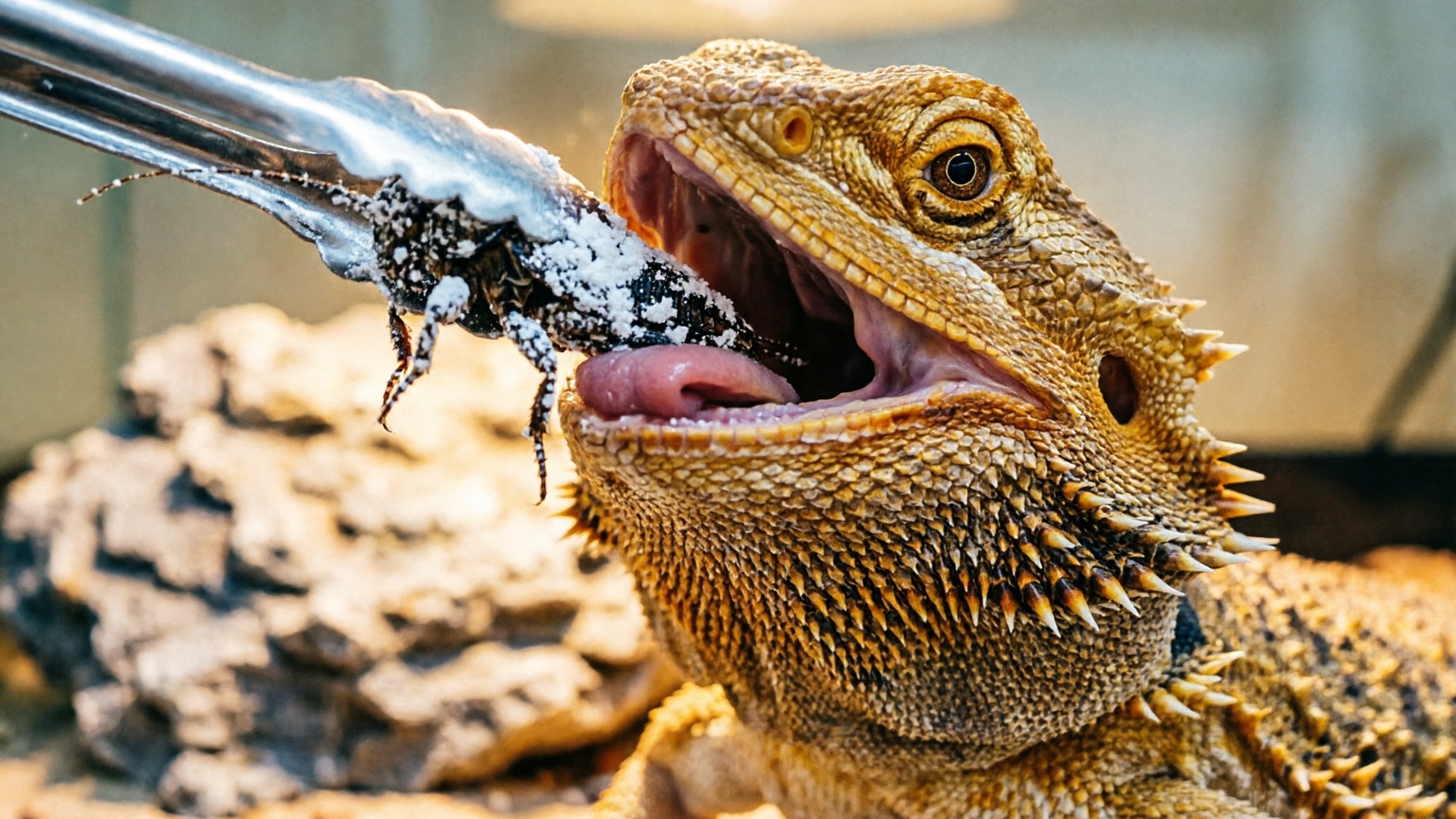
The rule for prey sizing is simple: prey item no wider than the space between the dragon’s eyes. Oversized crickets or mealworms can lodge in the throat or upper GI before they ever reach the stomach.
Hatchlings need pinhead crickets. Juveniles need ¼” to ½” crickets. Adults handle up to ¾” crickets — beyond that, the risk is real.
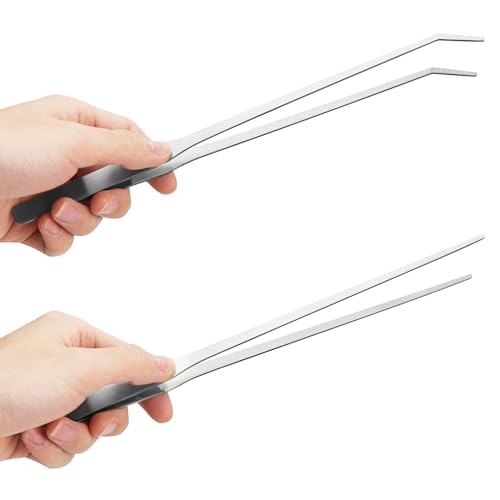
Long feeding tweezers keep your fingers out of strike range and let you size prey precisely. The Fri4Free 10.6” Tweezers are stainless steel (won’t harbor bacteria) and the right length to offer food from outside the enclosure.
Cause #4 — Dehydration (~10% of cases)
A dehydrated GI tract moves food slowly. The signs of dehydration in a bearded dragon are wrinkly skin that does not bounce back when pinched, sunken eyes, and sticky saliva. Hydration support includes soaks twice a week, a fresh water dish, and misting salads before serving.
Dehydration often compounds the other three causes. A dragon on loose substrate plus a cool basking spot plus mild dehydration is at much higher risk than any single cause alone. This is why the prevention section emphasizes all five rules together rather than picking the most important one.
Less Common Causes
Most impactions are substrate, temperature, prey size, or hydration. When none of these fit, look at the less common causes below — they account for fewer than 5% of cases, but they do happen.
- Parasites — coccidia and pinworms slow gut motility and create inflammation in the colon lining. Diagnosis requires a vet fecal test (fresh sample, brought in within 2 hours). Treatment is a course of antiparasitic medication; impaction clears once the parasite load is reduced.
- Foreign objects — small rocks, bedding fibers, or pieces of cage décor that the dragon swallowed by accident. Common culprits include loose pieces of background décor, small rubber feet from basking platforms, and substrate pieces the dragon picked up while hunting.
- Tumors or abscesses — rare in young dragons but possible in older adults (5+ years). An X-ray usually distinguishes a tumor from a substrate impaction because the mass has a different density.
- Egg binding in females — a gravid female that cannot lay her eggs may show signs similar to impaction (lethargy, hard belly, reduced appetite). The treatment is different: a lay box with moist substrate and, if she does not lay within 48 hours, a vet visit for oxytocin or surgical intervention.
- MBD-related spinal deformity — bearded dragons with metabolic bone disease develop a curved or kinked spine that compresses the colon mechanically. The impaction is secondary to the MBD; both need vet treatment.
If the four primary causes do not match your setup, ask a reptile vet to rule out these less common ones before assuming the blockage is from substrate.
How to Treat Bearded Dragon Impaction at Home
Skip this section if your dragon is already at the severe stage (back leg dragging plus black beard plus no poop 7+ days). Go directly to a reptile vet — at-home treatment will not dislodge a hard blockage.
The at-home protocol below is for mild-to-moderate impaction: no poop for 3–7 days, dragon still eating, no paralysis. If the dragon is not eating or has any severe signs, schedule a vet visit before starting the protocol.
Step 1 — Warm Bath Therapy
The warm bath is the core at-home treatment. The water softens the blockage, hydrates the colon, and stimulates peristalsis (the muscular wave that pushes waste through).
| Spec | Value |
|---|---|
| Water temperature | 85–95°F (measure with a thermometer — do not estimate) |
| Water depth | Belly-deep, never above the shoulders |
| Duration | 15–30 minutes per session |
| Frequency | 1–2× per day until defecation resumes |
| Supervision | 100% required — never leave the dragon unattended in water |
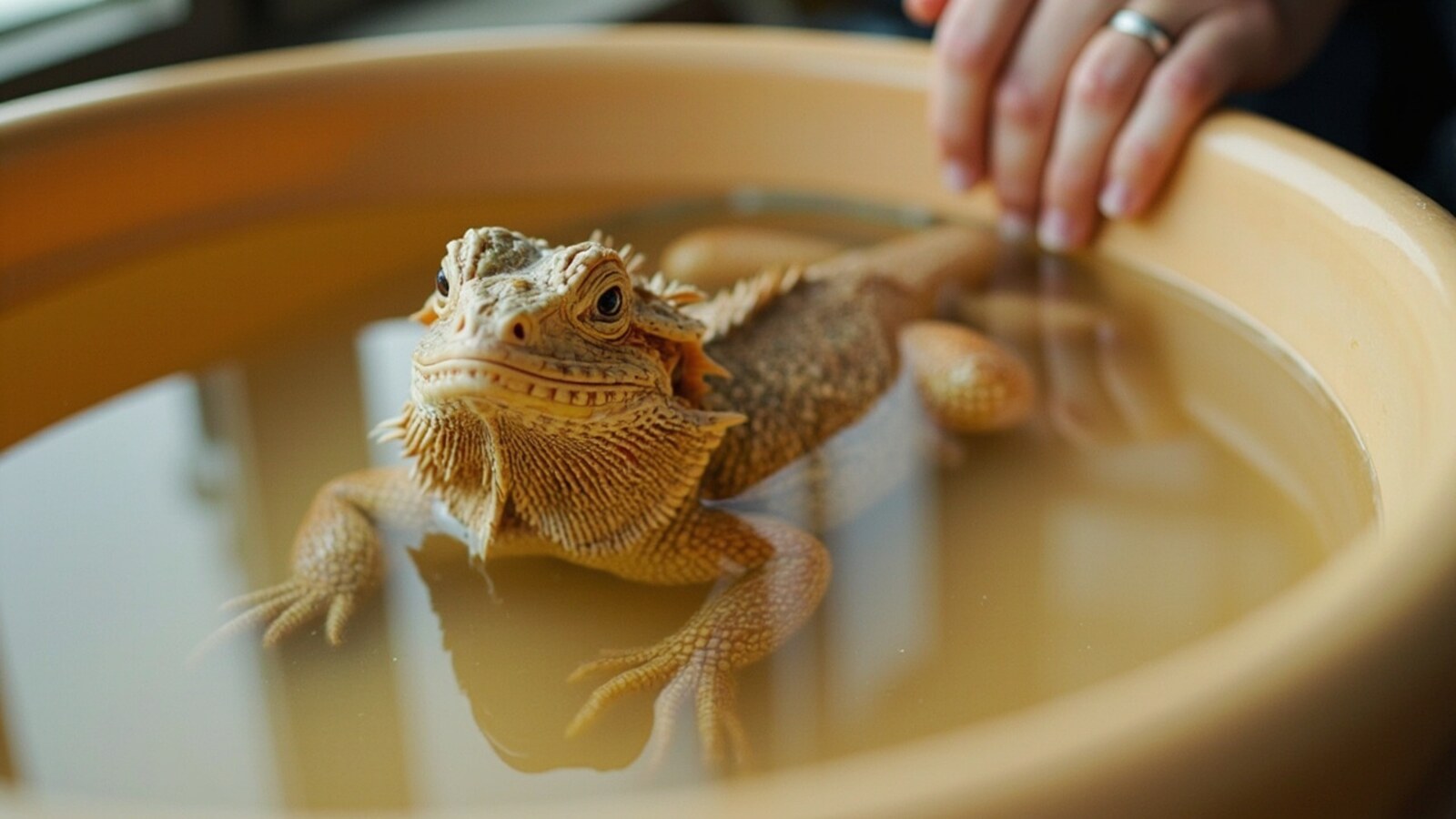
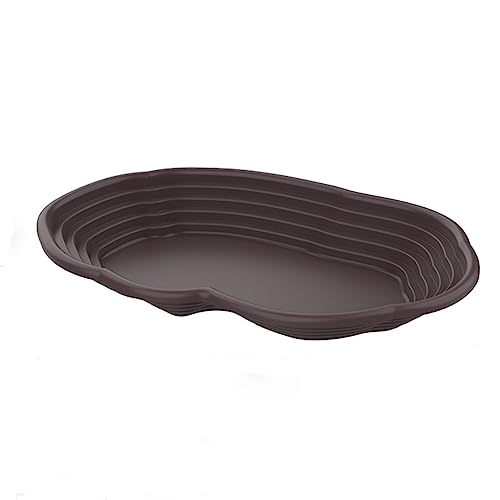
A purpose-built reptile bath is safer than improvising with a kitchen bowl — the Flushbay Bathing Pool has a built-in ramp so your dragon can climb out without flipping, and the 15” × 10” footprint fits an adult comfortably.
Step 2 — Add Electrolytes to the Bath Water
Plain water hydrates the skin. Electrolytes in the bath replace what the dragon has lost through dehydration and stress — sodium, potassium, magnesium — and improve gut motility faster than water alone.
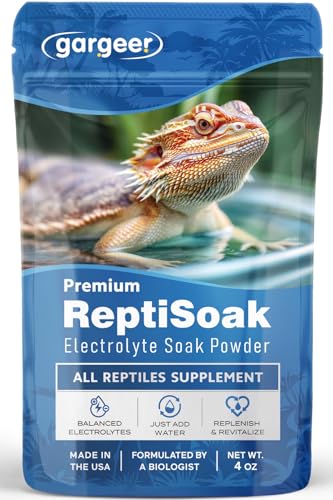
Dissolve the dose in the warm bath — the Gargeer ReptiSoak is a vet-grade electrolyte mix (sodium, potassium, magnesium) made in the USA. Add it to one of the daily baths during the first week.
Step 3 — Gentle Belly Massage
While the dragon is in the bath, use your thumb to apply gentle clockwise pressure on the lower belly. Two to three minutes is enough. Stop immediately if the dragon hisses, bites, or struggles — that signals pain, and forcing the massage can rupture the colon.
Step 4 — Monitor for Defecation
After the bath, dry the dragon with a soft towel and return it to a warm basking spot. Most dragons defecate within 30–60 minutes of a successful bath. Log the time, frequency, and consistency so you can report it to your vet if needed.
The 48-Hour Rule
If there is no bowel movement within 48 hours of twice-daily baths, schedule a vet visit. At-home treatment clears mild impactions; it cannot dislodge a hard blockage. Waiting longer risks the impaction progressing to the severe stage.
What NOT to Do
- ❌ Do not give mineral oil orally without vet guidance — aspiration pneumonia risk
- ❌ Do not force-feed — regurgitation worsens the blockage
- ❌ Do not try to flush the colon with a syringe — water in the lungs is fatal
- ❌ Do not wait 2+ weeks hoping it clears — severe impaction becomes life-threatening within days
Recovery — What to Expect After the Impaction Clears
Once the dragon defecates, the crisis is over but the recovery is not. The colon has been stretched and inflamed. Plan on 5–7 days of reduced handling and lighter meals.
- Day 1–2 post-clear: Offer only soft, hydrating foods — mashed squash, silkworms, hornworms. Skip crickets and mealworms while the gut recovers.
- Day 3–5: Resume normal feeding gradually. Continue one short bath per day to keep the colon hydrated.
- Day 5–7: Return to normal schedule. Watch for any return of lethargy or reduced stool — recurrence within 2 weeks is common if the underlying cause (substrate, temperature, prey size) was not fixed.
- Week 2 onward: Audit your setup against the five prevention rules below. If the impaction had a clear cause (loose sand, cold basking spot), fix it before the next meal.
When to See a Vet
The 48-Hour Decision Threshold
After 48 hours of twice-daily warm baths with no defecation, see a vet. Severe signs (dragging legs, black beard, regurgitation) skip the wait — go the same day.
What Impaction Treatment at the Vet Looks Like
A vet visit for impaction follows three steps:
| Step | What Happens | Typical Cost |
|---|---|---|
| Physical exam plus palpation | Vet feels the colon and checks hydration | $50–$150 |
| X-ray to confirm location | Locates the blockage and rules out foreign objects | $75–$200 |
| Treatment — laxative or enema | Hydration plus a vet-grade laxative | $100–$300 |
| Treatment — surgery (severe cases) | Abdominal surgery to remove the blockage | $500–$2,000 |
Costs vary by region and by the dragon’s size, but the ranges above are representative of what most US exotic vets charge in 2026.
How to Prepare for the Vet Visit
Bring the following:
- Recent photos of the belly swelling (timeline helps the vet see progression)
- Temperature log — basking surface and cool side readings for the last 7 days
- Stool history — or absence of stool, with dates
- Substrate sample if you suspect ingestion — the vet may want to identify the material
- Your full setup description — tank size, substrate type, heat source, UVB bulb age, last replacement date
Do not feed the dragon for 12 hours before the visit if surgery is a possibility — sedation is safer on an empty stomach. Transport the dragon in a small, secure carrier lined with a paper towel; avoid loose substrate in the carrier since it could worsen the impaction during the ride. Keep the car at 75–80°F on the way — a cold dragon’s gut slows further, which makes the visit less productive.
How to Prevent Bearded Dragon Impaction
Prevention is cheaper than treatment. Five rules cover the vast majority of cases.
Rule 1 — Use Non-Particle Substrate
- ✅ Reptile carpet, ceramic tile, non-adhesive shelf liner
- ❌ Calcium sand, walnut shell, gravel, wood chips, crushed corn cob
For the full breakdown of safe substrates and what to avoid, see our best bearded dragon substrate roundup.
Rule 2 — Verify Basking Temperature
- 95–110°F at the basking surface, measured with a digital probe thermometer
- 75–85°F on the cool side
- Replace UVB bulbs every 6–12 months — UVB output degrades invisibly even when the bulb still glows
For heating setup recommendations, see our guide to the best bearded dragon heating lamps.
Rule 3 — Feed Prey Sized to the Dragon
- Prey item no wider than the space between the dragon’s eyes
- Hatchlings: pinhead crickets only, no mealworms
- Juveniles: ¼” to ½” crickets
- Adults: up to ¾” crickets
Rule 4 — Maintain Hydration
- Fresh water dish in the enclosure daily (some dragons drink; some hydrate from food and baths)
- Soak in shallow warm water (85–95°F) for 10 minutes, twice a week
- Mist salads with water before serving
Rule 5 — Annual Reptile Vet Checkup
- Fecal parasite screen — coccidia and pinworms
- Bloodwork — calcium and vitamin D3 levels
- Early detection of issues that could predispose to impaction (metabolic bone disease, parasites, organ issues)
Bottom Line
Three actions cover 90% of impaction outcomes:
- Audit your setup today. Non-particle substrate, basking surface verified at 95–110°F with a digital probe, prey sized to your dragon. Most impactions never happen when these three are correct.
- Bookmark the severity table. When in doubt about whether to start baths or call a vet, the table at the top of this page makes the call in under 10 seconds.
- See a vet within 48 hours if at-home treatment does not produce a bowel movement. Mild cases clear at home; moderate and severe cases need imaging and possibly surgery. Waiting is the most common cause of preventable deaths from impaction.
Impactions are nearly always preventable. The four primary causes — loose substrate, cold basking spot, oversized prey, chronic dehydration — are all owner-controlled. Fix the setup and the impaction stops being a recurring risk.
If you found this page useful, our complete bearded dragon care guide covers the full husbandry checklist, and our bearded dragon substrate roundup reviews the eight safest substrate options in detail.