If you’re wondering what temperature should a bearded dragon tank be, the short answer is 100–110°F on the basking side and 75–85°F on the cool side. Temperature is the single most important factor in keeping a bearded dragon healthy. I’ve seen more health problems caused by incorrect heat than by any other husbandry mistake — poor digestion, lethargy, respiratory infections, and even metabolic bone disease can all trace back to wrong temperatures.
In this guide, I’ll walk you through the exact temperature ranges your bearded dragon needs at every life stage, how to set up a proper thermal gradient, and which thermometers and thermostats actually work in practice. For a full overview of daily care beyond heat, see our bearded dragon care guide.
Ideal Bearded Dragon Temperature Ranges
Bearded dragons are native to the arid regions of Australia, where they thermoregulate by moving between sun-baked rocks and cool burrows. In captivity, your job is to recreate that temperature range inside an enclosure.
Temperature Zone Reference
| Zone | Adult Range | Baby Range (< 6 months) |
|---|---|---|
| Basking surface | 100–105°F (38–41°C) | 105–110°F (41–43°C) |
| Warm side ambient | 85–95°F (29–35°C) | 90–100°F (32–38°C) |
| Cool side ambient | 75–85°F (24–29°C) | 80–85°F (27–29°C) |
| Nighttime | 65–75°F (18–24°C) | 70–75°F (21–24°C) |
These aren’t suggestions — they’re ranges backed by reptile veterinary guidelines. A basking spot below 95°F means your dragon can’t digest food properly, and a cool side above 90°F removes the thermal gradient your dragon needs to self-regulate.
Babies need slightly warmer conditions overall because they have less body mass and lose heat faster. In my experience, keeping baby enclosures on the warmer end of these ranges makes a real difference in appetite and growth rate.
Creating a Proper Temperature Gradient
A thermal gradient — a warm basking zone on one side and a cooler retreat on the other — is essential because bearded dragons regulate their body temperature by moving between zones. Without a gradient, your dragon has no way to cool down or warm up on its own.
Basking Zone Setup
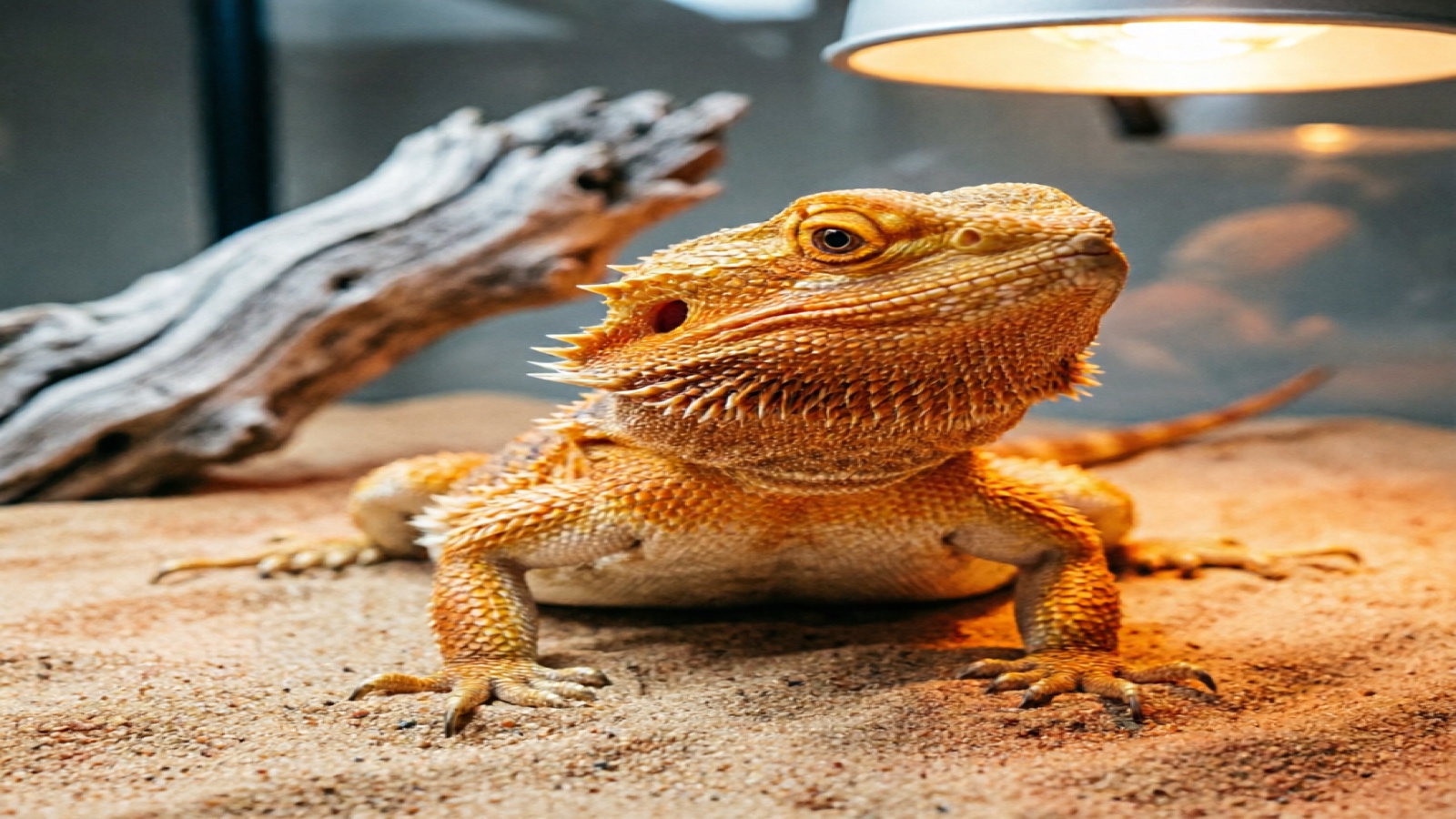
The basking area should be at the highest point in the enclosure, directly under the heat source. Use a flat rock, slate tile, or branch positioned so the dragon can get within 6–8 inches of the basking lamp. The closer the basking surface is to the bulb, the hotter it gets.
Cool Zone Setup
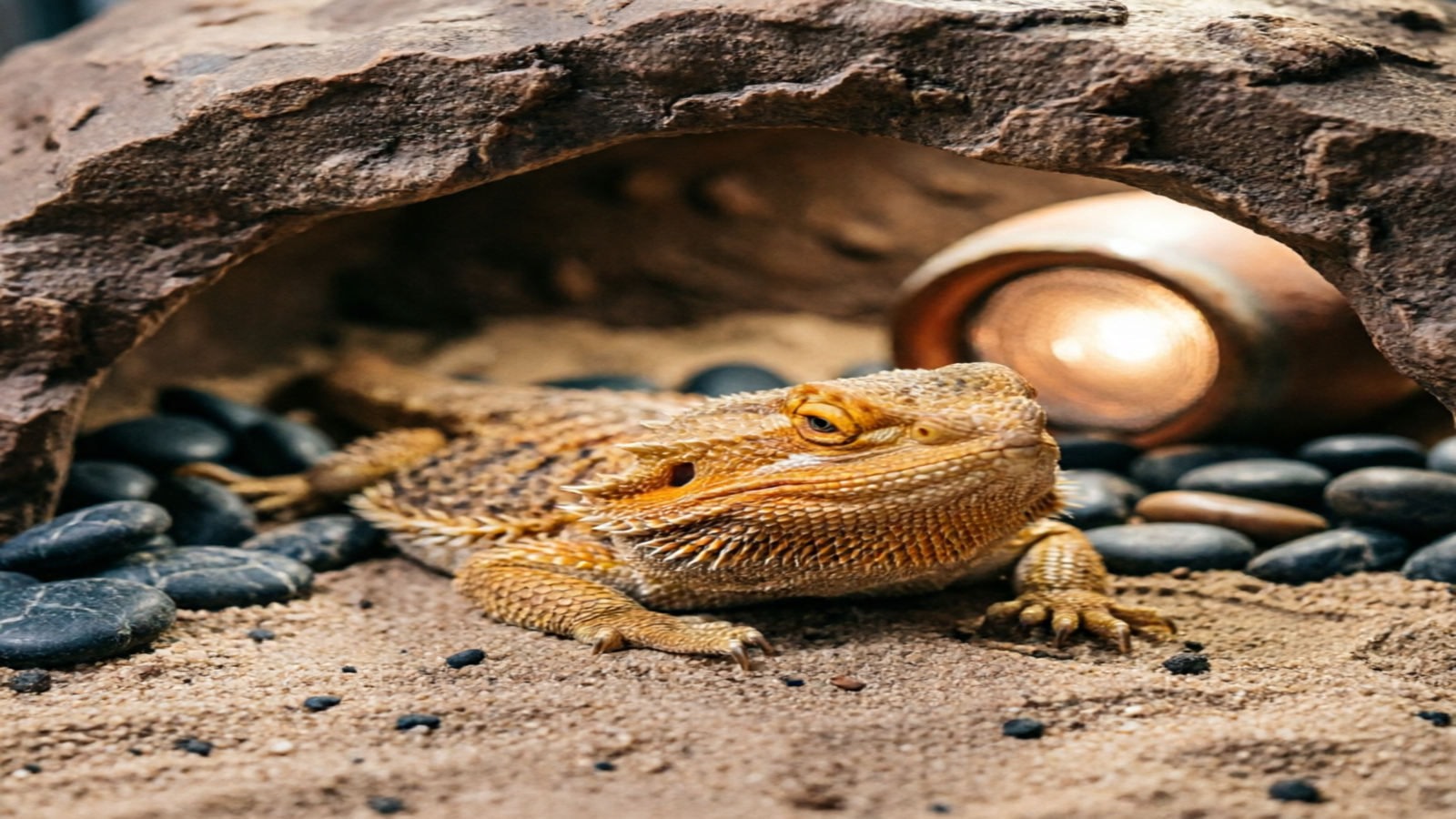
The cool side needs a hiding spot (a cork bark hide or half-log works well) and the water dish. This is where your dragon retreats after a basking session. The cool side temperature is just as important as the hot side — if the whole tank is 95°F, your dragon can’t cool down and will become chronically overheated.
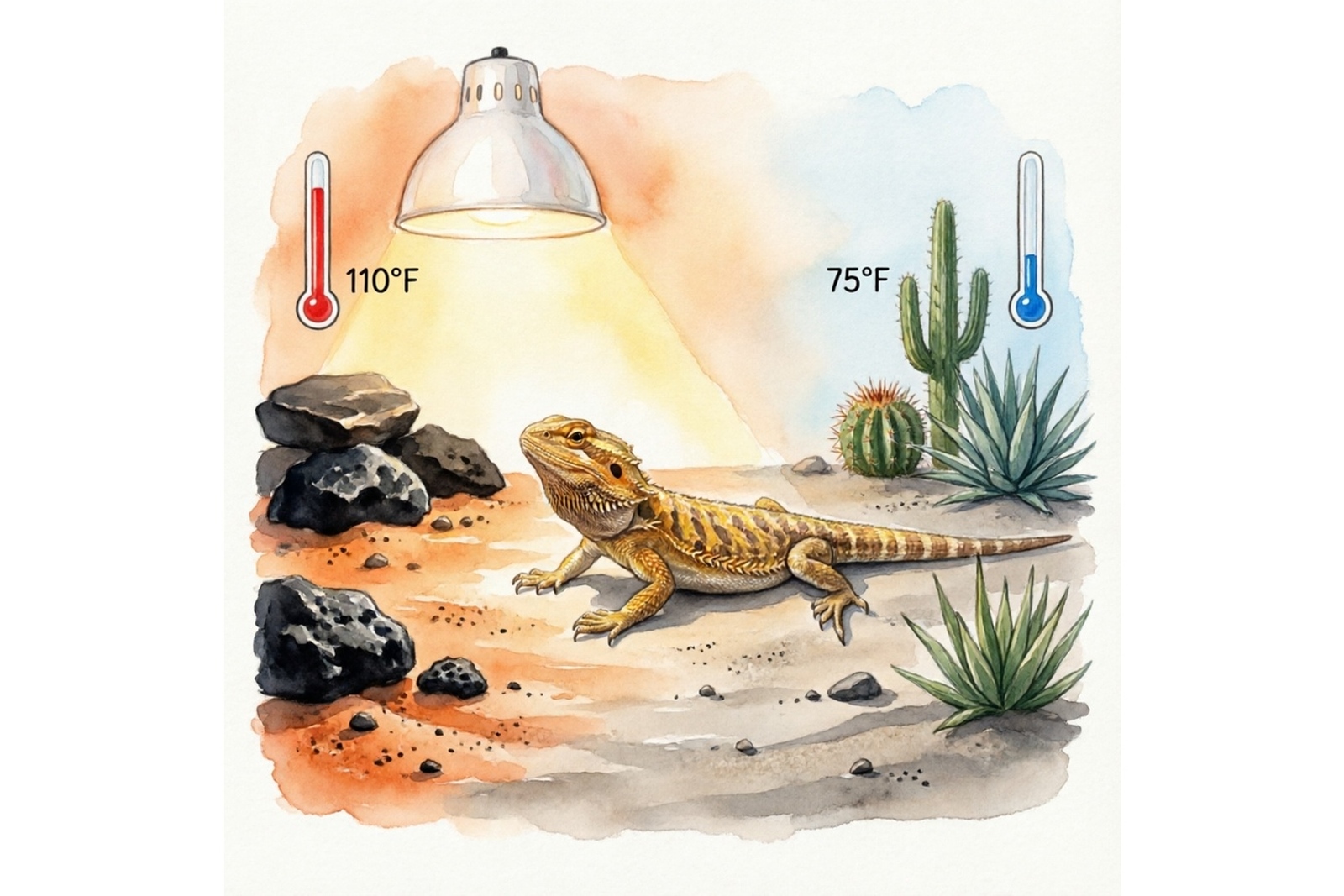
Enclosure size directly affects your ability to maintain a gradient. A 40-gallon breeder tank (36” × 18”) is the minimum for an adult, but I’d recommend going larger — a 4’ × 2’ enclosure gives you enough distance between the basking spot and cool side to hold a proper temperature differential. For more on this, see our guide on choosing the right enclosure size and tips for setting up your bearded dragon tank.
Heat Sources for Your Enclosure
The type of heat source you choose matters. Bearded dragons associate visible light with warmth and are more likely to bask under a bright white light than under a dark ceramic emitter.
Primary Basking Heat
Incandescent or halogen flood bulbs are the standard choice for basking heat. They produce both light and infrared warmth, which encourages natural basking behavior. Halogen bulbs tend to last longer and produce a more consistent heat output. Pick a bulb wattage that gets your basking surface to the target range — typically 75W for smaller enclosures and 100–150W for larger setups. For specific bulb recommendations, see our guide to the best bearded dragon heating lamps.
Supplemental and Nighttime Heat
Ceramic heat emitters (CHEs) produce no visible light, making them ideal for nighttime heating when ambient room temperature drops below 65°F. Deep heat projectors are another option that produce gentle infrared without disturbing sleep cycles. Neither of these should be the primary basking source — dragons need bright light to trigger natural basking behavior.
Temperature Monitoring and Control Equipment
You can’t manage what you don’t measure. Guessing at temperatures is the fastest way to end up with a sick dragon. I recommend two categories of equipment: something to read the temperature (thermometers) and something to control it (thermostats).
Thermometers
For the most reliable setup, use two types of thermometers:
- Digital probe thermometers placed at basking and cool side to measure ambient air temperature continuously
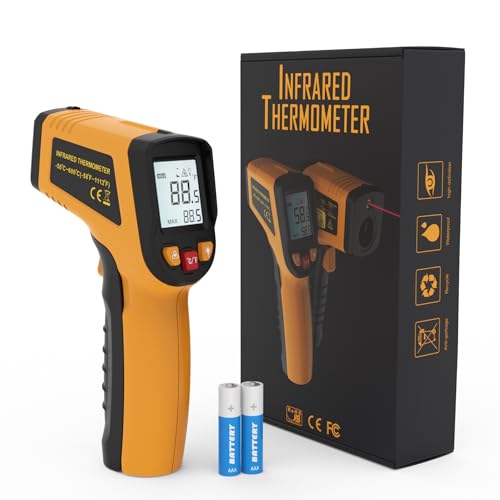
- Infrared temp guns to spot-check the actual basking surface temperature — this is the number that really matters for digestion
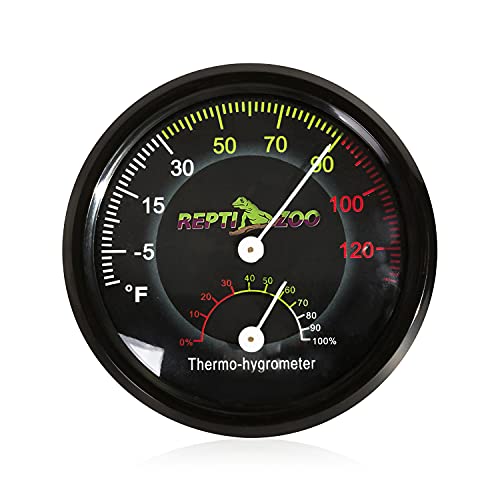
Analog dial gauges are affordable and work as backup monitors, but they’re less precise and harder to read at a glance. If you’re on a tight budget, the REPTI ZOO Dual Gauges pair gives you temperature and humidity readings at two fixed positions without needing batteries.
For digital readings, the REPTI ZOO Magnetic LCD thermometer is handy because the magnetic backing lets you move it between zones to compare readings. I find it particularly useful during initial setup when you’re dialing in the gradient.
For basking surface temperature, an infrared temp gun is non-negotiable. The KNINE OUTDOORS Infrared Thermometer Gun works well — it has a 12:1 distance-to-spot ratio so you can measure the basking rock from outside the enclosure without disturbing your dragon. Just point, pull the trigger, and you get an instant surface reading. Remember that surface temperature and air temperature are different numbers, and it’s the surface temp that matters most for digestion.
Thermostats
A thermostat automatically regulates your heat source to maintain a set temperature, which takes the guesswork out of daily management. This is especially useful in rooms with fluctuating temperatures.
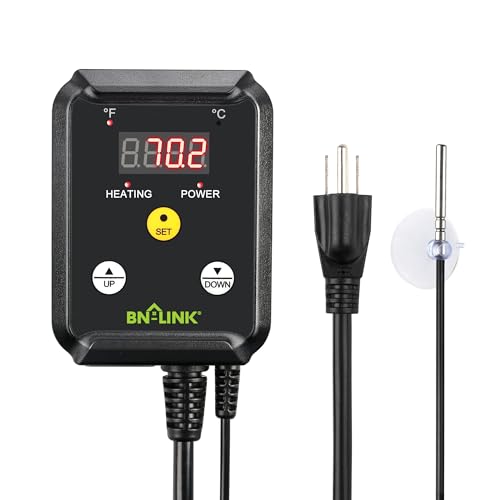
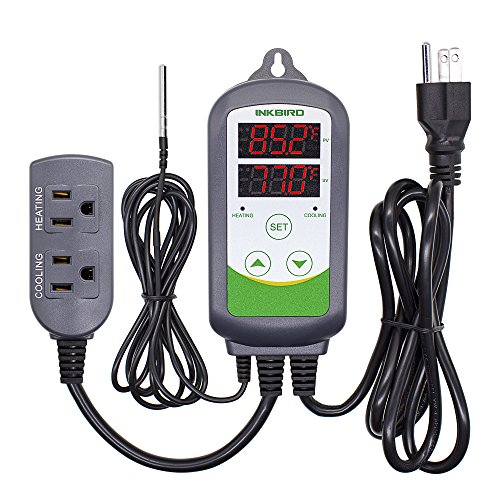
For basic on/off control of heat mats or ceramic emitters, the BN-LINK Thermostat is a reliable budget pick. It handles up to 1000W and has a 5-foot probe you can position at basking level. The downside is on/off cycling creates temperature swings of a few degrees around your setpoint.
If you’re using a basking lamp and want smoother regulation, a dimming thermostat is the better choice. The REPTIZOO Dimming Thermostat uses PID control to adjust lamp brightness gradually, keeping the temperature within 1°F of your target. It’s more expensive but eliminates the on/off cycling that can stress some dragons. I’d recommend this setup for anyone running a halogen basking bulb.
For maximum flexibility, the Inkbird ITC-308 offers two-stage heating and cooling control with over-temperature alarms. It’s well-reviewed for a reason — the built-in safety shutoff is a genuine lifesaver if a bulb shorts or a thermostat probe fails. For a deeper comparison of thermostat options, see our best reptile thermostats guide.
Equipment Quick Comparison
| # | Product | Best For |
|---|---|---|
| 1 | REPTI ZOO Dual Gauges | Budget fixed-position monitoring |
| 2 | REPTI ZOO Magnetic LCD | Portable zone-to-zone checking |
| 3 | KNINE OUTDOORS IR Temp Gun | Instant basking surface readings |
| 4 | BN-LINK Thermostat | Budget heat mat and CHE control |
| 5 | REPTIZOO Dimming Thermostat | Precise basking lamp regulation |
| 6 | Inkbird ITC-308 | Versatile control with safety alarms |
Temperature Needs by Age
Temperature requirements shift as your dragon grows. Babies are more vulnerable to temperature extremes and need tighter control, while adults are more forgiving.
Baby Bearded Dragons (0–6 months)
Babies need the warmest basking surface — 105–110°F — because their smaller bodies lose heat faster and they’re digesting frequently (they eat 2–3 times daily at this age). Keep the cool side no lower than 80°F, and don’t let nighttime temperatures drop below 70°F. I’d strongly recommend a thermostat at this stage since babies can’t regulate their body temperature as effectively as adults.
Juvenile Bearded Dragons (6–12 months)
At this stage, you can start transitioning toward adult temperature ranges. The basking surface can come down slightly to 100–105°F, and the cool side can sit at 75–80°F. Nighttime temperatures can safely reach 65°F. Watch your dragon’s behavior — if they’re spending all day on the cool side, the basking spot may be too hot.
Adult Bearded Dragons (12+ months)
Adults do well with the standard ranges listed in the reference table above. They’re fully capable of thermoregulating as long as the gradient exists. Healthy adults can even tolerate nighttime drops to 60°F in a warm room, though I wouldn’t push it below that regularly.
Senior Bearded Dragons (7+ years)
Older dragons often benefit from slightly warmer overall conditions — aim for a cool side closer to 80°F. Seniors spend more time basking and may have slower digestion, so maintaining consistent basking surface heat is important. If your senior dragon seems sluggish, a slight temperature increase often helps more than dietary changes.
Seasonal Adjustments
Room temperature changes with the seasons, and that directly affects your enclosure. Here’s how to adapt.
Summer
During hot months, ambient room temperatures may already be in the 80s, which can push your cool side above the target range. If the cool side exceeds 90°F, you need to address it — reduce basking bulb wattage, increase room ventilation, or use a small fan near (not inside) the enclosure. Some keepers run basking lamps on shorter cycles during summer to prevent the enclosure from overheating.
Winter
Cold rooms below 65°F are the bigger problem. If your house gets cold at night, a ceramic heat emitter on a thermostat set to 70°F prevents dangerous temperature drops. Don’t rely on room heaters — they’re unpredictable and can create fire hazards near enclosures. Always use a dedicated reptile heat source with a thermostat probe positioned inside the enclosure.
Brumation Considerations
Bearded dragons may enter brumation (a reptile form of hibernation) when daytime temperatures consistently stay below 65°F and daylight hours shorten. During brumation, your dragon will eat less, move less, and sleep more. This is a natural process for healthy adults, but it should never happen to babies under 12 months. If your dragon starts showing brumation signs and you want to prevent it, maintaining basking temperatures above 100°F and providing 12–14 hours of light per day usually keeps them active.

Setting Up Your Basking Temperature in 5 Steps
Whether you’re setting up a new enclosure or recalibrating an existing one, here’s a straightforward process that works for any size setup:
- Mount the basking lamp on one end of the enclosure, 6–8 inches above the basking surface (a flat rock or slate tile)
- Install a probe thermometer on the warm side at dragon-height level and a second probe on the cool side
- Turn on the basking bulb and wait 30 minutes for temperatures to stabilize — measure with an infrared temp gun
- Adjust the fixture height until the basking surface reads 100–105°F (105–110°F for babies) and the cool side reads 75–85°F
- Connect a thermostat (optional but recommended) with the probe at basking level to maintain consistent temperatures automatically
If you can’t reach target temperatures after adjustment, the bulb wattage is likely too low for your setup — try the next wattage up and re-measure.
Temperature Safety Checklist
Here’s a quick reference for what correct bearded dragon temperatures look like in a healthy setup:
Basking surface reaches 100–105°F (105–110°F for babies)
Warm side ambient stays at 85–95°F
Cool side ambient stays at 75–85°F (80–85°F for babies)
Nighttime temperatures stay above 65°F (70°F for babies)
Thermal gradient exists — warm end is noticeably hotter than cool end
Infrared temp gun used to verify basking surface (not air) temperature
Thermostat probe positioned at basking level
Basking surface below 95°F — dragon cannot digest food
Cool side above 90°F — no gradient, dragon cannot cool down
Nighttime below 60°F for adults (below 70°F for babies)
Using colored bulbs (red/blue) — disrupts natural basking behavior
Relying on only one thermometer — always use two types
Placing heat sources inside the enclosure without a thermostat — fire and burn risk
Troubleshooting Temperature Problems
Most temperature issues come down to a few common causes. Here’s how to diagnose and fix them.
Basking Spot Too Cold
If your basking surface won’t reach 100°F, check these in order:
- Bulb distance: The basking surface should be 6–8 inches below the bulb. Raise the basking platform or lower the fixture
- Bulb wattage: You may need a higher wattage bulb, especially in tall enclosures
- Bulb age: Incandescent bulbs degrade over time. If the bulb is over 3 months old and output has dropped, replace it
- Room temperature: A very cold room makes it harder to reach basking temps. A 150W bulb in a 60°F room may not hit 100°F at the basking surface
Basking Spot Too Hot
This is less common but more dangerous. If the surface exceeds 110°F:
- Raise the fixture a few inches or lower the basking platform
- Switch to a lower wattage bulb
- Add a dimmer thermostat like the REPTIZOO model mentioned earlier
- Signs of overheating include gaping (mouth open wide), spending all time on the cool side, and dark stress markings
Cool Side Too Warm
If the cool side stays above 85°F, the gradient has collapsed. This usually means the enclosure is too small, there’s not enough distance between the heat source and cool side, or the room itself is very hot. Solutions include upgrading to a larger enclosure, reducing basking bulb wattage, or improving room ventilation.
Dragon Not Eating
While loss of appetite has many causes, temperature is the first thing to check. If the basking surface is below 95°F, your dragon physically cannot digest food and will naturally refuse to eat. Verify surface temperature with an infrared temp gun before investigating other health issues. I’ve seen dragons resume eating within hours of correcting a cold basking spot.
Frequently Asked Questions
What temperature should a bearded dragon basking spot be?
Adults need 100–105°F (38–41°C) at the basking surface. Babies under 6 months need it warmer — 105–110°F (41–43°C). Use an infrared temp gun to measure the rock or tile surface, not the air.
Can bearded dragons survive without heat at night?
Healthy adults tolerate nighttime drops to 60–65°F as long as daytime basking is correct. Babies under 12 months need warmer nights — don’t let their enclosure drop below 70°F.
How do I know if my bearded dragon is too cold?
Watch for lethargy, darkened coloration (beard and body turn darker to absorb more heat), reluctance to move from the basking spot, and loss of appetite. A cold dragon may also sleep excessively during the day. The fastest way to confirm is checking basking surface temperature with a temp gun.
What’s the best thermometer for a bearded dragon tank?
Use two types together: a digital probe thermometer for continuous ambient readings and an infrared temp gun for basking surface checks. For an affordable digital option, the REPTI ZOO Magnetic LCD model repositions easily between zones.
Why is my bearded dragon’s basking spot not hot enough?
The most common causes are the basking surface being too far from the bulb, using a bulb with insufficient wattage for your enclosure height, or a bulb that has degraded with age. Try moving the basking platform closer, upgrading to a higher wattage bulb, or simply replacing a bulb that’s been in use for over 3 months.