Bearded dragons are rewarding pets, but they have specific habitat requirements that closely mirror their natural Australian desert environment. A bearded dragon tank setup is the complete arrangement of an indoor enclosure designed to replicate the natural Australian desert habitat of the Central bearded dragon (Pogona vitticeps). This includes selecting the correct tank size, installing safe substrate, providing overhead heating with a basking surface temperature of 95–110°F, supplying UVB lighting for calcium metabolism, and adding environmental enrichment like climbing branches and hiding spots. The Association of Reptilian and Amphibian Veterinarians (ARAV) recommends a minimum 120-gallon enclosure for adult bearded dragons, with separate basking and cool zones to support natural thermoregulation behavior.
According to research published in the Journal of Herpetological Medicine and Surgery, bearded dragons housed in enclosures with proper UVB gradients develop significantly stronger bone density than those kept under suboptimal lighting. A proper bearded dragon tank setup is not optional — it is the foundation of preventive husbandry that avoids up to 90% of common veterinary visits for metabolic bone disease, impaction, and thermal burns.
Why Proper Tank Setup Matters for Bearded Dragons
In the wild, bearded dragons (Pogona vitticeps) bask on sun-warmed rocks, retreat into cool burrows, and dig in sandy soil. A captive enclosure needs to replicate these conditions. The most common health problems in pet bearded dragons stem from inadequate UVB exposure (metabolic bone disease), incorrect temperatures (poor digestion and immune function), and unsafe substrate (intestinal impaction).
This bearded dragon tank setup guide walks you through every step: choosing the right enclosure, selecting safe substrate, installing heating and UVB lighting, adding decor, and creating the temperature gradient your dragon needs. Investing time in a proper setup before bringing your dragon home is far easier — and cheaper — than treating preventable diseases later.
Choosing the Right Tank Size
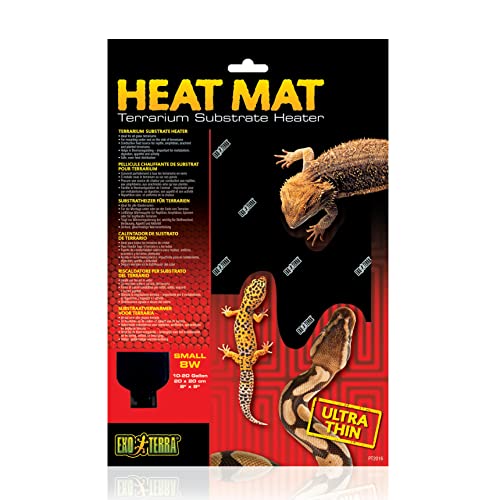
Exo Terra Heat Mat → is a quality option worth considering for your setup.
Adult bearded dragons are active climbers and sprinters. A cramped tank causes stress, reduces exercise, and makes it difficult to establish a proper temperature gradient.
Minimum enclosure sizes:
| Life Stage | Minimum Gallons | Minimum Dimensions |
|---|---|---|
| Baby (0–6 months) | 20–40 gallons | 36”×18”×18” |
| Juvenile (6–12 months) | 55–75 gallons | 48”×18”×20” |
| Adult (12+ months) | 120 gallons | 48”×24”×24” |
The 120-gallon minimum for adults is not arbitrary. Anything smaller makes it nearly impossible to maintain the 30°F temperature difference between basking and cool zones. Glass terrariums are the most common choice, but PVC or wood enclosures hold heat better and reduce escape-related stress from seeing reflections.
Keep in mind that vertical height matters too. Bearded dragons are avid climbers, and an enclosure at least 24 inches tall allows you to position basking branches and UVB fixtures at the proper distance. Front-opening doors make daily maintenance and feeding much easier than top-only access.
For a detailed breakdown of enclosure dimensions and materials, see our bearded dragon tank size guide and our review of the best bearded dragon terrariums. A complete bearded dragon tank setup at this stage should already include the enclosure, substrate, and a plan for fixture positioning.

Substrate Options and Setup
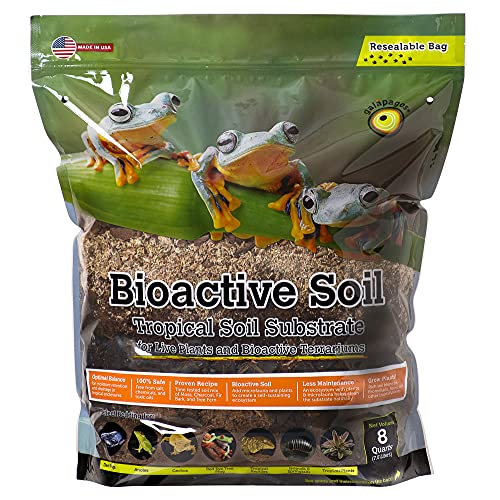
Many owners find that Galápagos Bioactive → works well for their pet’s needs.
Substrate choice directly impacts your dragon’s health. The wrong material causes impaction — a blockage in the digestive tract that often requires surgery.
Safe substrates:
- Ceramic tile — Easy to clean, zero impaction risk. Comes in natural stone textures. Ideal for adults.
- Non-adhesive shelf liner — Cheap, replaceable, and safe. Good temporary option.
- Paper towels — Best substrate for baby dragons. Replace when soiled. Zero impaction risk while they are young and prone to tasting everything.
- Washed play sand — Fine, silica-free play sand works for adult dragons kept on a proper diet with adequate hydration. Avoid in enclosures with baby dragons or dragons with a history of impaction.
Substrates to avoid:
- Calci-sand — Clumps when wet and causes severe impaction. The added calcium does not provide meaningful nutritional benefit.
- Walnut shells — Sharp edges cause internal injury and blockages.
- Gravel and small rocks — Easily swallowed and nearly impossible to pass.
For substrate depth, ceramic tile and liner need only a thin layer. If using play sand, keep it at 1–2 inches deep — deep enough for natural digging behavior but shallow enough to prevent burrowing and hiding uneaten insects.
Cleaning routine varies by substrate. Tile and liner should be spot-cleaned daily and removed for a full wash weekly. Sand needs weekly sifting to remove waste and uneaten insects. Paper towels are replaced entirely whenever soiled. Regardless of substrate, do a full enclosure deep-clean monthly — remove all decor, disinfect surfaces with a reptile-safe cleaner, and replace the substrate entirely.
Read our full best bearded dragon substrate comparison for material-specific pros and cons.
Heating and Temperature Gradient
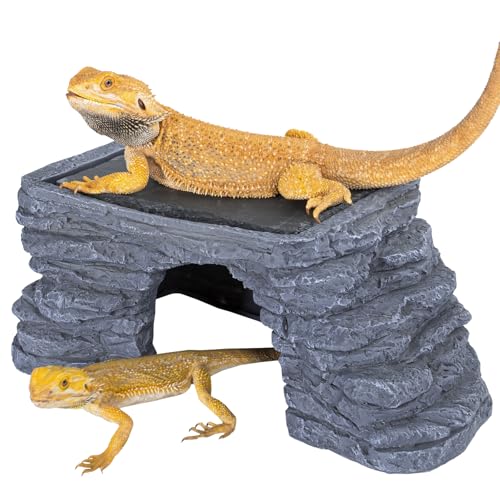
For a dry basking surface under the heat lamp, the REPTI ZOO Large Bearded Dragon Basking Platform gives adult dragons a 12.5-inch slate-top hide they can climb.
Bearded dragons are ectotherms — they regulate their body temperature by moving between warm and cool zones. Your enclosure must provide both.
Temperature requirements:
| Zone | Temperature Range | Purpose |
|---|---|---|
| Basking surface | 95–110°F | Digestion, metabolism |
| Warm ambient | 85–95°F | General activity area |
| Cool side | 75–85°F | Resting, sleeping |
| Nighttime | 65–75°F | Sleep (no supplemental heat if room stays above 65°F) |
Heat bulb types:
- Halogen bulbs — Produce focused heat with visible light. Best for basking spots. Available in 50–100W.
- Mercury vapor bulbs (MVB) — Combine heat and UVB in one bulb. Convenient but cannot be used with a thermostat in some setups.
- Ceramic heat emitters (CHE) — Produce heat without light. Useful for nighttime heating if room temps drop below 65°F.
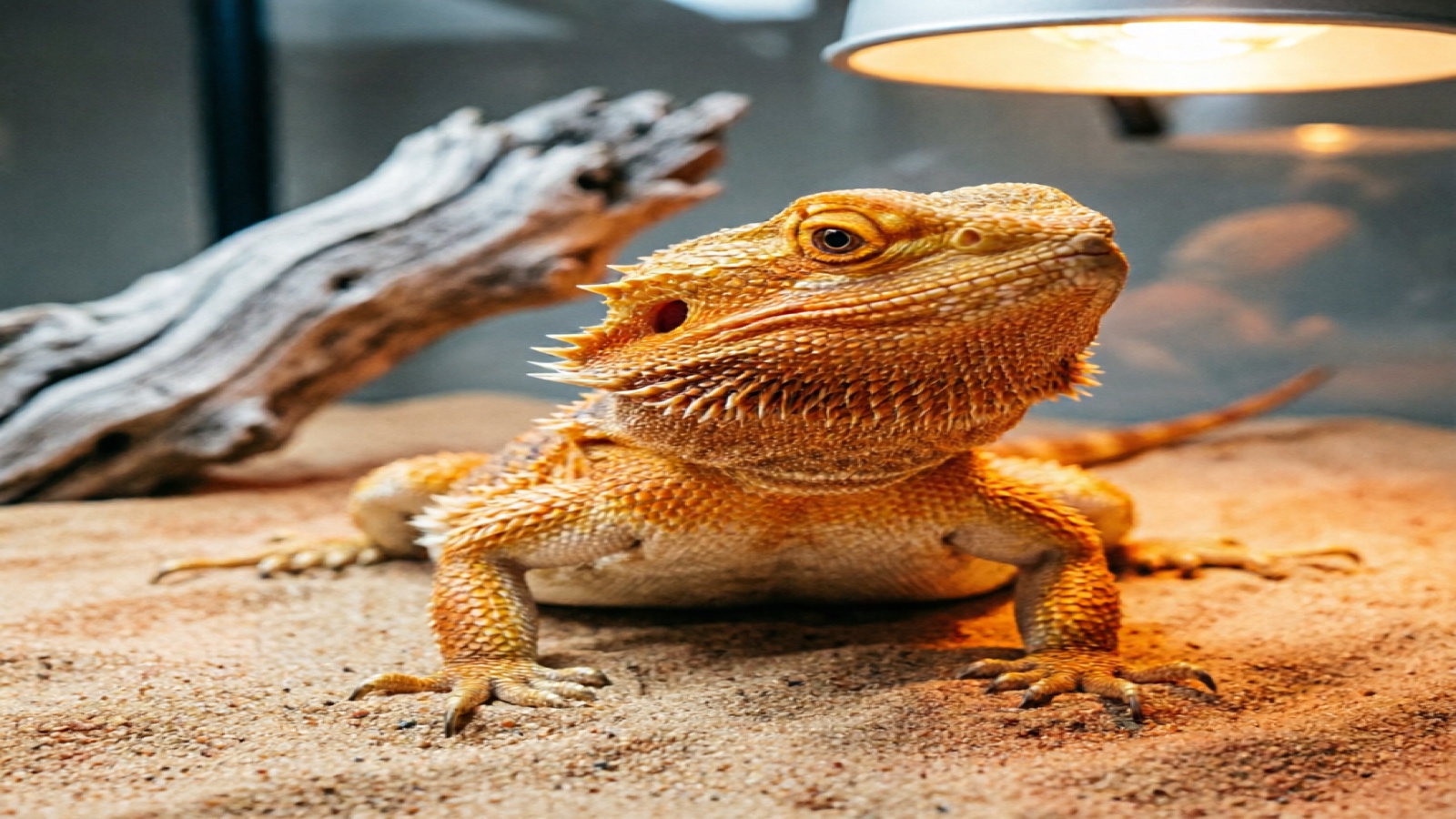
Placement tips: Mount the heat fixture on the warm end of the tank, positioned over a flat basking rock or platform. Use a digital probe thermometer taped to the basking surface — gun-style infrared thermometers only measure surface temp and can be inaccurate on glass.
Never use heat rocks or under-tank heaters as a primary heat source. Heat rocks have no thermostat, develop hot spots that cause severe burns, and bearded dragons sense heat from above (the sun), not below. Under-tank heaters are useful for nighttime ambient warming in cold rooms but should never replace an overhead basking bulb.
For recommended fixtures and bulbs, see our guide to the best bearded dragon heating lamps. Heating is the most safety-critical element of any bearded dragon tank setup — incorrect temperatures cause illness faster than any other husbandry error.

UVB Lighting Setup
UVB radiation is non-negotiable for bearded dragons. Without it, they cannot synthesize vitamin D3, cannot absorb dietary calcium, and will develop metabolic bone disease — a painful, often irreversible condition that causes softening and deformation of bones.
UVB bulb types:
| Bulb Type | UVB Output | Best For | Replace Every |
|---|---|---|---|
| T5 HO fluorescent | High, focused | Most setups | 6–12 months |
| Compact fluorescent | Low, concentrated | Small tanks only | 6 months |
| Mercury vapor | High + heat | Open-top enclosures | 6 months |
Critical setup details:
- Bulb distance matters. A T5 HO tube should sit 12–18 inches above the basking surface. Too far and UVB output drops to useless levels. Too close and it can cause eye damage. Check the manufacturer’s recommended distance for your specific fixture.
- No glass or plastic between bulb and dragon. Glass and most plastics block UVB wavelengths. Use a wire mesh screen top or mount the fixture inside the enclosure.
- Set a photoperiod. Run UVB for 12–14 hours per day on a timer. Consistent day/night cycles support healthy digestion and sleep patterns.
- Replace bulbs on schedule. UVB output degrades long before the bulb burns out. Even if the light still looks bright, it may no longer produce usable UVB after 6–12 months.
A UVB meter (such as the Solartech 6.5) is the only way to confirm actual output. Without one, follow the manufacturer’s replacement schedule strictly.
D3 supplementation is not a substitute for UVB lighting. While calcium and vitamin D3 powders dusted on feeder insects are part of a balanced diet, bearded dragons synthesize most of their D3 through UVB exposure. Oral D3 alone cannot match the natural process and overdosing oral supplements carries its own health risks.
For bulb recommendations, see our best bearded dragon UVB light reviews. UVB lighting completes the thermal-UVB pairing that is essential in every bearded dragon tank setup — without both heat and UVB over the same basking area, dragons cannot properly process calcium even with perfect diet.
Tank Decor and Accessories
A bare tank is stressful. Bearded dragons need environmental structure to feel secure and to engage natural behaviors like climbing and basking.
Essential items:
- Basking platform or rock — A flat, rough-surfaced rock under the heat lamp. Avoid smooth surfaces that offer no grip. Slate and natural stone work well.
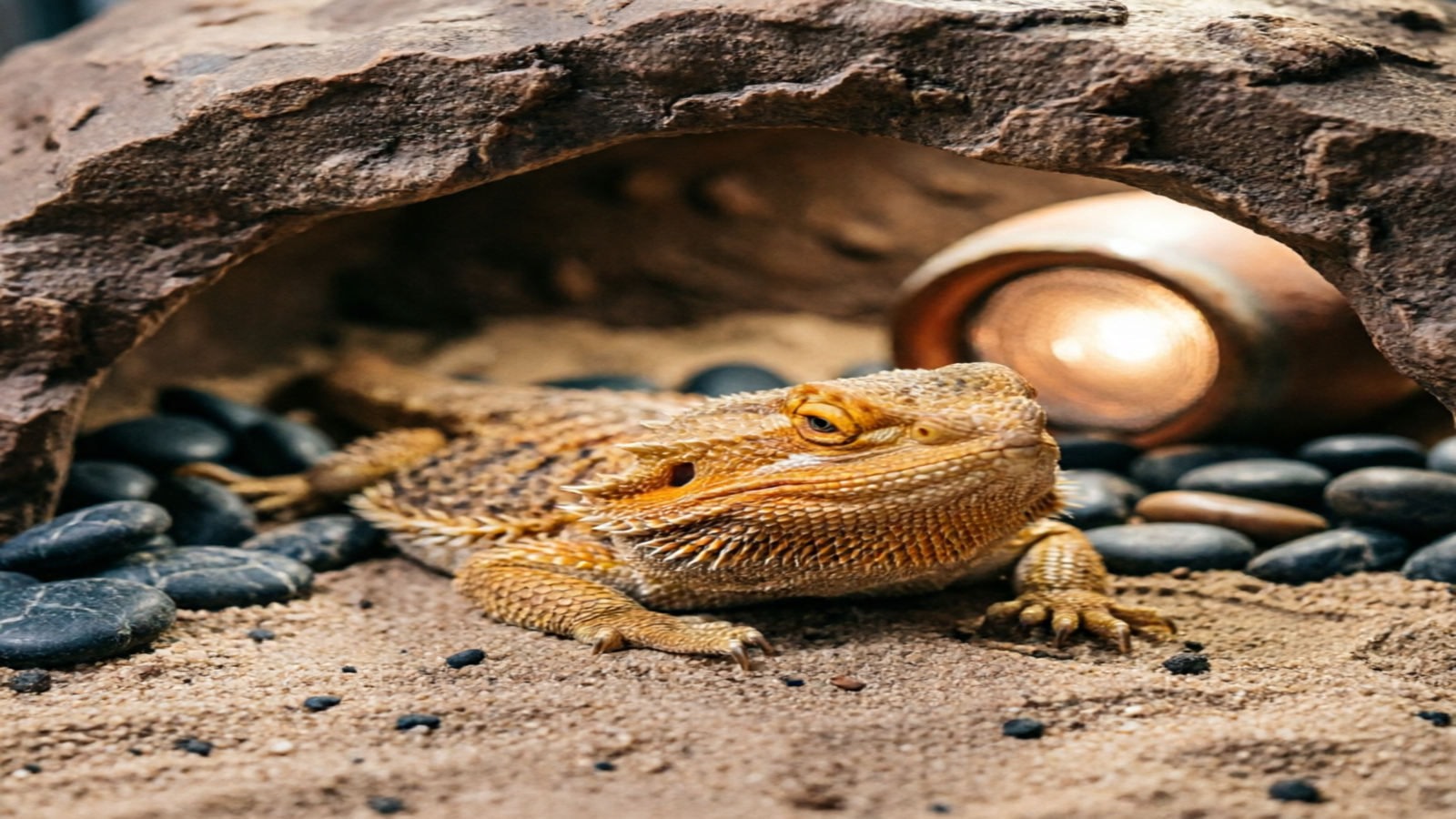
- Cool-side hide — A half-log hide or cave on the cool end gives your dragon a place to retreat from heat and light. Should fit snugly — dragons prefer enclosed spaces.
- Climbing branches — Rough-barked branches like grapevine or mopani wood provide exercise and enrichment. Avoid pressure-treated lumber or aromatic woods (pine, cedar).
- Shallow water dish — A small, heavy-bottomed dish (4–6 inches diameter, less than 1 inch deep) for drinking. Clean and refill daily. Some dragons prefer a drip system or being misted.
- Digital thermometer + hygrometer — Dual-probe digital gauges on both the warm and cool ends. Analog dial thermometers are inaccurate and should not be relied upon.
Optional enrichment:
- Safe live plants (snake plant, pothos, hibiscus) add visual cover and humidity microzones. Avoid toxic species like ivy, dieffenbachia, and philodendron.
- A second, lower basking shelf provides a middle-ground temperature zone for thermoregulation.
Setting Up the Temperature Gradient (Step-by-Step)
Getting the gradient right requires measuring — not guessing. Here is a practical setup sequence:
-
Position fixtures on the warm end. Mount the heat bulb and UVB fixture over the same quadrant of the tank. The basking rock goes directly below.
-
Measure basking surface temperature. Place a digital probe thermometer directly on the basking surface under the heat lamp. Adjust bulb wattage or height until the surface reads 95–110°F.
-
Place cool-side accessories. Position the hide, water bowl, and any cool-zone decor on the opposite end of the enclosure.
-
Measure cool-side temperature. Place the second probe thermometer in the cool zone. It should read 75–85°F. If the cool side is too warm, increase tank size, lower the basking bulb wattage, or improve room ventilation.
-
Run a 24-hour test. Check temperatures at basking surface, warm ambient, cool side, and nighttime. Record the readings. Adjust as needed.
-
Verify UVB output. If you have a UVB meter, confirm output at the basking surface matches the bulb’s rated distance. Without a meter, ensure the bulb is at the correct height per manufacturer specs.
Pre-introduction checklist:
- Basking surface: 95–110°F
- Cool side: 75–85°F
- Nighttime (lights off): 65–75°F
- UVB bulb at correct distance
- No glass between UVB and basking area
- Substrate safe for dragon’s age
- Fresh water available
- Hide present on cool side
Baby vs Adult Setup Differences
A setup for a baby bearded dragon differs from an adult setup in a few important ways:
Tank size: Start babies in a 20–40 gallon enclosure. Large tanks make it difficult for hatchlings to find food, water, and the correct temperature zone. Upgrade to adult-sized housing at around 6–12 months.
Substrate: Use paper towels exclusively for dragons under 6 months. Their instinct to taste everything, combined with small digestive tracts, makes even safe sand risky at this age. Switch to tile or sand once they are reliably eating and growing.
Basking items: Provide smaller, lower basking platforms for babies. A too-tall rock under a too-hot bulb creates a dangerous thermal gradient for a 4-inch dragon. Reduce bulb wattage accordingly — a 50W halogen is often sufficient.
Water dish: Use a very shallow dish (less than 0.5 inch depth) or a bottle cap. Baby dragons can drown in water that an adult would wade through without issue.
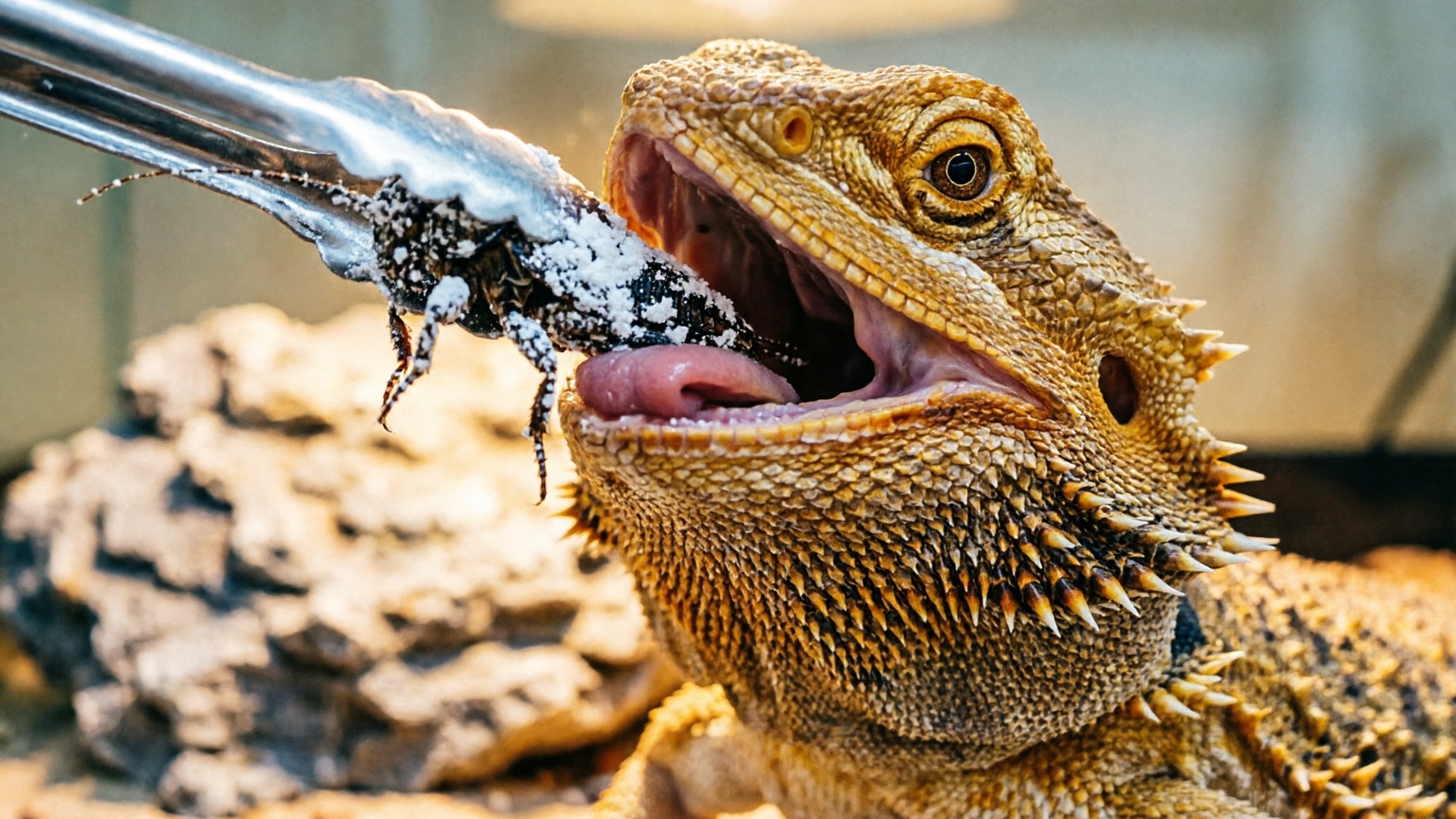
Feeding frequency: Babies eat 2–3 times per day (80% insects, 20% greens). Adults eat once daily (20% insects, 80% greens). The setup should accommodate frequent feeding — place a shallow feeding dish on the warm side to keep insects active and visible.
The transition from baby to adult setup should happen gradually. A good approach is to move the baby into a 55–75 gallon enclosure at 6 months, then into the full 120-gallon adult enclosure at 10–12 months. This staged approach prevents the stress of a sudden change while keeping the environment appropriately sized at each growth stage.
For comprehensive care guidance at any life stage, read our bearded dragon care guide and best bearded dragon food recommendations.