What Is Bearded Dragon Brumation?
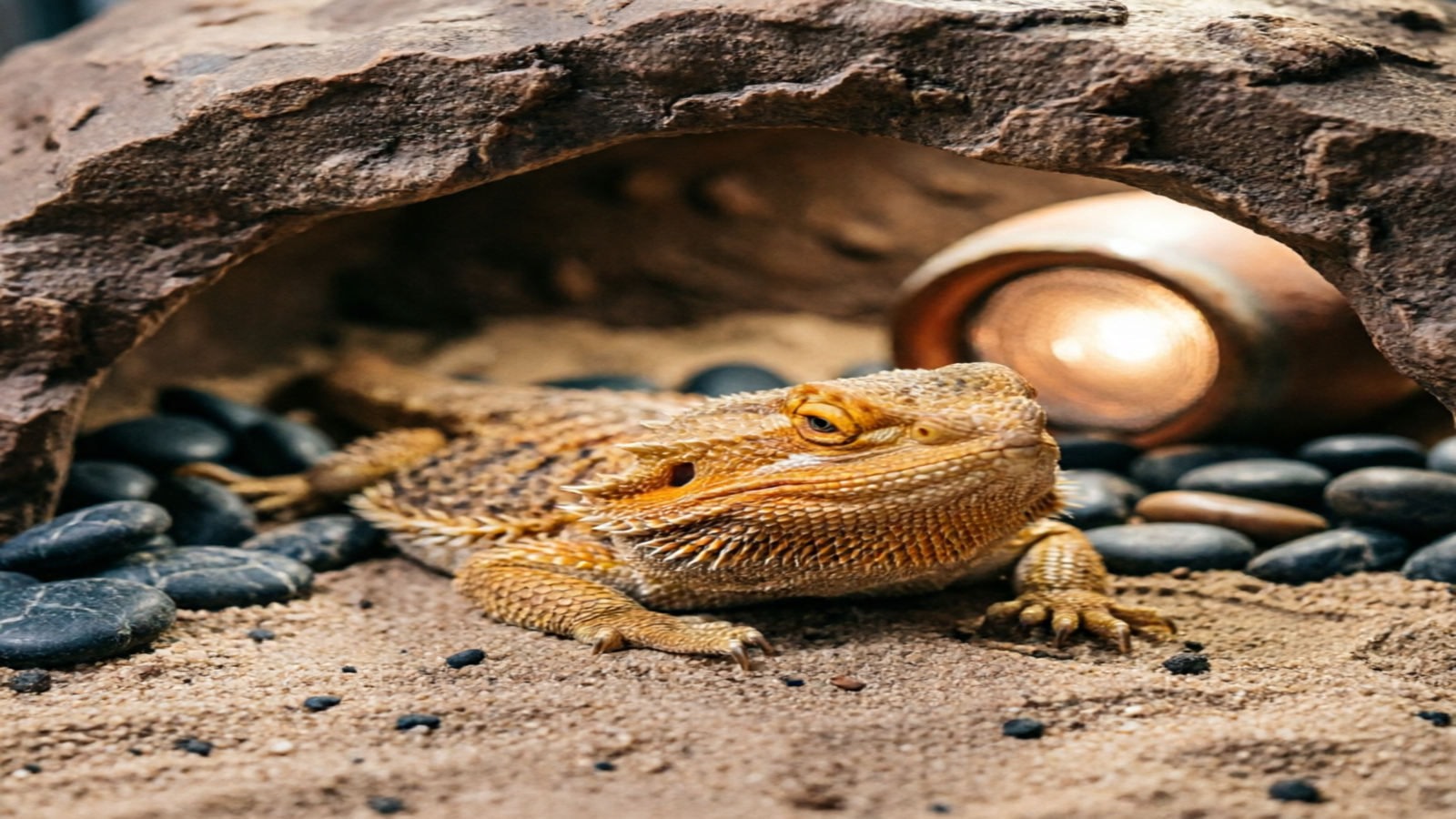
Brumation is a natural hibernation-like state that these reptiles enter during cooler months, where their metabolism slows dramatically to conserve energy. It is not the same as mammalian hibernation — brumating dragons remain semi-conscious and may occasionally rouse briefly to drink or adjust position.
During brumation, heart rate drops significantly, digestion nearly stops, and overall activity decreases to minimal levels. The dragon may appear to be in a deep sleep for extended periods. This is a survival mechanism, not a sign of declining health.
This brumation behavior stems from their evolutionary origins in the arid regions of Australia. Wild bearded dragons brumate to survive harsh seasonal changes when food and water become scarce. The brumation instinct remains strong even in captive-bred dragons living in climate-controlled enclosures with consistent heat and light.
Captive dragons may brumate despite consistent temperatures and lighting year-round. The trigger appears to be partly internal — a biological clock that tells them winter is approaching. Most brumation begins in late fall or early winter in the Northern Hemisphere, typically between October and February.
Not every bearded dragon will brumate. Some skip it entirely, others brumate every year, and some only experience a mild slowdown.
Genetics, age, health status, and environmental conditions all play a role in whether an individual dragon brumates.
For comprehensive husbandry beyond brumation, see our complete bearded dragon care guide. Shedding cycles may also overlap with or be confused with brumation onset — see our bearded dragon shedding guide if your dragon is also due for a shed.
Bearded Dragon Brumation Signs
Recognizing brumation signs early helps owners prepare properly and avoid unnecessary panic. The signs develop gradually over days to weeks, not overnight.
Brumation Signs Checklist:
- Lethargy and excessive sleeping — your dragon spends most of the day sleeping instead of basking
- Loss of appetite — refusing food or eating significantly less than usual
- Hiding in cool areas — avoiding the basking spot in favor of cooler hides
- Burrowing into substrate — digging down and burying themselves for security
- Less frequent bowel movements — digestion slows as metabolism drops
- Avoiding basking spot — refusing to thermoregulate normally
- Appearing flat or less active — body posture changes, less alert response to stimuli
- Brief activity followed by more sleeping — short awake periods then back to sleep
- Eyes open but unresponsive — common in light brumation states, the dragon appears awake but is deeply resting
- Sunken eyes or eye discharge — not a brumation sign, may indicate illness
- Rapid weight loss — brumating dragons should maintain stable weight
- Labored breathing or wheezing — may indicate respiratory infection, not normal brumation
Pre-brumation behavior often starts with digging and reduced eating. If your bearded dragon is not eating and spending more time in cool hides, brumation may be approaching. Pre-brumation digging behavior is one of the earliest and most reliable indicators.
Brumation progression typically follows a predictable pattern. First, appetite decreases over several days. Then basking time reduces as the dragon spends more time in cool hides.
Finally, the dragon burrows into the substrate and enters a state of deep rest with minimal activity.
These signs overlap with illness, which is why careful observation matters. The next section covers how to tell the difference definitively.
Brumation vs Illness: How to Tell the Difference
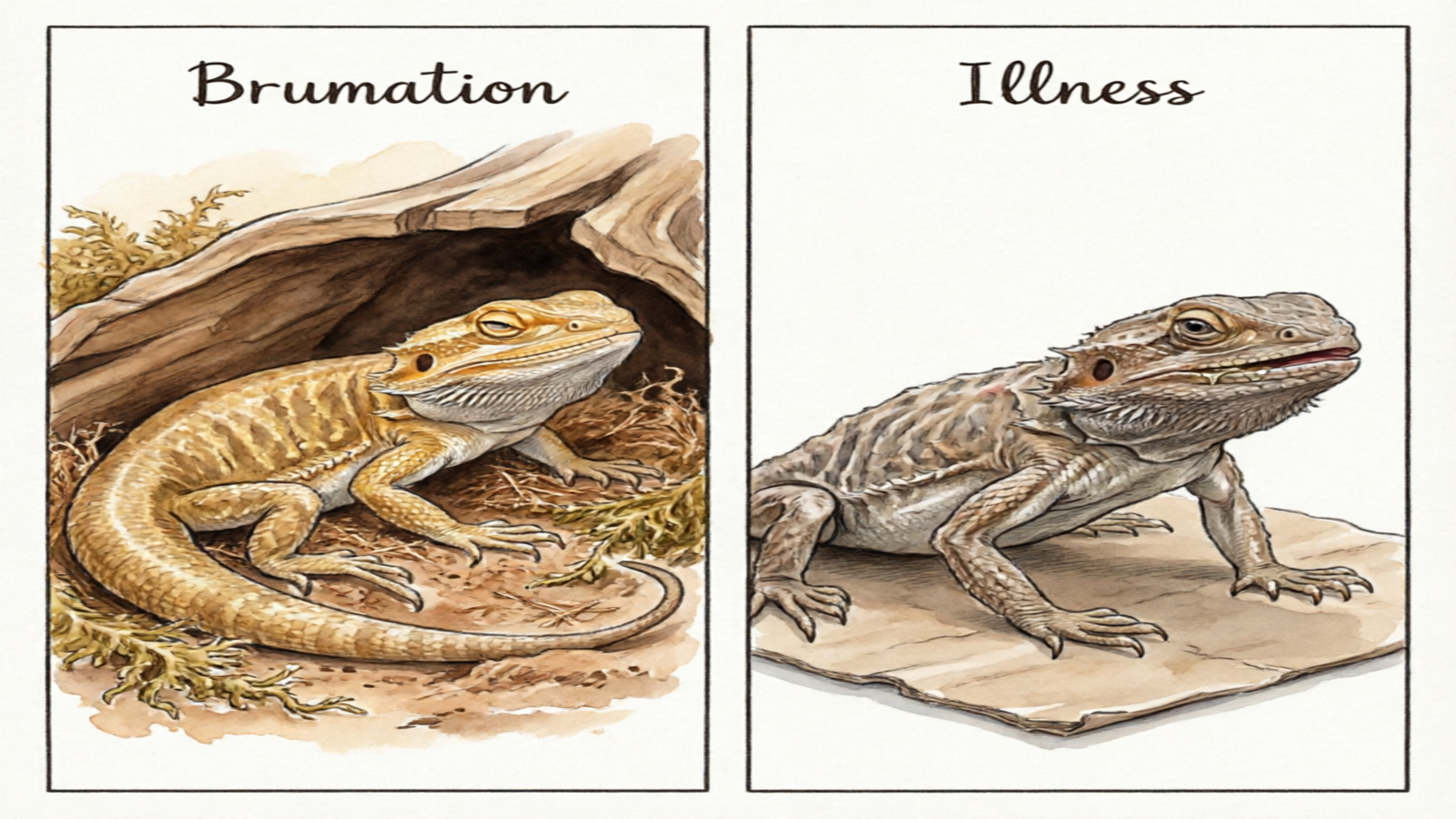
Brumation vs illness is the most important distinction for anxious owners. The fear of “bearded dragon brumation or dead” is common and understandable. Use this comparison table to assess your dragon’s condition.
| Sign | Brumation | Illness Warning: |
|---|---|---|
| Weight loss | Minimal or none over weeks | Rapid or significant loss |
| Response to handling | Slow but responsive | Unresponsive or distressed |
| Eyes | May be open occasionally | Sunken, crusty, or closed |
| Breathing | Slow but regular | Labored, wheezing, or gaping |
| Mouth | Clean and pink inside | Discharge, discoloration, or bubbles |
| Body condition | Normal muscle tone maintained | Thin, dehydrated, or limp |
| Duration pattern | Gradual slowdown over weeks | Sudden onset over days |
| Feces | Normal pre-brumation stool | Abnormal color or consistency |
Weight monitoring is your best tool. Weigh your dragon weekly on a kitchen scale and record the results. A brumating dragon should lose no more than a few grams over the entire period. Rapid weight loss signals illness.
How to check for responsiveness: Gently touch your dragon’s back or side. A brumating dragon will react slowly — a tail twitch, slight movement, or opening one eye. A completely unresponsive dragon that feels cold and stiff requires immediate veterinary attention.
“Brumation or dead” — how to tell: This is a common and understandable fear. Gently place your dragon on a warm surface (85°F). A brumating dragon will slowly respond within minutes — slight movement, eye opening, or posture adjustment. A deceased dragon will show no response to warmth or gentle touch over an extended period. If you are unsure, an exotic vet can confirm within minutes.
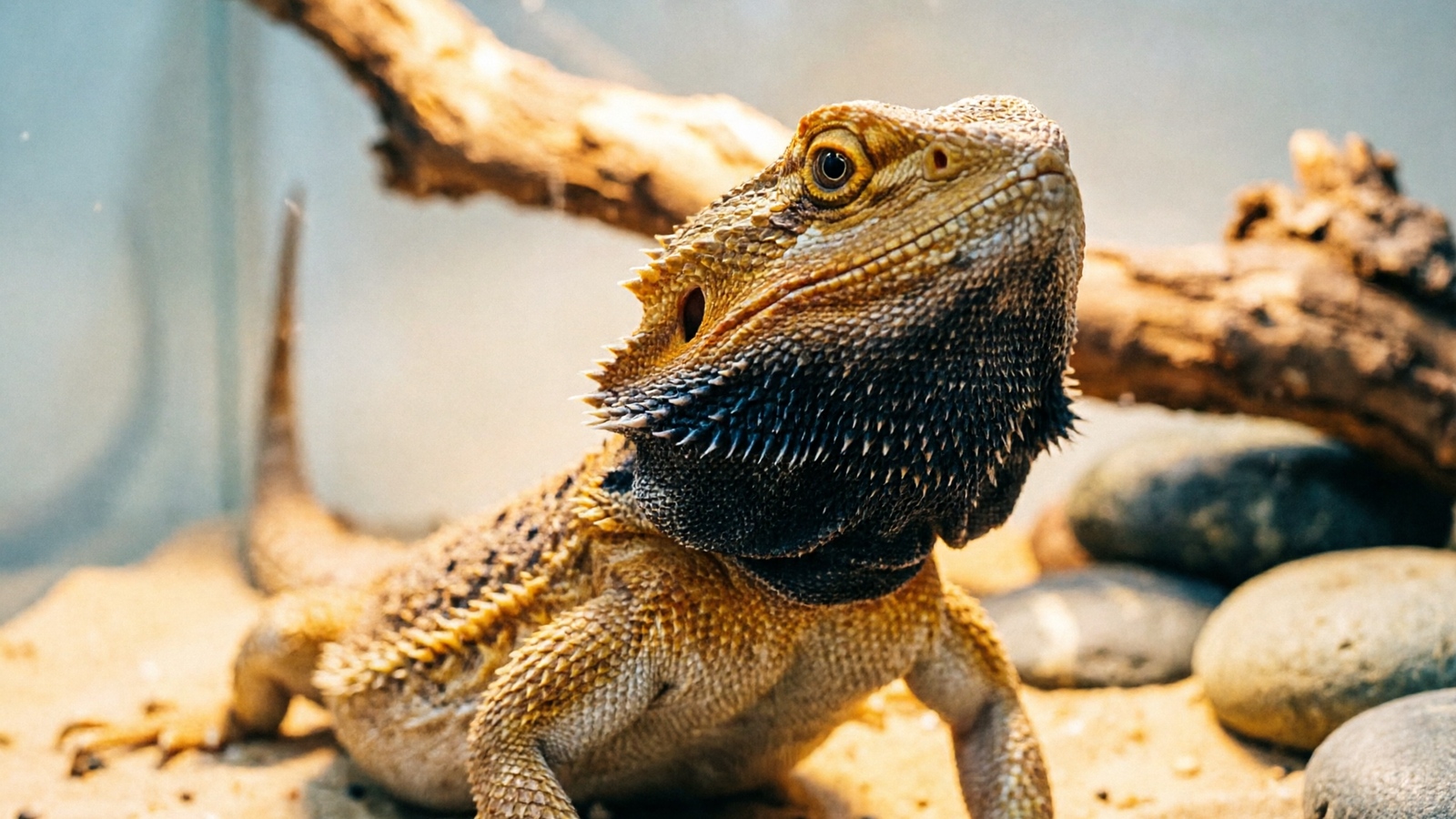
A black beard can signal stress or illness, not just brumation. If the black beard persists alongside other illness signs from the table above, consult a vet. Similarly, a bearded dragon opening its mouth persistently may indicate a respiratory infection rather than normal brumation behavior.
Emergency signs that require an immediate vet visit:
- Discharge from eyes, nose, or mouth
- Dramatic weight loss over a short period
- Discolored or blackened skin beyond the beard
- Labored breathing or constant gaping
- Complete unresponsiveness to touch or warmth
How Long Does Bearded Dragon Brumation Last?
A typical brumation lasts between 1 and 4 months, with most dragons brumating for 2–3 months. Duration varies by individual — there is no single “normal” length. Some dragons brumate for just a few weeks while others sleep for nearly four months.
Partial vs deep brumation is an important distinction in brumation. Some dragons only slow down — they eat less, sleep more, but still occasionally bask and move around. Others enter deep brumation, sleeping continuously for weeks with barely any visible activity. Both patterns are normal and depend on the individual dragon’s biology.
Timeline overview:
- Week 1 (Pre-brumation): Reduced appetite, increased hiding, digging behavior begins
- Weeks 2–3 (Entering): Food refusal becomes complete, sleep increases, activity drops sharply
- Months 1–3 (Deep brumation): Minimal activity, consistent sleep, rare brief awakenings to drink
- Waking: Gradual increase in activity over several days, first movements toward basking spot
Understanding how long does bearded dragon brumation last helps set realistic expectations. If your dragon exceeds 4 months of deep brumation, consult an exotic vet to rule out underlying health issues.
Does Age Affect Brumation?
Yes — bearded dragon brumation age is a critical factor in safety in whether brumation is safe.
Baby and juvenile dragons (under 12 months) generally should not brumate. Their smaller fat reserves and higher metabolic needs make brumation risky. A baby dragon simply does not have the energy stores to safely endure weeks without eating. If a juvenile shows brumation signs, maintain normal temperatures, increase feeding frequency, and consult an exotic vet.
Sub-adults (12–18 months) may experience their first light brumation. Monitor closely and maintain access to food and water. Weight loss should remain minimal throughout the period. Some sub-adults only slow down without entering deep sleep.
Adults (18+ months) brumate most predictably and safely. Full brumation in healthy adults is normal and expected. A pre-brumation vet check is still recommended even for experienced adults to rule out parasites or underlying conditions.
To prevent brumation in young dragons, keep temperatures and light cycles at normal summer levels year-round. Avoid any seasonal temperature drops in the enclosure. Increase feeding frequency if you notice early signs of lethargy.
Temperature and Lighting During Brumation
Adjusting temperature and lighting is one of the most important aspects of bearded dragon brumation care. Brumation temperature requirements differ significantly from normal keeping conditions. Use this brumation temperature table as your reference.
| Parameter | Normal | During Brumation |
|---|---|---|
| Basking temp | 95–110°F | 80–85°F |
| Cool side | 75–85°F | 70–75°F |
| Light cycle | 12–14 hours | 8–10 hours |
| UVB | On during daylight | Reduced or off (debated) |
| Night heat | 70–75°F | 65–70°F (with CHE) |
Should you turn off lights completely? No. Reduce the photoperiod to 8–10 hours to mimic natural seasonal changes, but maintain a consistent day-night cycle. Complete darkness disrupts their circadian rhythm unnecessarily.
A ceramic heat emitter is essential for brumation — it provides warmth without light that would disturb sleep. The LUCKY HERP 150W Ceramic Heat Emitter 2-Pack ($15.99) is a reliable choice.
LUCKY HERP 150W Ceramic Heat Emitter → Amazon
Owners report the CHE keeps dragons warm at night without disturbing sleep. A thermostat is essential since the emitter gets extremely hot without one. The 2-pack provides a backup bulb, valuable during months-long brumation.
LUCKY HERP 150W Ceramic Heat Emitter on Amazon →
Pair the CHE with a reliable thermostat for safe brumation heating:
For more heating guidance, see our bearded dragon heating lamp guide.
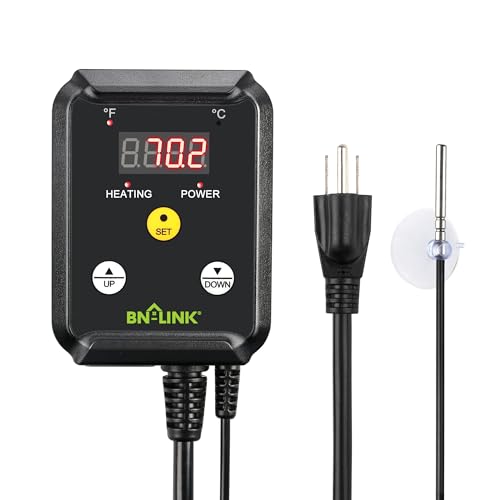
A thermostat is non-negotiable during brumation. Uncontrolled heating can cause fatal temperature spikes while your dragon sleeps. The BN-LINK Reptile Thermostat ($16.99) provides reliable temperature control.
BN-LINK Reptile Thermostat → Amazon
This is the most popular reptile thermostat available. Users confirm it safely shuts off heat sources when malfunctions occur, preventing dangerous temperature spikes. The main limitation is the single outlet — owners needing to control both a CHE and heat mat require a second unit.
BN-LINK Reptile Thermostat on Amazon →
For consistent temperature safety throughout the entire brumation period, plug your heat source into a thermostat before your dragon enters deep sleep.
Automating your light cycle eliminates the risk of human error during the long brumation period. The BN-LINK Digital Timer Outlet ($22.99) handles on/off scheduling automatically.
BN-LINK Digital Timer Outlet → Amazon
Owners praise the set-and-forget convenience: “Lights turn on and off exactly when they should.” The main complaint: “Only one outlet — had to buy a second for my CHE on a different schedule.”
BN-LINK Digital Timer Outlet on Amazon →
For managing different schedules on multiple devices, a second timer dedicated to your heating setup keeps things simple.
For UVB considerations during brumation, see our bearded dragon UVB light guide.
How to Prepare for Brumation: Step-by-Step
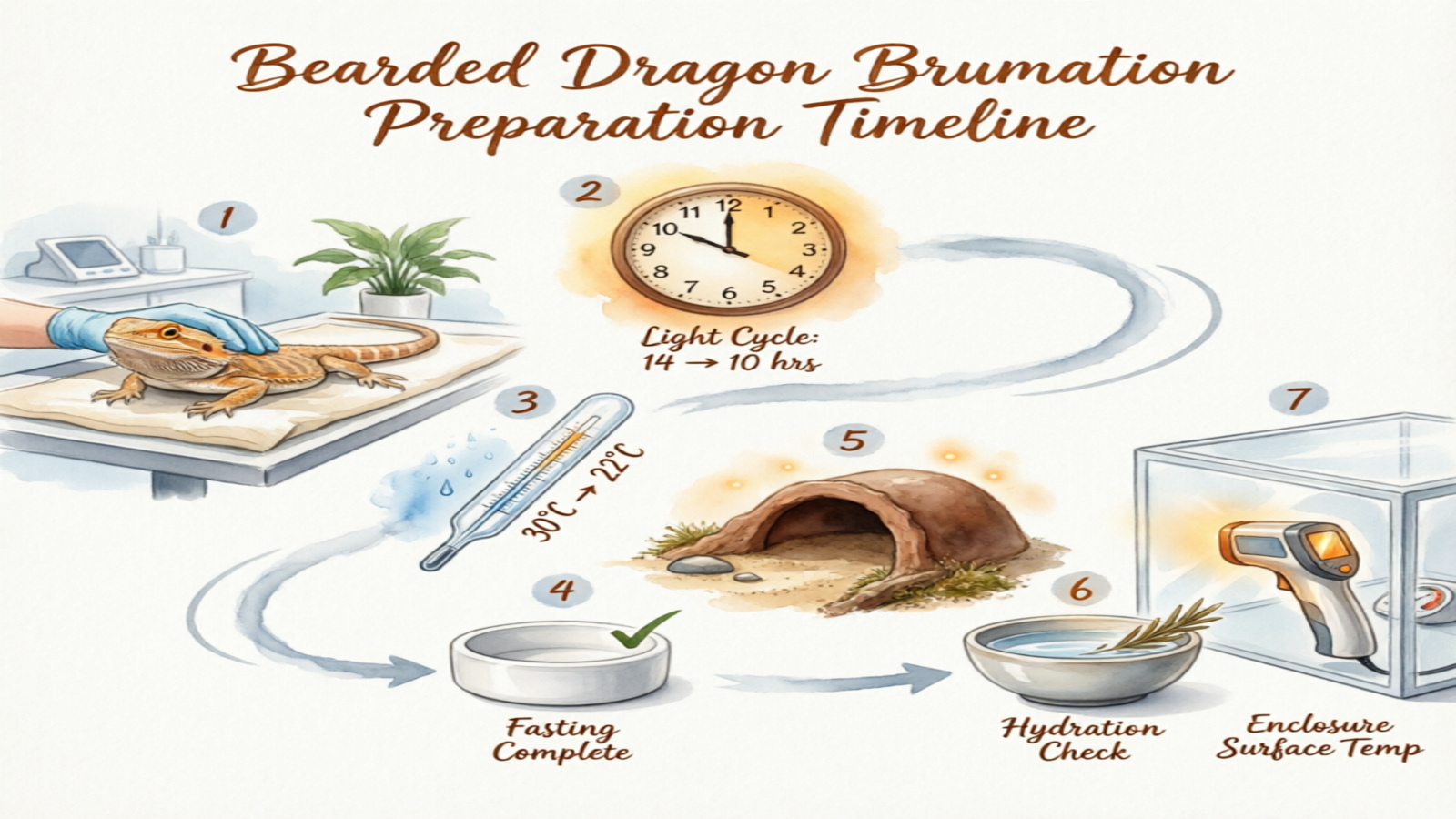
Follow this bearded dragon brumation preparation checklist before allowing your dragon to enter full brumation.
Step 1: Schedule a vet check. This is the most critical step. A fecal test for parasites is essential because brumation suppresses the immune system. An existing parasite load can become life-threatening during brumation when the dragon’s body cannot fight it.
Research data: In a retrospective study of 529 captive bearded dragons (Schmidt-Ukaj et al., 2017, Veterinární medicína), 83.27% of fecal samples tested positive for endoparasites — including pinworms (48.7%), coccidians (25.4%), and flagellates (16.1%). Because brumation suppresses immune function, these parasites can multiply unchecked during dormancy. A pre-brumation fecal test and targeted treatment is the single most effective preventive measure. Source: doi:10.17221/162/2016-VETMED
Additionally, research on brumation physiology in Pogona vitticeps (Capraro et al., 2020, Scientific Reports) confirmed that brumation involves active metabolic suppression — Standard Metabolic Rate drops significantly and gene expression profiles shift across brain, heart, and skeletal muscle tissue. This is not simply “sleeping colder” but a coordinated physiological shutdown that affects every major organ system. Source: PMC7576210
Step 2: Gradually reduce the light cycle. Over 2 weeks, transition from 14 hours of light down to 10 hours. Reduce by about 30 minutes every 2–3 days. Use the timer outlet to automate this precisely.
Step 3: Lower basking temperature gradually. Reduce the basking spot from 105°F to 85°F over the same 2-week period. The cool side should drop to 70–75°F. Use a thermostat to prevent overshooting.
Step 4: Stop feeding 2 weeks before full brumation. Food remaining in the digestive tract during brumation can rot and cause fatal impaction. Allow the digestive system to fully clear before the dragon enters deep sleep. Water should remain available at all times.
Step 5: Provide a brumation hide. Create a dark, cool, and secure hiding spot. A cave-style hide partially buried in substrate works well. The hide should be large enough for the dragon to fit comfortably but small enough to feel secure. Avoid hides in the basking zone — place them on the cool side.
Step 6: Ensure fresh water is always available. Even during deep brumation, some dragons wake briefly to drink. Place a shallow water dish near the brumation hide. Check and refill water daily — evaporation rates change with adjusted temperatures.
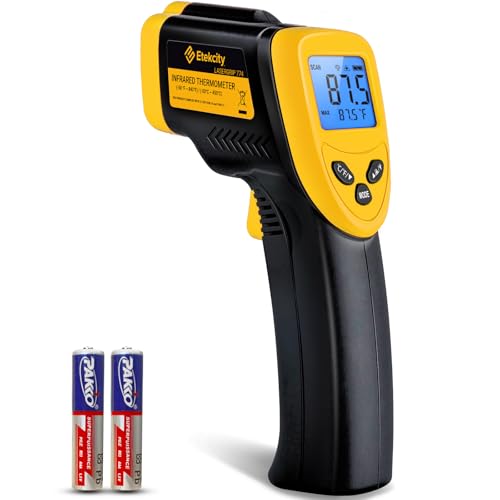
Step 7: Set up monitoring tools. A non-contact thermometer lets you check surface temperatures without disturbing your dragon. The Etekcity IR Thermometer ($9.48) offers instant readings at a budget-friendly price.
Etekcity IR Thermometer → Amazon
Owners consider this a must-have tool for checking basking spot temperatures instantly without stressing the dragon. A key limitation: it measures surface temperature only, not air temperature.
Etekcity IR Thermometer on Amazon →
At just $9.48, this tool provides affordable peace of mind throughout the brumation period. Point and shoot to verify temperatures in seconds.
Weight tracking template: Record your dragon’s weight weekly. Note the date, weight in grams, and any observed behavior changes. A healthy brumating dragon should lose no more than 5–10% of body weight over the entire brumation period. Any weight loss exceeding this threshold warrants a vet consultation.
Keep a simple spreadsheet or notebook near the enclosure for easy reference.
How to Wake Up a Bearded Dragon from Brumation
Learning how to safely end bearded dragon brumation is just as important as the preparation phase. The key principle: do not force it.
When your dragon starts waking:
Gradually increase basking temperatures back to normal levels (95–110°F) over 1–2 weeks. Simultaneously extend the light cycle from 8 hours back to 12–14 hours. Patience here is critical — rushing the transition stresses the dragon unnecessarily.
First bath after waking serves multiple purposes. A warm soak (85–90°F) for 10–15 minutes helps hydrate the dragon after weeks or months of minimal water intake. The warmth also stimulates digestion. This is often the first post-brumation bowel movement trigger. Use shallow water and supervise closely throughout the soak.
Reintroducing food requires patience. Start with small, easily digestible meals — a few dubia roaches or hornworms. Do not offer large meals immediately. The digestive system needs several days to fully reactivate after months of inactivity. Overfeeding too soon can cause regurgitation or impaction.
What to expect: Dragons are typically groggy for 1–2 weeks after waking. They may eat sporadically, bask inconsistently, and sleep more than usual. This post-brumation recovery period is normal and will gradually improve.
Post-brumation vet check is recommended, especially if you did not get a pre-brumation check. A fecal test confirms no parasites developed during the immune-suppressed brumation period. This single vet visit provides significant peace of mind and catches any issues early.
Some dragons wake up ravenous and return to normal behavior within days. Others take 2–3 weeks to fully recover their appetite and energy. Both recovery speeds are normal.
Key Takeaways
Bearded dragon brumation is a natural part of bearded dragon life. Here are the five most important points to remember.
1. Brumation is normal and natural for adult dragons. Brumation is not a disease or a sign of poor husbandry. Healthy adults may brumate annually without any adverse effects.
2. Always get a vet check before allowing brumation. A simple fecal test for parasites can prevent life-threatening complications during the immune-suppressed brumation period.
3. Monitor weight and temperature throughout. Weekly weigh-ins and temperature checks are your early warning system during brumation. Rapid weight loss or temperature spikes require immediate action.
4. Know the difference between brumation and illness. Use the comparison table in this guide as a reference. When in doubt, consult an exotic vet rather than guessing.
5. Do not force wake — let nature take its course. Gradual temperature and light adjustments guide the dragon in and out of brumation naturally. Forced waking causes unnecessary stress.
Bookmark this guide for when brumation season arrives. Preparation and knowledge transform a frightening first-time experience into a manageable natural process that both you and your dragon can navigate safely.
Frequently Asked Questions
Can bearded dragons brumate with their eyes open?
Yes, bearded dragons in light brumation may sleep with their eyes partially or fully open. Eyes-open behavior during brumation is normal and not a sign of illness or distress. The dragon is still resting even though the eyes appear alert.
Should I turn off my bearded dragon’s lights during brumation?
No, do not turn lights completely off. Reduce the light cycle to 8–10 hours per day to mimic seasonal changes. Maintain a consistent day and night cycle throughout the entire brumation period for your dragon’s wellbeing.
Can I handle my bearded dragon during brumation?
Minimize handling during brumation. Brief, gentle handling for weekly weight checks is acceptable. Excessive handling causes unnecessary stress and can interrupt the natural brumation cycle.
Do baby bearded dragons brumate?
Baby bearded dragons under 12 months generally should not brumate. Their smaller bodies lack sufficient fat reserves. If a juvenile shows brumation signs, maintain normal temperatures and consult an exotic vet immediately.
What triggers bearded dragon brumation?
Brumation is triggered by seasonal changes in temperature and light cycles, even in captive dragons. Some dragons brumate annually, others never do. Both patterns are considered normal.
How do I know if my bearded dragon is brumating or sick?
Brumating dragons maintain stable body weight, respond slowly to touch, and show gradual behavioral changes over weeks. Sick dragons lose weight rapidly, show discharge or discoloration, and decline suddenly over days.