If you’ve ever stared at the crested gecko supplements aisle and wondered whether your crested gecko actually needs calcium powder, a multivitamin, or just a good complete diet, you’re not alone. The crested gecko supplements market is confusing, and choosing the right crested gecko supplements matters because crested geckos have unique nutritional needs that don’t apply to most other reptiles.
Unlike bearded dragons or leopard geckos, crested geckos can thrive on a commercial Meal Replacement Powder (MRP) alone — no live insects required. But choosing the right crested gecko supplements and knowing when to add extras makes the difference between a gecko that survives and one that thrives.
Keeper reports and product research cover every major crested gecko supplements brand on the market. Getting supplementation wrong shows up in owner reports as everything from mild lethargy to advanced Metabolic Bone Disease that required months of veterinary care. If you’re asking yourself, do crested geckos need supplements — the short answer is yes, but far fewer than most new keepers think. Here’s a breakdown of what your gecko actually needs, what’s a waste of money, and which products keepers report using in their own collections.
Quick Answer — What Supplements Does a Crested Gecko Need?
Most crested geckos kept as pets need surprisingly little in the way of crested gecko supplements:
- A quality Complete Gecko Diet (CGD) — This is the foundation of all crested gecko supplements. A good CGD like Repashy or Pangea provides complete nutrition on its own, including calcium, vitamins, and protein. If you feed CGD exclusively, your gecko may not need anything else.
- Calcium without D3 — If you offer live insects (crickets, roaches), dust them with plain calcium. If your gecko has UVB lighting, this is the only calcium supplement you need.
- Calcium with D3 or a multivitamin — Only necessary if you do NOT have UVB lighting in the enclosure, or if you’re feeding live insects regularly and want to round out nutrition.
- A small calcium dish — A dish of plain calcium powder left in the enclosure allows geckos to self-regulate their intake.
While crested gecko probiotics are gaining interest among advanced keepers, the core supplements are much simpler. The catch: Not every gecko needs every crested gecko supplement on this list. A gecko eating CGD three times a week with UVB lighting may need nothing beyond the CGD itself. Over-supplementing is just as dangerous as under-supplementing.
Calcium-to-phosphorus ratio matters. The ideal Ca:P ratio in your gecko’s diet should be at least 2:1. Quality CGDs are already formulated to hit this ratio. When you add feeder insects (which have roughly 1:15 Ca:P — inverted!), you must dust them with calcium to correct the imbalance. Failing to do this is one of the most common causes of MBD in otherwise well-cared-for geckos.
Quick Comparison Table
| Product | Type | Price | Best For | Available On |
|---|---|---|---|---|
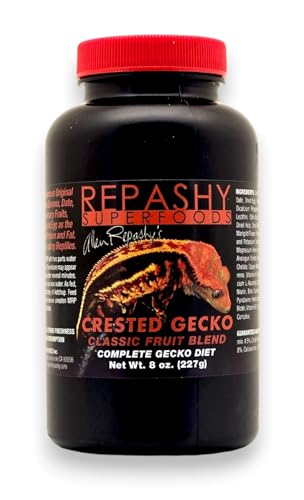
| Repashy Classic | Complete Diet (CGD) | $32.99/8oz | Staple diet, most keepers | Amazon |
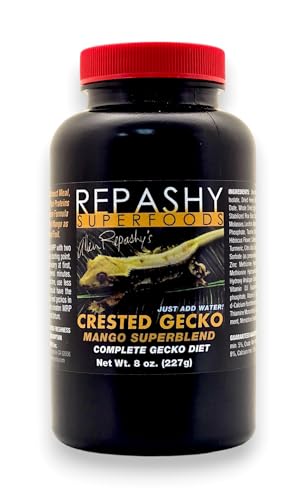
| Repashy Mango Superblend | Complete Diet (CGD) | $19.99/8oz | Picky eaters who love fruit flavor | Amazon |
| Gargeer Complete CGD | Complete Diet (CGD) | $15.97/8oz | Budget-friendly complete diet | Amazon |
| Pangea Fruit Mix Complete | Complete Diet (CGD) | $15-22/8oz | Breeders and variety feeders | Chewy |
| Zoo Med Calcium Without Vitamin D3 Reptile Food, 3-Ounce (4 Pack) | Calcium Powder | $19.92/4-pack | Insect dusting with UVB setup | Amazon |
| Repashy Calcium Plus | All-in-One (Ca + D3 + Vitamins) | $10-15 | Keepers wanting a single supplement | Chewy |
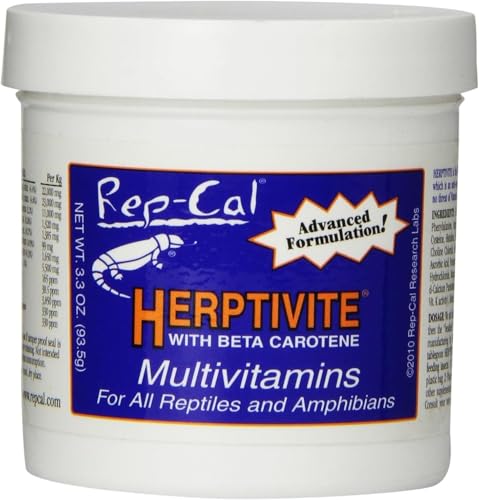
| Rep-Cal Herptivite | Multivitamin | $12.99/3.3 oz | Weekly rotation | Amazon |
| Fluker’s Liquid Calcium | Liquid Calcium | $8.49 | Geckos that won’t eat dusted insects | Chewy |
| Fluker’s Liquid Vitamin | Liquid Multivitamin | $8-9 | Easy vitamin delivery for picky geckos | Chewy |
Best Crested Gecko Complete Diets (CGD)
Complete Gecko Diet (CGD) is the single most important purchase you’ll make for your crested gecko. A quality CGD acts as a comprehensive crested gecko supplement powder designed to replace the need for live insects entirely — it contains the right calcium-to-phosphorus ratio (roughly 2:1), added vitamins, protein from sources like whey and soy, and fruit for palatability. Think of it as the ultimate crested gecko food supplement — nutritionally complete and ready to serve.
If you’re feeding CGD as the primary food source, your gecko is already getting most of the crested gecko supplements it needs from that single product. The question then becomes: which CGD is best?
When it comes to crested gecko repashy diets, the SuperFoods Crested Gecko Classic Fruit Blend is the industry standard. Allen Repashy literally invented the concept of Meal Replacement Powder for geckos, and the Classic formula has been the go-to for breeders for over a decade. The ingredient list reads like a nutrition textbook — banana, apricot, fig, papaya, whey protein isolate, soy protein isolate, calcium carbonate, and a full vitamin premix.
The main advantage of Repashy Classic is consistency. Every batch performs the same way, which is why Repashy remains one of the most trusted crested gecko supplements. It’s been field-tested on thousands of geckos over many generations. Keepers report raising multiple clutches on nothing but Repashy, and the growth rates and tail fat reserves speak for themselves.
The downside: Some geckos simply won’t touch it. The fruit base is more subtle than other options, and picky eaters sometimes refuse it. At $32.99 for an 8oz bag, it’s also the most expensive option per ounce.
Repashy Superfoods Crested Gecko Diet Mango Superblend solves the picky eater problem. The mango flavor is noticeably sweeter and more aromatic, which makes it irresistible to most geckos. If your gecko turns its nose up at the Classic formula, Mango is almost always the answer.
Keepers report geckos that refused every food for weeks until offered Mango Superblend. Within minutes, they were licking the bowl clean. The nutritional profile is nearly identical to Classic — same calcium, same protein, same vitamin premix — just with added mango for flavor. The lower price point ($19.99/8oz) makes it easier to recommend as a first try.
If you’re unsure which Repashy to start with, go with Mango. It has a near-universal acceptance rate, and you can always switch to Classic later if you want to save money long-term.
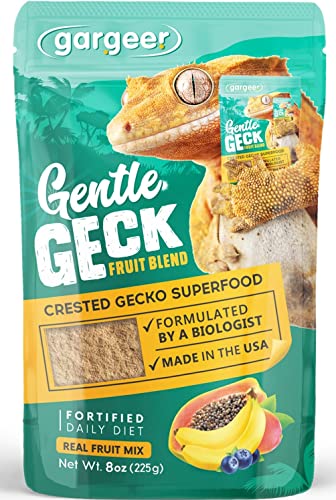
Gargeer Complete Crested Gecko Food Diet is the budget champion. At $15.97 for 8oz, it’s roughly half the price of Repashy Classic, and the nutritional profile is surprisingly competitive. Gargeer uses a fruit-based formula with added protein, calcium, and vitamins — covering all the basics that budget-conscious keepers want from their crested gecko supplements.
What I like about Gargeer is the consistency — it mixes into a smooth, thick paste that clings well to feeding ledges. Some CGDs separate or get watery after mixing, but Gargeer holds its texture for the full 24-36 hours you can leave it in the enclosure.
The catch: Gargeer has a polarizing flavor. Some geckos love it and come running when they smell it. Others absolutely refuse it, and no amount of mixing tricks will change their mind. I recommend buying the smaller size first to test acceptance before committing to a large bag. If your gecko takes to it, Gargeer is one of the most cost-effective CGD options available. If your gecko falls into the latter camp, you’re stuck with a bag of food nobody will eat. The zip-lock bag seal has also been a recurring complaint — it doesn’t always close properly, which can lead to the powder drying out if you’re not careful.
For keepers who prefer crested gecko pangea diets, the Pangea Fruit Mix Complete deserves a mention even though it’s not available on Amazon. Pangea is the brand most breeders reach for when they want something different from Repashy. Available through Chewy and specialty reptile shops, Pangea offers multiple varieties including With Insects (which contains black soldier fly larvae for extra protein) and Watermelon Mango.
Pangea tends to be slightly thicker in texture when mixed, which some geckos prefer. The With Insects formula is particularly good for growing juveniles that need extra protein. Keepers who rotate between Pangea and Repashy report better feeding responses when geckos get variety.
My recommendation: Start with Repashy Mango Superblend if you’re a first-time keeper. It has the highest acceptance rate and the strongest track record. If your gecko is already eating well and you want to save money, Gargeer is worth trying. For breeders or keepers who want to offer variety, rotate between Repashy and Pangea.
For detailed feeding schedules and enclosure setup, check out our complete crested gecko care guide. The right crested gecko supplements routine only works if your husbandry is solid — temperature, humidity, and enclosure design all affect how well your gecko absorbs nutrients. If your gecko’s appetite and supplements seem right but it’s still refusing food, check our guide on appetite and supplements for other potential causes.
Best Calcium Supplements for Crested Geckos
Calcium is the most critical crested gecko calcium powder supplement in your crested gecko supplements lineup, and for good reason. In the wild, crested geckos get calcium from their environment — from insects they eat and the mineral deposits they lick in their environment. In captivity, providing proper crested gecko supplements is essential — getting this wrong leads to Metabolic Bone Disease (MBD), which is painful, progressive, and largely irreversible.
The question of whether to use crested gecko calcium with or without d3 comes down to one factor: Does your gecko have UVB lighting?
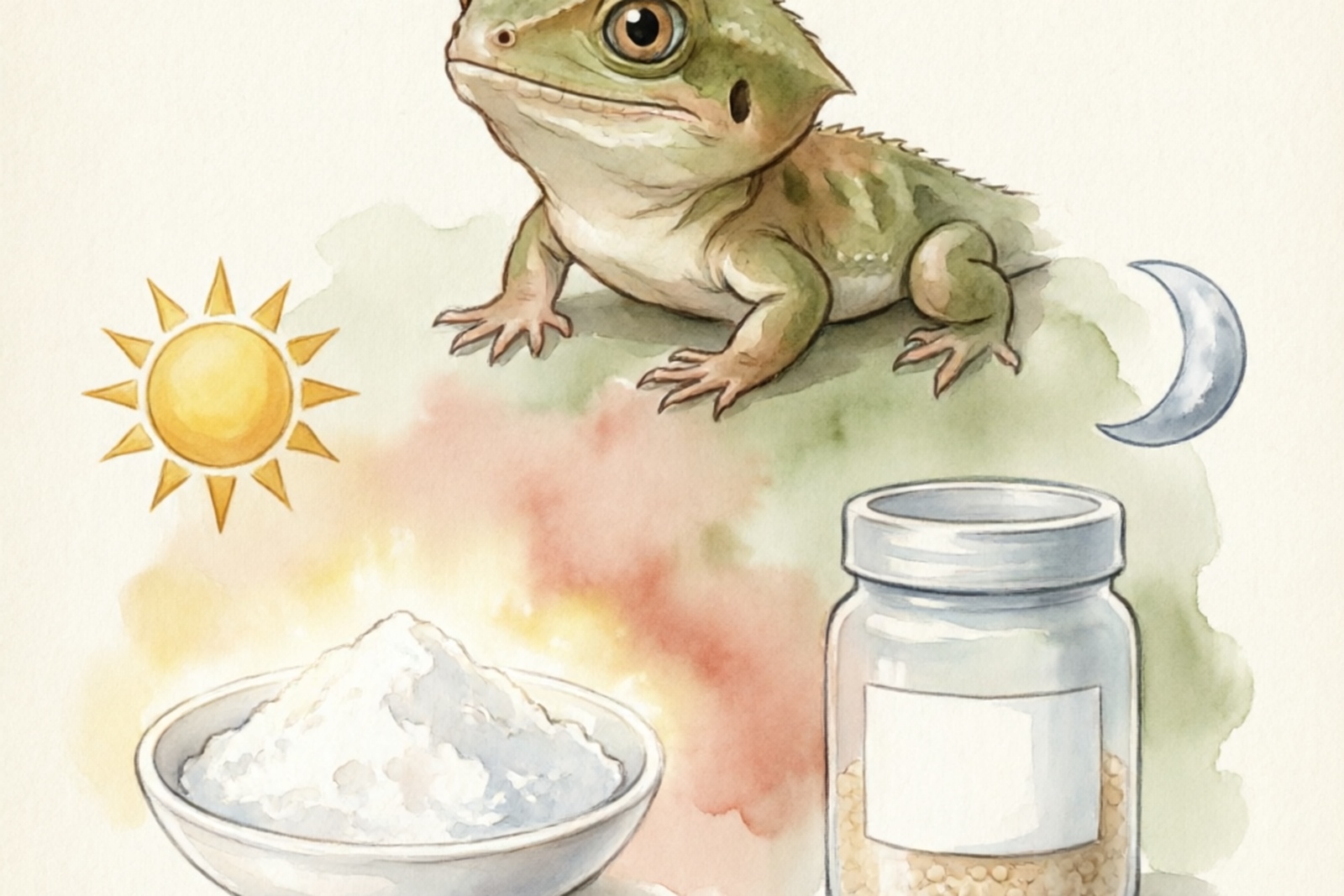
- Many keepers ask: do crested geckos need calcium with d3? If you have UVB lighting, the answer is no — your gecko synthesizes vitamin D3 naturally. Use calcium without D3 only. Adding D3 on top of UVB can cause vitamin D toxicity and hypercalcemia.
- For keepers wondering do crested geckos need d3 — without UVB, the answer is yes. Your gecko cannot make D3 and needs it supplemented. Use calcium with D3 — a crested gecko calcium supplement that provides both minerals and D3 — or an all-in-one product like Repashy Calcium Plus.
Zoo Med Repti Calcium without D3 is my top pick for keepers who have UVB in their enclosures. It’s a pure, ultrafine calcium carbonate powder with no added phosphorus, vitamin D3, or other extras. This is exactly what you want — clean calcium that your gecko’s body can process alongside the D3 it produces under UVB.
The 4-pack gives you 12oz total, which lasts a very long time even with multiple geckos. The powder is fine enough to coat feeder insects thoroughly, and keepers also use it in a small dish placed in the enclosure. Crested geckos will sometimes lick calcium directly from a dish, which is a natural self-regulation behavior.
If you’re looking for the best calcium for crested gecko setups with UVB, Zoo Med Repti Calcium without D3 is the safest choice. There’s no risk of D3 overdose because there’s no D3 in the product.
Repashy Calcium Plus takes a different approach. It’s an all-in-one supplement that combines calcium, vitamin D3, vitamin A, and a full vitamin/mineral premix in a single powder. If you don’t want to juggle separate calcium and multivitamin products, Calcium Plus covers everything.
The main advantage is simplicity. Dust your feeder insects once, and you’ve handled calcium, D3, and vitamins in one step. Keepers use Repashy Calcium Plus successfully for geckos kept without UVB, and the results have been excellent.
The caveat: If you already provide UVB lighting, Calcium Plus adds unnecessary D3 on top of what your gecko is already synthesizing. For UVB setups, stick with plain calcium without D3.
Understanding how calcium fits into your gecko’s overall nutrition is important. Different reptile species process nutrients very differently — for example, the calcium and vitamin needs discussed in our article on can leopard geckos eat bananas highlight how even closely related species require different approaches.
Best Multivitamins for Crested Geckos
When it comes to crested gecko vitamin d3 and other vitamins, multivitamins are the most misunderstood category. Here’s the truth about crested gecko supplements: if you’re feeding a quality CGD as the primary diet, your gecko is already getting a full vitamin profile. Adding a multivitamin on top of that is often unnecessary and can sometimes do more harm than good.
When you DO need a multivitamin:
- Your gecko is on an insect-heavy diet (insects are nutritionally incomplete without proper crested gecko supplements)
- You’re not using a complete CGD (some keepers use baby food or homemade mixes)
- Your gecko shows signs of vitamin deficiency (poor shedding, dull coloration, low energy)
- You don’t have UVB lighting and need D3 in their crested gecko supplements
The multivitamin crested gecko keepers rotate in most often is Rep-Cal Herptivite, a 3.3-ounce multivitamin and mineral powder at $12.99. It covers vitamin A, E, B vitamins, and trace minerals as part of a supplement rotation alongside your regular calcium.
Each jar is only 2 oz, which is fine because multivitamins are used sparingly. You’re dusting insects maybe once a week with multivitamins versus every feeding with plain calcium. A little goes a long way.
I recommend this Herptivite jar for keepers who run UVB and offer live insects. Dust insects with Herptivite once a week and plain calcium the rest of the time. Follow the label directions for your setup’s D3 needs.
Flukers liquid calcium reptile supplement is a popular choice for geckos that won’t eat dusted insects. Instead of dusting insects, you can add a few drops directly to CGD or apply them to the gecko’s snout for licking.
This is useful for geckos that won’t eat dusted insects (some cresteds are notoriously lazy hunters). The liquid format also makes it easy to control dosage — you can measure exactly how much you’re giving rather than guessing with powder coatings.
Bottom line: Liquid crested gecko supplements are a niche product. They work well for specific situations (sick geckos, picky eaters, force-feeding), but for routine maintenance, powder crested gecko supplements on feeder insects are simpler and more reliable. Keepers often keep Fluker’s Liquid Calcium in an emergency kit for geckos recovering from illness, but it is not part of a regular crested gecko supplements rotation.
Signs Your Crested Gecko Needs Supplements
Knowing when your gecko needs more (or less) supplementation is just as important as choosing the right products. Here are the warning signs to watch for, broken down by deficiency type.
Calcium deficiency (leading to Metabolic Bone Disease): Knowing the crested gecko calcium deficiency symptoms can save your gecko’s life.
- Soft or rubbery jaw — This is the most alarming sign. If you gently feel your gecko’s lower jaw and it flexes too easily, calcium levels are critically low. This requires immediate veterinary attention.
- Bowed limbs or kinked tail — Bones that should be straight start to curve or bend as the body pulls calcium from the skeleton to maintain blood calcium levels.
- Twitching or muscle tremors — Especially in the toes and legs. This is a neurological symptom of advanced MBD.
- Lethargy and weak grip — A healthy crested gecko clings to surfaces easily. A calcium-deficient gecko will struggle to hold on and may fall frequently.
Calcium deficiency is progressive. By the time you see outward signs like bowed limbs, internal damage has already occurred. This is why prevention through proper crested gecko supplements is so critical.
The early warning sign most keepers miss is tail fat loss. Crested geckos store fat in their tails (they’re called “fat tails” for a reason). If your gecko’s tail starts looking thinner than usual, it may not be getting enough calories or nutrients from its diet. While this isn’t always a crested gecko supplements issue — it could indicate stress, dehydration, or illness — a thinning tail paired with reduced appetite should prompt a close look at your crested gecko supplements routine.
Vitamin A deficiency: A crested gecko vitamin a deficiency is serious but often overlooked.
- Retained shed on eyelids and toes — Vitamin A plays a key role in skin health. Deficient geckos have difficulty shedding cleanly, especially around the eyes and digits.
- Swollen or cloudy eyes — Chronic vitamin A deficiency can cause eye inflammation and discharge.
- Reduced appetite and weight loss — Low vitamin A affects mucous membranes throughout the body, including the digestive tract.
Vitamin A is tricky because you can also overdose it. Synthetic vitamin A (retinol) is fat-soluble and builds up in the liver. This is why I prefer CGDs that use beta-carotene (a vitamin A precursor) rather than preformed vitamin A — the gecko’s body only converts what it needs.
When to see a reptile vet:
If you notice any of the signs above, don’t just add more crested gecko supplements and hope for the best. Advanced MBD requires veterinary intervention with injectable calcium and supportive care. Find a vet who specializes in exotics — a standard dog/cat vet won’t have the expertise. For more background on crested gecko health and behavior, see our crested gecko species guide.
How to Supplement Your Crested Gecko (Feeding Schedule)
Getting your crested gecko supplements schedule right is where most keepers make mistakes — either over-supplementing out of anxiety or under-supplementing out of confusion. Here are the three most common setups, based on what you’re feeding and whether you have UVB.
Setup 1: CGD only, with UVB lighting
This is the simplest and most common setup. Your gecko gets CGD three times per week, and the UVB bulb handles D3 synthesis. No additional calcium or vitamin supplements are needed — the CGD handles everything.
- Monday: Feed CGD
- Wednesday: Feed CGD
- Friday: Feed CGD
- Place a small dish of plain calcium carbonate (without D3) in the enclosure for self-regulation
Setup 2: CGD plus feeder insects, with UVB
Adding insects provides enrichment and extra protein, but insects have an inverted calcium-to-phosphorus ratio (more phosphorus than calcium), which means they actually deplete calcium unless you dust them.
- Monday: Feed CGD
- Tuesday: Offer dusted insects (plain calcium, no D3)
- Thursday: Feed CGD
- Saturday: Offer dusted insects (plain calcium, no D3)
- Keep a calcium dish in the enclosure
Setup 3: CGD plus feeder insects, WITHOUT UVB
If you don’t have UVB, you need to provide D3 through their crested gecko supplements. This is where most keepers get confused.
- Monday: Feed CGD
- Tuesday: Offer insects dusted with calcium + D3 (or Repashy Calcium Plus)
- Thursday: Feed CGD
- Saturday: Offer insects dusted with multivitamin (like Rep-Cal Herptivite)
- Keep a calcium dish in the enclosure
Breeding females need extra calcium regardless of setup. Egg production drains calcium reserves rapidly, and a breeding female without adequate calcium will pull it from her own skeleton. Increase calcium dusting to every insect feeding, and consider adding a second calcium dish. Some breeders also offer calcium-rich CGD varieties more frequently during the breeding season.
Calcium dish vs. dusting method:
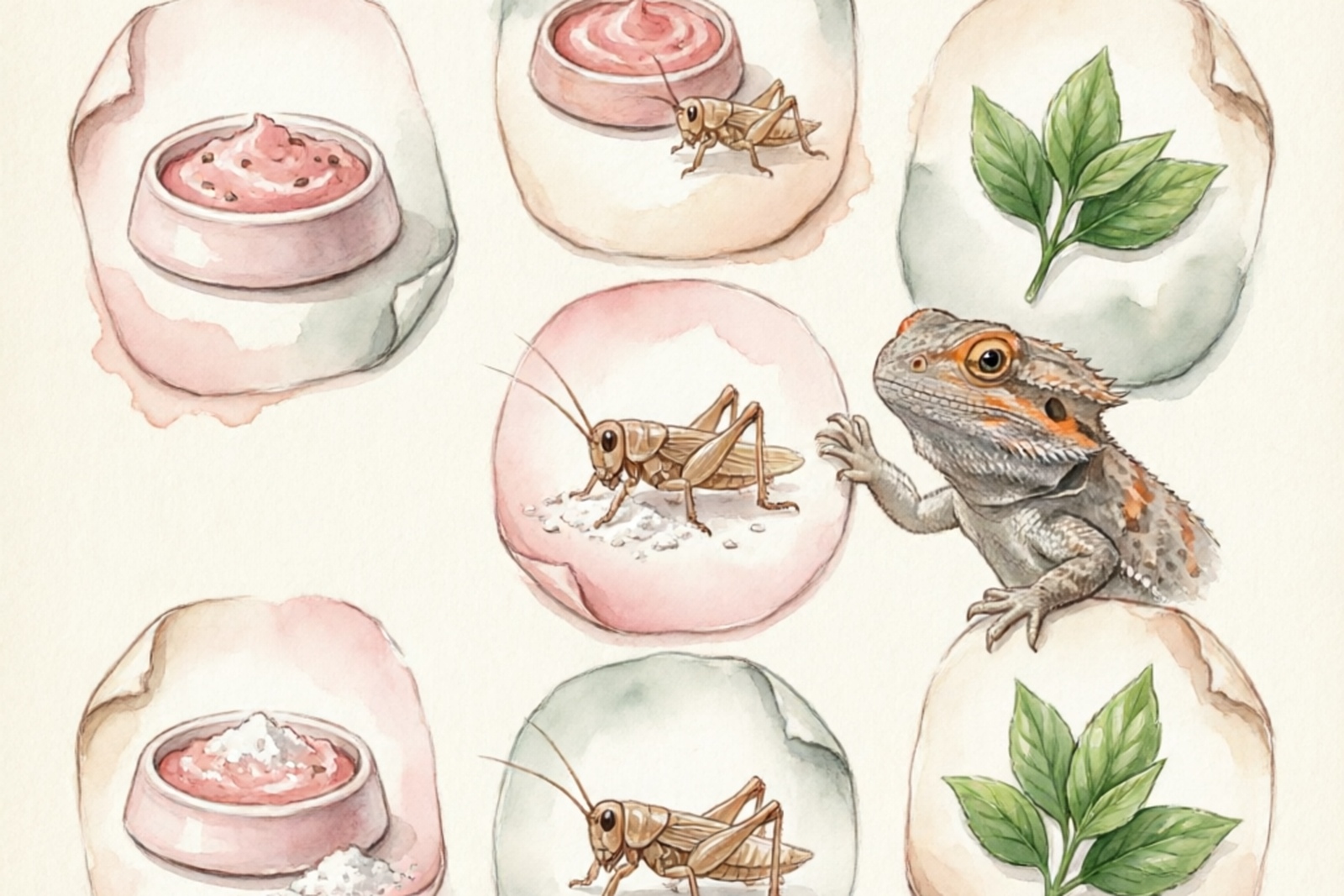
Keepers commonly use both methods for delivering crested gecko supplements. A small dish of plain calcium powder left in the enclosure allows geckos to self-regulate — they’ll lick it when they need it and ignore it when they don’t. This is especially important for breeding females, whose calcium needs fluctuate with egg development cycles.
Dusting insects is the more reliable method for ensuring calcium intake, since you can see exactly how much powder is being consumed. The downside is that some geckos won’t eat dusted insects (the powder can deter them), and you have to actually catch and handle the insects each time.
For detailed feeding guidance specific to your gecko’s life stage, our leopard gecko care guide has a useful comparison of how different gecko species handle crested gecko supplements — the principles overlap more than you’d expect.
Frequently Asked Questions
Do crested geckos need calcium with or without D3?
It depends on your UVB setup. Geckos with UVB lighting should get calcium without D3 (they synthesize their own), while geckos without UVB need calcium with D3 to prevent Metabolic Bone Disease.
How often should I feed my crested gecko CGD?
Feed CGD 3 times per week for adults and every other day for juveniles under 6 months. Remove uneaten food after 24-36 hours to prevent bacterial growth.
Can you use Repashy and Pangea together?
Yes, rotating between Repashy and Pangea is actually a great strategy. It provides nutritional variety and prevents your gecko from becoming fixated on a single flavor.
What happens if a crested gecko doesn’t get enough calcium?
Calcium deficiency leads to Metabolic Bone Disease (MBD), causing soft jaws, bowed limbs, tremors, and in severe cases, death. It’s the most preventable health problem in captive crested geckos — and the #1 reason crested gecko supplements matter.
Do baby crested geckos need different supplements than adults?
Baby crested geckos under 6 months need more frequent feeding (every other day) and may benefit from additional calcium dusting on feeder insects, but they should still eat the same CGD as adults.
Can I make my own crested gecko diet?
I strongly recommend against it. Commercial CGDs like Repashy and Pangea are formulated with precise calcium-to-phosphorus ratios, vitamins, and protein levels that are extremely difficult to replicate at home.
Can crested geckos have too much calcium?
Yes. Excess calcium can lead to hypercalcemia, causing kidney damage, calcification of soft tissues, and organ failure. Never supplement calcium with D3 if your gecko already has UVB lighting.