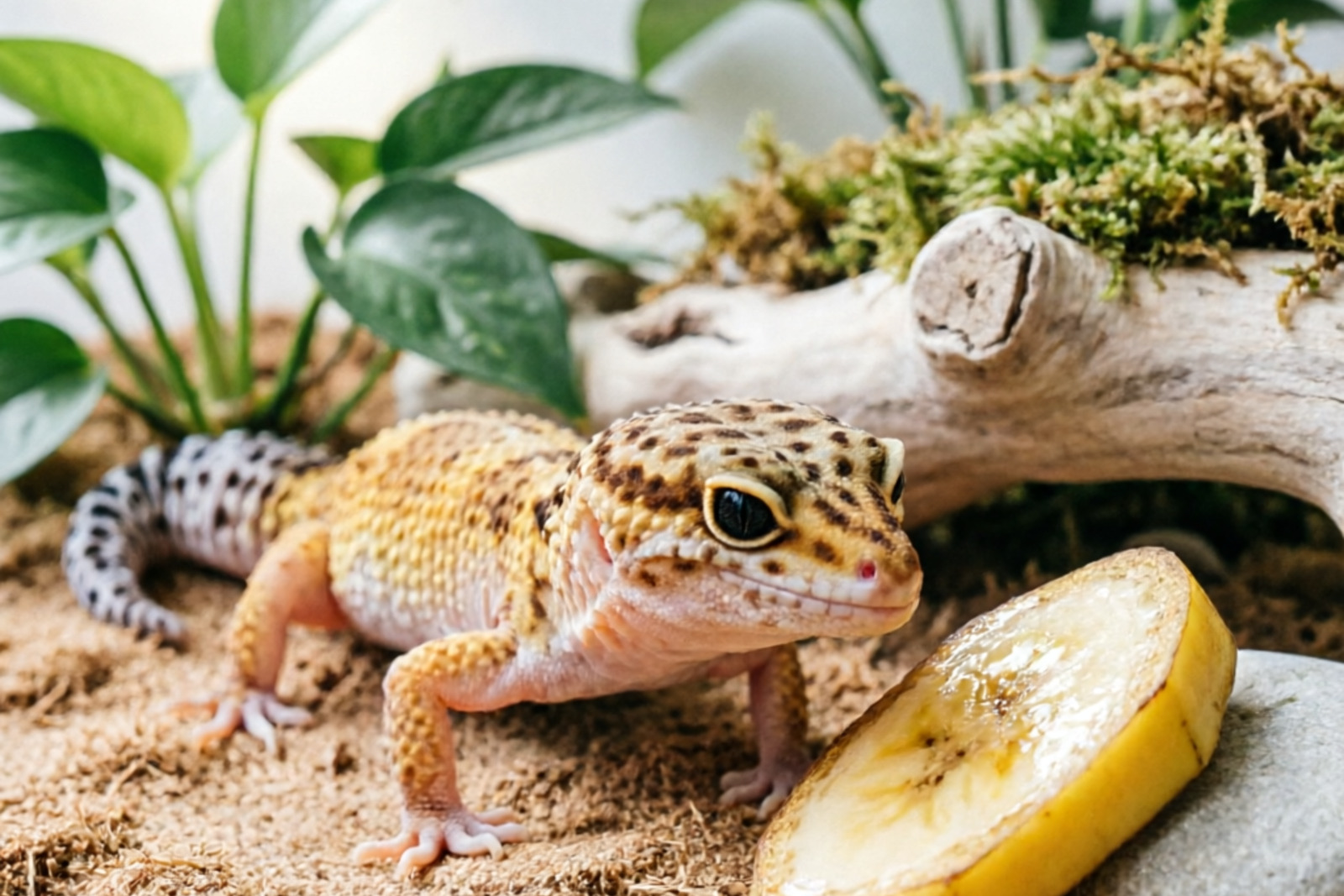
Quick Answer: Can Leopard Geckos Eat Bananas?
No — leopard geckos cannot eat bananas under any circumstances. They are strict insectivores, meaning their entire diet must consist of live insects. Bananas and all other fruits provide zero nutritional value to leopard geckos and can cause digestive upset, impaction, and other health problems.
💡 TL;DR: Leopard geckos eat only insects — crickets, dubia roaches, mealworms, and other appropriately-sized bugs. Fruit, vegetables, and plant matter of any kind should never be offered. For a complete diet guide, see our leopard gecko care guide.
This is one of the most common questions from new leopard gecko owners, and it’s easy to understand why. If you’ve kept other reptiles — like bearded dragons or crested geckos — you know many species do eat fruit and vegetables. But leopard geckos are fundamentally different. They belong to a different biological category of eaters, and confusing them with omnivorous reptiles is a common mistake that can harm your pet.
Safety Verdict
🚫 VERDICT: NO — Unsafe for leopard geckos
| Factor | Assessment |
|---|---|
| Toxicity | Not toxic, but indigestible |
| Nutritional value | Zero for insectivores |
| Digestibility | Cannot digest plant matter |
| Choking risk | Moderate — soft texture can lodge in throat |
| Impaction risk | High — plant fiber blocks digestive tract |
| Recommended serving | None |
Leopard geckos (Eublepharis macularius) are obligate insectivores. Their digestive tract, enzyme production, and nutritional requirements are entirely adapted to processing animal protein from insects. They lack the enzymes (like amylase and cellulase) needed to break down plant carbohydrates and fiber. Feeding them banana is like trying to run a diesel engine on gasoline — the fuel simply doesn’t match the engine.
Why Leopard Geckos Can’t Eat Bananas
Biology: They Are Insectivores, Not Omnivores
The key to understanding can leopard geckos eat bananas is knowing where leopard geckos sit on the dietary spectrum:
| Reptile Type | Diet Examples | Eats Fruit? |
|---|---|---|
| Insectivore | Leopard gecko, Tokay gecko | No |
| Omnivore | Bearded dragon, Blue-tongued skink | Yes (as part of varied diet) |
| Herbivore | Green iguana, Uromastyx | Yes (primary diet) |
| Carnivore | Snake species | No (whole prey only) |
Leopard geckos are firmly in the insectivore category. In the wild, they feed exclusively on insects and other small invertebrates — beetles, spiders, scorpions, centipedes, and moths. They have never evolved to process plant matter.
Digestive System Limitations
A leopard gecko’s digestive system is short and acidic — optimized for breaking down insect exoskeletons (chitin) and animal protein. Here’s what happens when plant matter enters this system:
-
No breakdown enzymes — Leopard geckos do not produce significant amounts of amylase (breaks down starches) or cellulase (breaks down fiber). Bananas contain both starch and fiber, neither of which can be properly digested.
-
Short digestive tract — Unlike herbivorous reptiles that have long, fermenting guts to break down plant matter, leopard geckos have a short digestive tract designed for quick processing of protein-rich insect meals. Plant material passes through too quickly to be useful and may cause blockages.
-
No fermentation chamber — Herbivores and omnivores have specialized gut bacteria that ferment plant fiber. Leopard geckos lack this microbial ecosystem entirely.
What the Experts Say
Reputable veterinary sources consistently classify leopard geckos as strict insectivores. When asking whether can leopard geckos eat bananas, the answer from every expert source is the same: no.
- Merck Veterinary Manual: Lists geckos in the family Eublepharidae as insectivorous reptiles requiring diets of live, gut-loaded insects.
- Association of Reptilian and Amphibian Veterinarians (ARAV): Recommends insect-only diets for leopard geckos, with no fruit or vegetable component.
Nutritional Analysis: Bananas vs. Leopard Gecko Requirements
To understand why leopard geckos can’t eat bananas, let’s compare what bananas provide with what leopard geckos actually need.
Banana Nutrition (Per 100g, USDA Data)
| Nutrient | Amount in Banana | Useful to Leopard Geckos? |
|---|---|---|
| Sugar (fructose/glucose) | 12.2g | No — insectivores process protein/fat, not simple sugars |
| Fiber | 2.6g | No — cannot digest plant fiber |
| Potassium | 358mg | No — obtained from gut-loaded insects |
| Vitamin C | 8.7mg | No — synthesized internally, not required from diet |
| Vitamin B6 | 0.4mg | No — obtained from insect prey |
| Calcium | 5mg | No — far too low, and from wrong source |
| Protein | 1.1g | Negligible — plant protein ≠ animal protein for insectivores |
What Leopard Geckos Actually Need
| Nutrient | Primary Source | How to Provide |
|---|---|---|
| Protein (animal) | Insects | Crickets, dubia roaches, mealworms |
| Fat | Insects | Varying insect types provide balanced fat |
| Calcium | Gut-loaded insects + supplement | Dust insects with calcium powder |
| Vitamin D3 | UVB exposure or supplement | UVB lighting or calcium+D3 supplement |
| Water | Insects + water dish | Fresh water always available |
The critical takeaway: Every nutrient a leopard gecko needs is available from insects. Adding banana provides nothing they can use and introduces materials they cannot process.
Risks of Feeding Bananas to Leopard Geckos
If you are still asking can leopard geckos eat bananas after the nutritional analysis, consider these real health risks. Feeding bananas to leopard geckos carries several documented dangers:
1. Digestive Upset
When a leopard gecko consumes banana, the undigested plant matter sits in the digestive tract and can cause:
- Diarrhea — the gut cannot process the fiber and sugars, leading to loose, abnormal stools
- Regurgitation — the gecko may vomit the banana back up if it cannot pass through the digestive system
- Bloating — undigested food ferments in the gut, producing gas and visible abdominal swelling
2. Impaction
This is the most serious risk. Impaction occurs when indigestible material creates a blockage in the digestive tract. While loose substrate (like sand) is the most common cause, any non-insect food can contribute to impaction in leopard geckos.
Signs of impaction:
- Not eating for more than a few days
- Not defecating
- Visible hard lump in the abdomen
- Lethargy and decreased activity
- Straining to defecate without results
Impaction can be fatal without veterinary intervention, which may include warm baths, gentle massage, or in severe cases, surgery.
3. Choking Hazard
Banana’s soft, sticky texture can adhere to the roof of a leopard gecko’s mouth or become lodged in the throat. While less common than impaction, it’s a real risk — especially with baby geckos who have smaller mouths and less developed swallowing reflexes.
4. Nutritional Imbalance
Every time a leopard gecko fills up on non-nutritive food, it’s missing an opportunity to consume real nutrition. A gecko that eats banana instead of insects is essentially starving itself — the banana provides calories but none of the amino acids, fats, and minerals the gecko needs.
5. Behavioral Confusion
Offering banana in the food dish can confuse your gecko’s feeding response. Leopard geckos are conditioned to hunt live prey — the movement of insects triggers their feeding instinct. Stationary, unfamiliar items in the food dish can cause stress and feeding refusal.
What If My Leopard Gecko Accidentally Ate Banana?
Accidents happen. Maybe a piece fell into the enclosure, or a curious gecko nibbled at your snack. Here’s what to do:
Small Amount (One Tiny Bite)
- Likely outcome: Will pass without major issues
- What to do: Remove all remaining banana immediately, offer fresh water, monitor for 24-48 hours
- Watch for: Changes in stool, reduced appetite, lethargy
Larger Amount (Several Bites or a Chunk)
- Likely outcome: Possible digestive upset or early impaction
- What to do: Remove all banana, offer a warm bath (shallow, lukewarm water for 15-20 minutes to help stimulate digestion), ensure fresh water
- Contact a vet if: No defecation within 48 hours, visible abdominal swelling, refusal to eat insects for more than a few days, or any signs of distress
Prevention
- Never feed banana or any fruit near your gecko’s enclosure
- Wash hands before handling your gecko after eating fruit
- Keep all human food away from the feeding area
What Leopard Geckos Should Eat Instead
Since bananas are off the table (literally), here’s what your leopard gecko actually needs. For complete details, see our leopard gecko care guide.
Staple Feeders
| Insect | Protein | Best For | Notes |
|---|---|---|---|
| Crickets | Excellent | All ages | Most common staple, stimulates hunting instinct |
| Dubia Roaches | Highest | All ages | Superior nutrition, quiet, don’t infest |
| Black Soldier Fly Larvae | High calcium | All ages | Excellent calcium-to-phosphorus ratio |
Occasional/Treat Feeders
| Insect | Fat Level | Frequency | Notes |
|---|---|---|---|
| Mealworms | Moderate | Adults only, 2-3x/week | Hard shell — avoid for juveniles |
| Waxworms | Very high | 1-2x/month (treat) | Like candy — great for bonding but easy to overfeed |
| Hornworms | Low fat, high moisture | 1-2x/week | Good hydration, soft texture |
| Superworms | High | Adults only, occasional | Large size — only for mature geckos |
Feeding Schedule by Age
| Age | Frequency | Amount |
|---|---|---|
| Hatchling (0-3 months) | Daily | 5-7 small crickets |
| Juvenile (3-6 months) | Daily | 7-10 small-medium crickets |
| Subadult (6-12 months) | Every other day | 8-12 medium crickets |
| Adult (12+ months) | Every 2-3 days | 10-15 medium-large crickets |
Supplements Are Non-Negotiable
- Calcium powder (without D3): Dust every feeding for juveniles, every other feeding for adults
- Calcium powder (with D3): Once weekly if no UVB lighting
- Multivitamin: Once weekly for trace nutrients
Gut-load feeder insects 24-48 hours before feeding with commercial gut-load formulas, dark leafy greens, and carrots. This ensures the nutrients transfer from insect to gecko.
🛒 Recommended Feeding Supplies for Leopard Geckos
-
Fluker’s Cricket Quencher, Calcium Fortified | Gel Formula | Easy to Use | 8 oz | Pack of 2 — Keep feeder insects hydrated and healthy before feeding. Dehydrated insects have lower nutritional value.
-
Repashy SuperFoods Calcium Plus 4 oz JAR — High-quality calcium supplement with optimal D3 ratio. Fine powder adheres well to insects.
-
Dubia Roaches — Live Feeder Colony — The best staple feeder for leopard geckos. High protein, low fat, easy to maintain. Start with a small colony and grow it.
We may earn a commission if you purchase through our links, at no extra cost to you.
Common Misconceptions About Leopard Gecko Diet
”But My Bearded Dragon Eats Fruit, So…”
Bearded dragons are omnivores — they eat both insects and plant matter. Leopard geckos are insectivores. These are fundamentally different digestive systems. What works for one species will harm the other.
”My Gecko Licked a Banana and Seemed to Like It”
Taste preference ≠ nutritional suitability. Many animals are attracted to sweet things (sugar triggers reward pathways in the brain) but lack the ability to process those foods. Your gecko’s taste buds told it “sweet = good” — its digestive system will tell a different story.
”A Little Bit Won’t Hurt”
While a single tiny lick won’t cause immediate harm, normalizing fruit as an acceptable food creates risk. One thing leads to another, portions increase, and the cumulative effect can cause chronic digestive problems. It’s safest to establish the rule from day one: no fruit, ever.
”I Saw a YouTube Video Where Someone Fed Their Gecko Banana”
Anecdotal videos are not evidence of safety. The absence of immediate death doesn’t prove safety — chronic damage from inappropriate diet can take months to manifest. Always follow established veterinary guidelines, not viral videos.
Other Reptiles That CAN Eat Bananas
Not all reptiles share the insectivore restriction. If you have multiple species, here’s a quick guide:
| Species | Can Eat Banana? | Notes |
|---|---|---|
| Leopard Gecko | ❌ No | Strict insectivore |
| Crested Gecko | ✅ Yes | Omnivore — commercial diet includes fruit |
| Bearded Dragon | ✅ Yes (adults) | Omnivore — fruit as occasional treat |
| Ball Python | ❌ No | Carnivore — whole prey only |
| Corn Snake | ❌ No | Carnivore — whole prey only |
| Blue-Tongued Skink | ✅ Yes | Omnivore — fruit is part of natural diet |
Frequently Asked Questions
Can leopard geckos eat bananas?
No, leopard geckos cannot eat bananas. They are strict insectivores with digestive systems designed exclusively for animal protein from live insects. Bananas provide zero nutritional value and can cause digestive upset, impaction, and other health problems. Their diet should consist entirely of appropriately-sized insects like crickets, dubia roaches, and mealworms, dusted with calcium supplements. For a complete feeding guide, see our leopard gecko care guide.
Can leopard geckos eat any fruit?
No, leopard geckos cannot eat any fruit — not bananas, apples, berries, melon, mango, or any other fruit. As strict insectivores, they lack the digestive enzymes needed to process plant matter. Unlike omnivorous reptiles (bearded dragons, crested geckos), leopard geckos have never evolved to digest fruit or vegetables. Keep all fruit far away from their enclosure.
What happens if a leopard gecko eats a banana?
If a leopard gecko accidentally ingests a small piece of banana, it will likely pass without serious harm but may cause digestive upset, diarrhea, or regurgitation. Larger amounts can cause impaction, where the undigested plant matter blocks the digestive tract. Remove all banana immediately, offer fresh water, and monitor for 24-48 hours. Contact a reptile vet if symptoms like lethargy, refusal to eat, or abnormal stools persist.
Can leopard geckos eat bananas as a treat?
No, bananas should never be offered as a treat. Unlike omnivorous reptiles, leopard geckos gain zero nutritional benefit from fruit. Even a tiny piece offers no value and introduces risk. If you want to offer a special treat, use waxworms or hornworms in moderation — these are safe, appropriate insect treats that leopard geckos find irresistible.
Can baby leopard geckos eat bananas?
No, baby leopard geckos should never eat bananas. Hatchlings have even more delicate digestive systems than adults and are at higher risk of impaction from any non-insect food. Their entire diet should consist of small, gut-loaded insects (pinhead crickets, small dubia roaches) dusted with calcium supplement. Fruit of any kind should be strictly avoided.
Summary
Leopard geckos cannot eat bananas — period. When searching can leopard geckos eat bananas, every expert source confirms the same answer. They are strict insectivores whose entire digestive system is built for processing live insects, not plant matter. Bananas offer no nutritional value and carry real risks of digestive upset and impaction. Feed your gecko a varied diet of gut-loaded insects dusted with calcium supplements, and keep all fruit far away from the enclosure.
For a complete guide to leopard gecko feeding and care, see our leopard gecko care guide.