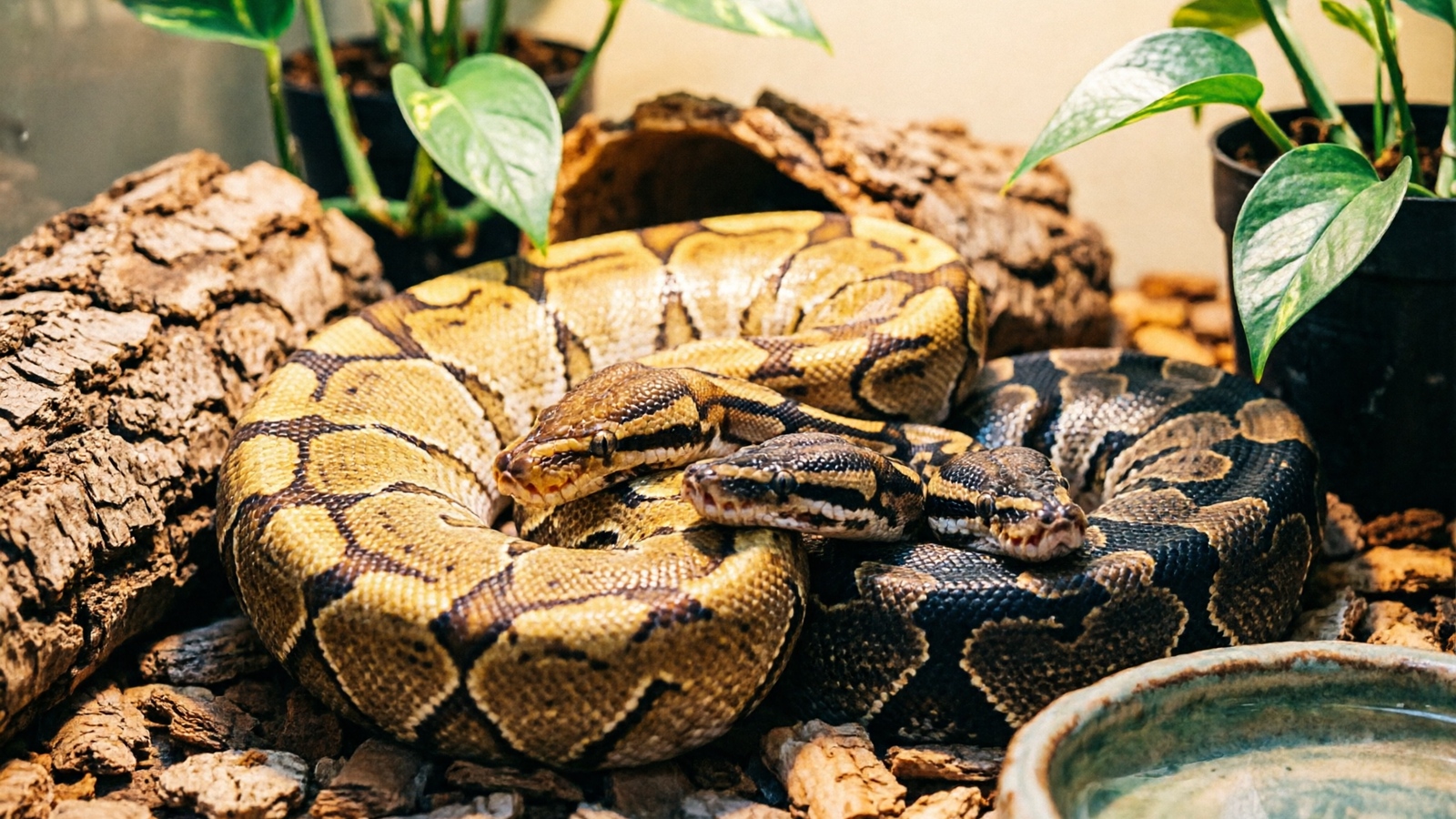
The ideal ball python humidity range is 55–70% for general maintenance, increased to 70–80% during shedding cycles. Maintaining proper ball python humidity is essential — in their native West African habitat (Ghana, Togo, Benin), ball pythons spend most of their time in underground burrows and termite mounds where humidity naturally reaches 70–90%.
Monitor humidity with a digital hygrometer — cheap analog dial gauges can be off by 10–20%. If humidity is too low, your python may develop stuck shed (dysecdysis), respiratory infections, or dehydration. If it is too high for extended periods, scale rot and bacterial skin infections become risks.
The most effective ways to increase humidity are: using moisture-retentive substrate (coconut husk, cypress mulch), adding a humid hide with sphagnum moss, misting the enclosure, and placing the water bowl on the warm side to encourage evaporation.
Ideal Ball Python Humidity Range
Relative humidity (RH) measures the percentage of moisture in the air relative to the maximum it can hold at a given temperature. For ball pythons, RH is critical because they absorb water through their skin and respiratory system, not just by drinking. You cannot manage what you cannot measure.
There is genuine disagreement among experts about the ideal humidity range for ball pythons. The table below shows the four major positions with their reasoning.
| Source | Recommended RH | Rationale |
|---|---|---|
| Traditional care guides | 50–60% | Conservative, safe for all setups. Claims excessive humidity causes respiratory infection. |
| Modern husbandry (ReptiFiles) | 60–80% daytime, 80–100% night | Based on wild habitat data from Porto Novo, Benin. Wild burrows reach much higher levels. |
| Toxirium (PVC enclosure manufacturer) | 70–80% | Calls 50-60% “old standard.” Claims chronic dehydration below 60%. |
| ARAV/Veterinary consensus | 50–70% general, higher for shedding | Most herp vets recommend 50–70% for maintenance, bump to 70–80% during shed cycles. |
| Our recommendation | 55–70% general, 70–80% shedding | Practical for both glass and PVC setups. |
In the wild, ball pythons inhabit West African savanna and forest edges. They spend daylight hours in underground burrows and termite mounds where humidity reaches 70–90%. A glass tank in a climate-controlled home is a very different environment.
The temperature-humidity relationship matters here. Hot air holds more moisture, so when you heat an enclosure, relative humidity drops even if actual moisture stays the same. This is why glass tanks with screen tops struggle to hold humidity — heated air rises through the screen and escapes, pulling dry room air in behind it.
Our recommendation of 55–70% for general maintenance is a practical middle ground — high enough to prevent dehydration and stuck shed in most setups, while achievable in standard glass tanks. Increase to 70–80% during shedding. For broader care beyond humidity, see our ball python care guide.
Best Hygrometers for Ball Python Enclosures
A reliable hygrometer is the foundation of humidity management. Analog dial gauges from pet stores can be off by 10–20%.
You need at least 2 digital hygrometers — one on the cool side near substrate level and one on the warm side. Ideally, place a third in the middle to map the full gradient.
| Product | Price | Type | Best For | Key Drawback |
|---|---|---|---|---|
| JEDEW 2-Pack | $6.92 | Digital | Budget 2-pack, multiple locations | Inaccurate above 80%, weak adhesive |
| TempPro TP50 | $10.99 | Digital | Magnetic backing | Fragile display, no backlight |
| REPTI ZOO Dual Gauge | $6.92 | Analog | Reptile brand, dual read | Less accurate than digital |
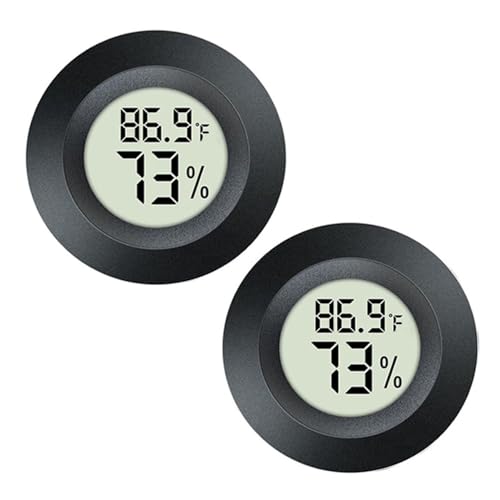
JEDEW 2 Pack Hygrometer Thermometer ($6.92) — a practical 2-pack for monitoring multiple locations.
Comes with extra batteries and fits small enclosures. Accurate within 30–80%. Readings become unreliable above 80%, and the adhesive may need reinforcement.
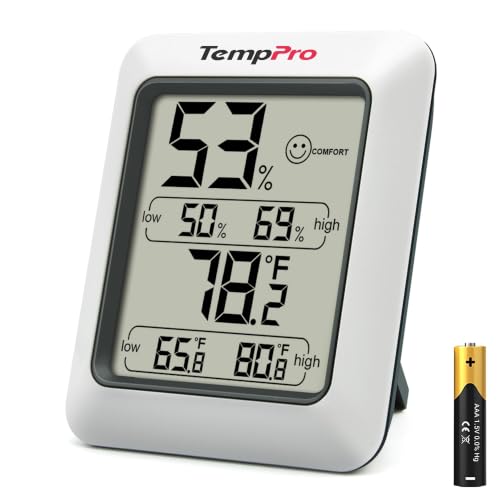
TempPro TP50 Digital Hygrometer ($10.99) — a widely used hygrometer on Amazon.
Magnetic backing sticks to metal fixtures. Compact and accurate, but the display is fragile. No backlight limits low-light readability.
REPTI ZOO Reptile Terrarium Thermometer Hygrometer ($6.92) — a reptile-specific brand with dual analog gauges.
The dial can be read by needle position even from awkward angles. Analog gauges are adequate for monitoring trends but should be calibrated against a digital hygrometer if precision matters.
How to Increase Humidity in a Ball Python Tank
There are seven effective methods for how to increase humidity in ball python tank setups, ranked from easiest to most involved. Most keepers combine 2–3 methods for consistent ball python humidity results.
Step 1: Larger water bowl on warm side (Free)
A wide, shallow water bowl provides more surface area for evaporation. Place it near the heat source so water warms and evaporates throughout the day. This alone can raise humidity by 5–10% in smaller enclosures.
Step 2: Moisture-retentive substrate ($10–20)
Replace paper towels or newspaper with coconut husk (coco coir) or cypress mulch at a minimum depth of 3–4 inches. Deeper substrate holds more moisture and releases it slowly. The “pouring technique” works well — pour water directly into substrate corners to create a moisture reservoir at the bottom that evaporates upward over days.
Step 3: Cover ventilation (Free)
Glass tanks with screen tops lose humidity through the “chimney effect” — hot air rises through the mesh, pulling dry room air in below.
Cover 50–80% of the screen top with foil tape or plastic wrap. Leave a gap for the heat lamp and airflow. Never block all ventilation — stagnant air promotes mold.
Step 4: Daily misting (Free)
Mist the substrate in the evening, not the snake. Ball pythons are crepuscular — active at dusk and dawn — so evening misting aligns with their natural cycle.
Use a clean spray bottle. Misting is effective but temporary; humidity may drop within 1–2 hours in dry climates.
Step 5: Add a humid hide ($10–50)
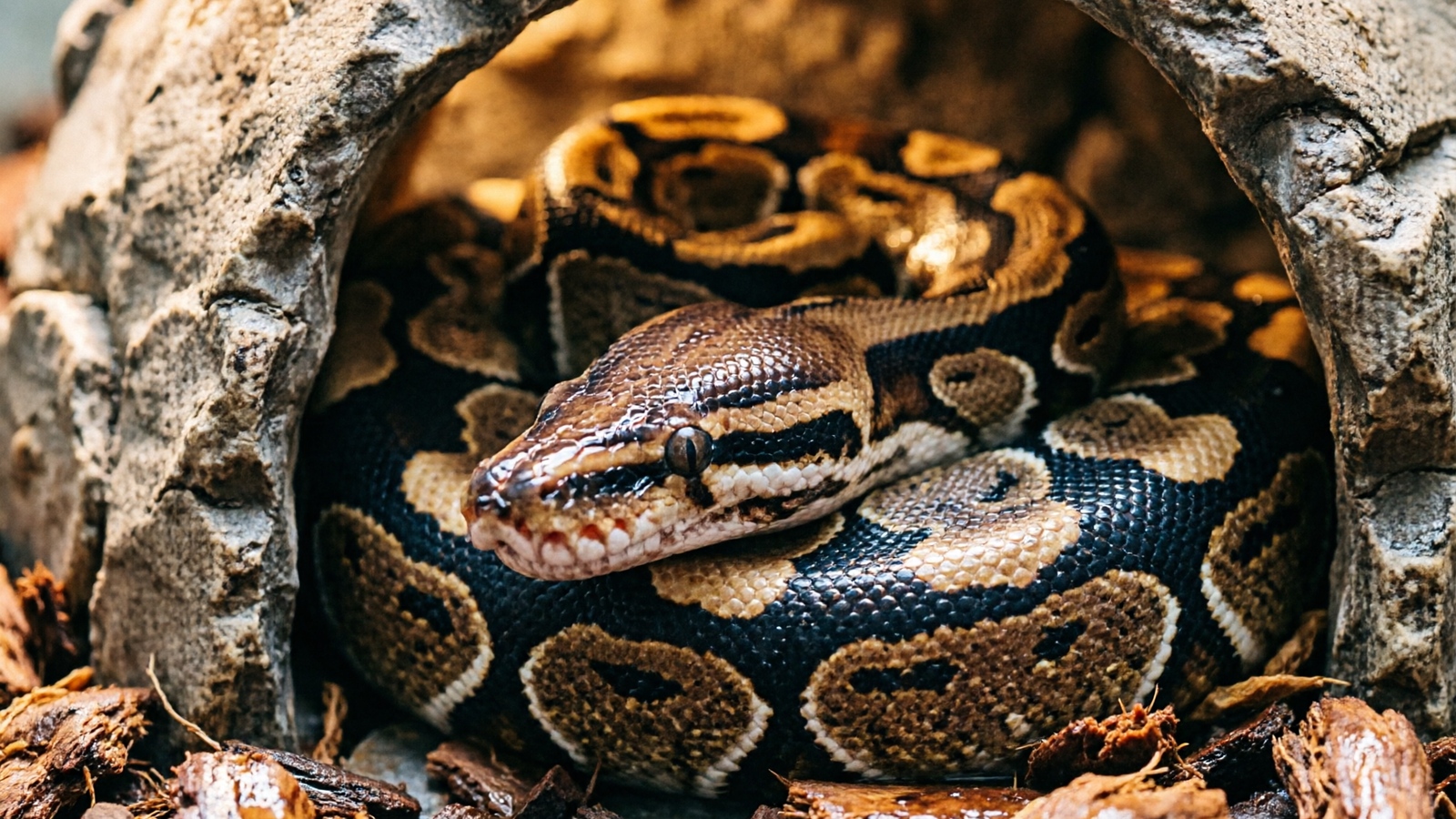
A humid hide provides a localized high-humidity microclimate your ball python can access on demand. This is critical for shedding, digestion, and comfort. Line the hide with damp sphagnum moss and place it on the warm side or middle of the enclosure.
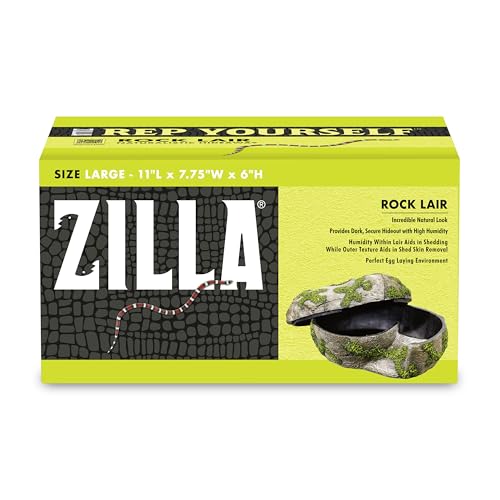
Zilla Rock Lair Naturalistic Hide, Large ($51.95) — a naturalistic rock hide that blends into any setup.
Very sturdy — ball pythons cannot flip it. Retains humidity well. Main downside: units occasionally arrive broken due to brittle resin. Wash before first use.
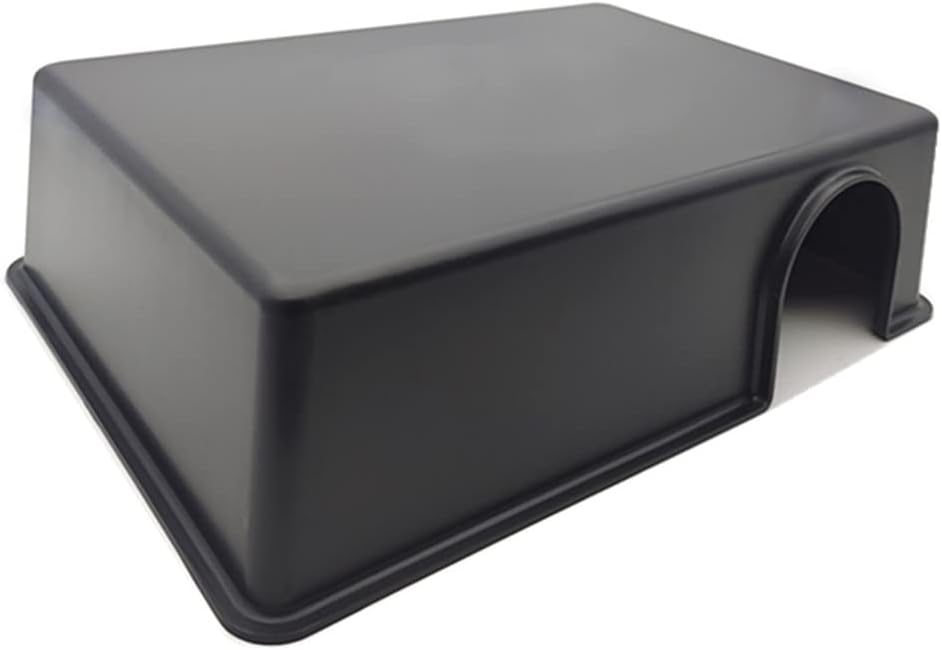
LEOTERRA Large Snake Hide for Ball Pythons ($20.88) — a budget hide designed specifically for ball pythons.
Smooth interior, no sharp edges. Lightweight means large snakes may flip it. Available in multiple sizes.
Step 6: Use a fogger or humidifier ($30–50)
For dry climates or persistent ball python humidity problems, a reptile fogger provides consistent output. You can also improve ball python humidity without a fogger by combining the previous methods — larger water bowl, better substrate, covered ventilation, and daily misting. For keepers who want ball python humidity without fogger equipment, these five free or low-cost methods are often sufficient in moderate climates. Route the tubing into the enclosure — do not place the unit inside. Use with a timer for automatic control.
Coospider 3.8L Reptile Fogger ($49.99) — a widely used reptile fogger.
The 3.8L tank lasts up to 2 weeks. Three adjustable mist levels and quiet operation. Recent redesign has leaking issues; always power off before refilling.
MRREPTILE 2.8L Reptile Fogger ($30.89) — a budget fogger with powerful output even on low.
The 2.8L capacity is smaller than the Coospider. Some units have durability concerns. The hose must be bent exactly as instructed or fog won’t flow.
Step 7: Bioactive substrate (Advanced, $40–80)
Live plants transpire moisture and deep soil holds water for gradual release. Once established, a bioactive setup is largely self-sustaining. Works best in PVC or sealed enclosures.
| Method | Cost | Effectiveness | Effort | Best For |
|---|---|---|---|---|
| Larger water bowl | Free | Low-Medium | None | All setups |
| Better substrate | $10–20 | High | One-time setup | All setups |
| Cover ventilation | Free | Medium | One-time | Glass tanks |
| Daily misting | Free | Medium | Daily | Temporary boost |
| Humid hide | $10–50 | High (localized) | Weekly maintenance | All setups, especially shedding |
| Fogger | $30–50 | Very High | Refill weekly | Dry climates, persistent issues |
| Bioactive | $40–80 | Very High (self-sustaining) | One-time + monitoring | Advanced keepers |
Temperature control directly affects humidity management. Overheating dries the air faster than any ventilation issue.
See our guide to choosing a reptile thermostat for temperature regulation. For broader habitat planning, see our reptile habitat setup guide.
Signs of Low Humidity — Problems and Solutions
Sustained humidity below 50% creates a cascade of health problems. Recognizing early signs allows intervention before the issue becomes serious.
| Problem | Symptoms | Solution |
|---|---|---|
| Stuck shed (dysecdysis) | Patchy retained skin, especially eye caps and tail tip | Increase to 70–80%, add humid hide, soak in lukewarm water |
| Respiratory infection | Wheezing, bubbling from nose, open-mouth breathing, clicking sounds | Increase humidity + vet visit — RI requires antibiotics |
| Dehydration | Wrinkled skin, sunken eyes, infrequent urination, constipation | Increase humidity, larger water bowl, check for underlying illness |
| Poor appetite | Refusing food consistently for multiple feedings | Low humidity causes stress and reduced appetite |
| Rough or dull scales | Dry, lackluster appearance, reduced sheen | Increase humidity gradually (5% per day) |
| Retained eye caps | Cloudy retained eye caps after shed cycle | 70–80% + humid hide — do NOT manually remove |
Never manually remove stuck shed or eye caps. Pulling can tear the delicate scale layer underneath.
Increase humidity and allow natural shedding. For stubborn cases, a lukewarm soak (80–85°F, deep enough to cover the body, 15–20 minutes) helps loosen skin.
Eye cap retention is a special concern. If retained eye caps do not resolve within one full shed cycle, consult a reptile vet — improper removal can cause permanent corneal damage.
Respiratory infection signs (wheezing, clicking, bubbling from nostrils) require immediate vet attention. While low humidity contributes to RI, the infection needs antibiotics — humidity alone will not cure it. Low humidity also triggers stress and appetite loss; if your ball python is refusing meals, humidity is one possible cause covered in our guide to why ball pythons stop eating.
Can Ball Python Humidity Be Too High?
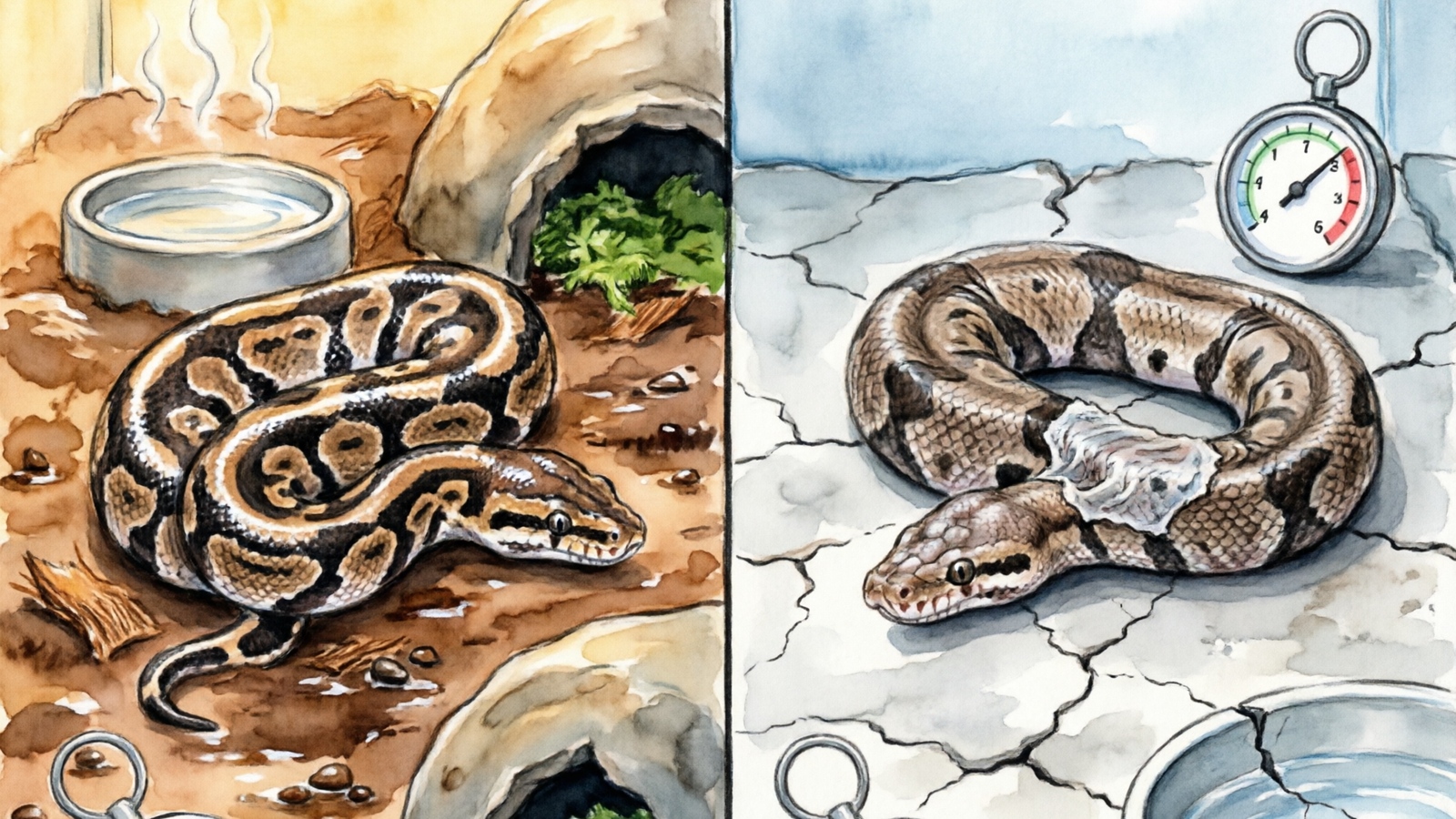
Yes. While low humidity is the more common problem, sustained humidity above 80–85% creates its own set of health risks.
Scale rot (necrotic dermatitis) is the primary concern. This bacterial infection develops on belly scales when a snake sits on constantly wet substrate.
Early signs include brown or black discoloration, soft or mushy texture, and a foul odor. Advanced scale rot can become life-threatening.
Prevention is straightforward: substrate should be damp, not soaking. Use the squeeze test — grab a handful and squeeze. It should clump but no water should drip.
Respiratory infections can also develop. While low humidity dries respiratory membranes, excessively high humidity promotes bacterial and fungal growth that can infect the respiratory tract.
Mold and mildew thrive in warm, humid, poorly ventilated environments. If you see white or colored fuzz on substrate or hides, remove affected material immediately and increase airflow.
Mite populations reproduce faster in high humidity. If dealing with a mite infestation, temporarily reducing humidity to 50–55% can slow their life cycle while you treat.
The key distinction is between humid air and wet surfaces. Air at 70% humidity with dry substrate surface is ideal. Wet substrate with pooled water is always dangerous.
Temporary spikes are normal. Humidity rises after misting or during rain.
Sustained high humidity over days and weeks causes problems. If humidity stays above 85% consistently, increase ventilation, reduce misting, or switch to a less moisture-retentive substrate.
Ball Python Humidity for Shedding
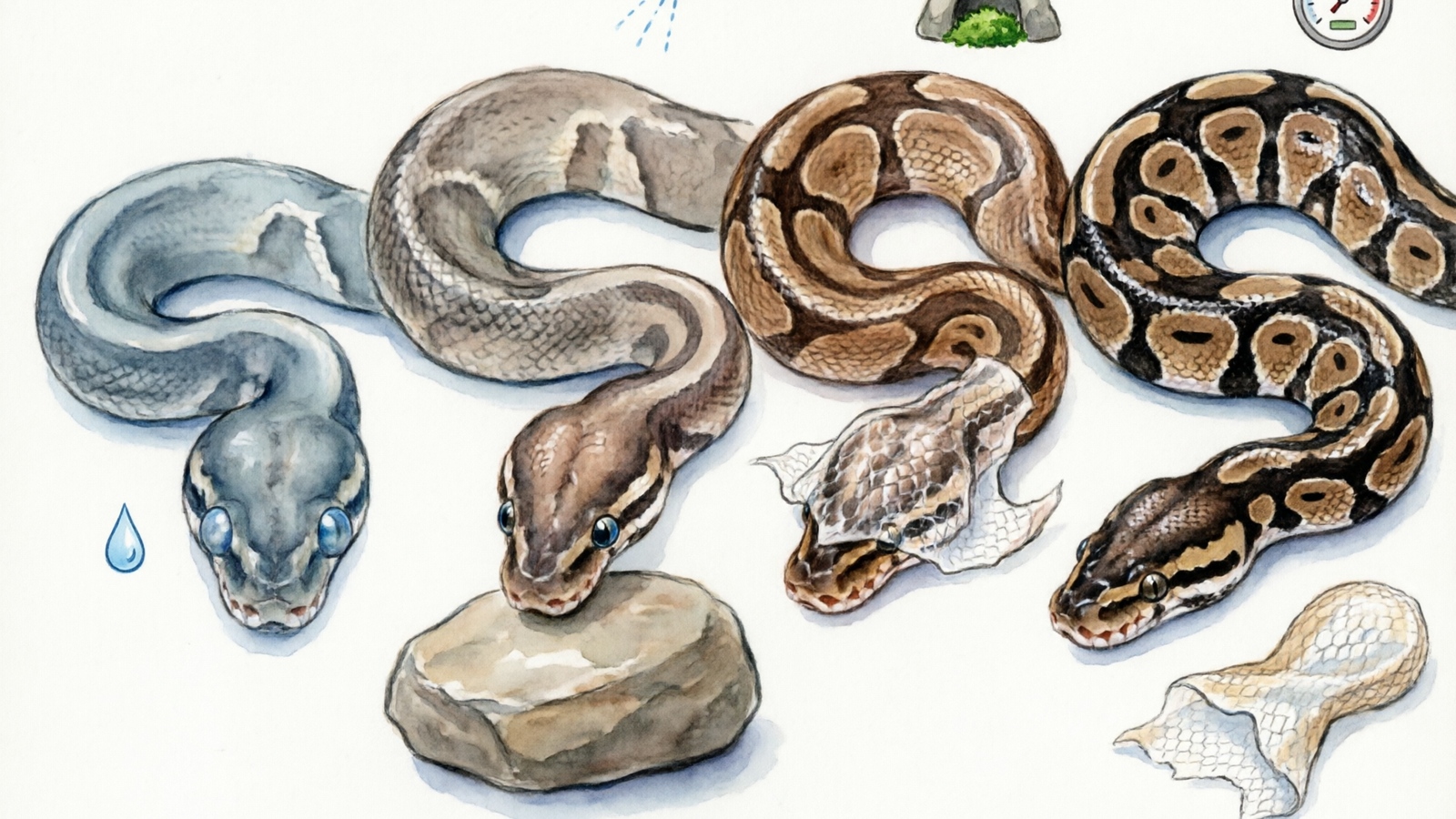
Ball pythons shed every 4–6 weeks as adults and every 2–3 weeks as juveniles. Watch for the signs: eyes turn cloudy or blue (the “blue phase”), skin dulls, the snake hides more, and appetite may decrease.
Dysecdysis (abnormal shedding) is the most common health problem linked to incorrect humidity in ball pythons (Python regius). According to the Association of Reptilian and Amphibian Veterinarians (ARAV), dysecdysis occurs when ambient humidity is insufficient to separate the old skin layer from the new skin beneath, causing the shed to come off in patches or fail to detach entirely. Retained shed around the eyes (spectacle caps), tail tip, and vent are particularly dangerous — unremoved spectacle caps can cause corneal damage and blindness, while retained tail rings can constrict blood flow and lead to tissue necrosis (tail loss). The ARAV recommends maintaining 70–80% humidity once the blue phase is observed (1–2 weeks before shed) and providing a humid hide lined with damp sphagnum moss. Chronic dysecdysis — incomplete sheds over multiple consecutive cycles — is a clinical sign of systemic dehydration or underlying illness and warrants veterinary assessment.
Increase humidity to 70–80% when you notice the blue phase, which appears 1–2 weeks before the actual shed. This gives the skin time to loosen so it comes off in one clean piece.
Zoo Med New Zealand Sphagnum Moss ($22.49) — a widely used sphagnum moss.
All-natural with excellent moisture retention. Place dampened moss inside the humid hide during shedding. A small amount goes a long way. Can occasionally introduce fungus gnats — rinse before use.
Build a DIY shedding box if your enclosure lacks a humid hide. Use a plastic container with a snug lid, cut an entry hole just large enough for the snake, and line the bottom with 1–2 inches of damp sphagnum moss. Place on the warm side and check daily.
A healthy shed comes off in one piece, like a sock turning inside out. Patchy sheds often resolve completely within one cycle just by adding a humid hide and bumping humidity to 75% during the blue phase. If the shed is fragmented, humidity was too low — increase it earlier next time.
Soaking can help with stubborn retained shed. Place the snake in lukewarm water (80–85°F) deep enough to cover the body but shallow enough for the head to stay above.
Soak for 15–20 minutes — the warm water softens retained skin. Never force-pull stuck shed; let the snake rub it off on cork bark or a damp towel.
For a comprehensive overview of the species including natural history and care fundamentals, see our ball python species guide.
Ball python humidity checklist:
- Hygrometer placed at snake level — not top of enclosure
- General humidity 50–70% — verified with digital gauge
- Bumped to 70–80% during blue phase (shedding)
- Humid hide available with damp sphagnum moss
- Water bowl on warm side for natural evaporation
- Moisture-retentive substrate (coco coir/cypress mulch) at 3–4 inches
- Fresh water daily — dehydration compounds low-humidity stress
- Never block all ventilation — stagnant air promotes mold
- Never use heat rocks — cause burns and unreliable humidity
- Never force-pull retained shed — let snake rub it off naturally
- Never ignore chronic incomplete sheds — veterinary assessment needed
Frequently Asked Questions
What humidity should a ball python be at?
Maintain 55–70% relative humidity for general health and maintenance. During shedding cycles (every 4–6 weeks for adults), increase to 70–80%.
In their native West African habitat, humidity in burrows reaches 70–90%, but captive conditions in glass tanks typically make 55–70% more practical. Monitor with a digital hygrometer — analog dial gauges from pet stores can be off by 10–20%.
How do I increase humidity in my ball python tank?
The most effective methods are: (1) Switch to moisture-retentive substrate like coconut husk or cypress mulch at 3–4 inches deep, (2) Add a humid hide lined with damp sphagnum moss, (3) Move the water bowl to the warm side to encourage evaporation, (4) Cover 50–80% of the screen top with foil tape to reduce the chimney effect, and (5) Mist the substrate daily in the evening. For persistent issues in dry climates, a reptile fogger with adjustable output works well.
What happens if ball python humidity is too low?
Low humidity (below 50% sustained) causes stuck shed (dysecdysis), dehydration (wrinkled skin, sunken eyes), respiratory infections (wheezing, clicking sounds), and reduced appetite. The most common visible sign is a patchy, incomplete shed — healthy sheds come off in one piece. Retained eye caps are a medical concern that requires a reptile vet if they don’t resolve naturally within one shed cycle.
Can ball python humidity be too high?
Yes. Sustained humidity above 80–85% promotes scale rot (bacterial belly infections from wet substrate), mold growth, and can create conditions for respiratory infections.
The key distinction: humid AIR (70%) is fine, but WET substrate (surface water pooling) is dangerous. Test by squeezing a handful of substrate — it should clump together but not drip water. Increase ventilation if humidity stays too high.