What Is a Crested Gecko?
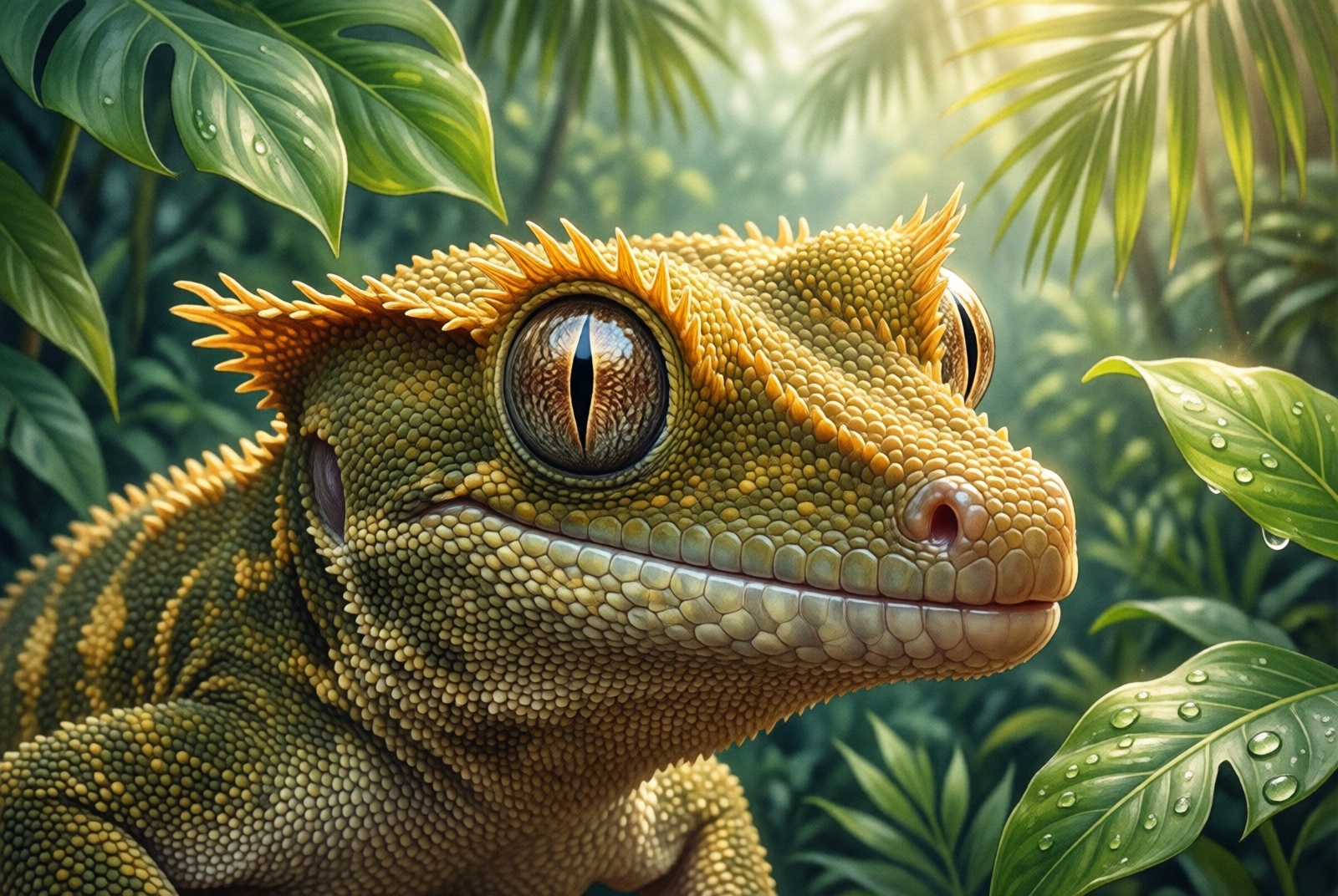
The crested gecko (Correlophus ciliatus) is a semi-arboreal gecko native to New Caledonia, a group of islands in the southwest Pacific Ocean. Named for the distinctive eyelash-like fringe of skin above each eye, they are among the most popular pet reptiles worldwide.
The scientific name has an interesting history. Originally described as Rhacodactylus ciliatus in 1866, it was reclassified to Correlophus ciliatus in 2012 based on molecular genetic analysis. The species name ciliatus means “eyelashed” in Latin, giving the gecko its common nickname: the “eyelash gecko.”
Perhaps the most dramatic part of this species’ history is its rediscovery. The species was believed extinct for over a century — no confirmed sightings between the 1860s and 1994. In 1994, a single expedition to the Isle of Pines in New Caledonia rediscovered the species, and within a few years, they had become one of the most popular pet reptiles in the world.
For complete husbandry requirements — enclosure setup, diet, temperature, and health — see our care guide.
| Attribute | Detail |
|---|---|
| Scientific name | Correlophus ciliatus (formerly Rhacodactylus ciliatus) |
| Common name | Crested Gecko / Eyelash Gecko |
| Family | Diplodactylidae |
| Adult size | 7-9 inches (18-23 cm) |
| Adult weight | 35-55 grams |
| Lifespan | 15-20 years (captivity) |
| Activity pattern | Nocturnal |
| Native range | New Caledonia (southwest Pacific) |
| Temperament | Docile, tolerates handling |
| Venom | Non-venomous |
Crested Gecko Species & Types
Carib Sea Moonlight Sand is a quality option worth considering for your setup.
Correlophus ciliatus is the sole recognized species of this gecko. The genus Correlophus contains one other species — C. sarasinorum (Sarasin’s giant gecko) — which is occasionally kept by specialist keepers but is far less common in the pet trade.
When people discuss “crested gecko types,” they are referring to morphs — color and pattern variations produced through selective breeding — not separate species or subspecies. Unlike ball pythons, where morphs follow predictable genetic rules (dominant, recessive, co-dominant), their morphs are primarily polygenic, meaning multiple genes interact to produce a continuum of colors and patterns rather than discrete categories.
For the other top beginner gecko, see our leopard gecko care guide.
| Species | Size | Native Range |
|---|---|---|
| Crested Gecko (C. ciliatus) | 7-9” | New Caledonia |
| Leopard Gecko (E. macularius) | 8-11” | Central/South Asia |
| Gargoyle Gecko (R. auriculatus) | 7-9” | New Caledonia |
| Tokay Gecko (G. gecko) | 10-15” | Southeast Asia |
| Day Gecko (Phelsuma spp.) | 4-8” | Madagascar |
Crested Gecko Size & Weight
Many owners find that Hikari Aquatic Turtle Probiotic Diet works well for their pet’s needs.
Adult Size
Their adult size is 7-9 inches (18-23 cm) in total length including the tail, making them a compact reptile ideal for keepers with limited space. Snout-vent length (SVL, body only without tail) is approximately 4-5 inches. Adults weigh 35-55 grams, with females typically larger and heavier than males.
Crested Gecko Size Chart by Age
Growth is rapid during the first six months, then gradually slows. The size chart below tracks typical development:
| Age | SVL Length | Total Length | Weight | Growth Phase |
|---|---|---|---|---|
| Hatchling | 1.5-2” | 3-4” | 1-2 g | Rapid growth |
| 1 month | 2-2.5” | 4-4.5” | 3-5 g | Fast growth |
| 3 months | 2.5-3” | 5-6” | 8-15 g | Steady growth |
| 6 months | 3-3.5” | 6-7” | 18-28 g | Slowing |
| 1 year | 3.5-4” | 7-8” | 30-40 g | Near-adult |
| 18+ months | 4-5” | 7-9” | 35-55 g | Full adult |
Crested Gecko Weight Chart
A healthy weight chart ranges from 30-40 grams for smaller individuals to 40-55 grams for larger ones. Visible hip bones, a thinning tail, or lethargy suggest underweight — if your gecko has also stopped eating, check our guide on why crested geckos stop eating for troubleshooting steps. Fat rolls at the armpits or difficulty climbing suggest overweight. Weight is especially important for breeding — females should reach at least 35 grams before being paired.
Crested Gecko Size vs Leopard Gecko
Their size comparison with the leopard gecko is one of the most common questions from prospective keepers. Both are top beginner geckos, but they differ in significant ways:
| Trait | Crested Gecko | Leopard Gecko |
|---|---|---|
| Adult length | 7-9” (18-23 cm) | 8-11” (20-28 cm) |
| Adult weight | 35-55 g | 45-80 g |
| Tail proportion | ~40% of total (if present) | ~40% of total |
| Climbing ability | Excellent (arboreal + lamellae) | Poor (terrestrial) |
| Activity pattern | Nocturnal | Nocturnal |
| Heat required | No (room temperature) | Yes (under-tank heater) |
Crested Gecko Lifespan
For this purpose, Zilla Coconut → is a popular choice among pet owners.
Their lifespan in captivity is 15-20 years with proper care. Wild lifespan is estimated at 10-15 years, though long-term field studies are limited. Reports of individuals exceeding 20 years exist but lack authoritative verification.
Key longevity factors include stable room temperatures (65-80°F), proper humidity (50-70%), a nutritionally complete diet (commercial CGD), and minimal stress. One of this species’ biggest advantages as a pet is that it does not require specialized heating — room temperature in most homes is sufficient, which reduces the risk of equipment failure leading to fatal temperature extremes.
| Species | Average Lifespan | Max Recorded |
|---|---|---|
| Crested Gecko | 15-20 years | 20+ years |
| Leopard Gecko | 15-20 years | 25+ years |
| Bearded Dragon | 8-12 years | 15+ years |
| Ball Python | 20-30 years | 62+ years |
| Gargoyle Gecko | 15-20 years | 20+ years |
For detailed husbandry that supports long life, see our crested gecko care guide.
Crested Gecko Morphs & Colors
Crested Gecko Morphs Explained
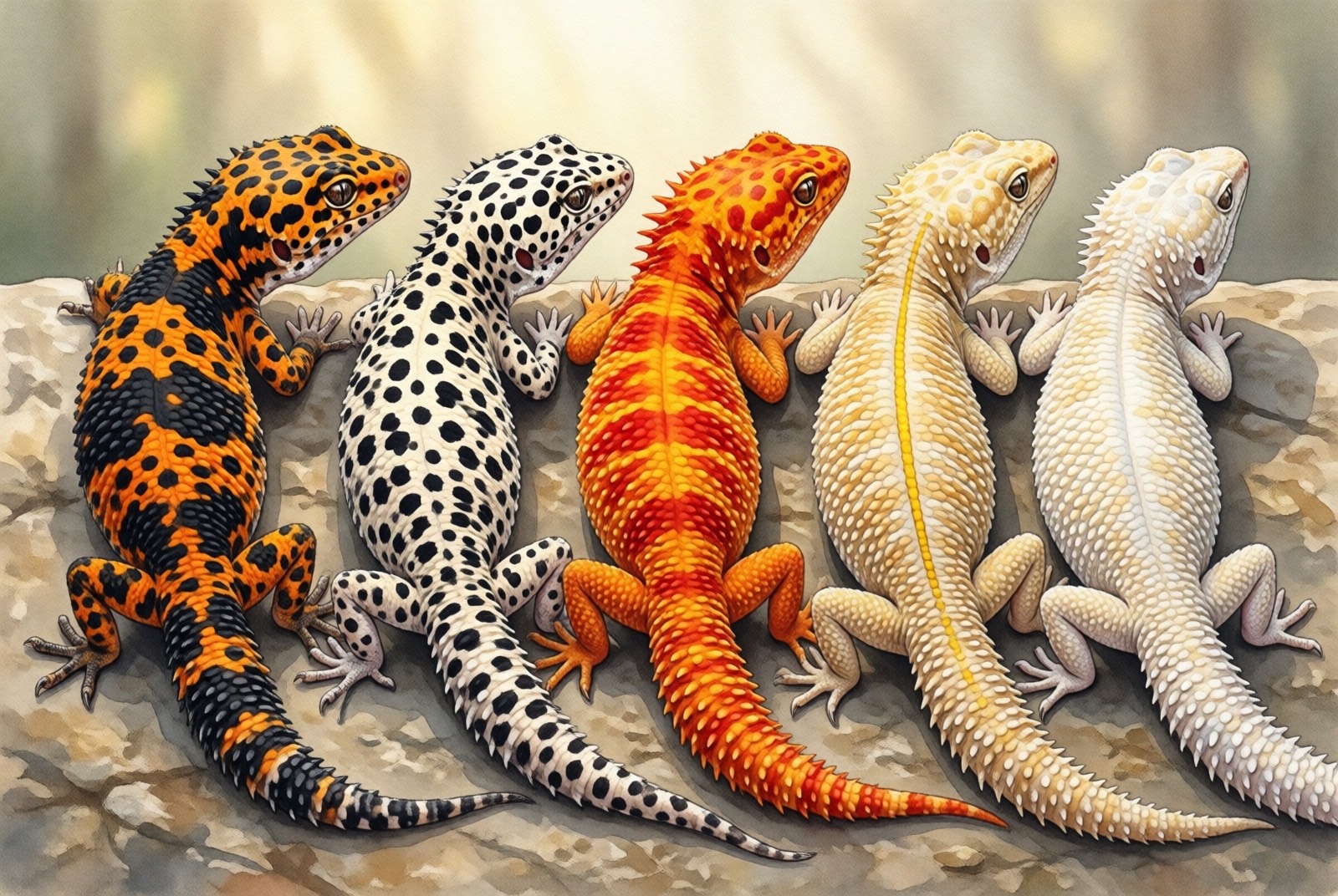
Morphs explained simply: morphs are color and pattern variations produced through selective breeding. Unlike ball pythons, where specific genes produce predictable offspring, their morphs are polygenic — multiple genes interact to create a nearly continuous spectrum of colors and patterns. This makes breeding them less predictable but visually more diverse.
The crested gecko morphs chart below covers the most widely recognized varieties. For a visual reference, search “crested gecko morphs with pictures” on MorphMarket or gecko forums.
Popular Crested Gecko Morphs List
| Morph | Appearance | Rarity | Price Range | Key Features |
|---|---|---|---|---|
| Normal/Wild Type | Brown-olive with darker markings | Common | $40-60 | Original wild coloration |
| Buckskin | Brown/tan with lighter pattern | Common | $50-80 | Warm earth tones |
| Flame | Bright base with dark dorsal pattern | Common | $60-120 | Strong color contrast |
| Harlequin | Bold pattern with heavily patterned limbs | Common | $80-200 | High contrast, very popular |
| Dalmatian | Dark spots on a solid base color | Common | $80-150 | Spot density varies widely |
| Pinstripe | Raised tubercles along the dorsal ridge | Common | $80-200 | Textural + visual trait |
| Quadstripe | Four distinct dorsal lines | Uncommon | $150-300 | Two pinstripes + two laterals |
| Phantom | Mottled, ghost-like pattern | Uncommon | $150-300 | Subtle, ethereal appearance |
| Lilly White | High white with dark eyes | Rare | $300-800+ | Dramatic high contrast |
| Extreme Harlequin | Maximum pattern coverage on limbs | Rare | $200-500+ | Extension of harlequin gene |
| Tricolor | Three distinct color layers | Rare | $200-500+ | Complex color combination |
Crested Gecko Colors
Their colors span a wide spectrum: reds, oranges, yellows, browns, olive-greens, near-blacks, and cream-whites. Color is evaluated across multiple zones — dorsal pattern (back), lateral pattern (sides), fringe color (crest edges), and cream areas (white/yellow patches). Unlike ball python morphs with discrete genetic categories, crested gecko colors exist on a continuous spectrum, which is why a formal crested gecko colors chart is difficult — the variation between individuals is gradual rather than clearly separated.
Crested Gecko Behavior & Temperament
Natural Behavior
The behavior profile reflects its semi-arboreal, nocturnal lifestyle. They are most active after dark, spending daylight hours hiding in tree bark crevices, among fern fronds, or in dense foliage. At night, they emerge to climb, forage, and explore.
Their climbing ability comes from lamellae — tiny hair-like structures on their toe pads that create van der Waals forces, allowing them to adhere to surfaces. Contrary to popular belief, this is not suction. Lamellae work on rough and textured surfaces but are less effective on perfectly smooth glass.
They are surprisingly athletic jumpers. They can leap several times their body length, spreading all four limbs in a posture resembling a flying squirrel. In captivity, they use jumping to navigate between branches and enclosure walls.
The “licking” behavior that many owners notice — including licking their keeper’s hands — is the gecko using its Jacobson’s organ (located on the roof of the mouth) to analyze airborne chemical particles collected by the tongue. Your gecko is gathering information about you, not showing affection.
They can produce a surprising barking or chirping sound when startled or during courtship — one of the few gecko species that vocalize audibly.
Crested Gecko Tail Drop
Tail drop (caudal autotomy) is one of the most important things new owners need to understand. They can and will drop their tails as a defense mechanism when they feel threatened — if grabbed by the tail, handled roughly, or severely stressed.
Critical difference from leopard geckos: Unlike leopard geckos, which can regenerate a partially functional replacement tail, their tail does not grow back. Once dropped, it is gone permanently. A small, blunt stub may occasionally regenerate, but it will look completely different from the original tail — no crests, no tapering, just a rounded nub.
The good news: a tailless gecko is perfectly healthy. Tail loss has no impact on lifespan, behavior, or breeding ability. It is purely an aesthetic difference. The simplest prevention is to never grab or pull the tail — always scoop the gecko from below with your palm supporting the body.
Crested Gecko Teeth & Bite
They have approximately 100 tiny, replaceable teeth (polyphyodont) that they shed and replace throughout their lives. They are non-venomous. Bites are extremely rare and typically occur only when a gecko mistakes a finger for food — usually because the handler’s hand smells like insects. When a bite does happen, it feels like fine sandpaper dragging across the skin — uncomfortable but not painful, and it rarely breaks the skin.
Male vs Female Crested Gecko
The sex differences become apparent as the gecko matures. The crested gecko male vs female size difference is modest — females tend to be slightly larger and heavier.
| Trait | Male | Female |
|---|---|---|
| Size | Slightly smaller | Slightly larger |
| Weight | 30-45 g | 35-55 g |
| Hemipenal bulge | Present at tail base | Absent |
| Preanal pores | Visible row | Absent or faint |
| Mature age | 8-12 months | 12-18 months |
| Breeding role | Courtship & mating | Egg-laying (2 eggs/clutch) |
| Territorial | Aggressive toward males | Generally calm |
Sex can be determined at 6+ months by looking for the hemipenal bulge at the tail base (males) or a row of preanal pores just above the vent (males). A jeweler’s loupe or magnifying glass helps with younger geckos. For feeding and dietary details, see our care guide.
Crested Gecko Habitat in the Wild
Natural Range & Origin
They are endemic to New Caledonia, a French territory comprising a group of islands in the southwest Pacific Ocean, approximately 750 miles east of Australia. They are found on the main island (Grande Terre), the Isle of Pines, and several smaller islets.
Their habitat is tropical rainforest — specifically the forest canopy and understory, from sea level to approximately 1,500 meters elevation. They spend daylight hours hiding in tree bark crevices, among epiphytic plants, and in dense fern growth. At night, they emerge to climb tree trunks and branches, foraging for insects, fruit, and nectar.
Climate & Environment
New Caledonia’s climate is tropical with average temperatures of 72-82°F (22-28°C) year-round — temperatures rarely exceed 85°F. Humidity ranges from 70-90% in their forest habitat. A warm wet season (November-April) alternates with a cooler dry season (May-October), but temperatures never drop to cold extremes.
They are listed as Vulnerable on the IUCN Red List and protected under CITES Appendix II. Primary threats are habitat loss from deforestation, mining, and introduced predators. For captive habitat guidance, see our reptile habitat guide.

Crested Gecko Fun Facts
Some interesting crested gecko facts for kids and adults alike:
Eyelash gecko — The “eyelashes” are actually a fringe of raised scales (tubercles) above each eye. Their function is not fully understood but may help break up the gecko’s silhouette for camouflage or channel water away from the eyes.
Rediscovered in 1994 — After no confirmed sightings for over a century, a single expedition to the Isle of Pines in 1994 rediscovered the species. Within five years, they were established in the global pet trade — one of the fastest species transitions from “thought extinct” to “commonly available.”
No eyelids — Like snakes, they have a transparent scale (spectacle) over each eye instead of movable eyelids. They lick their eyes clean using their tongue.
Tail does not regenerate — Unlike leopard geckos, a dropped tail stays gone. This is one of the most important things for new owners to understand.
Van der Waals forces, not suction — Their toe pad lamellae use molecular attraction to grip surfaces. A single gecko toe could theoretically support the animal’s entire body weight.
They bark — They produce audible barking and chirping sounds when startled or during courtship, making them one of the more vocal gecko species.
They eat their shed skin — After shedding (which happens in one piece, including the eye scales), they consume the shed skin to recover nutrients and avoid leaving scent trails for predators.
Temperature-dependent sex — Incubation temperature during egg development can influence the sex ratio of offspring, a phenomenon called temperature-dependent sex determination (TSD).
100+ teeth — They have approximately 100 tiny teeth that they continuously replace throughout their lives.
Found nowhere else — They are endemic to New Caledonia and exist naturally on Earth only on these specific Pacific islands.
Conclusion
This species is one of the most rewarding small reptiles you can keep. At 7-9 inches and 15-20 years, it offers a compact size with a long lifespan. Its unique features — eyelash crests, climbing ability, color-changing behavior, and vocalizations — make it far more interesting than its small size suggests. The fact that it thrives at room temperature without specialized heating makes it one of the most accessible pet reptiles available.
Ready to get started? Our crested gecko care guide covers everything you need: enclosure setup, diet, humidity, and handling. For an alternative beginner reptile, compare with leopard gecko care or bearded dragon care.