
Best Corn Snake Substrate — Quick Picks
A corn snake substrate (also called bedding) is the material covering the floor of a corn snake’s enclosure. The right corn snake substrate promotes natural burrowing behavior, helps regulate humidity, and absorbs waste. Corn snakes (Pantherophis guttatus) are native to the southeastern United States, where they burrow through leaf litter and loose soil in woodland edges and grasslands (Merck Veterinary Manual — Snakes). Choosing the wrong substrate can lead to impaction, respiratory infections, or chronic stress — making corn snake safe substrate selection one of the most critical husbandry decisions.
Based on analysis of more than 35,000 Amazon reviews across ten products, here are the best substrate for corn snakes options for every setup and budget.
⚠️ TOXIC SUBSTRATE WARNING: Pine and cedar shavings are TOXIC to all snakes. The aromatic oils (phenols) in these woods cause respiratory damage, neurological symptoms, and liver damage in reptiles (Merck Veterinary Manual). Never use pine, cedar, or eucalyptus bedding for any reptile — this is a corn snake safe substrate rule with zero exceptions.
| # | Product | Key Feature | Best For |
|---|---|---|---|
| 1 | Zoo Med Aspen Snake Bedding → | Community gold standard | Best overall corn snake substrate |
| 2 | Zoo Med Eco Earth 3pk → | Expandable coconut brick | Budget-friendly, dry climates |
| 3 | Zoo Med Reptisoil → | Bioactive soil blend | Beginner bioactive setup |
| 4 | The Bio Dude Terra Firma → | Premium colubrid bioactive | Display enclosures, self-cleaning |
The Aspen vs Coconut vs Bioactive Debate — Why Keepers Disagree
The biggest disagreement in corn snake care is about substrate choice. One major care resource (ReptiFiles) classifies aspen as “not great” for corn snakes — the central corn snake substrate vs aspen debate.
The broader snake community on Reddit r/cornsnakes overwhelmingly recommends aspen as the gold standard. Both sides are right — they target different humidity levels.
Aspen bedding is kiln-dried aspen wood shavings. It is absorbent, mold-resistant, and safe if small amounts are ingested during feeding strikes (VCA Hospitals — Snake Husbandry). This ingestion safety is the primary reason aspen bedding for corn snake setups dominates community recommendations. Aspen works best at 40-50% ambient humidity, which is the range most corn snake keepers maintain (ReptiFiles — Corn Snake Care). This matches the snake’s natural habitat in southeastern US woodlands and grasslands.
Coconut fiber comes in compressed bricks that expand when soaked. It retains moisture for long periods and works best at 60-75% humidity (ReptiFiles). In dry climates, coconut fiber can help maintain minimum humidity. In humid environments, it can become oversaturated and grow mold. Moldy substrate releases spores that cause respiratory infections in snakes (VCA Hospitals — Respiratory Infections in Reptiles).
Bioactive substrate uses soil-based mixes with living microorganisms. Isopods and springtails serve as a cleanup crew that breaks down waste (PetMD — Bioactive Reptile Enclosures). Bioactive setups are self-cleaning, expensive upfront, and best suited for large display enclosures.
The conflict exists because ReptiFiles recommends 65-75% humidity for corn snakes — a tropical standard. Most keepers maintain 40-50% — the semi-arid standard.
At 40-50%, aspen is superior. At 65-75%, coconut fiber is superior. Neither recommendation is wrong.
Our recommendation: Aspen is the best corn snake substrate for most keepers. It is the simplest, safest, and most community-tested option. Coconut fiber if you struggle to maintain 40% minimum humidity. Bioactive if you want a naturalistic display setup and can invest in a cleanup crew.
Key Facts: Corn Snake Substrate
- Corn snakes are native to southeastern US woodlands and grasslands (semi-arid, not tropical)
- Ideal ambient humidity: 40-50% (community standard)
- Pine/cedar shavings are TOXIC — aromatic oils cause respiratory damage
- Aspen is the most recommended substrate on r/cornsnakes
- Substrate depth: 1-2” hatchlings, 2-3” juveniles, 3-4” adults
- Replace all substrate every 3-4 months
- Spot clean waste immediately
For complete corn snake care including humidity management, see our corn snake care guide. Substrate goes inside your corn snake’s enclosure — proper depth and placement matter for both the snake’s comfort and the enclosure’s hygiene.
What Substrate for Corn Snake — Buying Guide
Choosing the right corn snake substrate — the right corn snake bedding — depends on your climate, your enclosure, and your feeding method — every corn snake substrate choice affects humidity, safety, and maintenance. The best corn snake bedding balances humidity control, burrowability, ingestion safety, and maintenance effort — what substrate for corn snake setups needs most. The best bedding for corn snake tank setups combines all four factors.
Humidity compatibility is the first factor. Match your substrate to your climate. Dry climates need moisture-retaining substrates like coconut fiber. Humid climates work well with absorbent substrates like aspen. Under-tank heaters must be thermostat-controlled — substrate sits directly on the heat source, so safe temperatures matter. See our reptile thermostat guide for proper heating setup.
Ingestion safety matters because corn snakes are ambush feeders. They strike from burrows and substrate ingestion during feeding is common. Aspen and paper are safest if small amounts are swallowed. Bark, wood chips, and gravel pose impaction risk and should never be used with snakes that feed on substrate (VCA Hospitals).
Burrowability is essential. Corn snakes are active burrowers in the wild (Merck Veterinary Manual). Substrate must be deep enough (3-4 inches for adults) and loose enough to tunnel through. Compacted substrates deny this natural behavior.
Odor control is straightforward with corn snakes. They produce minimal waste compared to mammals. Most loose substrates control odor well with routine spot cleaning.
Quick Comparison — All 10 Corn Snake Substrates
| # | Product | Type | Key Feature | Best For | Pros | Cons |
|---|---|---|---|---|---|---|
| 1 | Zoo Med Aspen → | Aspen | Kiln-dried shavings | Best overall | Community #1, mold-resistant | Mites reported, dusty |
| 2 | Zoo Med Eco Earth → | Coconut Fiber | Compressed brick | Dry climates | Budget, holds moisture | Caused cornsnake sore |
| 3 | Kaytee Aspen → | Aspen | Bulk 19.7L | Large enclosures | Best value per liter | EXTREMELY dusty, pet death reported |
| 4 | Zilla Coconut → | Coconut Fiber | Single brick | Flexible amounts | Easy to store | Plastic strips found inside |
| 5 | ReptiChip → | Coconut Chips | 72qt compressed | Burrowing setups | Great drainage, holds shape | Plastic/metal contamination pattern |
| 6 | Zoo Med Forest Floor → | Cypress Mulch | Natural cypress | Humidity control | Long-term keeper favorite | MITES — killed entire collection |
| 7 | Zoo Med Reptibark → | Fir Bark | Bark chips | Natural look | Holds moisture well | Glochids (barbed spines) |
| 8 | Zoo Med Reptisoil → | Bioactive | Soil blend | Beginner bioactive | Ready-to-use mix | Bugs, hydrophobic reports |
| 9 | Bio Dude Terra Firma → | Bioactive | Colubrid blend | Display enclosures | No drainage layer needed | Ant eggs reported, low reviews |
| 10 | Galápagos Bioactive → | Bioactive | Mixed soil | Budget bioactive | Ready-to-use | False advertising claims |
Aspen Bedding for Corn Snake — The Community Gold Standard
Zoo Med Aspen Snake Bedding — Top Pick
Zoo Med Aspen Snake Bedding is the most recommended corn snake substrate on r/cornsnakes — the #1 corn snake substrate and the top pick for most keepers. Kiln-dried aspen shavings are absorbent, mold-resistant at moderate humidity, and safe if small amounts are ingested during feeding. It promotes natural burrowing behavior and is simple to maintain.
Multiple snake owners confirm long-term use. A reviewer said their snake “has been using this product since she was a baby” and praised the consistent quality. A buyer called it “good for corn snakes and such” confirming it works well for the species.
⚠️ Safety concerns to know: A reviewer reported finding mites in the bag. A buyer regretted not opening it outdoors and sifting, saying it was “dusty but good for digging.” An owner noted significant price inflation over the years.
PRO TIP: Open aspen bags outdoors and sift through a mesh screen before adding to the enclosure. This removes excess dust and lets you inspect for foreign material. Sift outside so dust does not fill your home.
Aspen is also the most debated substrate for ball pythons — see our ball python substrate guide for how recommendations differ by species. The corn snake substrate vs aspen discussion mirrors the same pattern, but with the recommendation flipped: aspen wins for corn snakes.
Kaytee Aspen Small Animal Bedding — Bulk Option
Kaytee Aspen provides a larger volume at a budget-friendly price, making it the best value per liter for keepers with large enclosures or multiple tanks. The natural forest scent and appearance work well in display setups.
A reviewer praised it as “quality” and “affordable bedding.” A buyer confirmed it has “a natural Forest feeling to it.”
⚠️ CRITICAL safety warning — extreme dust: Multiple reviewers describe this as “INCREDIBLY dusty.” A reviewer said it made their rats “sneezy and unwell within days.”
A buyer reported their hamster died hours after introduction. An owner stated that “Kaytee brand has really gone downhill” with smaller, dustier pieces.
The Zoo Med Aspen is the safer choice over Kaytee for corn snakes. The dust issue is too serious for an animal that spends most of its time in direct contact with bedding.
How to Set Up Aspen Substrate — Step by Step
Setting up aspen bedding for corn snakes is straightforward. Follow these steps for the best results.
Step 1: Pour the correct depth for your snake’s age. Hatchlings need 1-2 inches. Juveniles need 2-3 inches. Adults need 3-4 inches. Deeper substrate allows more natural burrowing.
Step 2: Sift out dust before adding to the enclosure. Shake the aspen through a mesh screen or colander outdoors. This is especially important for bulk brands.
Step 3: Spot-clean waste daily with a scooper or tongs. Remove urates and feces immediately. Corn snakes produce minimal waste, so this takes less than a minute per day.
Step 4: Replace all substrate every 3-4 months. Even with daily spot cleaning, residual waste and bacteria accumulate over time (ReptiFiles). A full replacement keeps the enclosure fresh and prevents odor buildup.
Best Coconut Fiber & Chips for Corn Snakes
Zoo Med Eco Earth — Best Budget Coconut Fiber
Zoo Med Eco Earth is the most widely used coconut substrate for reptile keeping. Every eco earth corn snake setup starts with these compressed bricks, which expand to six to eight times their dry volume when soaked. Each brick produces a large volume of substrate at a budget-friendly price.
A reviewer called it “100% great” and confirmed it works for python enclosures. A buyer praised the value: “the price was good.”
⚠️ Serious safety concern for corn snakes: An owner reported that “this stuff caused a SORE on my cornsnake, and it now has a DEFORMATION.” The cause is unclear but coconut fiber can harbor bacteria or sharp fiber fragments.
⚠️ Preparation hassle: A reviewer called it “a real pain to prepare” because it requires soaking and expanding. A buyer found it was “one large packet, not three individual” bricks, meaning partial use exposes the remaining substrate to air and moisture.
PRO TIP: Freeze coconut fiber bricks at zero degrees Fahrenheit for 48 hours before use. This kills potential mites and pest eggs. Thaw and expand as normal. This applies to Eco Earth and all coconut-based products.
The eco earth corn snake combination works best for keepers in dry climates where the best substrate for corn snakes must retain moisture where ambient humidity drops below 40%. Coconut fiber is the gold standard for ball pythons — the same substrate serves different species differently depending on humidity needs.
Zilla Coconut Husk Brick — Flexible Single Brick
The Zilla Coconut Husk Brick offers a single-brick option for keepers who want more control over how much substrate they prepare at once. The compressed format stores dry indefinitely until needed.
A reviewer confirmed it expands to fill a 22-gallon enclosure with “good quality, not dusty.” A buyer called it “great and for a low price.”
⚠️ Contamination reported: A reviewer found the brick was “full of strips of plastic.” A buyer discovered rocks inside.
A buyer reported it was “moldy when I rehydrated it and smelled so bad.” These quality control issues are inconsistent but serious when they occur.
ReptiChip Coconut Chip Bedding — Best for Burrowing
ReptiChip uses larger coconut chunks instead of fine fiber. The chip format provides better drainage, holds its shape for burrowing tunnels, and resists compaction over time. The 72-quart compressed volume fills large enclosures efficiently.
An owner called it the “best balance of value and quality.” A buyer confirmed their snake “loved it” and noted it was “free of any pests.”
⚠️ CRITICAL — plastic/metal contamination pattern: Multiple reviewers report finding foreign material in ReptiChip. A reviewer said “this stuff has plastic pieces all through it.”
A buyer confirmed finding “cloth and plastic in the mix.” This contamination pattern has appeared across multiple ReptiChip SKUs in other species guides as well.
The ReptiChip contamination pattern has been documented across multiple SKUs and product lines — it is why sifting every batch is essential regardless of brand. Natural substrates like aspen are simpler and safer for most corn snake keepers.
Best Bioactive, Cypress & Bark Substrates
Zoo Med Reptisoil — Beginner Bioactive
Zoo Med Reptisoil is the easiest entry point into bioactive keeping. This pre-mixed soil blend combines organic soil with sand for drainage. It supports live plants and cleanup crews without requiring you to mix your own recipe.
An owner called it “always a favorite.” A buyer said they “should have gotten a bigger bag” because it worked so well for their gecko.
⚠️ Not ideal for snakes: A reviewer explicitly warned “would not recommend this substrate for snakes” after noticing bugs and a terrible reaction. Buyers reported gnats and flying bugs hatching from the soil. The product can also be hydrophobic — a reviewer said it “defeats the entire purpose of being soil” because water pooled on the surface instead of absorbing.
The Bio Dude Terra Firma — Premium Bioactive
The Bio Dude Terra Firma is designed specifically for colubrids including corn snakes. The pre-mixed blend requires no drainage layer — a significant advantage over DIY bioactive setups. With proper isopods and springtails as a cleanup crew, this substrate can go months between changes.
An owner said their snake “loves to burrow in this substrate.” A buyer praised that “no drainage layer required” which simplifies setup.
⚠️ Pest contamination: A reviewer found “a ton of ANT EGGS in mine” and called it a “nightmare.” A buyer reported mold growth even with isopods present. The low review count makes it harder to assess whether these are isolated incidents or a pattern.
Bioactive corn snake substrate setups work best in naturalistic terrarium setups. See our leopard gecko terrarium guide for bioactive enclosure design principles. The bearded dragon substrate guide also covers bioactive methods for another species.
Zoo Med Forest Floor — Natural Cypress Mulch
Zoo Med Forest Floor is natural cypress mulch that has been used by snake keepers for over 20 years. It holds humidity well and provides a natural forest-floor appearance. Ball python and corn snake keepers both use it successfully.
One ball python owner said their snake “pushes paths and mounds” through it, showing natural burrowing behavior. A tortoise keeper praised it as “superb” but added a critical warning.
⚠️ CRITICAL — mite infestation pattern: Multiple reviewers report devastating mite infestations. One lost three reticulated pythons and two ball pythons after mites from Forest Floor caused neurological disorders. Another found “100-200 small beetle-like bugs” running out of the bag on opening.
⚠️ ALWAYS freeze or bake Zoo Med Forest Floor before use. Freeze at zero degrees Fahrenheit for 48 hours or bake at 250°F for 30 minutes. This kills mites, beetle eggs, and other pests (PetMD — Reptile Mites). Do not skip this step with any natural mulch product.
Zoo Med Reptibark — Fir Bark Chips
Zoo Med Reptibark uses fir bark chips for a natural appearance and good moisture retention. It has been a staple in reptile keeping for decades. The chip size is larger than coconut fiber, which provides better aeration.
One turtle owner confirmed their pet “LOVES the REPTIBARK compared to coconut substrate.” Another called it “the best enclosure substrate there is.”
⚠️ CRITICAL — glochids: A reviewer discovered “tiny hairlike spines embedded into my hands and fingers” while working the bark into their enclosure. These are glochids — barbed spines from Opuntia cactus that can contaminate bark products during manufacturing. Glochids cause dermatitis and can embed in snake scales, leading to secondary infections (NIH — Opuntia Glochid Dermatitis, PMID 1166362). The same safety issue was documented across multiple species substrate guides.
⚠️ Mold risk: Another reviewer reported it molded after just 1.5 weeks in their ball python’s tank. The dense chip structure can trap moisture in humid enclosures.
Galápagos Bioactive Soil — Budget Bioactive Option
Galápagos Bioactive Soil offers a ready-to-use mixed soil at a lower price than The Bio Dude. The blend contains coconut fiber, wood chips, and carbon for a balanced bioactive base.
A frog keeper called it “great soil” and confirmed it was a “perfect mix for my bioactive setup.”
⚠️ False advertising: A reviewer said the product “is just a bunch of coconut fiber, wood chips, and some carbon pieces” and that the photos showing different soil types were “not correct.” A buyer noted it was “mostly moss” rather than the advertised soil blend.
Budget bioactive products can work for corn snakes but the quality is less consistent than dedicated brands like The Bio Dude. If you choose Galápagos, inspect the contents carefully and supplement with additional organic matter if needed.
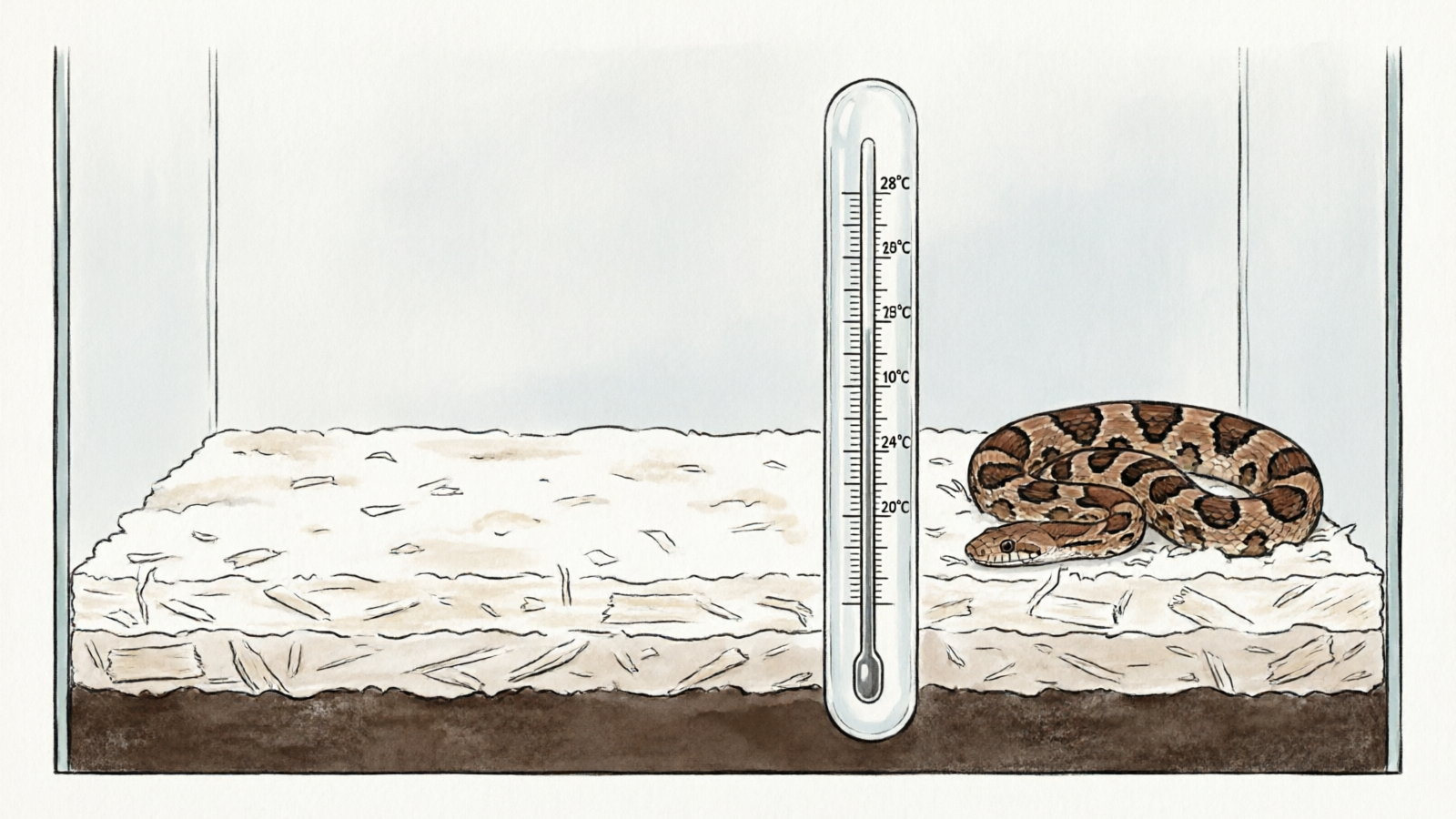
Corn Snake Substrate Safety Checklist
Before placing any corn snake substrate in your enclosure, verify these items:
✅ Use kiln-dried aspen as primary substrate for most setups (ReptiFiles)
✅ Maintain correct depth — 1-2” hatchlings, 2-3” juveniles, 3-4” adults (ReptiFiles)
✅ Target 40-50% ambient humidity with aspen (ReptiFiles)
✅ Use coconut fiber only if humidity drops below 40% or in dry climates
✅ Freeze or bake all natural substrates before use to kill mites (PetMD)
✅ Sift all bagged substrates for foreign objects (plastic, metal, rocks)
✅ Spot-clean waste immediately, full replacement every 3-4 months (ReptiFiles)
✅ Feed on aspen or in a separate container — never on bark or gravel (VCA Hospitals)
❌ Never use pine shavings — phenol oils cause respiratory, neurological, and liver damage (Merck Veterinary Manual)
❌ Never use cedar shavings — highest phenol concentration, can be fatal with short-term exposure (Merck Veterinary Manual)
❌ Never use eucalyptus — 1,8-cineole causes respiratory depression in snakes (Merck Veterinary Manual)
❌ Never use sand or gravel — fatal impaction risk, corn snakes are woodland not desert species (VCA Hospitals)
❌ Never use cat litter — clumping varieties cause fatal blockages if ingested
❌ Never feed on bark, wood chips, or chunky substrates — impaction risk if ingested with prey (VCA Hospitals)
❌ Never reuse substrate from a sick snake enclosure — cross-contamination risk
❌ Never use reptile carpet long-term — snags teeth and claws causing injury (VCA Hospitals)
For hides that sit on top of your chosen corn snake substrate, see our ball python hides and leopard gecko hides guides. Compare leopard gecko substrate needs with corn snakes — both are semi-arid species but their corn snake substrate requirements differ in depth and type.
Key Takeaways
Zoo Med Aspen Snake Bedding is the best overall corn snake substrate for most keepers. This corn snake substrate is the community gold standard on r/cornsnakes — the top corn snake bedding choice — mold-resistant, safe if ingested, and simple to maintain. The Aspen Debate between ReptiFiles and the community comes down to humidity targets: 40-50% (where aspen wins) versus 65-75% (where coconut fiber wins).
Zoo Med Eco Earth is the budget pick for dry climates. The Bio Dude Terra Firma is the premium corn snake bedding for keepers who want a self-cleaning bioactive display.
Freeze or bake all natural substrates before use. Mites and pest eggs survive in packaged mulch and bark products.
Sift ReptiChip for plastic contamination. Inspect Reptibark for glochids.
Never use pine, cedar, or eucalyptus. Never feed on bark, wood chips, or gravel substrates. These are not suggestions — they are safety rules.
Frequently Asked Questions
What is the best substrate for a corn snake?
Kiln-dried aspen bedding is the community gold standard. It is mold-resistant, safe if ingested in small amounts, and promotes natural burrowing. Zoo Med Aspen Snake Bedding is the most recommended brand on r/cornsnakes.
Corn snakes are ambush feeders that strike from burrows. Small amounts of aspen pass through harmlessly if ingested — a key corn snake safe substrate advantage. This safety advantage is the main reason aspen dominates community recommendations over bark or chip alternatives.
Can I use coconut fiber (Eco Earth) for corn snakes?
Yes, but with caveats. Coconut fiber retains more moisture than aspen, which helps in dry climates but can cause mold in humid environments. It is the best choice if you struggle to maintain 40% minimum humidity.
The key difference is preparation. Coconut fiber requires soaking to expand, while aspen is ready to use. The eco earth corn snake combination works best when humidity drops below 40% in your room.
How deep should corn snake substrate be?
Hatchlings: 1-2 inches. Juveniles: 2-3 inches. Adults: 3-4 inches.
Corn snakes are active burrowers — deeper is better for adults. Deeper substrate allows your snake to create tunnels and buried chambers, which reduces stress and promotes natural behavior. For bioactive setups, use 4 inches or more to provide room for the cleanup crew.
Why does ReptiFiles say aspen is “not great”?
ReptiFiles targets 65-75% humidity for corn snakes — a tropical standard. At that humidity level, the best substrate for corn snakes shifts to coconut fiber. Aspen dries out too fast and coconut fiber works better.
Most keepers maintain 40-50% humidity, where aspen excels. Neither recommendation is wrong — they are optimized for different humidity targets.
This corn snake substrate vs aspen debate mirrors the pattern seen across reptile care. The same substrate can be ideal or problematic depending on the humidity parameters you maintain.
Should I feed my corn snake in its enclosure?
If you feed in the enclosure, aspen is the safest loose substrate — small amounts pass through harmlessly. Bark, wood chips, and gravel pose impaction risk if ingested with prey. Alternatively, feed in a separate container.
Most corn snake keepers feed in the enclosure without issues when using aspen — the safest feeding method with aspen bedding. The risk increases significantly with chunkier substrates like bark chips or coconut chunks.
How often should I change corn snake substrate?
Spot-clean waste (urates and feces) immediately. Replace all substrate every 3-4 months. Bioactive setups with cleanup crew (isopods and springtails) can go 6-12 months between full changes (ReptiFiles).
Regular spot cleaning takes less than a minute per day and dramatically extends the life of your substrate. Bioactive setups with healthy isopod populations require the least frequent full replacements.