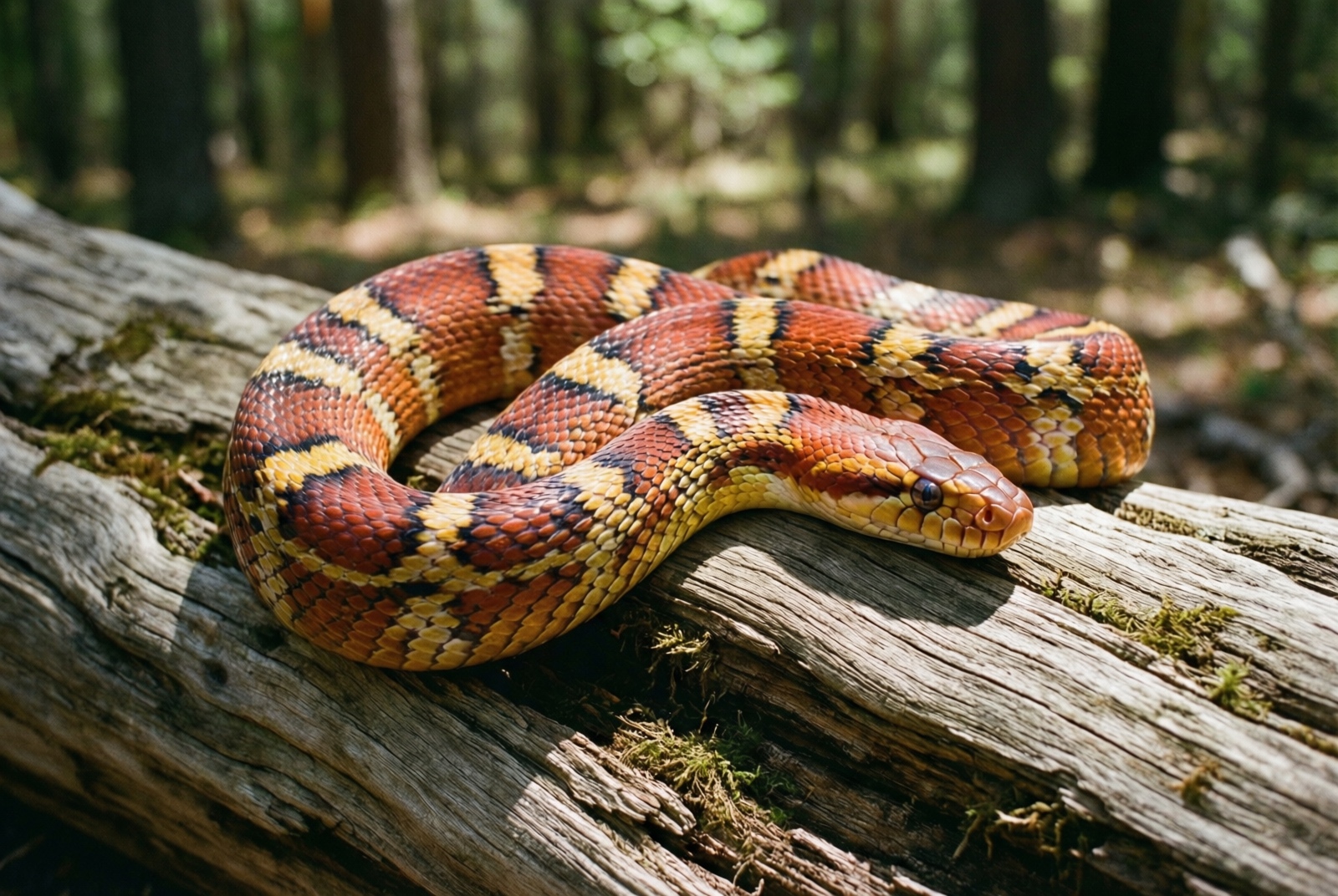
Corn snakes are widely regarded as the best beginner snake in the hobby, and for good reason. They are docile, relatively small, easy to care for, and come in a stunning range of colors and patterns called morphs. If you are considering your first pet snake, a corn snake is probably the smartest choice you can make.
This corn snake care guide covers everything from choosing the right enclosure and maintaining proper temperatures to feeding schedules, substrate selection, shedding, and common health problems. I have kept corn snakes for years, and I will share what actually works for corn snake care — not just what the care sheets say.
If you are also considering other popular pet reptiles, our ball python care guide covers the other most common beginner snake, and our leopard gecko care guide is worth reading if you are open to lizards instead.
Is a Corn Snake Right for You?
What Is a Corn Snake?
Corn snakes (Pantherophis guttatus) are North American colubrid snakes found throughout the southeastern United States. They got their name from the corn-grain pattern on their belly scales — not because they eat corn, which is a surprisingly common misconception. In the wild, they live in fields, forests, and near abandoned buildings where they hunt mice, rats, birds, and lizards.
Adult corn snakes reach 3 to 5 feet in length and live 15 to 20 years in captivity with proper care. The record lifespan exceeds 30 years. This is a long-term commitment — consistent corn snake care spans 15 to 20 years — roughly comparable to getting a dog in terms of how long the animal will be in your life.
Why Corn Snakes Are the Top Beginner Snake
Corn snakes have several qualities that make them ideal for first-time keepers. They are generally calm and tolerate handling well — one reason corn snake care is considered beginner-friendly. They do not grow to intimidating sizes. Their husbandry requirements are straightforward — no special lighting, no complex humidity systems, and feeding is simple with widely available frozen mice. Compared to ball pythons, corn snake care is similar but corn snakes are more active and curious explorers, which makes them more interesting to watch during the day.
The initial cost is reasonable: a hatchling from a reputable breeder runs $40 to $80, and a complete setup including enclosure, heating, and accessories costs $150 to $300. Monthly food costs are typically $10 to $20.
Handling Basics
A key part of corn snake care is building trust. Start with short 5-minute handling sessions and gradually work up to 15 to 20 minutes. Wait at least 48 hours after feeding before handling — moving a snake too soon after a meal can cause regurgitation. Support the body fully and avoid sudden movements. I have found that corn snakes that are handled regularly from a young age become noticeably more relaxed and comfortable with people.
Corn Snake Tank Setup & Enclosure Size
Getting the enclosure right from the start is one of the most important parts of corn snake care. The corn snake enclosure size you need depends on the snake’s age and size. The wrong setup leads to stress, feeding refusal, and health problems.
Enclosure Size by Age
| Age | Minimum Size | Preferred Size | Notes |
|---|---|---|---|
| Hatchling | 10 gallon | 20 gallon | Too large causes stress |
| Juvenile (6-12 months) | 20 gallon | 30 gallon | Gradual upsizing |
| Adult (3+ feet) | 40 gallon (36”×18”×18”) | 75 gallon | More space = more active snake |
The “too large causes stress” point for hatchlings is real and often overlooked by new keepers. Baby corn snakes in a massive 75-gallon tank will hide constantly, refuse food, and become skittish. Start small and upgrade as the snake grows.
Enclosure Type
Front-opening glass terrariums are the best option. They make feeding, cleaning, and decorating much easier than top-opening tanks. The Zilla QuickBuild Reptile 20 Gallon Glass Terrarium is a solid choice for hatchlings and juveniles. It has front-opening swing doors that make access easy, and the QuickBuild assembly system takes about 10 minutes. At $219.95 with a 4.5-star rating, it is an investment — but a quality enclosure lasts for years. One thing I would note: the screened top allows good airflow but can let humidity escape. If you live in a dry climate, covering part of the screen helps maintain moisture.
Essential Setup Items
Every corn snake enclosure needs:
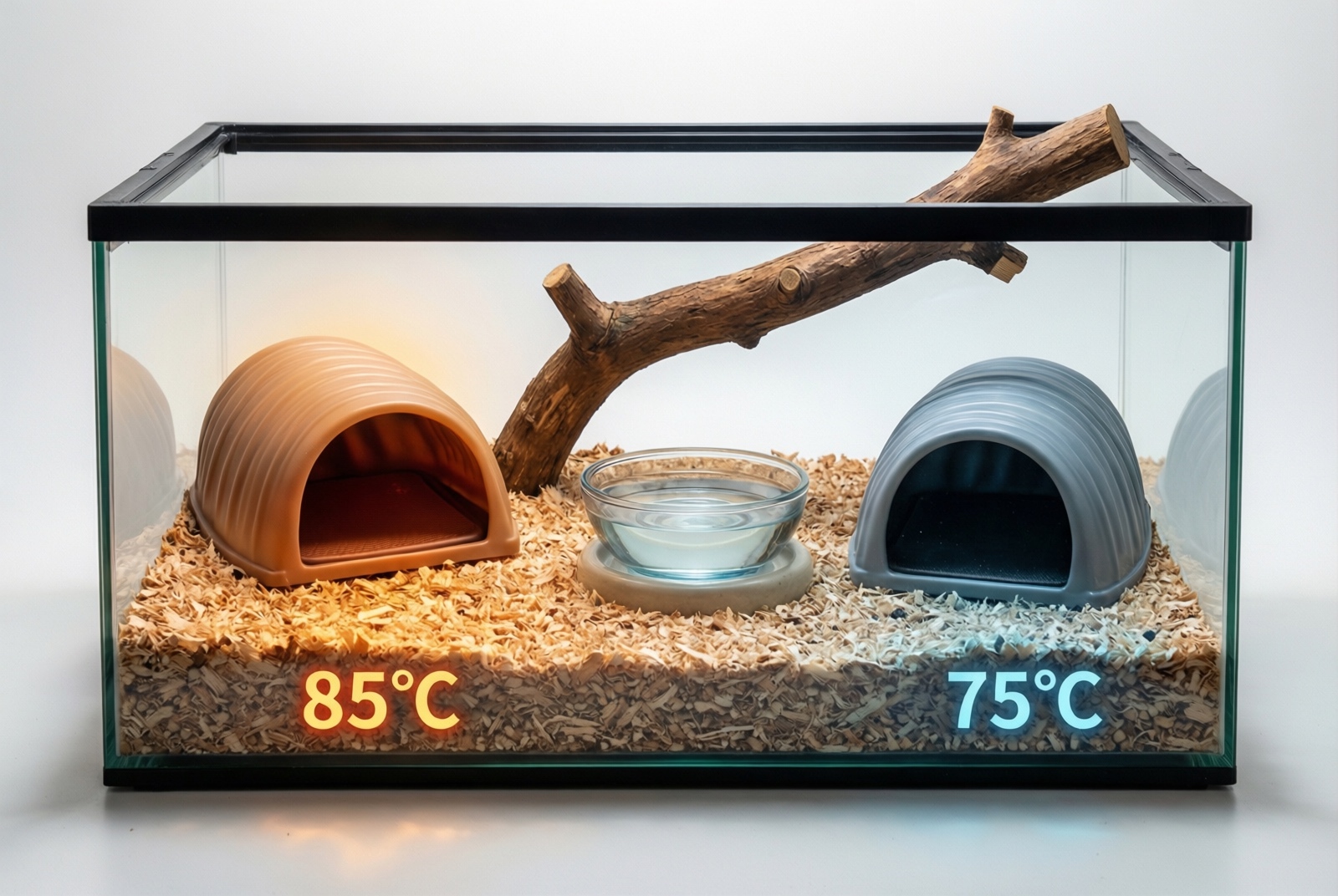
- Warm hide and cool hide — one on each side of the temperature gradient, so the snake can choose
- Water bowl — large enough for the snake to soak in, which helps with shedding
- Climbing branches — corn snakes are semi-arboreal and will absolutely use branches if provided
- Secure lid or locking mechanism — corn snakes are notorious escape artists
That last point deserves emphasis. I have heard from multiple keepers who lost corn snakes because they underestimated how determined these snakes can be about pushing open doors or squeezing through gaps. An Exo Terra Terrarium Lock is a simple metal lock that installs without tools and prevents curious children, cats, and the snake itself from opening the doors. At $10.99 with over 1,100 reviews, it is inexpensive insurance. Just be aware that this is a deterrent — a very determined snake might still push past it, so always check that the doors are fully latched.
Place the enclosure in a quiet room away from direct sunlight, HVAC vents, and high-traffic areas. Corn snakes prefer calm environments.
 —>
—>
Temperature & Heating Requirements
Temperature is the single most critical environmental parameter in corn snake care. They are ectothermic — they rely on their environment to regulate their body temperature. Getting your corn snake temperature wrong causes everything from feeding refusal to respiratory infections.
The Temperature Gradient
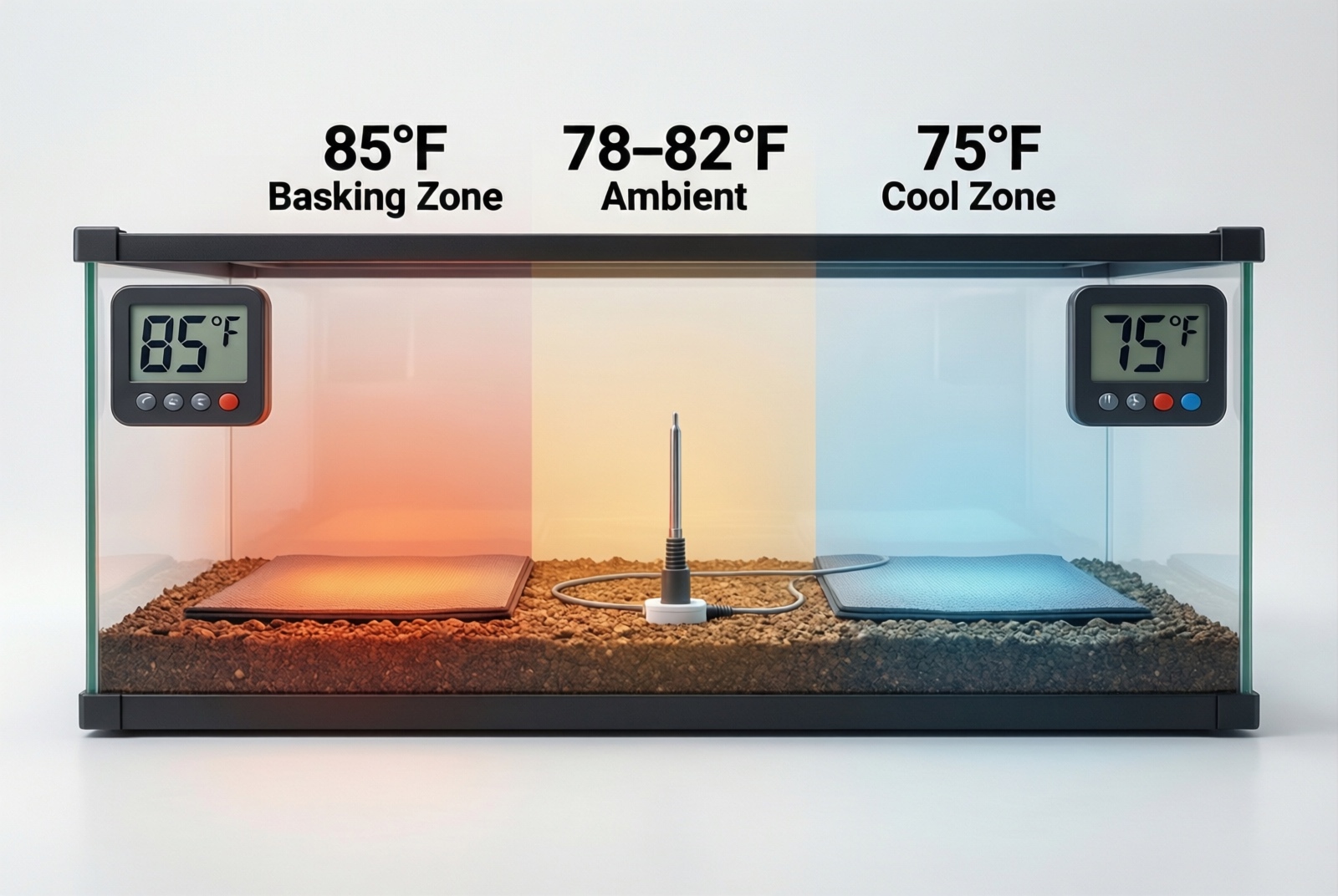
Corn snakes need a temperature gradient across their enclosure so they can thermoregulate by moving between warm and cool areas.
| Zone | Temperature | Purpose |
|---|---|---|
| Warm side (basking) | 85°F (29°C) | Digestion, general activity |
| Cool side | 75°F (24°C) | Resting, thermoregulation |
| Ambient (middle) | 78-82°F (26-28°C) | Comfort zone |
| Nighttime | 70-75°F (21-24°C) | No supplemental heat needed |
Heating Equipment
An under-tank heat mat (UTH) controlled by a thermostat is the standard heating method. The heat mat should cover approximately one-third of the enclosure floor on the warm side. Never use heat rocks — they cause severe burns and are responsible for countless injuries.
The Aiicioo Under Tank Heater with Built-in Thermostat is an all-in-one solution that includes both the heat pad and a digital thermostat with a probe. At $27.19 with over 2,100 reviews and a 4.4-star rating, it takes the guesswork out of heating. The adjustable range of 68 to 108°F covers corn snake needs easily. One caveat: the adhesive is extremely strong, so plan your placement carefully before sticking it on — removing it will tear the pad.
For keepers who already have a separate thermostat, the BN-LINK Reptile Heat Pad 6”×8” is a budget-friendly option at $9.34. It has 1,764 reviews and a 4.4-star rating. However, I want to be very clear: this is just a heat pad with a dial, not a real thermostat. You must pair it with a separate thermostat for safety. Multiple reviewers have reported that the pad gets dangerously hot on its highest setting without temperature regulation.
For monitoring, the PAIZOO Digital Thermometer is a reliable choice at $9.99. With over 5,600 reviews and a 4.5-star rating, it has an LED display with ±0.9°F accuracy. It sticks to the outside of the glass and activates with a tap. I would recommend placing one on each side of the enclosure to monitor the full gradient. Keep in mind that it measures the glass surface temperature, not the actual air temperature — for precise hotspot readings, a probe thermometer is more accurate.
Do Corn Snakes Need UVB?
Corn snakes are crepuscular and nocturnal, meaning they are most active at dawn, dusk, and during the night. In the wild, they get vitamin D3 from their prey (rodents have D3 in their livers), so UVB is not strictly required. However, many reptile veterinarians now recommend providing low-level UVB (a 5.0 bulb) for 12 hours per day on a timer. The benefits include better calcium metabolism, more natural behavior patterns, and improved overall health. If you decide to provide UVB, the Zilla Mini Heat & UVB Light Fixture is a compact dual fixture that holds both a heat bulb and a UVB bulb in one unit. At $39.99, it fits on top of 10 to 20 gallon terrariums. The bulbs are sold separately, which is worth knowing before you order.
For more on reptile heating and UVB requirements, our bearded dragon care guide covers species that have much more demanding UVB needs, and our crested gecko care guide discusses a species with minimal UVB requirements similar to corn snakes.
 —>
—>
What Do Corn Snakes Eat?
Diet in the Wild vs Captivity
In the wild, corn snakes eat mice, rats, birds, eggs, and lizards. In captivity, the diet is simple: frozen-thawed mice or rats of appropriate size.
I want to be very explicit about this — never feed live prey to a corn snake. Live rodents can and will fight back, and they cause serious injuries including bites, scratches, and infections. Frozen-thawed prey is safer, more convenient, and just as nutritious. Every reptile veterinarian and experienced keeper I know recommends frozen-thawed exclusively.
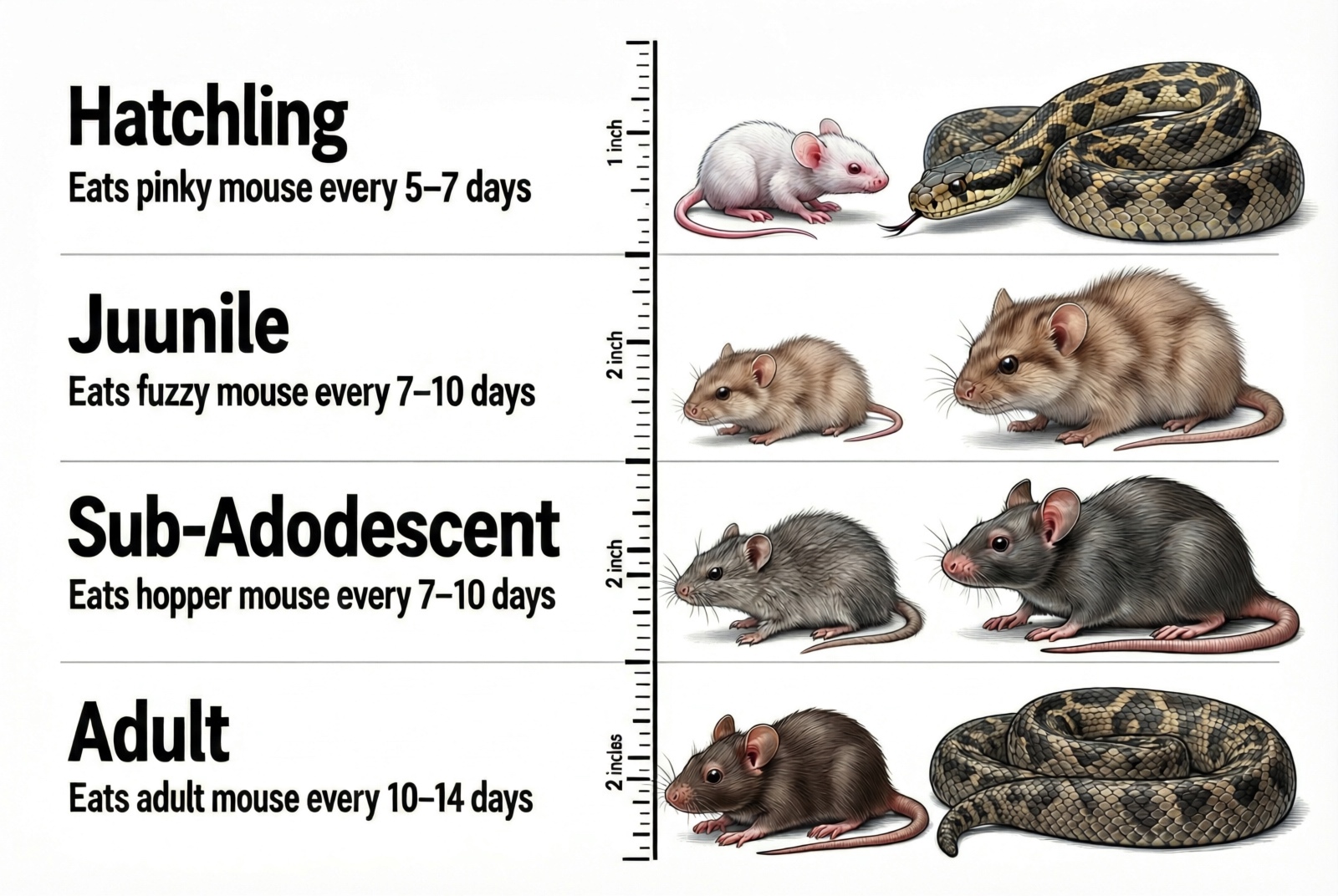
Feeding Schedule by Age
| Age | Frequency | Prey Size | Prey Type |
|---|---|---|---|
| Hatchling | Every 5-7 days | Pinkies | Frozen-thawed mice |
| Juvenile | Every 7-10 days | Fuzzies → hopper mice | Frozen-thawed mice |
| Adult (2+ years) | Every 10-14 days | Adult mice → small rats | Frozen-thawed mice or rats |
The general rule for prey size: the prey item should be slightly wider than the snake’s widest body part. If it looks too big, it probably is. Feeding prey that is too large can cause regurgitation, which is stressful and potentially dangerous for the snake.
How to Feed
Thaw frozen prey in the refrigerator overnight, then warm in warm water for 10 to 15 minutes. Use feeding tongs to present the prey. I prefer feeding in a separate container to avoid the snake associating my hand with food. Wait 48 hours after handling before feeding.
Feeding Problems
Refusing food is common in corn snake care and usually not alarming. When asking how often to feed a corn snake, the answer depends on age. Hatchlings may refuse during their first few feedings in a new home, and adults often go off food during shedding. If an adult refuses food for more than 3 weeks and is not in shed, check your temperatures.
Regurgitation means the snake vomited up a meal. Common causes are handling too soon after feeding, prey that was too large, or temperatures too low. After regurgitation, wait 10 to 14 days before the next meal and start with a smaller prey item.
 —>
—>
Corn Snake Care: Substrate Options
Choosing the right corn snake substrate matters more than many new keepers realize. Corn snakes are active burrowers — they spend a significant amount of time tunneling through their bedding. The substrate needs to be safe, allow burrowing, and control odors.
Best Substrate Options
| Substrate | Safe for Burrowing | Odor Control | Humidity | Cost | Best For |
|---|---|---|---|---|---|
| Aspen shavings | Excellent | Good | Low (dry) | Moderate | Default choice for corn snakes |
| Newspaper/paper towels | No | Poor | Neutral | Very low | Quarantine and hatchlings |
| Cypress mulch | Good | Good | Holds moisture | Moderate | Low-humidity environments |
| Coconut husk (eco earth) | Good | Good | Holds moisture | Moderate | Higher humidity needs |
Aspen shavings are the top recommended substrate for corn snakes. They are safe if accidentally ingested, allow natural burrowing, and control odors. The Zoo Med Aspen Snake Bedding is the standard choice at $9.91 for a 4-quart bag. With a 4.7-star rating across 575 reviews, it is well-established in the hobby. One reviewer noted that their snake actively pushed out a different substrate and stayed in the aspen — corn snakes do show a preference, and most prefer aspen. The main downside is that it can be dusty out of the bag, so give it a quick sift before adding it to the enclosure. For a 20-gallon tank, plan on 2 to 3 bags to get 1 to 2 inches of depth.
Newspaper or paper towels are not glamorous, but they are the best choice for quarantine setups and new arrivals. They make it easy to monitor droppings and spot potential health issues. Once the snake is established and healthy, switch to aspen.
What to Never Use
Pine and cedar shavings contain aromatic oils (phenols and terpenes) that are toxic to snakes and cause respiratory and neurological problems. Sand and gravel cause impaction if swallowed. Astroturf and reptile carpet are harsh on belly scales and trap bacteria. Avoid all of these.
Corn Snake Care: Shedding & Humidity
Humidity Requirements
Proper corn snake humidity should be 40 to 50% ambient. This is moderate — not bone dry, but not tropical either. During shedding cycles, increase humidity to 50 to 60% to prevent stuck shed.
The Shedding Cycle
Corn snakes shed every 4 to 6 weeks as adults, and every 2 to 3 weeks as juveniles (they grow faster, so they shed more often). The process takes 1 to 2 weeks from start to finish.
Signs of an upcoming shed:
- Colors become dull or darkened
- Eyes turn blue or cloudy (called being “in blue”)
- The snake becomes more secretive and may hide more
- Appetite may decrease
After the blue phase clears (eyes return to normal), the actual shed typically happens within 3 to 5 days. A healthy shed comes off in one complete piece, including the eye caps and tail tip.
Helping Your Snake Shed
Provide a humid hide — a small container filled with damp sphagnum moss that the snake can enter. This creates a microclimate of higher humidity. You can also lightly mist one corner of the enclosure with water during shed cycles.
Stuck shed is the most common shedding problem. If pieces remain — especially eye caps or the tail tip — increase humidity immediately. Soak the snake in lukewarm (not hot) water for 15 to 20 minutes in a shallow container. Retained eye caps that do not come off after two shed cycles need veterinary attention. Retained tail shed can constrict blood flow and lead to tail loss if left untreated.
Corn Snake Care: Health & Common Problems
Signs of a Healthy Corn Snake
A healthy corn snake has clear eyes (unless in shed), smooth scales without discoloration, regular tongue flicking, consistent feeding, and complete sheds.
Common Health Issues
Respiratory infections are usually caused by incorrect temperatures or humidity. Symptoms include wheezing, clicking sounds when breathing, mucus bubbles around the mouth or nostrils, and open-mouth breathing. If you notice any of these, check your temperatures immediately — the warm side may be too cool. Respiratory infections require veterinary treatment with antibiotics and do not resolve on their own.
Mites are tiny external parasites that appear as black or red dots on the snake, especially around the eyes. Affected snakes may soak excessively or rub against objects. Mites spread rapidly between reptiles and require dedicated treatment products and thorough enclosure cleaning. Quarantine new snakes for at least 60 days.
Scale rot appears as discolored, blistered, or soft scales on the belly, caused by substrate that is too wet. Treatment involves improving drainage, using dry paper towels temporarily, and veterinary care for severe cases.
Regurgitation is not a disease itself but a symptom. Common causes include feeding too soon after handling, prey that is too large, and warm-side temperatures below 80°F. After a regurgitation event, wait 10 to 14 days before the next feeding attempt and offer a smaller prey item.
Finding a Reptile Vet
Find an exotic reptile veterinarian before you need one — not when your snake is already sick. Many regular veterinarians do not treat reptiles. The Association of Reptilian and Amphibian Veterinarians (ARAV) has a searchable directory online. For more on common reptile health issues, our box turtle care guide covers some overlapping conditions seen across different reptile species.
Frequently Asked Questions
How often should I feed my corn snake?
Hatchlings every 5 to 7 days with pinkies or fuzzies. Juveniles every 7 to 10 days with fuzzies or small adult mice. Adults every 10 to 14 days with adult mice or small rats. Always use frozen-thawed prey slightly wider than the snake’s widest body part. Never feed live prey — the risk of injury is not worth it.
What temperature do corn snakes need?
The warm side basking area should be 85°F, and the cool side should be 75°F. Use a thermostat-controlled under-tank heat mat on the warm side. Nighttime temperatures can safely drop to 70 to 75°F without supplemental heating. A digital thermometer on each side of the enclosure is essential for monitoring.
How big of a tank does a corn snake need?
Hatchlings do well in a 10 to 20 gallon enclosure. Adults need a minimum of 40 gallons (36”×18”×18”), with 75 gallons being ideal for active adults. Front-opening terrariums are strongly preferred over top-opening tanks for easier maintenance and feeding.
How long do corn snakes live?
15 to 20 years in captivity with proper care. The documented record exceeds 30 years. This is a significant long-term commitment — comparable in duration to owning a dog. Make sure you are prepared for two decades of care before getting one.
What substrate is best for corn snakes?
Aspen shavings are the best all-around choice. They are safe, allow natural burrowing, control odors, and most corn snakes actively prefer them over alternatives. Avoid pine and cedar shavings (toxic), sand and gravel (impaction risk), and reptile carpet (harsh on scales). Use 1 to 2 inches of depth and spot-clean weekly.
Do corn snakes need UVB lighting?
Not strictly required. Corn snakes are crepuscular and get vitamin D3 from their prey. However, many reptile veterinarians now recommend providing low-level UVB (a 5.0 bulb) for 12 hours per day to support overall health and natural behavior. It is not essential, but it is increasingly considered beneficial.
Can corn snakes be handled?
Yes — they are one of the most docile snake species available. Start with 5-minute sessions and gradually increase to 15 to 20 minutes. Always wait at least 48 hours after feeding before handling. Support the full body and move slowly. I have found that corn snakes handled regularly from a young age become noticeably calmer and more comfortable with people.
What do corn snakes eat?
Frozen-thawed mice and rats. Hatchlings start with pinkies and progress through fuzzies to adult mice as they grow. The prey should be slightly wider than the snake’s widest body part. Thaw in the refrigerator overnight, then warm in warm water before offering. Never feed live prey.