Why Choosing the Right Rabbit Bedding Matters
Rabbit bedding is the material that lines your rabbit’s living area — providing comfort, absorbing urine, controlling odor, and protecting their feet from sore hocks (pododermatitis). Choosing the wrong bedding can lead to respiratory problems, skin infections, and chronic discomfort — which is why selecting the best rabbit bedding matters from day one.
Rabbits are especially vulnerable to three bedding-related risks:
- Respiratory sensitivity. Dusty bedding irritates delicate lung tissue and can trigger chronic sneezing, wheezing, and upper respiratory infections. For guidance on protecting your rabbit’s breathing, see our article on rabbit respiratory health.
- Ammonia from urine. A single rabbit produces 120–130 mL of urine per kilogram of body weight daily (PetMD; PMC7158343). Rabbits also have uniquely high fractional urinary calcium excretion — their kidneys eliminate excess dietary calcium through urine rather than reabsorbing it, which makes bedding that traps ammonia especially critical (ScienceDirect). Bedding that traps moisture without neutralizing ammonia creates a toxic environment.
- Foot health. Rabbits lack thick foot pads like dogs or cats. Hard or abrasive surfaces cause sore hocks — painful, open wounds on the hock joint that require veterinary treatment.
Bedding vs. litter: Bedding covers the cage or hutch floor for comfort and warmth. Litter goes in a specific box for waste management. Many materials work as both bedding and litter, but the best choice depends on your setup. For waste management specifically, see our guide to the best rabbit litter.
Quick Comparison of Top Rabbit Bedding Picks
| Product | Material | Best For | Price |
|---|---|---|---|
| Carefresh White Paper) | Paper | Best Overall | $28.99 (50L) |
| Kaytee Clean & Cozy Lavender) | Paper (Scented) | Best Scented | $24.95 (49.2L) |
| Kaytee Extreme Odor Control) | Paper (Odor) | Best Odor Control | $29.99 (40L) |
| Oxbow Pure Comfort) | Paper Pellet | Best Premium | $24.95 (36L) |
| Kaytee Aspen) | Aspen Wood | Best Wood | $30.79 (52.4L) |
| Kaytee Pine) | Pine Wood | Best Budget | $8.99 (52.4L) |
| Blue Mountain Hay | Wheat Straw Pellet | Best Pellet | $34.99 (20lb) |
| Sunheir Fleece Liners) | Fleece (Reusable) | Best Reusable | $20.51 (2pk) |
Best Rabbit Bedding Reviews
We researched and compared 8 products across 6 material types to find the best rabbit bedding for every situation. Here are our top picks based on safety, odor control, absorbency, and real user feedback. Choosing the right bedding starts with choosing the right rabbit cage — size and ventilation both affect which bedding works best.
1. Carefresh 99% Dust-Free White Paper Bedding — Best Overall
Carefresh is the most reviewed rabbit bedding on Amazon. It earns the top spot for consistent dust-free quality, strong odor control, and soft texture that protects sensitive rabbit feet.
Carefresh is the default choice for any new rabbit owner — it is the hardest bedding to get wrong.
Key features: 99% dust-free manufacturing, 10-day odor control guarantee, and moisture-wicking technology that pulls wetness to the bottom layer while keeping the surface dry. The white color makes it easy to spot-clean soiled areas.
The paper fibers are soft enough that rabbits frequently use them for nesting and digging — natural behaviors that indicate comfort. Owners note: “Best paper bedding I know of — dust free, controls odor, soft for their feet. My bunny loves it and uses it for digging.”
Honest downside: The lightweight paper format means rabbits kick it out of open-sided cages easily. If your cage has low walls or a wire bottom, expect bedding scattered outside the cage daily. Using a deeper litter box or cage with high sides minimizes this.
Carefresh White Paper Bedding → Amazon)
2. Kaytee Clean & Cozy Lavender — Best Scented
Kaytee Clean & Cozy Lavender adds natural lavender buds to their paper bedding formula. The result is a pleasant, subtle scent that masks cage odors without relying on artificial fragrances. For owners specifically looking for scented paper bedding for rabbits, this is the most popular option available.
Key features: 99.9% dust-free, natural lavender scent, and the same soft, absorbent paper fiber base as the standard Clean & Cozy line. The 49.2-liter bag covers a standard rabbit cage bedding setup for approximately 2-3 weeks with weekly full changes.
Owners appreciate the scent balance. Owners appreciate the balance: “Super soft and absorbent — the scent keeps the cage smelling fresher for longer without being overwhelming.”
Honest downside: The lavender dye can transfer color when wet. If your rabbit is a heavy drinker or prone to tipping water bowls, the bedding may stain light-colored cage floors. Some sensitive rabbits may also find any scent bothersome — watch for sneezing or nose-twitching after first use.
Kaytee Clean & Cozy Lavender → Amazon)
3. Kaytee Extreme Odor Control — Best for Odor Control
For rabbit owners fighting persistent ammonia smell, Kaytee Extreme Odor Control is the strongest option available — and the best rabbit bedding for odor control overall. It uses activated carbon technology specifically designed for high-odor animals.
Key features: 14-day odor control guarantee (4 days longer than standard paper bedding), activated carbon formula, and thousands of positive owner reviews. This is the best rabbit bedding for odor control when nothing else works.
Owners with multiple rabbits report: “We’ve been using this for our bunnies for about a year — super absorbent in their litter box. Fluffy, really good odor control — my new go-to.”
Honest downside: At $29.99 for 40 liters, it is the most expensive paper bedding per liter in this lineup. You pay a premium for the activated carbon technology. It is also only available in gray, which makes it harder to spot soiled areas compared to white bedding.
Kaytee Extreme Odor Control → Amazon)
4. Oxbow Pure Comfort White Paper — Best Premium
Oxbow is a veterinarian-trusted brand specifically focused on small animal nutrition and care. Their Pure Comfort bedding reflects that expertise — it is designed from the ground up for rabbits and guinea pigs. Oxbow products consistently deliver premium quality that justifies the price — a reputation well-earned in the exotic pet community.
Key features: Low-dust paper pellet format, superior absorbency from compressed paper fibers, and a dense pellet structure that resists tracking and scattering. Many rabbit owners specifically seek out Oxbow products for the brand’s reputation in the exotic pet community.
Repeat buyers confirm: “I keep reordering for my holland lop bunny — packed full, good odor control, he always uses his litter box.”
Honest downside: The 36-liter bag is noticeably smaller than Carefresh’s 50-liter at the same $24.95 price point. You get 28% less bedding per dollar. The pellet format is also slightly firmer than fluffy paper — some rabbits initially prefer softer textures.
5. Kaytee Aspen Bedding — Best Wood Option
Aspen is the only wood shaving considered safe for rabbits because it contains no aromatic oils or phenols. For owners who prefer natural aspen bedding, Kaytee Aspen earns the top wood spot.
Key features: All-natural aspen shavings, biodegradable, and free from the dangerous phenols found in cedar and non-kiln-dried pine. Thousands of owners rate it highly for both small animal and bird use.
The texture is coarser than paper but still soft enough for rabbit feet. Owners confirm: “Best bedding — absorbs both the waste and the smell, soft on their feet.”
Honest downside: Dust levels vary between bags. Some batches arrive with fine particles that create a dust cloud when poured. Sifting before use or transferring slowly minimizes airborne dust. At $30.79 for 52.4 liters, it is also the most expensive option per liter. For more on wood bedding safety, see our aspen vs pine bedding comparison which covers the same safety concerns for hamsters.
Kaytee Aspen Bedding → Amazon)
6. Kaytee Pine Bedding — Best Budget Pick
At $8.99 for 52.4 liters, Kaytee Pine is the cheapest safe rabbit bedding available.
The kiln-drying process removes most harmful phenols, making it safe when the label confirms kiln-dried processing.
Key features: Kiln-dried for safety, natural pine scent, biodegradable, and the lowest cost per liter of any bedding in this guide. The natural pine aroma provides mild odor masking without added fragrances.
Owners on a budget appreciate the value. Owners on a budget note: “Super absorbent and keeps the odour to a minimum — pine scented freshness without the overpowering smell.”
Honest downside: Absorbency is noticeably lower than paper bedding. Pine shavings saturate faster, requiring more frequent changes. Some dust is present despite kiln-drying. Always verify the bag says “kiln-dried” — raw pine shavings are dangerous. The packaging bags themselves are also thin and tear easily during transport.
7. Blue Mountain Hay Organic Wheat Straw Pellets — Best Pellet Option
Wheat straw pellets offer a completely different bedding experience from fluffy paper or wood shavings. As wood pellet bedding alternatives, wheat straw is more sustainable and equally effective at wicking moisture.
Key features: Biodegradable wheat straw, moisture-wicking pellet technology, low dust, and a light natural scent. The pellet format makes spot-cleaning easy — you can scoop out just the wet pellets without replacing the entire box.
Owners with litter-trained rabbits love the efficiency. Owners with litter-trained rabbits report: “Best litter for rabbits — soaks up bunny pee, you can scoop just the wet part. No tracking, controls urine smell very well.”
Honest downside: The hard pellet texture is less comfortable than paper for rabbits who sleep directly on their bedding. It is best used in litter boxes rather than as a full cage floor covering. Some rabbits initially refuse to walk on pellet surfaces — transition gradually by mixing with familiar bedding.
8. Sunheir Washable Fleece Cage Liners — Best Reusable
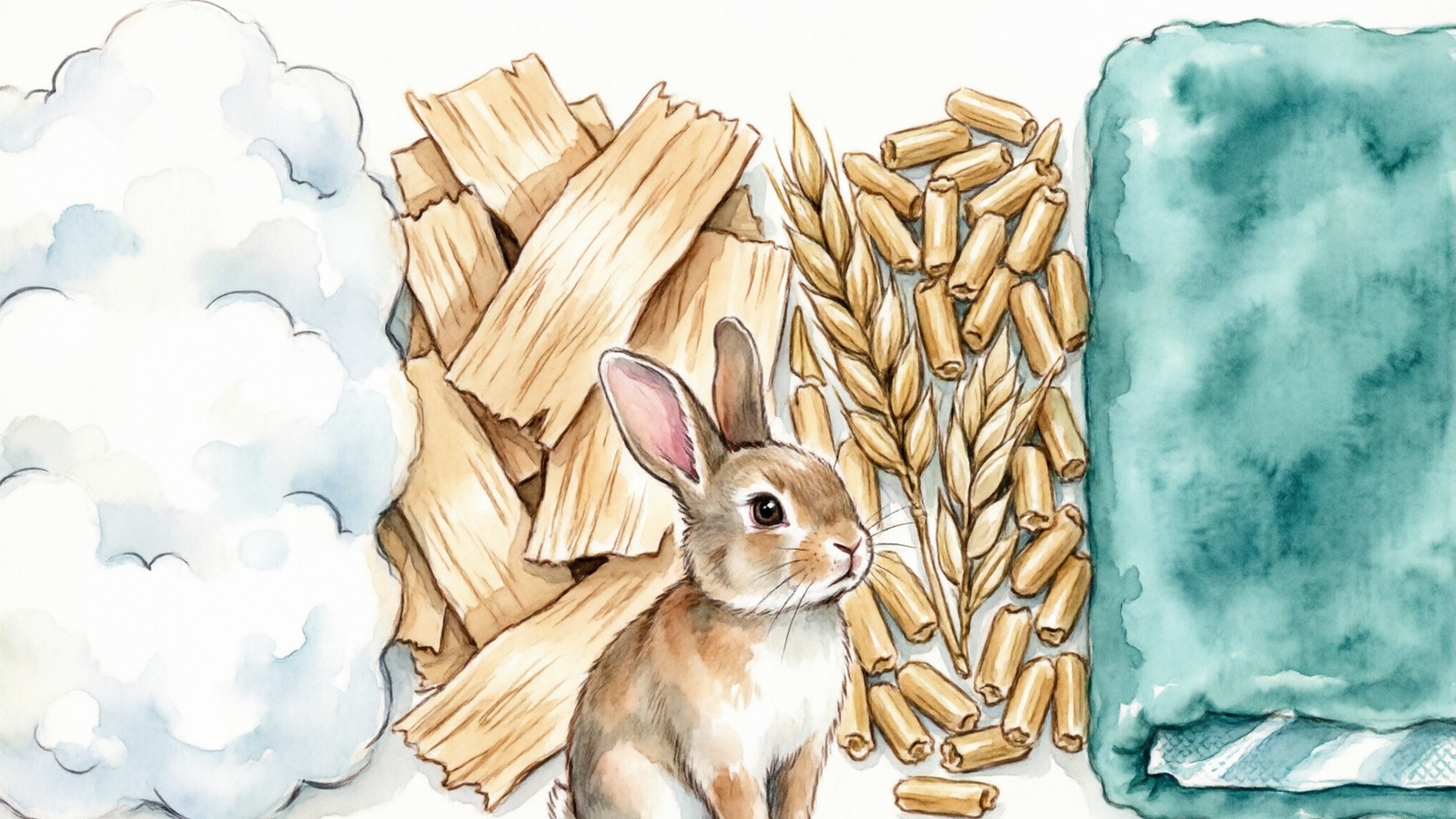
Fleece bedding is the fastest-growing segment among indoor rabbit owners. Sunheir’s two-pack of waterproof-backed liners offers a zero-waste, cost-effective alternative to disposable bedding — especially for free-roam setups.
Key features: Waterproof bottom layer prevents urine from soaking through to the floor, machine washable and dryer safe, and sold as a two-pack for rotation during laundry days. The 24×48-inch size fits standard exercise pens and cage bottoms.
Owners appreciate the convenience. Owners report: “I have two sets for my bunnies — launder beautifully, absorb well. Best pee pads — hay doesn’t stick to them.”
Honest downside: Fleece requires washing every 2-3 days to prevent ammonia buildup and urine scald. The initial $20.51 investment is comparable to disposable bedding, but the ongoing laundry cost (water, electricity, detergent) adds up. Not suitable for outdoor hutches or environments where frequent washing isn’t practical. Guinea pig owners face the same tradeoff — see our guinea pig bedding guide for the reusable vs disposable debate in a different species.
Sunheir Fleece Liners → Amazon)
Rabbit Bedding Materials Compared
The best rabbit bedding depends on material type. Each has different absorbency, odor control, and safety characteristics.
Understanding material differences helps you choose the right bedding for your specific situation. This comparison covers 6 common bedding materials across 8 criteria.
| Feature | Paper Bedding | Aspen | Pine (Kiln-Dried) | Wheat Straw Pellets | Fleece Liners | Hemp |
|---|---|---|---|---|---|---|
| Odor Control | Good | Fair | Fair | Very Good | Poor | Very Good |
| Dust Level | Very Low | Low | Low | Low | Zero | Very Low |
| Absorbency | Very Good | Fair | Fair | Excellent | Good | Excellent |
| Comfort | Excellent | Good | Fair | Fair | Excellent | Good |
| Safety if Eaten | Safe | Safe | Safe | Safe | N/A | Safe |
| Eco-Friendly | Recycled | Biodegradable | Biodegradable | Biodegradable | Reusable | Biodegradable |
| Cost/Change | $$ | $$$ | $ | $$ | $ (amortized) | $$ |
| Best Use | All-purpose | All-purpose | Budget | Litter box | Indoor/free-roam | All-purpose |
Hemp note: Hemp bedding scores well across all categories but is not included in our product reviews. Current hemp bedding for rabbits on Amazon is primarily marketed for horses and poultry, running $50-60 in quantities too large for single-rabbit households.
Best Rabbit Bedding for Odor Control
Odor is the number one complaint among rabbit owners. The science behind cage odor is straightforward: rabbits on high-protein diets produce urine rich in urea, which breaks down into ammonia. The right bedding neutralizes this cycle.
Top 3 for odor control:
-
Kaytee Extreme Odor Control — 14-day guarantee with activated carbon technology. Best for multi-rabbit households or small, poorly ventilated rooms.
-
Blue Mountain Hay wheat straw — Wheat straw naturally absorbs and neutralizes ammonia. Best for litter-trained rabbits who use a box.
-
Carefresh White Paper — 10-day odor control with moisture wicking. Best all-around option that balances odor control with comfort.
Odor control tips that work:
- Layer your bedding. Place paper pellets or wheat straw pellets as a base layer, then add fluffy paper bedding on top. The bottom layer absorbs moisture while the top layer stays dry and comfortable.
- White vinegar for cleaning. Mix equal parts white water and white vinegar to clean litter boxes between changes. The acid neutralizes ammonia residue. Both Kaytee and Rabbit Hole Hay recommend this approach.
- Daily spot cleaning. Remove visibly wet areas every day. A full weekly change prevents ammonia buildup.
For complete care routines including cleaning schedules, see our rabbit care guide.
While not as common as paper or wood, wood pellets for rabbit bedding are an economical option many outdoor owners prefer.
Indoor vs Outdoor Rabbit Bedding
The best rabbit bedding indoor setups differ significantly from outdoor hutch requirements. Indoor environments prioritize aesthetics, dust control, and comfort. Outdoor setups need weather resistance and cost-efficiency for larger spaces.
Indoor Recommendations
For the best rabbit bedding indoor setups, dust control and appearance matter most. Carefresh White Paper and Kaytee Clean & Cozy are the top picks because they produce almost no airborne dust and look clean in a home environment.
Fleece liners like the Sunheir are ideal for free-roaming indoor rabbits who have a dedicated pen or room. They eliminate disposable waste entirely and look more like home decor than pet supplies. Wash every 2-3 days for best results.
Outdoor Recommendations
For outdoor hutches, the best bedding for outdoor rabbits prioritizes weather resistance and cost. Blue Mountain Hay wheat straw pellets hold up well against humidity and temperature changes. They do not blow away in wind like fluffy bedding can.
Kaytee Pine at $8.99 per 52.4 liters is the most economical choice for large outdoor hutches that require frequent, volume-heavy bedding changes. The natural pine scent also helps mask outdoor waste odors.
Setting up your rabbit’s home? See our complete rabbit setup guide for cage, supplies, and bedding recommendations in one place.
What Bedding to NEVER Use for Rabbits
Only safe rabbit bedding should ever be used — some materials sold as “small animal bedding” are dangerous for rabbits. Avoid these 6 materials entirely:
-
❌ Cedar shavings. Cedar contains aromatic oils and phenols that cause liver damage and respiratory disease in rabbits. LafeberVet specifically warns against cedar for all small mammals.
-
❌ Non-kiln-dried pine. Raw pine shavings contain the same harmful phenols as cedar. Only kiln-dried pine (heat-treated to remove oils) is safe.
-
❌ Clumping clay cat litter. Sodium bentonite clay expands up to 15 times its original dry volume when wet (PMC12307631). If ingested during grooming, the expanded clay causes fatal intestinal blockages. Both Lafeber and Kaytee explicitly warn against this.
-
❌ Corn cob bedding. Corn cob pieces mold rapidly when wet, creating a respiratory hazard. Ingested pieces can also cause intestinal impaction.
-
❌ Sawdust. Fine sawdust particles are small enough to enter and irritate the lower respiratory tract. Even short-term exposure triggers sneezing and eye irritation.
-
❌ Heavily fragranced bedding. Artificial scents overwhelm a rabbit’s sensitive olfactory system. Natural lavender (like Kaytee’s) is mild enough for most rabbits, but avoid any product with added perfume.
For more on protecting your rabbit from environmental hazards, see our guide to rabbit respiratory problems.
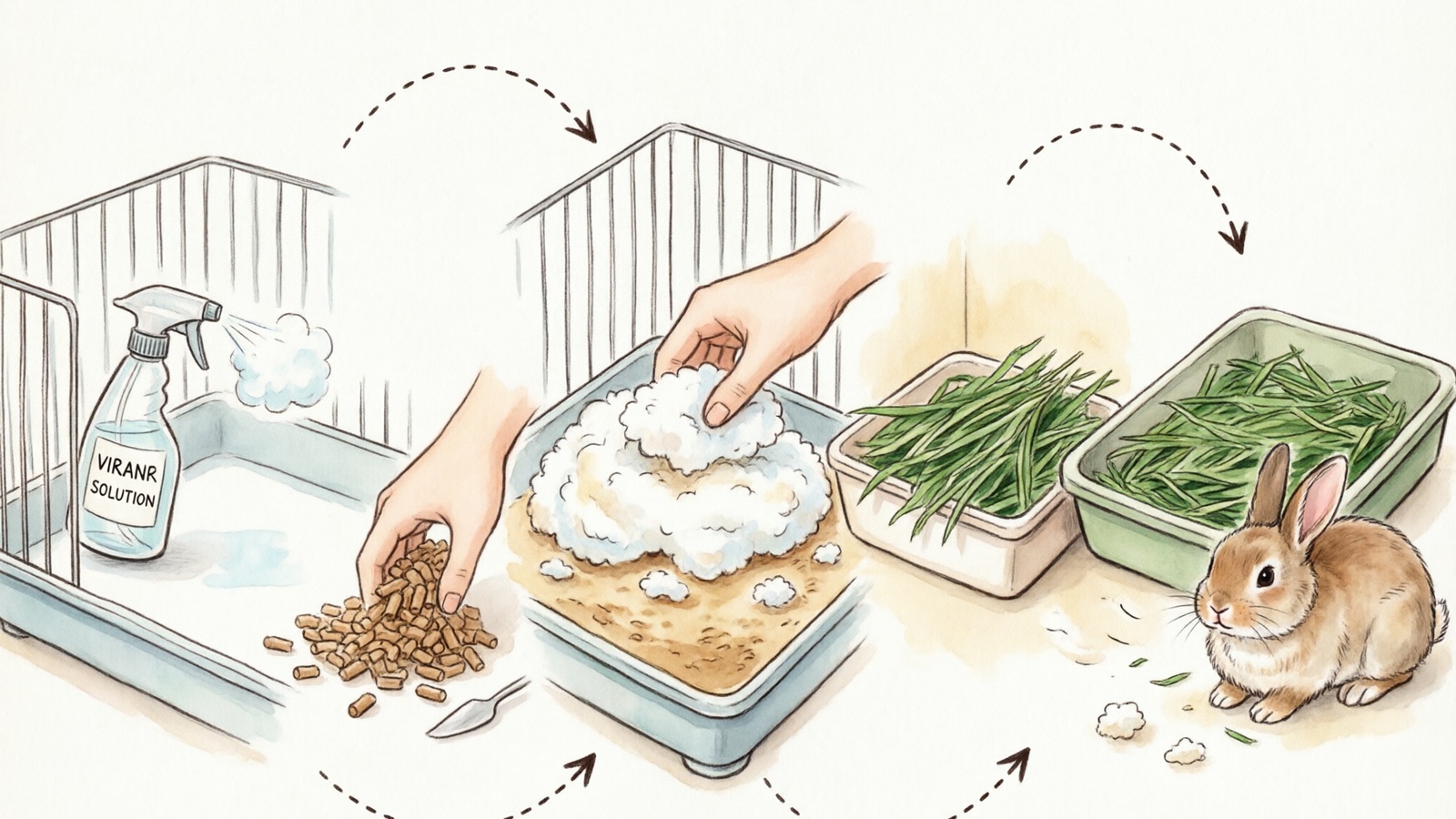
How to Set Up Rabbit Bedding (Step-by-Step)
Setting up the best rabbit bedding properly extends time between changes and keeps your rabbit healthier. Follow this 5-step process:
-
Clean the cage or litter box. Spray with a 50/50 white vinegar and water solution. Wipe dry with paper towels. This removes ammonia residue that causes lingering odor.
-
Add a 1-2 inch base layer. Use paper pellets or wheat straw pellets at the bottom. This layer absorbs moisture and prevents it from pooling on the cage floor.
-
Add a 2-3 inch comfort layer. Spread fluffy paper bedding or aspen shavings on top. This is the layer your rabbit actually walks and sleeps on.
-
Place hay in litter box corners. Rabbits eat where they eliminate. Adding Timothy hay to the litter box encourages proper litter box use while providing a fresh snack.
-
Maintain a cleaning schedule. Spot clean wet spots daily. Replace soiled areas every 3-4 days. Do a complete bedding change once per week.
Monthly cost estimate: A single-rabbit household using disposable bedding spends approximately $15–40 per month. Fleece liner users spend about $5–10 per month amortized over the liner’s 6-12 month lifespan, plus laundry costs.
Rabbit Bedding FAQ
These common questions help you choose the best rabbit bedding for your specific setup.
What is the best bedding for rabbits?
Paper bedding is the safest and most versatile option for most rabbits. It is dust-free, highly absorbent, and soft enough to protect against sore hocks.
Carefresh White Paper Bedding earns the top spot because it balances all these qualities at a reasonable price.
Can rabbits use fleece blankets as bedding?
Yes, fleece liners are an excellent reusable option for indoor, free-roaming rabbits.
Look for waterproof-backed liners like the Sunheir, which prevent urine from soaking through to the floor. Wash every 2-3 days to prevent odor and bacterial growth.
How often should I change rabbit bedding?
Spot clean daily by removing visibly wet areas. Replace soiled sections every 3-4 days.
Do a full bedding change once per week — remove all bedding, clean with vinegar solution, and add fresh layers. Fleece liners need washing every 2-3 days.
Is pine bedding safe for rabbits?
Only kiln-dried pine is safe. Raw pine contains aromatic oils and phenols that can damage your rabbit’s liver and respiratory system.
Always check the packaging for “kiln-dried” labeling. If the label does not specify, assume it is raw and choose a different option.
What is the cheapest rabbit bedding?
Kaytee Pine Bedding at $8.99 for 52.4 liters is the most affordable safe option at approximately $0.17 per liter.
For long-term savings, washable fleece liners cost less over time. The Sunheir 2-pack at $20.51 pays for itself within 2-3 months compared to weekly disposable bedding purchases.