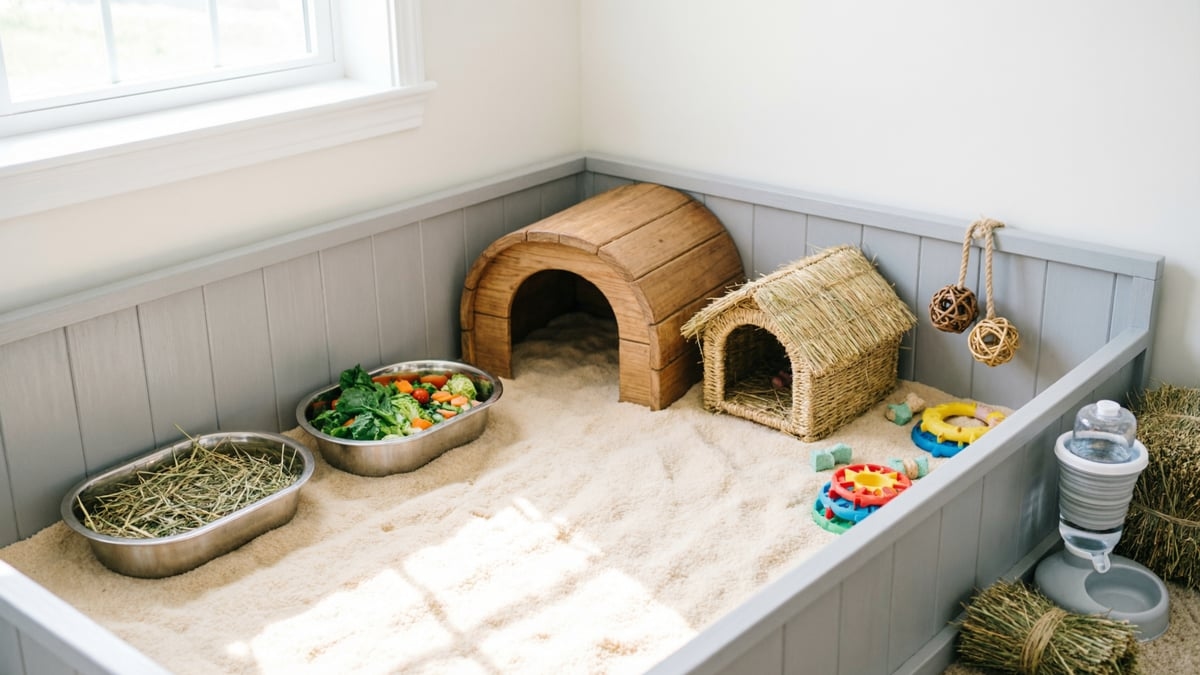
Bringing home a new rabbit is exciting, but proper preparation is crucial for your bunny’s health and happiness. This comprehensive guide covers everything you need to create the perfect rabbit habitat, from cage selection to daily essentials. Whether you’re a first-time rabbit owner or upgrading your setup, this guide has you covered.
Before You Bring Your Rabbit Home
Preparation Timeline
1-2 Weeks Before:
- Purchase and set up cage/enclosure
- Buy essential supplies
- Rabbit-proof your home (if free-roaming)
- Schedule vet appointment (initial checkup)
1-2 Days Before:
- Set up litter box
- Prepare food and hay
- Create hiding spots
- Research rabbit-safe plants (if applicable)
Day of Arrival:
- Keep environment calm and quiet
- Limit handling first 24-48 hours
- Provide fresh water, hay, and pellets
- Let rabbit explore at their own pace
What to Have Ready
Essentials:
- Appropriate-sized enclosure
- Litter box + rabbit-safe litter
- Hay feeder (or hay rack)
- Food bowl
- Water bottle or heavy ceramic bowl
- Hay (unlimited timothy hay for adults)
- Pellets (high-quality, age-appropriate)
- Fresh vegetables (for gradual introduction)
- Hiding house/box
- Chew toys
Pro Tip: Have everything set up and ready before bringing your rabbit home. This reduces stress and helps them settle in faster.
Enclosure Options
Option 1: Rabbit Cage
Pros
- Contained space
- Easy to clean
- Portable
- Good for temporary housing
Cons
- Often too small
- Limited exercise space
- Wire floors cause foot problems
Size Requirements
- Minimum: 4-6 times the rabbit’s length when stretched out
- Better: 8-12 square feet for medium rabbit
- Best: As large as possible + daily exercise time
Minimum Dimensions:
| Rabbit Size | Weight | Minimum Floor Space | Minimum Height |
|---|---|---|---|
| Small (dwarf) | 2-4 lbs | 4 sq ft (24” x 24”) | 14” |
| Medium | 4-8 lbs | 8 sq ft (36” x 36”) | 16” |
| Large | 8-12 lbs | 12 sq ft (48” x 36”) | 18” |
| Giant (Flemish) | 12+ lbs | 16+ sq ft (48” x 48”) | 24” |
Important: These are minimums. Larger is always better. Rabbits need space to hop, stretch, and binky.
Recommended Cages
- MidWest Homes for Pets Wabbitat (36”L x 24”W x 24”H)
- Price: $80-120
- Solid floor option
- Easy to clean
- Buy on Amazon - $31.99 (similar playpen option)
- Living World Deluxe Habitat (47”L x 23”W x 20”H)
- Price: $100-150
- Included accessories
- Wire top, plastic base
- Buy on Amazon - $31.99 (similar playpen option)
- Ferplast Krolik Rabbit Cage (56”L x 24”W x 20”H)
- Price: $120-180
- Large size
- Included accessories
- Buy on Amazon - $31.99 (similar playpen option)
Option 2: Exercise Pen (X-Pen) ⭐⭐⭐⭐⭐
Highly Recommended for Indoor Rabbits
Pros
- Large space (8-16+ sq ft)
- Affordable ($40-80)
- Easy to set up/move
- Can be configured in different shapes
- Portable
Cons
- No top (rabbits can jump out if tall enough)
- Requires solid floor underneath (protect flooring)
Recommended X-Pens
- Small Animal Playpen (48” x 24” x 16”, 12 panels)
- Price: $30-35
- Great for most rabbits
- Includes waterproof mat
- Buy on Amazon - $31.99
- AmazonBasics Foldable Metal Dog Crate (36” tall)
- Price: $30-50
- Taller option (for jumpers)
- Folds for storage
- Buy on Amazon - $31.99 (similar playpen option)
X-Pen Setup
- Place on waterproof mat or rug
- Add foam mats underneath for comfort
- Secure to wall or furniture if needed
- Leave one panel open for free-roam time
Option 3: Free-Roam (Rabbit-Proofed Room) ⭐⭐⭐⭐⭐
Ideal for Rabbit Welfare
Pros
- Maximum space
- Best exercise
- Natural behaviors
- Stronger bond with rabbit
- Most humane option
Cons
- Requires rabbit-proofing
- Supervision needed initially
- Potential for damage
Rabbit-Proofing Essentials
- Cover all wires with plastic tubing or cord covers
- Block off spaces behind furniture and appliances
- Protect baseboards with plastic guards
- Remove toxic plants
- Block access to unsafe areas (under deck, behind washer)
- Provide litter box in each accessible room
Option 4: Outdoor Hutch
For Outdoor Rabbits Only
Requirements
- Weatherproof (insulated, waterproof roof)
- Predator-proof (sturdy wire, secure latches)
- Connected run for exercise
- Shade and ventilation
- Protection from extreme temperatures
Safety: Outdoor rabbits face risks from predators, weather, and disease. Indoor housing is strongly recommended.
Cage Setup: Step-by-Step
Step 1: Flooring
Options
- Solid plastic base (easiest to clean)
- Foam mats (comfortable, easy to replace)
- Rug or carpet remnant (soft, but harder to clean)
- Vinyl flooring (waterproof, wipeable)
Avoid
- ❌ Wire flooring (causes sore hocks)
- ❌ Cedar/pine shavings (respiratory issues)
- ❌ Newspaper (ink can be toxic if ingested)
Step 2: Litter Box Setup
Rabbits can be litter trained!
What You Need
- Litter box: Large cat litter box or storage bin
- Size: At least 12” x 18” for medium rabbit
- High sides help contain hay
- Litter: Paper-based (Yesterday’s News, Carefresh) or wood pellets (horse stall bedding)
- Hay: Place hay in one end of litter box
Setup
- Place litter box in corner (rabbits prefer corners)
- Add 1-2 inches of litter
- Pile hay on one end of box
- Add a few poop pellets to encourage use
- Place near food and water
Pro Tip: Rabbits often poop while eating. Placing hay in the litter box encourages them to use it.
Litter Training Tips
- Spay/neuter first (reduces marking behavior)
- Start with multiple boxes (reduce as rabbit learns)
- Reward use with treats and praise
- Clean daily (rabbits avoid dirty boxes)
- Be patient (can take 1-4 weeks)
Step 3: Hay Feeder
Hay is 80% of rabbit’s diet—it must be always available.
Options
- Hay rack (attach to cage side)
- Large pile on floor (in litter box)
- Woven hay bag (slow feeder)
Recommended Hay Feeders
- Ware Manufacturing Hay Rack ($20-22) Buy on Amazon - $20.18
- Oxbow Enriched Life Hay Ball ($5-6) Buy on Amazon - $5.20
- Simple: Pile of hay in litter box (free!)
Hay Types:
- Adults (7+ months): Timothy hay, orchard grass, meadow hay
- Baby rabbits (under 7 months): Alfalfa hay (higher calcium/protein)
Step 4: Food & Water Station
Food Bowl
- Heavy ceramic bowl (can’t be tipped)
- Size: 4-6 inch diameter
- Placement: Away from litter box
Water
Option 1: Water Bottle
- Pros: Clean, can’t be spilled
- Cons: Can malfunction, unnatural drinking position
- Recommended: 32oz bottle with ball-bearing nozzle
Option 2: Heavy Ceramic Bowl ⭐ (Recommended)
- Pros: Natural drinking, easier to drink
- Cons: Can be spilled (use heavy bowl)
- Recommended: 8-10oz heavy bowl, refill daily
Pro Tip: Provide both bottle and bowl during first week. See which your rabbit prefers.
Step 5: Hiding House
Essential for rabbit security.
Options
- Wooden house (chewable, natural)
- Cardboard box (free, disposable)
- Tunnel (plastic or fabric)
- Fabric hideaway (washable)
Placement
- In quiet corner
- Away from direct light
- Near litter box (optional)
Recommended
- Niteangel Small Animal House ($26-28) Buy on Amazon - $26.99
- Cardboard box with holes cut (free!)
Step 6: Enrichment & Toys
Prevent boredom and encourage natural behaviors.
Essentials
- Chew toys: Applewood sticks, willow balls, cardboard
- Toss toys: Small balls, toilet paper rolls
- Digging box: Container with shredded paper or hay
- Tunnel: Cardboard or fabric tunnel
- Platforms: For climbing and surveying
Recommended
- Oxbow Timothy Hay Mat ($5-6) Buy on Amazon - $5.19
- Kaytee Crispy Chews ($11-12) Buy on Amazon - $11.91
- Niteangel Wooden Tunnel ($8-10) Buy on Amazon - $8.99
DIY: Toilet paper rolls stuffed with hay make excellent free toys!
Essential Supplies Checklist
Must-Have Items
| Item | Purpose | Budget | Quality Option |
|---|---|---|---|
| Enclosure | Housing | $40-150 | X-pen ($50) or large cage ($100) |
| Litter box | Potty area | $5-15 | Large cat box ($10) |
| Litter | Absorbent material | $15-30/month | Wood pellets ($20/40lb) |
| Hay | Main diet (80%) | $20-40/month | Timothy hay ($30/50lb box) |
| Pellets | Supplemental nutrition | $10-20/month | Oxbow ($15/5lb) |
| Food bowl | Pellet serving | $5-10 | Heavy ceramic ($8) |
| Water bowl/bottle | Hydration | $5-15 | Ceramic bowl ($10) |
| Hide house | Security | $10-25 | Wooden house ($15) |
| Chew toys | Dental health | $5-15/month | Applewood sticks ($10) |
| Nail clippers | Grooming | $5-10 | Small animal clippers ($8) |
| Brush | Grooming | $5-15 | Slicker brush ($10) |
Total Initial Cost: $150-300 (depending on choices) Monthly Cost: $50-80 (food, litter, hay)
Nice-to-Have Items
- Hay feeder ($8-15)
- Playpen for outdoor time ($30-50)
- Carrier for vet visits ($20-40)
- Grooming glove ($8-12)
- Snuffle mat for foraging ($15-25)
- Cooling mat for summer ($15-25)
Setting Up Different Spaces
For Indoor Rabbits
Living Room Setup:
- X-pen in corner
- Litter box with hay
- Food/water station
- Hide house
- Rabbit-proofed baseboards and wires
- Waterproof mat under pen
Bedroom Setup:
- Free-roam with litter box
- Cord covers on all electronics
- Block under-bed access
- Protect baseboards
- Provide multiple hide spots
Dedicated Rabbit Room (Best Option):
- Fully rabbit-proofed
- Multiple litter boxes
- Various hide spots and levels
- Digging box
- Unlimited space to run
For Outdoor Rabbits
Hutch Requirements:
- Weatherproof construction
- Insulated walls and roof
- Raised off ground
- Predator-proof wire (16 gauge or heavier)
- Secure locks
- Connected run (minimum 8 sq ft)
Summer Considerations:
- Shade (tarp, umbrella, tree)
- Frozen water bottles (to lie against)
- Ceramic tiles (cool surface)
- Good ventilation
- Check for heat stress (ears hot, panting)
Winter Considerations:
- Insulation (straw, blankets)
- Heated pad (rabbit-safe)
- Protected from wind
- Check water doesn’t freeze
- Bring inside if below 40°F
Strong Recommendation: Indoor housing is safer and allows for better bonding. Outdoor rabbits face significant risks.
First Week Essentials
Day 1-2: Settling In
- Limit handling: Let rabbit explore and adjust
- Quiet environment: Minimize noise and activity
- Same food: Feed what breeder/shelter fed (gradually transition)
- Fresh water and hay: Always available
- Observe: Watch for normal behaviors (eating, drinking, pooping)
Day 3-5: Exploring
- Short handling sessions: 5-10 minutes, gentle
- Offer treats: From your hand (build trust)
- Expand space: Open pen for exploration (supervised)
- Introduce new foods: One new vegetable at a time
Day 6-7: Routine
- Establish routine: Feed at same times daily
- Increase interaction: Longer play sessions
- Litter training: Reinforce good habits
- Vet visit: Schedule initial checkup (if not done)
Signs of a Happy, Settled Rabbit
- ✅ Eating and drinking normally
- ✅ Normal poop (round, firm pellets)
- ✅ Exploring enclosure
- ✅ Relaxing in various positions (loaf, sprawl)
- ✅ Binkying (happy jumps)
- ✅ Curious, alert demeanor
Signs of Stress (Consult Vet)
- ❌ Not eating (serious—can lead to GI stasis)
- ❌ No poop for 12+ hours
- ❌ Hiding constantly
- ❌ Aggressive behavior
- ❌ Rapid breathing
- ❌ Grinding teeth (pain)
Common Setup Mistakes
Mistake 1: Too Small Enclosure
Problem: Rabbits need space to exercise and express natural behaviors. Solution: Minimum 8-12 sq ft + daily exercise time. Larger is always better.
Mistake 2: Wire Flooring
Problem: Causes sore hocks (painful foot sores). Solution: Use solid flooring with mats or bedding.
Mistake 3: Not Providing Hay 24/7
Problem: Rabbits need constant fiber for digestive health. Solution: Unlimited hay, always available.
Mistake 4: Using Cedar or Pine Shavings
Problem: Phenols in wood cause respiratory and liver damage. Solution: Use paper-based litter, wood pellets, or aspen shavings.
Mistake 5: Skipping Litter Box
Problem: Rabbits are clean animals and prefer designated potty areas. Solution: Provide large litter box with hay.
Mistake 6: No Hiding Spots
Problem: Rabbits are prey animals and need security. Solution: Provide at least one hide house per rabbit.
Mistake 7: No Chew Toys
Problem: Rabbit teeth grow continuously—chewing is essential. Solution: Provide safe wood chews, cardboard, and hay-based toys.
Mistake 8: Placing Enclosure in High-Traffic Area
Problem: Stress from constant activity. Solution: Place in quiet corner, away from loud noises and foot traffic.
Rabbit-Proofing Your Home
Why Rabbit-Proof?
- Rabbits chew everything (wires, baseboards, furniture)
- They squeeze into small spaces
- Some plants are toxic
- Prevents costly damage and keeps rabbit safe
What to Protect
Electrical Cords
- Use cord covers (plastic tubing, split loom)
- Bundle cords and secure out of reach
- Unplug unused electronics
Baseboards
- Install plastic guards (from hardware store)
- Use bitter apple spray (deterrent)
- Provide alternative chewing (wood, cardboard)
Furniture
- Block access to underside (use wood or plastic barriers)
- Cover corners with plastic guards
- Provide alternative chewing
Plants
- Remove toxic plants (see list below)
- Place safe plants out of reach
- Use hanging planters
Toxic Plants (Avoid!)
- Aloe vera
- Azalea
- Calla lily
- Daffodil
- Dieffenbachia
- Ivy
- Lily of the valley
- Oleander
- Philodendron
- Rhododendron
- Tomato plant (leaves/stems)
- Tulip
Safety: When in doubt, assume a plant is toxic. Keep all plants out of reach.
Safe Plants
- Basil
- Cilantro
- Dandelion (pesticide-free)
- Mint
- Parsley
- Wheatgrass
Special Considerations
For Baby Rabbits (Under 7 months)
- Alfalfa hay (higher calcium for growing bones)
- Alfalfa-based pellets (more calories)
- Smaller litter box (upgrade as they grow)
- More frequent feeding (high metabolism)
- Gentle handling (fragile)
For Senior Rabbits (7+ years)
- Softer bedding (arthritis)
- Lower entry litter box (easier access)
- Joint supplements (consult vet)
- More frequent vet checks (every 6 months)
- Easier access to food and water
For Multiple Rabbits
- Neuter/spay all (prevents fighting and breeding)
- Introduce slowly (separate enclosures initially)
- Multiple litter boxes (reduce territorial behavior)
- More space (at least 12 sq ft for two)
- Multiple hide houses (one per rabbit + one shared)
Budget Breakdown
Minimal Setup ($150-200)
- X-pen: $50
- Litter box: $10
- Litter (1 month): $20
- Hay (1 month): $30
- Pellets (1 month): $15
- Food/water bowls: $15
- Hide house: $10 (cardboard box)
- Chew toys: $10
- Total: $160
Standard Setup ($250-350)
- X-pen or cage: $80
- Litter box: $10
- Litter (1 month): $20
- Hay (1 month): $30
- Pellets (1 month): $15
- Food/water bowls: $15
- Hide house: $20
- Toys: $25
- Grooming supplies: $15
- Carrier: $25
- Total: $255
Premium Setup ($400-600)
- Large cage or room setup: $150
- Premium litter (1 month): $30
- Premium hay (1 month): $40
- Premium pellets (1 month): $20
- Ceramic bowls: $20
- Wooden hide house: $30
- Variety of toys: $40
- Grooming supplies: $20
- Carrier: $40
- Playpen: $40
- Total: $430
Note: Monthly costs are $50-80 after initial setup.
Maintenance Schedule
Daily
- Fresh water (clean bowl/bottle)
- Fresh hay (refill as needed)
- Check food (remove uneaten fresh food)
- Scoop litter box (remove soiled areas)
- Spot clean enclosure (remove soiled bedding)
- Check rabbit (eating, drinking, pooping normally)
Weekly
- Full litter box change (dump, clean, refill)
- Deep clean enclosure (remove all bedding, wipe down)
- Wash food bowls (hot soapy water)
- Check toys (remove damaged items)
- Brush rabbit (especially long-haired breeds)
- Check nails (trim if needed)
Monthly
- Replace heavily chewed items
- Deep clean all accessories
- Stock up on supplies (hay, litter, pellets)
- Evaluate setup (adjust as rabbit grows or needs change)
Summary: Key Takeaways
- ✅ Enclosure size matters: Minimum 8-12 sq ft for medium rabbit
- ✅ Solid flooring: Avoid wire floors (causes sore hocks)
- ✅ Hay is essential: 80% of diet, available 24/7
- ✅ Litter training is possible: Most rabbits learn quickly
- ✅ Rabbit-proofing is crucial: Protect wires, baseboards, plants
- ✅ Hide houses provide security: Essential for prey animals
- ✅ Chew toys prevent dental problems: Rabbit teeth grow continuously
- ✅ Larger is always better: Provide as much space as possible
- ✅ Indoor housing is safest: Protect from predators, weather, disease
- ✅ Preparation reduces stress: Have everything ready before rabbit arrives
Frequently Asked Questions (FAQ)
1. What size cage does a rabbit need?
Minimum 8-12 square feet for a medium rabbit, plus daily exercise time. Larger is always better. Many commercial cages are too small.
2. Can rabbits be litter trained?
Yes! Most rabbits learn quickly, especially after spaying/neutering. Provide a large litter box with hay at one end.
3. What type of litter is safe for rabbits?
Paper-based (Carefresh, Yesterday’s News) or wood pellets (horse stall bedding). Avoid cedar, pine, and clay/clumping litters.
4. Do rabbits need bedding?
In the litter box, yes. In the rest of the enclosure, optional. Foam mats or rugs provide comfort without needing bedding.
5. Can I use a wire-bottom cage?
No. Wire floors cause sore hocks (painful foot sores). Use solid flooring with mats or bedding.
6. How often should I clean my rabbit’s cage?
Daily: Spot clean, scoop litter box, fresh water and hay. Weekly: Full litter box change, deep clean enclosure.
7. Should I get one rabbit or two?
Two is often better. Rabbits are social animals. However, both must be spayed/neutered and properly introduced.
8. Can rabbits live outside?
They can, but it’s risky. Outdoor rabbits face predators, weather extremes, and disease. Indoor housing is strongly recommended.
9. What’s the first thing I should buy for my rabbit?
An appropriately-sized enclosure and litter box with hay. These are the foundation of rabbit care.
10. How much does it cost to set up a rabbit?
$150-300 for initial setup (enclosure, supplies, first month of food/litter). Monthly costs are $50-80.
Related Guides
- For potty training, see our Rabbit Litter Training Guide
- Need toys? Check our Rabbit Toys Guide
- Want to build your own? Check our DIY Rabbit Hutch Guide — plans, materials & best products
- Grooming essentials: Rabbit Grooming Guide
- Stock up with our Rabbit Food Guide
- Health basics: Rabbit Health Guide
Recommended Products
- MidWest Exercise Pen (30” tall) - Best enclosure option Buy on Amazon
- MidWest Wabbitat Cage (36”) - Good cage option Buy on Amazon - $49.56
- Litter Box (large cat box) - Essential Buy on Amazon
- Wood Pellet Litter (40lb bag) - Economical, effective Buy on Amazon - $10.49
- Oxbow Timothy Hay (50lb box) - High-quality hay Buy on Amazon - $21.68
- Oxbow Garden Select Pellets - Premium pellets Buy on Amazon - $12.74
- Heavy Ceramic Food Bowl - Can’t be tipped Buy on Amazon
- Niteangel Wooden House - Secure hideaway Buy on Amazon - $27.99
- Applewood Chew Sticks - Dental health Buy on Amazon - $11.99