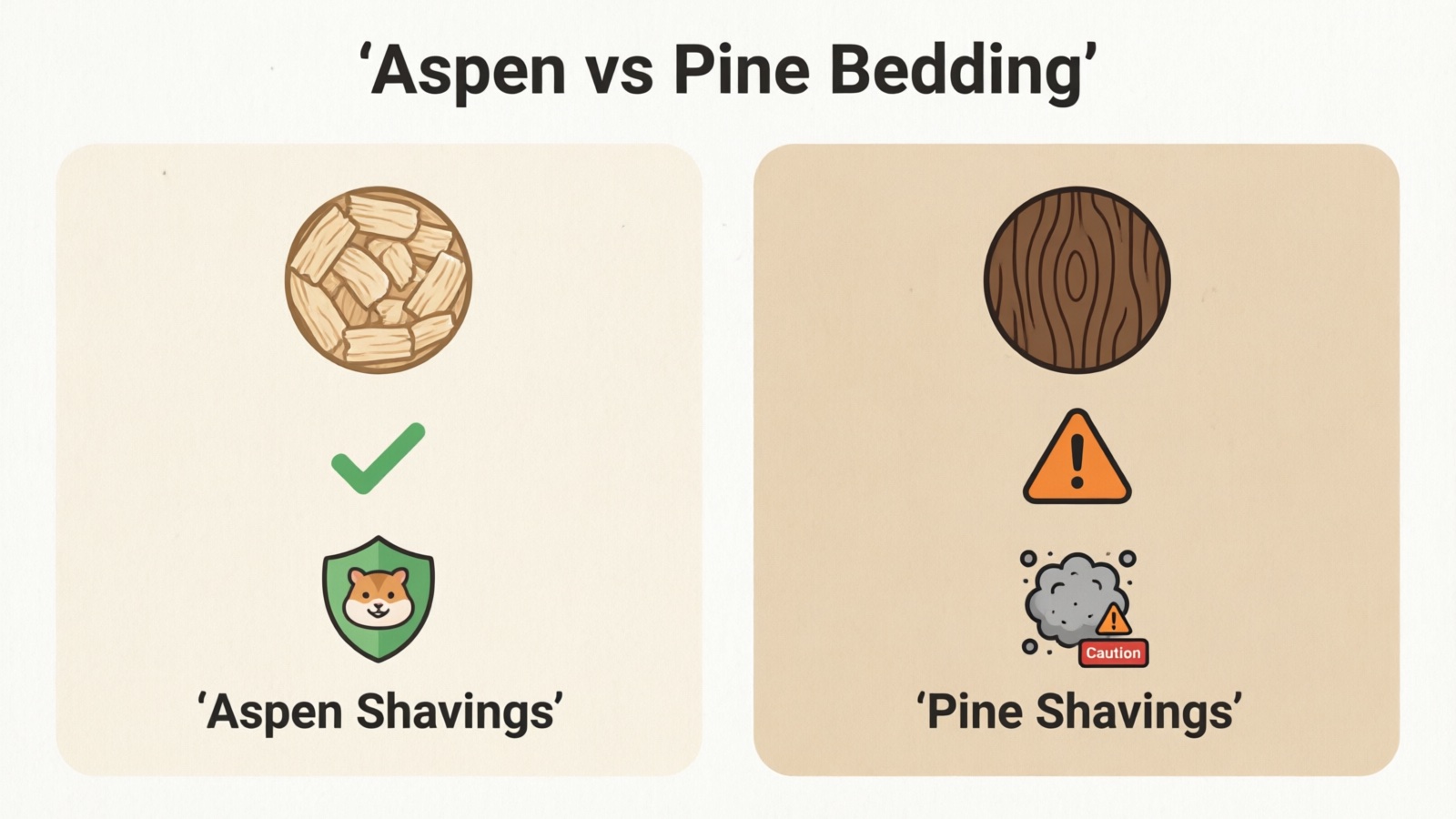
The bedding you choose for your pet affects their respiratory health, skin condition, and overall wellbeing every single day. They live in it, sleep in it, burrow in it, and breathe in whatever dust it produces. And when it comes to aspen vs pine bedding, there’s a safety controversy you need to understand before making a decision.
Aspen and pine are two of the most popular wood bedding options for small pets, but they have very different safety profiles. This guide explains the science behind pine safety, compares costs, and tells you exactly which bedding to use for hamsters, guinea pigs, rats, and chinchillas.
Quick navigation:
- What’s the Difference?
- Is Pine Bedding Safe?
- For Hamsters
- For Guinea Pigs
- For Other Animals
- Cost Comparison
- Cedar Warning
- FAQ
What’s the Difference? Aspen vs Pine at a Glance
Aspen is a hardwood that naturally contains no harmful compounds. Pine is a softwood that contains phenols — toxic aromatic oils — unless those oils have been removed through kiln-drying.
Aspen bedding is made from aspen trees (Populus tremuloides), a hardwood species. Because it’s a hardwood, aspen naturally lacks the aromatic oils and phenols found in softwoods. It’s considered the safest wood shaving bedding available for small animals.
Pine bedding is made from pine trees (Pinus spp.), a softwood species. Pine naturally contains phenols — aromatic compounds that can be toxic to small animals. However, when pine is kiln-dried (heated to remove moisture and volatile oils), up to 95% of these harmful compounds are eliminated, making kiln-dried pine safe for most small pets.
Kiln-drying is a commercial heating process that removes moisture, bacteria, and volatile oils from wood shavings. It’s the key factor that determines whether pine bedding is safe or dangerous.
Phenols are aromatic compounds found in softwoods like pine and cedar. In small animals, phenols cause respiratory irritation, liver stress, and skin problems with prolonged exposure.
| Feature | Aspen Bedding | Pine Bedding (Kiln-Dried) | Pine Bedding (Non-Kiln-Dried) |
|---|---|---|---|
| Tree Type | Hardwood | Softwood | Softwood |
| Phenols | None (naturally free) | Removed by kiln-drying | Present — dangerous |
| Aromatic Oils | None | Removed | Present — dangerous |
| Safety Rating | ✅ Safe for all small animals | ✅ Safe when kiln-dried | ❌ Not safe — avoid |
| Absorbency | Good | Good | Good |
| Odor Control | Moderate | Moderate | Strong (pine scent) |
| Dust Level | Low–moderate | Low (when kiln-dried) | Varies |
| Price | $$ | $ | $ |
| Best For | All small animals | All small animals (if kiln-dried) | No small animals |
The most important takeaway: kiln-dried pine is safe; non-kiln-dried pine is not. Aspen is always safe. The practical question isn’t “which is safer?” — it’s “is your pine kiln-dried?”
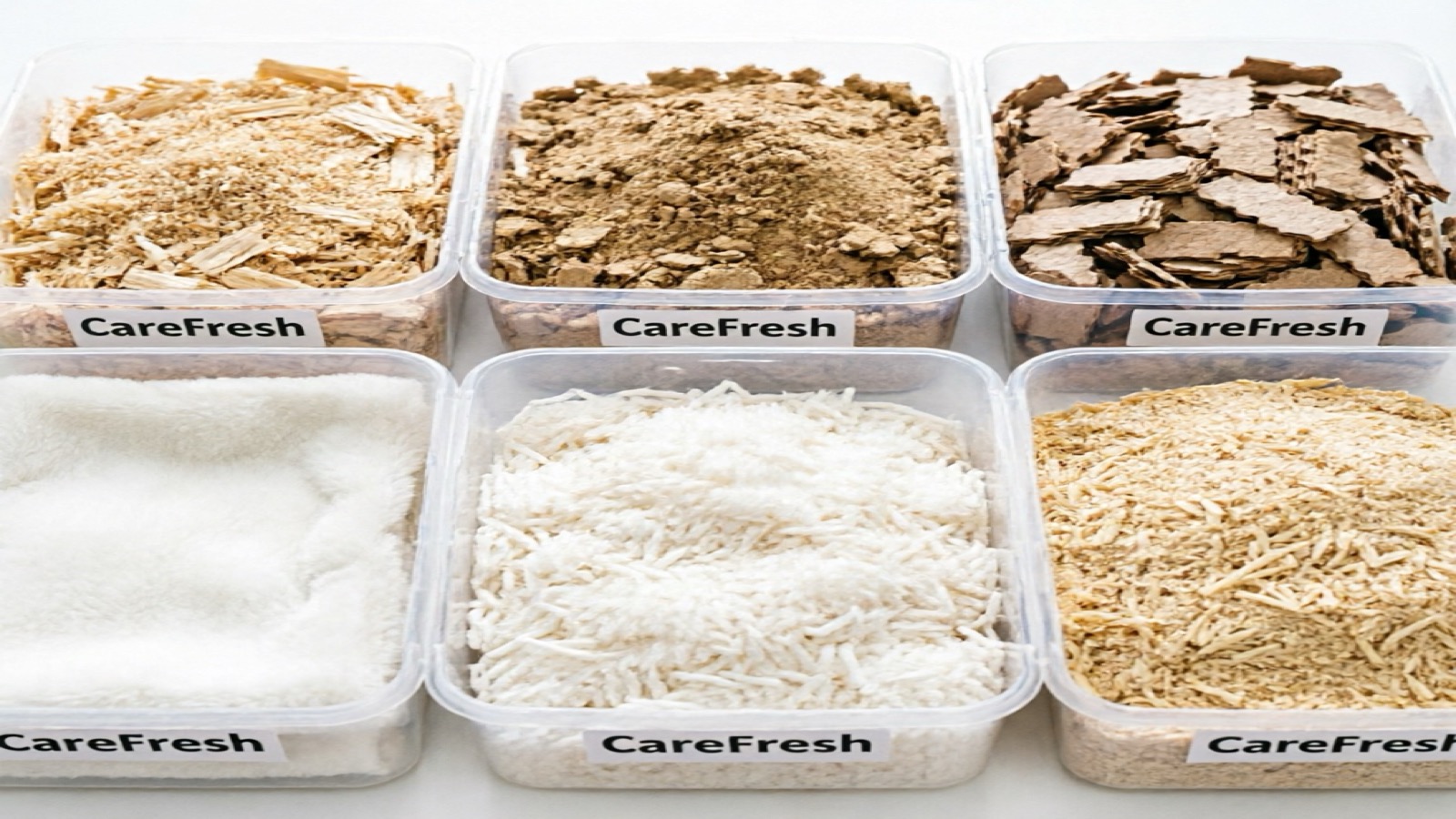
Is Pine Bedding Safe? The Science Explained
The Problem: Phenols and Aromatic Oils
Pine and cedar contain phenols — natural aromatic compounds that give these woods their distinctive scent. That “pine fresh” smell that seems pleasant to humans? It’s toxic to small animals with their sensitive respiratory systems and small body size.
What phenols do to small animals:
- Respiratory irritation: Inhaling phenol-laden dust causes chronic inflammation of the respiratory tract. Over time, this leads to increased susceptibility to respiratory infections, chronic sneezing, and reduced lung function. I’ve seen hamsters develop persistent respiratory issues that cleared up within days of switching from pine to paper bedding.
- Liver stress: The liver works overtime to process and eliminate phenols from the body. In small animals, this constant processing can alter liver enzyme levels and impair the liver’s ability to handle other toxins. The liver doesn’t get a break because the animal lives on the bedding 24/7.
- Skin irritation: Direct contact with phenol-rich shavings causes skin dryness, itching, flaking, and in some cases, dermatitis. Animals that burrow and nest in phenol-laden bedding have continuous skin exposure.
- Long-term risk: Rodent studies have linked prolonged exposure to softwood phenols with increased cancer rates and reduced lifespan. While these studies used laboratory conditions with constant, concentrated exposure, they raise legitimate concerns for pets living on softwood bedding around the clock.
Why small animals are especially vulnerable:
- They live in direct contact with bedding around the clock — no escape from exposure
- They burrow and nest in it, dramatically increasing surface area contact
- Their small body size means a higher concentration of toxins per pound of body weight compared to larger animals
- They have faster metabolisms, which can amplify the processing burden on the liver
The Solution: Kiln-Drying
Kiln-drying is a heating process that removes moisture, bacteria, and volatile oils (including phenols) from wood shavings. The wood is heated to 160–180°F (71–82°C) for extended periods, which drives off up to 95% of the aromatic oils and associated compounds.
How to verify: Look for “kiln-dried” on the packaging. Major brands like Kaytee clearly label their pine bedding as kiln-dried. If the package doesn’t explicitly say kiln-dried, assume it’s not — and don’t use it for small animals. This is not a label to skip checking.
Veterinary consensus: Most exotic animal veterinarians consider kiln-dried pine bedding safe for hamsters, guinea pigs, rats, and rabbits. The ASPCA, the House Rabbit Society, and numerous veterinary schools recommend avoiding cedar and non-kiln-dried pine, but generally accept kiln-dried pine as a safe option. Kiln-dried pine has been used safely in veterinary clinics and laboratory settings for decades.
Key Evidence
- Laboratory rodent studies document measurable respiratory and liver changes from prolonged exposure to softwood bedding containing phenols
- Kiln-dried pine has been used safely in veterinary practices and research facilities for years without the health issues associated with non-kiln-dried pine
- The ASPCA and House Rabbit Society both explicitly recommend avoiding cedar and non-kiln-dried pine while accepting kiln-dried pine as a safe alternative
Aspen vs Pine Bedding for Hamsters
Aspen is the safest choice for hamsters. Kiln-dried pine is a good budget alternative. I’ve used both with hamsters over the years, and both work well — but aspen gives me more peace of mind because there’s nothing to verify on the label.
Hamsters have specific bedding needs that make the choice particularly important:
- Deep burrowing: Hamsters create elaborate tunnel systems and need at least 6 inches of bedding depth. More bedding means more material your hamster is in contact with at all times — making safety even more critical than with animals that only need a thin layer.
- Respiratory sensitivity: Hamsters are prone to respiratory infections, especially dwarf varieties. Any bedding that irritates the respiratory tract increases the baseline risk.
- Skin contact: Hamsters sleep in underground burrows surrounded by bedding for hours during the day. Prolonged skin contact with phenols can cause dermatitis over time.
Syrian vs dwarf consideration: Dwarf hamsters (Winter Whites, Campbell’s, Roborovskis, Chinese) are slightly more sensitive than Syrian hamsters due to their smaller body size. For dwarf hamsters, I’d recommend sticking with aspen rather than kiln-dried pine — the smaller body means less tolerance for any residual compounds that survive the kiln-drying process.
Step-by-step: choosing hamster bedding:
- Always choose aspen or explicitly labeled kiln-dried pine
- Avoid any pine product that doesn’t say “kiln-dried” on the packaging
- For dwarf hamsters or individuals with respiratory issues, stick with aspen or paper bedding
- Provide at least 6 inches of depth for burrowing
Recommended Bedding for Hamsters
| # | Product | Type | Price | Rating |
|---|---|---|---|---|
| 1 | Kaytee Aspen Bedding | Aspen | $17.99 | 4.7⭐ (5,578 reviews) |
| 2 | Niteangel Aspen Shavings | Aspen (premium) | $33.99 | 4.7⭐ (471 reviews) |
| 3 | Sukh Aspen Bedding | Aspen (budget) | $7.99 | 4.5⭐ (413 reviews) |
| 4 | Kaytee Pine Bedding | Kiln-dried pine | $12.99 | 4.6⭐ (3,794 reviews) |
My recommendation: Kaytee Aspen is the safest, most widely available, and most reviewed option — with over 5,500 reviews, there’s a lot of owner experience backing it. For budget-conscious owners, Sukh Aspen at $7.99 is the most affordable aspen option available on Amazon. If you choose pine, only use Kaytee Pine — it’s explicitly labeled kiln-dried and has the veterinary backing to match.
For more bedding options, see our best hamster bedding guide.
Aspen vs Pine Bedding for Guinea Pigs
Aspen is the preferred choice for guinea pigs. Guinea pigs are the most phenol-sensitive of the common small pet species. Their respiratory systems are particularly vulnerable — they’re naturally prone to upper respiratory infections, and any additional irritation from bedding compounds the risk significantly.
Guinea pigs don’t burrow as deeply as hamsters (they need 2–3 inches of bedding rather than 6+), but their larger body size means they need more total bedding volume, which increases the overall material cost. Some guinea pig owners report that even kiln-dried pine causes sneezing in sensitive individuals — in those cases, aspen or paper bedding is the only safe option.
For guinea pigs, I recommend:
- Aspen bedding as the safest wood option — Kaytee Aspen is cost-effective when buying in bulk, and the peace of mind is worth the small price premium over pine
- Paper bedding as the safest alternative — Kaytee Clean & Cozy (4.6⭐, 9,929 reviews, $19.95) is 99.9% dust-free with no aromatic oils whatsoever. It’s the most worry-free option for guinea pig owners, especially those with pigs that have shown respiratory sensitivity to wood bedding.
For more guinea pig bedding options, see our best guinea pig bedding guide.
Aspen vs Pine Bedding for Other Small Animals
Rats
Rats are relatively hardy compared to hamsters and guinea pigs. Kiln-dried pine is generally safe for rats, and many rat owners use it without issues. Aspen is still the safer default choice, especially for young, old, or sick rats with compromised immune systems. Rats appreciate deep bedding for burrowing — it’s a natural behavior that reduces stress and provides enrichment — so cost can add up with multiple rats. Kiln-dried pine is the more economical option for multi-rat households where budget is a factor.
Chinchillas
Chinchillas should NOT use pine bedding — even kiln-dried pine. Chinchillas have extreme sensitivity to dust and respiratory irritants due to their unique lung structure. They also take regular dust baths that create fine airborne particles — adding pine dust (even minimal residue from kiln-dried pine) can compound respiratory risk. What’s safe for a hamster or rat may not be safe for a chinchilla.
Aspen is acceptable for chinchillas, but many chinchilla owners prefer fleece liners or paper bedding for maximum respiratory safety. If you’re choosing between aspen and pine for a chinchilla, aspen is the only acceptable wood option. For chinchilla-specific recommendations, see our best chinchilla bedding guide.
Rabbits
Both aspen and kiln-dried pine work well for rabbits. Many rabbit owners prefer paper-based bedding for superior absorbency, since rabbits produce significantly more waste than smaller pets. The House Rabbit Society specifically recommends avoiding cedar and non-kiln-dried pine but accepts kiln-dried pine and aspen as safe options. For rabbits, the choice between aspen and pine comes down to personal preference and cost rather than safety concerns.
Aspen vs Pine — Cost Comparison
Actual per-week cost matters more than the sticker price, especially if you have large cages or multiple pets that require deep bedding.
Estimated weekly cost for a standard hamster cage (based on Amazon prices):
| Bedding Type | Product | Package Price | Volume | Est. Weekly Cost |
|---|---|---|---|---|
| Aspen | Kaytee Aspen | $17.99 | 14 cu ft | ~$0.50/week |
| Kiln-dried pine | Kaytee Pine | $12.99 | 8 cu ft | ~$0.40/week |
| Paper | Clean & Cozy | $19.95 | 14L | ~$0.60/week |
| Aspen (budget) | Sukh Aspen | $7.99 | 14 oz | ~$0.35/week |
Kiln-dried pine is the cheapest option per week. Aspen is slightly more expensive but offers complete peace of mind — no need to verify kiln-drying, no residual compound concerns, no label-checking required. Paper bedding is the most expensive but is the safest overall choice with zero phenol risk and minimal dust.
For multi-pet households or large enclosures (like guinea pig cages), the cost difference between pine and aspen adds up significantly over time. A guinea pig cage might use 3–4x the bedding of a hamster cage, meaning the $0.10/week difference between pine and aspen becomes $0.30–0.40/week — or $15–20/year. For some owners, that’s worth it for the safety margin. For others, the savings matter more.
What About Cedar Bedding?
Cedar bedding should never be used for any small animal. This isn’t a debate — it’s a clear safety warning.
Cedar contains even higher levels of phenols than pine — roughly 3–4 times more concentrated. The aromatic oils in cedar are potent enough that even kiln-dried cedar is not considered safe by most veterinary experts. Cedar bedding causes the same problems as non-kiln-dried pine (respiratory irritation, liver stress, skin issues) but more severely and more quickly due to the higher phenol concentration.
Some pet stores still sell cedar bedding because it has strong natural odor-control properties — the same oils that control odor are the ones that damage your pet’s health. Don’t buy it, regardless of what a store employee might recommend.
Frequently Asked Questions
Is pine bedding safe for hamsters?
Only if it’s kiln-dried. Kiln-dried pine has had up to 95% of harmful phenols and aromatic oils removed through a commercial heating process. Non-kiln-dried pine — which still contains these toxic compounds — should never be used for hamsters or any small animal. Always check the packaging for the “kiln-dried” label. If it doesn’t say kiln-dried, don’t use it.
Is aspen bedding better than pine?
Aspen is inherently safer because it’s a hardwood that naturally contains no phenols or aromatic oils. You never have to worry about whether aspen has been properly processed or whether the batch you bought is safe. Pine can be equally safe when kiln-dried, but you must verify the packaging label every time you purchase. When in doubt, choose aspen — there’s zero risk of getting a “bad batch.”
Can pine bedding cause respiratory problems?
Yes — non-kiln-dried pine contains phenols that irritate the respiratory tract. Symptoms of phenol-related respiratory issues include sneezing, wheezing, labored breathing, nasal discharge, and increased susceptibility to respiratory infections. If your pet is sneezing more than usual after a bedding change, the bedding may be the cause. Kiln-dried pine does not carry this risk because the phenols have been removed.
What bedding is best for guinea pigs?
Aspen bedding is the safest wood shaving option for guinea pigs due to their particular respiratory sensitivity. Paper bedding (like Kaytee Clean & Cozy) is also excellent — it’s 99.9% dust-free and contains no aromatic oils whatsoever, making it the safest overall choice. Avoid non-kiln-dried pine and all cedar products. Some guinea pigs even react to kiln-dried pine with increased sneezing, so aspen or paper is the safest bet.
Why is kiln-dried pine cheaper than aspen?
Pine trees grow significantly faster than aspen and are more abundant globally. Pine is a softwood that’s easier and cheaper to harvest, process, and transport. Aspen is a hardwood with a longer growth cycle and more expensive processing requirements. The price difference reflects supply and production economics, not quality or safety — kiln-dried pine is safe, just cheaper to produce.
Can I mix aspen and pine bedding?
There’s no benefit to mixing them. If you want the safety of aspen, use aspen exclusively. If you want the cost savings of kiln-dried pine, use kiln-dried pine exclusively. Mixing creates uncertainty about overall phenol exposure levels and makes it harder to identify which bedding is causing a problem if your pet reacts poorly. Keep it simple — pick one type and stick with it.
Conclusion
Aspen = always safe. Kiln-dried pine = safe but verify the label. Non-kiln-dried pine = never safe. Cedar = never safe.
By animal:
- Hamsters → Aspen (preferred) or kiln-dried pine (budget option)
- Guinea pigs → Aspen preferred (most phenol-sensitive species)
- Rats → Either is fine, aspen for extra safety margin
- Chinchillas → Aspen only, or fleece/paper bedding
- Rabbits → Either works, paper for best absorbency
If budget allows, aspen is the worry-free choice — no label-checking required, no residual compound concerns, and it works for every species. If you choose pine, only buy products explicitly labeled “kiln-dried” from reputable brands like Kaytee.
For more bedding options and detailed reviews, see our best hamster bedding guide.