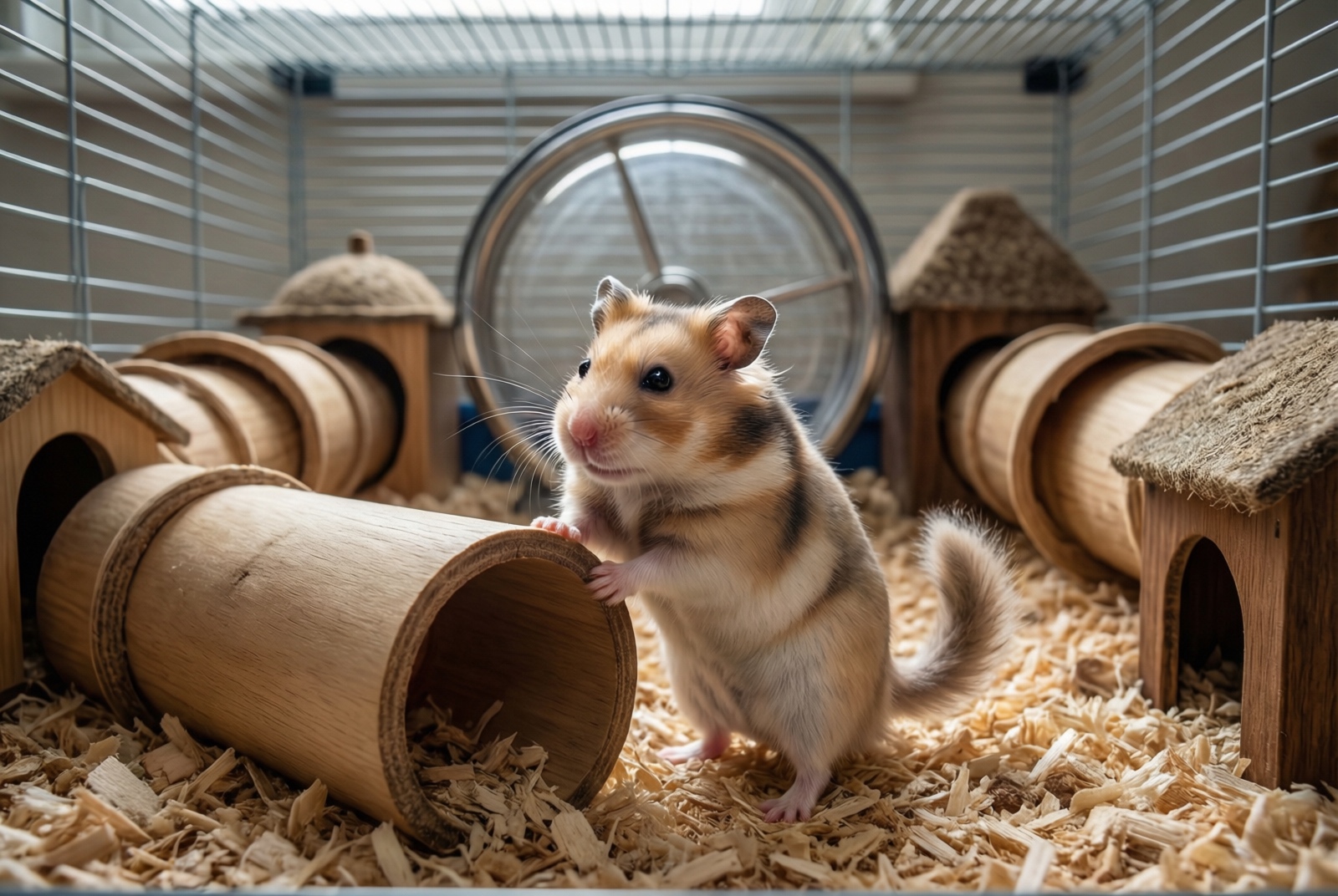
Getting a hamster means preparing five essentials before your new pet arrives: a cage with at least 450 square inches of floor space, a silent exercise wheel, deep paper bedding for burrowing, quality pellet food, and a hideout for security. The minimum starting cost is around $108 for a budget setup.
This guide covers everything you need to know before getting a hamster — from choosing the right breed and calculating total costs to preparing the cage and surviving the first 24 hours. I’ve raised hamsters for years and made every rookie mistake so you do not have to.
Quick Answer — What You Need Before Getting a Hamster
Before bringing a hamster home, have these five essentials ready:
- Cage — Minimum 450 square inches of continuous floor space (not levels)
- Exercise wheel — 8+ inches for dwarfs, 11+ inches for Syrians
- Bedding — Paper-based, at least 6 inches deep for burrowing
- Food — Quality pellet mix plus fresh vegetables
- Hideout — A dark enclosed space where your hamster feels safe
Budget setup total: ~$108. Ideal setup total: ~$196. Monthly maintenance: $20-30.
Getting a hamster for the first time is exciting, but preparation makes the difference between a stressed pet and a happy one. Set everything up at least 24 hours before your hamster arrives.
Is a Hamster Right for You?
Nocturnal crepuscular — Hamsters are often called nocturnal, but research shows they are actually crepuscular, meaning they are most active during dawn and dusk. According to the American Society for the Prevention of Cruelty to Animals (ASPCA), this natural activity pattern means hamsters are awake and energetic when most owners are sleeping or just waking. The ASPCA also notes that hamsters have poor eyesight and rely on scent glands and whisker vibrations to navigate — which is why sudden movements or loud noises near their cage trigger stress responses. Understanding this biology is essential before getting a hamster, as it affects cage placement, handling schedules, and whether a hamster fits your lifestyle. The Animal Welfare Act (AWA) further establishes minimum standards for hamster housing, including floor space, ventilation, and temperature ranges.
What to Know Before Getting a Hamster
Hamsters are nocturnal. They sleep most of the day and become active in the evening and through the night. If you want an interactive pet during daytime hours, a hamster may disappoint you.
Most hamster species are strictly solitary. Syrian hamsters and Chinese hamsters must live alone — housing two together leads to fighting, injury, or death. Only certain dwarf hamster pairs tolerate each other, and even then only with careful monitoring.
Hamsters live 2-3 years on average. This is a short commitment compared to dogs or cats, but it also means you form a bond and say goodbye relatively quickly. Some hamsters reach 4 years with excellent care, but that is uncommon.
Hamsters are fragile. They can be handled, but they require patience and gentle hands. They are not ideal pets for children under 8 who may squeeze too hard or drop them.
Best Hamster Breeds for Beginners
| Breed | Size | Temperament | Lifespan | Best For |
|---|---|---|---|---|
| Syrian (Teddy Bear) | 5-7 inches | Gentle, easy to tame | 2-3 years | First-time owners |
| Winter White Dwarf | 3-4 inches | Friendly, can be fast | 1.5-2 years | Families with older kids |
| Roborovski Dwarf | 2-2.5 inches | Fast, shy, not cuddly | 3-3.5 years | Watching, not handling |
| Chinese Hamster | 3-5 inches | Calm, good climber | 2-3 years | Patient owners |
The Syrian hamster is widely considered the best hamster for beginners. They are larger, easier to handle, and more predictable in temperament. Dwarf hamsters are fun to watch but faster and harder to catch.
For a full breakdown of each breed’s personality and care needs, see our hamster breeds guide.
How Much Does It Cost to Get a Hamster?
One of the biggest shocks for first-time owners is the cost. The hamster itself is cheap — everything else adds up fast.
| Item | Budget Option | Ideal Option |
|---|---|---|
| Hamster | $10-15 (pet store) | $20-25 (breeder/rescue) |
| Cage | $38 (20 Planes Expandable) | $119 (Prolee Chewproof) |
| Exercise wheel | — | $37 (Niteangel Silent) |
| Bedding (first month) | $15 (Kaytee Clean & Cozy) | $15 (Kaytee Clean & Cozy) |
| Food (2 lb bag) | $9 (Kaytee Wild) | $9 (Kaytee Wild) |
| Hideout | $9 (Yasdyri Wooden) | $9 (Yasdyri Wooden) |
| Total | ~$108 | ~$196 |
Monthly costs after setup:
- Bedding replacement: $10-15/month
- Food: $5-10/month
- Treats and chews: $5/month
- Total monthly: $20-30
Veterinary emergency fund: Keep at least $200-500 set aside. Exotic vet visits for hamsters cost $50-150 per visit, and emergency surgery can exceed $300. Many owners skip this and regret it when their hamster falls ill at midnight.
Essential Hamster Supplies Checklist
Here is the hamster supplies checklist with specific product recommendations for each category.
Cage
Your cage is the single most important purchase. A cage that is too small causes stress, bar-biting, and repetitive behaviors. The absolute minimum is 450 square inches of continuous floor space — and bigger is always better.
Budget option: The 20 Planes Expandable Cage at $37.99 is an affordable entry point. The expandable design lets you increase floor space over time. The waterproof liner makes cleaning straightforward.
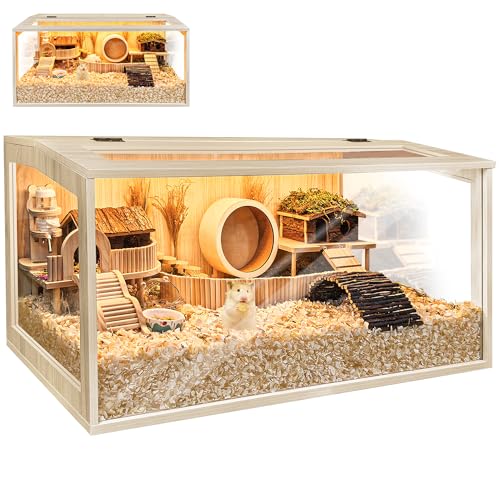
Premium option: The Prolee Chewproof Cage at $118.99 uses acrylic panels for full visibility and chew-proof construction. The openable top makes cleaning and access easy.
The Prolee is worth considering if your budget allows — the acrylic panels give you a clear view of your hamster’s behavior, which helps you spot health issues early. For more options, see our best hamster cages guide.
Exercise Wheel
Hamsters run 5-8 miles every night in the wild. A wheel is not optional — it is a basic welfare requirement.
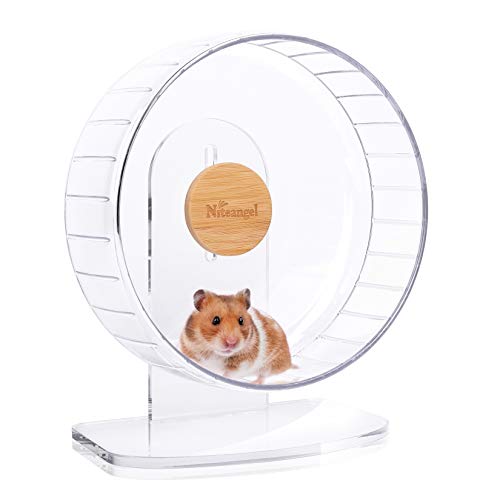
The Niteangel Super-Silent Wheel at $36.99 is the gold standard. It runs truly silent, which matters when your hamster starts running at 2 AM and the cage is in your bedroom. The adjustable stand fits most cage setups.
Choose the right size: 8-inch for dwarf hamsters, 11+ inch for Syrians. A wheel that is too small causes spinal curvature and back pain. If your hamster’s back arches upward while running, the wheel is too small — size up immediately.
Some hamsters prefer flying saucers (angled discs) over upright wheels. Flying saucers allow a more natural running posture and are worth trying if your hamster ignores the upright wheel. The Niteangel Silent Wheel mentioned above also comes in a flying saucer variant. See our best hamster wheels guide for the full comparison.
Bedding
Paper-based bedding is the safest choice. Pine and cedar shavings release toxic phenols that cause respiratory damage.
Kaytee Clean & Cozy at $14.95 per 49.2-liter bag is the most popular option. It is 99% dust-free, controls odor well, and provides excellent burrowing material.
Fill the cage with at least 6 inches of bedding. Hamsters are natural burrowers — deep bedding lets them dig tunnels, which reduces stress and prevents stereotypic behaviors like bar-biting. Most new owners use too little bedding. Go deep.
A 49.2-liter bag of Kaytee Clean & Cozy fills approximately 3-4 inches in a standard 450-square-inch cage. You will likely need 1.5 to 2 bags for the initial setup to reach the recommended 6-inch depth. The bedding compresses over time as your hamster burrows, so topping up every week during spot cleaning maintains the depth.
For more options, see our best hamster bedding guide.
Food
A quality pellet or seed mix forms the diet base. Fresh vegetables and occasional protein (mealworms, boiled egg) supplement daily.
Kaytee Food from The Wild at $8.95 per 2-pound bag contains a natural blend of seeds, grains, and freeze-dried vegetables. It is affordable and most hamsters enjoy the variety.
The main drawback: hamsters pick out their favorite pieces and ignore the rest. You may find sunflower seeds hoarded while the nutritious pellets sit untouched. For a complete diet comparison, see our best hamster food guide.
Hideout
A dark enclosed hideout is essential. In the wild, hamsters sleep in underground burrows. Without a hideout, your hamster will be chronically stressed.
The Yasdyri Wooden Tunnel at $8.99 provides a multi-chamber wooden hideout that encourages natural tunneling behavior. The natural wood is safe to chew, doubling as a dental enrichment item.
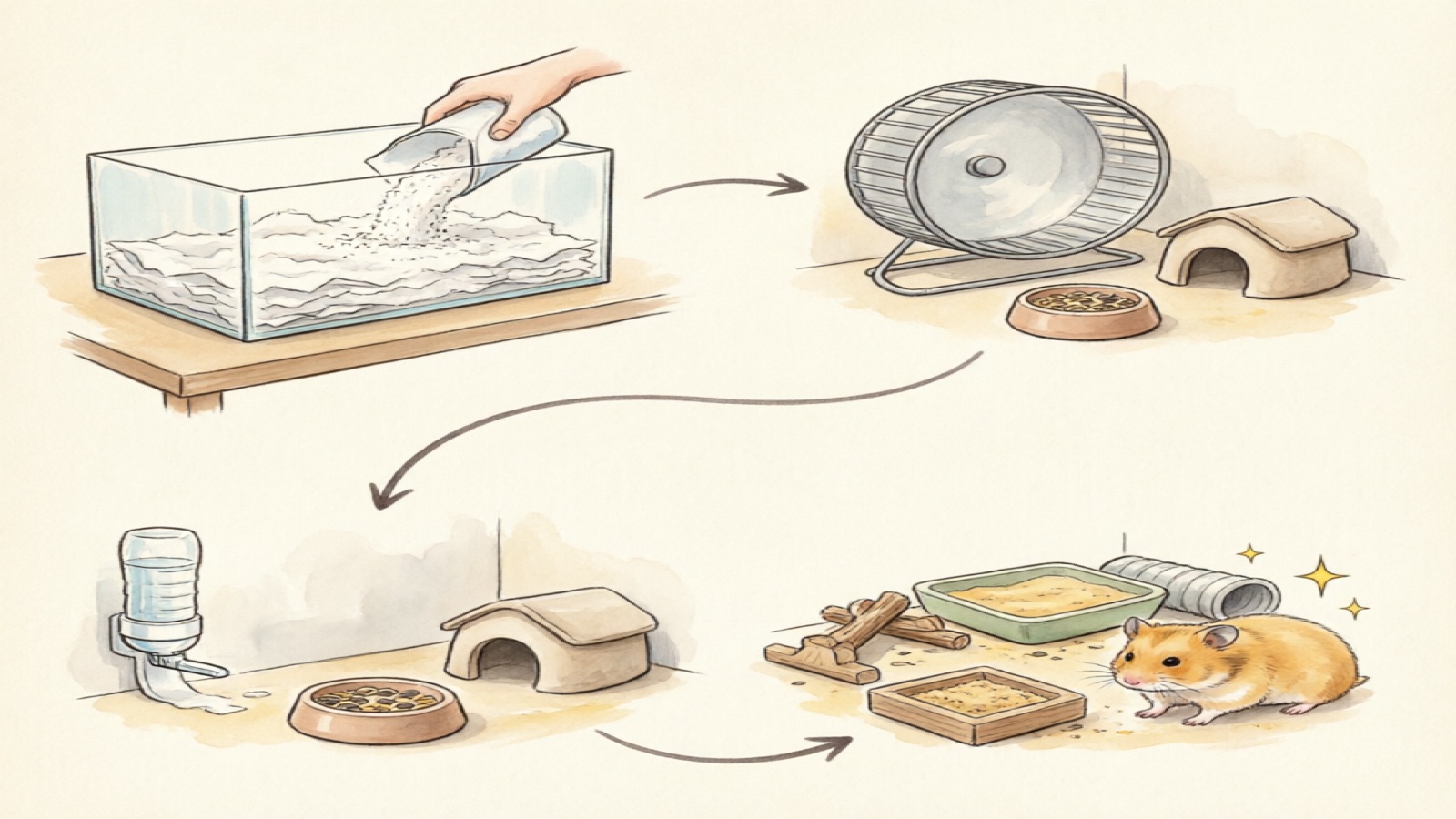
How to Prepare for a Hamster — Cage Setup Guide
Knowing how to prepare for a hamster means getting the cage right before your pet arrives. Follow these steps:
Step 1 — Choose the right location. Place the cage in a quiet room away from direct sunlight, drafts, and other pets. The ideal temperature is 65-75°F. Avoid rooms with loud TVs or speakers — hamsters are sensitive to vibration.
Step 2 — Add deep bedding. Pour at least 6 inches of paper bedding across the entire floor. Heap it higher in one corner for burrowing. Press it down lightly so tunnels hold their shape.
Step 3 — Install the wheel. Place the wheel on a flat, stable surface. If using a stand, make sure it does not wobble. The wheel should spin freely without resistance.
Step 4 — Set up the hideout. Bury the hideout partially in the bedding so it feels like an underground burrow. Add a small handful of torn tissue paper inside for nesting material.
Step 5 — Add food and water. Fill a heavy ceramic bowl with food. Attach a water bottle to the cage side. Check that water flows freely by tapping the ball bearing.
For a complete walkthrough with photos, see our hamster cage setup guide.
Where to Get a Hamster
You have three main options for getting a hamster, and the choice matters more than most people realize.
Adoption (recommended). Check Petfinder.com or your local small animal rescue. Rescue hamsters are often already tame, and you are giving a homeless animal a second chance. The adoption fee is typically $10-20, which sometimes includes a health check.
Reputable breeder. A good breeder breeds for temperament and health, not just appearance. They can tell you about the hamster’s lineage and any genetic health issues. Expect to pay $20-40 from a breeder, but the health and temperament are worth it.
Pet store (use caution). Most pet store hamsters come from mass-breeding facilities with limited health screening. They may carry genetic conditions or illnesses. If you choose a pet store, look for bright eyes, clean fur, active behavior, and no signs of wet tail or respiratory distress.
Adopted hamsters and breeder hamsters tend to be healthier and tamer than pet store hamsters. The initial cost difference is small, but the long-term difference in veterinary bills can be significant.
When visiting a breeder, ask to see the parents if possible. A breeder who refuses or makes excuses is a red flag. Look for clean enclosures, active animals, and a breeder who asks you questions about your setup — a good breeder screens buyers because they care about where their hamsters end up.
If you choose a pet store, go during the evening when hamsters are naturally active. A lethargic hamster at 8 PM may actually be sick, not just sleeping. Check for clear eyes with no discharge, dry fur around the tail area (wet tail is deadly), and clean ears. Ask the staff when the hamsters arrived — newly shipped hamsters are stressed and more likely to develop illness within the first week.
First 24 Hours With Your New Hamster
The first 24 hours are critical — and counterintuitive. The best thing you can do is absolutely nothing.
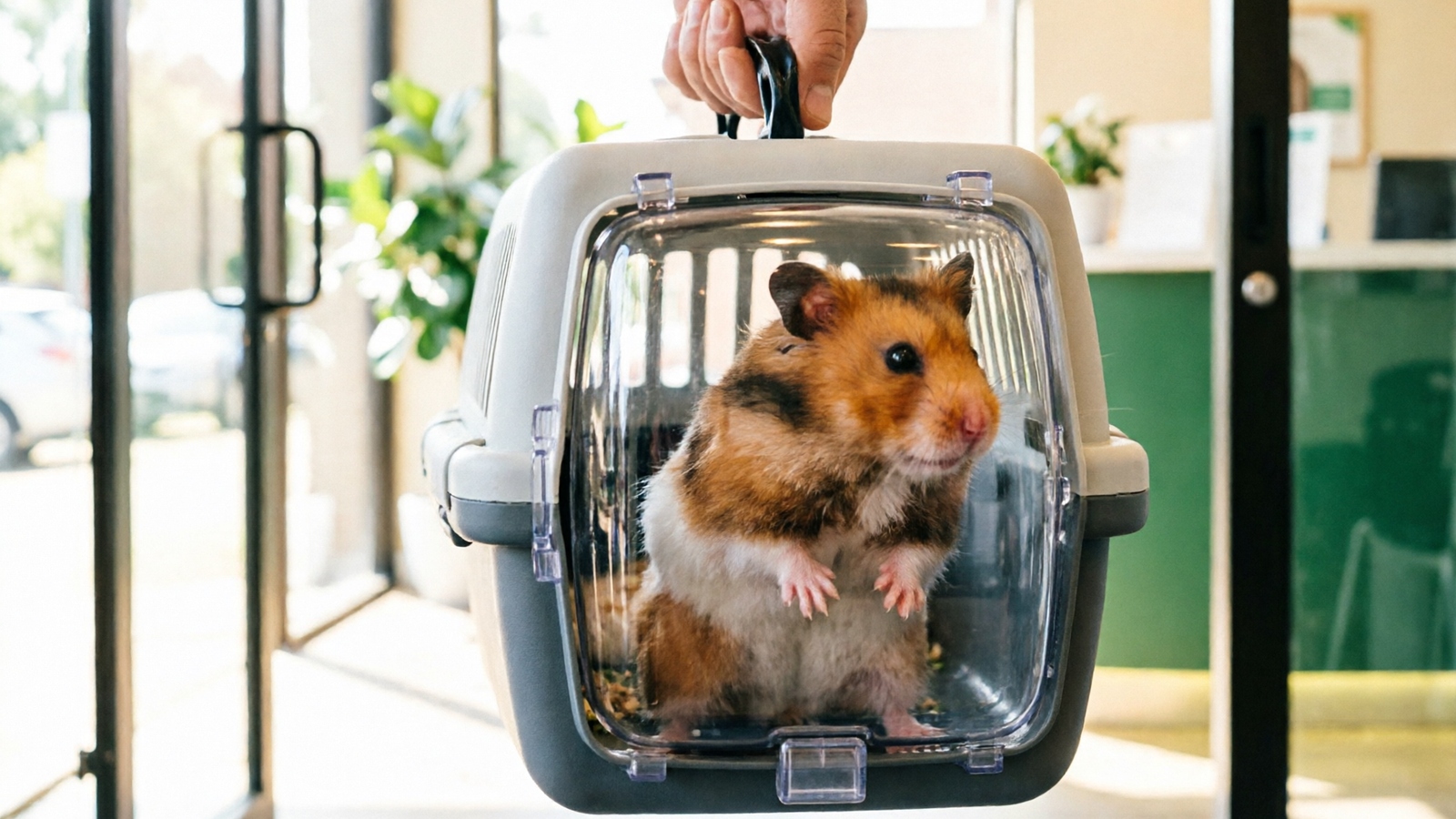
Transport: Use a secure carrier with bedding and a small hideout. Keep the car quiet and the temperature stable. Cover the carrier with a light towel to reduce visual stress.
Arrival: Gently place the carrier inside the prepared cage and open it. Let your hamster walk out on its own. Do not tip it or shake it out.
The 48-hour rule: Leave your hamster completely alone for at least 48 hours. No handling, no petting, no reaching in. Your hamster needs time to explore the cage, find the hideout, and establish its burrow. Interacting too early causes stress that can take weeks to undo.
Days 3-5: After the initial 48 hours, start sitting near the cage and talking softly. Your hamster will start to recognize your voice as a non-threatening presence. Place your hand flat in the cage with a treat on your palm — a sunflower seed or a small piece of broccoli works well. Let the hamster approach you on its own terms. Do not chase or grab.
Days 6-7: Your hamster may start climbing onto your hand voluntarily. If it does, do not lift your hand yet. Let it explore and leave on its own. This builds trust faster than forcing contact. The goal is for your hamster to associate your hand with good things, not capture.
Week 2 and beyond: Gradually start lifting your hamster a few inches over the cage floor. Keep sessions short — 5 minutes maximum at first. Always sit on the floor or over a soft surface in case your hamster jumps. For a complete first-week bonding plan, see our first-time hamster owner guide.
Common First-Time Owner Mistakes to Avoid
Getting a hamster is easy — keeping one healthy requires avoiding these common errors:
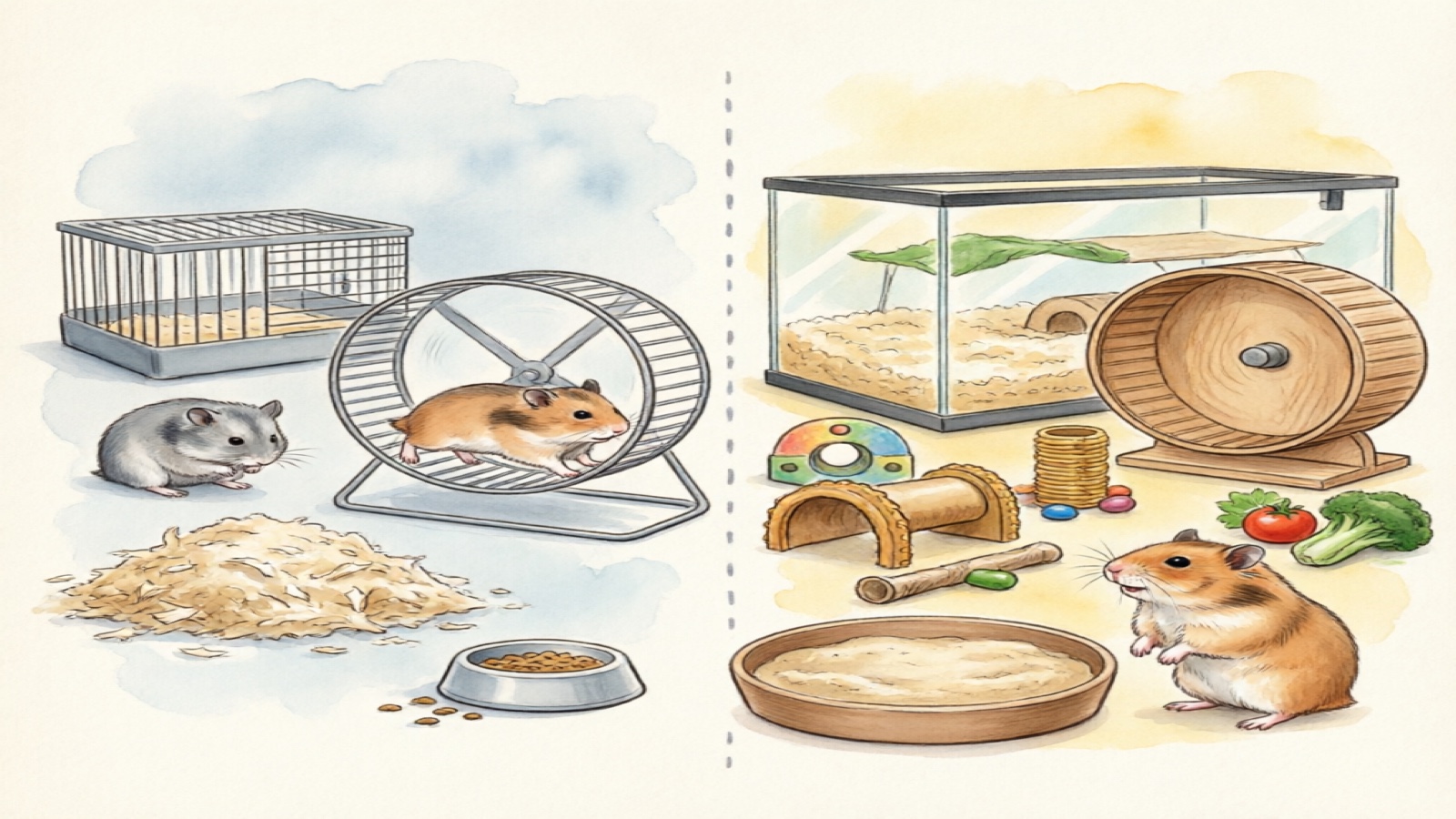
Cage too small. Those colorful pet store cages with tubes and levels look fun but are usually under 200 square inches. A hamster needs 450+ square inches of continuous floor space. Small cages cause stress, bar-biting, and repetitive pacing.
Toxic bedding. Pine and cedar shavings release aromatic oils that cause liver damage and respiratory disease in small animals. Use paper-based bedding only.
Wheel too small. A wheel that forces your hamster to arch its back causes permanent spinal damage. Syrian hamsters need 11+ inch wheels. Dwarf hamsters need 8+ inches.
Handling too soon. The urge to hold your new hamster is strong. Resist it. Wait at least 48 hours, then start slow with hand-feeding before attempting to pick up.
Using hamster balls. Those clear plastic balls seem fun but are dangerous. Hamsters have poor ventilation inside them, they cannot stop or control direction, and their toes can get caught in the slits. A playpen is a safer alternative.
For a deeper dive into these mistakes and how to fix them, see our hamster care guide and our first-time hamster owner resource.
Getting a hamster checklist:
- Cage with 450+ sq inches of continuous floor space — prevents stress, bar-biting, and pacing
- Exercise wheel sized correctly — 11+ inches for Syrians, 8+ inches for dwarfs (ASPCA)
- Paper-based bedding at least 6 inches deep — enables natural burrowing behavior
- Ceramic food bowl and drip water bottle — prevents tipping and contamination
- Dark enclosed hideout — provides security, reduces cortisol levels
- Cage placed in quiet room at 65–75°F — away from direct sunlight, drafts, and vibrations
- 48-hour settling period before handling — lets the hamster acclimate to new environment
- Exotic vet fund of $200–500 set aside — emergency visits cost $50–150+ per trip
- Paper-based or aspen bedding only — safe for respiratory health (AWA minimum standards)
- Never use pine or cedar shavings — aromatic oils cause liver damage and respiratory disease
- Never use a cage under 450 sq inches — causes chronic stress and stereotypic behaviors
- Never use hamster balls — poor ventilation, toe entrapment risk, no escape option
- Never house Syrian or Chinese hamsters together — leads to fighting, injury, or death
- Never handle in the first 48 hours — stress causes bites and long-term trust issues
Frequently Asked Questions
Is getting a hamster a good idea?
Yes, hamsters make great pets for people who want a small, relatively low-maintenance companion. They are entertaining to watch and can form bonds with their owners through patient handling. They are best suited for people who are active in the evening and night when hamsters are awake.
How much does a hamster cost per month?
Expect to spend $20-30 per month on bedding, food, and occasional treats. Bedding is the biggest recurring expense at $10-15 per month. Annual veterinary checkups add another $50-100 if you choose to do them.
What do hamsters need in their cage?
A hamster needs a properly sized cage (450+ sq inches), a silent exercise wheel, deep bedding for burrowing, a hideout, fresh water, and quality food. These six items are the non-negotiable minimum for responsible hamster care.
Can I keep two hamsters together?
Most hamsters are solitary and should be housed alone. Syrian and Chinese hamsters must live alone — housing them together leads to serious fights. Only certain dwarf hamster pairs from the same litter may cohabitate, and even then only under close supervision.
Are hamsters good pets for kids?
Hamsters can work for older children ages 8 and up who understand gentle handling. They are fragile and nocturnal, which means they sleep during the day when kids want to play. Adult supervision is essential for younger children.
How long do hamsters live?
Most pet hamsters live 2-3 years. Syrian hamsters average 2-3 years, while Roborovski dwarfs can reach 3-4 years. Genetics, diet, and cage conditions all affect lifespan.
What should I do in the first 24 hours with a new hamster?
Place your hamster in its prepared cage, add food and water, then leave it completely alone for at least 48 hours. No handling, no reaching in, no loud noises nearby. Your hamster needs this decompression time to adjust to its new environment.