Guinea pig litter box options have diversified significantly in 2026. New designs from Kaytee and Living World feature lower entry ramps and higher backs specifically adapted to guinea pig anatomy, while grid-style trainers have gained popularity for their compatibility with C&C cages. With more owners adopting fleece liner setups, the demand for litter boxes that work with — rather than against — fleece bedding has driven real innovation in this category.
Why Guinea Pigs Need a Special Litter Box
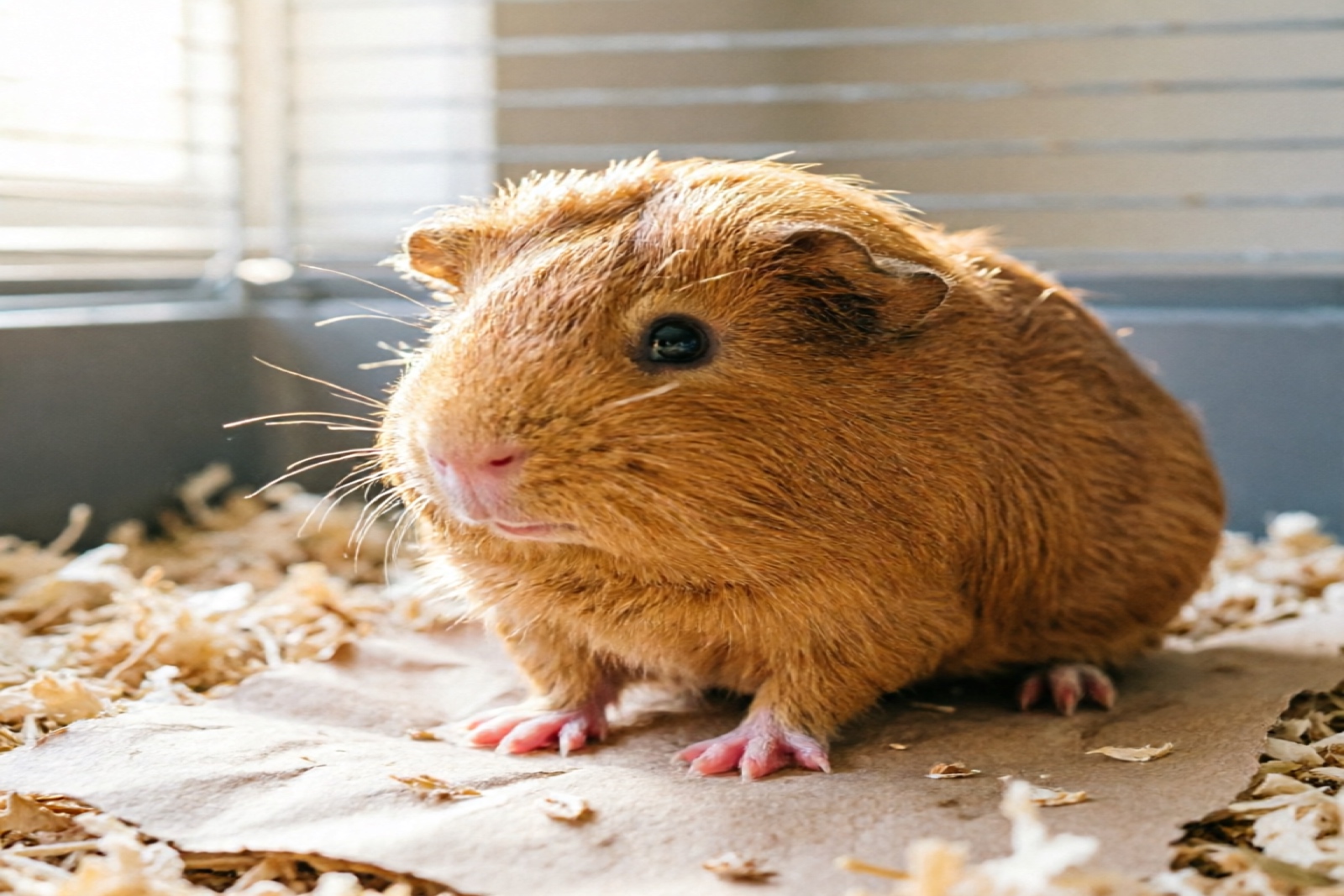
Guinea pigs have a unique habit — they eat and poop at the same time, in the same spot. Unlike rabbits or ferrets that can be reliably litter trained, guinea pigs need a litter box that works with this behavior, not against it. This concept is changing cage cleaning for thousands of owners.
A search for “best guinea pig litter box” returns pages of forum threads asking the same question, brand pages selling single products, and social media videos with no written comparison. There is not a single editorial article that compares litter boxes side by side.
This guide covers 10 litter boxes across 6 design types — grid trainers, corner potties, lock-on pans, kitchen boxes, hay feeder combos, and extra large — helping you find the best guinea pig litter box for your cage type and pig count. Your litter box sits inside your best guinea pig cage, so choosing the right size and type matters for cage compatibility.
What Makes a Good Guinea Pig Litter Tray
A guinea pig litter box — also called a litter tray or pan — is a containment vessel placed inside a guinea pig cage to concentrate waste in one cleanable area. Unlike cat litter boxes, this setup must accommodate the animal’s habit of eating hay while eliminating.
| Feature | Why It Matters for Guinea Pigs | What to Avoid |
|---|---|---|
| Low front entry | Short legs cannot climb over tall edges | High-sided entry pans |
| High back walls | Contains hay scatter and stray droppings | Low open pans that scatter everywhere |
| Correct size | Adult GP needs space to stretch while eating | Pans smaller than 12 x 14 inches |
| Safe grid holes | Keeps feet dry, prevents bumblefoot | Grid holes wide enough for toes to get stuck |
| Cage compatible | Must fit inside C&C, Midwest, or custom cage | Pans too wide for cage dimensions |
| Easy to clean | Daily spot-clean, weekly deep-clean required | Complex designs with hard-to-reach corners |
Why Guinea Pigs Are Different from Rabbits and Ferrets: Guinea pigs eat while they poop — the right litter box must combine with a hay feeding area. They can only be “somewhat” litter trained, so placement matters more than training.
Their short legs make low entry non-negotiable, and multiple pigs need multiple boxes — one box per two guinea pigs minimum. For foundational scent-based training methods, the rabbit litter training guide covers principles that overlap across species.
Your guinea pig cage size determines what litter box dimensions will fit. A litter box that is too wide for your cage footprint will not work regardless of how good the product is. The same best guinea pig bedding you use in the cage goes into the litter box — paper pellets or fleece work best.
Warning: Grid Safety: Some owners report guinea pigs getting their toes stuck in wire grids. Monitor your pigs for 48 hours after introducing any grid-style pan. Remove the grid if they show foot discomfort or reluctance to enter.
Quick Comparison — All 10 Guinea Pig Litter Boxes
| # | Product | Type | Price | Best For | Cage Fit | Check Price |
|---|---|---|---|---|---|---|
| 1 | PODOO Grid Pan | Grid Trainer | $22.61 | TOP PICK | Most cages | Check Price |
| 2 | RUBYHOME Square Potty | Corner | $18.99 | Best Corner | Small cages | Check Price |
| 3 | Ware Lock-N-Litter 2pk | Lock-On | $22.25 | Best Value 2pk | Wire bar cages | Check Price |
| 4 | So Phresh High-Back | High Back | $23.99 | Best High-Back | Most cages | Check Price |
| 5 | Oleisert Large Drawer | Drawer | $24.99 | Best Drawer | Medium+ cages | Check Price |
| 6 | Midwest C&C Litter Box | Kitchen | $29.99 | Best C&C/Midwest | C&C & Midwest only | Check Price |
| 7 | Piggy Poo XL | Extra Large | $54.99 | Best Multi-Pig | Large C&C | Check Price |
| 8 | BESNEW 3-in-1 | Hay Combo | $35.14 | All-in-One | Medium+ cages | Check Price |
| 9 | RUBYHOME Triangle | Triangle | $12.99 | Budget Corner | Small cages | Check Price |
| 10 | Petmate Open Pan | Versatile | $23.80 | Most Versatile | Any cage | Check Price |
Guinea Pig Litter Box Setup — The Kitchen Concept
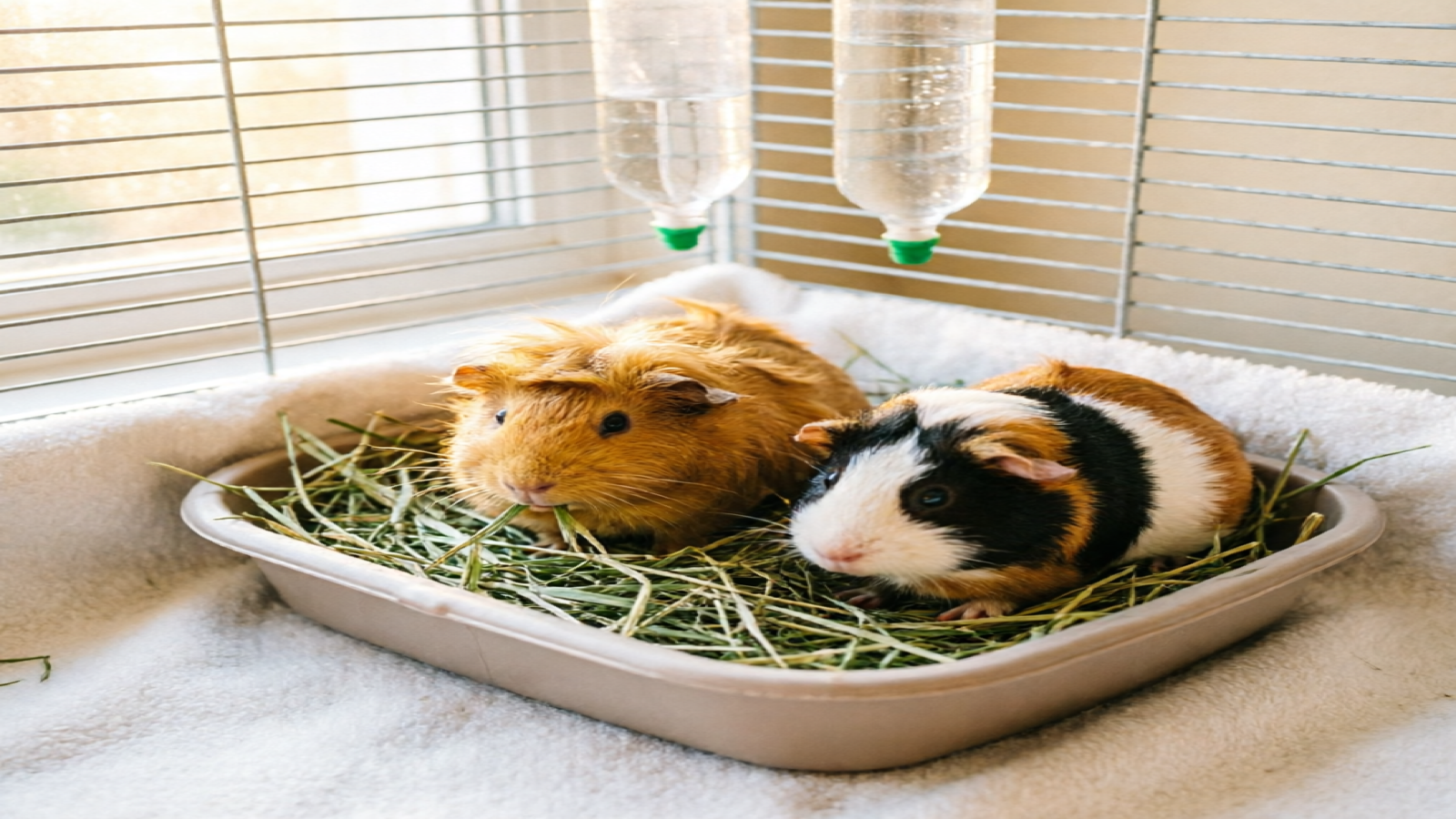
The “Kitchen” Concept: Guinea pigs eat and eliminate simultaneously. The right guinea pig litter box setup combines the litter tray with a hay rack or feeder — creating a designated “kitchen” area where your pigs do both.
This reduces cage cleaning frequency by concentrating 80% or more of waste in one spot. The concept has gone viral on social media through The Pig Room’s content, but no editorial article has covered it in detail — until now.
Step-by-Step Setup Guide:
- Choose the Right Location: Observe where your guinea pigs naturally eliminate most — usually where they eat. Place the box in that corner or area.
For multi-pig cages, place one box per two guinea pigs.
-
Add Bedding to the Litter Box: Use paper-based pellet litter — never clumping cat litter or aromatic wood shavings. Layer one to two inches of litter in the bottom, then top with a handful of fresh hay.
-
Set Up the Hay Feeder: If using a plain guinea pig litter tray, attach a hay rack to the cage wall above or beside the box. If using a kitchen box like the Midwest C&C litter box, hay goes directly in the designated feeding area.
Always keep fresh hay available — this is the key to encouraging litter box use.
- Transfer Scent: Move a few soiled bedding pieces from the cage floor into the new litter tray. Guinea pigs follow scent — this signals “this is where we go.”
Use their best guinea pig food treats as a training reward when they use the box.
- Monitor and Adjust: If pigs use the box consistently, your setup is complete. If they avoid it, try moving it to their preferred corner.
If they sleep in the box, it may be too cozy — remove excess bedding or try a different style. The goal is an active eating and toileting area, not a second sleeping hideout.
What to Put in Your Litter Box: Paper-based pellet litter forms the base layer, topped with fresh hay. Never use clumping cat litter, which is dangerous if ingested. Avoid cedar and pine shavings — the aromatic oils cause respiratory issues in guinea pigs.
Some owners add a fleece liner on top of the pellets for easier cleaning. The combination of pellets for absorption and hay for attraction creates the most effective litter box environment.
Product Reviews — 10 Options Compared
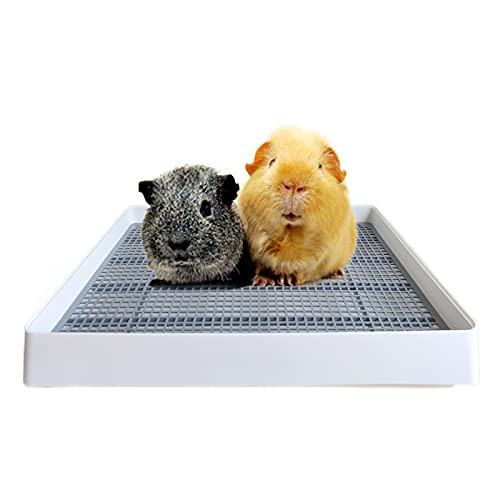
1. PODOO Grid Pan — TOP PICK ($22.61)
The PODOO grid pan is the best guinea pig litter box for most owners — it separates waste from feet. Waste falls through the grid holes into a pull-out tray below, keeping your guinea pigs dry and making daily cleaning straightforward.
Pros:
- Grid design keeps feet dry — reduces bumblefoot risk
- Spacious interior fits adult guinea pigs comfortably
- Low entrance for easy access
- Pull-out tray for simple waste removal
Cons:
- Warning: Some owners report grid is hard on guinea pigs’ feet — monitor for 48 hours
- Drawer mechanism can be uncomfortable to clean
- May be too large for smaller cages
- Not all pigs take to grid surfaces immediately
Best for owners who want the cleanest setup with minimal daily maintenance. Remove the grid if your pigs show any foot discomfort.
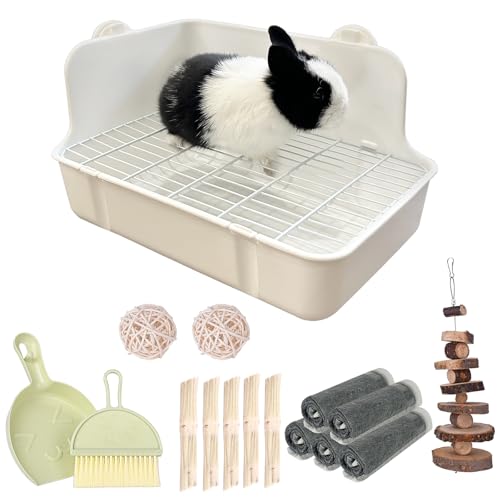
2. RUBYHOME Square Potty — Best Corner ($18.99)
This guinea pig corner litter box fits snugly in cage corners, saving floor space in smaller enclosures. It includes a plastic grate and clips for cage bar attachment.
Pros:
- Corner design maximizes cage space
- Clips attach securely to cage bars
- Consistent owner feedback for confidence
- Affordable at under $19
Cons:
- Multiple reviews say it is smaller than it appears in photos
- Urine sticks to plastic walls — harder to clean
- First orders sometimes arrive without advertised accessories
- Too small for medium or large guinea pigs
Best for small cages where corner space is the only option. Works for a single guinea pig in a compact setup.
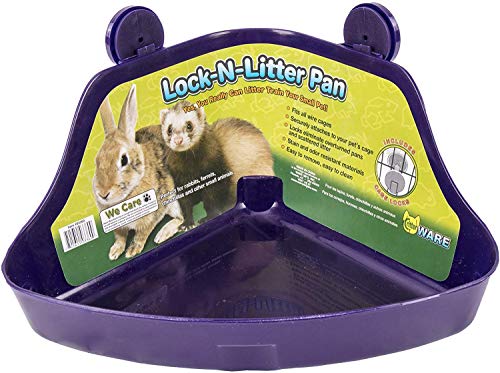
3. Ware Lock-N-Litter 2-Pack — Best Value ($22.25)
Two guinea pig litter trays for $22 — the best value per unit on this list. The lock-on clips prevent tipping, which solves the number one complaint about lightweight litter pans.
Pros:
- Two pans for $22 — best value for multi-pig homes
- Lock-on clips prevent tipping and shifting
- Works on any wire bar cage
- Consistent feedback across widespread use
Cons:
- No included grate — waste sits directly in the pan
- Sticker labels are glued on and nearly impossible to remove
- Missing lock hardware reported in some shipments
- Plain design with no high back wall
Best for multi-pig households needing two or more boxes. This same product is also reviewed in the rabbit litter box guide.
4. So Phresh High-Back — Best High-Back Design ($23.99)
A widely used budget option at the lowest price. The high back wall contains mess while the low front lip lets older guinea pigs with stiff joints enter easily.
Pros:
- Cheapest option that actually works well
- High back wall contains hay scatter effectively
- Low lip for easy entry by older or arthritic pigs
- Widely used option at this price point
Cons:
- Spin-on lock warps and falls off during normal use
- Slides around in cages without secure attachment
- Some pigs find it so cozy they sleep in it
- Only one pan per purchase — no multi-pack option
Best for budget-conscious first-time owners with a single guinea pig. This same pan is also covered in the ferret litter box guide for cross-species reference.
5. Oleisert Large Drawer — Best Drawer Design ($24.99)
The pull-out drawer design makes waste removal quick and clean. The grid top keeps guinea pig feet dry while letting waste fall through to the collection tray below.
Pros:
- Pull-out drawer for easy waste removal
- Grid top keeps feet dry
- Larger interior than most standard pans
- Convenient cleaning mechanism
Cons:
- Collection tray is thin and requires daily emptying
- Not all sides have drainage holes — urine accumulates on paws
- Smaller than expected despite “Large” in the product name
- Limited owner feedback — smaller sample
Best for owners who prefer drawer-style cleaning in medium to large cages. Budget for daily maintenance with this guinea pig litter tray.
6. Midwest Guinea Pig Kitchen — Best C&C/Midwest ($29.99)
Purpose-built for C&C and Midwest cages, this creates a full guinea pig kitchen setup — eating and toileting combined in one designated area. Multiple owners call it a “game-changer.”
Pros:
- Designed specifically for C&C and Midwest cage dimensions
- True “kitchen” concept — eating and toileting in one area
- Multiple owners report pigs stopped eliminating outside the box
- Good size for two guinea pigs
Cons:
- Warning: Mixed durability — some units fell apart within three months
- Made of corrugated plastic that absorbs urine and retains odors
- Assembly required with plastic screws that can break
- Arrived incomplete in some reported shipments
Best for C&C and Midwest cage owners who want the full kitchen experience. Accept the risk of a three to six month replacement cycle due to the corrugated plastic material.
7. Piggy Poo XL — Best Multi-Pig ($54.99)
The highest-rated extra large option, designed for households with three or more guinea pigs. American-made with thick, durable plastic construction.
Pros:
- Consistently positive feedback among XL options
- Fits two to three guinea pigs comfortably
- Thick durable plastic — made in USA by a small business
- Extra large size reduces overflow issues
Cons:
- Expensive at $55 for a litter box
- Textured bottom makes cleaning harder — waste sticks to the surface
- Restocking fee if returned
- Limited owner feedback — small sample for long-term assessment
Best for households with three or more guinea pigs in large C&C cage setups. The best large option when budget is not the primary concern.
8. BESNEW 3-in-1 Hay Feeder — All-in-One ($35.14)
The true all-in-one guinea pig kitchen — hay rack, food bowls, and litter tray combined in a single unit. This all-in-one setup reduces hay waste and centralizes feeding and toileting.
Pros:
- Complete feeding and toileting station in one unit
- Reduces hay waste significantly
- Multiple owners call it the “perfect guinea pig kitchen”
- Removable plastic insert for easier cleaning
Cons:
- Warning: Wood absorbs urine — once soaked, the smell is permanent
- Too small for larger guinea pigs
- Hay rack can split in half over time
- Food bowls are exceptionally small
Best for owners wanting a complete feeding and toileting station for a single guinea pig or small pair. Expect to replace after six to twelve months because the wood component absorbs urine permanently.
9. RUBYHOME Triangle — Budget Corner ($12.99)
The cheapest corner option that works, with widespread owner feedback confirming reliable use. The triangle shape maximizes corner space in compact cages.
Pros:
- Cheapest functional corner option at under $13
- Clips hook over cage bars for stability
- Triangle shape maximizes corner space
- Widespread use confirmed by extensive owner feedback
Cons:
- Warning: “Slots are too big and my guinea pig’s foot got stuck” — safety concern
- Plastic reportedly degrades with prolonged urine exposure
- Can be knocked over by determined pigs
- Remove the grid grate before use for foot safety
Best for tight budgets and small cages. Always remove the grid grate from this guinea pig corner litter box before use to prevent foot injuries.
10. Petmate Open Pan — Most Versatile ($23.80)
A universally used small animal pan — extensive owner base. A simple open design with no grates, no clips, and no assembly — literally impossible to break.
Pros:
- Widely used pan with strong user base
- Simple open design with zero breakable parts
- Made in USA with durable plastic
- Works in any cage orientation
Cons:
- Universally described as smaller than expected
- Designed for kittens — sized too small for most guinea pigs
- No high back wall to contain mess
- No attachment mechanism — slides around freely
Best for owners who want a simple, unbreakable pan. Consider sizing up to a large Petmate pan if this medium size is too small for your needs.
Litter Training Tips for Guinea Pigs
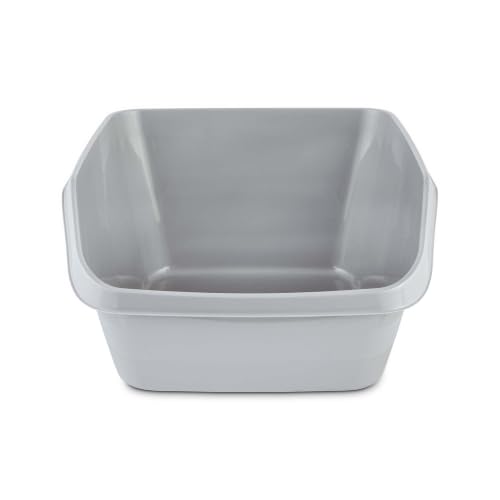
Can you litter train a guinea pig? The honest answer is partly — guinea pig potty training is not the same as cat litter training. They will not seek out a litter box on command, but they can be guided to use one consistently through smart placement.
The secret is that guinea pigs go where they eat. Put the litter box where they already eat most, and fill it with their favorite hay. They will enter to eat and eliminate while they are there.
Training Tips for Your Guinea Pigs:
-
Observe first: Watch where your pigs eliminate for three to five days before choosing a litter box. Place the box in their preferred spot.
-
Hay lure: Fill the guinea pig litter tray with fresh hay. Guinea pigs will enter to eat, and while eating, they will naturally eliminate.
-
Scent transfer: Move soiled bedding from their current toilet spots into the new box. Scent is the strongest motivator.
-
Remove competing areas: Clean spots where they toilet outside the box with a vinegar solution to remove urine scent markers.
-
Multiple boxes: For three or more guinea pigs, use two or more boxes. They will not all share one consistently.
-
Be patient: Consistent use takes one to four weeks. Some individual pigs never fully adapt — that is normal for the species.
Warning: Never punish your guinea pig for missing the box. They do not understand punishment and it damages trust. Keep the litter box in their preferred spot and add more hay.
Frequently Asked Questions
What is the best litter box for a guinea pig?
The best choice depends on your cage type and pig count. For most owners, a grid-style pan like the PODOO offers the cleanest setup with dry feet.
For C&C or Midwest cages, a kitchen box like the Midwest C&C litter box combines eating and toileting in one area. Budget pick: So Phresh High-Back at $23.99.
What to put in a guinea pig litter box?
Use paper-based pellet litter as the base layer, topped with fresh hay. What to put in a guinea pig litter box matters because wrong bedding causes respiratory problems.
Never use clumping cat litter, scented wood shavings, or cedar and pine bedding. Some owners add a fleece liner on top of the pellets for easier spot cleaning.
How to train a guinea pig to use litter box?
You cannot fully house-train a guinea pig like a cat, but consistent use is possible through smart placement. How to train a guinea pig to use litter box comes down to one principle: guinea pigs go where they eat.
Place the litter box where they already eat most, fill it with their favorite hay, and move soiled bedding into the box. Clean outside areas with vinegar to remove scent markers. It takes one to four weeks.
What size litter box does a guinea pig need?
Minimum 12 by 14 inches for a single adult guinea pig. For two pigs, use at least 16 by 12 inches or a 2x1 kitchen-style box.
For three or more pigs, use an extra large box or two standard boxes placed in their preferred elimination corners. The box must be large enough for the pig to stretch out while eating.
Do guinea pigs need a litter box?
Not strictly required, but a litter box significantly reduces cage cleaning time by concentrating 80% or more of waste in one spot. It keeps the living area drier and reduces bumblefoot risk and respiratory issues from ammonia buildup.
A litter box is especially recommended for fleece bedding setups, where waste concentration makes fleece maintenance much simpler.
Conclusion
A litter box is one of the most essential guinea pig cage accessories for reducing cleaning time. By concentrating 80% or more of waste in one spot, it keeps the rest of the cage cleaner and drier — reducing bumblefoot risk and ammonia exposure.
For most owners, the PODOO grid pan at $22 is the best guinea pig litter box — it keeps feet dry and simplifies cleaning. For C&C and Midwest cage owners, the Midwest C&C kitchen box creates the full “kitchen” experience — the best option for dedicated setups.
Budget buyers should start with the So Phresh High-Back at $23.99.
Whatever litter box you choose, remember the golden rule: guinea pigs go where they eat. Place the box where your pigs already eat most, fill it with fresh hay, and let their natural instincts do the rest.