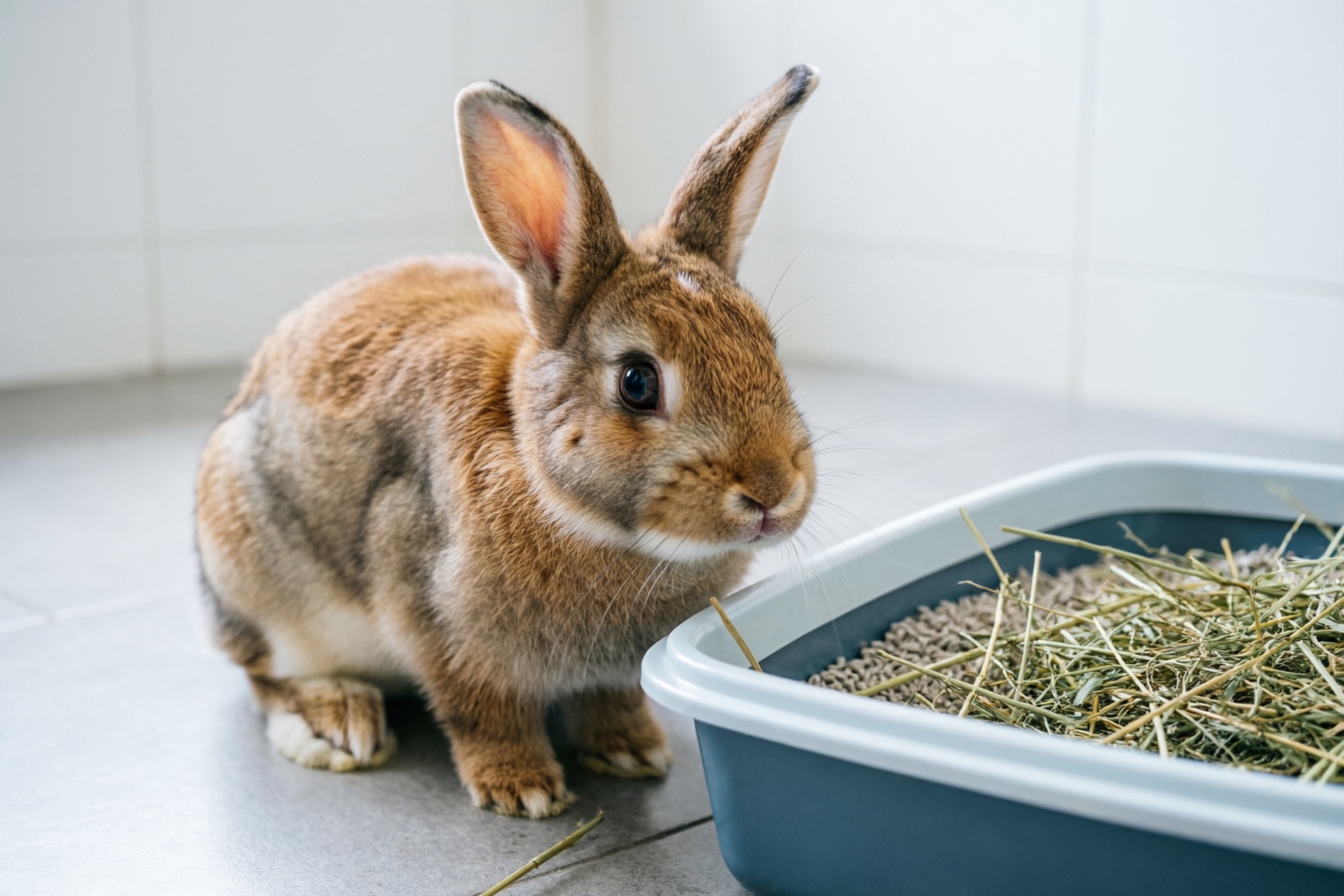
Yes, rabbits can be litter trained! In fact, rabbits are naturally clean animals and most will readily learn to use a litter box with the right setup and training. This complete guide covers everything you need to know about litter training rabbits, from choosing supplies to troubleshooting common problems.
Why Litter Training Is Important
Benefits of Litter Training
For Your Rabbit:
- ✅ Cleaner environment: Less contact with waste
- ✅ Better hygiene: Reduced risk of infections
- ✅ Natural instincts: Satisfies rabbit’s natural cleanliness
For You:
- ✅ Easier cleanup: One designated area vs. entire cage
- ✅ Less odor: Contained waste area
- ✅ Cost-effective: Less bedding wasted
- ✅ Better bonding: Rabbit is cleaner for handling
Are Rabbits Hard to Litter Train?
No! Compared to cats, rabbits are actually easier to litter train because:
- Rabbits naturally choose one or two bathroom spots (often corners)
- They’re clean animals that prefer not to soil living areas
- Most rabbits learn in 1-2 weeks (cats can take months)
- Spaying/neutering dramatically improves success rate
Success Rate: 80-90% of rabbits can be successfully litter trained, especially after spaying/neutering [House Rabbit Society].
Preparation: Setting Up for Success
Step 1: Spay or Neuter Your Rabbit
This is crucial for litter training success.
Why It Matters
- Intact rabbits have strong urge to mark territory (dropping poop everywhere)
- Spaying/neutering reduces territorial marking by 80-90%
- Hormonal rabbits are significantly harder to train
- Unneutered males may spray urine (impossible to litter train)
When to Spay/Neuter:
- Before training (ideal)
- At 4-6 months old (before sexual maturity)
- If rabbit is older, still beneficial
Recovery Time:
- Wait 2-4 weeks after surgery for hormones to settle
- Start training during recovery but expect faster progress after hormones stabilize
Note: Spayed/neutered rabbits are much easier to litter train. This single step significantly increases success rate.
Step 2: Choose the Right Litter Box
Size Matters
Minimum Dimensions:
- Small rabbits (2-4 lbs): 12” x 8” x 4” deep
- Medium rabbits (4-8 lbs): 15” x 10” x 6” deep
- Large rabbits (8+ lbs): 18” x 12” x 6” deep
Better Option: Larger is always better
- Rabbits like to sit in box with all four feet
- Room to turn around comfortably
- Space for hay pile (rabbits poop while eating)
Rule: Box should be at least 1.5x the rabbit’s length.
Material Options
Plastic (Most Common):
- Pros: Easy to clean, inexpensive, durable, lightweight
- Cons: Some rabbits chew plastic
- Best for: Most rabbits
Ceramic:
- Pros: Heavy (can’t be tipped), cool in summer, chew-proof
- Cons: Breakable, heavier, more expensive
- Best for: Chewers, hot climates
Stainless Steel:
- Pros: Durable, chew-proof, hygienic, lasts forever
- Cons: Expensive
- Best for: Heavy chewers, long-term investment
Cat Litter Box (Covered):
- Pros: High sides contain hay, inexpensive, widely available
- Cons: Takes up more space
- Best for: Messy rabbits, those who kick litter out
Recommended Litter Boxes
- Large Plastic Storage Bin (DIY Option) ⭐⭐⭐⭐⭐
- Price: $5-15
- Get 50-70 quart bin with high sides
- High sides contain hay
- Easy to clean, durable
- Buy on Amazon
- Cat Litter Box with High Sides
- Price: $15-30
- Various sizes available
- Cover optional
- Buy on Amazon
- Ceramic Litter Pan
- Price: $15-25
- Heavy, chew-proof
- Durable
- Buy on Amazon
DIY Tip: A large plastic storage bin works perfectly and costs $5-10. Choose size at least 15” x 11” for medium rabbits.
Step 3: Choose the Right Litter
Safe Litter Options
Paper-Based Litter (Recommended) ⭐⭐⭐⭐⭐:
- Yesterday’s News (compressed paper pellets)
- Carefresh
- Kaytee Clean & Cozy
Pros: Safe if ingested, absorbent, low dust, controls odor Price: $15-25 for 30lb bag Duration: 1 bag lasts 2-4 weeks
Wood Pellets (Horse Stall Bedding) ⭐⭐⭐⭐:
- Pros: Very inexpensive, absorbent, natural
- Cons: Can be dusty, heavier Price: $6-12 for 40lb bag
- Nature’s Logic Pine Pellet Cat Litter is a quality option Duration: 1 bag lasts 4-6 weeks
Aspen Shavings ⭐⭐⭐:
- Pros: Natural, absorbent, inexpensive
- Cons: Can be messy, less odor control Price: $10-20 per bag
Litter to Avoid
- ❌ Clay/Clumping Litter - Dangerous if ingested, causes blockages
- ❌ Cedar/Pine Shavings - Respiratory issues from phenols
- ❌ Crystal Litter - Sharp, dangerous if ingested
- ❌ Corn Cob - Mold risk, can cause blockages
- ❌ Cat Litter with Deodorizers - Chemicals harmful to rabbits
Safety: Paper-based litter is safest. Rabbits may nibble litter, so choose non-toxic options only.
How Much Litter?
- Depth: 1-2 inches in box
- Daily: Add fresh litter on top
- Weekly: Full change (dump, wash, refill)
Step 4: Add Hay to Litter Box
Essential: Rabbits often poop while eating hay. Placing hay in the litter box encourages use.
Hay in Litter Box Method ⭐⭐⭐⭐⭐
How to Do It:
- Place litter box in corner of cage
- Add 1-2 inches of litter
- Pile generous amount of hay at one end of box
- Rabbit sits in box to eat hay → naturally poops in box
Benefits:
- Natural association between eating and pooping
- Keeps hay clean and accessible
- Most successful training method
- Rabbit spends more time in box
Pro Tip: Most rabbits naturally use litter box when hay is placed inside. This is the most effective training method.
Hay Types:
- Adults: Timothy hay, orchard grass, meadow hay
- Young rabbits (under 7 months): Alfalfa hay (higher calcium/protein)
Step 5: Place Litter Boxes Strategically
Location Matters
- Corner placement: Rabbits prefer corners (feel secure)
- Near food and water: Rabbits often poop near eating areas
- Quiet area: Avoid high-traffic zones
- Multiple boxes: One box per area for large spaces
Starting Setup:
- Observe where rabbit currently poops
- Place box in that spot (usually a corner)
- Add hay to box
- Include a few poop pellets in box (scent cue)
Tip: Let your rabbit choose the location. Moving the box to where they naturally go is more effective than forcing them to use your chosen spot.
The Training Process
Week 1: Observation and Setup
What to Do:
- Place litter box in rabbit’s chosen corner
- Add hay to box
- Don’t clean up all accidents immediately (leave some poop in box for scent)
- Observe where rabbit naturally eliminates
- Move box if rabbit consistently uses different spot
What to Expect:
- Rabbit will explore box curiously
- May start using immediately (some do!)
- May still have accidents outside box (normal)
- Rabbit may eat hay from box (good!)
Week 2: Encouragement and Reinforcement
What to Do:
- When you see rabbit use box, offer small treat and praise (“Good rabbit!”)
- Continue leaving some poop in box as scent cue
- Gently place any stray poop pellets into box (let rabbit see you do this)
- Clean up excess poop outside box
- Keep box clean but not sterile (some scent is helpful)
What to Expect:
- Rabbit using box more frequently
- Fewer accidents outside box
- Rabbit may start seeking box intentionally
- Training clicking into place
Week 3-4: Consistency and Maintenance
What to Do:
- Continue praising box use enthusiastically
- Clean box daily (remove soiled litter, add fresh)
- Replace hay as needed (keep fresh pile in box)
- If accidents occur, gently place in box without scolding
- Maintain consistent routine
What to Expect:
- Rabbit consistently using box (80-90% success)
- Very few accidents
- Rabbit may spend time relaxing in box (normal and fine)
- Training largely complete
Timeline: Most rabbits are reliably trained within 2-4 weeks. Some learn faster (few days), others slower (6-8 weeks). Patience is key.
Troubleshooting Common Problems
Problem 1: Rabbit Won’t Use Litter Box
Possible Causes:
- Not spayed/neutered: Hormonal marking behavior
- Box too small: Rabbit uncomfortable
- Wrong location: Box not where rabbit wants to go
- Litter issues: Rabbit dislikes the litter type or texture
- Medical issue: Urinary tract infection, bladder sludge, pain
Solutions:
- Spay/neuter (if not already done) - Most important step
- Try larger box - Upgrade to 50+ quart storage bin
- Move box - Place exactly where rabbit is currently pooping
- Try different litter - Switch from wood pellets to paper-based
- Add more hay - Large, fresh hay pile attracts rabbits
- Place multiple boxes - Several locations for large cages/rooms
- See vet - If rabbit is straining, has bloody urine, or seems in pain
Patience: Some rabbits need 6-8 weeks. Don’t give up! Most eventually learn.
Problem 2: Rabbit Poops in Box but Pees Outside
Why This Happens:
- Pooping and peeing are separate behaviors for rabbits
- Rabbit may be comfortable pooping in box but not peeing
- Box may be too dirty (rabbits are very clean)
- Medical issue (urinary problem)
Solutions:
- Clean box more frequently (rabbits avoid dirty boxes for peeing)
- Try larger box
- Add second box in different location
- Place box in area where rabbit is currently peeing
- Be patient—this often resolves with time
- See vet if rabbit seems to be in pain or straining
Problem 3: Rabbit Kicks Litter Out of Box
Why This Happens:
- Play behavior (digging/kicking is natural)
- Dislikes litter texture
- Boredom (not enough enrichment)
- Box too small
Solutions:
- Try different litter (paper pellets vs. wood pellets)
- Use box with higher sides
- Provide more enrichment (digging box, toys, out-of-cage time)
- Upgrade to larger box
- Place mat under box to catch scattered litter
Problem 4: Rabbit Sleeps in Litter Box
Why This Happens:
- Box is comfortable (hay is soft and cozy)
- Feels secure in enclosed space
- May not have other comfortable hide areas
- Rabbit likes the smell of their own scent
Solutions:
- Provide attractive hide houses elsewhere in cage
- Place hay in box AND in separate hay feeder
- Add soft bedding to other hide areas
- This is generally harmless—let rabbit sleep there if they want
Note: Many rabbits enjoy resting in their litter box. This is normal and doesn’t need correction.
Problem 5: Rabbit Eats the Litter
Why This Happens:
- Curiosity (rabbits explore with their mouths)
- Hunger or insufficient fiber
- Litter looks like food (corn cob, alfalfa pellets)
- Mineral deficiency (rare)
Solutions:
- Switch to paper-based litter (safe if ingested in small amounts)
- Avoid clay, crystal, or clumping litter (dangerous)
- Ensure rabbit getting enough fiber (unlimited hay)
- Provide more foraging opportunities
- See vet if eating large amounts of non-food items
Safety: Paper-based litter is safe if ingested in small amounts. Clay and clumping litter can cause fatal blockages—never use these.
Problem 6: Sudden Loss of Litter Training
Why This Happens:
- Medical issue: UTI, bladder sludge, kidney stones, arthritis (pain)
- Stress: New environment, new pet, loud noises, changes in routine
- Dirty box: Rabbit avoiding soiled box
- Territorial marking: New rabbit, intact rabbit, hormonal surge
- Age-related: Senior rabbit may have mobility issues
Solutions:
- See vet first to rule out medical issues (most common cause)
- Clean box thoroughly with vinegar and water
- Go back to basics (place box where rabbit is currently eliminating)
- Consider if rabbit is intact (spay/neuter if not)
- Identify and reduce stressors
- Provide easier access for senior rabbits (lower entry)
Red Flag: Sudden loss of housetraining in a previously trained rabbit warrants a vet visit. Often indicates medical issue.
Advanced Tips
Multiple Litter Boxes
When to Use:
- Large cage or free-roam setup
- Multiple rooms
- Senior rabbits (easier access)
- Very clean rabbits (avoid dirty boxes)
Setup:
- 1 box per 50 square feet of living space
- Place in corners and near food areas
- All boxes should have hay
- Clean boxes on rotation (not all at once)
Litter Box for Free-Roam Rabbits
Special Considerations:
- Place box in area rabbit naturally chooses
- May need multiple boxes (1 per room)
- Block off areas you don’t want used (under furniture, behind TV)
- Place hay near box (in box or adjacent hay feeder)
- Puppy pads or mats under box protect flooring
Litter Box for Bonded Pairs
Special Considerations:
- Provide at least 2 boxes (some rabbits won’t share)
- Extra-large boxes accommodate both
- More frequent cleaning (more waste)
- Watch for territorial behavior
Cleaning and Maintenance
Daily Tasks
- Remove soiled litter (wet spots, poop piles)
- Add fresh litter on top
- Replace hay if soiled or depleted
- Quick visual check of box condition
Weekly Tasks
- Dump all litter completely
- Wash box with white vinegar and water solution (1:1)
- Rinse thoroughly with clean water
- Dry completely before refilling
- Add fresh litter (1-2 inches) and fresh hay
Tip: Vinegar is safe, effective, and eliminates odors. Avoid bleach and harsh chemicals—fumes can harm rabbits.
Signs of a Well-Maintained Litter Box
- ✅ Rabbit using box consistently
- ✅ Minimal odor
- ✅ No wet spots outside box
- ✅ Rabbit comfortable spending time in box area
- ✅ Clean hay available
Litter Training Summary
Success Factors
- ✅ Spay/neuter first - Most important factor
- ✅ Large box with high sides - Comfort and containment
- ✅ Paper-based litter - Safe and absorbent
- ✅ Hay in or near box - Natural attraction
- ✅ Place in rabbit’s chosen corner - Work with instincts
- ✅ Patience and consistency - Don’t rush the process
- ✅ Praise success, don’t punish accidents - Positive reinforcement only
Timeline
- Days 1-7: Exploration, may start using immediately
- Week 2: Consistency developing, fewer accidents
- Week 3-4: Reliable use, training largely complete
- 2-4 weeks: Most rabbits fully trained
Red Flags (See Vet Immediately)
🚨 Straining to urinate 🚨 Bloody urine 🚨 Frequent small amounts of urine 🚨 Sudden loss of training in previously trained rabbit 🚨 Loss of appetite + not using litter box 🚨 Visible pain when urinating or defecating
Frequently Asked Questions (FAQ)
1. How long does it take to litter train a rabbit?
2-4 weeks for most rabbits. Some learn in days, others take 6-8 weeks. Consistency and patience are key.
2. Do I need multiple litter boxes?
For large spaces, yes. Rule of thumb: 1 box per 50 sq ft. Multiple boxes reduce accidents.
3. Can I use cat litter for rabbits?
Avoid clay and clumping litters. Paper-based litter (Yesterday’s News, Carefresh) is safest for rabbits.
4. Why does my rabbit poop in the litter box but pee outside?
This is common. Pooping and peeing are separate behaviors. Clean box more frequently and be patient—usually resolves with time.
5. Why does my rabbit kick litter out of the box?
Play behavior or dislikes litter. Try different litter type, provide more enrichment, use box with high sides.
6. Should I punish my rabbit for accidents?
No. Never scold or punish. This creates stress and makes training harder. Just quietly clean up and place poop in box.
7. Can older rabbits be litter trained?
Yes! Older rabbits may take longer but can learn. Be patient and provide easy access to box.
8. Why does my rabbit sleep in the litter box?
Comfort and security. Provide attractive hide areas elsewhere. This is generally harmless—let rabbit rest where they feel safe.
9. What if my rabbit suddenly stops using the litter box?
See vet. Sudden behavior change often indicates medical issue (UTI, bladder sludge, arthritis, pain).
10. Do I need to spay/neuter my rabbit for litter training?
Highly recommended. Intact rabbits have strong urge to mark territory. Spaying/neutering significantly improves success rate (80-90% vs. 30-40%).
11. How do I stop my rabbit from eating the litter?
Switch to paper-based litter (safe if ingested in small amounts). Ensure rabbit getting enough fiber (unlimited hay). Provide more foraging opportunities.
12. Can I use a covered litter box?
Yes. Some rabbits prefer privacy. Ensure rabbit can easily enter/exit. Remove cover if rabbit avoids box.
13. Why does my rabbit drag hay out of the litter box?
Play behavior or looking for food. Normal. Provide hay feeder in addition to litter box hay.
14. How do I clean a rabbit litter box?
Weekly: Dump litter, wash with white vinegar + water (1:1), rinse thoroughly, dry completely, add fresh litter and hay.
15. Can I use a cat litter scoop for rabbit litter?
Yes. Useful for removing waste daily. Wash scoop regularly.
16. Why does my rabbit pee on my bed/couch?
Territorial marking or not spayed/neutered. Also: not enough litter boxes, box too dirty, medical issue. Spay/neuter, provide more boxes, clean more frequently, see vet if sudden change.
17. How long can a rabbit hold their pee?
Varies. Healthy rabbits may hold 6-8 hours, but shouldn’t have to. Provide litter box at all times.
18. Can rabbits be litter trained if they’re older?
Yes! Older rabbits may take longer but can learn. Be patient, provide easy access to box.
19. Why does my rabbit pee next to the litter box instead of in it?
Box may be too small, too dirty, or in wrong location. Try larger box, clean more frequently, or move to where rabbit is peeing.
20. How do I litter train multiple rabbits?
Provide multiple boxes (at least 2, preferably more), watch for territorial marking, ensure all rabbits are spayed/neutered, clean boxes frequently to prevent conflict.
21. What if my rabbit only pees in the box but poops everywhere?
This is common. Rabbits often poop to mark territory. Spaying/neutering helps. Pick up poop and place in box, rabbit will learn.
22. Can I use puppy pads instead of litter?
Temporarily, yes. Not ideal long-term (expensive, not as absorbent). Better for travel or temporary setups.
23. How do I know if my rabbit’s litter habits indicate illness?
Red flags: Straining, frequent small amounts, blood in urine, suddenly not using box, loss of appetite. See vet immediately.
24. Why is my rabbit’s urine red/orange?
Normal. Rabbit urine varies from pale yellow to red/orange due to plant pigments. Concerning: Dark brown, blood-tinged, or if rabbit seems in pain.
25. Can rabbits use a litter box while free-roaming?
Yes! Free-roam rabbits often use litter box reliably. Provide multiple boxes in different rooms, especially where rabbit spends time.
Common Problems and Solutions
Problem 1: Rabbit Completely Ignores Litter Box
Possible causes:
- Box in wrong location
- Box too small
- Rabbit not spayed/neutered
- Medical issue
- Stress
Solutions:
- Move box to where rabbit is eliminating
- Try larger box (storage bin)
- Spay/neuter rabbit
- See vet if sudden behavior change
- Identify and reduce stressors
- Add hay to box
- Place some poop in box as scent cue
Problem 2: Rabbit Uses Box Sometimes But Not Always
Possible causes:
- Inconsistent cleaning
- Not enough boxes
- Box too dirty
- Hormonal (intact rabbit)
Solutions:
- Clean box more frequently
- Add second box in different location
- Ensure box is clean at all times
- Spay/neuter rabbit
- Be patient—training takes time
Problem 3: Rabbit Poops in Box but Pees Outside
Why this happens: Pooping and peeing are separate behaviors for rabbits
Solutions:
- Clean box more frequently (rabbits avoid dirty boxes for peeing)
- Try larger box
- Add second box
- Be patient—often resolves with time
- Spay/neuter if not already done
Problem 4: Rabbit Sleeps in Litter Box
Why this happens: Box is comfortable, secure, or only hide available
Solutions:
- Provide attractive hide houses elsewhere
- Add hay in box AND in separate feeder
- Add soft bedding to other hide areas
- This is generally harmless—let rabbit sleep where comfortable
Problem 5: Rabbit Kicks Litter Out of Box
Why this happens: Play, digging instinct, dislikes litter texture
Solutions:
- Try different litter (paper pellets vs. wood pellets)
- Use box with higher sides
- Provide digging box elsewhere
- Place mat under box to catch scattered litter
Training Tips for Different Situations
For Free-Roam Rabbits
Setup:
- Provide multiple litter boxes (1 per room or per 50 sq ft)
- Place boxes in corners and near food areas
- Block off areas you don’t want used (under furniture)
- Use puppy pads under boxes to protect flooring
Tips:
- Start with rabbit confined to one room with box
- Gradually expand access as rabbit uses box reliably
- Add boxes as you expand territory
For Cage-Housed Rabbits
Setup:
- One large box in corner of cage
- Place where rabbit naturally eliminates
- Hay in or adjacent to box
Tips:
- Confine rabbit to cage until using box reliably
- Gradually increase out-of-cage time
- Provide box in play area as well
For Multiple Rabbits
Setup:
- Multiple boxes (at least 2, preferably more)
- Large or extra-large boxes
- More frequent cleaning
Tips:
- Watch for territorial behavior
- Ensure all rabbits spayed/neutered
- Provide enough resources for all
- Separate if conflict occurs
Real-World Success Stories
Example 1: Spayed Female, Free-Roam
Rabbit: 2-year-old spayed female, free-roam in apartment
Training:
- Day 1-3: Confined to living room with 2 litter boxes
- Day 4-7: Started using boxes reliably
- Week 2: Expanded access to bedroom
- Week 3-4: Added box in bedroom, 100% reliable
Keys to success: Spayed, multiple boxes, gradual expansion, consistent cleaning
Example 2: Unneutered Male, Cage + Playpen
Rabbit: 1-year-old intact male, cage with daily playpen time
Training:
- Week 1-2: Used box in cage reliably
- Week 3: Started marking in playpen
- Week 4: Neutered
- Week 6-8: No more marking, reliable in both cage and playpen
Keys to success: Neutering was crucial, patience during hormonal period