2026 has brought meaningful updates to the ferret bedding market. Carefresh reformulated its popular paper bedding to achieve even lower dust levels (now labeled 99.9% dust-free), and fleece liner manufacturers have introduced antimicrobial fabrics that resist odor-causing bacteria between washes. With ferret owners increasingly aware of the link between bedding quality and respiratory health, choosing the right material has never been more critical.
Best Ferret Bedding — Quick Comparison
Ferrets have a reputation for being smelly, and most of that reputation comes down to one thing: the wrong bedding. Pick the right material and your ferret’s cage stays reasonably fresh. Pick the wrong one and you’re dealing with ammonia, respiratory irritation, and a room that smells before you even open the door.
What makes ferret bedding different from hamster or rabbit bedding is that ferrets don’t spend all day sitting in it. They’re active — running, climbing, digging through tunnels. Bedding matters most in their sleeping areas and litter boxes. The best ferret bedding setup I’ve found combines a washable fleece liner across the cage floor with paper bedding in the litter box. It’s cheaper in the long run and easier to maintain than filling the entire cage with loose material.
Here’s a quick overview of the seven bedding options I researched and compared:
| # | Product | Type | Price |
|---|---|---|---|
| Carefresh 99% Dust-Free White Paper Bedding | Paper | $28.99 | Best Budget |
| Carefresh Sea Glass Paper Bedding 50L | Paper | $22.99 | Best Value |
| Kaytee Clean & Cozy Natural Paper Bedding 100L | Paper | $36.17 | Largest Capacity |
| Kaytee Clean & Cozy Extreme Odor Control 65L | Paper | $24.95 | Best Odor Control |
| Kaytee Small Animal Pine Bedding | Pine | $10.99 | Natural Pine Scent |
| Reginary 4 Pcs Waterproof Guinea Pig Blankets | Fleece | $19.99 | Best Reusable |
| Guinea Pig Blanket 2 Pack Warm Soft Coral Fleece | Fleece | $7.99 | Cheapest Option |
Do Ferrets Need Bedding?
Technically, ferrets don’t need traditional loose bedding the way hamsters or guinea pigs do. Ferrets can be litter trained, which means you can cover the cage floor with a washable liner and put bedding only in the litter box and sleeping areas. But some form of bedding — whether loose material or fabric — is still important for comfort, odor control, and protecting your ferret’s feet from wire cage floors.
Ferrets are different from most small pets in how they interact with their cage environment. A hamster spends most of its life on its bedding. A ferret spends most of its awake time running ramps, exploring tubes, and digging in corners — providing the right ferret toys keeps that energy channeled safely. The bedding they encounter is mainly what’s in their sleeping sack and their litter box.
Paper bedding is made from recycled paper pulp that’s been heat-treated and processed into soft, absorbent pieces. It’s free of aromatic oils, chemicals, and inks, making it the safest ferret bedding material for respiratory health. Pairing clean bedding with a high-quality ferret diet helps keep your ferret’s immune system strong.
Pine bedding is made from kiln-dried pine shavings. The kiln-drying process heats the wood to high temperatures (350-400°F), which burns off phenols — the aromatic compounds in fresh pine that cause liver damage and respiratory disease. Only kiln-dried pine is safe. Fresh pine and cedar must be avoided entirely.
Fleece liners are machine-washable polyester fabric pads that cover cage floors. They don’t absorb urine (liquid pools on the surface), so they need daily spot cleaning and regular washing. But they eliminate dust entirely and last 6-12 months, making them the most cost-effective option long-term.
For ferret bedding options, the best approach depends on your setup. If your ferret is litter trained, a fleece liner with paper bedding in the litter box is the cleanest, most economical combination. For more on this, see our ferret litter training guide.
Never use these materials for ferrets:
- Cedar shavings — contain volatile oils (plicatic acid and thujone) that cause progressive liver damage and respiratory disease. No exceptions.
- Non-kiln-dried pine — phenols cause the same organ damage as cedar. If the bag doesn’t say “kiln-dried,” don’t use it.
- Newspaper — the ink contains chemicals that can be toxic if ingested or absorbed through the skin.
- Corn cob bedding — ferrets may ingest it, and it ferments in the GI tract, causing fatal bloating.
- Clumping cat litter — if ingested, it swells and causes intestinal blockages. Use only paper-based or wood-pellet litter in ferret litter boxes — see our best ferret litter guide for specific product recommendations.
Best Paper Bedding for Ferrets
Paper bedding is the safest choice for ferrets. It’s dust-free, contains no aromatic oils, absorbs well, and doesn’t pose toxicity risks. I’d recommend paper for the litter box and any sleeping areas where your ferret burrows. The four options here cover different needs — budget, bulk, and odor control.
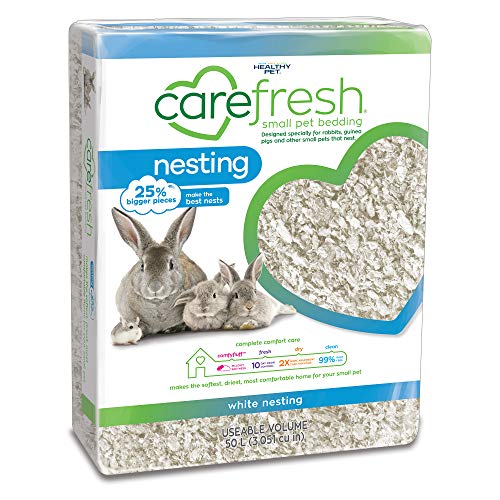
Carefresh 99% Dust-Free White Paper Bedding
The carefresh white paper bedding is a well-known 99% dust-free option with a 4.6-star rating. At $28.99 for a 50L bag, it’s the cheapest entry point into quality paper bedding.
The white color is genuinely useful — you can see soiled areas immediately and spot-clean before odor develops. One owner called it “dust free, controls odor, soft for their feet and easy to keep clean.” The 99% dust-free formula is the real selling point for ferrets, whose respiratory systems are sensitive to airborne particles.
The 50L bag works for a single ferret with a small litter box, though multi-ferret households or full cage bedding will still go through bags. Some owners also report receiving bags that are “hard and crumbly” instead of soft and fluffy, particularly from Amazon — multiple reviewers noted their Amazon bags felt like cardboard compared to pet store versions. At $28.99 for 50L, it’s also more expensive per liter than the larger bags.
I’d recommend this for single-ferret homes or as a trial before committing to a larger bag. For a ferret bedding for smell solution on a budget, it works well in the litter box.
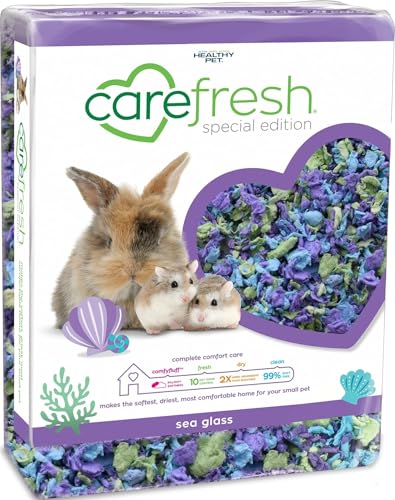
Carefresh Sea Glass Paper Bedding 50L
The Carefresh Sea Glass bedding is the same Carefresh formula as the white version above, in a soft pastel color blend that hides waste far better than plain white. Same 50L bag size at $22.99 — the per-liter cost beats the white version.
The muted colors hide waste better than white, which means less frequent full changes for the same hygiene standard. One owner said it “absorbs everything and there’s never a smell.” The 99% dust-free formula carries across the whole Carefresh line, which matters for ferrets’ sensitive respiratory systems.
The trade-off: the 50L bag is bulky — it takes up significant storage space, and multi-ferret homes go through it quickly. Some owners report receiving bags that felt denser than the soft fluffy texture Carefresh is known for, so fluff the bedding by hand when you open the bag.
For multi-ferret homes or anyone going through bedding quickly, this is the best ferret bedding value in the paper category.
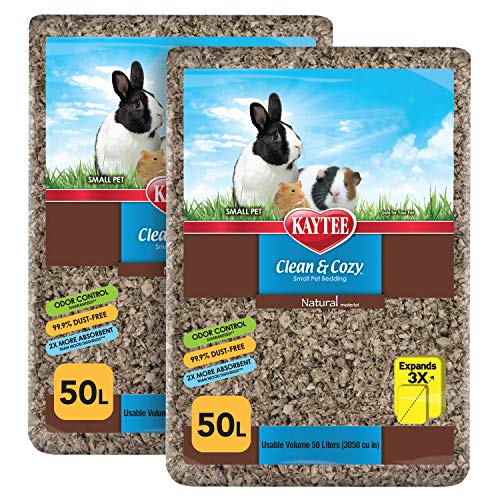
Kaytee Clean & Cozy Natural Paper Bedding 100L
The Kaytee Clean & Cozy takes the capacity game further with a 100L bag at $36.17 — the largest paper bedding bag here. With over 1,000 ratings and a 4.7-star rating, it’s a well-established alternative to Carefresh.
One owner called it “the greatest bedding I’ve found for my animals” and praised the price-to-volume ratio. Another uses it specifically in their rabbit’s litter box, which is the same way I’d use it for ferrets. The natural brown color hides waste, and at $0.38 per liter it trades a higher sticker for the biggest bag in this comparison.
The downside is odor control longevity. One owner reported it “stinks after only 2-3 days” and switched to another product. Others have noted it gets “matted down” over time, losing its fluffy texture. Several reviews mention dust despite the “clean and cozy” branding — not enough to be a dealbreaker, but more than Carefresh.
I’d pick this for the sheer volume if you have a large cage or multiple ferrets. Just plan to change the litter box more frequently — every 2-3 days instead of the 5-7 days Carefresh can manage.
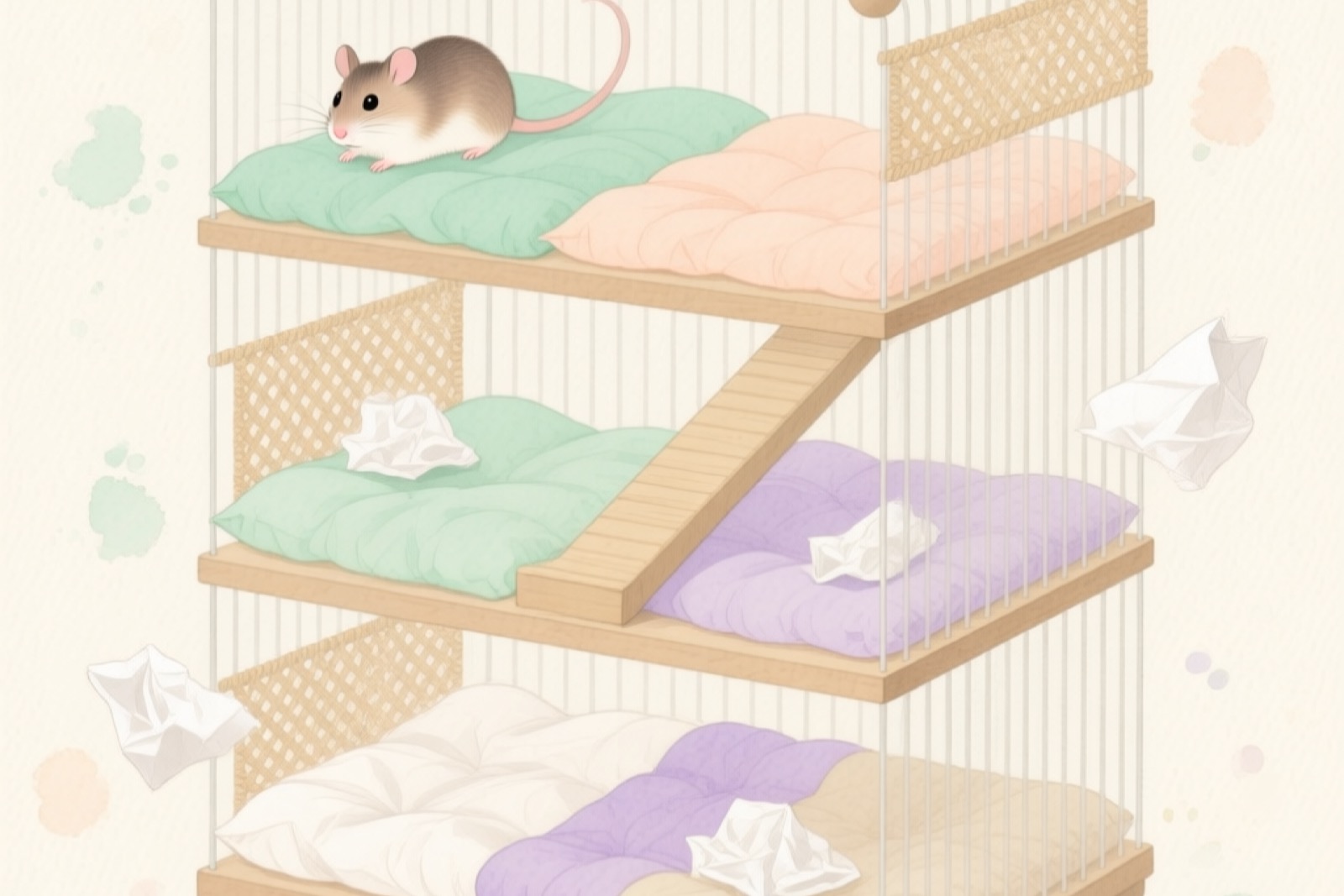
Kaytee Clean & Cozy Extreme Odor Control 65L
The Kaytee Extreme Odor Control is Kaytee’s answer to odor problems. Same with over 6,000 ratings, but with an odor-control formula that’s noticeably stronger than their standard version. At $24.95 for 65L, it’s the most expensive paper bedding here.
One owner confirmed “I definitely notice less odor” and can “go a few days longer without changing bedding.” Another called it “best bedding at a great price” and praised the fluffy texture. If ferret odor is your primary concern and you’re keeping your ferrets indoors (which most owners do), this is the paper bedding I’d choose first.
The white color shows everything — one owner noted “the white color shows all the droppings which is really highlighted and looks yuk.” Several reviews mention dust, with one saying “this has LOTS of dust in it.” At $24.95, it’s a significant price jump over the standard Clean & Cozy for only 7 fewer liters.
For ferret bedding for smell specifically, this is the strongest paper option. The odor control difference is real — I noticed it within the first day of switching.
Best Pine Bedding for Ferrets
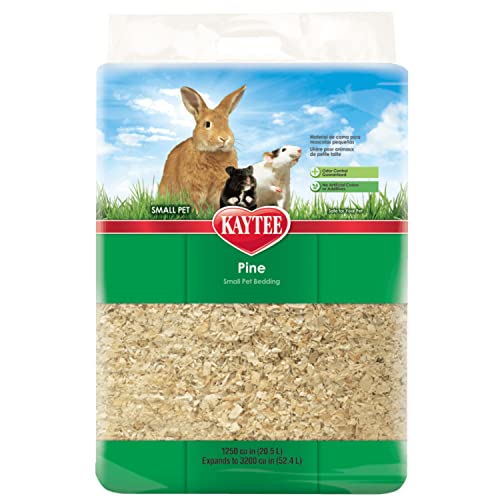
Kaytee Small Animal Pine Bedding
The Kaytee pine bedding at $10.99 is the only pine option here, and it earns its place with over 1,500 ratings and a 4.6-star rating. Kaytee kiln-dries their pine, which removes the phenols that make fresh pine dangerous — this is critical for ferrets, whose livers are sensitive to aromatic compounds.
The natural pine scent is the main attraction. Unlike paper bedding which is virtually scentless, pine gives the cage a woodsy smell that many owners find pleasant. One owner wrote an entire humorous saga about discovering this bedding and ending their odor problems. Another confirmed it’s “super absorbent and keeps the odor to a minimum.”
Pine bedding has real downsides for ferrets. It’s harder and less comfortable than paper — ferrets with sensitive feet or skin may prefer the softer texture of paper. It also gets wet and dirty faster than paper options. One owner switched back because it “stinks faster than the paper shreds.” The shavings can also be dusty depending on the batch.
I’d only recommend pine if you specifically want the natural scent and your ferret doesn’t have respiratory sensitivity. For the litter box, it works fine. For sleeping areas where your ferret spends extended time, I’d stick with paper or fleece.
Important: Always verify the bag says “kiln-dried.” Non-kiln-dried pine contains phenols that cause liver damage and respiratory disease in ferrets. Cedar must never be used under any circumstances.
Best Fleece Bedding & Cage Liners for Ferrets
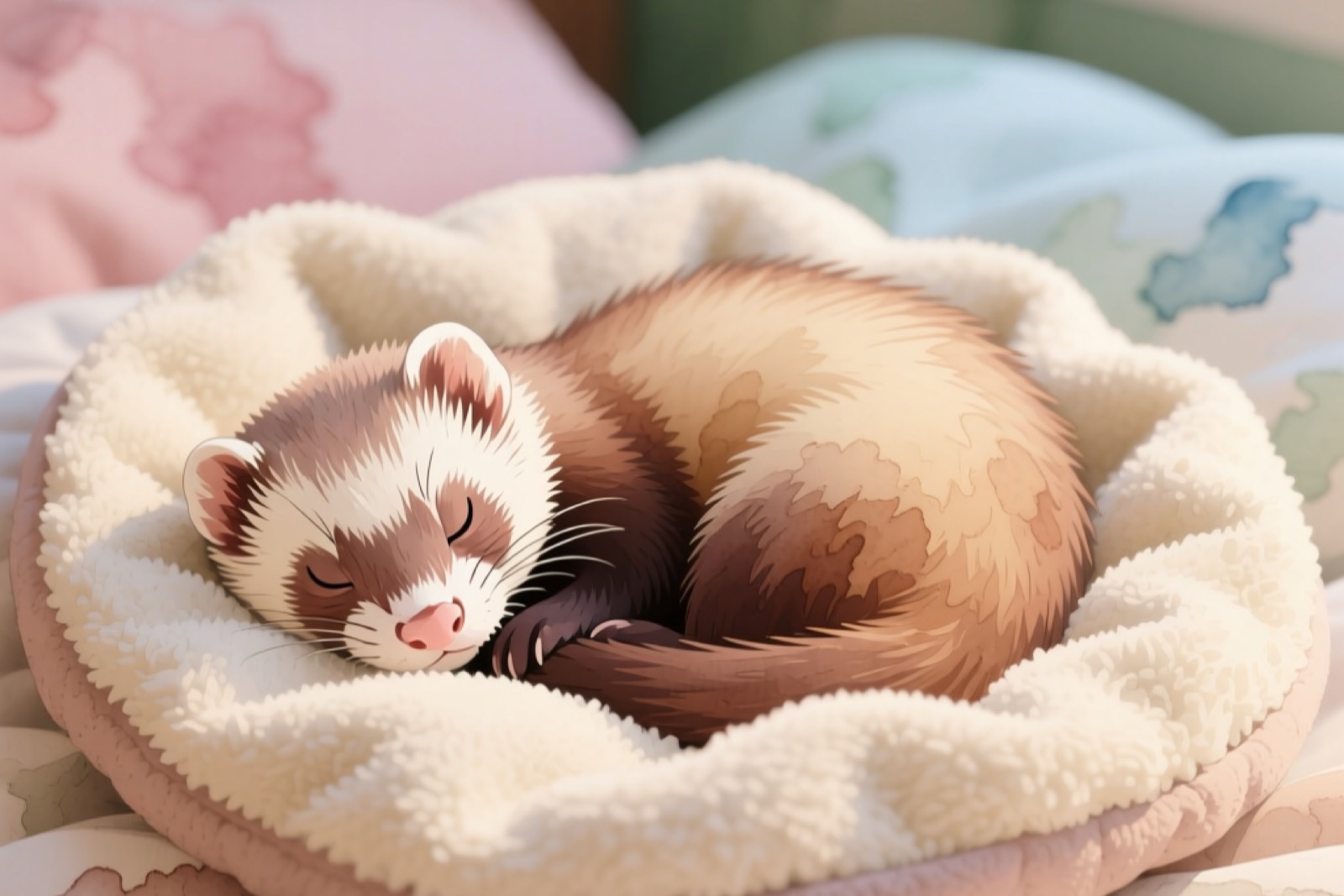
Fleece liners change the ferret bedding equation entirely. Because ferrets can be litter trained, you don’t need loose bedding covering the whole cage. A fleece liner on the floor, combined with paper bedding or wood pellets in the litter box, is the setup most experienced ferret owners use. It’s cheaper long-term, creates zero dust, and makes cage cleaning faster.
Washing tips I’ve learned the hard way: use unscented detergent, skip the fabric softener (it coats the fibers and ruins absorbency), and wash fleece separately from regular laundry. You’ll want at least two sets so one is available while the other is in the wash. For ferret cage setup and ferret cage ideas that work well with fleece liners, check those guides.
Reginary 4 Pcs Waterproof Guinea Pig Blankets
The Reginary waterproof blankets at $19.99 give you four washable pads, which is the minimum I’d recommend for rotation. With over 1,200 ratings and a 4.6-star rating, these are the most established fleece cage liner option here.
The waterproof backing is the key feature. Urine hits the fleece surface and stays there until you wipe it up — it doesn’t soak through to the cage tray. One owner called them “excellent quality” and confirmed they “still look and feel new” after multiple washes. Another said they’re “the best fleece cage liners I have found so far” for absorbency.
The problems are real. Some owners report they’re “very thin and definitely NOT waterproof” — the waterproof backing is apparently inconsistent between batches. One owner switched to using these as a top layer over thicker waterproof mats instead of standalone liners. At 24 by 16 inches, you’ll need multiple to cover a large ferret cage floor. Another owner noted odor issues: “I love that they are soft and colorful but I am cleaning the cage 2x a week now.”
I’d use these as the cage floor layer with paper bedding in the litter box. Buy two packs (8 total) if you have a large cage. Spot-clean daily, machine wash every 2-3 days.
Guinea Pig Blanket 2 Pack Warm Soft Coral Fleece
The coral fleece blankets at $7.99 for a two-pack are the cheapest option in this comparison. With only , they’re a newer product with less track record.
Owners consistently describe them as “very soft” — ferrets enjoy snuggling into coral fleece, and these work well as sleeping blankets inside hammocks or hideouts. They’re machine washable and hold up reasonably well according to most reviews.
The limitations are significant. They’re thin — multiple owners mention they’re “thinner than expected” with “limited absorbency.” They have no waterproof backing, so urine soaks through to whatever is underneath. One owner warned that “feces gets stuck” in the fabric and is difficult to pick off. These simply can’t function as standalone cage liners.
I’d use these as sleeping blankets or supplemental layers over waterproof liners, not as primary cage bedding. At $7.99 they’re worth having as comfort items, just don’t expect them to handle the job alone.
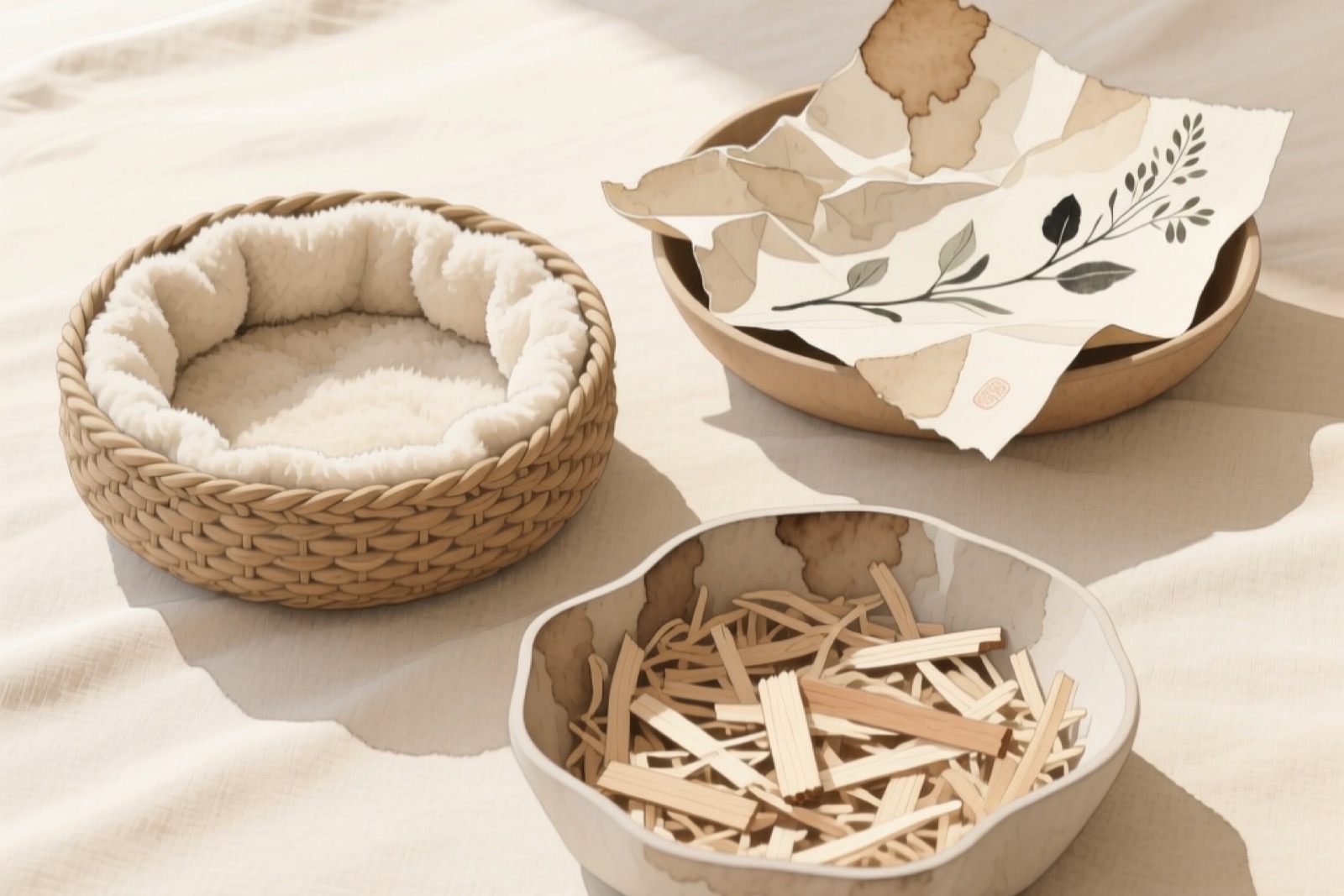
Paper vs Pine vs Fleece — Which Is Best for Ferrets?
Each material has clear strengths, and the best ferret bedding material depends on how you keep your ferrets.
| Feature | Paper Bedding | Pine Bedding | Fleece Liner |
|---|---|---|---|
| Safety | Safest choice | Safe only if kiln-dried | Safe |
| Odor control | Good (excellent with odor-control formulas) | Good (natural pine scent) | Needs litter box for odor |
| Absorbency | Excellent | Excellent | Does not absorb |
| Dust | Minimal (99% dust-free) | Moderate | None |
| Long-term cost | High (ongoing purchases) | Moderate | Low (reusable 6-12 months) |
| Cleaning effort | Full replacement every 3-5 days | Full replacement every 3-5 days | Daily spot clean, wash 2-3x/week |
| Comfort | Soft, good for burrowing | Harder texture | Soft, good for sleeping |
| Best use | Litter box filling | Litter box filling | Cage floor liner |
The setup I recommend most often: fleece liner across the cage floor + paper bedding (Carefresh or Kaytee) in the litter box. This combination gives you the dust-free, cost-effective benefits of fleece where your ferret walks and sleeps, with the absorbency and odor control of paper where they do their business. It’s what most experienced ferret owners I know use, and it’s what I’ve found works best in practice. Once your ferret’s cage is set up with comfortable bedding, consider picking up a ferret harness for supervised outdoor exploration — it’s a great way to provide enrichment beyond the cage.
If you’re not litter training, paper bedding across the entire cage floor is the simplest approach. Pine works too if you want the scent, but I’d only use kiln-dried pine in the litter box, not as the main cage floor covering — it’s too hard for extended contact.