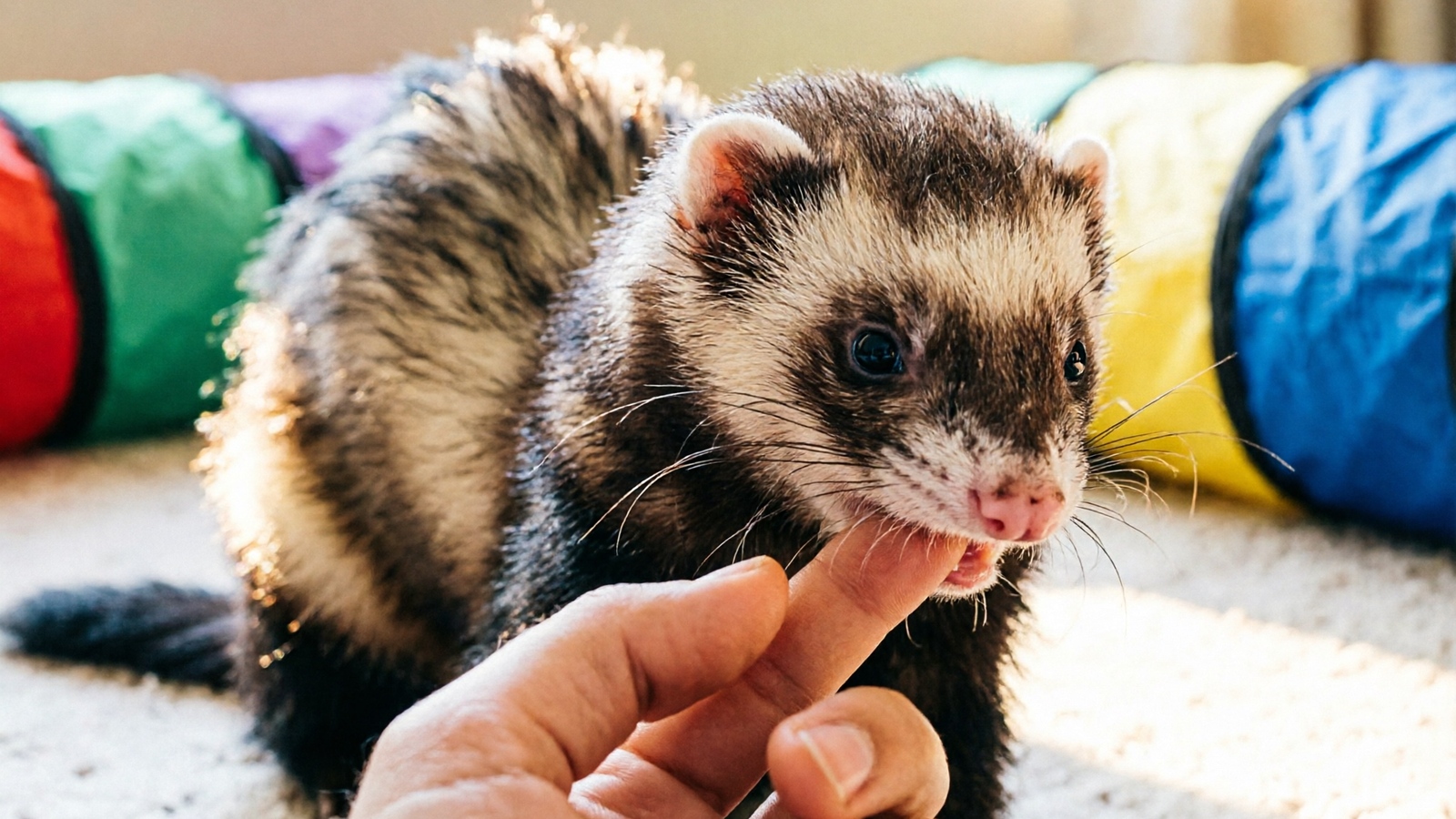
Ferret behavior research in 2026 has reinforced what experienced owners have long known: biting in ferrets is almost never random, and understanding the root cause is the most effective path to solving it. With more ferret owners than ever turning to positive reinforcement training methods — moving away from punishment-based approaches — there is a growing body of owner-reported success with techniques that address the underlying reason for biting rather than simply suppressing the behavior.
Quick Answer — Ferrets Use Their Mouths to Explore
Ferrets are carnivores that use their mouths the way humans use hands — to investigate, communicate, and interact with the world. If you are asking why does my ferret bite, the answer depends on the type of bite.
Play biting is normal ferret behavior, especially in young ferrets. It does not break the skin, happens during play, and can be trained away. Aggressive biting breaks the skin, happens without clear provocation, and is a sign of fear, pain, or illness that needs to be addressed.
Understanding the type of bite is the first step. Most biting can be resolved with consistent training. For a broader understanding of ferret communication, see our ferret behavior guide.
Why Does My Ferret Bite Me “For No Reason”?
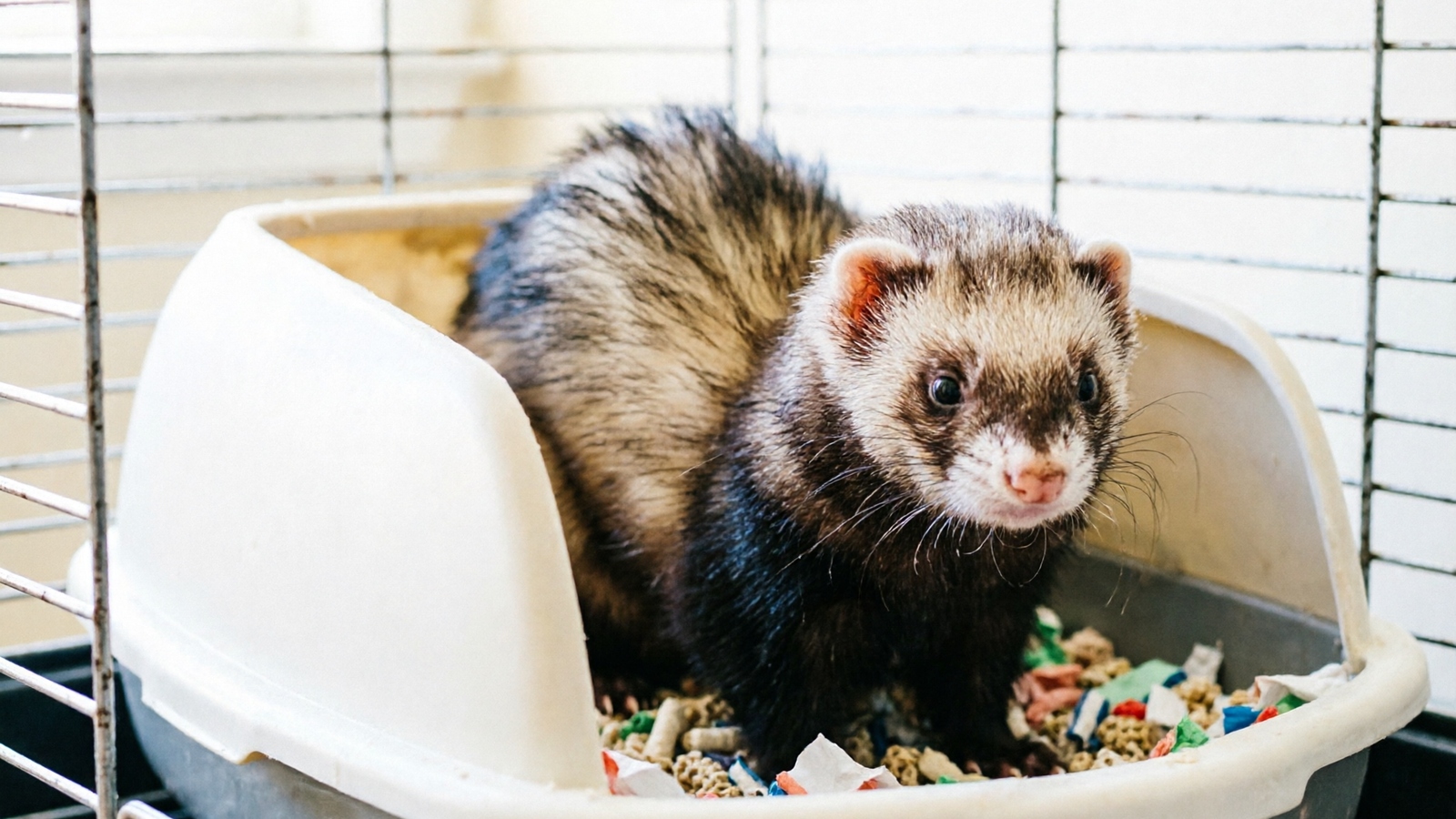
kathson Drawer Litter Box is a quality option worth considering for your setup.
If you are wondering why does my ferret bite seemingly for no reason, there is almost always a hidden trigger. Ferrets rarely bite randomly. In my experience, the hidden triggers behind most “no reason” bites:
Attention seeking — Your ferret wants interaction and has learned that biting gets a reaction. Even a negative reaction (yelling, pushing away) counts as attention.
Overstimulation — Play that goes on too long pushes excitement past the threshold. I’ve found that most “out of nowhere” bites happen about 15-20 minutes into an active play session.
Food residue on your hands — Ferrets have an extraordinary sense of smell. If you handled meat, treats, or even some fruits without washing, your ferret may bite your hand thinking it contains food.
Sudden movements — Reaching down quickly toward your ferret can trigger their prey drive. A fast-moving hand looks like something to chase and grab.
Environmental triggers you missed — A loud noise, an unfamiliar smell, a draft, or a change in lighting that you barely noticed can stress a ferret enough to bite.
If your ferret bites seemingly without cause, start a log: write down exactly what happened before each bite for a few days. The pattern usually becomes obvious.
Play Biting vs. Aggressive Biting — How to Tell the Difference
Many owners find that RUBYHOME Corner Pan works well for their pet’s needs.
Knowing the difference between play and aggression is essential. Play biting needs training. Aggressive biting needs investigation.
| Feature | Play Biting | Aggressive Biting |
|---|---|---|
| Force | Light, does not break skin | Hard, may draw blood |
| Context | Happens during play | No clear trigger or stressed state |
| Body language | Relaxed, bouncing, dooking sounds | Puffed fur, arched back, hissing |
| Sound | Occasional light chittering | Hissing or screaming |
| Afterward | Continues playing, relaxed | Refuses to let go, may attack again |
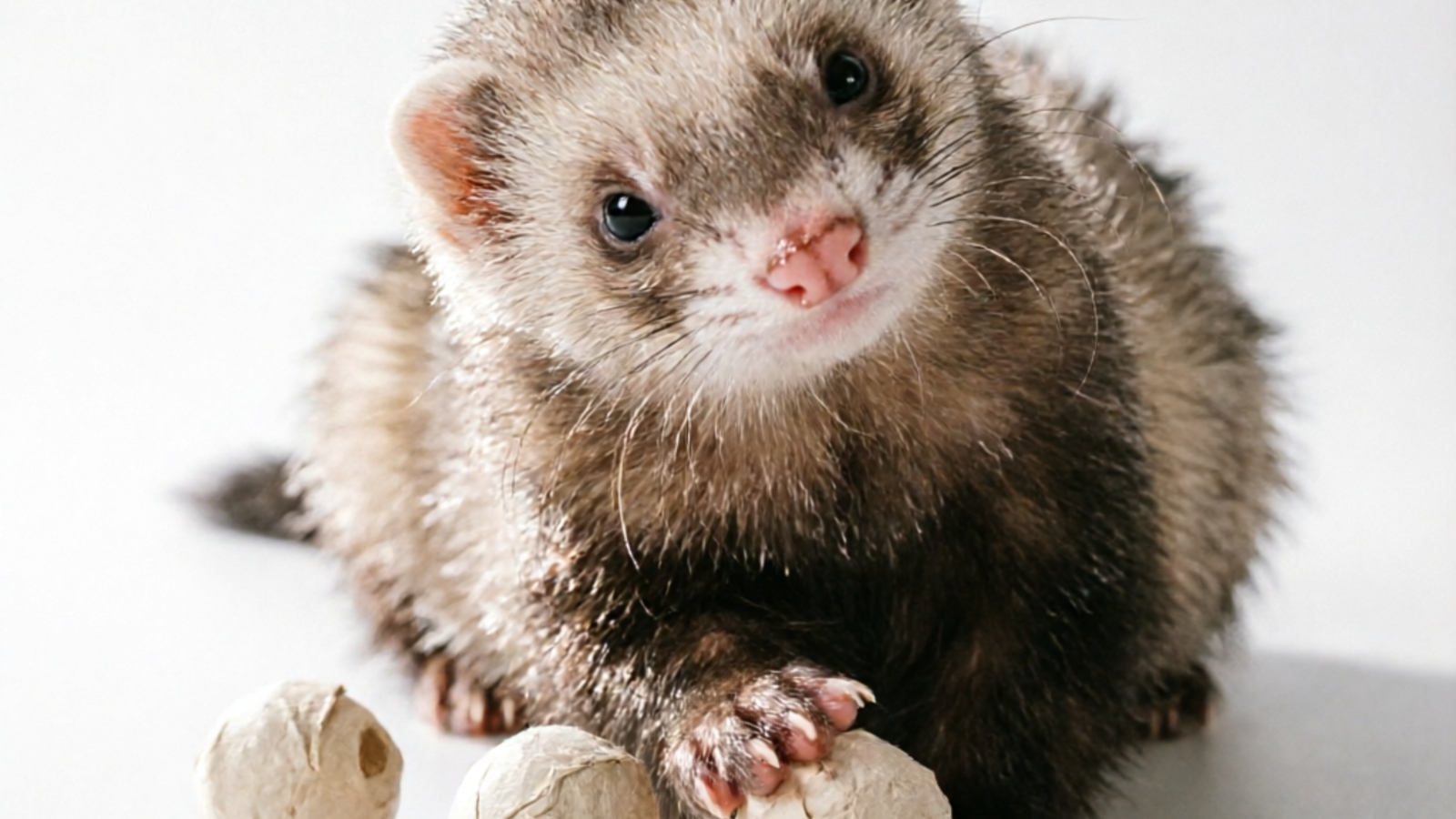
Play biting is a ferret’s way of interacting — similar to how puppies mouth during play. It is normal but needs to be managed because ferret teeth are sharp enough to hurt even without breaking skin. Aggressive biting is a different problem entirely. A ferret that bites hard and shows fearful body language is communicating distress or pain.
7 Common Reasons Why Ferrets Bite
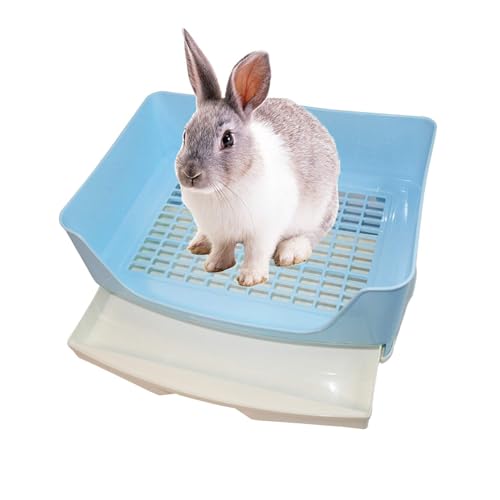
For this purpose, Kaytee High Corner 2pk is a popular choice among pet owners.
| # | Cause | Key Signals | Urgency | Solution |
|---|---|---|---|---|
| 1 | Exploration and play | Light nips, bouncing, dooking | 🟢 Normal | Train bite inhibition |
| 2 | Teething (3-6 months) | Chewing everything, drooling | 🟢 Normal | Provide chew toys |
| 3 | Lack of socialization | New home, hiding, tense body | 🟨 Training | Gradual desensitization |
| 4 | Fear or stress | Puffed fur, hissing, backing away | 🟨 Monitor | Remove stress source |
| 5 | Attention seeking | Bites then watches your reaction | 🟢 Adjust | Ignore + redirect |
| 6 | Pain or illness | Sudden biting with other symptoms | 🟥 Emergency | See a vet |
| 7 | Hormonal (unneutered) | Increased aggression during mating season | 🟨 Monitor | Spay or neuter |
Exploration and play is the top cause, especially in ferrets under one year old.
Teething between 3-6 months causes discomfort that chewing helps relieve.
Lack of socialization is common in pet store ferrets. A kit not handled gently does not trust human hands.
Fear and stress trigger biting when a ferret feels cornered.
Pain or illness is the most serious cause. A ferret that suddenly starts biting when previously gentle may be hurting. This always warrants a vet visit.
How to Stop a Ferret From Biting — Step-by-Step Training
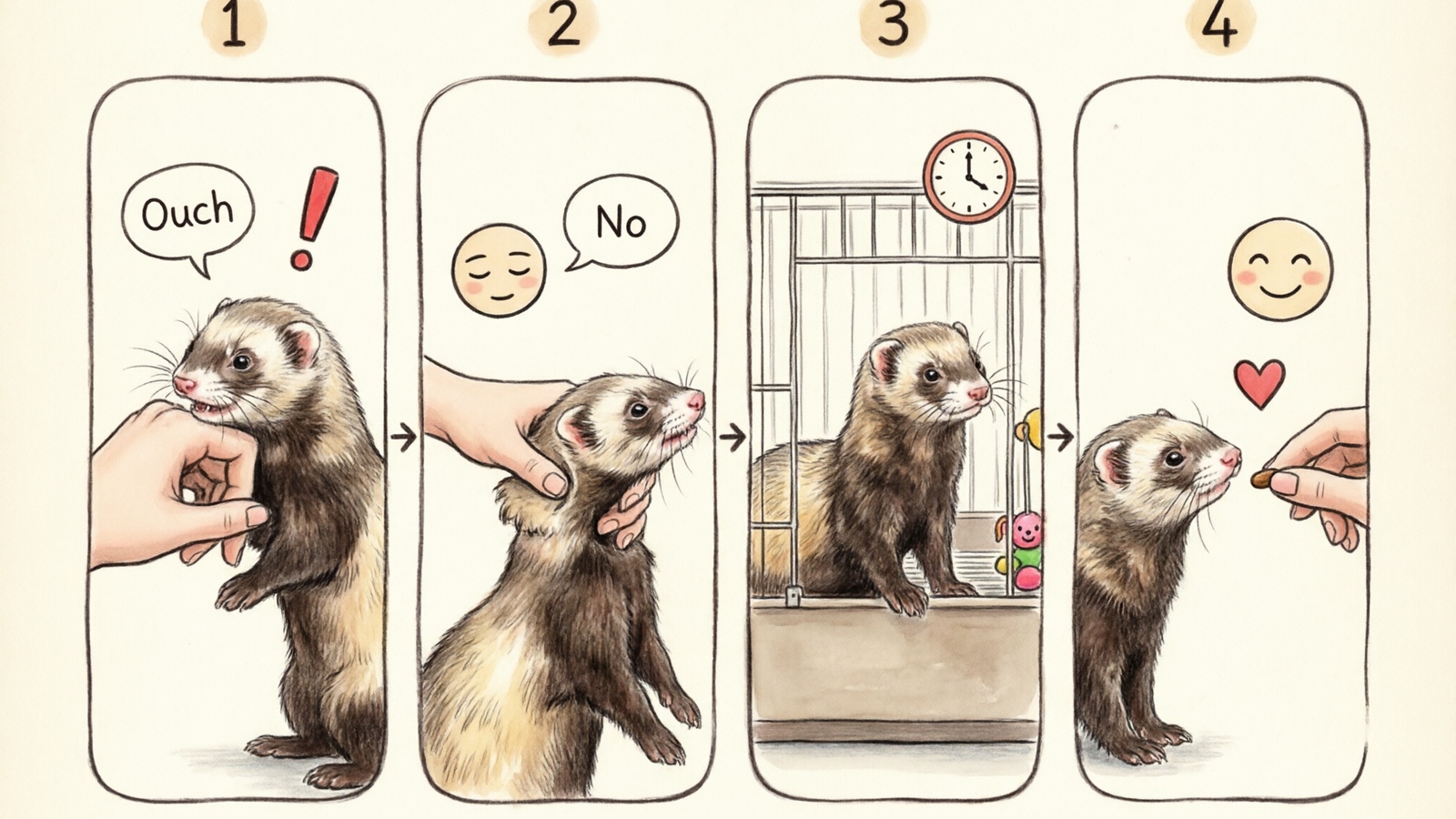
The key to how to train a ferret not to bite is consistency. Every bite must get the same response.
Scruffing is the technique of gently grasping the loose skin at the back of a ferret’s neck — mimicking how a mother ferret carries her kits. It is a natural calming mechanism that temporarily immobilizes the ferret without causing pain. According to the Ferret Association of Connecticut, scruffing should be brief (5-10 seconds), gentle, and always paired with a verbal cue — never used as punishment.
Step 1: The “Ouch” and Scruff Technique
The moment your ferret bites, make a sharp high-pitched “Ouch!” or “Eep!” — this mimics a littermate’s squeal. Immediately follow with a gentle scruff: grasp the back-of-neck skin firmly but not painfully, hold 3-5 seconds while saying “No” calmly, then release. This simulates how a mother ferret disciplines her kits.
Step 2: Time-Out for Consistency
Immediately after the scruff, place your ferret back in their cage for 2-5 minutes. Give zero attention during time-out. Keep best ferret toys in the cage so it does not feel purely like punishment.
Step 3: Redirect to Toys
When your ferret focuses on your hands or feet, immediately offer a toy. Redirection must happen before the bite.
Step 4: Positive Reinforcement
Reward gentle behavior with best ferret treats. Hand-feeding builds a positive association between your hands and good things. A good ferret food guide can help you choose treats. I’d recommend starting with small pieces of cooked chicken — it is high-value and easy to control during training. For more training principles, our ferret litter training guide covers consistent positive-reinforcement methods that apply broadly.
Critical rule: never hit, flick the nose, or push fingers into your ferret’s mouth as punishment. These responses increase fear and make biting worse, not better.
Baby Ferret Biting — The Training Window
Ferrets under six months bite most but are easiest to train — a baby can learn in 2-4 weeks, an adult may take 4-8.
Teething between 3-6 months drives a lot of the chewing and biting. Provide safe, ferret-specific chew toys to satisfy the urge. Avoid rubber toys that can be shredded and swallowed.
Bite inhibition is a skill normally taught by the mother ferret and littermates. When kits play together and bite too hard, the bitten sibling squeals and stops playing — the biter learns that hard bites end the fun. Ferrets separated too early from their litter often missed this lesson. Your job is to replicate it using the scruff technique described above.
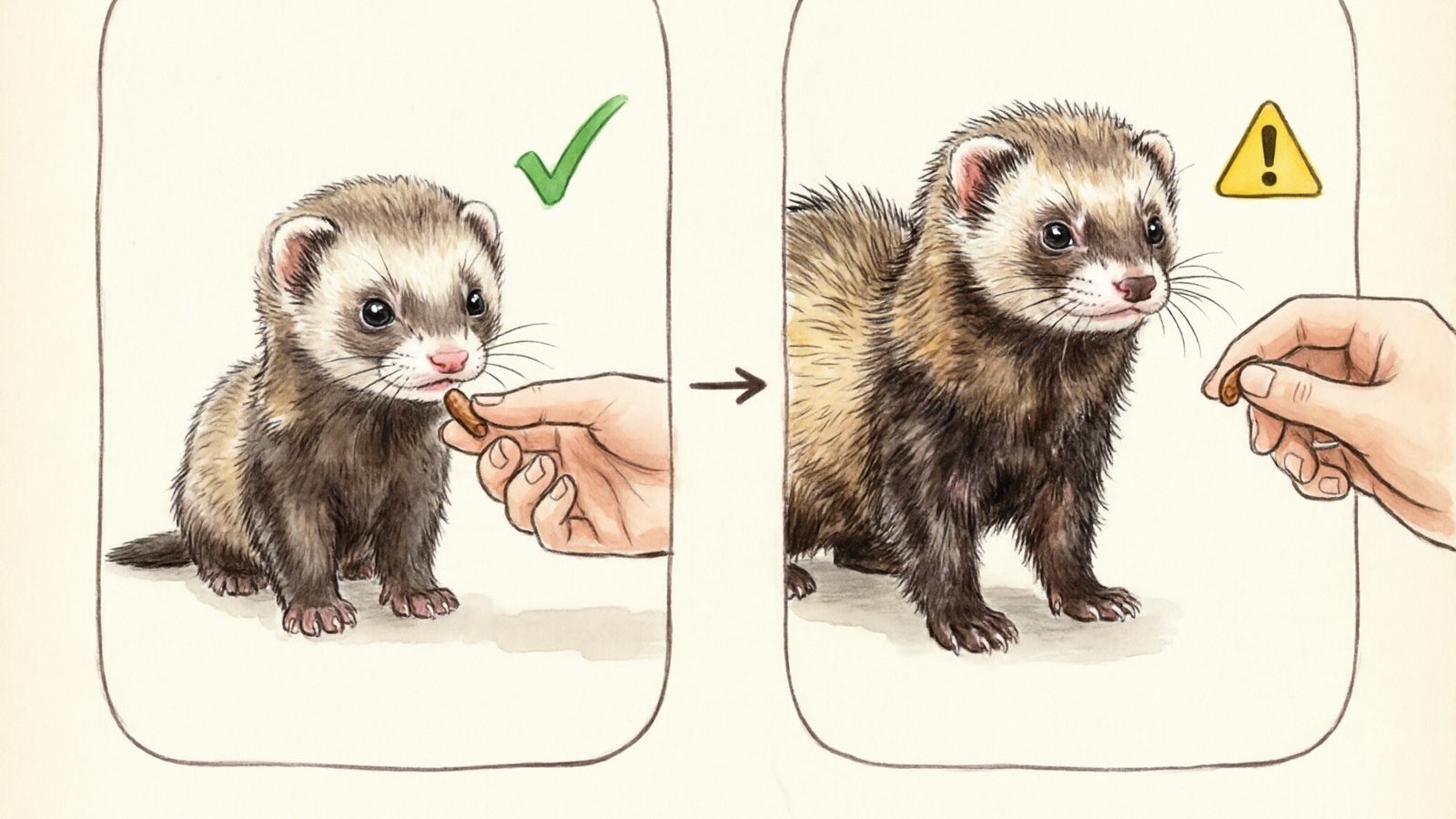
Early socialization matters enormously. Handle your baby ferret frequently, gently, and consistently during the first six months. The more positive hand interactions they experience, the less likely they are to bite as adults. See our ferret care guide for comprehensive juvenile care advice.
| | Baby Ferret (under 6 months) | Adult Ferret (over 6 months) | |---|---| | Training difficulty | Easy | Moderate | | Main cause | Teething and lack of socialization | Established habits | | Training time | 2-4 weeks | 4-8 weeks | | Success rate | High (over 90%) | Moderate (60-80%) |
Ferret Biting Hard and Drawing Blood — What to Do
If your ferret’s biting has escalated to breaking skin, immediate first aid is needed:
Do not pull away — yanking your hand out makes the wound larger. Instead, push your hand gently further into the ferret’s mouth. This triggers a gag reflex and they will release immediately.
Wash the wound — clean with warm water and soap for at least five minutes. Ferret mouths carry bacteria that can cause infection.
Disinfect — apply antibiotic ointment and cover with a bandage.
Monitor for infection — check the wound daily for redness, swelling, warmth, or pus over the next 48 hours.
See a doctor if: the wound is deep or will not stop bleeding, signs of infection appear within 24 hours, the ferret’s vaccination status is unknown, or the bite victim is a child, elderly person, pregnant woman, or immunocompromised individual.
If a previously gentle ferret starts biting aggressively, pain or illness may be the cause — see our ferret health problems guide for conditions that cause sudden aggression.
Why Does My Ferret Bite My Feet?
Ferret biting feet is extremely common — your ferret chases your feet, especially with socks or slippers.
Prey drive — moving feet trigger instinctive chasing and grabbing behavior. Ferrets are predators, and feet look like prey to them.
Socks and slippers — the texture and smell of fabrics attract chewing and biting.
Boredom — a ferret with insufficient out-of-cage time will find ways to entertain themselves, and your feet are the most accessible moving target.
Play invitation — some ferrets use foot biting as a way to initiate play.
Fix: wear shoes, stop moving when bitten, say “No,” redirect with a toy. Keep best ferret toys nearby. The American Ferret Association recommends four+ hours of daily out-of-cage time.
Ferret Suddenly Aggressive and Biting
A normally gentle ferret that suddenly becomes aggressive is almost always dealing with a health issue, not a training problem.
Pain or illness is the leading cause. Internal conditions, dental problems, or injuries can make a ferret lash out when touched. If your ferret bites when you pick them up or touch a specific area, pain is the likely culprit.
Adrenal disease is common in unneutered ferrets, especially those over three years old. It causes a surge in hormones that dramatically increases aggression. This requires veterinary treatment.
Environmental changes like moving or new pets can trigger stress-induced aggression.
Sensory decline in older ferrets causes startle responses and defensive biting. See our ferret lifespan guide for age-related care tips.
Action plan: sudden aggression combined with weight loss, hair thinning, increased drinking, or lethargy means an immediate vet visit. Even without other symptoms, sudden aggression lasting more than a week warrants investigation. See our ferret health problems guide for conditions that cause behavioral changes.
See a vet immediately if you notice any of these:
Sudden aggression in a previously gentle adult ferret
Biting when touched in a specific area (pain indicator)
Weight loss combined with increased drinking or urination
Hair thinning, especially on the tail (adrenal disease signal)
Lethargy, hunched posture, or reluctance to move
Do not attempt to “train out” pain-based biting — address the medical cause first
Product Recommendations
Here are some products mentioned in this guide:
Frequently Asked Questions
Why does my ferret bite me for no reason?
Ferrets rarely bite without a reason. Hidden triggers include attention-seeking behavior, overstimulation during play, food residue on your hands, or sudden movements that trigger their prey drive. Tracking when bites happen usually reveals the pattern.
How do I stop my ferret from biting?
Use the scruff-and-say-no technique immediately when bitten, followed by a 2-5 minute time-out in the cage. Redirect their energy to appropriate toys and reward gentle interactions with treats. Consistency is the most important factor — every bite must get the same response.
Do ferret bites hurt?
Yes. Ferrets have sharp, carnivorous teeth designed for catching prey. A play nip feels like a strong pinch, while an aggressive bite can break the skin and draw blood. Most ferrets can be trained to control their bite force with consistent training.
Why does my baby ferret bite so much?
Baby ferrets bite frequently because they are teething between 3-6 months old and have not learned bite inhibition from their mother and siblings. This is the ideal training window — use the scruff technique, provide chew toys, and be consistent. Most stop biting within 2-4 weeks.
When should I take my ferret to the vet for biting?
See a vet immediately if your ferret suddenly starts biting when previously gentle, if biting comes with weight loss, hair loss, or lethargy, or if an unvaccinated ferret bites someone. Sudden aggression in an adult ferret often indicates pain or an underlying condition like adrenal disease.