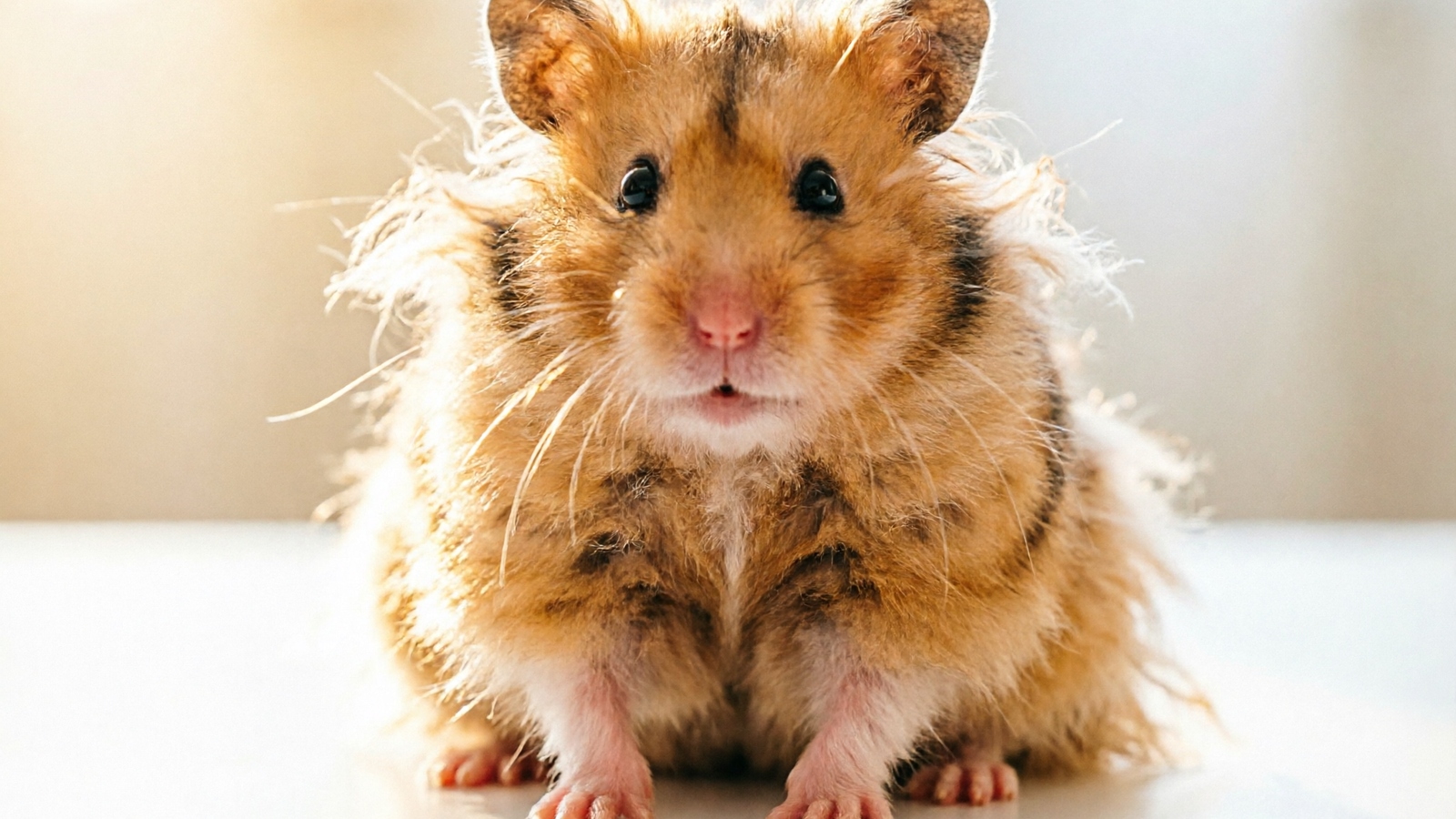
What Is a Teddy Bear Hamster?
A teddy bear hamster is a long-haired variety of the Syrian hamster (Mesocricetus auratus). It is not a separate species — it is the exact same animal as the standard short-haired Syrian hamster, distinguished only by a genetic mutation that produces longer, fluffier fur.
The long-haired gene appeared naturally in captive Syrian hamster populations and has been selectively bred by enthusiasts for decades. Some breeders also refer to them as “angora hamsters,” though “teddy bear” remains the most common name in the pet trade.
Because they are genetically identical to standard Syrians, long-haired Syrians share the same temperament, dietary needs, housing requirements, and lifespan. The only meaningful difference is coat length — and the extra grooming that comes with it. For the full species profile, see our Syrian hamster breed page.
Appearance & Coat Types
This long-haired variety Standard size is 5-7 inches (13-18 cm) in body length and weighs 3-6 ounces (85-170 grams) — identical to standard Syrian hamsters. The long-haired gene affects coat length only, not body size or structure.
Coat Variations
Syrian hamsters come in four coat types: short (standard), long (teddy bear), rex (wavy or curly), and satin (glossy sheen). The long-haired coat type grows fur to approximately 1-2 inches in length, giving the hamster its characteristic fluffy, rounded appearance.
Male vs Female Coat Differences
There is a noticeable sex difference in coat length. Males develop significantly longer fur, especially around the hindquarters and belly, forming what breeders call a “skirt.”
This skirt can grow long enough to drag along the ground if not maintained. Females have shorter, more even coats that still qualify as long-haired but require less intensive grooming.
Color Varieties
Long-haired Syrians come in the same color patterns as all Syrian hamsters: golden (the original wild-type color), cream, cinnamon, banded (white band across the middle), tortoiseshell, and dominant spot. Coat color has no relation to temperament or health.
The distinction between teddy bear and standard Syrian hamsters can be subtle in juveniles. For photos and a detailed comparison, see our teddy bear vs Syrian hamster guide.
Personality & Temperament
This breed shares the same friendly, docile personality as all Syrian hamsters. The long-haired gene affects coat appearance only — it has zero impact on behavior or temperament.
They are known for being one of the easiest hamster varieties to handle. Compared to dwarf species, long-haired Syrians are slower-moving, larger, and less likely to squirm out of your hands. This personality trait makes them a popular choice for first-time owners and families.
Activity Pattern
These hamsters are crepuscular — most active during dawn and dusk hours. They sleep for much of the day and become energetic in the early evening. This is a natural behavior pattern from their wild Syrian ancestry, where avoiding daytime heat and nighttime predators was essential for survival.
Solitary Nature
All Syrian hamsters are strictly solitary and territorial. Each hamster must live alone in its own cage.
Housing two together will result in fighting, often with serious injuries. Separate littermates by 4-5 weeks of age when sexual maturity begins. This is hardwired instinct, not a personality flaw.
Taming Timeline
With consistent, gentle handling, most become comfortable being held within 1-2 weeks. Start by offering treats from your hand, then progress to short scooping sessions. Avoid chasing or grabbing from above — this triggers their prey instinct.
Care Guide
Housing & Cage Setup
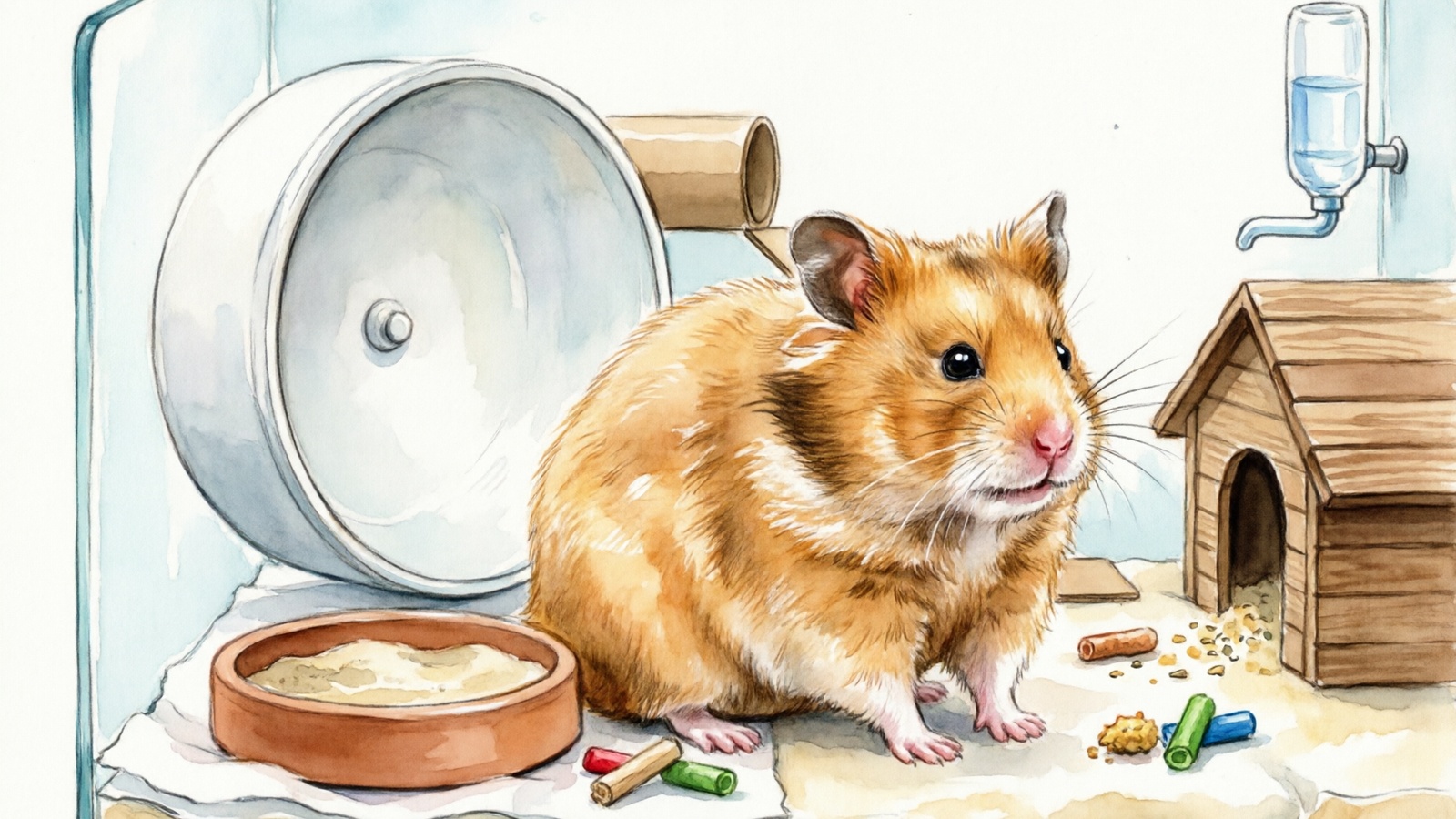
Proper care of this breed starts with the right housing. Long-haired Syrians need the same housing as all Syrians: A minimum cage size of 450 square inches of unbroken floor space.
Bar spacing should be no wider than 0.5 inches to prevent escapes. For the full housing breakdown, see our complete cage setup guide.
Long-hair specific consideration: Avoid fabric, cloth, or fleece bedding. Long fur easily tangles in fabric fibers, creating painful mats close to the skin.
Bedding checklist for long-haired Syrians:
- ✅ Paper-based bedding (carefresh, kiln-dried pine)
- ✅ Aspen shavings
- ✅ Toilet paper torn into strips (nesting material)
- ❌ Cedar or pine shavings (toxic respiratory irritants)
- ❌ Fabric, fleece, or cloth (tangles in long fur)
- ❌ Corn cob bedding (mold risk, ingestion hazard)
Diet & Nutrition
Dietary needs are identical to standard Syrians: a commercial seed or pellet mix as the base, supplemented with fresh vegetables and occasional protein sources.
For coat health specifically, foods rich in omega-3 and omega-6 fatty acids help maintain a soft, shiny coat. Small amounts of flaxseed, a tiny piece of hard-boiled egg, or a mealworm once or twice a week provide these essential fats. For detailed feeding recommendations, see our guide to the best hamster food.
Exercise & Enrichment
Provide an exercise wheel with a minimum 8-inch diameter — 10 inches or larger is ideal for the comfort of a full-grown Syrian. Avoid wheels with rungs (solid surface only) to prevent foot injuries. Tunnels, chew toys, and a sand bath area round out the enrichment setup.
Daily supervised free-roam time in a hamster-safe space provides additional exercise and mental stimulation. Block off any small gaps or openings before letting your hamster explore.
Grooming Your Long-Haired Syrian
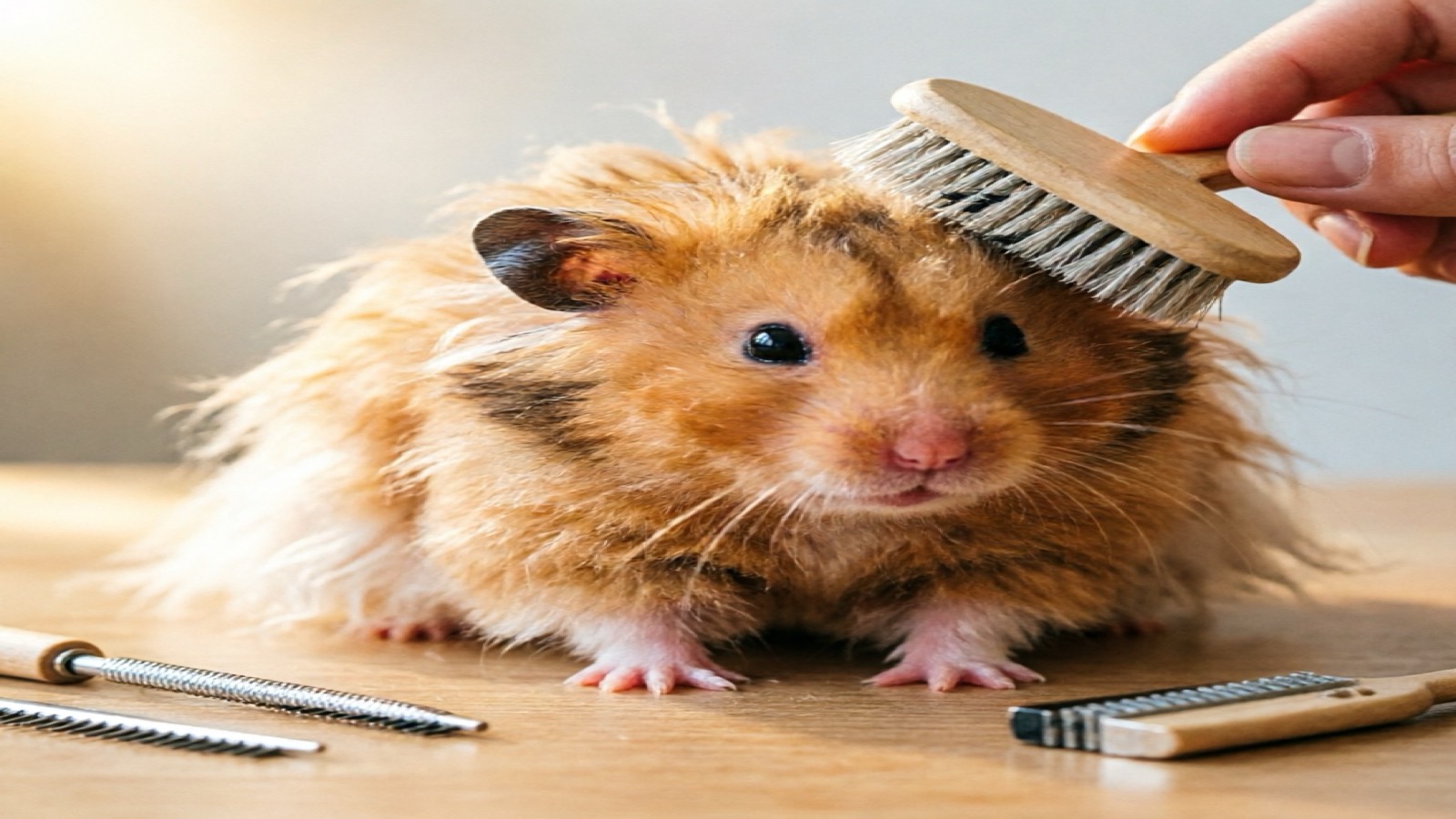
Teddy bear hamster grooming is the single biggest difference in caring for a long-haired Syrian versus a standard short-haired one. The long coat requires regular maintenance to prevent painful matting and skin problems. Owners who establish a grooming routine early tend to have the healthiest, happiest hamsters.
Brushing Schedule
Follow this step-by-step brushing routine for best results:
- Pick the right time. Evening hours work best — the hamster is naturally active and alert. Avoid waking a sleeping hamster for grooming.
- Use the right tool. A clean, soft-bristled toothbrush or a small pet brush designed for small animals works best. Stiff bristles can scratch sensitive skin.
- Brush in the direction of fur growth. Start at the head and work toward the tail. Pay special attention to areas prone to matting: behind the ears, under the front legs, and around the hindquarters.
- Check for tangles. If you find small knots, gently work them loose with your fingers before brushing through. Never pull or tug — mats tighten quickly and pull on the skin.
- Adjust frequency by season. Males with longer skirts may need daily brushing during fall and winter coat changes. Females and short-coated individuals typically do fine with 2-3 sessions per week.
Sand Baths
Provide a shallow dish of chinchilla sand (never dust) in the cage. The hamster will roll in it naturally, which helps distribute skin oils and removes loose debris from the coat. This is the primary way hamsters keep themselves clean in the wild.
Replace soiled sand every few days. Use a dish that is heavy enough not to tip over — a ceramic ashtray or small baking dish works well.
What NOT to Do
Never give your hamster a water bath. Bathing strips natural oils from the coat, causes extreme stress, and creates a serious risk of hypothermia. Hamsters cannot regulate their body temperature well when wet, even at room temperature. If the fur becomes soiled with something sticky or toxic, spot-clean with a damp cloth and dry the area immediately.
Trimming
Light trimming is occasionally needed around the sanitary area if fur becomes soiled with bedding or waste. Use blunt-tipped scissors and trim only the obviously dirty portions. Never cut close to the skin.
Seasonal Coat Changes
These hamsters grow a heavier, thicker coat during cooler months and shed some of that density in warmer weather. During fall and winter, you may notice increased shedding and need to brush more frequently to remove loose fur. In summer, the coat may appear slightly shorter and less full.
Health & Lifespan
The average lifespan is 2-3 years — exactly the same as all Syrian hamsters. Coat length has no effect on longevity. For detailed lifespan information and factors that influence it, see our hamster lifespan guide.
Long-Hair Specific Health Risks
The long coat creates three health risks that short-haired Syrians do not face:
- Heat stress. Long fur traps body heat more effectively than short fur. Keep the cage below 75°F (24°C), especially during summer months. Signs of overheating include lethargy, panting, and lying flat with limbs spread. Position the cage away from windows and direct sunlight.
- Fur matting leading to skin infections. Mats pull on the skin, creating warm, moist pockets where bacteria thrive. Severe matting can cause painful skin lesions. Regular brushing prevents this entirely.
- Flystrike risk. Less common in indoor hamsters but the risk increases if matted fur traps moisture around the rear end. Check the sanitary area daily during warmer months.
General Syrian Health Concerns
Long-haired Syrians are susceptible to the same conditions as all Syrians: wet tail (proliferative ileitis), respiratory infections, dental overgrowth, and tumors. According to the American Veterinary Medical Association (AVMA), small mammals like hamsters should receive annual wellness exams to catch early signs of disease. Research published in the Journal of Exotic Pet Medicine (Heatley, 2018) notes that early intervention for wet tail improves survival rates significantly. Find an exotic pet veterinarian before you need one — emergency searches during a health crisis waste precious time.
Teddy Bear vs Standard Syrian
The most common source of confusion is whether the long-haired variety and the standard Syrian are different species. They are not.
| Feature | Teddy Bear | Standard Syrian |
|---|---|---|
| Species | Mesocricetus auratus | Mesocricetus auratus |
| Coat Length | 1-2 inches, fluffy | Short, dense |
| Grooming Needs | 2-3x/week brushing | Minimal |
| Male “Skirt” | Yes, prominent | No |
| Size | 5-7 inches, 3-6 oz | 5-7 inches, 3-6 oz |
| Lifespan | 2-3 years | 2-3 years |
| Temperament | Friendly, docile | Friendly, docile |
| Diet | Same | Same |
| Housing | Same (avoid fabric bedding) | Same |
The long haired Syrian hamster is the same species with a different coat gene.
Everything else — personality, diet, housing, lifespan — is identical. The name “teddy bear” is a pet trade marketing term, not a scientific classification. For the complete breakdown, see our detailed comparison guide.
Are They Good Pets?
Yes — this breed is one of the best small pets for beginners. They combine the friendly, docile nature of Syrian hamsters with an irresistibly fluffy appearance that makes them especially popular with children and first-time pet owners.
Who Should Get One?
Great for: First-time hamster owners, families with older children (age 8 and up), apartment dwellers, and anyone who wants a relatively low-maintenance pet with regular but manageable grooming needs. This breed is especially recommended for anyone who finds standard Syrians cute but wants that extra fluff factor.
Not ideal for: Very young children who may handle the hamster roughly, people who want to keep multiple hamsters in one cage, or anyone unwilling to commit to a regular brushing routine.
Key Takeaways
- Same species, different coat. This breed is a long-haired Syrian hamster — identical in every way except fur length and grooming needs.
- Grooming is the main commitment. Brush 2-3 times per week, provide sand baths, and never use water baths. Males need more attention than females.
- Heat management matters. Long fur traps heat. Keep the environment below 75°F (24°C), especially in summer.
- Solitary housing only. Like all Syrians, they must live alone. No exceptions.
- 2-3 year lifespan. A rewarding but time-limited commitment that teaches responsibility without the decades-long dedication of larger pets.