What Are Pet Snails?
A pet snail is a land or aquatic mollusk kept in a controlled enclosure for observation and companionship. Unlike dogs or cats, snails are quiet, low-maintenance, and need only a small space — making them one of the most accessible exotic pets available. Most pet snails belong to a few well-known species, each with different care requirements.
Common Pet Snail Species
| Species | Type | Size | Lifespan | Difficulty |
|---|---|---|---|---|
| Garden snail (Cornu aspersum) | Land | 1-1.5 inches | 2-5 years | Easy |
| Mystery snail (Pomacea bridgesii) | Aquatic | 1-2 inches | 1-2 years | Easy |
| Nerite snail (Neritina natalensis) | Aquatic | 0.5-1 inch | 1-2 years | Easy |
| Giant African land snail (Lissachatina fulica) | Land | 4-8 inches | 5-10 years | Moderate |
The garden snail is the most common choice for beginners — it is small, hardy, and legal to own in all US states. This guide focuses primarily on land snails since their care requirements differ significantly from aquatic species. For feeding recommendations specific to each species, see our snail food guide.
Warning: Legal notice: Giant African land snails are banned as invasive species in Florida, Texas, Hawaii, and Washington. This article focuses on garden snails, which are legal everywhere in the US. Always check your local regulations before acquiring any pet snail.
Snail Lifespan
A garden snail’s lifespan ranges from two to five years in captivity, depending on housing quality, diet, and calcium intake. Most garden snails found outdoors live only one to two years due to predators, weather extremes, and inconsistent food sources. In a controlled environment with steady humidity, proper calcium, and a balanced diet, they reach the upper end of that range.
Mystery snails and nerite snails live shorter lives — typically one to two years. These aquatic species are often kept in fish tanks as algae cleaners rather than primary pets.
Calcium is the single biggest factor in snail lifespan. A snail with constant calcium access develops a strong, thick shell that resists damage and supports healthy body functions. Without enough calcium, the shell thins and cracks, leaving the snail vulnerable to dehydration and infection. For more on how lifespan compares across small pets, see our axolotl lifespan guide.
Setting Up a Snail Tank
A proper snail tank needs five core components: an enclosure, substrate, hiding spots, a water source, and ventilation.
Enclosure Size
For one to two garden snails, a 5-gallon enclosure is the minimum. The general rule is one gallon per snail. Glass terrariums work best because they hold humidity, are easy to clean, and let you observe your snail. Plastic storage bins with drilled ventilation holes are a budget-friendly alternative. For detailed comparisons of enclosures, see our land snail habitat guide.
Substrate
Coconut coir (also called coco fiber) is the standard substrate for land snails. It holds moisture well, is free of chemicals, and allows snails to burrow naturally — a behavior they need for comfort and egg-laying. The substrate should be 3-5 inches deep.
Avoid sand, gravel, cedar chips, and pine shavings. Sand and gravel cause impaction if ingested. Cedar and pine contain aromatic oils that are toxic to invertebrates. For substrate options and comparisons, see our snail substrate guide.
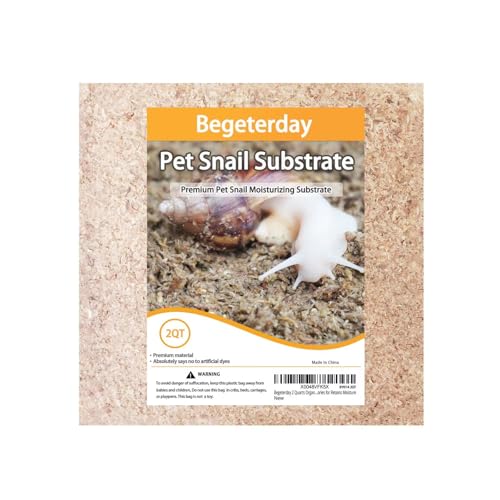
This organic fiber substrate designed specifically for pet snails retains moisture effectively and comes pre-measured at 2 quarts — enough for a standard 5-10 gallon terrarium.
Hiding Spots
Snails spend most daylight hours hiding. Provide at least two shelters: a cork bark piece, a coconut half-shell, or a small terracotta pot turned on its side. Place one shelter on the warm side and one on the cooler side of the enclosure so the snail can regulate its temperature.
Water Dish
Use a shallow dish — a bottle cap or small terracotta saucer works. The water should be no deeper than the snail’s shell height. Snails can and will drown in deep water. Use dechlorinated water: either bottled spring water or tap water left out for 24 hours.
Ventilation
A mesh or screen lid provides airflow while keeping the snail contained. Snails are surprisingly strong climbers — they scale glass walls and squeeze through gaps as narrow as their shell width. The lid must fit snugly with no gaps along the edges. For more on tank setup principles, our axolotl tank setup guide covers similar enclosure design concepts.
Temperature and Humidity
Temperature and humidity are the two environmental factors that matter most to a pet snail. Get these right, and most other care problems solve themselves.
Temperature
Garden snails do best at 65-75°F (18-24°C). They become sluggish below 60°F and can enter estivation (a dormancy state) above 80°F. No heat lamp is needed — room temperature in most homes is fine. Avoid placing the tank near windows (temperature swings), radiators (too hot and dry), or air conditioning vents (cold drafts).
If your home regularly drops below 60°F in winter, use a low-wattage under-tank heater on one side of the enclosure. This creates a temperature gradient so the snail can move to its preferred zone.
Humidity
The target range is 70-85% humidity. Below 60%, snails lose moisture through their skin and retract into their shells to survive — prolonged dryness is fatal. Above 90%, mold and bacterial growth become problems.
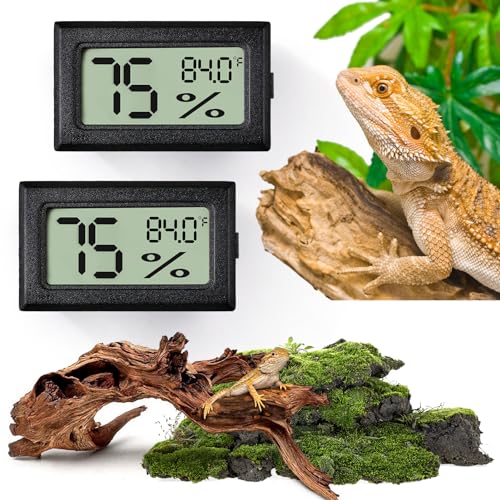
Measuring humidity accurately requires a digital gauge. This 2-pack reptile thermometer and humidity gauge sticks to the inside wall of the enclosure with adhesive backing and displays both temperature and humidity on a small LCD screen — place one near the substrate and one near the lid to check for gradients.
Maintaining Humidity
Mist the enclosure once daily with a spray bottle. This Exo Terra Mini Mister produces a fine, even mist — better than household spray bottles that shoot a concentrated stream. Use filtered water, spring water, or dechlorinated tap water.
The substrate should feel moist but not wet. If it is still damp the next day, skip the misting. Over-misting is the number one cause of mold in snail enclosures.
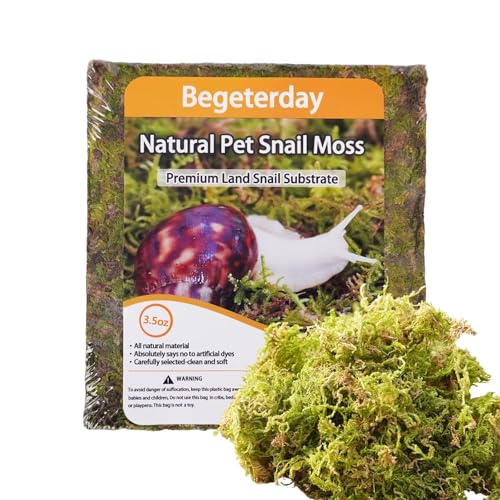
Placing natural sphagnum moss on top of the substrate helps maintain humidity between misting sessions and gives the snail a soft surface to rest on. Replace the moss every two to three weeks.
Signs of incorrect humidity:
- Too dry: Snail stays retracted for long periods, shell feels lighter than normal, mucus around the shell opening
- Too wet: Condensation dripping from the lid, mold spots on substrate or food, sour smell
For more on humidity control in similar small pet habitats, see our hermit crab care guide.
What to Feed Your Pet Snail
A pet snail’s diet breaks down into three categories: daily vegetables, constant calcium, and periodic protein. Getting the balance right prevents shell problems, supports healthy growth, and keeps your snail active.
Vegetables (Daily — 60-70% of Diet)
Fresh vegetables are the foundation. Safe options include:
| Category | Examples |
|---|---|
| Leafy greens | Kale, spinach, romaine lettuce, dandelion greens |
| Squashes | Zucchini, yellow squash, sweet potato (cooked) |
| Root vegetables | Carrots (grated), bell pepper |
| Occasional fruit | Strawberry, melon, blueberry (1-2x per week max) |
Wash all produce thoroughly to remove pesticide residue. Cut vegetables into pieces smaller than the snail’s shell. Remove uneaten food after 24 hours to prevent mold and bacterial growth.
Foods to Avoid
Some foods are harmful or toxic to snails:
- Salt — even small amounts are lethal to snails
- Citrus fruits — the acid damages their digestive system
- Onion and garlic — toxic to invertebrates
- Raw potato — contains solanine, which is harmful
- Processed human food — bread, pasta, crackers, chips
- Dairy products — snails cannot digest lactose
For a detailed breakdown of commercial snail foods and supplements, see our pet snail food guide.
Calcium (Available 24/7)
Calcium is not optional — it is the most critical nutrient in a snail’s diet. Snails use calcium to build and repair their shells. Without a constant supply, the shell thins, cracks, and deforms.
The standard calcium source is cuttlebone. This cuttlebone designed specifically for snails comes ready to place in the terrarium — no preparation needed. If using bird cuttlebone, remove the hard plastic-like backing and place the soft side facing up.
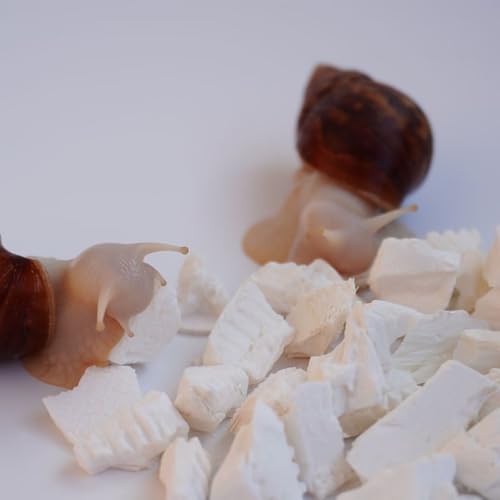
Calcium rocks are another option. These SunGrow calcium and magnesium rocks slowly release minerals into the substrate and provide a gnawing surface. They work well as a secondary calcium source alongside cuttlebone.
Protein (1-2 Times Per Week)
Garden snails need protein for muscle and tissue growth. Offer small amounts of:
- Bloodworms (thawed frozen, not freeze-dried)
- Boiled egg white (a tiny piece, no larger than the snail’s body)
- Dog kibble (one piece, soaked in water until soft)
- Fish flakes (aquarium type, one or two flakes)
Remove uneaten protein after 12 hours — it spoils faster than vegetables.
Feeding Schedule Summary
| Frequency | Food Type |
|---|---|
| Daily | Fresh vegetables |
| 24/7 | Cuttlebone or calcium source |
| 1-2x per week | Protein source |
| 1-2x per week | Fruit treat |
For feeding approaches in a similar small pet, see our hermit crab food guide.
How to Handle a Pet Snail
Handling a snail requires more care than most people expect. A snail’s body is soft and vulnerable, and its shell is its only protection.
Proper Technique
- Wash your hands with plain water before handling — soap residue and lotion chemicals can absorb through a snail’s skin
- Let the snail come to you — gently touch the shell or place your finger near its head. If it extends its body, slide your finger under its foot
- Support the entire body — cup your hand and let the snail rest flat. Never hold a snail by its shell with nothing underneath — its body weight hanging freely stresses its mantle connection
- Keep handling under 10 minutes — longer sessions cause stress and dry out the snail’s skin
What to Avoid
- Never pull a snail off a surface — it creates suction to hold on, and pulling can tear the mantle (the tissue connecting the body to the shell)
- Never handle a snail that has retracted into its shell — it is stressed or sleeping
- Never use dry hands — moisten your hands first to prevent the snail’s mucus from drying
- Never handle after applying hand sanitizer, lotion, or insect repellent
After handling, rinse your hands. Snails carry bacteria including Salmonella and E. coli on their bodies. This is normal and not a sign of a sick snail, but basic hygiene matters — the same practice applies to handling any pet. See our axolotl care guide for similar hygiene principles with aquatic pets.
Cleaning Your Snail’s Tank
Tank cleaning falls into three levels: daily spot cleaning, weekly maintenance, and monthly deep cleaning.
Daily
- Remove uneaten food and replace with fresh portions
- Wipe away visible waste (snail feces look like small dark pellets)
- Check humidity and temperature readings
- Top off the water dish
Weekly
- Remove the top half-inch of substrate in high-traffic areas and replace with fresh coconut coir
- Wipe down the enclosure walls with a damp paper towel (no soap or cleaning products)
- Replace the sphagnum moss if it looks brown or smells musty
- Rinse the water dish and refill
Monthly Deep Clean
- Move the snail to a temporary container (a plastic cup with damp paper towel works)
- Remove all substrate and discard it — do not reuse
- Wash the enclosure with hot water only (no soap, no bleach, no chemicals)
- Rinse and dry completely
- Add 3-5 inches of fresh substrate
- Replace hiding spots, cuttlebone, and moss
- Return the snail to the clean enclosure
For substrate options that make cleaning easier, see our hermit crab substrate guide — the same coconut coir products work for both species. And for bedding concepts that apply across small pets, our hamster bedding guide covers moisture retention and safety principles.
Common Health Problems
Pet snails are relatively hardy, but they have specific vulnerabilities that every owner should recognize.
Shell Damage
Thin, cracked, or pitted shells are almost always a calcium deficiency. The fix is straightforward: provide constant access to cuttlebone or calcium rocks and the shell will gradually repair itself over the next few shell growth cycles. If the shell has a deep crack exposing soft tissue, isolate the snail and monitor for infection.
Dehydration
Signs include a retracted body with thick mucus sealing the shell opening, a lighter-than-normal shell, and the snail not responding to stimuli. To treat, increase misting frequency, ensure the substrate is moist, and place the snail in a shallow dish of dechlorinated water for 10-15 minutes.
Respiratory Infection
Bubbles coming from the snail’s breathing pore, excessive mucus, and a swollen mantle are signs of respiratory trouble. This usually stems from poor ventilation or ammonia buildup from waste. Improve airflow and do an immediate substrate change. If symptoms persist for more than 48 hours, consult an exotic veterinarian.
Parasites
Wild-caught snails may carry internal parasites. Symptoms include abnormal feces, weight loss despite normal eating, and a pale or translucent body. Quarantine any wild-caught snail for two weeks before introducing it to an existing enclosure. A vet experienced with invertebrates can diagnose and treat parasitic infections.
Pesticide Poisoning
Snails absorb chemicals directly through their skin. If you use pesticide-treated plants as food, or place the enclosure near an area treated with bug spray, the snail can become sick within hours. Symptoms include excessive mucus production, loss of coordination, and retraction with no response. Prevention is the only solution — only feed pesticide-free produce and keep the enclosure away from chemical treatments.
Breeding Basics
Garden snails are hermaphrodites — each individual has both male and female reproductive organs. When two snails mate, both can produce eggs. A single mating session can result in up to 120 eggs.
Egg Identification
Snail eggs are small, round, translucent-white spheres about 2-3mm in diameter. They are usually buried in the substrate or hidden under moss. If you find a cluster and do not want baby snails, simply remove the eggs and dispose of them.
Managing Breeding
If you keep only one snail, breeding is not a concern — garden snails cannot self-fertilize. With two or more snails, eggs are likely. Check the substrate weekly for egg clusters. One pair of garden snails can produce hundreds of offspring per year, which quickly overcrowds a small enclosure.
Common Mistakes Beginner Snail Owners Make
Most problems with pet snails come down to a handful of avoidable mistakes.
Using the Wrong Substrate
Sand, gravel, and decorative pebbles seem natural but cause impaction when snails ingest them during feeding. Cedar and pine shavings release oils that are toxic to invertebrates. Stick with coconut coir or organic topsoil — see our snail substrate guide for tested options.
Skipping Calcium
This is the single most common mistake. Without constant calcium, the shell degrades. A cuttlebone costs under $2 and lasts months — there is no reason to skip it. For feeding details, see our pet snail food guide.
Using Tap Water Without Dechlorinating
Chlorine and chloramine in municipal tap water irritate a snail’s skin and respiratory system. Use bottled spring water, or leave tap water in an open container for 24 hours before use. A water conditioner used for aquariums also works.
Tank Too Small
A single garden snail needs at minimum a 2-gallon space, but 5 gallons is far better. Overcrowded tanks build up ammonia faster, harbor more bacteria, and stress the snail. Two snails in a 5-gallon enclosure is the sweet spot. For enclosure options at every price point, see our land snail habitat guide.
Overhandling
Daily handling sessions longer than 10 minutes cause chronic stress. Stressed snails eat less, produce thinner shells, and become reclusive. Handle two to three times per week for short periods. Let the snail set the pace — if it retracts, put it back.
Feeding the Wrong Foods
Bread, crackers, salty snacks, and processed leftovers are not treats for snails — they are harmful. Citrus, onion, and garlic are toxic. Raw potato contains solanine. Stick to the vegetable list in the diet section above and your snail will stay healthy.