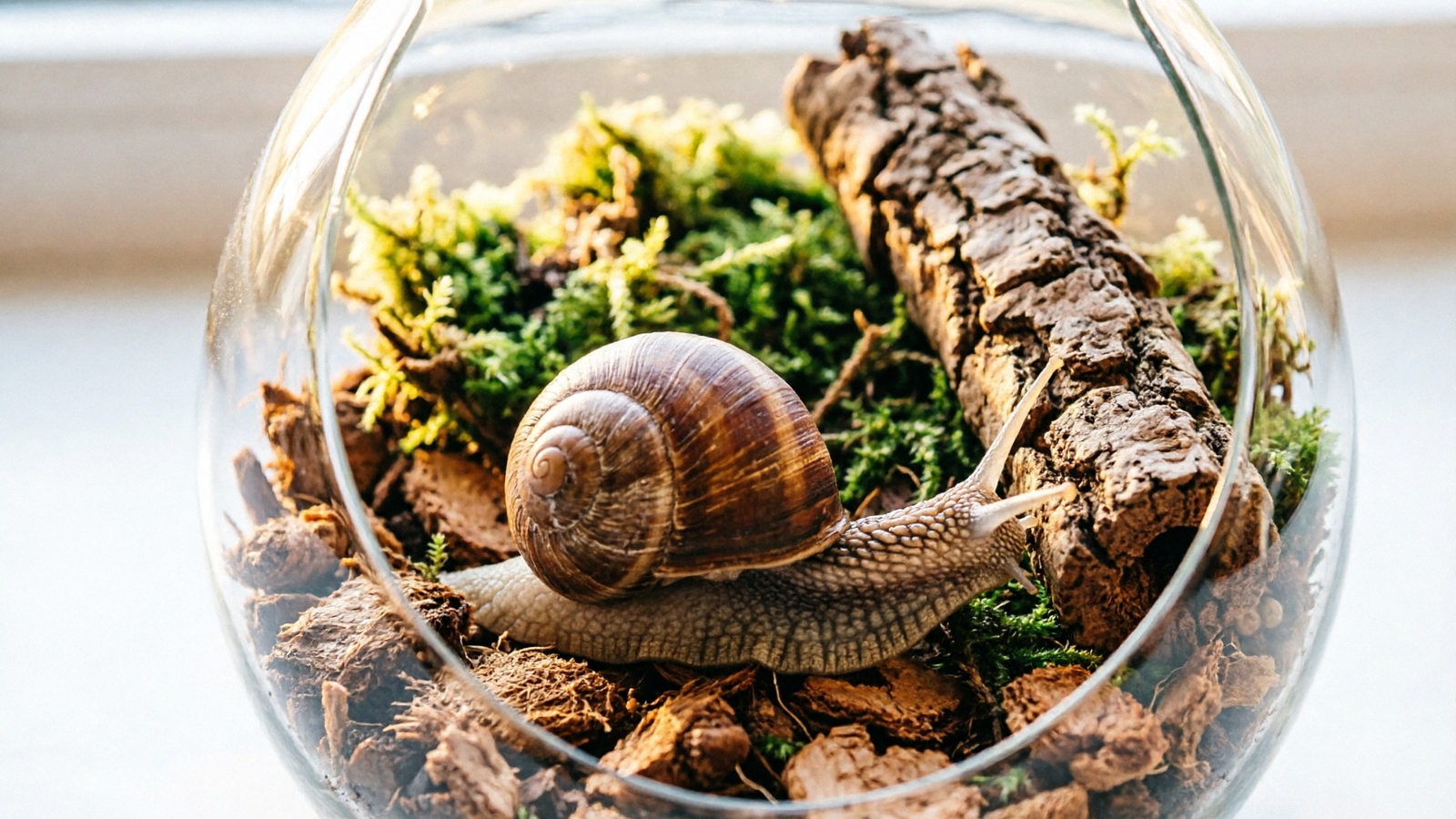
A land snail habitat (also called a snail terrarium or land snail enclosure) is a secure, ventilated container that recreates a snail’s natural environment — a moist forest floor with deep substrate to burrow into, hiding spots for shelter, and stable humidity levels. Unlike fish tanks or hamster cages, a snail terrarium requires specific conditions: moisture-retaining substrate, controlled ventilation, and escape-proof design because snails can climb smooth glass and squeeze through surprisingly small gaps.
Finding the best land snail habitat depends on your species, budget, and space constraints. Garden snails (Cornu aspersum) — the default pet species in this article — are small, hardy, and universally legal to keep. Giant African Land Snails are banned in Florida, Texas, Hawaii, and Washington as invasive species.
Warning: Legal Notice: Giant African Land Snails (Lissachatina fulica) are banned as invasive species in Florida, Texas, Hawaii, and Washington. This article focuses on garden snails (Cornu aspersum), which are legal to keep as pets in all US states. Always check your local regulations before acquiring any pet snail species.
What Does a Pet Snail Need in Its Habitat?
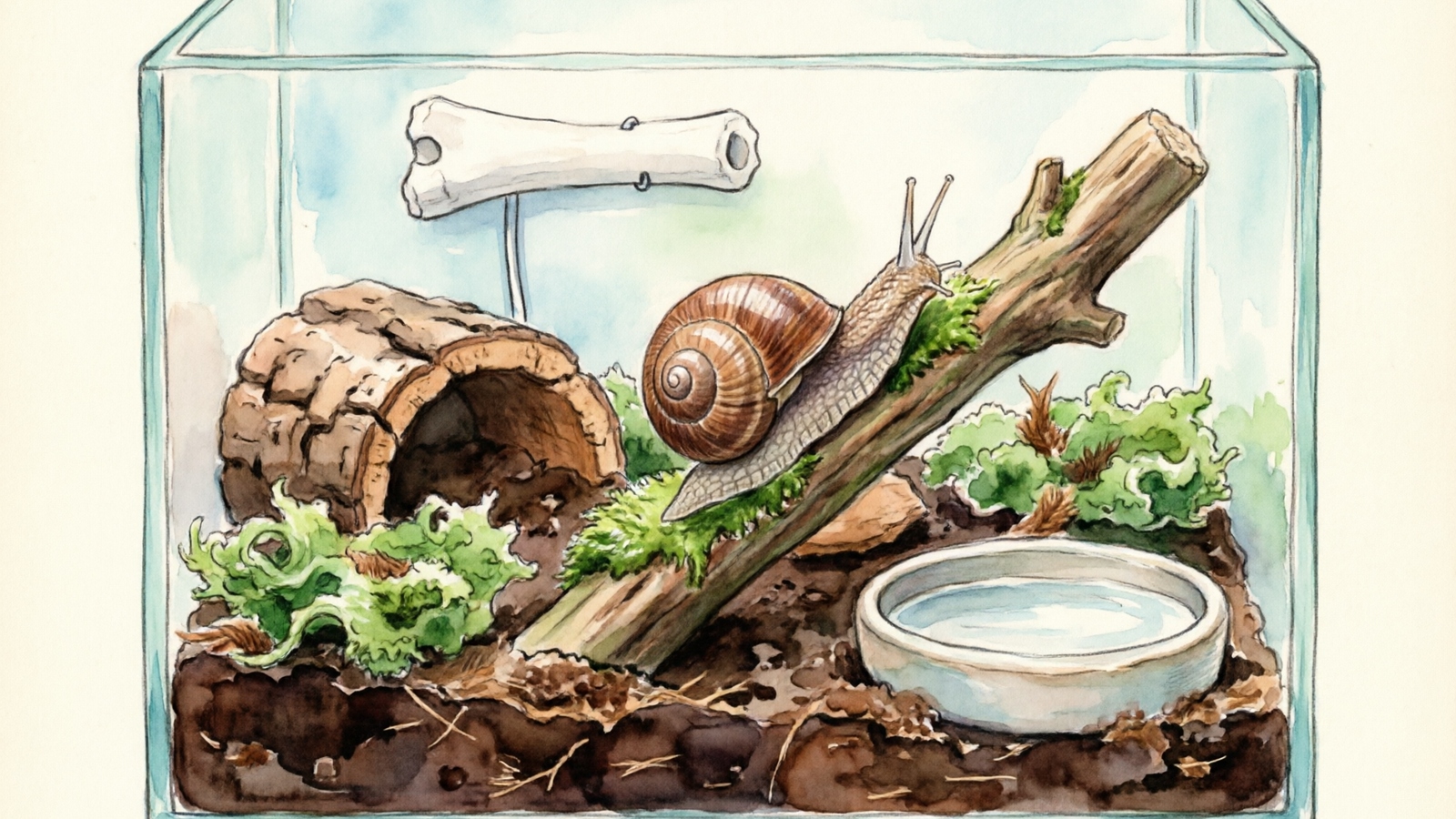
A healthy pet snail habitat needs eight essential components working together to maintain the warm, humid conditions snails require:
- Substrate: 3-5 inches deep, pesticide-free coconut coir or sterilized topsoil — deep enough for burrowing and egg-laying
- Sphagnum moss: maintains humidity between misting sessions and provides soft padding on the surface
- Hiding spots: cork bark, coconut half, or terracotta pot for daytime shelter
- Ventilation: mesh or screen lid for airflow — stagnant air promotes mold and respiratory issues
- Secure lid: tight-fitting with no gaps — snails are expert climbers that scale glass walls
- Calcium source: cuttlebone mounted inside the enclosure, always accessible
- Water source: shallow dish (bottle cap depth) — snails can and will drown in deep water
- Temperature: 65-75°F (room temperature); no heat source needed for most homes
For feeding placement and cuttlebone positioning within the enclosure, our guide to the best pet snail food covers diet layout and calcium supplementation in detail.
Land Snail Tank Setup (Step-by-Step)
Setting up a land snail tank is straightforward once you have the right components. In my experience, getting the substrate depth right on the first try saves a lot of frustration later — too shallow and snails can’t burrow, too deep and it takes forever to dry out between mistings. Follow these steps in order — substrate first, then decor, then the snail.
Step 1: Choose your best land snail habitat. Glass terrariums offer the best visibility and are easiest to clean. Plastic bins work for budget setups. Size depends on your species (see sizing guide below).
Step 2: Add substrate layer. Pour 3-5 inches of coconut coir into the bottom. Moisten it until it holds together when squeezed but doesn’t drip — like a wrung-out sponge.
Step 3: Add sphagnum moss. Place patches on top of the substrate in corners and around hiding spots for passive humidity retention.
Step 4: Place hiding spots. Position cork bark, a coconut half, or an overturned terracotta pot. Snails need dark, sheltered areas during daylight hours — they’re nocturnal by nature and spend most of the day tucked away. Place at least two hiding options at opposite ends of the enclosure so your snail can choose based on temperature and humidity preferences.
Step 5: Mount calcium source. Attach cuttlebone to the glass wall using a suction cup, soft side facing the snail.
Step 6: Add shallow water dish. Use a bottle cap or very shallow dish — no more than 1cm deep. Change water daily.
Step 7: Secure ventilated lid. Check for gaps around the edges. Cover large openings with fine mesh (no metal — zinc and copper are toxic to snails).
Step 8: Place in indirect light. No direct sunlight — it overheats the enclosure and dries the substrate rapidly.
Species-Specific Sizing Guide:
| Species | Min Tank Size | Min Dimensions | Notes |
|---|---|---|---|
| Garden snail (Cornu aspersum) | 5 gallons | 12”×8”×8” | 1 gal per snail |
| Milk snail (Otala lactea) | 5 gallons | 12”×8”×8” | Similar to garden snail |
| Roman snail (Helix pomatia) | 10 gallons | 16”×10”×10” | Slightly larger species |
| Giant African (Lissachatina fulica) | 20+ gallons | 24”×12”×12” | Banned in FL, TX, HI, WA |
This land snail tank setup mirrors substrate and humidity principles used for other terrestrial pets. For detailed reference on coconut coir preparation, our axolotl tank setup guide covers the same fundamentals.
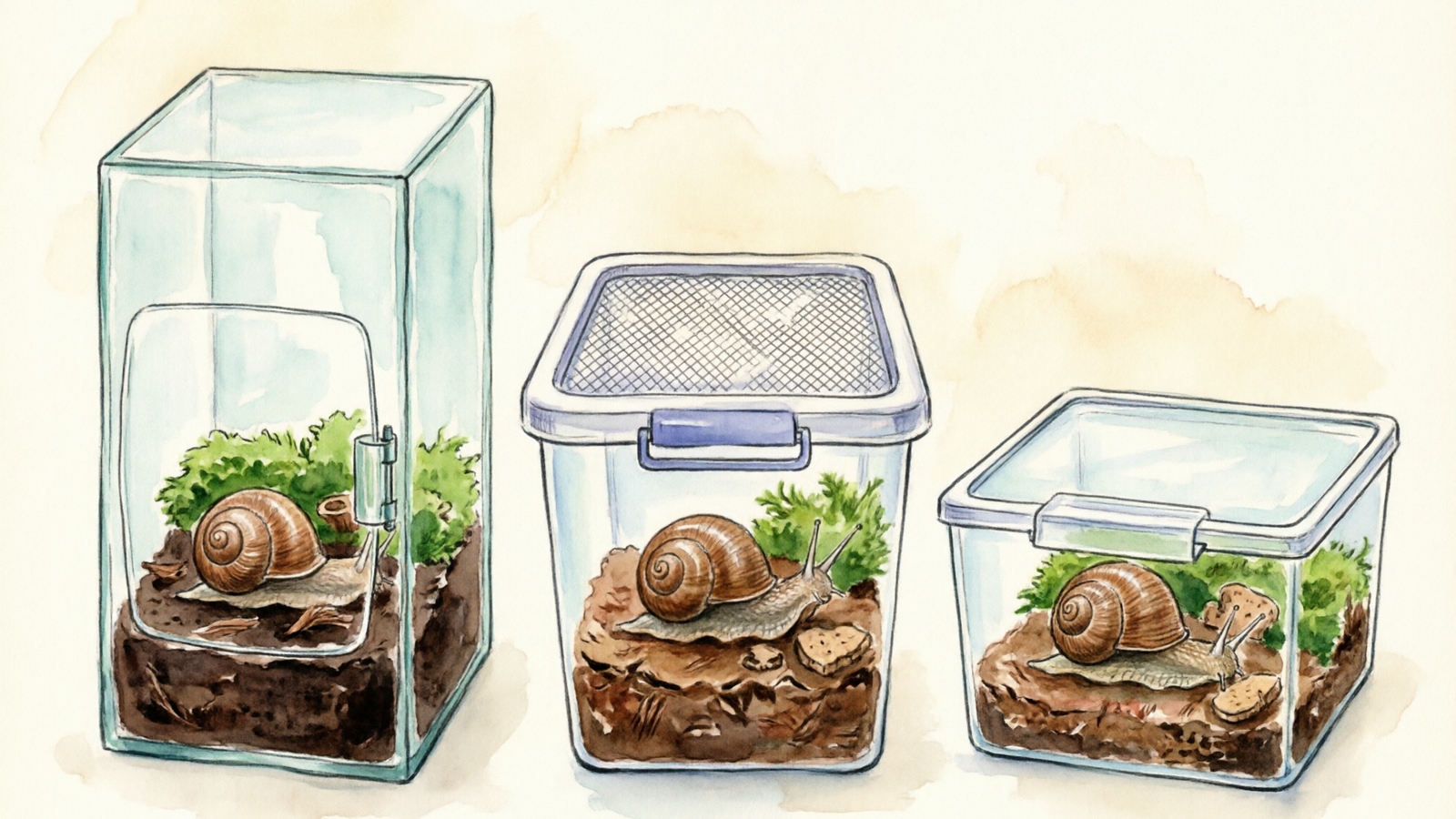
Land Snail Tank Setup: Choosing Glass vs Plastic vs Acrylic
The material you choose for your enclosure affects visibility, durability, weight, and price.
Glass terrariums are often the best land snail habitat choice — they offer the best visibility and are easiest to clean. They maintain humidity well and won’t shift during routine maintenance. The downside is weight and breakability. Brands like Exo Terra, REPTIZOO, and NCYP make glass enclosures ideal for permanent display setups. Many of the same glass terrarium brands are popular for hermit crab tanks — see our best hermit crab tank comparison for detailed brand analysis.
Plastic terrariums are lightweight, affordable, and good for beginners. Dedicated snail brands like My Happy Snails offer plastic options around $30, and generic containers cost as little as $3-16. Plastic scratches easily and is less aesthetically pleasing, but functional.
Acrylic enclosures — a premium snail terrarium option — provide glass-like clarity with less weight. Brands like HerpCult offer acrylic terrariums, but they cost more than plastic and can yellow over time with UV exposure. For snail habitats that stay indoors away from windows, yellowing isn’t a major concern. Our axolotl care guide discusses similar acrylic and glass options for amphibian setups.
Bottom line for your land snail enclosure: I’d recommend glass for anyone planning to keep snails long-term — the visibility and ease of cleaning make daily maintenance noticeably smoother. Go with plastic for a first setup you might outgrow, or acrylic if you want lighter weight with good clarity.
8 Best Land Snail Habitats Compared
This section covers the best land snail habitat options for your collection, from dedicated snail kits to general reptile terrariums. For substrate and accessory products, see the next section.
| # | Product | Type | Size | Price | Best For |
|---|---|---|---|---|---|
| 1 | Jinymral Snail Terrarium Kit | Dedicated snail kit | 11.2”×7.9”×6” | $29.97 | TOP PICK — Best budget kit |
| 2 | REPTIZOO Mini Glass Terrarium | Glass | 8”×8”×8” | $52.99 | Best functional glass |
| 3 | NCYP House Shape Terrarium | Glass (decorative) | 10.2”×5.9”×8.2” | $39.90 | Best aesthetic |
| 4 | Exo Terra Glass Terrarium Kit | Glass | 12”×12”×12” | $76.99 | Premium brand name |
| 5 | Bantam.Earth V2 Gastro | Dedicated snail kit | Customizable | $75.24 | Best snail-specific (direct-only) |
| 6 | My Happy Snails Starter Kit | Complete starter | Full setup | $179.95 | All-in-one (direct-only) |
| 7 | My Happy Snails Plastic Terrarium | Plastic | Small | $29.95 | Budget plastic (direct-only) |
| 8 | DIY Plastic Bin Conversion | DIY | Custom | $5-15 | Ultra-budget |
Note: Customer feedback below is aggregated from available product reviews and synthesized for summary.
1. Jinymral Snail Terrarium Kit (TOP PICK) — $29.97
The only dedicated snail terrarium kit — and arguably the best land snail habitat for beginners — with meaningful customer feedback and widespread availability. Includes climbing accessories and basic snail terrarium kit components. At 11.2”×7.9”×6”, it fits 1-2 garden snails comfortably. Owner feedback highlights it as a great starter kit for beginners and families.
Key positives: Perfect size for juvenile and small garden snails, easy assembly, good value at under $30. Multiple reviewers mention it’s popular with children as a first pet setup.
“Great starter kit for my kids! Very easy to put together and the price was great!” — Amazon review
Honest downsides: The included climbing wall blocks airflow and promotes mold — remove it immediately. Several quality control reports including receiving used items. Some kits arrived with moldy substrate. At this price point, inconsistency is the main risk.
“We received a clearly used item with scratches on the sides and still dirty.” — Amazon review
Best for: First-time snail owners wanting an affordable dedicated kit for 1-2 garden snails.
2. REPTIZOO Mini Glass Terrarium — $52.99
An 8”×8”×8” front-opening glass terrarium from a well-known reptile brand — a solid best land snail habitat option for small collections. The front-opening design is a significant advantage — access without removing the lid makes daily feeding and cleaning far less disruptive. With 971 customer reviews, it’s a proven product in the reptile and invertebrate community.
Key positives: Front door enables easy cleaning and feeding, full glass panels for maximum visibility, sturdy construction, good ventilation design.
“It makes cleaning and feeding so easy. I love that I don’t have to stick my hand in the top and struggle to clean.” — Amazon review
Honest downsides: The latch requires two hands and can be cumbersome. At roughly 2 gallons, it’s smaller than some buyers expect. The top is not removable (only the front door opens). Not a concern for garden snails, but the screen top has wire holes that could allow very tiny creatures to escape.
“It is a full 2 handed operation and you better have small fingers. Good otherwise. But that’s a huuuuuge deal.” — Amazon review
Best for: Snail owners who prioritize easy access and visibility over budget pricing.
3. NCYP House Shape Glass Terrarium — $39.90
A decorative house-shaped glass terrarium with acrylic lid — the best land snail habitat for display-minded keepers. The most aesthetically distinctive option — it doubles as room decor on a shelf. With 1,408 customer reviews, it’s the most-reviewed terrarium here. Multiple snail owners specifically mention using it for garden snails.
Key positives: Beautiful decorative design that looks like a miniature glass house, no water leakage issues reported by most snail keepers, compact footprint, affordable under $40.
“I’ve bought two now and they are perfect for our little garden snails. I’ve had the terrarium for months and have never had a problem with any water leaks.” — Amazon review
Honest downsides: Acrylic lid hinge can break after a few months of regular use. Some units arrive with incomplete silicone seals. Significantly smaller than it appears in photos. Not designed specifically for pets — primarily marketed for plants and terrariums.
“About 3 weeks ago the hinge on the top of the door broke. I open it about 1-2x a week.” — Amazon review
Best for: Snail owners who want their habitat to function as decorative room display.
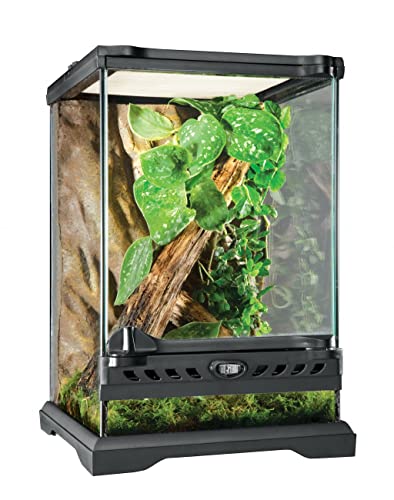
4. Exo Terra Glass Terrarium Kit — Best Land Snail Habitat Kit (Mini Wide) — $76.99
The premium brand-name option. Exo Terra is one of the most recognized reptile enclosure brands, and their 12”×12”×12” Mini Wide provides the most floor space of any product on this list — roughly 5 gallons. With 2,615 customer reviews, it has the strongest track record. The kit includes a foam background panel for a naturalistic look.
Key positives: Largest floor space in this comparison, excellent build quality, recognizable brand with extensive accessory compatibility, screen lid provides good ventilation.
“Came already assembled in box, no damage, perfect for our frog! Have used these enclosures before and they always meet my needs.” — Amazon review
Honest downsides: Most expensive option at $53.61. Multiple shipping damage reports — glass arrives cracked or shattered. The foam background creates gaps where small feeder insects get stuck (not a snail concern for most keepers). Screen lid mesh is too fine for some mounting hardware.
“The corner is shattered and left glass all inside the terrarium. It’s still hanging on by a paper thin sliver.” — Amazon review
Best for: Snail owners wanting maximum floor space and a brand with the widest accessory ecosystem.
Best Substrate & Accessories for Your Terrarium
A proper land snail habitat needs more than just an enclosure. Substrate, humidity management, and enrichment accessories are equally critical for your snail’s health.
| # | Product | Category | Price | Best For |
|---|---|---|---|---|
| 5 | Zoo Med Eco Earth 3-Pack | Substrate | $29.69 | TOP PICK Substrate |
| 6 | Begeterday Organic Fiber | Substrate | $5.99 | Dedicated snail substrate |
| 7 | ZeeDix Coconut Fiber 2-Pack | Substrate | $22.79 | Bulk budget substrate |
| 8 | Begeterday Natural Moss | Humidity | $7.29 | Dedicated snail moss |
| 9 | Zoo Med Natural Cork 4-Pack | Hideout | $9.99 | Hiding and climbing |
| 10 | Begeterday Climbing Toy | Accessory | $8.99 | Enrichment |
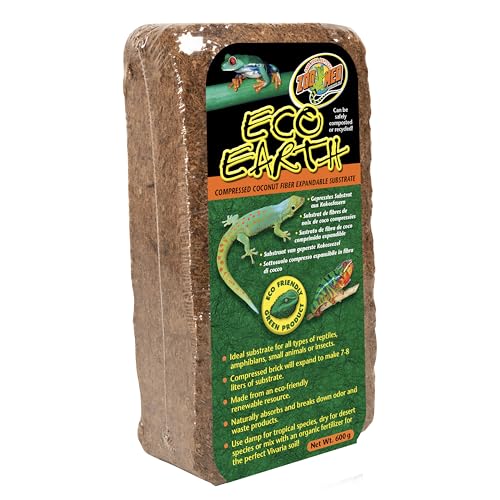
5. Zoo Med Eco Earth Compressed Coconut Fiber (TOP PICK Substrate) — $29.69
The community standard substrate for terrestrial invertebrates. Each compressed brick expands to roughly 7-8 liters when hydrated. At $29.69 for a 3-pack, it’s still one of the cheaper ways to buy coconut fiber in bulk. With 5,044 customer reviews, it’s the most proven substrate across all pet categories on this list.
Key positives: Industry standard with massive user base, excellent moisture retention, chemical-free, expands significantly when hydrated. Long-term hermit crab owners report using it for years with consistent results.
“I’ve used this product for the past couple of years. It does a really good job of staying moisturized.” — Amazon review
Honest downsides: Requires preparation — bricks need soaking in water for hours before use. Some buyers receive loose coir instead of properly compressed bricks. Inconsistent compression between batches. Our best hermit crab substrate guide covers the same product in detail for a different species.
“This is a real pain to prepare. I expected to be able to just break it up and use it, not so. Instructions call for soaking.” — Amazon review
Best for: Any snail keeper — this is the default coconut coir recommendation.
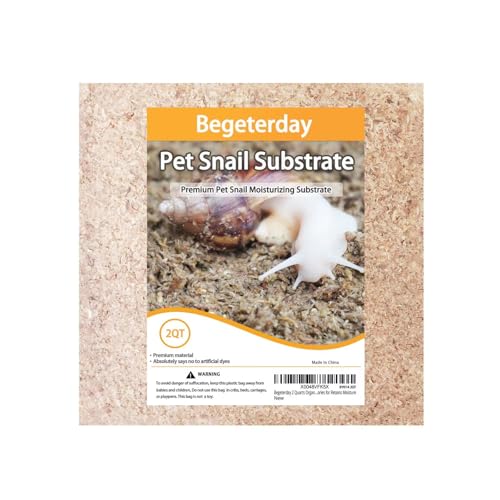
6. Begeterday Organic Fiber Substrate — $5.99
The only substrate specifically marketed for pet snail terrariums and the best land snail habitat setups. The 2-quart bag is ready to use without hydrating compressed bricks. Some snail owners report their snails prefer it over standard coconut coir.
Key positives: Ready to use without hydration, snail-specific formulation, good expansion from a small package, affordable at $5.99.
“My snails loved it! A very large amount that is packed into a small size. Just one was enough for both of my snail tanks and I had extra left over!” — Amazon review
Honest downsides: Multiple mold reports within 24 hours of placement. Some users report the substrate stays perpetually wet with poor airflow. A reviewer noted their snail’s shell started peeling after switching away from this product — suggesting it may provide beneficial minerals that alternatives lack.
“It became moldy just overnight. The entire surface was just covered in mold. Thankfully I hadn’t put my snail in yet.” — Amazon review
Best for: Snail owners wanting a ready-to-use dedicated substrate, with awareness of potential mold issues requiring careful moisture management.
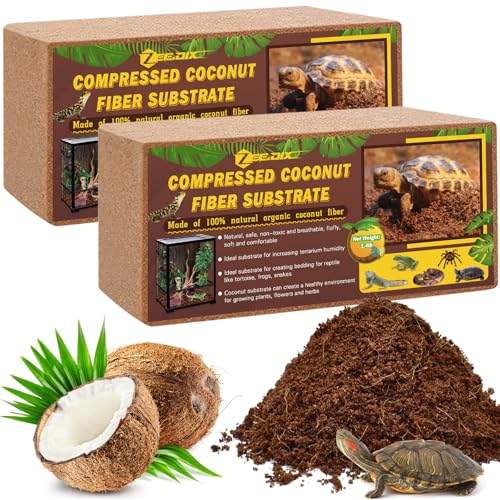
7. ZeeDix 2 Pack Coconut Fiber Substrate — $22.79
A bulk coconut coir option with two compressed bricks. It has a solid track record across the reptile and invertebrate community. At $22.79 for two bricks, it’s more per brick than Zoo Med but provides substantial volume for larger enclosures or multi-tank setups.
Key positives: Good moisture retention, large volume from compressed bricks, holds humidity well in bigger terrariums.
“The product made more than I thought. Good deal. I would purchase again.” — Amazon review
Honest downsides: Some reviewers report a stringy texture that doesn’t work well for all species. A plastic contamination report raises quality control concerns. Multiple mold complaints consistent with other coconut coir products.
“Found a piece of plastic in the coconut fiber substrate. My turtle could have died from this.” — Amazon review
Best for: Owners with larger enclosures or multiple tanks needing bulk substrate.
8. Begeterday Natural Moss — $7.29
Moss marketed specifically for pet snail enclosures. Place patches on top of substrate to maintain humidity between misting sessions. It’s the most established snail-specific moss product.
Key positives: Easy to use, expands significantly when soaked, dedicated snail branding, multiple repeat purchasers.
“This works perfect for a snail setup. When you soak it, a little goes a long way. It really expands!” — Amazon review
Honest downsides: Multiple mold reports — some within 24 hours. A reviewer identified it as peat moss rather than sphagnum moss, noting peat moss is acidic and bitter to snails, making it unsuitable for any pet snail habitat. Becomes too fluffy when wet to serve as flooring. For active humidity control beyond passive moss, our best hermit crab humidifier guide covers reptile humidifiers compatible with snail habitats.
“This is peat moss, it’s acidic and bitter to snails and slugs. They prefer sphagnum moss.” — Amazon review
Best for: Supplementing substrate with humidity retention — experiment with small quantities to avoid mold.
9. Zoo Med Creatures Natural Cork (4-Pack) — $9.99
Natural cork bark pieces serving as both hiding spots and climbing surfaces. Cork is the community-standard enrichment material for terrestrial invertebrates. It’s well-established across reptile and isopod keeping communities.
Key positives: Natural material snails interact with readily, creates multiple hiding spots, doubles as climbing enrichment. Reviewers across species report animals gravitate to it within minutes.
“The isopods gravitated towards it within minutes and chose the cork bark over the tree bark I’d found outside.” — Amazon review
Honest downsides: Some pieces arrive significantly smaller than product photos. Several mold reports in humid environments. Size inconsistency between the four pieces in each pack.
“About half the size listed. It’s super small. I was hoping to break it into two pieces but I can’t.” — Amazon review
Best for: Creating naturalistic hiding and climbing enrichment in any snail enclosure.
10. Begeterday 12 Inch Climbing Toy — $8.99
Bendable moss-covered climbing branches designed for snail enclosures. The 12-inch posable design lets you create custom climbing configurations. Snail owners with grove snails specifically report positive engagement.
Key positives: Flexible and posable, adds visual interest, some snails interact with it actively.
“These 12-inch posable moss branches are a hit! Grove snails love to climb and be up high, these are the perfect addition.” — Amazon review
Honest downsides: Severe mold issues — multiple reports of mold within 24-48 hours. The core includes plastic string wrapping that some reviewers find concerning. Some snails ignore it entirely. Cork bark is more reliable enrichment with fewer mold problems.
“I’ve had this in the snail enclosure for just over 24 hours. There’s a stringy mold attached to the underside of one of the legs.” — Amazon review
Best for: Snail owners wanting decorative climbing enrichment who are willing to monitor closely for mold.
DIY vs Pre-Made Habitats
For readers researching how to make a snail habitat, the best land snail habitat can genuinely be DIY-built — unlike many pet species where professional enclosures are strongly recommended. Here’s how the costs break down:
| Option | Cost | Setup Time | Pros | Cons |
|---|---|---|---|---|
| DIY plastic bin | $5-15 | 30 minutes | Ultra-cheap, customizable size | Not aesthetic, must drill ventilation |
| Budget kit (Jinymral) | $29.97 | 10 minutes | Ready to use, snail-specific | Quality inconsistency, mold risk |
| Glass terrarium (NCYP) | $39.90 | 15 minutes | Attractive display piece | Lid durability concerns |
| Premium glass (Exo Terra) | $53.61 | 15 minutes | Most space, best brand | Highest price listed |
| Dedicated kit (Bantam.Earth) | $75-86 | 10 minutes | Snail-specific design | Ships direct from manufacturer |
The DIY approach works well for a budget land snail enclosure. I’ve set up several DIY bins for temporary quarantine and housing — they’re surprisingly effective when done right. A 5-gallon plastic storage bin costs $5-8, drilling ventilation holes takes under 10 minutes, and adding coconut coir with sphagnum moss keeps total cost under $15.
How to Make a Pet Snail Habitat (Budget DIY Guide)
If you want to build the best land snail habitat from scratch, here’s exactly how to set up the best land snail habitat.
Materials list:
- Plastic storage bin (5+ gallons, clear or translucent) — $5-8
- Coconut coir brick (Zoo Med Eco Earth or equivalent) — $2-3
- Sphagnum moss (small bag) — $4-5
- Cork bark piece or coconut half — $2-5
- Spray bottle — $1-2
- Drill or heated nail for ventilation holes
Steps: Clean the bin with hot water (no soap). Drill 15-20 small holes in the lid and upper sides for airflow. Add 3-5 inches of hydrated coconut coir. Place sphagnum moss patches in corners. Position cork bark as a hide. Add a bottle cap with filtered water. Cover and place in indirect light. For more context on snails in shared environments, our axolotl tank mates guide covers how land snails function alongside other species.
Common Mistakes to Avoid
Using potting soil with fertilizers — chemical fertilizers are toxic to snails. Use only organic, pesticide-free coconut coir or sterilized topsoil.
Peat moss as substrate — too acidic for snails and can cause shell degradation over time. Stick with coconut coir.
Deep water dishes — snails can and will drown, especially babies. Use bottle-cap-depth dishes only.
Metal mesh lids — zinc and copper corrode in humid environments and leach toxins. Use plastic or nylon mesh.
Direct sunlight — overheats the enclosure rapidly and kills snails quickly through dehydration. Indirect light only, preferably from a north- or east-facing window.
Unsecured lids — snails climb glass effortlessly and can squeeze through gaps as thin as their shell. If there’s a gap, they will find it.
Tap water without dechlorinating — chlorine irritates snail skin and can harm the sensitive mucous layer they rely on for respiration. Use filtered, distilled, or dechlorinated water for all misting.
Gravel or sand as substrate — prevents natural burrowing behavior, poses impaction risk if ingested, and doesn’t retain the moisture snails need to keep their skin functioning properly.
Frequently Asked Questions
How big should a pet snail habitat be?
At minimum 5 gallons for 1-2 garden snails, with a general rule of 1 gallon per snail. Giant African land snails need 20+ gallons but are banned in Florida, Texas, Hawaii, and Washington as an invasive species. Milk snails have similar space requirements to garden snails — 5 gallons is sufficient for 1-2 individuals.
What substrate is best for land snails?
Coconut coir is the best substrate for any land snail habitat — it holds moisture well, is chemical-free, and allows snails to burrow naturally. Avoid peat moss (too acidic), sand and gravel (impaction risk and prevents burrowing), and any soil containing fertilizers or pesticides. Depth should be 3-5 inches to support burrowing and egg-laying behavior.
Do snails need a heat lamp?
No. Garden snails thrive at room temperature between 65-75°F. Heat lamps are unnecessary and can dangerously dry out the pet snail habitat, potentially killing your snail through dehydration. Only consider supplemental heating if your home consistently drops below 60°F.
How often should I mist my enclosure?
Once daily with filtered or distilled water. The substrate should feel moist but not soggy — if it’s still damp the next day, skip a misting. Over-misting is the number one cause of mold in enclosures. When in doubt, less is more.
Can I use a plastic bin as a snail enclosure?
Yes — a clean plastic storage bin works well as a budget DIY land snail habitat alternative. Drill small ventilation holes in the lid and upper walls, add 3-5 inches of coconut coir, top with sphagnum moss, add cork bark hides, and include a shallow water dish. Total cost is typically $5-15 for a complete functional land snail enclosure.
Choosing the best land snail habitat for your pet comes down to three priorities: deep coconut coir substrate, proper ventilation with a secure lid, and consistent humidity management — the three pillars of the best pet snail habitat. The Jinymral kit at $29.97 is the best budget starting point for first-time snail owners, while the Exo Terra Mini Wide at $53.61 offers the most space for growing collections. For the absolute cheapest option, a DIY plastic bin setup at $5-15 works perfectly.
Now that your snail’s home is ready, explore our complete snail care series — a proper setup is just the foundation of great snail keeping.