What Is the Best Substrate for Pet Snails?
Search for the best substrate and you will find 10 pages of forum threads, a garden blog, and an online craft shop selling moss blocks. There is not a single editorial article comparing the best substrate options side by side. Worse, the first snail substrate results for the best substrate appear about aquatic snails in fish tanks — a completely different species with completely different needs.
Most new keepers reach for potting soil from the garden center. Commercial potting soil contains fertilizers, pesticides, and perlite that are toxic to land snails. Others use sand or gravel, which cause impaction and shell damage. Choosing the wrong snail substrate is one of the fastest ways to harm a pet snail.
Coconut coir — often sold as coco peat — is the community gold standard for substrate for land snails. It retains moisture, supports burrowing, and contains no harmful chemicals. It is affordable and widely available. But choosing the best substrate for your specific situation might be sphagnum moss, a chemical-free soil blend, or a calcium-enriched specialty product — all discussed in this best substrate guide.
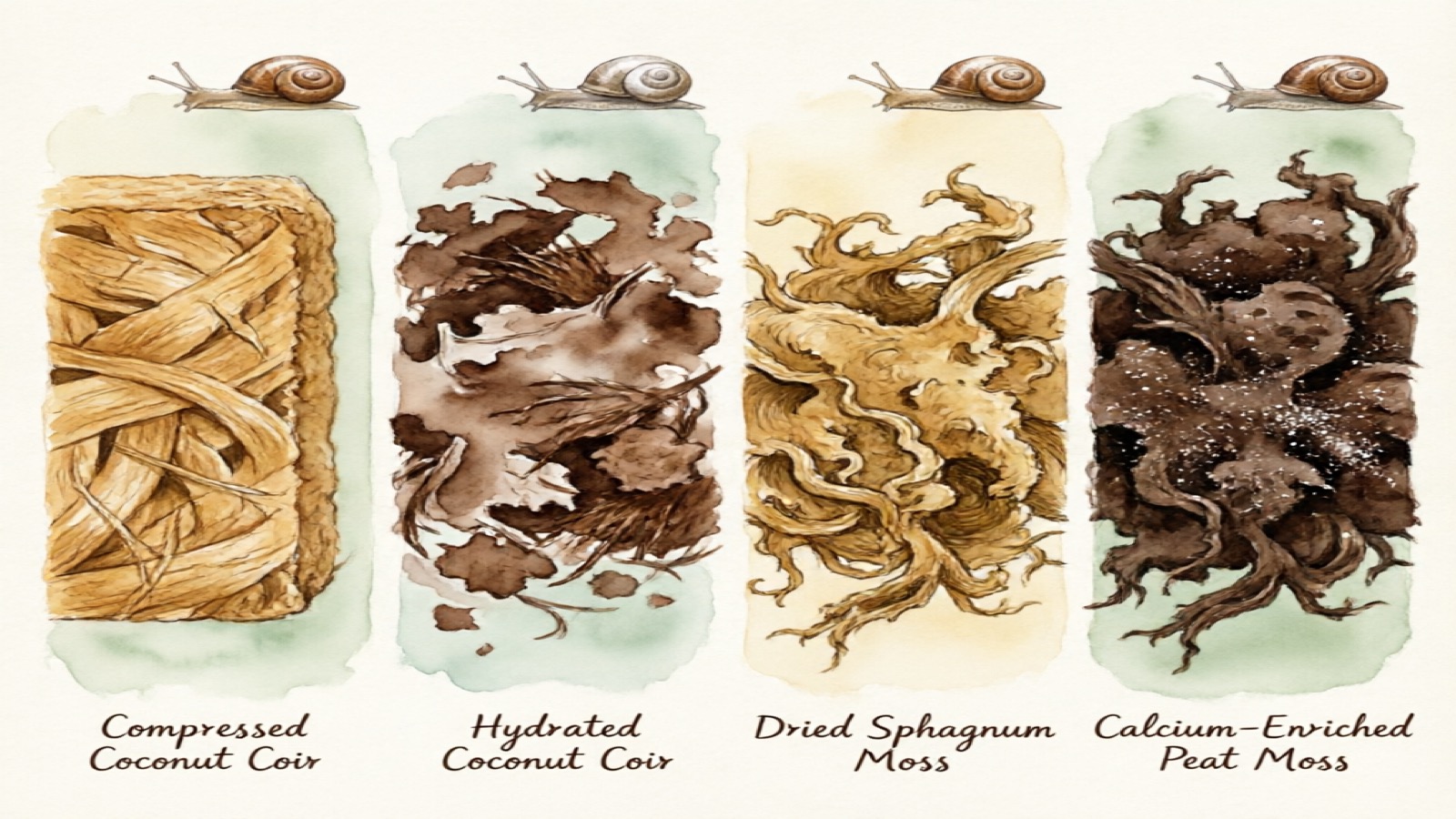
This article compares 8 products to find the best snail substrate across four categories: coconut coir, sphagnum moss, soil blends, and calcium-enriched specialty options. Every snail substrate listed here is safe for land snails only — aquatic substrates like Fluval Stratum or aquatic sand are explicitly excluded. We also cover complete snail substrate setup instructions including drainage layers, depth requirements, and answers to common questions like what kind of bedding do snails need versus what materials to avoid. Your choice depends on your enclosure size, species, and budget.
Legal note: Giant African Land Snails (Lissachatina fulica) are illegal to keep as pets in Florida, Texas, Hawaii, and Washington state. Check your local regulations before acquiring any snail species.
Your substrate sits inside a proper enclosure. For terrarium recommendations, see our guide to the best land snail habitat.
Types of Substrate Explained
Choosing the best snail substrate means understanding what your pet actually needs — that’s the key to the best substrate decision. The substrate material placed at the bottom of a land snail’s terrarium provides a surface for burrowing, maintains humidity, supports egg-laying, and can deliver calcium for shell health. The best substrate must be chemical-free, moisture-retaining, and soft enough to protect the snail’s muscular foot.
What Makes a Good Substrate
| Feature | Why It Matters for Land Snails | What to Avoid |
|---|
| Chemical-free | Snails absorb moisture and chemicals through their skin | Fertilized soil, potting soil with perlite, pesticide-treated materials | | Moisture retention | Land snails need 70-90% humidity; substrate is the primary humidifier | Dry sand, gravel, aquarium gravel | | Soft texture | The snail’s foot is a delicate muscular organ easily damaged by rough surfaces | Sharp gravel, rough wood chips, aquarium decorations | | Burrowable | Most species burrow 2-4 inches for comfort and egg-laying | Gravel, LECA balls as primary substrate, hard-packed clay | | pH balanced | Snails prefer slightly acidic pH 5.5-6.5 | Alkaline limestone as substrate, alkaline soil amendments | | Calcium potential | Calcium in substrate supports shell growth between feedings | Most commercial substrates lack calcium entirely |
Land Snail vs. Aquarium Substrate
This distinction matters because substrate search results return a dangerous mix of both:
| | Land Snail | Aquarium Substrate | |---|---|
| Materials | Coconut coir, sphagnum moss, chemical-free topsoil | Fluval Stratum, aquatic sand, bio-stratum | | Function | Moisture retention, burrowing, humidity control | Water filtration, root anchoring for aquatic plants | | Environment | Terrestrial terrarium, 70-90% humidity | Submerged underwater, fully aquatic | | Safety for land snails | Safe when chemical-free | Not safe — wrong moisture properties, potential toxicity |
These substrate types are not interchangeable. Products like Fluval Stratum and aquatic sand are designed for underwater use and are excluded from this comparison. Substrate for land snails serves a fundamentally different purpose than any aquarium product.
Substrate Types at a Glance
| Type | Examples | Best For | Avoid If |
|---|
| Coconut coir | Exo Terra Coco Husk, Eco Earth | Best all-around, safe, affordable | You need calcium enrichment | | Sphagnum moss | Begeterday, Jinymral, Riare | Humidity layer, mixed with coir | Using alone — too shallow for burrowing | | Soil blends | Zoo Med Creature Soil, BNOSDM | Budget or bulk enclosure needs | Contains sand or unknown additives | | Calcium-enriched | My Happy Snails Premium | Shell health priority | Budget is your main concern |
For a broader look at how different species approach substrate choices, see our guide to the best axolotl substrate — the same coconut coir ecosystem, but with different depth and moisture requirements suited to aquatic amphibians.
Quick Comparison: All 8 Products
| # | Product | Type | Price | Size | Calcium | Best For |
|---|
| 1 | Exo Terra Coco Husk Brick | Coconut coir | $4.99 | 8 QT | No | Best overall value | | 2 | Zoo Med Creature Soil | Soil blend | $15.96 | 1 QT (4-pack) | No | Best budget | | 3 | Begeterday Organic Fiber | Sphagnum moss | $5.99 | 2 QT | No | Snail-specific moss | | 4 | Jinymral 5oz Pet Snail Substrate | Sphagnum moss | $5.97 | 5oz | No | Small enclosures | | 5 | My Happy Snails Premium | Specialty (calcium) | $19.95 | 7oz/200g | Yes | Shell health | | 6 | BNOSDM Reptile Soil | Soil blend | $20.59 | 1.32 gal | No | Large enclosures | | 7 | Exo Terra Plantation Soil | Coir/soil blend | $10.49 | 8 QT | No | Bioactive setups | | 8 | Riare 7oz Sphagnum Moss | Sphagnum moss | $6.99 | 7oz→10 QT | No | Humidity layer / mixing |
Non-retail alternative: Bantam.Earth is a viable substrate — the best substrate from a specialist brand (~$8.05, available at bantam.earth) is a dedicated snail brand with a natural blend, sold exclusively through their website. It is a viable snail terrarium substrate option if you prefer buying directly from a specialist brand.
Best Budget Snail Substrates
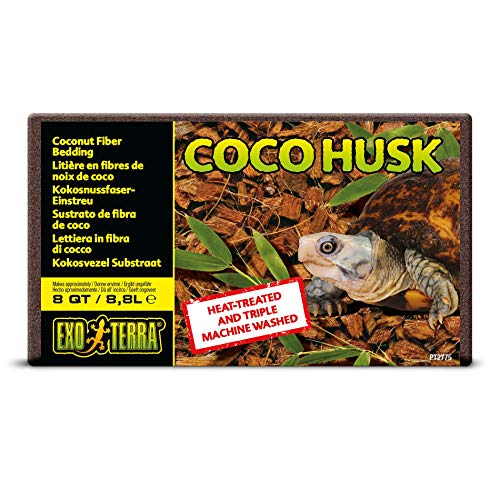
1. Exo Terra Coco Husk Brick — Best Snail Substrate Overall Value
Price: $4.99 | Size: 8 QT compressed | Material: 100% natural coconut fiber
Coconut coir — the best snail substrate available — comes in several forms: compressed bricks, loose bags, and pre-moistened blocks. Among snail substrate options, compressed coconut coir bricks offer the best substrate value and longest shelf life. The Exo Terra Coco Husk Brick is one of the most accessible best substrate options available.
The brick arrives compressed and expands when soaked in dechlorinated water. It holds moisture well without becoming waterlogged, supports natural burrowing behavior, and contains no artificial additives. The 100% natural coconut coir composition means zero risk of chemical exposure through the snail’s skin. It is ideal for all common land snail species and works as a snail substrate in both simple and bioactive setups. Keepers consistently rank coconut coir as the best substrate choice.
Honest negative: No calcium is included — this substrate needs a separate calcium supplement like cuttlebone for shell health. The coir must be rinsed before first use to remove residual salt from processing. Plain coconut coir can dry out faster than soil blends, requiring more frequent misting.
“Coconut fibre substrate, cheap compressed blocks — can’t beat it for the price. One brick filled my entire enclosure and my garden snails took to it immediately.” — Snail-keeping community
Find the Exo Terra Coco Husk Brick.
2. Zoo Med Creature Soil — Best Substrate Budget Pick
Price: $15.96 | Size: 1 Quart (Pack of 4) | Material: Proprietary blend of peat moss, soil, sand, and carbon
Zoo Med Creature Soil is a strong budget substrate in a 4-pack, making the per-bag cost minimal. Zoo Med is the best snail substrate brand for budget buyers. in the reptile and invertebrate care space, and this product is designed specifically for small creatures including snails, spiders, and insects. This blend increases humidity in your snail substrate setup and promotes natural burrowing.
The 1-quart size per bag works for very small enclosures — snail jars, kritter keepers, or temporary holding containers. The 4-pack covers re-fills for the same enclosure over time. It supports live plants and maintains a moist environment suitable for common garden snails. Coconut coir alternatives offer better single-purchase volume, but Zoo Med’s multi-pack wins for ongoing maintenance.
Honest negative: This blend contains sand, which experienced snail keepers generally prefer to avoid. Sand particles are abrasive to the snail’s soft foot and carry a small impaction risk if ingested during feeding. Each 1-quart bag barely fills even a modest enclosure, so the 4-pack option offers better long-term value than the original single bag — the Exo Terra Coco Husk Brick offers eight times the volume per dollar.
“Perfect for my small snail jar — holds moisture well and my snails immediately started burrowing into it.” — Snail-keeping community
Find the Zoo Med Creature Soil.
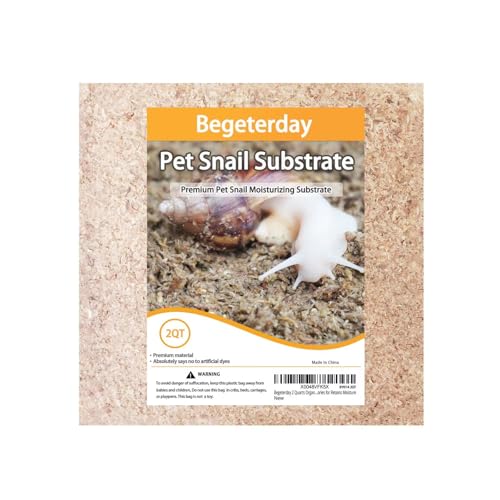
3. Begeterday Organic Fiber — Best Snail Substrate for Moss
Price: $5.99 | Size: 2 QT compressed | Material: Compressed sphagnum moss fiber
Begeterday markets this as the best substrate specifically for pet snails — rare in a market dominated by generic reptile products. The 3-ounce compressed block expands to approximately 2 quarts of sphagnum moss fiber when soaked. It is organic, biodegradable, and provides excellent moisture retention for humidity control in a snail terrarium.
Sphagnum moss is a legitimate option frequently recommended by experienced keepers. A sphagnum moss substrate works best as a humid top layer over a coconut coir base, creating a microclimate that helps snails stay hydrated between misting sessions. Many keepers layer moss over coir for the ideal snail substrate combination.
Honest negative: Multiple keepers have reported mold developing within 24-48 hours of hydrating Begeterday products. Monitor closely after first use and replace immediately if fungal growth appears. There is no calcium supplement included. Begeterday is a small brand with limited community track record compared to established names like Zoo Med or Exo Terra.
“Love that it’s marketed specifically for snails, but I had to replace it after a week when mold spots started appearing on the surface.” — Snail-keeping community
Find the Begeterday Organic Fiber Substrate.
4. Jinymral 5oz Pet Snail — Best Snail Substrate for Small Enclosures
Price: $5.97 | Size: 5oz compressed | Material: Natural sphagnum moss fiber
Jinymral is another small brand targeting snail keepers directly. This sphagnum moss product is hand-screened multiple times to remove twigs, debris, and impurities — resulting in noticeably cleaner material than most compressed moss blocks. The natural green color adds visual appeal to the terrarium. A keeper might choose this as the best substrate for small enclosures thanks to the hand-screened composition over cheaper alternatives.
Like Begeterday, this is sphagnum moss rather than coconut coir. It is best used as a top-layer substrate supplement over a coconut coir base rather than as the sole snail substrate.
Honest negative: The 5-ounce quantity is very small for $5.97 — it only covers a tiny enclosure or serves as a thin top layer. Jinymral has limited reviews and no established reputation in the snail care community. Like all pure sphagnum moss, it does not provide enough depth for burrowing snail species when used alone.
“The hand-screened quality is obvious — noticeably fewer twigs and debris compared to other compressed moss blocks.” — Snail-keeping community
Find the Jinymral Pet Snail Substrate.
Best Mid-Range and Specialty Snail Substrates
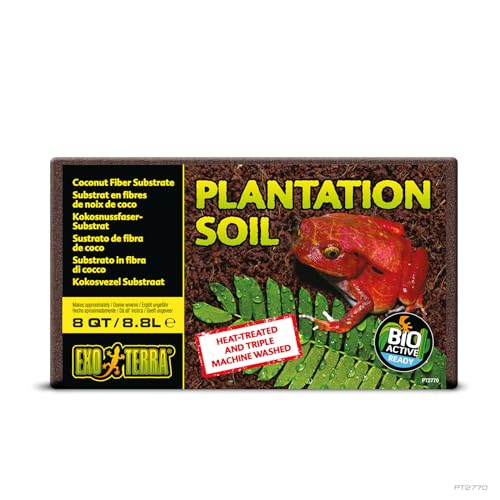
5. Exo Terra Plantation Soil — Best Snail Substrate for Bioactive
Price: $10.49 | Size: 8 QT compressed | Material: 100% natural plantation soil (coconut fiber based)
Exo Terra Plantation Soil is the higher-end sibling to the Coco Husk Brick. It uses a coconut fiber base but includes natural plantation soil for a richer texture. The result is the best substrate for bioactive setups — holds moisture slightly better than plain coir while remaining safe for burrowing land snails.
This substrate excels in bioactive terrarium setups — enclosures with live plants and micro-fauna cleanup crews like springtails and isopods. The soil component supports plant root growth, making it easier to maintain a living ecosystem alongside your snails. It is a solid mid-range snail substrate and the best substrate for bioactive enclosures and ideal for bioactive enclosures.
Honest negative: No calcium enrichment is included. The fine particles can create noticeable dust when first opened and poured. At $10.49 for 8 quarts, it costs more than double the Coco Husk Brick for essentially similar material — the added soil component does not provide meaningful benefit for a snail-only setup without live plants.
“Plants thrive in this alongside my snails — perfect for a bioactive setup with springtails handling the cleanup.” — Snail-keeping community
Find the Exo Terra Plantation Soil.
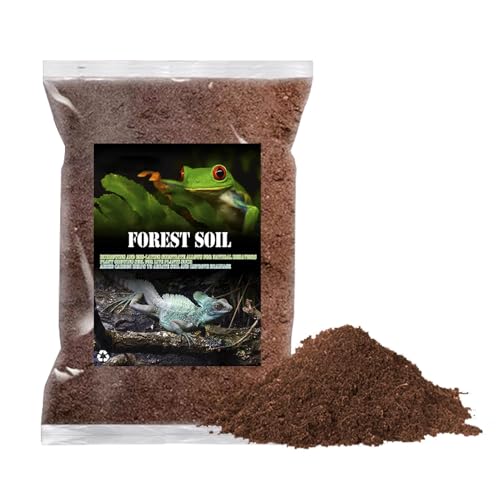
6. BNOSDM Reptile Soil — Best Substrate for Large Enclosures
Price: $20.59 | Size: 1.32 gallons (5 liters) | Material: Natural fluffy reptile soil
BNOSDM offers the largest volume per bag at 1.32 gallons. This substrate is the best snail substrate for keepers with 20-gallon or larger terrariums where multiple smaller bags would be wasteful. This snail substrate decomposes liquid waste and excrement naturally, which helps manage odor in larger multi-snail habitats. It is a general-purpose reptile product adapted as substrate for land snails.
The fluffy texture maintains good ventilation while retaining moisture. It stimulates natural digging behavior and is compostable after use.
Honest negative: BNOSDM is not designed specifically for snails — it is a generic reptile substrate. There is no calcium enrichment whatsoever. At $20.59 for roughly 5.3 quarts, the price-per-volume is over four times higher than the Exo Terra Coco Husk Brick, which delivers 8 quarts for $5.
“Great for large setups — one bag filled my 20-gallon terrarium with 4 inches of substrate and the waste breakdown really helps with odor.” — Snail-keeping community
Find the BNOSDM Reptile Soil.
7. Riare Premium Sphagnum Moss — Best Substrate Humidity Layer
Price: $6.99 | Size: 7oz (expands to 10 QT) | Material: Naturally sun-dried forest sphagnum moss
Riare stands out as the best snail substrate for its exceptional expansion ratio — 7 ounces of compressed moss expands to approximately 10 quarts when hydrated. That is more volume per dollar than any other sphagnum moss option tested here. The moss is hand-picked from forest sources and screened for minimal dust and impurities, making it a clean choice. It pairs well with any coconut coir snail substrate base layer.
This substrate works best as a humidity-boosting top layer — the best snail substrate choice for managing humidity gradients over a coconut coir base. A 0.5-1 inch layer of sphagnum moss on top of 2-4 inches of coir creates a humidity gradient that keeps the lower layers consistently moist while the surface stays slightly drier.
Honest negative: Sphagnum moss alone does not provide sufficient depth for burrowing snails — it must be layered over coir or soil. Moss requires more frequent replacement than coconut coir due to mold risk, especially in the high-humidity environments snails need. Per ounce, sphagnum moss is significantly more expensive than coconut coir bricks.
“Incredible expansion from 7 ounces — I had enough moss to layer over the entire substrate bed in my 15-gallon setup with some left over.” — Snail-keeping community
Find the Riare Premium Sphagnum Moss.
Best Premium Snail Substrate — Calcium-Enriched
8. My Happy Snails Premium — Best Snail Substrate for Shell Health
Price: $19.95 | Size: 7oz (200 grams) | Material: Organic peat moss enriched with organic calcium powder
My Happy Snails Premium is the only calcium-enriched substrate — the best snail substrate for shell health currently on the market. Shell health is the number one concern for snail keepers — calcium deficiency causes thin, pitted shells and stunted growth. This substrate addresses that problem directly by mixing organic calcium powder into the peat moss base. For shell health, this snail substrate is undeniably the top choice and the best substrate for keepers prioritizing shell growth.
The substrate is pH balanced at 5.5-6.5, the ideal range for land snails. It comes from My Happy Snails, a dedicated snail care brand. The product is suitable for all common land snail species including garden snails (Helix aspersa), milk snails, and Giant African Land Snails.
Honest negative: At $19.95 for only 7 ounces, this is the most expensive option per volume tested. The small quantity will not fill a large enclosure alone — most keepers use this snail substrate as a calcium supplement — the best substrate strategy for shell health. Availability is limited to select retailers and the brand’s direct website.
“My snails’ shells have noticeably improved since I started mixing this into their coconut coir — the calcium delivery through substrate really makes a difference alongside proper diet.” — Snail-keeping community
Calcium through this product is a supplement, not a replacement for proper diet. For feeding recommendations that complement the best substrate setup, see our guide to the best pet snail food.
Find the My Happy Snails Premium Substrate.
Substrate Do’s and Don’ts
** Safe Substrate Practices**
- Use coconut coir as your primary substrate — Retains moisture, supports burrowing, chemical-free.
- Layer sphagnum moss over coir for humidity — Creates a moisture gradient for consistent humidity management.
- Include a drainage layer of hydroballs — Prevents waterlogging and bacterial growth at the substrate base.
- Use 2-4 inches for garden snails, 4-6 inches for GALS — Proper depth supports natural burrowing and egg-laying behavior.
- Add calcium via cuttlebone or crushed eggshells — Supports shell health between feedings.
- Sterilize garden soil before use — Bake at 200°F (93°C) for 30 minutes to kill pathogens and pesticides.
- Replace substrate every 2-4 weeks — Prevents mold, bacterial buildup, and ammonia exposure.
- Test moisture by squeezing — Should hold shape like a wrung-out sponge without dripping.
** Dangerous Substrate Mistakes**
- Using sand or gravel as substrate — Causes fatal impaction if ingested and damages the soft foot.
- Using commercial potting soil with fertilizers — Snails absorb chemicals through their skin.
- Using aquarium substrates (Fluval Stratum, aquatic sand) — Designed for underwater use with completely different moisture properties.
- Using cedar or pine shavings — Aromatic oils are toxic to invertebrates.
- Using LECA/clay pebbles as primary substrate — Snails cannot burrow and the hard surface damages their foot. Reserve for drainage only.
- Skipping the drainage layer — Waterlogging causes bacterial growth and shell erosion.
- Letting substrate dry out completely — Causes snail desiccation, stress, and burrowing refusal.
- Using substrate deeper than 6 inches without aeration — Deep anaerobic zones produce hydrogen sulfide gas toxic to snails.
Sand and gravel. Both cause impaction if ingested and are abrasive to the snail’s soft body. Gravel provides zero burrowing ability. Is sand or gravel better for snails as snail substrate is a common question with a clear answer: neither. Several search results recommend these for aquarium snails, but they are harmful to land snails and should never be used as snail substrate.
Aquatic substrates. Products like Fluval Stratum, aquatic sand, and bio-stratum are designed for underwater use in fish tanks. They have completely different moisture properties and may contain compounds never tested for terrestrial invertebrate safety.
Fertilized potting soil. Commercial potting soil from garden centers almost always contains fertilizers, pesticides, perlite, and wetting agents. Snails absorb chemicals directly through their skin — even “organic” potting soil often includes added nutrients that are toxic to snails. This is the single most common mistake new keepers make when setting up their first terrarium.
Cedar and pine shavings. These softwood shavings release aromatic oils — never use them in any substrate setup. Never use them in a snail terrarium under any circumstances.
LECA and clay pebbles as primary substrate. While expanded clay makes an excellent drainage layer at the terrarium bottom, it cannot serve as the main substrate layer. Snails cannot burrow in clay pebbles — the hard surface damages their foot, making LECA unsuitable as any snail substrate. Reserve LECA exclusively for drainage beneath your snail terrarium substrate.
How to Set Up Your Substrate
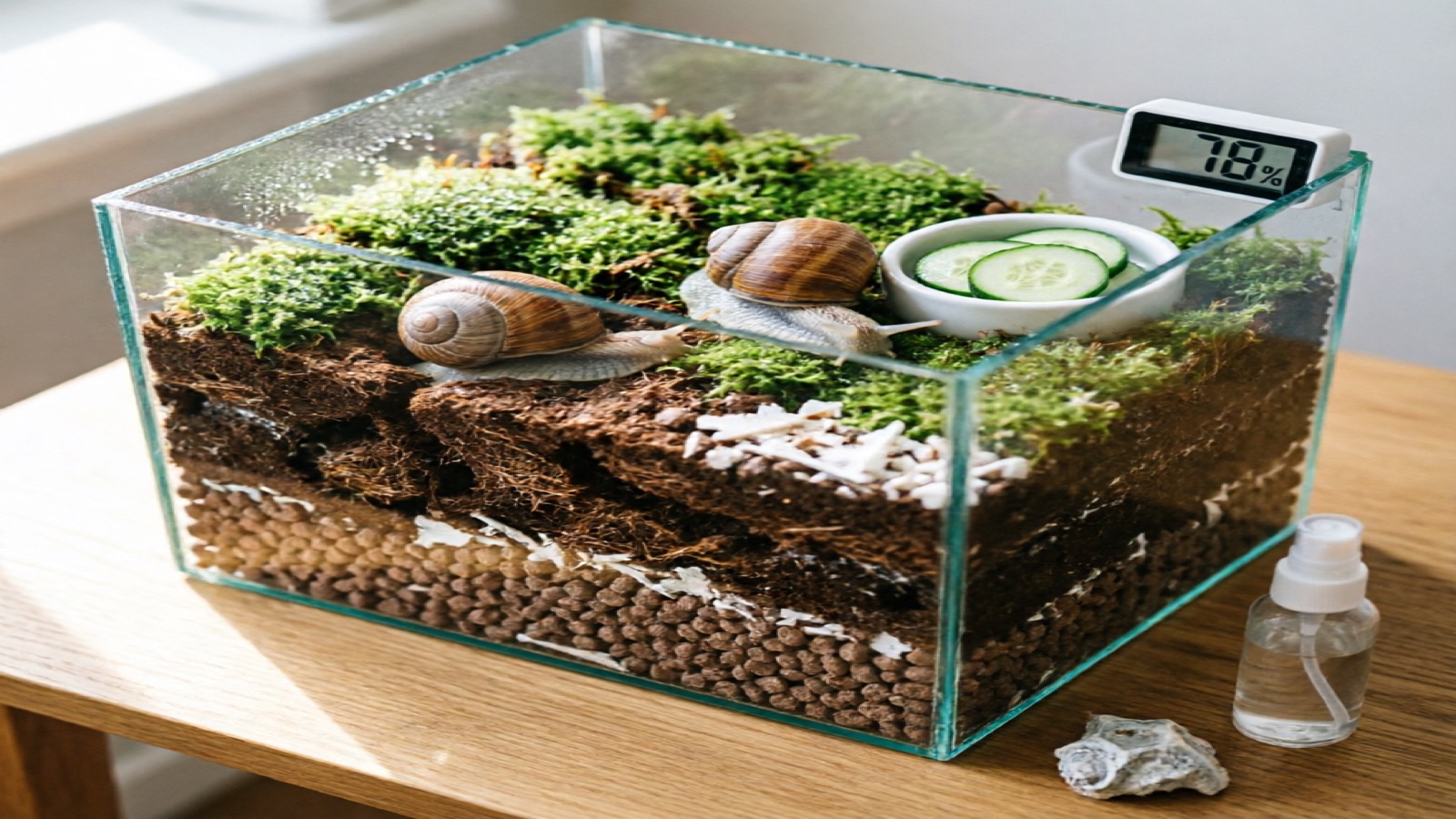
A proper substrate setup uses three layers to create the best snail substrate conditions: drainage, base substrate, and humidity top layer. This method prevents the most common snail substrate problems — waterlogging, mold growth, and insufficient burrowing depth.
Step 1: Drainage Layer (Bottom)
Add 1-2 inches of expanded clay hydroballs at the terrarium bottom — the first step to the best substrate setup. This prevents water from pooling in the substrate and causing bacterial growth. Cover the hydroballs with a thin piece of fiberglass mesh screen to prevent the coir above from sifting down into the drainage layer.
Step 2: Base Substrate Layer (Middle)
Add 2-4 inches of coconut coir over the mesh screen. For Giant African Land Snails, use 4-6 inches to accommodate their deep burrowing behavior. For garden snails, 2-3 inches of substrate is sufficient. The coir serves as the primary layer where your snail will spend most of its time. Compressed bricks are the most economical snail substrate option — the best substrate for value seekers.
Moisten the coir with dechlorinated water — the best substrate hydration technique — until it holds shape when squeezed but does not drip. The texture should feel like a wrung-out sponge — damp, not saturated.
For calcium supplementation without buying specialty substrate, mix crushed cuttlebone powder or baked crushed eggshells into the top 1 inch of coir. This provides a DIY calcium snail substrate — a best substrate alternative for shell health.
Step 3: Humidity Layer (Top)
Add 0.5-1 inch of sphagnum moss over the coir to complete your snail terrarium substrate setup. A sphagnum moss layer creates a humidity gradient — consistently moist at the bottom, slightly drier at the surface. Place food dishes on top of the moss layer to keep them clean and off the soil surface.
Maintenance Schedule
| Task | Frequency | Details |
|---|
| Spot clean | Daily | Remove visible waste and uneaten food | | Mist | Daily | Spray dechlorinated water to maintain 70-90% humidity | | Full substrate change | Every 2-4 weeks | Replace all substrate to prevent mold and bacteria | | Deep clean enclosure | Monthly | Wash terrarium with vinegar solution during substrate change | | Calcium check | Weekly | Ensure cuttlebone is available and check shell condition |
Moisture balance is critical. Substrate that is too wet promotes mold, bacterial growth, and shell erosion. Substrate that is too dry causes snail desiccation, stress, and burrowing refusal. Test by squeezing a handful — it should hold together without dripping water. Whether you use coconut coir or sphagnum moss as your snail substrate, consistent moisture management is essential.
The same coconut coir and sphagnum moss ecosystem used for snails also works for other burrowing pets. For cross-species substrate comparisons, see our guides to the best hermit crab substrate and the best guinea pig litter box. Both articles cover coconut coir setups adapted to different species.
Frequently Asked Questions
What is the best substrate for pet snails?
The best substrate overall is the Exo Terra Coco Husk Brick — 8 quarts of 100% coconut fiber for under $5, safe for all common land snail species. When evaluating the best substrate for your specific situation, consider enclosure size and species. If shell health is your top priority, the best substrate is My Happy Snails Premium — the only calcium-enriched option at $19.95. For very small enclosures on a tight budget, the best substrate budget pick is Zoo Med Creature Soil at $3.99.
Can I use potting soil for snails?
Only if it is 100% fertilizer-free — the best substrate is always chemical-free with no perlite or wetting agents. Most commercial potting soil contains additives that are toxic to land snails, who absorb chemicals directly through their skin. If you must use garden soil, bake it at 200°F (93°C) for 30 minutes to sterilize, then mix 50/50 with coconut coir. Pre-packaged coconut coir bricks remain the safest best substrate choice and most convenient option.
How Deep Should the Substrate Be?
Use 2-3 inches for garden snails (Helix aspersa) and 4-6 inches for Giant African Land Snails, which are deep burrowers. Always include a 1-2 inch drainage layer of hydroballs beneath the substrate to prevent water pooling. Add a 0.5-1 inch sphagnum moss layer on top for humidity management. The ideal depth depends entirely on your snail species.
How Often Should I Change the Substrate?
Replace all substrate every 2-4 weeks, or sooner if you notice mold growth or persistent odor. The best snail substrate still needs regular replacement to prevent bacterial buildup. Between full snail substrate changes, spot-clean daily by removing visible waste and uneaten food. During each full snail substrate change, wash the terrarium with a mild vinegar solution to prevent bacterial buildup.
Is sand safe for snails?
No. Sand and gravel are both harmful for land snails. Sand causes impaction if ingested during feeding and is abrasive to the snail’s soft body. Gravel has sharp edges that damage the muscular foot and provides no burrowing ability. Neither belongs in any snail terrarium substrate. Use coconut coir or sphagnum moss instead — land species always need a soft, moisture-retaining material.