Quick Answer — Yes, But Strawberries Are a Treat, Not a Staple
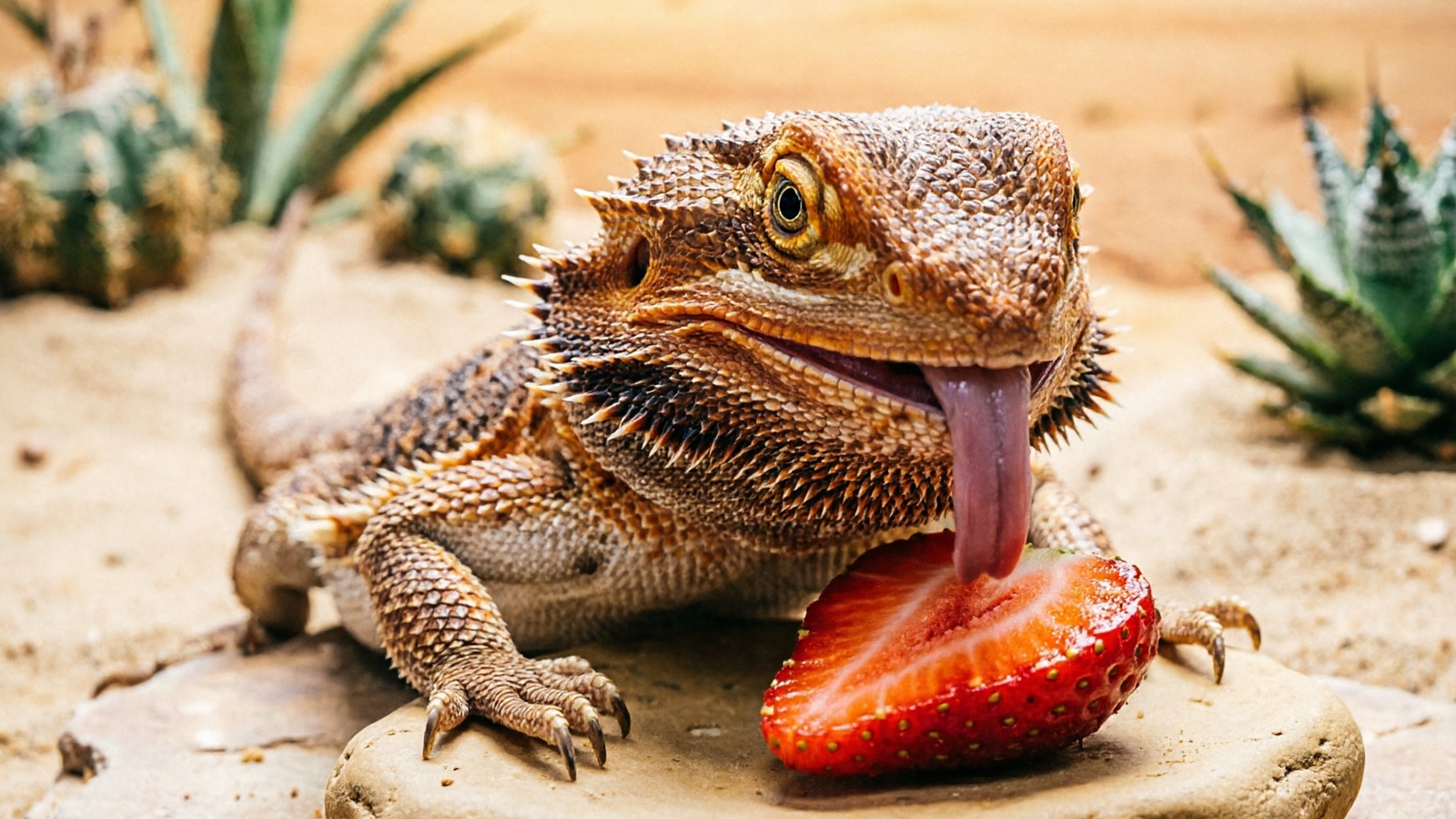
Can bearded dragons eat strawberries? Yes — but only as an occasional treat, not a dietary staple. One or two small pieces (about a quarter of a medium strawberry), fed once or twice per week, is the safe limit for adult bearded dragons.
Technically, strawberries are non-toxic to bearded dragons. Most dragons find them irresistible because they are naturally drawn to sweet, brightly colored foods. Practically, however, strawberries carry two nutritional concerns: sugar content at 4.9g per 100g and an unfavorable calcium-to-phosphorus ratio of roughly 1:1.4 (16mg calcium vs 24mg phosphorus). Best practice is to reserve strawberries as a once-or-twice-weekly reward while building the diet around leafy greens, vegetables, and appropriately sized insects.
Unlike chinchillas and hamsters — strict herbivores with almost zero fruit in their natural diet — bearded dragons are omnivorous reptiles that occasionally encounter fallen fruit in the wild. But “some capacity” does not mean “unlimited.” The calcium-to-phosphorus ratio remains the single most important nutritional metric for any bearded dragon food.
For a complete overview of daily nutrition and husbandry, see our bearded dragon care guide. When it comes to whether can bearded dragons eat strawberries, the short answer is yes — but understanding the full picture requires looking at calcium, sugar, and feeding frequency.
Why Ca:P Ratio Matters More Than You Think
If you take one thing away from this article, it should be this: the calcium-to-phosphorus ratio determines whether a food helps or harms your bearded dragon’s skeleton.
Bearded dragons need a dietary Ca:P ratio between 1.5:1 and 2:1 — roughly twice as much calcium as phosphorus. When phosphorus exceeds calcium, the body pulls calcium from bones to maintain blood levels, causing Metabolic Bone Disease (MBD) — the most common preventable fatal disease in captive bearded dragons.
The UVB-D3-Calcium triad is how bearded dragons maintain healthy bones:
- UVB lighting triggers vitamin D3 synthesis in the skin
- Vitamin D3 enables calcium absorption in the intestines
- Calcium from food and supplements builds bone tissue
When you feed a food high in phosphorus — like strawberries (Ca:P 0.67:1) — the excess phosphorus blocks calcium absorption, even with excellent UVB lighting.
For dragons housed with proper UVB lighting for bearded dragons, a phosphorus-free calcium powder like Zoo Med Reptile Calcium without D3 ($7.43) is the standard choice — your dragon synthesizes its own D3 from UVB, so the without-D3 version avoids over-supplementation risk.
If your UVB bulb is expired or coverage is inadequate, Zoo Med Reptile Calcium with D3 ($13.00) fills the gap by providing D3 directly. Both products use phosphorus-free calcium carbonate, which compensates for the Ca:P imbalance in strawberries without adding more phosphorus. When evaluating whether can bearded dragons eat strawberries safely, proper supplementation is essential.
Strawberry Nutrition Facts — The Numbers That Matter
Here is what 100g of raw strawberry contains and how each value relates to bearded dragon dietary requirements:
| Nutrient | Strawberry (per 100g) | BD Safe Standard | Assessment |
|---|---|---|---|
| Sugar | 4.9g | <2-3g/day total intake | ⚠️ Moderate — one piece = ~0.25g |
| Water | 91g | BD tolerates well (omnivore) | ✅ Acceptable |
| Protein | 0.7g | 20-30% from insects | ❌ Negligible |
| Fat | 0.3g | <5% dry weight | ✅ Minimal |
| Fiber | 2.0g | Vegetables provide bulk fiber | ❌ Low |
| Calcium (Ca) | 16mg | — | ⚠️ Low |
| Phosphorus (P) | 24mg | — | ⚠️ Elevated |
| Ca:P Ratio | 0.67:1 | 1.5:1 to 2:1 | 🔴 Unfavorable |
| Vitamin C | 58.8mg | — | ✅ High |
| Manganese | 0.39mg | — | ✅ Antioxidant support |
| Oxalates | Low-moderate | — | ⚠️ Binds calcium |
| Anthocyanins | High (red pigment) | — | ✅ Antioxidant |
Bearded Dragon Strawberry Calcium Phosphorus Ratio — Why 0.67:1 Matters
A Ca:P ratio of 0.67:1 means phosphorus exceeds calcium by roughly 50%. Every time your dragon eats a strawberry piece without calcium supplementation, that phosphorus actively works against the calcium it needs.
For context, bananas have a Ca:P of roughly 1:3 — three times more phosphorus than calcium. Strawberries at 1:1.4 are not as extreme, but still firmly unfavorable. Dusting even a single strawberry piece with calcium powder is the standard veterinary recommendation to offset this imbalance.
The vitamin C content (58.8mg per 100g) is the genuine bright spot. Bearded dragons require vitamin C for immune function and skin health, and strawberries deliver more than any other common berry. Combined with manganese and anthocyanin antioxidants, strawberries offer real nutritional benefits — they are simply not balanced enough to be a staple food.
Our article on can leopard geckos eat bananas covers a similar Ca:P problem — bananas at roughly 1:3 are significantly worse than strawberries. For owners wondering whether can bearded dragons eat strawberries, the Ca:P issue is the key factor to understand.
The Three Real Concerns — Sugar, Ca:P, and Oxalates
Metabolic Bone Disease (MBD) is the most common nutritional disease in captive reptiles, caused by chronic calcium deficiency relative to dietary phosphorus. According to the Association of Reptilian and Amphibian Veterinarians (ARAV), MBD develops when inadequate calcium intake, insufficient UVB exposure, or excessive dietary phosphorus prevents normal bone mineralization. In bearded dragons (Pogona vitticeps), the calcium-to-phosphorus ratio of food is critical — a ratio below 1:1 means phosphorus actively blocks calcium absorption, progressively weakening bones and causing deformities, tremors, and in severe cases, fatal fractures.
| # | Risk | Mechanism | Severity | Controllability |
|---|---|---|---|---|
| 1 | Sugar (4.9g/100g) | Excess sugar → obesity, dental disease, vegetable refusal | 🟡 Moderate | ✅ Limit frequency |
| 2 | Ca:P imbalance (0.67:1) | High phosphorus blocks calcium absorption → MBD | 🔴 High | ✅ Calcium supplementation + UVB |
| 3 | Oxalates | Oxalates bind dietary calcium → further reduced absorption | 🟡 Moderate | ✅ Strawberry oxalate is low vs raspberries |
Sugar is the behavioral trap. Bearded dragons naturally prefer sweet foods, and once a dragon learns strawberries exist, it may start refusing leafy greens and holding out for fruit. A study published in the Journal of Veterinary Dentistry documented dental abnormalities in reptiles fed high-sugar diets, including tooth root abscesses and premature tooth loss.
Oxalates compound the Ca:P problem. Strawberries contain low-to-moderate oxalate levels — organic compounds that bind dietary calcium, preventing absorption. Raspberries and blackberries contain significantly more oxalates, which is one reason strawberries are considered safer than those berries despite their poor Ca:P ratio.
If your dragon shows digestive upset, lethargy, or unusual stool after eating fruit, consult a reptile veterinarian. Persistent refusal of greens may indicate a diet that is too fruit-heavy. When deciding whether can bearded dragons eat strawberries, remember that moderation is the key principle. For other bearded dragon behavior issues, diet is often a contributing factor.
Strawberry Leaves, Seeds, and Preparation — What’s Safe?
Can Bearded Dragons Eat Strawberry Leaves?
Strawberry leaves (the green calyx) are not toxic, but most reptile veterinarians recommend removing them. The primary concern is pesticide residue — strawberries consistently rank in the EWG’s Dirty Dozen top three, and leaves accumulate more pesticide than the fruit. If you use organic strawberries, a small piece of leaf is technically safe but offers minimal value compared to leafy greens like collard or mustard greens.
Can Bearded Dragons Eat Strawberry Seeds?
Yes. Strawberry seeds are completely safe. Unlike apple seeds, which contain amygdalin (a cyanide precursor), strawberry seeds are tiny, harmless, and pass through the digestive tract intact. There is no need to remove them.
Can Bearded Dragons Eat Frozen Strawberries?
Frozen strawberries are acceptable once fully thawed to room temperature. Never feed cold food — cold food slows a bearded dragon’s temperature-dependent digestion.
Avoid freeze-dried strawberries entirely. The freeze-drying process concentrates sugar roughly 10 times — a single small piece can equal an entire fresh strawberry in sugar content. Never feed strawberries with added sugar, syrup, or any other ingredient.
Safe Preparation Protocol
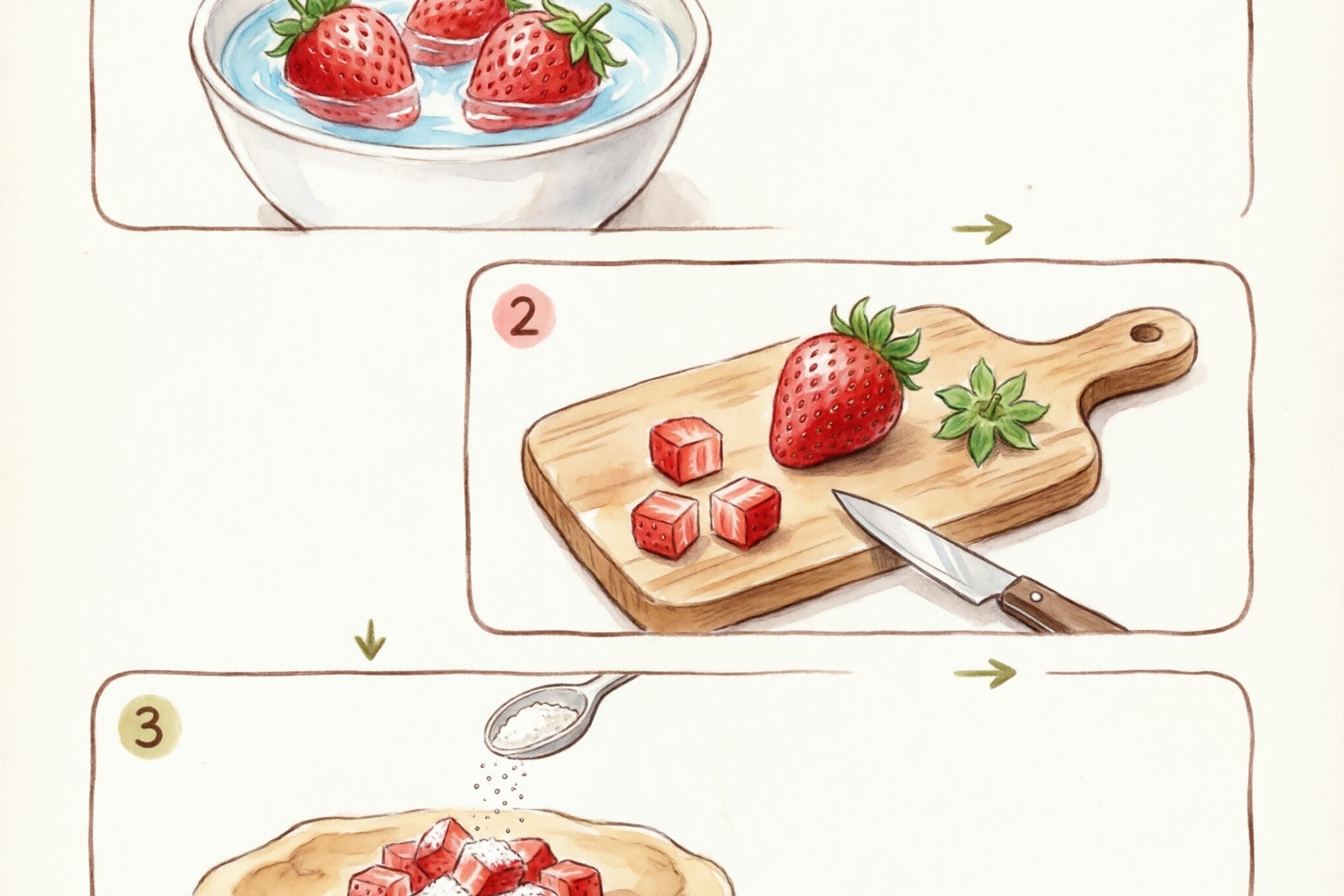
Before following this protocol, note that can bearded dragons eat strawberries only in very small quantities. Here is the step-by-step process:
- Choose organic when possible — strawberries are EWG Dirty Dozen number three
- Soak in baking soda solution (1 tsp per 2 cups water) for 5-10 minutes
- Remove green tops — reduces pesticide and oxalate exposure
- Cut into 1cm pieces — dragons swallow whole without chewing
- Thaw frozen strawberries completely to room temperature
- Dust with calcium powder — compensates for the unfavorable Ca:P ratio
A shallow feeding dish like the Zoo Med Repti-Rock Food Dish, Small ($4.39) works well — the low-profile design lets your dragon access food easily and blends into a desert terrarium. When it comes to whether can bearded dragons eat strawberries, the preparation method matters as much as the portion size.
Feeding Frequency — Adult vs Baby Bearded Dragons
How Often Can Bearded Dragons Eat Strawberries?
For healthy adult dragons (over 12 months), strawberries can be offered once or twice per week — one to two small pieces, roughly a quarter of a medium strawberry.
Can Baby Bearded Dragons Eat Strawberries?
Baby bearded dragons (under 6 months) should avoid strawberries entirely or receive them no more than once per month. During the first year, a bearded dragon grows to roughly 80% of its adult size, and its calcium requirements are two to three times higher than an adult’s. Every feeding slot matters — filling it with a low-calcium, high-phosphorus food displaces the calcium-rich insects and greens that the growing skeleton needs.
The Association of Reptilian and Amphibian Veterinarians (ARAV) recommends fruit comprise less than 5% of a juvenile’s diet, compared to 10-15% for adults. This reinforces why the question of whether can bearded dragons eat strawberries must always consider age and growth stage.
| Age | Strawberry Frequency | Per Serving | Reason |
|---|---|---|---|
| Baby (<6 months) | ❌ Avoid or <1x/month | None / tiny piece | Peak growth requires maximum calcium and protein |
| Juvenile (6-12 months) | 1x/month max | 1-2 small pieces | Bone development period — Ca:P imbalance has greater impact |
| Adult (>12 months) | 1-2x/week | 1/4 medium strawberry | Occasional treat for dietary variety |
| Senior (>8 years) | 1x/week | 1-2 small pieces | Slower metabolism — sugar harder to process |
Another reason to restrict strawberries in babies: younger dragons more easily develop a strong sweet preference that persists into adulthood. Once a juvenile holds out for fruit, healthy eating habits become much harder to establish. For more on life stages and specific needs, see our bearded dragon breed profile.
Frequently Asked Questions
Can bearded dragons eat strawberries?
Yes, bearded dragons can eat strawberries as an occasional treat. Feed one or two small pieces (about a quarter of a medium strawberry) once or twice per week for adults. Strawberries provide vitamin C (58.8mg per 100g), manganese, and antioxidants, but their sugar content (4.9g per 100g) and unfavorable calcium-to-phosphorus ratio (roughly 1:1.4) mean they should never replace leafy greens or insects. Always wash thoroughly and remove the green tops before feeding.
Can bearded dragons eat strawberry leaves?
Strawberry leaves are not toxic to bearded dragons, but most reptile veterinarians recommend removing them. The main concern is pesticide residue — strawberries consistently rank in the top three of the EWG’s Dirty Dozen list. If you use organic strawberries, a small piece of leaf is technically safe, but it offers minimal nutritional value compared to dedicated leafy greens like collard or mustard greens.
Can bearded dragons eat strawberry seeds?
Yes, strawberry seeds are completely safe for bearded dragons. Unlike apple seeds (which contain amygdalin, a compound that converts to cyanide), strawberry seeds are tiny, harmless, and pass through the digestive system without issue. There is no need to remove seeds before feeding.
Can bearded dragons eat frozen strawberries?
Frozen strawberries are safe once fully thawed to room temperature. Bearded dragons should never eat cold food as it can slow their digestion. Avoid freeze-dried strawberries — the dehydration process concentrates sugar roughly 10 times, making even a small piece equivalent to an entire fresh strawberry in sugar content. Never feed strawberries with added sugar or syrup.
What fruits can bearded dragons eat safely?
The best fruits for bearded dragons are berries (strawberries, blueberries, raspberries, blackberries) fed 1-2 times per week. Other safe options include apples (seedless), mango, and kiwi (once per week). Bananas and watermelon should be limited to once or twice per month due to poor Ca:P ratio (bananas) or excessive water content (watermelon). Citrus fruits, avocado, and rhubarb are toxic and must be avoided entirely.
Best Berries for Bearded Dragons — A Nutritional Comparison
Best Berries for Bearded Dragons
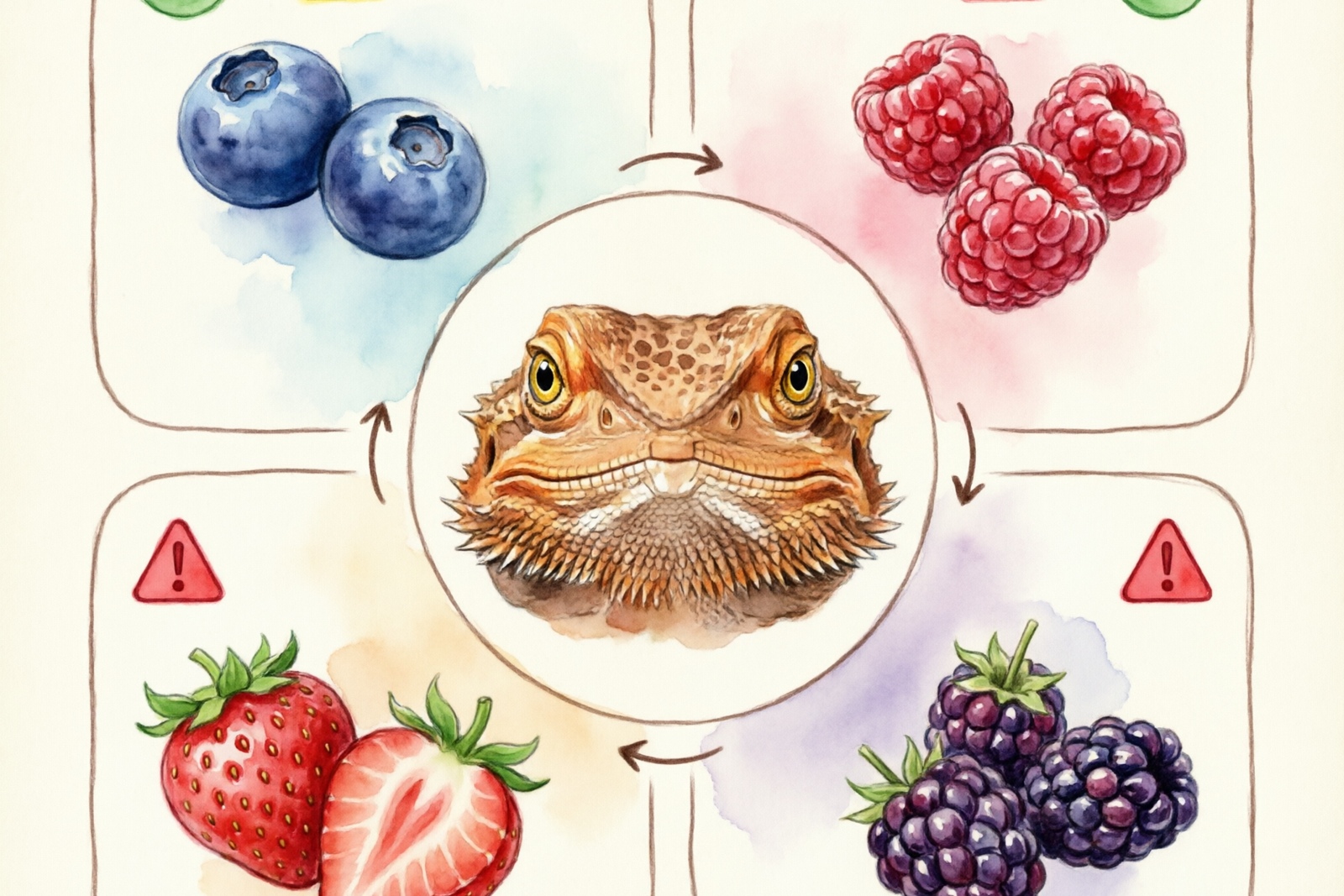
No single berry is perfect — each has strengths and weaknesses. The healthiest approach is rotation: alternate between different berries weekly so your dragon gets each berry’s benefits without cumulative drawbacks.
| Berry | Sugar/100g | Water | Fiber | Ca:P | Vitamin C | Oxalates | Frequency | Best Quality | Biggest Risk |
|---|---|---|---|---|---|---|---|---|---|
| Blueberry | 10.0g ⚠️ | 84g | 2.4g ✅ | ~1:1.1 | 9.7mg | Low ✅ | 1-2x/week | Best Ca:P + lowest oxalates | ❌ Highest sugar |
| Raspberry | 4.4g ✅ | 86g | 6.5g ✅✅ | ~1:1.2 | 26.2mg ✅ | High 🔴 | 1-2x/week | Highest fiber + lowest sugar | 🔴 High oxalates |
| Strawberry | 4.9g ⚠️ | 91g | 2.0g | 0.67:1 🔴 | 58.8mg ✅✅ | Low-mod ✅ | 1-2x/week | Highest vitamin C | 🔴 Worst Ca:P |
| Blackberry | 4.9g ⚠️ | 88g | 5.3g ✅ | ~1:1 | 21.0mg ✅ | High 🔴 | 1-2x/week | High fiber + good VC | 🔴 High oxalates |
If you can only pick one: blueberries have the best Ca:P and lowest oxalates, making them the safest single choice. But strawberries deliver far more vitamin C. Most dragons accept all four berries readily, so rotation is easy. Ultimately, can bearded dragons eat strawberries alongside other berries for the best nutritional balance.
What Fruits Can Bearded Dragons Eat — The Complete Safe List
Beyond berries, several other fruits are safe in moderation:
| 1-2x/week | Blueberry, Raspberry, Strawberry, Blackberry | Best berries — moderate sugar, high nutrients | | 1x/week | Apple (seedless), Mango, Kiwi, Pear | Good nutrition but higher sugar or oxalates | | 1-2x/month | Banana (Ca:P 1:3), Watermelon (92% water), Grapes | Poor Ca:P, excessive water, or high sugar | | ❌ Never | Citrus, Avocado, Rhubarb | Toxic or dangerous |
Citrus fruits cause mouth irritation. Avocado contains persin, toxic to reptiles. Rhubarb has oxalate levels so high that even a small amount can cause acute calcium depletion.
Proper diet is one pillar of good husbandry — the other is environment. A well-designed bearded dragon terrarium setup with correct temperatures, UVB coverage, and a dedicated feeding area supports healthy digestion and overall well-being.