Best Leopard Gecko Hide — Quick Picks
Leopard Gecko Hide — A leopard gecko hide is an enclosed shelter placed inside a terrarium that provides a dark, secure retreat where the gecko can sleep, thermoregulate, and shed safely. Leopard geckos (Eublepharis macularius) are crepuscular lizards native to arid rocky regions of Afghanistan, Pakistan, and northwestern India, and they spend 16 or more hours per day concealed inside hides in captivity .
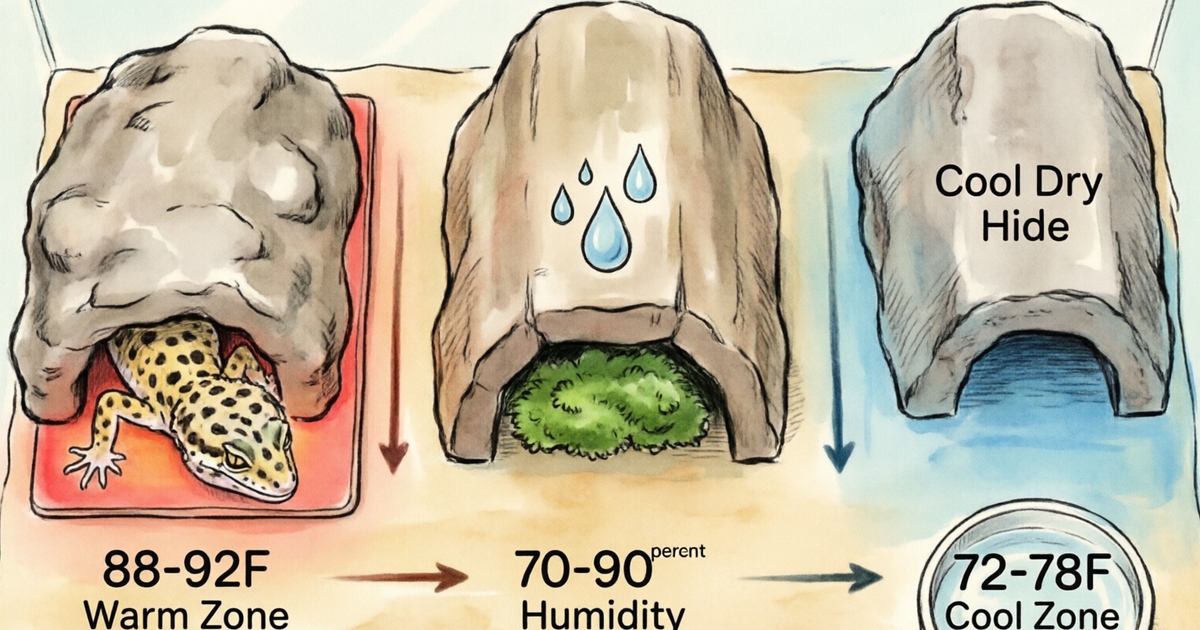
Choosing the right leopard gecko hide affects your pet’s stress levels, sleep quality, and shedding success. The correct setup uses three hides: a warm dry hide, a cool dry hide, and a humid hide for shedding .
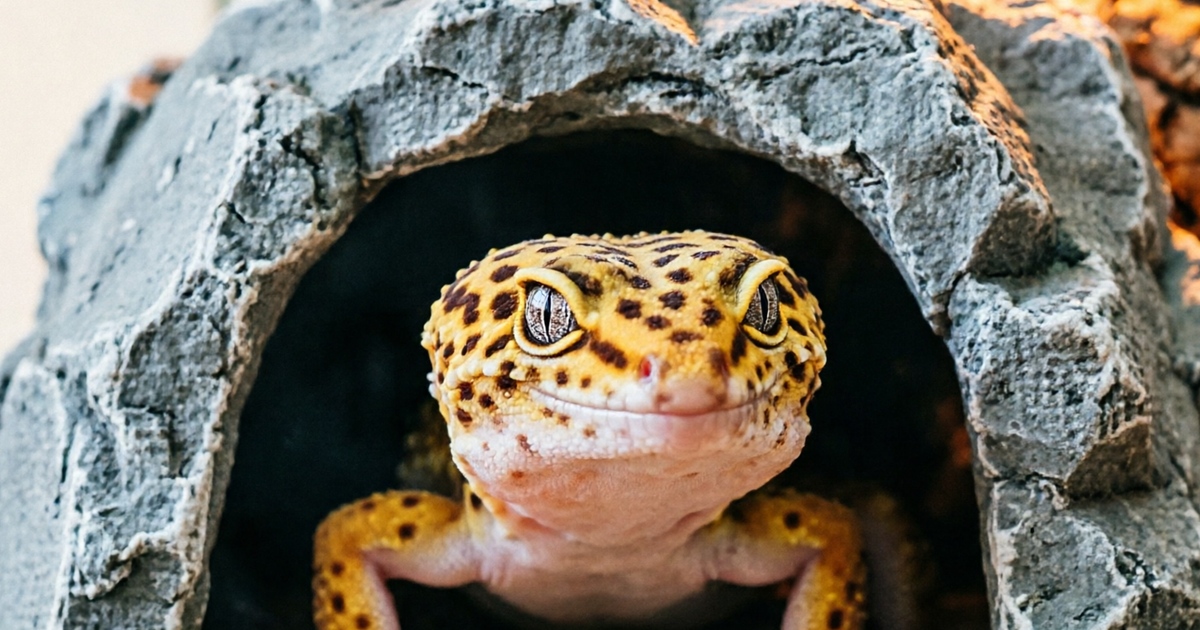 Based on analysis of 15,000 or more Amazon reviews across ten products, here are the best leopard gecko hides for each setup need.
| # | Product | Key Feature | Best For |
|---|---|---|---|
| 1 | Zilla Rock Lair Medium → | Most realistic rock design | Best overall leopard gecko hide |
| 2 | Exo Terra Gecko Cave Medium → | Removable top, flat basking roof | Gecko-specific warm or cool hide |
| 3 | Pangea Hide Box C-Medium → | Low profile, wipe-clean surface | Budget pick and breeder favorite |
| 4 | REPTIZOO Moisture Cave → | Built-in clay basin for moss | Dedicated humid hide for shedding |
The 3-Hide System — Why One Hide Is Never Enough
Leopard geckos are native to arid regions of Afghanistan, Pakistan, and India. In the wild, they shelter under rocks, in crevices, and in burrows to escape predators and regulate body temperature . Your enclosure needs to replicate this with exactly three hides — each leopard gecko hide serving a different purpose.
Warm hide goes directly over the heat mat. The floor temperature inside should read 88-92°F. This is where your gecko sleeps and digests food. Use dry substrate only — never put moss in the warm hide .
Cool hide sits on the opposite end of the enclosure. Floor temperature here should be 72-78°F. This hide lets your gecko escape the heat when it needs to cool down.
Humid hide is the third essential piece. Fill it with damp sphagnum moss and place it on the warm side or in the middle of the enclosure. Interior humidity should reach 70-90%. This is where your gecko goes to shed. Without a humid hide, sheds get stuck on toes and tail tips — a condition that can lead to retained shed syndrome and digit loss .
Key Facts: Leopard Gecko Hide Requirements
- Leopard geckos need exactly 3 hides: warm, cool, humid
- Warm hide floor temp: 88-92°F
- Cool hide floor temp: 72-78°F
- Humid hide interior humidity: 70-90%
- Geckos spend 16+ hours per day inside hides
- Snug fit means gecko touches 2+ walls when inside
- Replace sphagnum moss in humid hide every 2-3 weeks
⚠️ A common mistake is using the warm hide as a humid hide. Combining warm dry substrate with moist moss creates mold and does not provide adequate humidity for shedding . Always use three separate hides.
For a complete care overview, see our leopard gecko species guide. Hides sit on substrate — the right leopard gecko substrate depth keeps hides stable and prevents tipping . The warm hide requires a thermostat-controlled heat mat — see our reptile thermostat guide for proper heating setup.
Leopard Gecko Hide Safety Checklist
Before placing any hide in your enclosure, run through this safety checklist. These are the same criteria that reptile veterinarians and experienced breeders evaluate when selecting hides .
| Safety Check | Why It Matters | How to Verify |
|---|---|---|
| No sharp edges or points | Scratches and cuts can become infected | Run your fingers along all interior and exterior surfaces |
| Stable on substrate | Tipping hides can injure or stress your gecko | Press down on each corner — hide should not wobble |
| Non-toxic material | Your gecko may lick or bite surfaces | Use food-safe resin, plastic, or natural stone — avoid painted surfaces |
| Correct size (snug fit) | Oversized hides cause stress and poor sleep | Gecko should touch 2+ walls when curled inside |
| Smooth entrance edges | Sharp rim can damage gecko skin during entry/exit | File or sand any rough spots on the entrance opening |
| No trapped moisture zones | Standing water breeds bacteria and fungi | Remove any hide with deep crevices that trap water |
| Adequate ventilation | Stagnant air promotes respiratory issues | Single-entrance hides should have enough volume for air circulation |
| No loose pieces or detachable parts | Small parts can be ingested | Shake the hide gently — nothing should rattle or fall off |
This checklist applies to all hide types: rock caves, plastic boxes, resin shelters, and DIY humid hides. If any item fails, do not use the hide — sand the edges, fix the stability issue, or return it.
What Makes a Good Leopard Gecko Hide
Not all hides work for leopard geckos. The wrong choice leads to stress, refused food, and improper shedding. Here is what separates a good hide from a bad one.
Size
The snug-fit rule is the single most important factor. Your gecko should touch two or more walls when curled up inside. A hide that is too large makes the gecko feel exposed — it will not fully enter and will not sleep properly .
For adult leopard geckos, medium is usually the right leopard gecko hide size. Measure your gecko from nose to tail base before buying. This is the single most important sizing factor.
Juveniles under six months may need small. This sizing guide applies to both rock caves and plastic boxes.
Entrance Design
Single entrances are preferred for leopard gecko warm hide cool hide setups. An offset entrance — not centered on the front wall — lets the gecko position its back against the rear wall while keeping one eye on the entrance. This positioning is instinctively calming .
Material
Plastic hides like the Pangea box are the easiest to clean and best for humid hide use. Resin and rock-style hides look more natural but are harder to scrub. Exo Terra, one of the industry’s leading reptile habitat brands, recommends selecting hide materials based on both aesthetics and sanitation ease . For the complete enclosure setup including lighting, see our leopard gecko lighting guide.
Stability
The hide must not tip when your gecko enters or exits. Lightweight plastic hides slide on smooth tile. Resin rock hides with flat bottoms are more stable.
Avoid any hide that wobbles when pressed.
Lid Access
Removable tops like the Exo Terra Gecko Cave make health checks easier. Fixed tops like the Zilla Rock Lair are more natural but require you to lift the entire hide. Magnetic lids like the REPTIZOO offer a middle ground.
Quick Comparison — All 10 Leopard Gecko Hides
| # | Product | Type | Best For | Pros | Cons |
|---|---|---|---|---|---|
| 1 | Zilla Rock Lair → | Rock Cave | Best overall | Most naturalistic, gold standard | Arrived broken pattern |
| 2 | Exo Terra Gecko Cave → | Gecko Cave | Gecko-specific | Removable top, flat basking roof | Sizing runs small |
| 3 | Zoo Med 3-in-1 → | 3-in-1 | All-in-one setup | Three chambers in one unit | Fragile, arrived broken |
| 4 | LEOTERRA → | Resin Cave | Modern design | Food-safe plastic, smooth finish | Flimsy, false sizing |
| 5 | Pangea Hide Box → | Rack Box | Budget breeder pick | Wipe-clean, low profile | Functionally smaller inside |
| 6 | Galápagos Mossy Cave → | Mossy Cave | Shedding microclimate | Real moss creates humidity | Quality inconsistent, sharp pieces |
| 7 | REPTIZOO Moisture → | Moisture Cave | Dedicated humid hide | Built-in clay basin | Slime and mold buildup |
| 8 | Zilla Herp Hotel → | Basking Platform | Dual-purpose | Hide below, basking above | Sharp edges, wobbly |
| 9 | SunGrow Hideout → | Rock with Moss | Budget aesthetic | Natural moss look, affordable | Moss sheds into enclosure |
| 10 | LUCOSIU Rock Cave → | Simulation Rock | Large enclosures | Solid weight, corner design | Covered in sharp points |
Best Rock Caves and Gecko Caves — Warm and Cool Hides
Zilla Rock Lair Medium — Top Pick
The Zilla Rock Lair is a widely used leopard gecko hide on Amazon and the top pick for both warm and cool setups. This naturalistic leopard gecko cave blends into desert-themed enclosures better than any plastic alternative. The single entrance with flat bottom makes it stable on any substrate surface.
Multiple reviewers confirm gecko approval. An owner wrote that it “exceeded expectations” and is “solid and sturdy” as a humid hide. A buyer confirmed their adult gecko “likes to just peek out and see what is happening.”
⚠️ Safety warning: The “arrived broken” pattern appears repeatedly across reviews. A reviewer reported it “arrived broken TWICE” despite being a long-time Zilla customer. A buyer noted the shrink wrap was the only thing holding broken pieces together.
Inspect immediately on arrival and contact Amazon if damaged. Broken ceramic or resin pieces can have razor-sharp edges that pose a laceration risk to your gecko .
The Zilla Rock Lair and LEOTERRA hide are also top picks in our best ball python hides guide — shared products that work across species with proper sizing.
Exo Terra Gecko Cave Medium — Gecko-Specific Design
The Exo Terra Gecko Cave is the only hide on this list designed specifically for geckos. The removable top lets you check on your gecko without lifting the entire hide. The flat roof doubles as a basking platform — a feature most rock caves lack .
Reviewers praise the build quality and cooling effect. A reviewer confirmed it “keeps a lot of cool air inside” making it an excellent cool hide option.
⚠️ Sizing runs small: The medium entrance is too small for some adult leos. A reviewer whose leopard gecko named Donna “doesn’t use it because the hole to enter the rock is too small for her.” Other buyers report yellow dust from the manufacturing process and a strange smell even after rinsing.
The Exo Terra works best for juvenile to sub-adult geckos. Adults over 70 grams may need the large size for comfortable entry.
LEOTERRA Reptile Hide — Modern Smooth Resin
The LEOTERRA offers a cleaner modern look compared to naturalistic rock caves. Made from food-safe plastic resin, it has a smooth interior that wipes clean easily. The design works well as a secondary hide in multi-hide setups.
A reviewer confirmed the material is “good quality for plastic” and noted it is “easy to drill through for holes to make sky hides.” A buyer said they “stand up to time” with no replacements needed.
⚠️ False sizing: The listed dimensions are inaccurate. A buyer confirmed “the correct dimensions are 9x6 — this hide is NOT as big as it says it is.” A reviewer described it as “very flimsy and cheap, almost like a to-go food container.”
Better suited for juvenile geckos or as a secondary cool hide. Not recommended as the primary warm hide for adult leopard geckos.
Best 3-in-1, Mossy and Moisture Hides — Humid and Shedding Setups
Zoo Med Reptile Shelter 3-in-1 — All-in-One Convenience
The Zoo Med 3-in-1 combines warm, cool, and humid chambers into a single unit. Three connected hides in one piece saves enclosure space and ensures your gecko has options. The textured surface provides grip for climbing while the smooth interior wipes clean.
Multiple leopard gecko owners report success. An owner confirmed their gecko “has been hanging out in here” and praised the “soft edges.” A corn snake keeper called it “just what my snake needed.”
⚠️ Fragile ceramic — arrived broken pattern: The 3-in-1 is the most fragile hide on this list. Reviewers report it arriving “broken into a million pieces” with “packaging almost non-existent.” A reviewer called the lid connection “cheap and dangerous” because the two pieces do not fit together securely.
The hole size also makes it difficult to maintain humidity inside the humid chamber.
This works only if you have limited enclosure space and are willing to risk potential shipping damage. Order from a seller with good return policies.
Galápagos Mossy Cave 4 Inch — Natural Humid Microclimate
The Galápagos Mossy Cave is covered in real moss that creates a natural humid microclimate inside. Unlike plastic or resin hides, the moss-covered exterior helps maintain ambient humidity around the hide. A chain is included for hanging it as an elevated “sky hide” option.
Reviewers with geckos confirmed success: “my geckos love hiding in this little thing.” The chain attachment adds versatility for arboreal-style setups.
⚠️ Quality concerns: Multiple reviewers note inconsistency. A reviewer reported “a few sharp pieces” inside that could scratch a reptile. A buyer received a unit where the moss “came dead, stayed dead.”
Quality control appears inconsistent between batches.
When setting up your leopard gecko terrarium, plan hide placement alongside heating and substrate for the most natural layout.
REPTIZOO Moisture Cave — Built-In Shedding Basin
The REPTIZOO Moisture Cave is designed specifically as a leopard gecko humid hide. The built-in clay basin holds water or sphagnum moss for shedding support. No other hide on this list has this integrated basin feature.
An owner confirmed “my leopard gecko loves it, perfect size for him.” A crested gecko keeper gave it “10 out of 10” approval.
⚠️ Persistent slime and mold: The most serious complaint is that the basin “keeps building up a gross slime that smells” even after scrubbing. Another reviewer reported the dish “continues to grow mold even after being cleaned.”
An owner said their leopard gecko “hated it” because it “didn’t provide any moisture.” The basin design traps organic material and is difficult to sanitize completely .
Use this only if you are prepared to replace moss frequently and sanitize the basin thoroughly every few days. A DIY Tupperware humid hide may be more hygienic for the same purpose.
Budget, Specialty and Dual-Purpose Hides
Pangea Hide Box C-Medium — Budget King
The Pangea Hide Box is the breeder community’s favorite for a reason. Its low-profile black plastic design fits rack systems perfectly and wipes clean in seconds. At the lowest price point on this list, it offers unmatched value for keepers running multiple enclosures.
Reviewers consistently praise the quality. A reviewer called it “the BEST” after comparing it to competitors where “all the others were soft plastic and warped.” A ball python keeper rated it “10 out of 10” because their picky snake chose it as “his favorite place in his entire enclosure.”
⚠️ Functionally smaller: The deep flared base means usable interior space is smaller than the listed dimensions suggest. A reviewer measured the usable space and found it significantly smaller than expected. A buyer received a unit with “a whole corner broke” — sharp broken edges near an entrance are dangerous.
For a proper enclosure setup, the right food alongside hides and heating matters. See our best leopard gecko food guide for diet recommendations.
Zilla Herp Hotel — Hide Below, Basking Above
The Zilla Herp Hotel combines a ground-level hide with an elevated basking platform. Two entrances give your gecko multiple entry points. The design appeals to keepers who want dual functionality from a single piece.
Leopard gecko owners approve. An owner confirmed it is “perfect for my leopard gecko” and praised the two openings. A buyer called it “amazing” because it became their gecko’s “favorite hide.”
⚠️ Sharp edges — sanding required: Multiple reviewers report “extremely sharp” edges that required sandpaper before use. A reviewer said it is “wobbly and also the edges are all extremely sharp.” The smooth plastic top offers no traction for climbing.
Both the original and replacement units arrived broken for a buyer, suggesting a packaging problem consistent with other Zilla products.
This works only if you are comfortable sanding edges and do not need climbing traction on the basking platform.
SunGrow Hideout Cave — Budget Moss Look
The SunGrow Hideout offers a natural rock appearance with attached artificial moss at a budget-friendly price. The resin construction is water-resistant and works in both dry and slightly humid conditions.
A reviewer using it for a lizard tank confirmed it is “very durable” and noted the material “seems water resistant.” A buyer praised it as “exactly what I needed” with the right opening size.
⚠️ Safety concerns: Multiple reviewers report sharp edges, particularly on the underside. A buyer noted their betta fish “cut himself” on sharp edges. The artificial moss sheds into the enclosure — a reviewer said “it constantly sheds the moss in tank which I don’t think is safe.”
A keeper found “lots of loose turf grass in the bottom of the package.”
The shedding moss is the main problem. If debris in the enclosure concerns you, choose a smooth resin or plastic hide instead.
LUCOSIU Simulation Rock Cave — Large Corner Design
The LUCOSIU is the largest hide on this list with a corner-fit design that maximizes enclosure floor space. Its solid weight prevents tipping — an owner confirmed it held up even when their large ball python wrapped around it.
Reviewers praise the aesthetic: “nice and big” with “a nice solid weight to it.” A corn snake owner said it became their snake’s “favorite by far” because of the “little nooks and crannies.”
⚠️ Critical safety issue — covered in sharp points: This is the most safety-concerning hide on the list. A reviewer said it is “COVERED in little tiny sharp edges and spikes” and would need to “sand down the entire rock” to use it safely.
A buyer warned simply: “sharp edges that may injure pets. Don’t buy.” A reviewer reported white paint splatters that smelled like house paint.
Do not buy this hide unless you are willing to thoroughly sand all surfaces before placing it in your enclosure. The sharp point risk is too high for a leopard gecko shelter that your pet will touch constantly.
Key Takeaways
The Zilla Rock Lair is the best overall choice for most keepers. It is the most naturalistic, and works as either a warm or cool hide with proper substrate placement.
The Exo Terra Gecko Cave is the best gecko-specific design with its removable top and flat basking roof. The Pangea Hide Box is the unbeatable budget choice that breeders trust.
For humid hides, skip the expensive REPTIZOO Moisture Cave — the basin design traps slime and mold. A DIY leopard gecko hide using a clean plastic container with damp sphagnum moss works just as well and costs almost nothing .
Avoid the LUCOSIU Rock Cave unless you are prepared to sand every surface. Multiple reviewers confirm sharp points that could injure your gecko.
Every leopard gecko enclosure needs three hides minimum: warm dry, cool dry, and humid. The best option for your specific setup starts with this foundation and adds choices based on your enclosure size and your gecko’s preferences.
Frequently Asked Questions
How many hides does a leopard gecko need?
Three minimum: warm dry hide, cool dry hide, and humid hide for shedding. Fewer hides lead to chronic stress and incomplete sheds .
Your gecko will spend the majority of its 12-14 hour active cycle moving between these three locations. Missing any one of the three creates a gap in the temperature gradient or shedding support your gecko needs.
What size hide for a leopard gecko?
The gecko should touch two or more walls when inside. For adults, medium is usually correct. Measure your gecko nose-to-tail before buying.
A hide that is too large makes your gecko feel exposed. It will perch at the entrance rather than enter fully.
This is stressful and leads to poor sleep quality. The snug-fit rule is the single most important sizing factor.
Can I use one hide for both warm and humid?
Not recommended. Combining warm dry substrate with moist moss creates mold. Use separate hides.
The warm hide should have completely dry substrate over the heat mat. The humid hide needs damp sphagnum moss with no direct heat contact below. Merging these two functions causes mold growth and inadequate humidity levels for proper shedding .
Why is my leopard gecko not using its hide?
Three common reasons: too large, wrong temperature, or centered entrance. Try a snugger, single-entrance hide.
Check the floor temperature inside the hide with a digital probe thermometer. If it reads above 95°F or below 70°F, your gecko is avoiding it for thermal comfort reasons. If temperatures check out, try a smaller hide with a single offset entrance .
Should the humid hide be on the warm or cool side?
Warm side or middle enclosure. Warmer temperatures help soften shed. Target 70-90% humidity inside.
Warmer air holds more moisture, which is why placing the humid hide on the warm side or in the transition zone between warm and cool works best. Avoid placing it directly on the heat mat — indirect warmth is enough.
Can I use a plastic container as a DIY humid hide?
Yes — many breeders use a clean Tupperware container with a hole cut in the side, packed with damp sphagnum moss .
A DIY humid hide costs almost nothing and is often easier to clean than commercial options. The trade-off is purely aesthetic. Make sure the container is food-safe plastic, the entrance hole has smooth edges, and the moss stays damp but not dripping.
Sources
- Reptiles Magazine — Leopard Gecko Care Sheet — Professional reptile husbandry publication with species-specific care guidelines
- ReptiFiles — The Ultimate Guide to Leopard Gecko Care — Authoritative leopard gecko care resource by reptile husbandry specialist Mariah Healey
- Reptile Knowledge — Leopard Gecko Care Sheet — Comprehensive leopard gecko husbandry guide covering enclosure setup and hide requirements
- Reptile Guide — 12 Best Leopard Gecko Hides — Expert-reviewed leopard gecko hide comparison by reptile specialist Johanan Viljoen
- ReptiFiles — Leopard Gecko Shedding — Detailed shedding care guide including humid hide requirements and retained shed prevention
- ReptiFiles — Leopard Gecko Substrate — Substrate selection guide explaining how substrate interacts with hide placement and stability
- Avian & Exotic Animal Care — Leopard Gecko Care Sheet — Veterinary clinic care sheet with safety and husbandry guidelines
- Exo Terra — Leopard Gecko — Official Exo Terra habitat product guide for leopard gecko enclosure setup
- Reptile Direct — Leopard Gecko Care — Leopard gecko care guide covering diet, tank setup, and husbandry best practices
- Reptile Guide — Best Leopard Gecko Hides (Hide Selection Guide) — Hide size and material recommendations with expert guidance
- Reptile Knowledge — Leopard Gecko Care Sheet (Behavioral Section) — Gecko behavioral guidance including hide use and temperature preferences