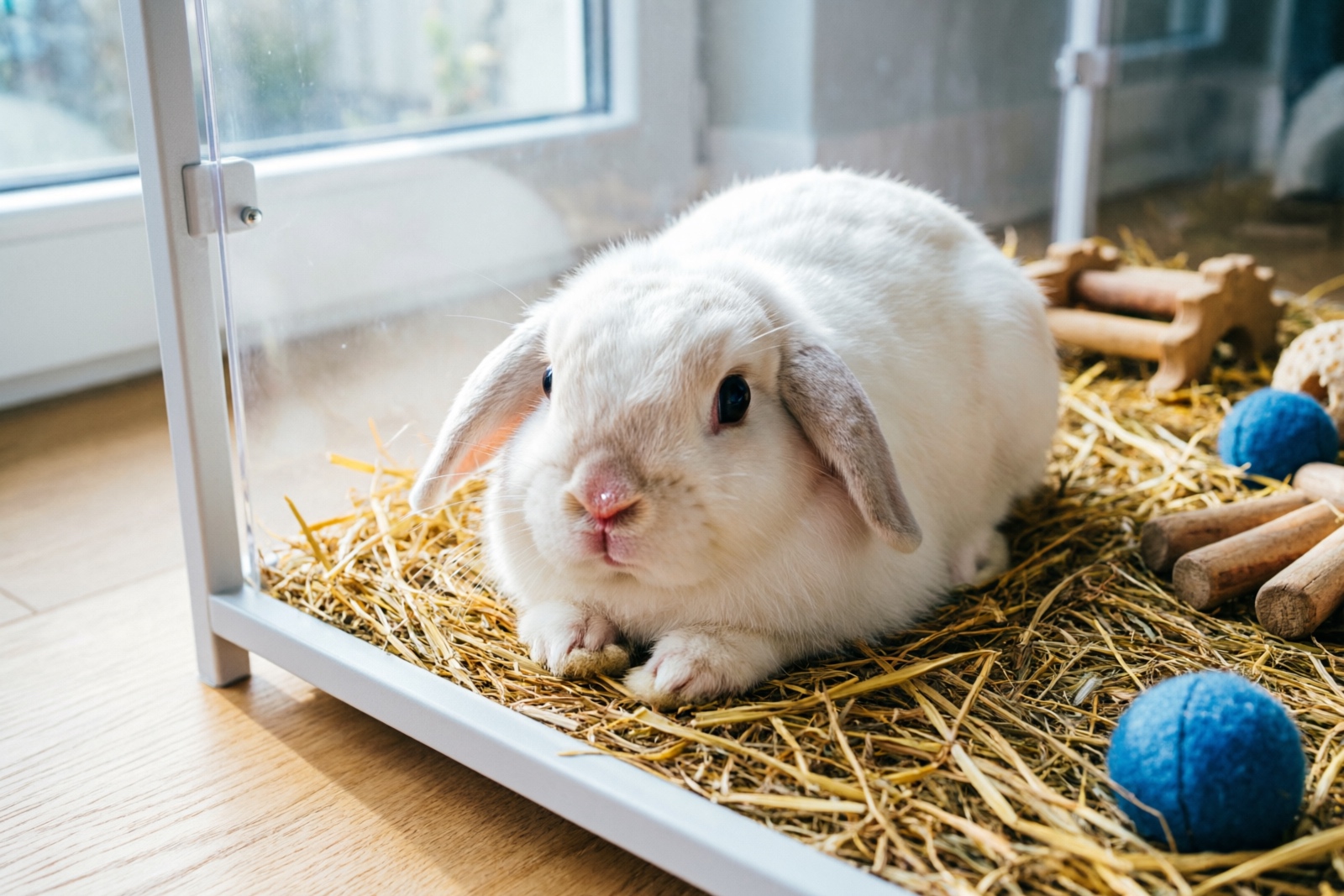
Choosing the right rabbit cage size is one of the most important decisions you will make for your pet. A cage that is too small can lead to serious health problems, behavioral issues, and a significantly shorter lifespan. Yet most first-time rabbit owners underestimate just how much space these active animals actually need.
This guide breaks down the minimum rabbit cage size requirements based on breed and number of rabbits, compares indoor cages versus outdoor hutches versus exercise pens, and recommends the best products at every price point. Whether you are housing a single Netherland Dwarf or planning rabbit cage size for 4 rabbits, or a pair of Flemish Giants, you will find the exact rabbit cage dimensions you need — and the products that deliver them.
Minimum Rabbit Cage Size Requirements
The Golden Rule
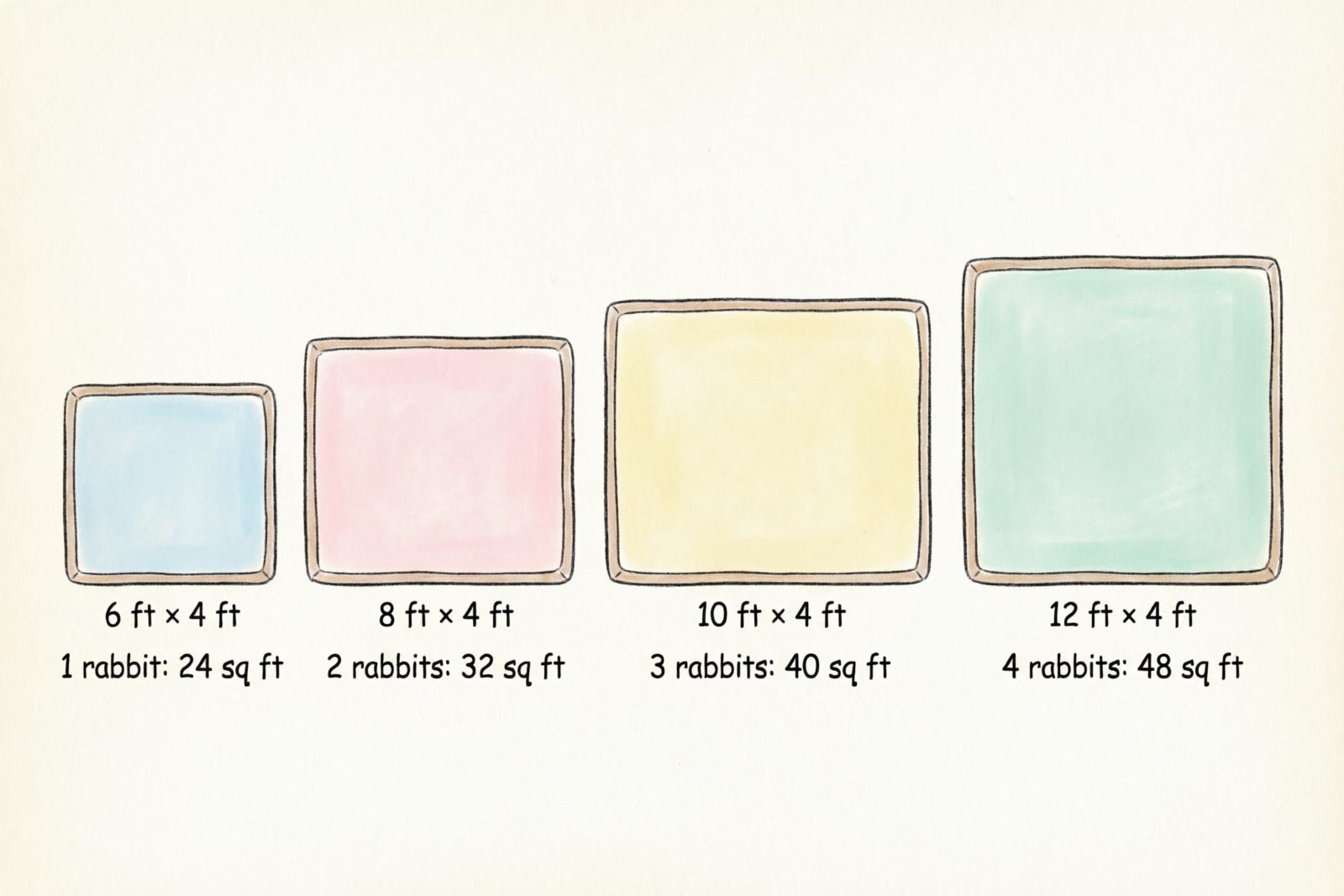
The single most important rule for rabbit cage size is this: the floor area should be at least four to six times the size of your rabbit when it is fully stretched out. For most breeds, this translates to a minimum of 12 square feet (1.1 square meters) of continuous floor space. That is the absolute floor — anything below this is simply not adequate. I’ve seen too many owners buy cages that look spacious in the store but turn out to be barely half the recommended size once you measure the actual floor area.
Here is how the sizing standards break down across three tiers:
- Minimum standard: 12 sq ft (1.1 sq m) of floor area with at least 24 inches of height. This is the baseline for keeping a rabbit physically healthy.
- Recommended standard: 16 to 24 sq ft (1.5 to 2.2 sq m). This gives your rabbit room to hop, binky, and stretch without restriction.
- Ideal standard: 24+ sq ft (2.2+ sq m) or larger. This is what experienced rabbit owners and rescue organizations consider truly comfortable.
Height matters just as much as floor space. Rabbits need at least 24 inches (61 cm) of vertical clearance so they can stand fully upright on their hind legs and perform natural vertical jumps. Anything shorter restricts their movement and causes chronic stress.
Why Cage Size Matters
A cage that is too small does not just make your rabbit uncomfortable — it causes measurable physical and psychological damage. Rabbits confined to small spaces develop:
- Skeletal problems from lack of movement, including weakened bones and joint stiffness
- Obesity because they cannot exercise enough to burn calories
- Muscle atrophy from spending hours unable to hop or stretch
- Aggression and stress behaviors such as biting, cage bar chewing, and excessive thumping
These health consequences are well documented in veterinary literature. Small cages directly compromise your rabbit health and create problems that are expensive and sometimes impossible to reverse. Similarly, space restriction is one of the leading triggers for abnormal rabbit behavior, including destructive chewing and self-mutilation.
The Pet Store Problem
Here is the uncomfortable truth: most cages sold in pet stores labeled as “rabbit cages” are too small. The typical pet store rabbit cage provides only 4 to 6 square feet of floor space — less than half the minimum recommended size. These cages were designed decades ago when rabbits were considered low-maintenance children’s pets, not the intelligent, active companions we now know them to be. I’ve been in pet stores and seen cages marketed for rabbits that I wouldn’t even use for a guinea pig.
Do not let the word “rabbit” on the packaging fool you. If the cage looks like it might be too small, it almost certainly is. Rabbits need room to run and jump — not just room to stand and turn around.
Rabbit Cage Size by Breed and Number
Size Chart by Breed Category
Rabbit breeds vary enormously in size, from the two-pound Netherland Dwarf to the 15-pound Flemish Giant. The right cage size depends directly on your rabbit’s adult weight. Use this rabbit cage size chart to find your breed’s requirements:
| Breed Size | Examples | Adult Weight | Min Floor Area | Recommended | Min Height |
|---|---|---|---|---|---|
| Small (2–4 lb) | Netherland Dwarf, Holland Lop, Polish | 2–4 lb | 8 sq ft | 12 sq ft | 24 inches |
| Medium (4–8 lb) | Mini Rex, Dutch, Lionhead, Mini Lop | 4–8 lb | 12 sq ft | 16 sq ft | 24 inches |
| Large (8–12 lb) | French Lop, English Spot, Rex | 8–12 lb | 16 sq ft | 24 sq ft | 30 inches |
| Giant (12+ lb) | Flemish Giant, Continental Giant | 12+ lb | 24 sq ft | 32+ sq ft | 36 inches |
For the minimum cage size for rabbit housing, always round up to the next category if your rabbit falls between sizes. A slightly larger cage is always better than one that is borderline.
Cage Size for Multiple Rabbits
If you are housing more than one rabbit, the math is not as simple as doubling the single-rabbit size. Rabbits need shared communal space for eating, playing, and resting together. Here is the formula:
- 2 rabbits: Minimum 16 sq ft (not 2 × 8). Recommended: 24 sq ft
- 3 rabbits: Minimum 24 sq ft. Recommended: 32 sq ft
- 4+ rabbits: Consider a full exercise pen or free-roam setup instead of a cage
As a general rule, add 4 to 6 square feet for each additional rabbit beyond the first. This accounts for shared resources (litter boxes, food stations, hideouts) that take up floor space.
One critical note about housing multiple rabbits: same-sex pairs must be spayed or neutered. Unfixed rabbits will fight — sometimes violently — regardless of how much space they have. Spaying and neutering also significantly extends your rabbit lifespan by reducing the risk of reproductive cancers, which affect up to 80% of unspayed females by age four.
Indoor Cage vs Outdoor Hutch vs Exercise Pen
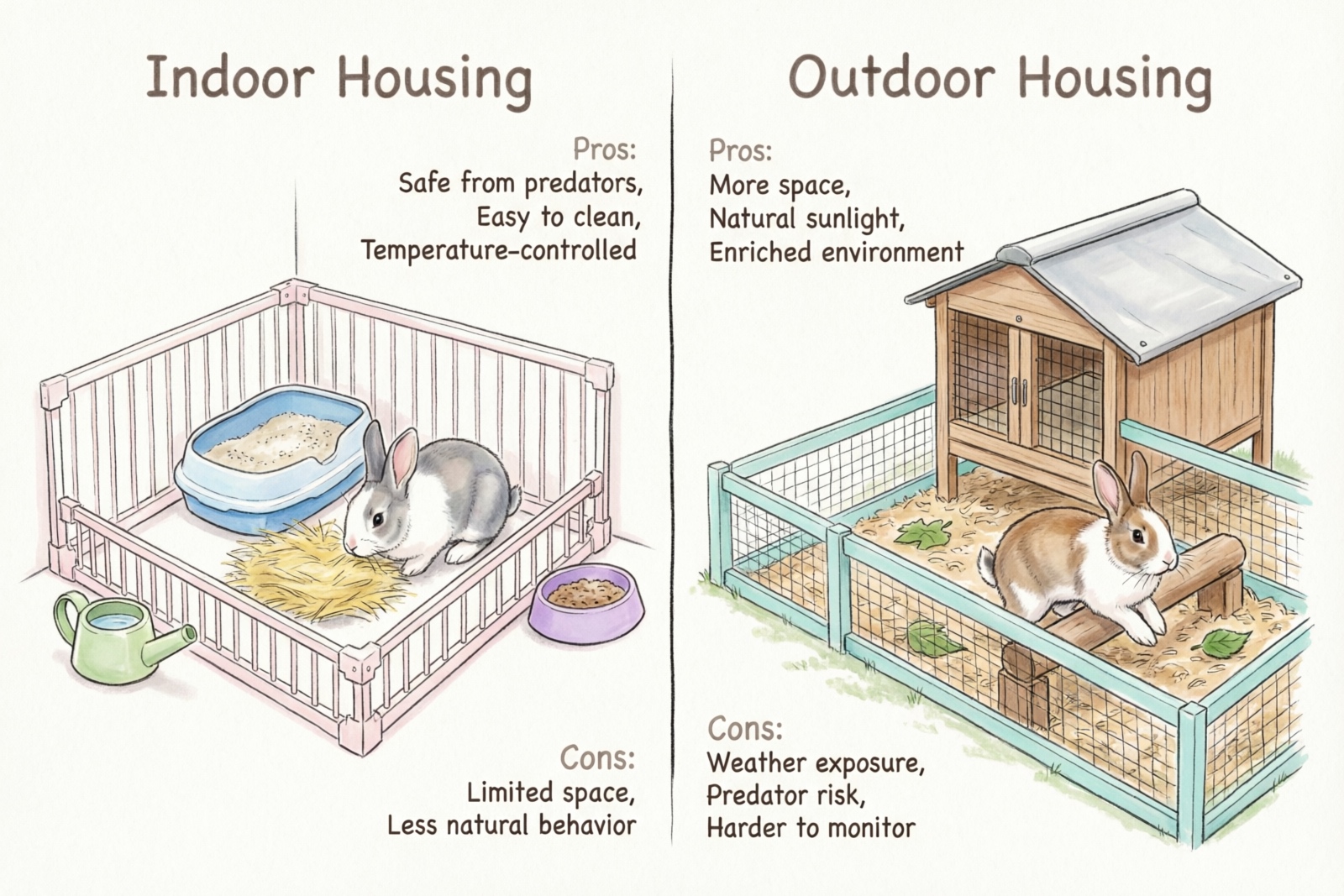
The type of housing you choose affects not just the rabbit cage size requirements but also your rabbit’s quality of life. Each option has distinct advantages and limitations.
Type Comparison
| Type | Min Size | Pros | Cons | Best For |
|---|---|---|---|---|
| Indoor cage | 12 sq ft | Safe, climate-controlled, easy interaction | Takes up floor space | 1–2 medium rabbits |
| Outdoor hutch | 16 sq ft + run | Natural environment, larger footprint | Predator risk, weather exposure | Homes with yards |
| Exercise pen | 24+ sq ft | Maximum floor space, flexible layout | Not escape-proof, needs supervision | Free-roam playtime |
| Free roam | Entire room | Best welfare possible | Requires rabbit-proofing | Experienced owners |
For a complete guide on setting up each housing type, see our rabbit setup article.
Indoor vs Outdoor — Key Differences
Indoor housing provides consistent temperature, protection from predators, and more frequent interaction with your rabbit. I’d recommend indoor housing for most owners — the health and behavioral benefits of daily interaction are hard to overstate. The main trade-off is floor space — you need a dedicated area large enough for the minimum cage size requirements.
Outdoor housing offers more room and a more natural environment, but introduces serious risks. Outdoor hutches must be predator-proof (welded wire mesh, not chicken wire), weather-protected (waterproof roof, wind blocks), and elevated off the ground. In extreme climates, outdoor rabbits may need to be brought inside during summer heatwaves and winter freezes.
The GEGURI Wooden Rabbit Hutch bridges the indoor-outdoor gap nicely. At $159.99 with a 4.2-star rating, it features solid wooden construction, built-in wheels for easy mobility, a removable bottom tray for simple cleaning, and a ramp for two-level access. One owner noted: “The easy-to-pull-out catch tray makes cleaning so convenient. The build quality feels sturdy, and the wheels make it easy to move around when needed.” However, keep in mind that the wood may need weatherproofing treatment for long-term outdoor use, and the hutch itself should be connected to an exercise run for adequate daily activity space.
Best Indoor Rabbit Cages Compared
Top 3 Indoor Cages
Ferplast Cavie Rabbit Cage — Best Overall Indoor Cage
When choosing the right rabbit cage size, indoor options like the Ferplast Cavie Cage set the standard for indoor rabbit cage size. It has a 4.5-star rating and sells for $99.74, and I’d recommend it for first-time indoor rabbit owners because it ships with everything you need on day one — food bowl, water bottle, hay rack, and hiding house. Ferplast is a trusted European pet brand with a one-year manufacturer warranty.
The single-level design with a deep plastic base allows plenty of room for bedding and natural digging behavior. One reviewer called it a “mansion” and praised the included hideaway: “It gives plenty of room for her to play in the rest of the cage while her food and water are all in one area.” The main limitation is that large breed owners may find the floor space insufficient without connecting an additional pen.
Amakunft Pop-Up Portable Playpen — Best Budget Option
The Amakunft Pop-Up Playpen is not a permanent cage, but at just $16.99 with a 4.3-star rating, it is the most versatile budget option available. It pops open instantly with no assembly required, features breathable mesh walls for ventilation and visibility, and folds flat for storage or travel.
This is ideal for supervised playtime, vet visits, and temporary housing during cage cleaning. Guinea pig owners especially love it: “We use this almost every night. We put our piggy into a small carrier and bring her downstairs and she loves her little playpen.” Be aware that the mesh walls are not chew-proof for determined rabbits — this is a supervised play area, not a standalone cage.
20 Panels Small Animal Playpen with Waterproof Mat — Best Customizable Option
The 20 Panels Playpen offers the most flexible approach to rabbit housing. At $39.94 with a 4.2-star rating, these twenty metal panels can be configured into any shape — rectangle, L-shape, square — to fit your available space. The included waterproof mat protects your floors underneath.
The C&C cage-compatible grid spacing means you can expand this system over time by purchasing additional panel sets. One reviewer who used it for baby rabbits wrote: “Love that I can add panels and adapt this to different needs. Can be assembled, unassembled and stored as one small pack of panels.” The 16-inch panel height is adequate for most rabbits, though particularly athletic jumpers may need a second layer of panels.
Cage vs Playpen — Which Is Better?
The ideal setup for most rabbit owners is not a cage or a playpen — it is both. I’d recommend using a cage as a secure sleeping area and attaching a playpen for daytime activity space. This combination gives your rabbit a safe retreat while providing the floor space they need for exercise.
For floor protection under both cages and pens, the Sunheir Washable Pee Pads are a practical solution. At $24.99 for a two-pack (each pad measures 24” × 48”), these 4.4-star rated pads feature a waterproof backing that protects floors from urine damage and an absorbent core that traps moisture. They are machine washable and reusable, making them far more economical than disposable options over time. One rabbit owner confirmed: “I have two sets for my bunnies, that way I can have a set waiting while one is down. Launder beautifully.”
Essential Cage Accessories for Space Optimization
Space-Saving Accessories
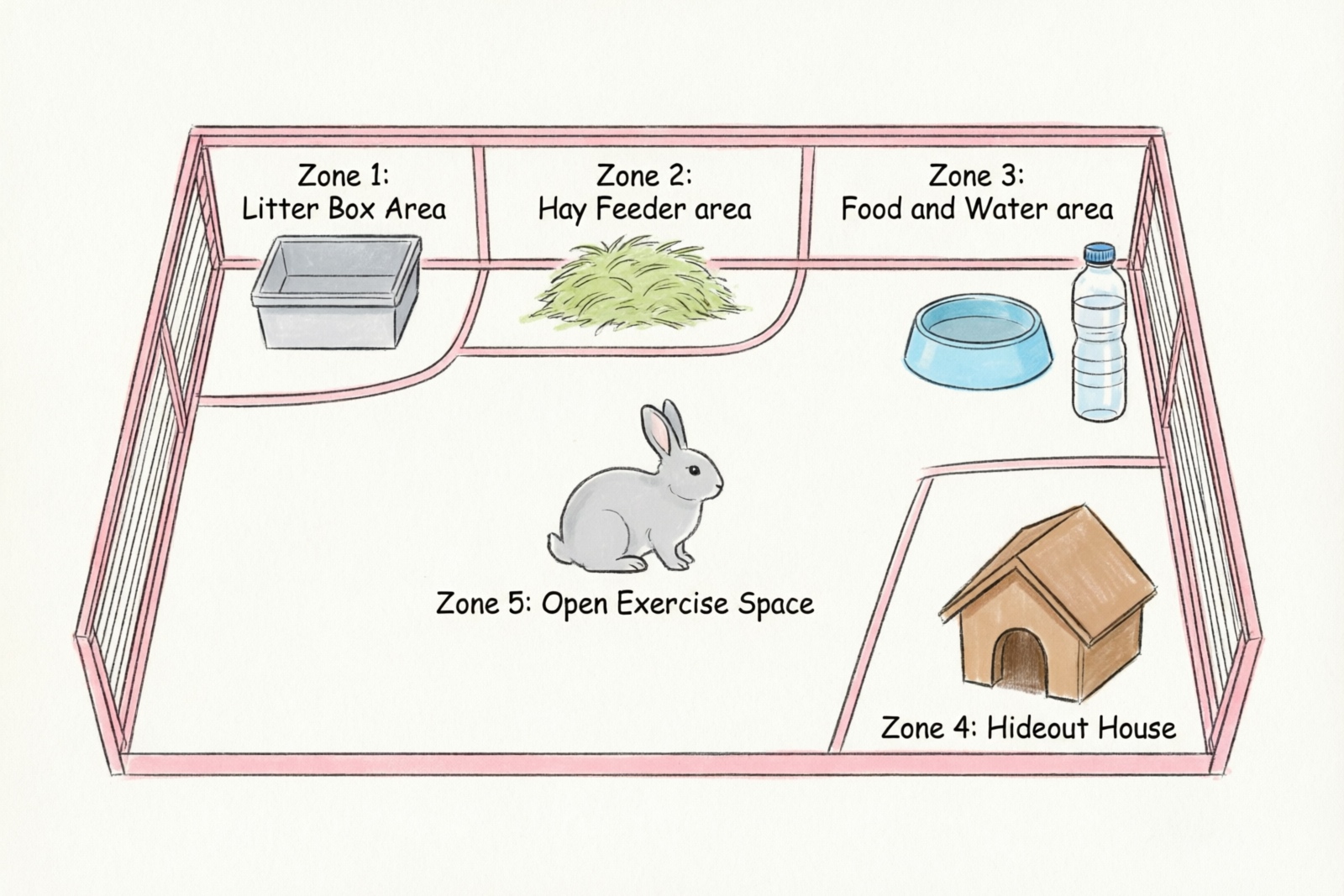
Even a generously sized cage can feel cramped if you fill it with bulky accessories. Choosing the right accessories — and positioning them strategically — can dramatically increase your rabbit’s usable floor space.
Hanging Automatic Food & Water Dispenser Set — The Hanging Food & Water Dispenser mounts directly to your cage bars, keeping food and water off the floor entirely. At $23.99 with a 4.1-star rating, this gravity-fed system automatically replenishes food and water as your rabbit eats and drinks. One owner called it a “game changer”: “Now they can’t spill the bowl over like before.” Note that this requires cage bar spacing wider than 1.2 inches for the hanging hooks to fit.
HERCOCCI Hay Feeder + Water Bottle Set — The HERCOCCI Hay Feeder at $17.99 (4.2 stars) serves a dual purpose: the hanging feeder keeps hay accessible while reducing waste, since rabbits pull hay from the top rather than dragging it out of a pile. The included 500ml water bottle prevents spills. Owners consistently praise the durability — one confirmed: “Super sturdy and nice item! It has lasted a year now in my rabbit cage!”
Must-Have Cage Items Checklist
| Item | Purpose | Space Impact | Tip |
|---|---|---|---|
| Litter box | Toilet training | Medium — place in a corner | Use a corner-style box to save space |
| Hay feeder | Continuous hay supply | Low — hanging design frees floor space | Position next to litter box |
| Hideout | Safety and stress reduction | Medium — must be large enough to enter | Choose a flat-roof hide for extra surface space |
| Food bowl | Daily meals | Low — hanging is best | Avoid tip-prone lightweight bowls |
| Water source | Hydration | Low — wall-mounted bottle | Check nozzle daily for dripping |
| Chew toys | Dental health and enrichment | Low | Rotate toys to prevent boredom |
For toy recommendations that fit compactly inside any cage, see our guide to rabbit toys. Proper placement of the litter box is also essential — check our rabbit litter training guide for optimal corner placement strategies that maximize remaining floor space.
Common Cage Size Mistakes to Avoid
Top 5 Mistakes
1. Buying a pet store “rabbit cage.” Most commercially sold rabbit cages provide only 4 to 6 square feet — far below the 12 square foot minimum. These cages were designed for a different era of rabbit care and do not meet modern welfare standards.
2. Choosing a multi-level cage over a wide single-level cage. Rabbits are not hamsters. They need horizontal floor space for running and hopping, not vertical stacking. A 12 sq ft single-level cage is always better than an 8 sq ft two-level cage.
3. Ignoring daily exercise requirements. Even the largest cage is not enough on its own. Rabbits need at least four hours per day of supervised free-roam time outside their enclosure. The cage is a home base, not their entire world.
4. Underestimating height requirements. A cage that is 18 inches tall may look adequate to you, but a rabbit standing on its hind legs needs at least 24 inches of clearance. Short cages force rabbits into a permanent crouch, which causes spinal problems over time.
5. Assuming “it looks big enough.” Judge the cage from your rabbit’s perspective — at ground level, lying down, stretched out. If you would feel cramped spending 12 hours a day in that space, your rabbit will too.
The Multi-Level Cage Myth
Multi-level cages are one of the most common purchases that well-meaning rabbit owners regret. I see this mistake all the time. While the idea of “more levels means more space” sounds logical, it does not work that way for rabbits. Here is why:
- Only the bottom level provides usable floor space for a rabbit. Upper levels with ramps are rarely used for active exercise.
- Ramps pose injury risks, especially for older rabbits, overweight rabbits, or breeds with long backs like Flemish Giants.
- The ramps themselves consume floor space that could otherwise be open for hopping.
If you want maximum value per square foot, always choose a wider, single-level enclosure over a taller multi-level one. For more ideas on building a spacious enclosure on a budget, see our DIY rabbit hutch guide.
FAQ: Rabbit Cage Size Questions
How big should a rabbit cage be?
The minimum rabbit cage size is 12 square feet of floor area with at least 24 inches of height. However, 16 to 24 square feet is recommended for most breeds. Giant breeds like the Flemish Giant need 24 to 32+ square feet. See the breed size chart above for specific recommendations.
What is the rabbit cage size for 2?
For a rabbit cage size for 2 rabbits, the minimum is 16 square feet (not simply double the single-rabbit minimum). The recommended size for a bonded pair is 24 square feet. For a rabbit cage size for 4, you need 24+ sq ft minimum. Add 4 to 6 additional square feet for each extra rabbit beyond two. Both rabbits must be spayed or neutered to prevent fighting.
Can rabbits live in a small cage?
Physically, yes — rabbits can survive in small cages. But they should not. Long-term confinement in undersized housing causes obesity, skeletal degeneration, muscle atrophy, and severe psychological stress. These health effects compound over time and can shorten your rabbit’s lifespan by years.
How much floor space do rabbits need?
At minimum, rabbits need 12 square feet inside their enclosure plus at least four hours of supervised free-roam exercise time daily. The ideal setup provides 24+ square feet of enclosure space with permanent access to a larger exercise area.
Are multi-level cages good for rabbits?
Not ideal. Rabbits are ground-dwelling animals that need horizontal space for running and binkying. Multi-level cages only provide usable floor space on the bottom level, and ramps can be hazardous for older or heavy rabbits. A 12 sq ft single-level cage is always preferable to an 8 sq ft two-level cage.
Is it better to have a cage or pen for rabbits?
An exercise pen is generally better for daily living space because it provides more floor area. The best rabbit cage size is one that pairs a cage for secure sleeping paired with a connected exercise pen for daytime activity. This gives your rabbit both a safe retreat and room to exercise without sacrificing either.