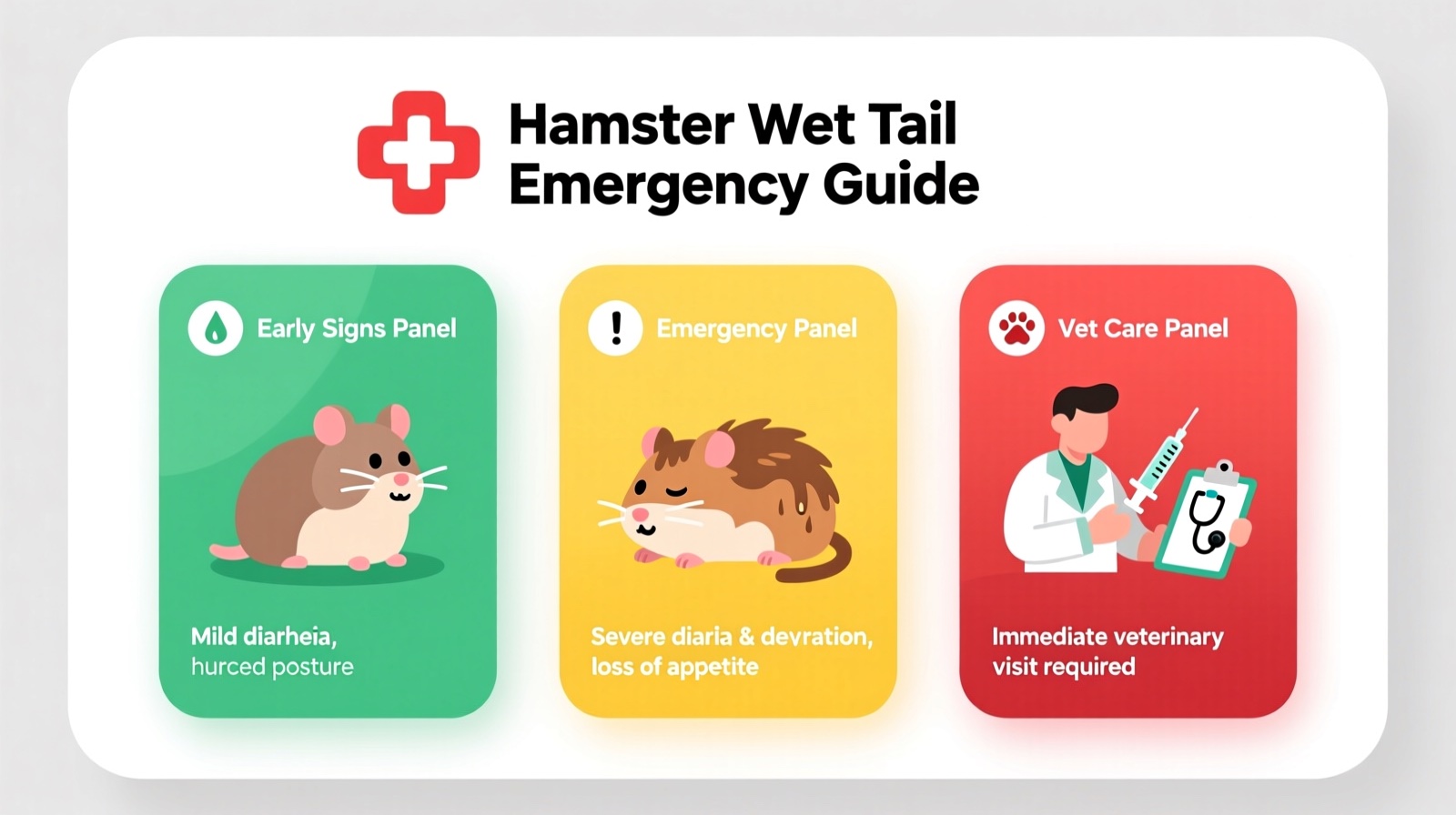
Medical Disclaimer: This hamster wet tail guide is for informational purposes only and does not replace professional veterinary care. Hamster wet tail is a medical emergency that requires immediate veterinary attention. If your hamster shows symptoms of wet tail, contact an exotic animal veterinarian immediately. Delaying treatment significantly reduces survival chances.
If you’re reading this hamster wet tail guide because your hamster is sick right now, go straight to the Emergency Triage section below. For the quick overview, see our hamster wet tail emergency guide. Hamster wet tail kills fast — within 24 to 48 hours without treatment. Every hour matters. I’ve seen the difference between a hamster brought to the vet within 6 hours versus 36 hours. The former usually recovers. The latter usually doesn’t. That timing gap is everything when dealing with hamster wet tail.
Emergency Triage: How Urgent Is Your Situation?
This is the most important section in this hamster wet tail guide. Before reading anything else, use this decision tree to assess your hamster’s condition right now. Hamster wet tail progresses fast, and knowing the correct urgency level determines whether your hamster lives or dies.
Emergency Triage Decision Tree:
| Symptoms Present | Severity Level | Action | Time Frame |
|---|---|---|---|
| Wet tail area ONLY, hamster still active and eating | Monitor | Watch for 6-12 hours, prepare vet visit | Hours |
| Wet tail plus lethargy OR loss of appetite | Urgent | Vet visit within 6 hours | Same day |
| Wet tail plus hunched posture OR sunken eyes | Emergency | Vet visit IMMEDIATELY | Within 2 hours |
| Wet tail plus cold body plus not moving | Critical | Emergency vet NOW — every minute counts | Immediately |
| Blood in stool plus any of the above | Critical | Emergency vet NOW | Immediately |
The 48-hour rule for hamster wet tail: Without treatment, wet tail kills within 24-48 hours. If your hamster has ANY symptoms beyond just a wet tail area, don’t wait — get to a vet.
Don’t confuse urgency with severity. Even a hamster that appears relatively normal but has a wet, soiled tail area can deteriorate within hours. The Lawsonia intracellularis bacteria that cause hamster wet tail don’t wait for convenient hours to multiply. Early intervention is the single biggest factor in whether a hamster survives wet tail.
If you’re dealing with a hamster health concern that isn’t wet tail, our hamster health guide covers other common conditions. If your hamster has stopped eating without wet tail symptoms, see our hamster not eating guide.
What Is Wet Tail?
Hamster wet tail — medically known as proliferative ileitis — is a severe bacterial infection of the ileum, the final section of the small intestine. It’s caused by the bacterium Lawsonia intracellularis, and it is one of the most dangerous conditions a pet hamster can face.
Hamster wet tail is not simply diarrhea — it’s a systemic bacterial infection that causes the intestinal lining to thicken abnormally, disrupting all nutrient absorption and triggering rapid dehydration and shock.
- Mortality rate: 50-90% without treatment; survival improves to 70-90% with early veterinary intervention
- Time window: 24-48 hours from symptom onset to death without treatment
- Highest risk group: Syrian hamsters aged 3-12 weeks (weaning period is the most vulnerable time)
- Root cause: Lawsonia intracellularis bacteria, triggered by stress that compromises the immune system
- Contagious: Highly contagious to other hamsters, but NOT contagious to humans, dogs, cats, or other pet species
- Requires: Prescription antibiotics from a veterinarian — over-the-counter products alone are not sufficient
The Merck Veterinary Manual describes Lawsonia intracellularis as the causative agent of “proliferative enteropathy” in hamsters, characterized by thickening of the intestinal mucosa and watery to mucoid diarrhea [merckvetmanual.com]. The bacteria target the epithelial cells of the ileum, causing them to proliferate uncontrollably, which is where the condition gets its medical name — proliferative ileitis.
For hamster owners who want to understand common health conditions beyond wet tail, our hamster lifespan guide covers how diseases like wet tail impact overall life expectancy.
7 Critical Symptoms of Hamster Wet Tail
| Symptom | Severity | What to Look For |
|---|---|---|
| Wet, soiled tail area | Early | Fur around the tail and anus matted with wet, foul-smelling feces |
| Lethargy | Early | Sleeping more than usual, reluctant to leave the hideout, slow movements |
| Loss of appetite | Moderate | Full food bowl, refusing favorite treats, no interest in food |
| Hunched posture | Severe | Back arched, sitting in a tight ball, may squeak when touched |
| Sunken or dull eyes | Severe | Eyes appear sunken, half-closed, dry-looking — this indicates severe dehydration |
| Cold extremities | Critical | Ears, feet, and tail feel cold to the touch — sign of shock and circulatory failure |
| Blood in stool | Critical | Red streaks or dark tarry stool mixed with diarrhea |
Symptom progression timeline for hamster wet tail:
| Time From Onset | What Happens |
|---|---|
| Hours 0-6 | Wet tail area appears, mild lethargy begins, hamster may still eat |
| Hours 6-12 | Lethargy worsens significantly, appetite drops, hunched posture develops |
| Hours 12-24 | Severe dehydration visible (sunken eyes), diarrhea becomes constant |
| Hours 24-48 | Cold body, shock sets in, potential death without treatment |
The foul smell test: hamster wet tail diarrhea produces a distinctly offensive odor different from normal stool. If you can smell it from outside the cage, that’s a red flag.
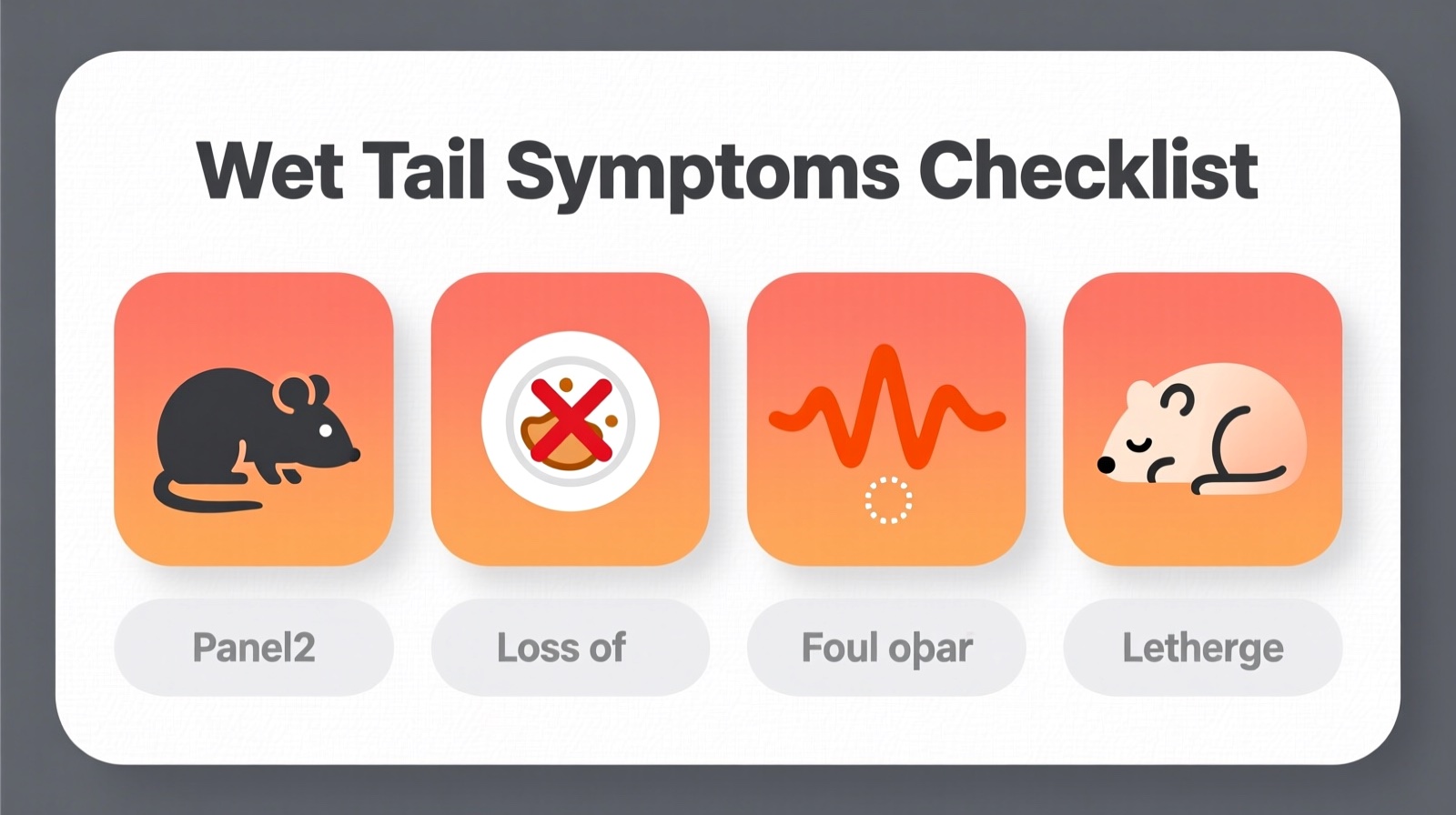
If your hamster isn’t eating but doesn’t show these specific wet tail symptoms, the cause may be different. See our guide on when hamsters stop eating for other possible explanations.
Wet Tail vs Diarrhea — How to Tell the Difference
8-Dimension Comparison: Hamster Wet Tail vs Diarrhea:
| Dimension | Hamster Wet Tail | Normal Diarrhea |
|---|---|---|
| Cause | Lawsonia intracellularis bacterial infection | Diet change, mild stress, minor infection, too many vegetables |
| Odor | Strong, foul, offensive smell | Mild or no unusual smell |
| Duration | Worsens rapidly over hours | Usually resolves within 1-2 days |
| Other symptoms | Multiple simultaneous — lethargy, hunched posture, sunken eyes | Usually just loose stool, hamster otherwise acts normal |
| Behavior | Hides, hunched over, unresponsive to interaction | Still active, curious, interested in surroundings |
| Stool appearance | Watery, may contain blood or mucus, profuse | Soft or loose pellets, no blood or mucus |
| Treatment needed | Prescription antibiotics from a veterinarian | Often resolves with diet adjustment and time |
| Mortality risk | 50-90% without treatment | Very low — rarely life-threatening |
The quick test for hamster wet tail vs diarrhea: If your hamster has loose stool BUT is still active, eating normally, and showing interest in their surroundings, it’s likely regular diarrhea. Monitor for 12 hours. If your hamster has loose stool AND is also lethargic, hunched, or refusing food — assume hamster wet tail and get to a vet immediately.
Treating hamster wet tail with diet changes or home remedies does not work — the bacteria require specific prescription antibiotics. Delaying proper treatment is the number one reason hamsters die from this condition.
My rule of thumb when evaluating hamster wet tail vs diarrhea: when in doubt, treat it as wet tail. The cost of an unnecessary vet visit is $40-80. The cost of a delayed wet tail diagnosis is your hamster’s life.
Hamster Wet Tail Treatment Protocol
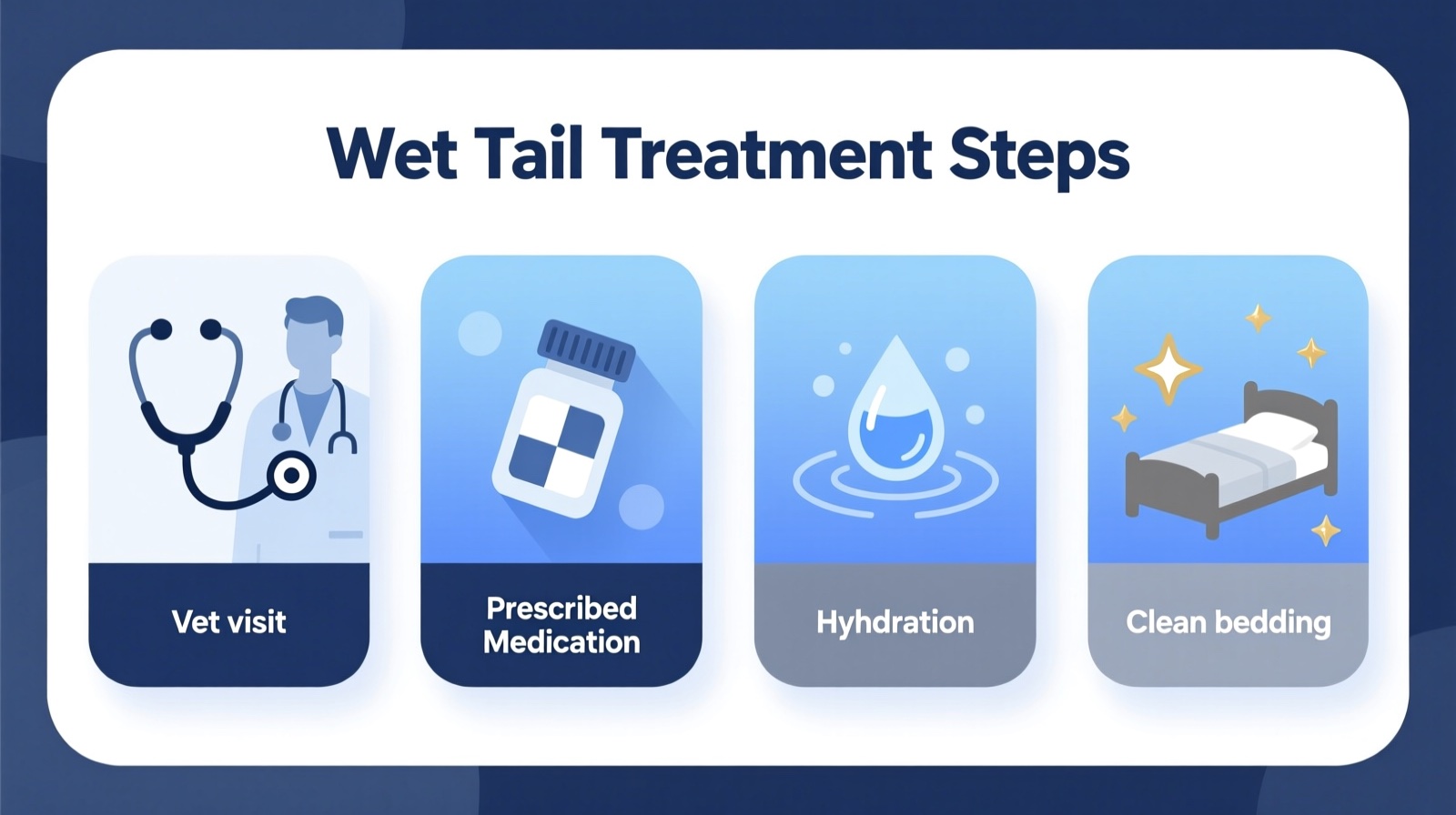
Veterinary Treatment (Gold Standard)
| Treatment | Purpose | Details |
|---|---|---|
| Enrofloxacin (Baytril) | Antibiotic — eliminates Lawsonia bacteria | Most commonly prescribed; given orally or by injection for 7-14 days |
| Trimethoprim-sulfa | Antibiotic — alternative option | Used if Baytril is ineffective or unavailable |
| Subcutaneous fluids | Emergency rehydration | Critical intervention — dehydration is the primary killer in hamster wet tail |
| Anti-inflammatory medication | Reduce intestinal inflammation | Helps the gut heal while antibiotics fight the infection |
| Probiotics | Restore healthy gut bacteria | Given separately from antibiotics (not at the same time) |
The Merck Veterinary Manual recommends enrofloxacin at 5-10 mg/kg orally every 12 hours for 7-14 days as first-line treatment for proliferative ileitis in hamsters [merckvetmanual.com]. This is the antibiotic most exotic veterinarians will reach for when treating hamster wet tail.
Estimated veterinary costs for hamster wet tail treatment:
| Treatment Component | Cost Range |
|---|---|
| Emergency examination | $50-100 |
| Antibiotics (full course) | $20-50 |
| Subcutaneous fluids (per session) | $15-30 |
| Follow-up visit | $30-50 |
| Total typical cost | $85-180 |
Home Care Steps (Alongside Vet Treatment)
These steps support your hamster’s recovery while veterinary treatment addresses the underlying infection. Do NOT rely on these alone.
Step 1 — Isolate immediately
Move your hamster to a clean hospital cage — a small carrier or temporary bin cage works. This serves two purposes: it prevents contagion spreading to other hamsters, and it reduces the amount of energy your sick hamster needs to spend navigating a large enclosure.
Use paper bedding only during recovery. Kaytee Clean and Cozy Natural Paper Bedding is the best choice here — it’s 99.9% dust-free, absorbs three times its weight in moisture, and is safe for hamsters with compromised respiratory systems. At $20 with nearly 10, it’s a reliable option for sick hamsters. Keep the hospital cage in a warm, quiet, dimly lit room away from household traffic.
Step 2 — First-line treatment supplement
While seeking veterinary care, you can administer Oasis Wet Tail Drops as a first-line supplement. This is the only wet tail-specific product available on Amazon — an easy-to-administer oral liquid designed for hamsters. It has a , though with a small review count. The important caveat: this is a supplement, NOT a substitute for vet-prescribed antibiotics. Use it while you’re getting to a vet or alongside prescribed medication, but never as your only treatment for hamster wet tail.
Step 3 — Hydration support
Dehydration is what actually kills most hamsters with wet tail. Offer fresh water mixed with unflavored Pedialyte. If your hamster won’t drink, use a clean oral syringe to offer small drops at the corner of the mouth — do NOT force water.
Step 4 — Temperature control
Keep the hospital cage at 75-80 degrees Fahrenheit. Place a heating pad under HALF the cage so the hamster can self-regulate temperature.
Step 5 — Minimize stress
Stress triggered the condition and more stress accelerates it. Remove the wheel and toys — only bedding, food, and water should be in the cage. Cover half with a light cloth for security.
For a complete overview of creating a healthy hamster environment that reduces stress, see our hamster care guide.
Is Wet Tail Contagious?
| Question | Answer |
|---|---|
| Contagious to humans? | No — Lawsonia intracellularis is species-specific to hamsters |
| Contagious to dogs or cats? | No — does not infect other common pet species |
| Contagious to other hamsters? | YES — highly contagious |
| How does it spread between hamsters? | Direct contact, shared food bowls, water bottles, bedding, and your hands |
| Can a hamster carry the bacteria without symptoms? | Yes — asymptomatic carriers can transmit hamster wet tail |
Quarantine protocol if one hamster has wet tail:
- Immediately separate ALL hamsters into individual cages in separate rooms — different rooms, not just different cages
- Use dedicated supplies for each hamster: separate food bowls, water bottles, cleaning tools, and bedding
- Wash your hands thoroughly with soap and water for at least 20 seconds between handling each hamster
- Disinfect any shared items or the cage of the infected hamster with REScue One-Step Disinfectant Cleaner — veterinary-grade disinfectant that kills bacteria, viruses, and fungi
- Quarantine all potentially exposed hamsters for a minimum of 14 days, watching for any symptoms
Survival Rate and Recovery Timeline
Hamster wet tail survival rate by treatment timing:
| When Treatment Begins | Survival Rate |
|---|---|
| Within 12 hours of first symptoms | 80-90% |
| 12-24 hours after symptoms appear | 60-75% |
| 24-48 hours after symptoms appear | 30-50% |
| After 48 hours without treatment | Less than 20% |
These numbers are sobering, and they’re the reason this hamster wet tail guide emphasizes urgency at every step. A hamster that receives antibiotics within the first 12 hours has an excellent chance of full recovery. A hamster that doesn’t receive treatment until day three has a poor prognosis regardless of how aggressive the veterinary intervention is.
Hamster wet tail recovery timeline after treatment begins:
| Recovery Stage | What to Expect |
|---|---|
| Day 1-2 (acute phase) | Antibiotics begin working; diarrhea may continue or worsen temporarily before improving |
| Day 3-5 (turning point) | Diarrhea should slow noticeably; appetite starts returning; hamster becomes more alert |
| Day 5-7 (visible improvement) | Normal stool forming; increased activity level; hamster shows interest in surroundings |
| Week 2 (continued recovery) | Stool may still be slightly soft; activity continues increasing; appetite normalizes |
| Week 3-4 (full recovery) | Back to normal behavior and diet; can return to regular cage setup |
If your hamster is not moving and you suspect wet tail may be the cause, see our hamster not moving guide for additional assessment steps.
Wet Tail Prevention Guide
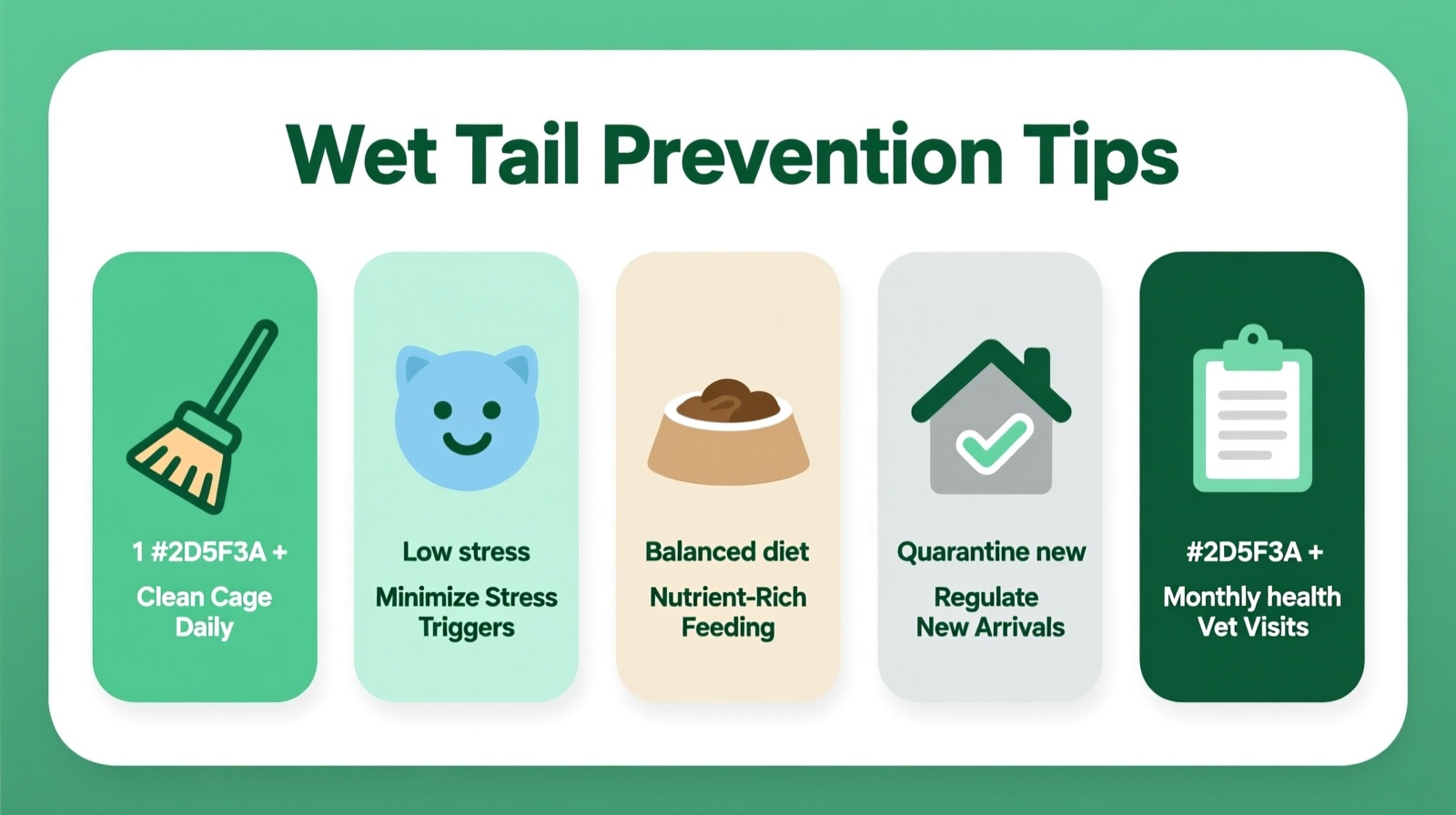
10-Point Hamster Wet Tail Prevention Checklist:
-
Quarantine new hamsters for a minimum of 2 weeks before introducing them to any other hamsters. Pet store and breeder hamsters may be asymptomatic carriers of Lawsonia intracellularis.
-
Provide proper cage size — minimum 450 square inches of unbroken floor space for Syrian hamsters, 360 square inches for dwarf hamsters. Cramped cages are one of the most common chronic stressors. See our hamster cage setup guide for size recommendations.
-
Maintain a weekly cleaning schedule — full substrate change with disinfection once a week, plus daily spot cleaning of soiled areas. A dirty cage promotes bacterial growth and weakens the immune system.
-
Use paper-based bedding — pine and cedar shavings contain aromatic oils that cause respiratory irritation and immune suppression. Paper bedding is safer and more absorbent. See our best hamster bedding guide for product comparisons.
-
Minimize handling during the first week after bringing a new hamster home. Let them acclimate to their new environment without the added stress of being picked up.
-
Maintain stable temperature between 68-75 degrees Fahrenheit. Keep the cage away from drafts, windows, air conditioning vents, and direct sunlight.
-
Feed a proper diet with quality pellets as the base. Avoid sudden diet changes, which are a significant stress trigger. See our hamster diet guide for complete nutritional recommendations.
-
Provide fresh water daily and clean the water bottle or bowl weekly to prevent bacterial contamination.
-
Disinfect cages thoroughly between hamster occupants. If a hamster passes away or is rehomed, deep clean the enclosure before introducing a new animal. This is especially important because hamster wet tail bacteria can survive in the environment.
-
Wash your hands between handling different hamsters, every single time, without exception.
Disinfectant products for hamster wet tail prevention:
| Product | Price | Best For |
|---|---|---|
| REScue One-Step Disinfectant | $58 | Deep disinfection — after illness, between hamster occupants, full cage cleans |
| Absolutely Clean Cage Cleaner | $25 | Daily spot cleaning — spray and wipe formula, no rinsing required |
| Zoo Med Wipe Out 1 | $21 | Quick cage wipe-downs — ready-to-use formula, affordable for routine cleaning |
REScue One-Step is the strongest option here — it’s a concentrated veterinary-grade disinfectant used by animal shelters and vet clinics. For routine weekly cleaning, Zoo Med Wipe Out 1 or Absolutely Clean are more practical and affordable. For daily spot cleaning, Absolutely Clean’s spray-and-wipe formula is the most convenient.
When to Consider Euthanasia
Signs that euthanasia may be the kindest choice:
- Your hamster has been on vet-prescribed antibiotics for 5 or more days with zero improvement
- The hamster is in visible pain — constant hunched posture, squeaking, unable to move comfortably
- Severe dehydration that subcutaneous fluids cannot correct
- Blood in the stool continues despite antibiotic treatment
- The hamster has stopped eating and drinking entirely for more than 24 hours
- The hamster’s quality of life has clearly deteriorated — they are suffering, not recovering
If you’re concerned about other health conditions that may affect your hamster’s quality of life, our hamster diabetes guide covers another serious chronic condition.
Frequently Asked Questions
Q: Is wet tail contagious to humans?
No. The bacteria that cause hamster wet tail (Lawsonia intracellularis) are species-specific and cannot infect humans, dogs, cats, or other pets. However, it IS highly contagious to other hamsters through direct contact, shared supplies, bedding, and your hands. Immediately quarantine the sick hamster in a separate room with dedicated supplies.
Q: Can a hamster survive wet tail?
Yes, with prompt veterinary treatment. Without treatment, the hamster wet tail mortality rate is 50-90% within 24-48 hours. With early antibiotics and fluids, survival improves to 70-90%. Treatment within the first 12 hours gives the best odds.
Q: What is the difference between wet tail and diarrhea?
Hamster wet tail is a specific Lawsonia intracellularis infection with a strong foul odor, multiple simultaneous symptoms, and rapid worsening. Regular diarrhea from diet changes or mild stress usually resolves in 1-2 days and the hamster otherwise acts normal. When in doubt, treat it as hamster wet tail and see a vet.
Q: How do you treat wet tail at home?
Home treatment for hamster wet tail is supportive only — isolate in a clean cage with paper bedding, keep warm at 75-80 degrees, offer water with Pedialyte, administer Oasis Wet Tail Drops as a supplement, and minimize handling. These steps support recovery but must be combined with veterinary-prescribed antibiotics.
Q: What causes wet tail in hamsters?
Hamster wet tail is caused by Lawsonia intracellularis bacteria that multiply when stress compromises the immune system. Common triggers: bringing a new hamster home, cramped cages, rough handling, temperature changes, poor diet, and dirty conditions. Syrian hamsters aged 3-12 weeks are at highest risk.
Q: How long does wet tail last?
Without treatment, hamster wet tail is fatal within 24-48 hours. With veterinary antibiotics, the acute phase lasts 5-7 days, and full recovery takes 2-3 weeks. The first 48 hours are the most critical.
Q: Can wet tail be prevented?
Yes. Key hamster wet tail prevention measures: quarantine new hamsters for 2 weeks, provide adequate cage size, clean weekly with veterinary-grade disinfectant, use paper bedding, minimize handling the first week, maintain stable temperatures, feed a proper diet, and wash hands between handling different hamsters.
Q: Is wet tail contagious to other hamsters?
Yes — highly contagious. Separate ALL hamsters into individual cages in separate rooms immediately. Use dedicated supplies for each, disinfect shared items with REScue One-Step, and quarantine all potentially exposed hamsters for at least 14 days.