⚠️ Medical Disclaimer: This article is not a substitute for professional veterinary care. If your hamster is showing signs of illness, consult a qualified exotic veterinarian.
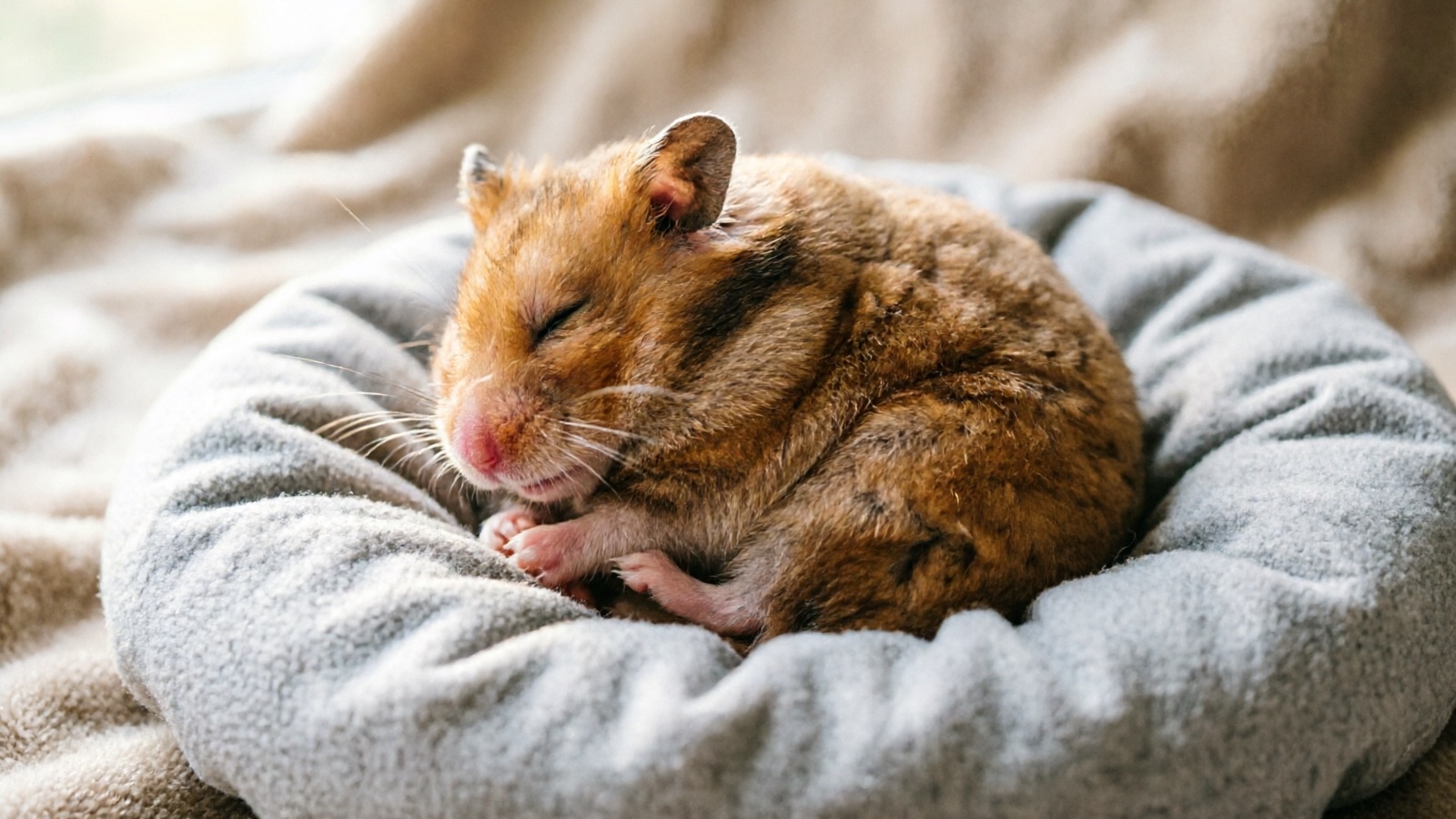
I know exactly how terrifying it is to find your hamster completely still. The first time it happened to me, I was sure my hamster was gone — lying motionless in the corner of the cage, eyes half-open, body cold. It turned out to be torpor, and with proper warming, she recovered within an hour. But I’ve also spoken with owners who weren’t so lucky, because they didn’t realize what was happening in time.
This guide will help you quickly determine whether your hamster is in torpor, sick, or has passed — and exactly what to do in each situation. The difference between life and death can be a matter of understanding the signs and acting fast.
First Check: Is Your Hamster in Torpor?
Torpor is the #1 reason hamsters stop moving but are still alive. If your hamster is not moving but still breathing, torpor should be your first thought — especially if the room temperature has dropped recently.
| Sign | Torpor | Dead |
|---|---|---|
| Breathing | Very slow (1-2/min) but present | None after a few minutes of observation |
| Body temperature | Cold to touch | Cold, won’t warm up |
| Stiffness | Soft, limp, pliable | Stiff (rigor mortis sets in within 1-3 hours) |
| Eyes | May be open or half-closed, glassy | Open, no muscle control |
| Response to warming | Gradual movement in 30-60 min | No response |
The breathing test: This is the single most important check. Hold a small mirror or your finger near the hamster’s nose and watch carefully for 60 full seconds. Even the slowest torpor breathing — which can be as infrequent as once per minute compared to the normal 60-100 breaths per minute — will create a tiny fog on the mirror or a faint sensation on your fingertip. Watch the chest area closely. Torpor breathing is so shallow and slow that you might miss it if you only watch for a few seconds.
The stiffness test: Gently pick up your hamster and feel their body. A torpid hamster will be cold and limp — like a soft, cold rag. A hamster that has passed away will develop stiffness (rigor mortis) within 1-3 hours. If the body is stiff, it’s too late. If it’s limp and cold, warming may still save them.
If you’re unsure about the cage temperature, a digital thermometer with a probe gives you an instant reading. I keep one near my hamster enclosures year-round — it costs almost nothing and eliminates guesswork.
What Is Torpor? (Pseudo-Hibernation Explained)
Torpor is a survival mechanism triggered by cold temperatures. When a hamster’s environment drops below approximately 65°F (18°C), their body responds by dramatically slowing its metabolic processes: body temperature drops to match the surroundings, heart rate plummets from over 300 beats per minute to under 50, and breathing becomes barely perceptible — sometimes as infrequent as once per minute.
Torpor is NOT true hibernation. True hibernating animals (like ground squirrels) undergo a controlled, seasonal metabolic shutdown with specific biological preparation. Hamsters do not. Torpor in hamsters is an uncontrolled emergency response — more like the body saying “it’s too cold to function, shutting everything down to survive.” It’s dangerous and damages the body each time it occurs.
Key facts about torpor:
- Triggered below 65°F (18°C) — at 50°F (10°C), it’s almost certain; at 40°F (4°C), it can be fatal
- More common in Syrian hamsters than dwarf species, though all hamsters can experience it
- Each torpor episode causes organ stress — the heart, liver, and kidneys are all affected by the extreme metabolic slowdown
- Repeated torpor significantly shortens lifespan — a hamster that goes into torpor multiple times is accumulating organ damage
- Prevention is the only real cure — maintaining proper temperature is far more important than knowing how to warm a hamster out of torpor
The most common triggers I’ve seen: air conditioning set too low, cage placed near a window in winter, power outages during cold weather, and moving the cage to a colder room during a home renovation. If you’re setting up a new cage, our hamster cage setup guide covers temperature management and cage placement tips to help prevent torpor.
How to Warm a Hamster Out of Torpor (Step-by-Step)
If you’ve determined your hamster is in torpor (cold, limp, breathing very slowly), warming is the immediate priority. This needs to be done carefully — too fast or too hot can cause shock.
DO:
- Move the cage to a warm room — ideally 70-75°F. If the whole cage can’t be moved, move the hamster in a small carrier with warm bedding.
- Place a heating pad on LOW under HALF the cage — the “half” is critical. The hamster needs an escape route if it gets too warm. A reptile heating pad set to low provides gentle, consistent warmth. Always put a towel between the pad and the cage bottom.
- Wrap the hamster in a warm towel — the towel should feel comfortably warm against your skin, not hot. Think “warm from the dryer” temperature, not “just off the stove.”
- Hold against your body — your body heat is gentle and safe. Tuck the wrapped hamster inside your jacket or against your chest.
- Offer warm water from a syringe — 1-2 drops at a time. Dehydration worsens during torpor. The water should be lukewarm, not hot.
- Wait 30-60 minutes — this is a gradual process. Don’t expect instant results. You may see whisker twitching first, then paw movement, then full awareness.
- Once moving, offer warm, soft food — mashed banana, soaked pellet slurry, or a tiny bit of warm oatmeal. Don’t offer cold food to a hamster just coming out of torpor.
DON’T:
- ❌ Never use direct heat — hair dryers, radiators, or heating pads set to high can cause thermal shock and burns
- ❌ Never submerge in warm water — this is extremely stressful and dangerous for a semi-conscious animal
- ❌ Never place directly on a heating pad without a towel barrier
- ❌ Never force food or water into an unresponsive mouth — aspiration (fluid in lungs) is fatal
- ❌ Never use a microwave or oven to warm the hamster
If your hamster doesn’t show any response after 2 hours of consistent, gentle warming, the situation may be more serious than torpor. See a vet.
If It’s Not Torpor: Other Causes
If the room temperature is within the normal range (68-75°F) and your hamster is still not moving, or if warming hasn’t helped, other causes need to be considered.
| Cause | Key Symptoms | Action |
|---|---|---|
| Wet tail | Wet tail area, diarrhea, severe lethargy | 🔴 Vet NOW — often fatal in 24h |
| Respiratory infection | Clicking sounds, labored breathing, nasal discharge | 🟠 Vet same day |
| Dehydration | Sunken eyes, dry skin tenting, extreme lethargy | 🟠 Syringe water + vet |
| Old age | Gradual slowdown over weeks/months, 2+ years old | Monitor quality of life |
| Stroke | Head tilt, circling, limb weakness on one side | 🔴 Vet immediately |
| Spinal injury | Dragging back legs, fall history | 🔴 Vet immediately |
| Diabetes coma (dwarfs) | Excess drinking, cataracts, unresponsiveness | 🟠 Vet + diet change |
| Bedding entanglement | Hair or threads wrapped around limbs | ✂️ Carefully cut free |
| Poisoning | Seizures, drooling, unusual smell, twitching | 🔴 Vet immediately |
The most urgent on this list is wet tail — a bacterial infection of the intestinal tract that causes profuse diarrhea and can kill a hamster within 24 hours. It most commonly affects young hamsters under 12 weeks old. If your hamster has a wet, soiled rear end and isn’t moving, this is a veterinary emergency. See our wet tail guide for detailed information.
Respiratory infections are also common and serious. If you hear clicking or crackling sounds when the hamster breathes, or see discharge from the nose, antibiotics from a vet are needed. See our hamster health guide and diabetes guide for more on common hamster illnesses.
Hamster Not Moving Back Legs
Back leg problems are surprisingly common in hamsters and can be particularly distressing for owners. The key is determining whether the cause is mechanical (something physically blocking movement) or neurological (nerve or spinal damage).
Check first: Bedding entanglement — this is the easiest fix and the one most people overlook. Hair, thread, or fibrous bedding material can wrap tightly around a hamster’s legs, cutting off circulation and immobilizing them. Gently inspect each leg, especially the ankles. If you find wrapping, carefully cut it with small, blunt-nosed scissors. Don’t pull — you could damage the skin.
If not entangled, the possible causes are more serious:
- Spinal injury: Usually from a fall from a height (hamsters are terrible judges of distance and will leap from shelves or hands). The damage may be partial or complete. A vet can assess the extent and prescribe pain management, but full recovery from spinal cord injury is uncommon.
- Stroke: Sudden onset, often accompanied by head tilt, circling, or weakness on one side of the body. Dwarf hamsters are more susceptible than Syrians. Some hamsters recover partially with supportive care and time.
- Nutritional deficiency: Vitamin E or B1 deficiency can cause hind leg weakness or paralysis. This is correctable with dietary changes and supplements, but requires veterinary diagnosis.
- Age-related decline: Elderly hamsters (2+ years) may gradually lose strength in their back legs. This is progressive and not reversible. Focus on comfort — lower water bottles and food bowls, provide ramps instead of climbing, and remove tall structures from the cage.
If your hamster is dragging its back legs and the cause isn’t obvious (no thread, no recent fall), a vet visit is needed for proper diagnosis.
Hamster Not Moving Much (Not an Emergency)
There’s an important distinction between a hamster that’s completely still and one that’s moving less than usual. If your hamster IS moving — just slowly or less frequently — it’s probably not torpor. Consider these normal explanations:
- It’s daytime: Hamsters are nocturnal and sleep 12-14 hours during the day. A hamster barely moving at 2 PM is doing exactly what hamsters do. Their active hours are typically 8 PM to 6 AM.
- Slightly cool room: Temperatures between 65-68°F can make hamsters sluggish without triggering full torpor. They move less, eat less, and seem sleepy. Warming the room slightly usually resolves this.
- Age: Hamsters over 18 months naturally slow down. They sleep more, run on their wheel less, and spend more time in their hideout. This is normal aging, not illness.
- Stress: A recent cage move, new pet in the house, loud construction, or change in routine can cause temporary reduced activity. Most hamsters adjust within 3-7 days.
- Beginning of illness: Reduced activity is often the first visible sign that something is wrong. If your hamster seems less active for more than 48 hours and there’s no obvious environmental cause, start monitoring more closely.
For tips on safe handling and reading your hamster’s body language, see our hamster handling guide.
How to Prevent Torpor
Prevention is dramatically better than treatment. Each torpor episode causes cumulative organ damage, and a hamster that goes into torpor repeatedly will have a significantly shortened lifespan.
| Prevention Method | Details |
|---|---|
| Maintain temperature | Keep the room at 68-75°F (20-24°C) at all times, day and night |
| Use a thermometer | A digital probe thermometer in or near the cage eliminates guesswork |
| Avoid drafts | Keep the cage away from windows, exterior doors, AC vents, and hallways |
| Winter preparation | If your room gets cold in winter, use a heating pad on low under part of the cage |
| Monitor daily | A quick activity check during evening hours (their active time) catches problems early |
| Have a warming plan | Know what you’ll do if the power goes out or the heating fails in winter |
The single most impactful thing you can do is keep a thermometer near the cage and check it regularly. Temperature fluctuations are the enemy — a room that’s 72°F during the day but drops to 60°F at night is more dangerous than a room that’s consistently 68°F.
How to Syringe Feed an Immobile Hamster
If your hamster isn’t moving due to illness or recovery from torpor, they may not be able to reach their food or water. Syringe feeding keeps them hydrated and nourished while they recover.
Oxbow Critical Care Omnivore is a veterinary-formulated recovery food designed for small omnivores including hamsters. Mix the powder with warm water to a thin yogurt consistency. If you don’t have critical care on hand, you can blend hamster pellets with warm water to a similar consistency.
Syringe feeding steps:
- Mix the formula — critical care powder + warm water, or blended pellets + water. No chunks.
- Draw into a small syringe (1ml size is ideal for hamsters).
- Hold the hamster gently — wrap in a soft cloth if needed, but don’t restrain tightly.
- Tilt the head very slightly — just enough to prevent the liquid from running out.
- Place syringe at the SIDE of the mouth — in the gap between incisors and cheek teeth. Never straight in.
- Dispense 0.1-0.2ml — tiny amounts for a hamster. Wait for a swallow.
- Feed 1-2ml total per session, every 2-3 hours.
- If the hamster won’t swallow — stop immediately. Do not risk aspiration.
Critical warning: Immobile hamsters are at high risk for aspiration — fluid entering the lungs. This is often fatal. Go very slowly, use tiny amounts, and always position the syringe from the side of the mouth.
For related concerns, see our hamster not eating guide.
When to See a Vet
Go to the vet IMMEDIATELY if:
- Hamster doesn’t respond to warming after 2 hours of consistent effort
- Wet tail symptoms present (wet, soiled rear + diarrhea + lethargy)
- Labored or open-mouth breathing
- Seizures, head tilt, or circling behavior
- Bleeding from any orifice
- Suspected spinal injury (dragging legs, recent fall)
- Completely unresponsive and body doesn’t warm up
See a vet the same day if:
- Reduced activity for 24+ hours with no environmental explanation
- Not eating or drinking for 12+ hours
- Discharge from eyes or nose
- Persistent sneezing or clicking sounds when breathing
Important: Like guinea pigs, hamsters need exotic animal veterinarians. Standard dog and cat vets often don’t have the small equipment or specialized knowledge needed. Search for “exotic vet near me” or check the AEMV directory.
For more on hamster health throughout their life, see our hamster lifespan article.
Frequently Asked Questions
Is my hamster dead or in torpor?
Check three things. First, breathing — watch the chest carefully for 60 full seconds. Torpor breathing is extremely slow (1-2 breaths per minute compared to the normal 60-100), but it’s present. A dead hamster will not breathe at all. Second, temperature — if the room has been cold (below 65°F/18°C), torpor is very likely. Third, stiffness — rigor mortis develops within 1-3 hours after death. A torpid hamster will feel cold and limp, like a soft, cold cloth. A hamster that has passed will be stiff and rigid. The ultimate test: gently warm the hamster. A torpid hamster will gradually respond within 30-60 minutes. A deceased hamster will not.
How do I warm up a hamster in torpor?
Warm gradually and gently — never use direct, intense heat. Move the hamster (in its cage or a small carrier) to a warm room at 70-75°F. Place a heating pad on LOW setting under HALF the cage so the hamster can move away if it gets too warm. Wrap the hamster in a towel that’s comfortably warm against your skin. Hold them against your body for shared warmth. Offer a few drops of lukewarm water from a syringe. Recovery typically takes 30-60 minutes — you may see whisker twitching first, then paw movement. If there’s no response after 2 hours of consistent warming, see a vet immediately.
Why is my hamster not moving but breathing?
The most common reason by far is torpor — a cold-triggered survival state where the body dramatically slows all functions. If the room temperature has dropped below 65°F (18°C), torpor is the most likely explanation. Other possibilities include severe illness like wet tail or respiratory infection, old age (gradual decline in elderly hamsters), injury particularly to the spine or back legs, or severe dehydration. If the environment is warm and the hamster still isn’t moving, illness rather than torpor is the likely cause, and veterinary assessment is needed.
Why is my hamster not moving but eyes are open?
Open eyes without movement is a common feature of torpor — the hamster appears to be staring blankly because the muscles that control the eyelids are also affected by the metabolic slowdown. It can also occur with shock, severe dehydration, or a neurological event like a stroke. If the room is cold, focus on warming the hamster first. If the room is at normal temperature, check for other symptoms: is there wetness around the tail (wet tail), clicking sounds when breathing (respiratory infection), or head tilt (stroke)? Any additional symptoms alongside unresponsiveness warrant an immediate vet visit.
Why is my hamster not moving its back legs?
Back leg immobility has several possible causes. The first thing to check is bedding entanglement — hair, thread, or fibrous material wrapped around the ankles or legs. This is common, easy to miss, and simple to fix by carefully cutting the wrapping material. If there’s no entanglement, spinal injury (from a fall), stroke (sudden onset, often with head tilt), advanced wet tail, or nutritional deficiency (vitamin E or B1) are the most likely causes. A hamster dragging its back legs needs a vet visit — spinal injuries and strokes both require urgent assessment, and the prognosis varies significantly depending on the cause.
What temperature is too cold for a hamster?
Below 65°F (18°C) is the danger zone where torpor can be triggered. The ideal temperature range for all hamster species is 68-75°F (20-24°C). Syrian hamsters can tolerate slightly cooler temperatures than dwarf species, but all hamsters are at risk below 65°F. At 50°F (10°C), torpor is nearly guaranteed. At 40°F (4°C), torpor can be directly fatal. The most common culprits are air conditioning set too low, cage placement near windows or exterior walls in winter, and nighttime temperature drops in poorly insulated rooms. A digital thermometer near the cage is the best prevention tool.
Can a hamster survive torpor?
Yes — hamsters that go into torpor for a short duration (a few hours) typically recover fully with gentle warming over 30-60 minutes, with no apparent lasting effects. However, the longer a hamster remains in torpor, the greater the risk of organ damage, dehydration, and death. Prolonged torpor (12+ hours) becomes increasingly dangerous. Importantly, each torpor episode causes cumulative stress to the heart, liver, and kidneys. A hamster that goes into torpor multiple times will have a measurably shorter lifespan than one that never does. This is why prevention — maintaining proper temperature — is so much more important than knowing how to treat torpor.
How do I know if my hamster is dying?
Signs that a hamster is approaching the end of life include extreme lethargy or unresponsiveness that doesn’t improve with warming, labored or open-mouth breathing, a body that stays cold despite warming efforts, complete refusal of food and water (even favorite treats), rapid unexplained weight loss, persistent hunched posture, sunken eyes, and any discharge from the nose or rear. Hamsters instinctively hide when they’re dying — finding a hamster tucked deep in their hideout, unresponsive and cold, may be a natural end-of-life sign rather than a treatable emergency. If your hamster is elderly (2+ years) and showing multiple signs, a vet can help assess quality of life and discuss end-of-life options.
Related Articles
- Hamster Cage Setup Guide — Temperature management to prevent torpor
- Hamster Health Guide — Common hamster illnesses and warning signs
- Hamster Not Eating Guide — What to do when your hamster stops eating
- Hamster Wet Tail Guide — Symptoms and emergency treatment