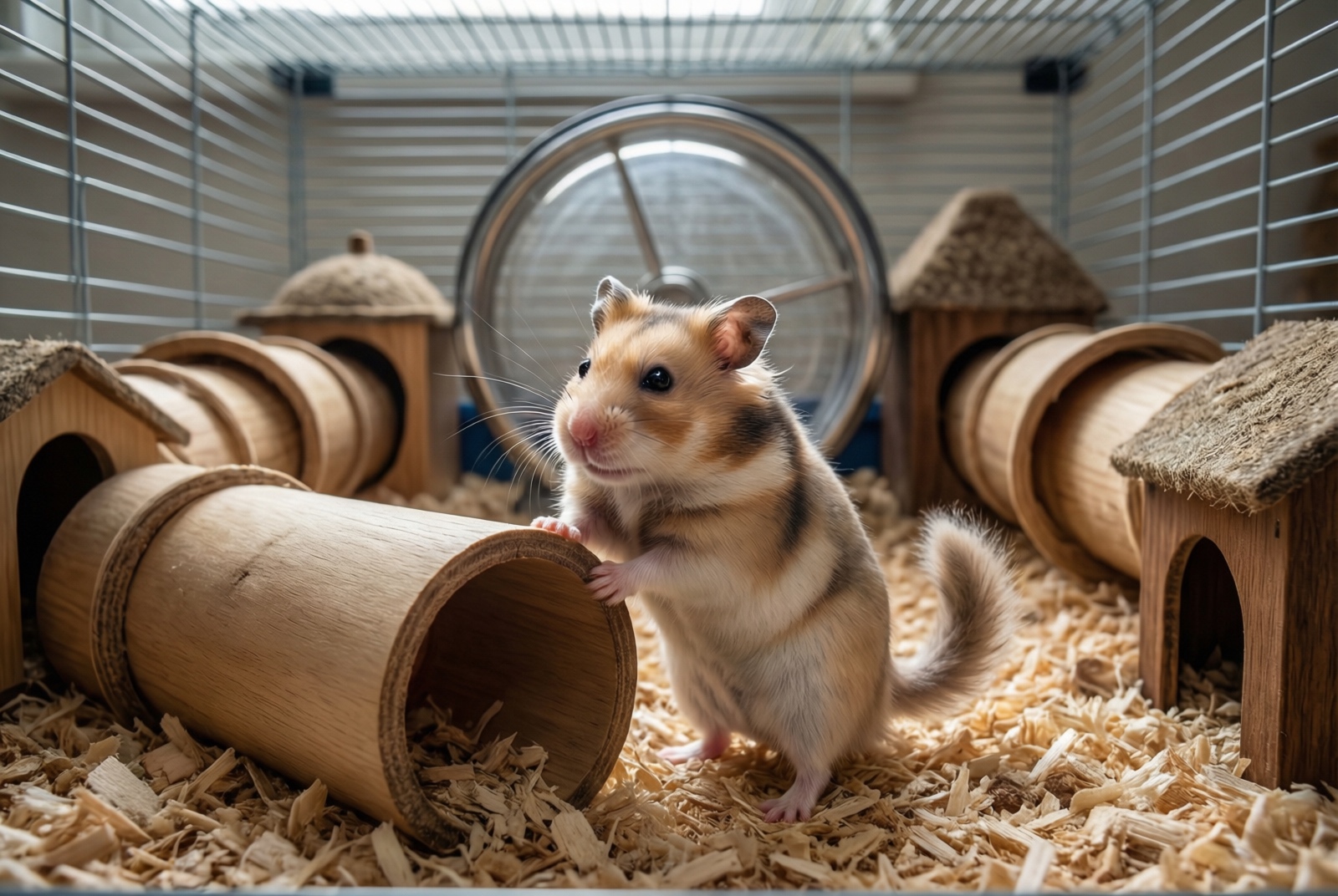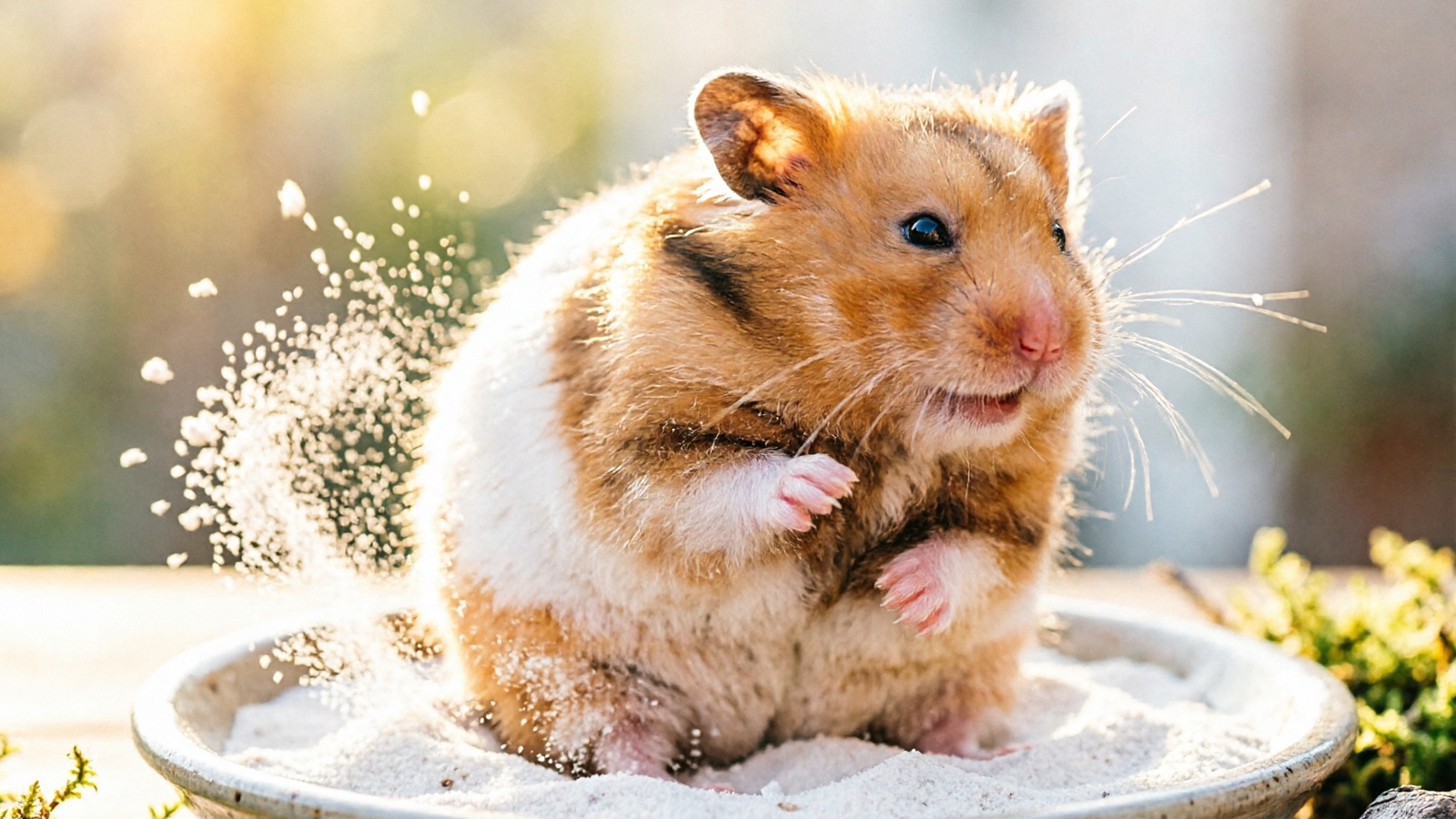
Hamsters are desert animals. In the wild, they roll in fine sand to keep their fur clean and oil-free — they never take water baths. A hamster sand bath is one of the most important additions to any enclosure, and watching your hamster roll, dig, and kick sand around is genuinely entertaining.
The number one safety rule: use sand, not dust. Dust particles are too fine and cause respiratory infections. This guide covers the five best sand products, three containers, DIY options, breed-specific advice, and a maintenance schedule.
For overall hamster care beyond sand baths, see our hamster care guide. For choosing safe cage substrate, see our best hamster bedding guide.
Quick Answer — Top 3 Picks
| Pick | Product | Type | Price | Best For |
|---|---|---|---|---|
| Best Overall Sand | Niteangel Desert Bath Sand | Desert Sand | $13.99 | All hamsters — no-dust formula |
| Best Container | Niteangel Triangle Sand Bath Box | Acrylic | $25.99 | Cage corner — clear viewing |
| Best Budget Sand | Sukh 14oz Hamster Sand Bath | Silica Sand | $6.99 | First-time try — under $7 |
Why Your Hamster Needs a Sand Bath
Hamsters in the wild — Syrian hamsters originate from the dry regions of Syria and Turkey — naturally clean themselves by rolling in fine sand. A sand bath serves four essential purposes:
- Coat health: Rolling in sand removes excess oils and dirt, keeping fur soft and preventing greasy buildup. This is especially important for long-haired Syrian varieties.
- Natural behavior enrichment: Digging, rolling, and burrowing in sand is deeply instinctive. Hamsters spend 15-30 minutes happily bathing — it doubles as play and stress relief.
- Odor control: Sand absorbs the oils that cause hamster smell. Regular sand bathing means a fresher-smelling pet.
- Parasite prevention: The abrasive action of sand helps dislodge external parasites from the coat.
Critical rule: Never bathe a hamster in water. Water strips protective oils from the coat, causes hypothermia, and creates extreme stress. A hamster sand bath is the only safe cleaning method.
For help integrating a sand bath into your enclosure, see our hamster cage setup guide.
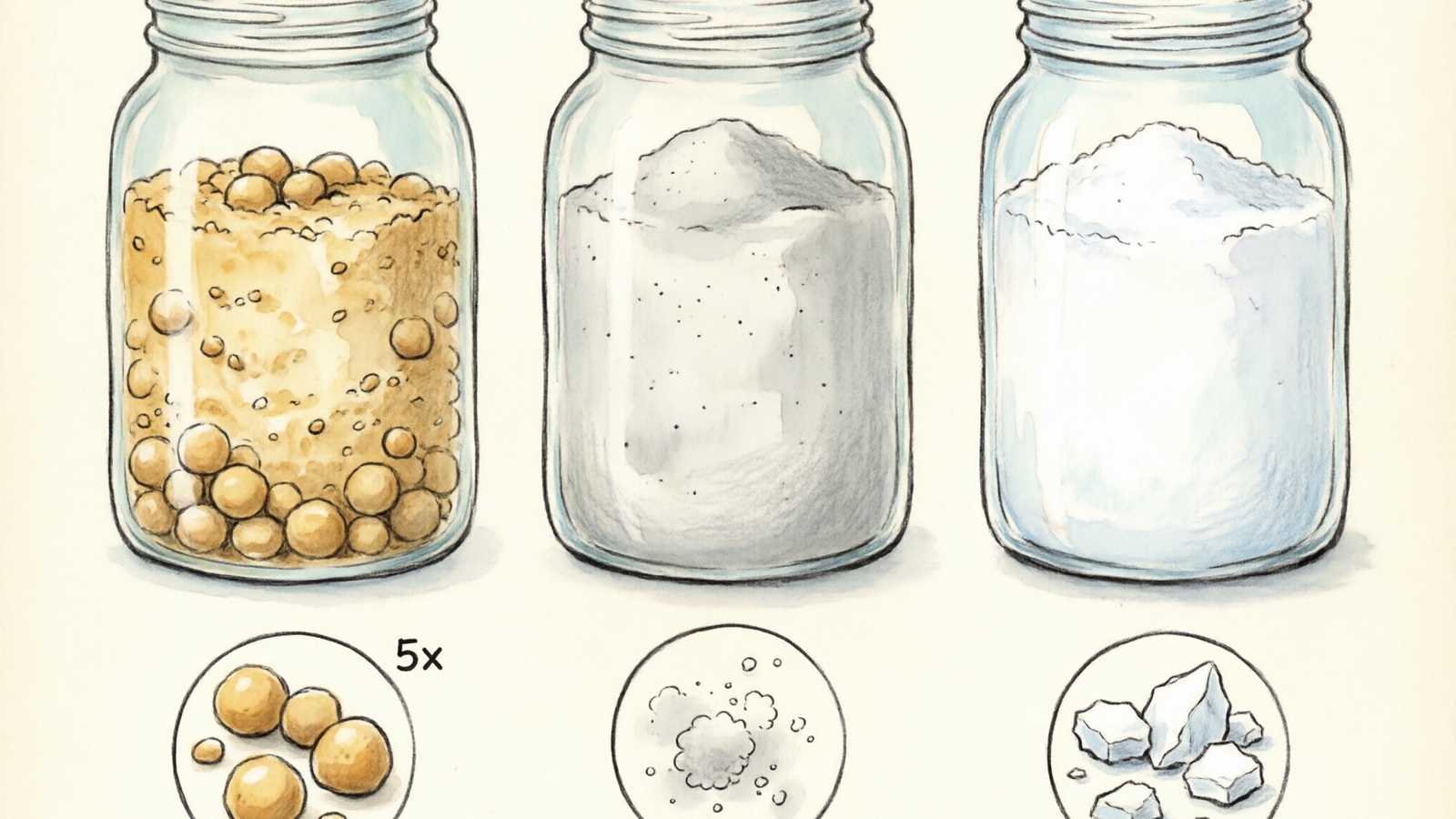
Sand vs Dust: The Critical Safety Difference
This is the most important thing to understand before buying any hamster sand bath product.
| Property | Sand | Dust |
|---|---|---|
| Grain size | Larger particles (visible grains) | Extremely fine powder |
| Safety | Safe for respiratory system | Can cause infections, sneezing, lung damage |
| Texture | Feels like beach sand | Feels like flour or talcum powder |
| Examples | Niteangel, DR.DUDU, ReptiSand | Oxbow POOF!, Kaytee dust, chinchilla dust |
| Dust cloud | Minimal when pouring | Large visible cloud when hamster rolls |
How to test: Pour some into your hand and rub gently. If it creates a visible dust cloud, it is too fine for hamsters.
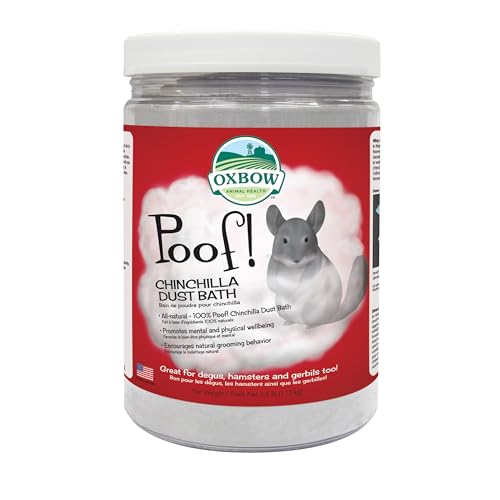
Oxbow POOF! is technically dust, not sand. It is the gold standard for chinchillas but should be used with caution for hamsters. Many hamster owners use it successfully, but if your hamster sneezes after bathing, switch to desert sand immediately.
What to avoid in any hamster sand bath product:
- Calcium sand — can cause urinary issues. Always check the label
- Scented or colored sand — chemical additives irritate respiratory systems
- Construction sand — too coarse, may contain harmful minerals
- Any product labeled “dust bath” — too fine for hamster lungs
5 Best Hamster Sand Bath Products Reviewed
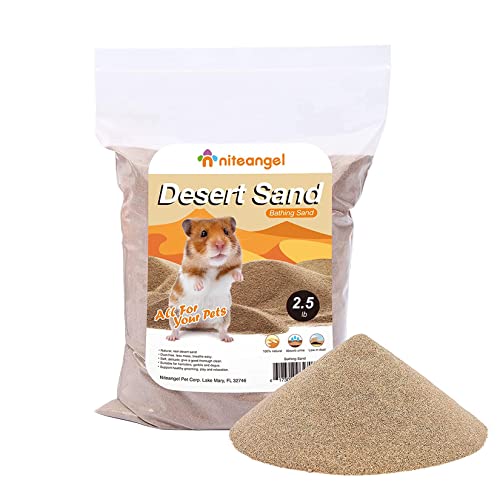
Niteangel Hamster Desert Bath Sand — Best Overall
The Niteangel Desert Bath Sand ($13.99) is the most reviewed hamster-specific sand on Amazon. It uses a no-dust formula that mimics the texture of natural desert sand.
The texture hits the sweet spot — fine enough for comfortable rolling, coarse enough to produce zero dust clouds. Owners consistently praise the truly dust-free quality.
One owner noted: “There really is no dust. No dust cloud when pouring and no dust on my hands.”
It also doubles as potty litter. The sand clumps when wet, making daily scooping straightforward with a small mesh strainer. The trade-off is quantity — the package runs out faster than bulk options.
I’d recommend this as your default sand. If you have multiple hamsters or want to save money, the bulk options below offer better value per ounce.
DR.DUDU Hamster Bath Sand 6.6lb — Best Value
The DR.DUDU 6.6lb Bath Sand ($18.99) gives you nearly five times the sand of the Niteangel for only $5 more. It is dust-free and calcium-free.
The bulk format means fewer reorders. The white sand shows waste clearly, which helps with daily scooping. Some batches are slightly coarser than Niteangel, and the packaging has been reported to tear during shipping — keep a backup container handy.
Owners report their hamsters start rolling in it immediately. One reviewer said: “My hamster started rolling in it right away. It’s low-dust and doesn’t make a huge mess.”
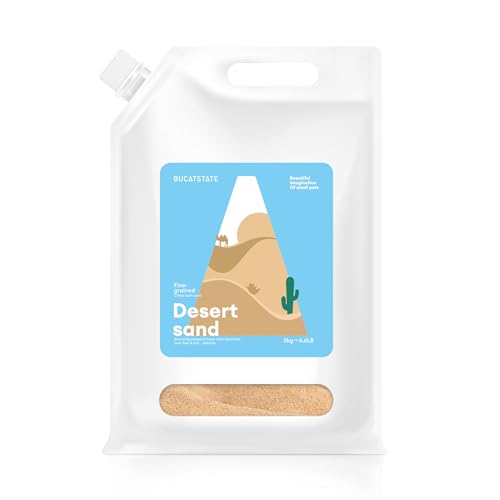
BUCATSTATE Hamster Bath Sand 6.6lb — Best Bulk with Pour Spout
The BUCATSTATE 6.6lb Sand ($19.99) adds a convenient pour spout that makes refilling the sand bath mess-free. The calcium-free, dust-free formula is comparable to DR.DUDU.
The pour spout is the differentiator — no more funneling sand from a torn bag. The resealable packaging keeps sand fresh between uses.
Owners note it is slightly dustier than Niteangel, but most consider it acceptable. One reviewer said: “Slightly on the dusty side, but not horrible. Still bought it again.”
With only 348 reviews, this is a less proven option. But for the pour spout convenience at bulk pricing, it is worth considering.
Sukh 14oz Hamster Sand Bath — Best Budget
The Sukh 14oz Sand ($6.99) is the cheapest way to try a hamster sand bath without committing to a larger purchase.
At 14 ounces, this is a trial-size quantity. It will need frequent refilling if your hamster loves to dig.
The silica sand texture is fine and most hamsters enjoy it immediately. One owner described it: “As if there is a special gene for rolling in the sand, both of our hamsters took to it.”
One owner flagged a respiratory concern with the extremely fine texture. If your hamster sneezes after using this product, switch to Niteangel’s coarser desert sand.
Oxbow POOF! Chinchilla Dust Bath — Best Premium (Warning: Dust, Not Sand)
The Oxbow POOF! ($14.99) is 100% natural blue beauty pumice dust from Oxbow, one of the most vet-trusted brands in small animal care.
Important caveat: This is dust, not sand. It is designed for chinchillas and degus, which have different respiratory needs than hamsters. Many hamster owners use it successfully, but it does produce a visible dust cloud when your hamster rolls. In my experience, if your hamster has any respiratory sensitivity, skip this product and stick with desert sand.
The 2.5-pound jar lasts a long time and comes with a scoop. The cleaning action is excellent — the ultra-fine particles penetrate deep into the coat.
Just watch for sneezing.
3 Best Sand Bath Containers Reviewed
Niteangel Sand-Bath Box Triangle — Best Container
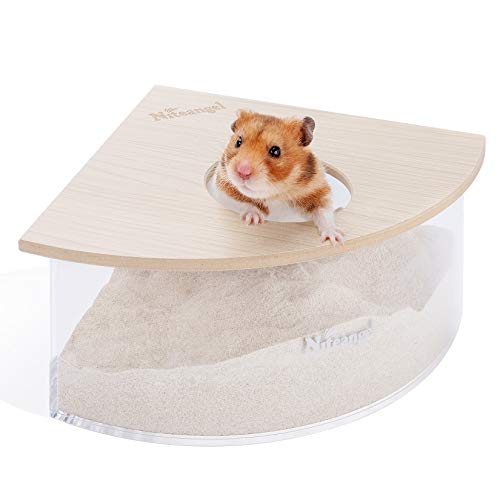
The Niteangel Triangle Sand Bath Box ($25.99) is the most reviewed sand bath container available. The crystal-clear acrylic walls let you watch your hamster roll and dig from every angle.
The triangle shape fits neatly into cage corners, maximizing floor space. The wooden roof doubles as a sitting platform. The deep design holds plenty of sand and keeps it contained when your hamster kicks enthusiastically.
The main issue: the entry is too high for Chinese Dwarf hamsters. You will need to add a ramp or pile extra sand inside. For Syrians and standard dwarfs, the height is fine.
One Syrian owner said: “I don’t know what it is about this particular sand bath, but my Syrian absolutely loves it.”
Wenriko Hamster Sand Bath Container — Best Budget Container
The Wenriko Sand Bath Container ($5.99) is the cheapest option and includes a cleaning scoop. It works well for dwarf hamsters.
The simple two-piece plastic design is easy to clean. The included scoop handles daily waste removal.
The trade-off is size — this is too small for Syrian hamsters, and the shallow walls let sand get kicked out. Some owners report the two halves do not snap together securely.
Wenriko Hamster Sand Bath Box — Best Mid-Range
The Wenriko Sand Bath Box ($9.99) is the larger version that fits Syrian hamsters. It provides enough depth for comfortable digging and rolling.
The open-top design means sand can escape during enthusiastic bathing sessions. It takes up more cage space than the triangle Niteangel, but the larger floor area gives Syrian hamsters room to move. One gerbil owner said: “I absolutely love this sand bath and so does my gerbil Binx.”
Sand Bath Size Guide by Hamster Breed
| Hamster Type | Min Container | Sand Depth | Frequency |
|---|---|---|---|
| Roborovski | 4 x 4 inches | 1 inch | Permanent |
| Winter White / Campbell’s | 5 x 5 inches | 1-2 inches | Permanent or daily |
| Chinese Hamster | 5 x 5 inches | 1-2 inches | Permanent or daily |
| Syrian (Standard) | 7 x 5 inches | 2-3 inches | Permanent |
| Syrian (Long-haired) | 8 x 6 inches | 2-3 inches | Permanent |
Dwarf hamsters tend to be more enthusiastic bathers than Syrians. Many Syrians also use the sand bath as their designated potty — this is normal and actually helpful for cage cleanliness.
For full Syrian care guidance, see our Syrian hamster care guide. For cage dimensions that accommodate a sand bath, check our dwarf hamster cage and Syrian hamster cage size guides.
DIY Sand Bath Container: 3 Budget Options
You do not need to buy a dedicated container. These household items work just as well:
Glass baking dish (best DIY option) — An 8x8 or 9x9 inch Pyrex dish is heavy enough to resist tipping, has smooth edges, and is easy to clean. The transparency lets you watch your hamster. Cost: $5-10.
Ceramic bowl or pie dish — A large ceramic pasta bowl (6+ inch diameter) is heavy, chew-proof, and attractive. Make sure it has no chips or sharp edges. Cost: $3-8.
Plastic Tupperware — Cut a low entry hole in one side of a medium Tupperware container with at least 3-inch walls. Sand the cut edges smooth. This is the cheapest option but can tip if your hamster is energetic. Cost: $2-5.
What not to use: Cardboard gets soggy, metal cans have sharp edges, and anything smaller than 4x4 inches is too cramped.
Community tip from Reddit: Children’s play sand works as a budget sand option — bake at 350°F for 15-20 minutes to sterilize, then cool completely before use. I’ve used this method myself when I ran out of packaged sand and it works perfectly.
How to Set Up and Maintain a Sand Bath
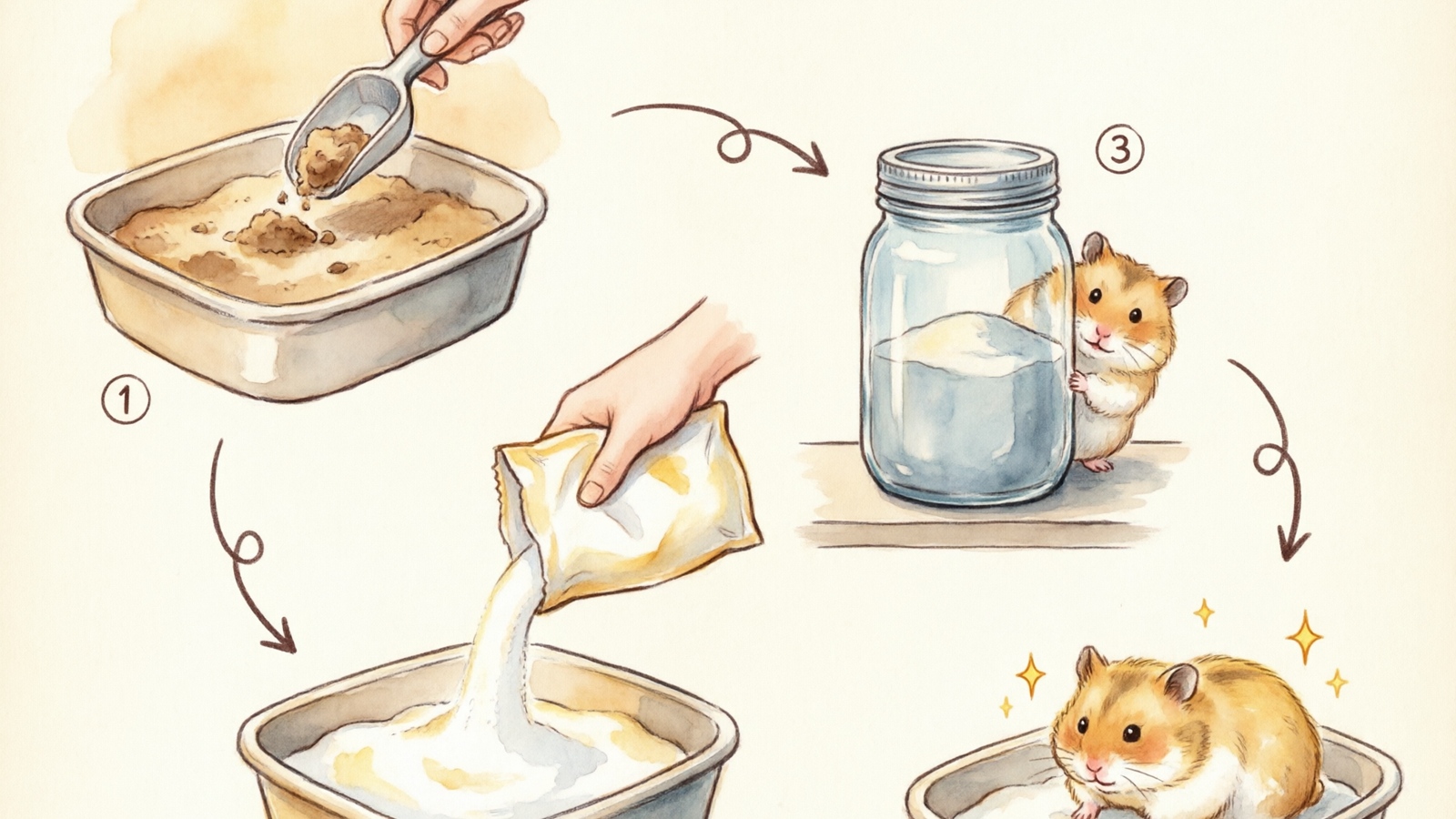
Setup (5 minutes)
- Choose the right container — see the size guide above or use a DIY option
- Fill with 1-3 inches of hamster-safe sand (no dust, no calcium)
- Place in a corner — hamsters prefer corners for their bathroom
- Leave permanently in the cage, or offer 2-3 times per week if space is tight
Maintenance Schedule
| Task | Frequency | How |
|---|---|---|
| Scoop waste | Daily | Use a small scoop or mesh strainer to remove poop and pee clumps |
| Top up sand | As needed | Add fresh sand when level drops below 1 inch |
| Full replacement | Every 1-2 weeks | Dump all sand, wash container with warm soapy water, dry, refill |
| Deep clean | Monthly | Wash with white vinegar to remove mineral deposits, rinse, air dry |
If sand gets smelly before the 1-2 week mark, your hamster is using it heavily as a potty. Replace more often or get a larger container. Clumping sand makes daily scooping much easier.
For the full cage cleaning routine, see our guide on how to clean a hamster cage.
Common Sand Bath Problems Solved
| Problem | Solution |
|---|---|
| Hamster won’t use it | Try different sand textures. Place in their preferred corner. Be patient — it can take days. |
| Sand kicked everywhere | Container too shallow. Use deeper walls (Niteangel Triangle) or a DIY glass dish. |
| Used as potty | Very common and actually helpful. Just scoop daily. Clumping sand makes this easy. |
| Hamster sneezes | Switch from dust to sand immediately. Use Niteangel or DR.DUDU (confirmed dust-free). |
| Sand smells fast | Replace more often. Try clumping sand for easier scooping. Container may be too small. |
| Hamster eats sand | Small amounts of tasting are normal. If persistent, switch brands. Ensure calcium-free. |
For broader behavioral issues, see our hamster behavior problems guide.
Frequently Asked Questions
Is a sand bath good for a hamster?
Yes. A sand bath is essential for hamster health — it removes excess oils from the coat and provides natural enrichment. Hamsters should never be bathed in water.
What happens if a hamster doesn’t have a sand bath?
Without a sand bath, a hamster’s coat becomes greasy, matted, and odorous over time. They also miss out on an important natural enrichment behavior. While they will not die without one, their quality of life and coat condition will suffer noticeably.
What is the best sand for a hamster sand bath?
Dust-free, calcium-free desert sand is the best option. Niteangel Hamster Desert Bath Sand ($13.99) is the most popular choice because it is specifically formulated for hamsters with a confirmed no-dust formula. For budget options, sterilized children’s play sand also works well.
Can hamsters use chinchilla sand or dust?
Chinchilla sand can work for hamsters, but chinchilla dust is too fine and poses a respiratory risk. Products labeled “dust bath” are designed for chinchillas and degus. Choose “sand” — never “dust.”
Watch for sneezing and switch products if it occurs.
How often should I give my hamster a sand bath?
Most experienced keepers recommend leaving the sand bath in the cage permanently. Hamsters self-regulate their bathing. Scoop waste daily and replace all sand every 1-2 weeks.
If cage space is limited, offer the sand bath 2-3 times per week for at least 30 minutes.
How do I make a DIY hamster sand bath container?
Use a glass baking dish, ceramic bowl, or plastic Tupperware container. Minimum 4x4 inches for dwarf hamsters, 7x5 inches for Syrians. Fill with 1-3 inches of hamster-safe sand.
Avoid cardboard, metal cans, or anything with sharp edges. Total cost: $2-10.
Do Syrian hamsters need sand baths?
Yes, Syrian hamsters benefit greatly from sand baths — especially long-haired varieties prone to coat matting. Syrians need larger containers (minimum 7x5 inches) with 2-3 inches of sand depth. Many Syrians also use the sand bath as their potty area, which is normal.
Why is my hamster throwing sand everywhere?
This is normal and actually a sign your hamster is enjoying the bath. Hamsters dig and kick sand as part of their bathing and play behavior. If it creates too much mess outside the cage, use a container with higher walls or a covered design like the Niteangel Triangle.