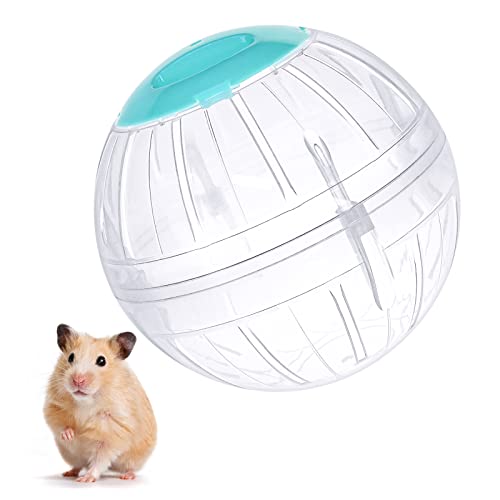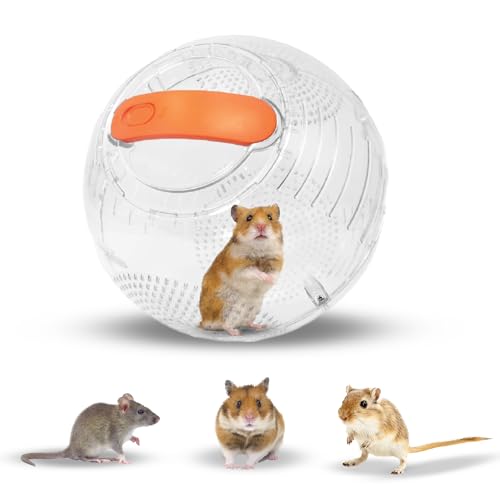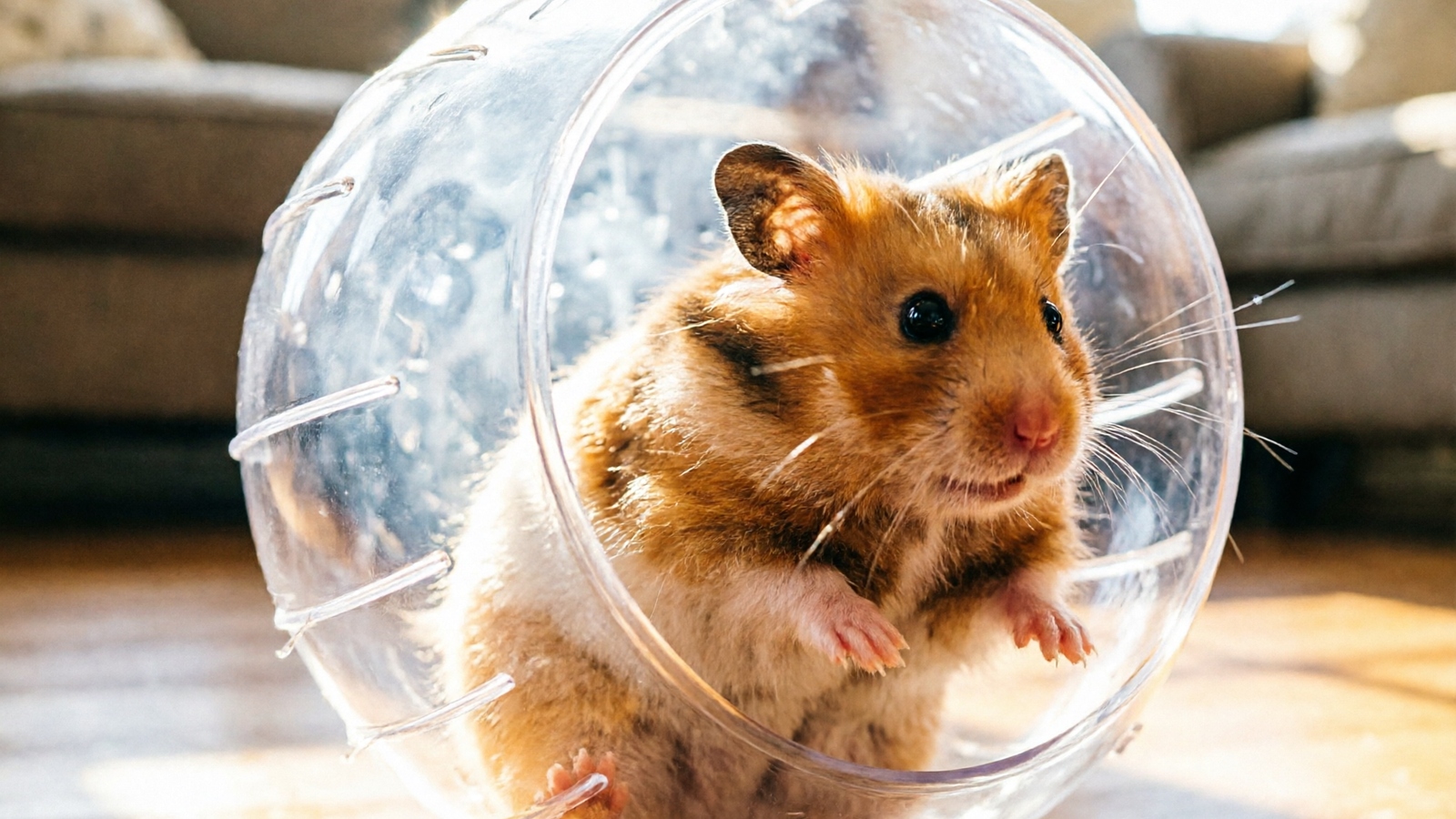
A hamster exercise ball lets your small pet explore beyond the cage while staying contained. But choosing the right size and using it safely matters more than most owners realize — too small a ball can arch the spine, and too long a session causes overheating.
After comparing 8 options across different sizes, materials, and price points to find the best hamster ball for every situation. This guide covers species-specific size charts, expert safety guidelines, and honest advice on whether exercise balls are the right choice for your pet.
Quick Answer: Top Hamster Ball Picks
Short on time? Here are the top picks at a glance:
| Pick | Product | Size | Price | Best For |
|---|---|---|---|---|
| Best Overall (Syrian) | Kaytee 7” Run-About Ball | 7” | $11.97 | Adult Syrian hamsters |
| Best for Dwarfs | Kaytee 5” Run-About Ball | 5” | $9.49 | Roborovski and dwarf hamsters |
| Best Premium | Happy Habitats Roam Ball | 7” | $24.99 | Owners wanting top ventilation |
| Best Value | FANKUTOYS 2-Pack | 5.7” | $17.99 | Multi-hamster households |
| Best Budget | NESTSOUL 7.9 Inch Clear Ball | 5.1” | $20.99 | Small dwarfs on a budget |
Important: No matter which ball you choose, limit sessions to 15-20 minutes and always supervise. See our full safety guidelines below.
Hamster Ball Size Guide by Species
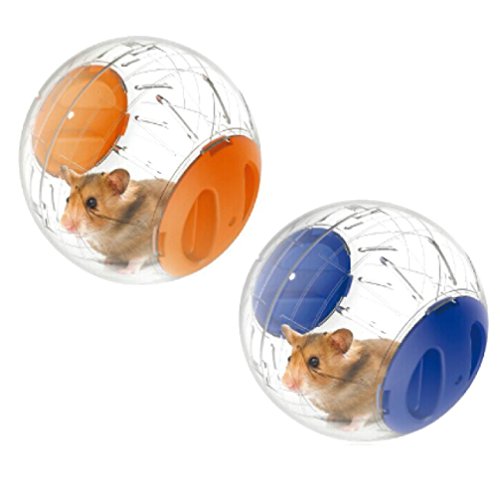
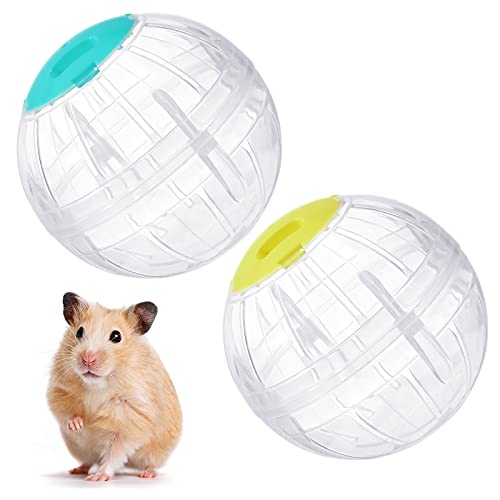
A hamster exercise ball is a hollow sphere made of clear plastic that your pet runs inside to move around outside its cage. Getting the right size is the single most important factor — a ball that’s too small forces an arched back, while one that’s too large becomes too heavy to move.
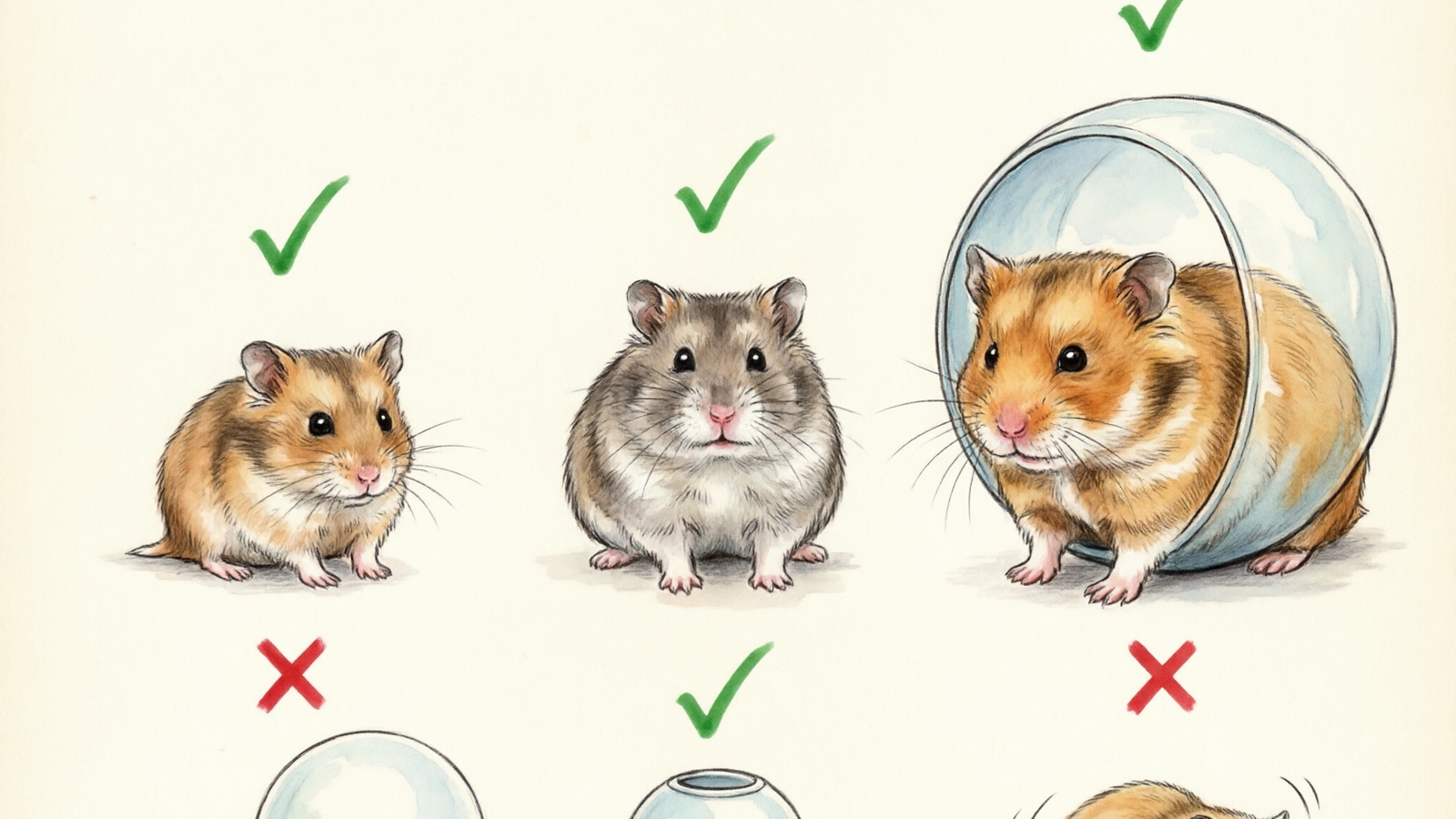
| Species | Body Length | Min Ball Size | Recommended Product |
|---|---|---|---|
| Roborovski dwarf | 2-3 inches | 5 inches | Kaytee 5” Run-About Ball |
| Campbell / Winter White | 3-4 inches | 5-5.7 inches | FANKUTOYS 5.7” Ball |
| Syrian hamster | 5-7 inches | 7 inches minimum | Kaytee 7” Run-About Ball |
| Large Syrian | 7+ inches | 7.9 inches | JOUSONTY 7.9” Ball |
Why size matters: A Roborovski dwarf in a 7-inch ball simply cannot generate enough force to roll it. Conversely, a full-grown Syrian crammed into a 5-inch ball runs with a hunched spine that can cause lasting damage. For more on the physical differences between breeds, see our Syrian vs dwarf hamster comparison.
Top 8 Hamster Ball Reviews
Best Overall for Syrian Hamsters — Kaytee 7” Run-About Ball
The Kaytee 7-inch Run-About Ball is the standard choice for Syrian hamsters, and for good reason. This Kaytee hamster ball has the right diameter for most adults, a secure twist-lock lid that prevents accidental escapes, and enough ventilation slots to keep airflow reasonable during short sessions.
The clear design lets you keep an eye on your pet at all times. This is the default pick for any standard Syrian — it’s affordable, widely available, and proven reliable.
Best for: Adult Syrian hamsters (5-7 inches body length) Price: $11.97
Best for Dwarf Hamsters — Kaytee 5” Run-About Ball
If you have a dwarf hamster, the Kaytee 5-inch Run-About Ball is the go-to option. It holds Amazon’s Choice status and ranks as the #7 best seller in small animal habitat accessories.
The smaller diameter means Roborovski, Campbell, and Winter White dwarfs can actually generate enough momentum to roll. The same twist-lock lid and ventilation design as the 7-inch version, just scaled down. At under $10, it’s hard to beat for a single dwarf hamster.
Best for: All dwarf species (Roborovski, Campbell, Winter White) Price: $9.49
Best Premium — Happy Habitats Roam Ball 7”
The Happy Habitats Roam Ball is a newer entry that addresses some of the ventilation complaints common with Kaytee balls. It features a redesigned ventilation pattern with more, smaller air holes that improve airflow without compromising structural integrity.
At $24.99, it costs more than twice the Kaytee equivalent. But if you’re concerned about air circulation and want the best-built option on the market, this is the one. The smoother rolling action also means less noise on hard floors.
Best for: Owners willing to invest in better ventilation and build quality Price: $24.99
Best Value — FANKUTOYS 2-Pack 5.7”
Got more than one hamster? The FANKUTOYS 2-Pack at 5.7 inches gives you two balls for $17.99 — roughly $9 each. That’s comparable to a single Kaytee 5-inch but with slightly more interior room.
The 5.7-inch size works well for Campbell and Winter White dwarfs. Smaller Roborovskis might find it slightly heavy, but it’s still manageable. The twist-lock mechanism is secure, and the transparent plastic is reasonably thick.
Best for: Multi-hamster households, Campbell/Winter White dwarfs Price: $17.99 (2-pack)
Best for Large Syrians — JOUSONTY 7.9” Ball
Some Syrian hamsters, particularly long-haired varieties, are simply too large for a standard 7-inch ball. The JOUSONTY 7.9-inch option provides that extra fraction of space that makes a difference for bigger hamsters.
The additional ventilation holes are a welcome touch. At $19.99, it sits between the Kaytee and Happy Habitats on price. If your Syrian’s back arches in a 7-inch ball, this is your answer.
Best for: Large or long-haired Syrian hamsters that need extra room Price: $19.99
Best Budget — NESTSOUL 7.9 Inch Clear Ball 5.1”
The NESTSOUL 7.9 Inch Clear option sits at the mid-range price point in our lineup at $20.99. The clear plastic design lets you keep an eye on your hamster while they exercise, making it easier to monitor for signs of stress or fatigue.
At 5.1 inches, it’s suited for small dwarf hamsters. The lid mechanism is a simple push-fit rather than twist-lock, which I’d consider a downgrade — it’s less secure. For a budget pick, it works, but I’d spend the extra dollar for the Kaytee 5-inch if you can.
Best for: Budget-conscious owners with small dwarf hamsters Price: $20.99
Best Mid-Range Single — FANKUTOYS 5.7”
The FANKUTOYS 5.7-inch single ball hits a sweet spot between the Kaytee 5-inch and 7-inch options. The extra 0.7 inches over the Kaytee 5-inch gives Campbell and Winter White dwarfs more room without being too heavy to roll.
At $12.99, it’s a few dollars more than the Kaytee 5-inch but offers a more comfortable fit for hamsters in the 3-4 inch range. The transparent design and twist-lock lid are comparable to Kaytee’s build quality.
Best for: Campbell and Winter White dwarfs that find the 5-inch snug Price: $12.99
Best Dwarf-Specific 2-Pack — Emours 4.8” Mini Balls
The Emours 4.8-inch 2-pack is purpose-built for the smallest hamsters. If you have Roborovski dwarfs, this is the most appropriately sized option available.
At 4.8 inches, these balls are light enough for even the tiniest hamsters to maneuver. The two-pack at $14.99 means you get a backup or can use both if you have two dwarfs. With hundreds of verified reviews, they’ve proven popular with dwarf hamster owners.
Best for: Roborovski dwarfs and other extra-small hamster species Price: $14.99 (2-pack)
Comparison Table
| Product | Diameter | Price | Best For | Key Feature |
|---|---|---|---|---|
| Kaytee 7” | 7” | $11.97 | Syrian | Secure twist-lock lid |
| Kaytee 5” | 5” | $9.49 | Dwarf | Amazon’s Choice |
| Happy Habitats | 7” | $24.99 | Premium | Best ventilation |
| FANKUTOYS 2-pack | 5.7” | $17.99 | Value | Two balls included |
| JOUSONTY | 7.9” | $19.99 | Large Syrian | Extra spacious |
| NESTSOUL 7.9 Inch Clear | 5.1” | $20.99 | Budget | Fun design |
| FANKUTOYS single | 5.7” | $12.99 | Mid-range | Good all-rounder |
| Emours 2-pack | 4.8” | $14.99 | Robo dwarf | Lightest option |
How to Use a Hamster Ball Safely
Using a hamster exercise ball correctly is just as important as choosing the right one. Here’s a step-by-step approach that minimizes stress and maximizes safety.
Step 1: Choose the right size. Refer to the size chart above. Your hamster’s back should be flat — not arched — when standing inside the ball.
Step 2: Introduce gradually. Place the open ball in your hamster’s cage for a few days so it can investigate the strange new object on its own terms. Don’t force your hamster inside.
Step 3: Start with short sessions. The first time, aim for just 5 minutes. Gradually increase to a maximum of 15-20 minutes per session.
Step 4: Supervise at all times. Never leave your hamster unattended in a ball. Watch for signs of stress including freezing in place, excessive grooming, rapid breathing, or frantically trying to escape. For tips on reading your hamster’s behavior, see our guide to proper hamster handling techniques.
Step 5: Use on safe surfaces. Flat, hard floors work best. Block off stairs, remove other pets from the room, and keep away from direct sunlight or heat sources.
Step 6: Clean between uses. Hamsters sometimes urinate or defecate inside the ball. Wash both halves with warm soapy water after each session and dry completely before storing.
Warning signs to watch for: If your hamster stops moving, grooms excessively, pants, or tries to chew the lid, remove it immediately. These are stress signals, not “getting used to it.”
Are Hamster Balls Safe? What Experts Say
This is the question every responsible hamster owner should ask. The honest answer is nuanced.
The case against exercise balls is strong. The RSPCA, Blue Cross, and California Hamster Association all recommend against using hamster exercise balls. Their concerns include:
- Poor ventilation: Despite the holes, airflow inside a sealed plastic sphere is limited, especially during active running
- No exit option: Hamsters cannot choose to stop or leave the ball, which contradicts their natural instinct to hide when stressed
- Spine curvature: Running in a curved surface forces an unnatural posture, particularly in undersized balls
- Toe and foot injuries: Toes can get caught in ventilation slots or at the seam between the two halves
- Sensory deprivation: Hamsters rely heavily on smell and touch — a plastic ball blocks both senses
The practical reality is that many owners still use exercise balls, and some hamsters appear to enjoy the activity. The key is minimizing risk through proper sizing, strict time limits, and close supervision.
Our position: If you choose to use one, follow every safety rule in this guide. For exercise options that avoid these concerns entirely, see our hamster exercise alternatives.
5 Hamster Ball Safety Rules
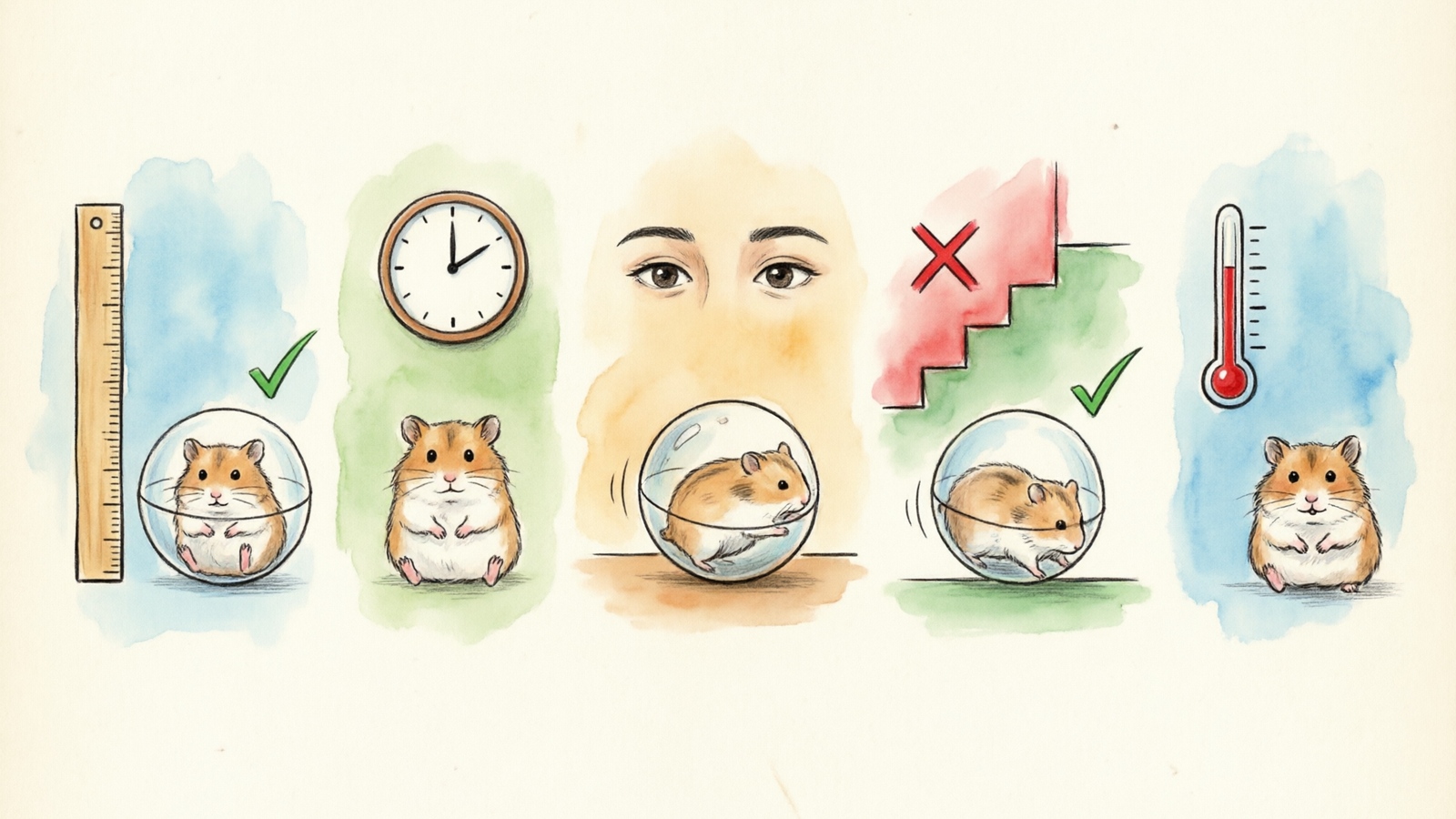
If you use one, follow these rules every single time:
- Size check: The ball must be at least twice your hamster’s body length. When in doubt, size up.
- Time limit: Maximum 15-20 minutes per session. Set a timer — it’s easy to lose track.
- Always supervise: Never walk away, even for a moment. Other pets, stairs, and gaps under furniture are constant hazards.
- Flat surface only: Block stairs, close doors, and avoid thick carpets where the ball can tip over and trap your hamster upside down.
- Watch for stress: Remove your hamster immediately if it stops moving, grooms frantically, or tries to chew its way out.
Safer Alternatives to Hamster Balls
Given the welfare concerns, many experienced hamster owners prefer these alternatives:
Free-roam time in a hamster-safe room is the gold standard. Block off gaps, remove electrical cords, and let your hamster explore a small room or hallway on its own four paws. This allows natural movement, scent exploration, and the ability to retreat when stressed.
A playpen or exercise pen creates a controlled space without the confinement of a ball. You can add tunnels, hides, and toys to make it enriching. Your hamster can stop, rest, and explore at its own pace.
A larger wheel in the cage provides the most natural form of exercise. Hamsters in the wild run miles each night, and a properly sized wheel lets them do this safely. See our guide to the best hamster wheels for species-specific recommendations.
Tunnel systems that connect to the cage or run across a safe area give your hamster both exercise and enrichment. For ideas on setting these up, check out our cage enrichment guide.
A Syrian hamster with a properly sized wheel (10-12 inches) and regular free-roam time gets more beneficial exercise than any ball session can provide.
How to Choose the Right Hamster Ball
If you’ve decided to use an exercise ball, here’s what to look for beyond size:
Material quality: The plastic should be thick enough not to crack if the ball bumps into furniture. Thin, brittle plastic can shatter on impact. Run your finger along the inside — there should be no sharp edges or rough seams.
Ventilation: Look for multiple ventilation slots distributed around the ball, not just a few large holes on the top and bottom. More, smaller holes provide better airflow without compromising the structure.
Lid security: Twist-lock lids (like Kaytee uses) are more secure than push-fit designs. A hamster that figures out how to pop open a push-fit lid can escape in seconds.
Clarity: Clear plastic lets you monitor your hamster’s behavior from any angle. Colored or tinted balls make it harder to spot signs of stress early.
Easy cleaning: A ball that splits into two halves is much easier to clean than one with a small opening. Since hamsters frequently soil their balls, easy disassembly matters.
For more on setting up a safe and enriching environment for your hamster, see our hamster cage setup guide.
Frequently Asked Questions
Can Syrian hamsters use hamster balls?
Yes, Syrian hamsters can use exercise balls that are at least 7 inches in diameter. A standard adult Syrian measures 5-7 inches in body length, so anything smaller forces the hamster to run with a curved spine. The Kaytee 7-inch Run-About Ball is the most widely used option for Syrians.
Are hamster balls cruel?
This is debated among hamster owners and welfare experts. Organizations like the RSPCA, Blue Cross, and California Hamster Association recommend against hamster balls due to concerns about ventilation, stress, and injury risk. However, many owners use them responsibly with proper sizing, short sessions, and supervision. If you’re unsure, the alternatives section above covers safer exercise options.
How long can a hamster stay in a ball?
No more than 15-20 minutes per session, and never more than once per day. Extended time in a ball can cause overheating, exhaustion, and significant stress. First-time sessions should be limited to 5 minutes.
What size hamster ball do I need?
The ball should be at least twice your hamster’s body length. For dwarf hamsters (2-4 inches), use a 5-5.7 inch ball. For Syrian hamsters (5-7 inches), use a 7-7.9 inch ball. Measure your hamster from nose to tail base to get an accurate length.
Can dwarf hamsters use hamster balls?
Yes, dwarf hamsters including Roborovski, Campbell, and Winter White varieties can use 5 to 5.7 inch balls. The Kaytee 5-inch ball works for smaller dwarfs, while the FANKUTOYS 5.7-inch gives Campbell and Winter White varieties a bit more room.
Are clear or colored balls better?
Clear balls are strongly recommended. Transparency lets you monitor your hamster’s behavior, spot signs of stress early, and check that its posture looks natural while running. Colored or tinted plastic obscures your view.
How do I clean a hamster ball?
Twist the ball open into its two halves, remove any bedding or debris, and wash both pieces with warm soapy water. Use a bottle brush to reach inside the ventilation slots. Rinse thoroughly and air dry completely before the next use — trapped moisture can cause mold.
Can hamster balls be used outside?
No. They should only be used indoors on flat, level surfaces. Outside, the ball can roll into dangers like slopes, water, sharp objects, or direct sunlight. Temperature extremes and predators are also serious risks. Keep ball time inside where you can control the environment.