Quick Answer — Guinea Pig Nails Need Regular Trimming
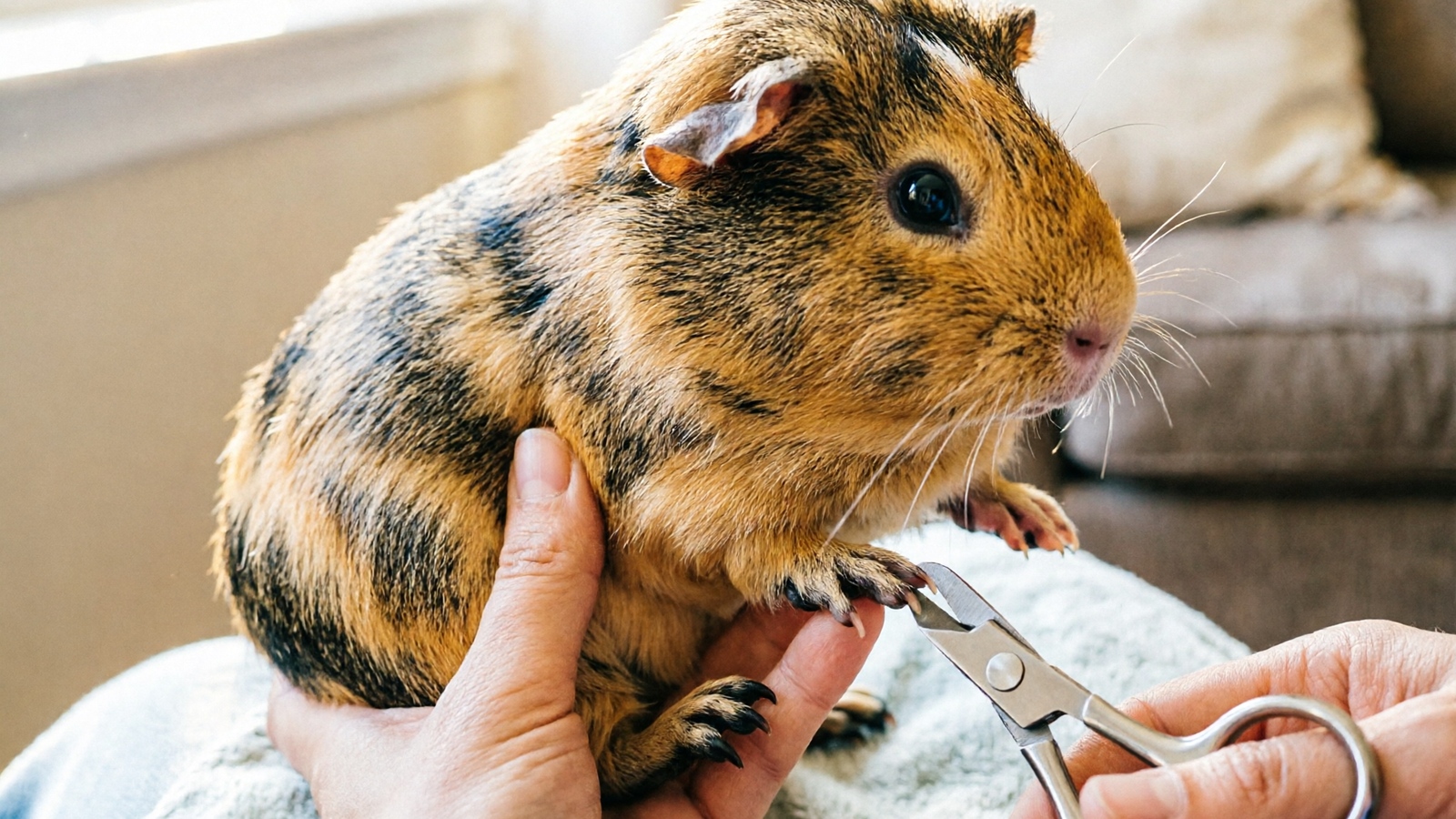
How to trim guinea pig nails? Guinea pig nails grow continuously and cannot wear down naturally on soft bedding, so they need trimming every 2-4 weeks. Use small animal nail clippers (not human clippers), cut below the pink quick (the blood vessel inside the nail), and trim only the curved tip — about 1-2mm at a time. For black nails where the quick is invisible, use a flashlight from underneath or cut in tiny increments. If you accidentally cut the quick, apply styptic powder or cornstarch with firm pressure for 30 seconds.
What is the quick? The pink-colored blood vessel and nerve inside the nail. Cutting into it causes brief pain and bleeding. In white nails, it’s visible as a pink line. In black nails, use a flashlight or micro-increment method (H2-5).
The Quick (Kerogenous Pad) is the living tissue inside a mammal’s nail that contains blood vessels and nerve endings, supplying nutrients to the growing nail. According to Pippa Elliott MRCVS, the quick extends further in overgrown nails because the nail grows faster than the quick recedes — meaning long-neglected nails have a longer quick and require gradual trimming over multiple sessions to safely shorten. Cutting into the quick causes bleeding and sharp pain but is not dangerous if treated promptly with styptic powder. In white or light-colored nails, the quick is visible as a pink stripe. In black nails, it is invisible and requires backlighting or micro-increment cutting.
Key numbers:
- Guinea pig nail trimming frequency: every 2-4 weeks (adults)
- Total nails: 14 (4 per front foot × 2 + 3 per back foot × 2)
- Amount per trim: 1-2mm of the curved tip
- First trim: around 8-12 weeks of age
- Bleeding first aid: styptic powder + 30 seconds pressure
How to cut guinea pig nails follows the same principle — identify the quick, stay below it, trim the curved tip.
For the complete guinea pig care guide, see our dedicated resource. Guinea pig nail trimming is one of the most important regular maintenance tasks for any owner.
What Happens If You Don’t Trim Guinea Pig Nails?
Check Price is a quality option worth considering for your setup.
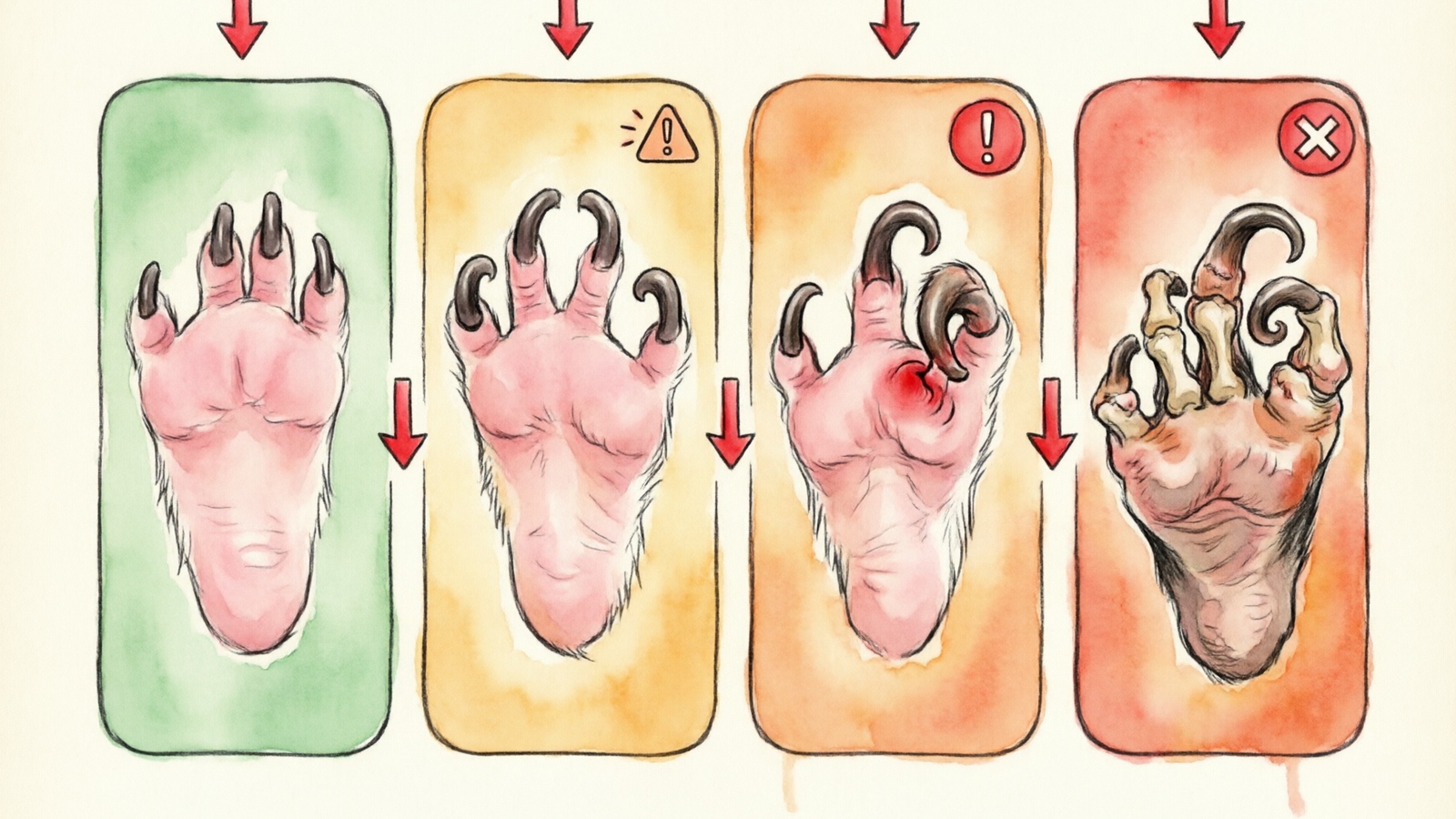
Guinea pigs in the wild keep nails short by running on hard ground and foraging on rough terrain. Pet guinea pigs live on soft bedding (fleece, paper bedding) that provides almost zero friction. Without trimming, overgrown nails cause serious problems. Guinea pig nail trimming is not optional — it is essential for long-term health and mobility.
6 consequences of overgrown nails
| # | Problem | Severity |
|---|---|---|
| 1 | Toe deformation — forces toes sideways, causes joint damage and arthritis | Warning: Severe — irreversible |
| 2 | Pain when walking — nails press into footpad every step | Warning: Severe |
| 3 | Ingrown nails (paronychia) — curled nail pierces skin → infection → pus | Warning: Severe — vet needed |
| 4 | Caught on cage wire — snag on grid → panic → torn nail or fracture | 🟡 High |
| 5 | Scratching owners and cagemates | 🟡 Medium |
| 6 | Quick elongation — quick extends with nail → future trims more limited | 🟡 Medium |
Offering the best guinea pig hay with rough stalks provides mild natural filing, but doesn’t replace regular guinea pig nail trimming.
Tools You Need — Nail Clippers & Supplies Compared
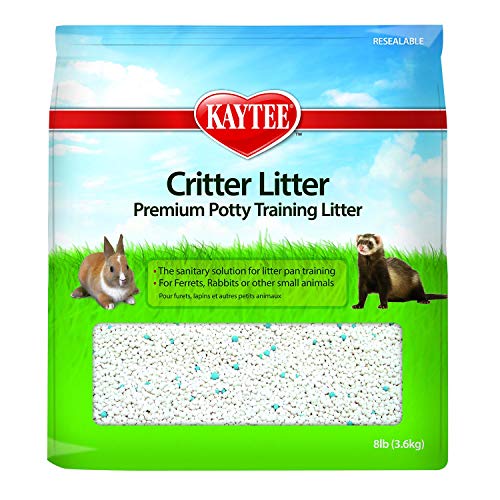
Many owners find that Kaytee Potty Training Litter works well for their pet’s needs.
Nail clipper types
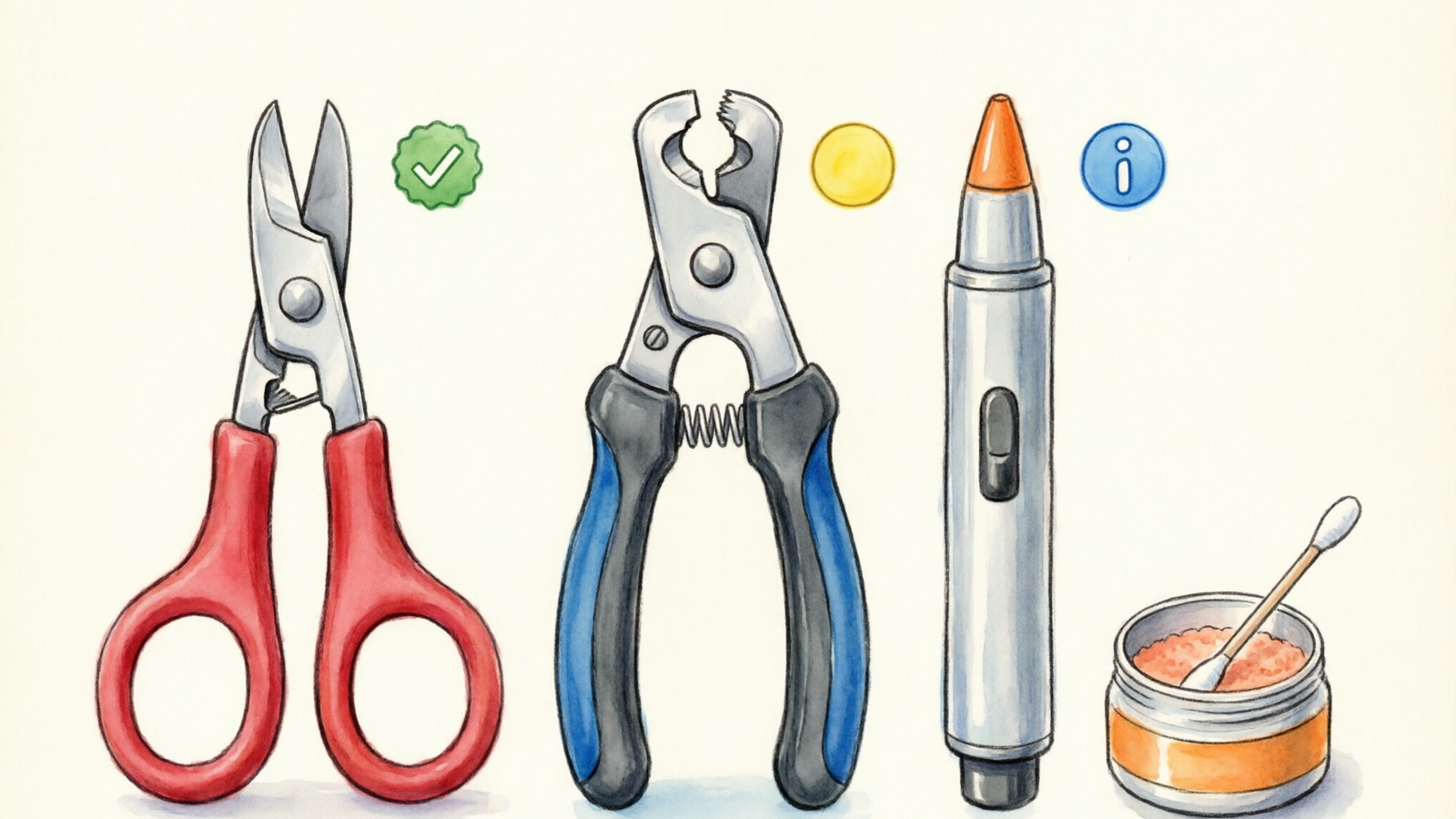
| Type | Pros | Cons | Rating | Price |
|---|---|---|---|---|
| Scissor-style | Precise, wide opening, designed for small pets | Blades dull over time | ⭐⭐⭐⭐⭐ Best | $5-12 |
| Guillotine | Clean cut | Small opening, harder on dark nails | ⭐⭐⭐ | $6-10 |
| Rotary (Dremel) | No bleeding risk, smooth edges | Noisy, slow, learning curve | ⭐⭐ Calm pigs only | $15-25 |
| Human clippers | Already at home | Squeezes nail (painful), imprecise | Not recommended | — |
Why not human clippers? Human clippers compress the nail flat before cutting — uncomfortable and can crush rather than cut cleanly. Scissor-style clippers have a wider opening that fits without compressing. Per Pippa Elliott MRCVS, human clippers “squeeze the nail together before clipping it; this may be painful to your guinea pig.” Choosing the right tool is a key part of successful guinea pig nail trimming.
Bleeding supplies
| Supply | Effectiveness | Where | Price |
|---|---|---|---|
| Styptic powder | ⭐⭐⭐⭐⭐ Fastest (seconds) | Amazon, pet stores | $5-8 |
| Cornstarch | ⭐⭐⭐ (30-60 seconds) | Grocery baking aisle | $2-3 |
| Flour | ⭐⭐ (60+ seconds) | Kitchen | $1-2 |
Essential checklist
- Small animal nail clippers (scissor-style)
- Styptic powder or cornstarch
- Cotton swabs
- Small towel
- Phone flashlight (black nails)
- Treats
How to Trim Guinea Pig Nails — Step-by-Step Guide
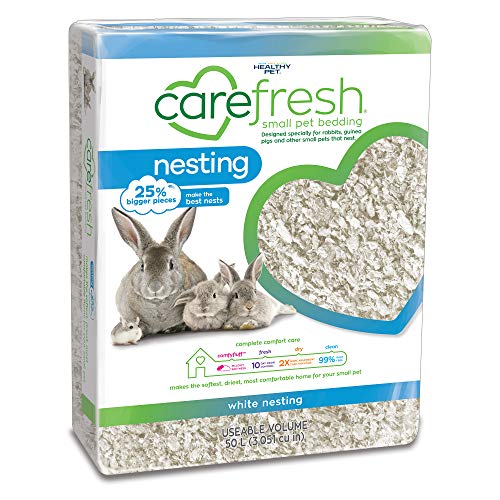
For this purpose, Oxbow Pure Comfort Paper Bedding is a popular choice among pet owners.
Step 1: Prepare workspace
Lay towel on lap or table. Tools within reach. Pre-pour styptic powder on tissue — no time to fumble if bleeding.
Step 2: Pick up and calm your guinea pig
Approach from the side. Cup one hand under chest, other under hindquarters. Place on towel. Stroke head and ears (calming zone). Offer bell pepper. The key to stress-free guinea pig nail trimming is keeping your pig relaxed throughout the process.
Step 3: Examine nails and locate the quick
- White/clear nails: Quick visible as a pink line. Cut below it.
- Black nails: Shine phone flashlight from under the paw pad upward. Quick = dark shadow. Translucent area beyond = safe to trim.
- Overgrown nails: Quick has extended. Trim only 1mm — quick recedes with regular trimming.
Step 4: Trim back feet first
Grip the ankle, isolate one toe. Clippers parallel to nail base, cut curved tip — 1-2mm. Back nails are thicker. Treat after each foot.
Step 5: Trim front feet
Face guinea pig away from you. Front nails are thinner and more curved. Same rule: 1-2mm below quick.
Step 6: Count all 14 nails
Front: 4 × 2 = 8. Back: 3 × 2 = 6. Total: 14. Confirm all trimmed.
Step 7: Reward and return
Larger treat. Return to cage. Calendar reminder for next trim in 2-4 weeks. Consistency is what makes guinea pig nail trimming easier over time — each session builds trust.
Important: A squeak during trimming doesn’t always mean pain. Guinea pigs often vocalize when they simply dislike being restrained. Per Pippa Elliott MRCVS, vocalization during nail trims is common even without pain.
How to Trim Black Guinea Pig Nails
Black nails are the most common challenge because the quick is invisible. Each nail needs individual assessment.
Three methods for locating the quick
Method 1 — Flashlight (most effective). Phone flashlight under the nail through the paw pad. Quick = dark shadow. Translucent tip = safe to trim. Best in dim lighting.
Method 2 — Natural curve. Quick typically ends just before the nail curves downward. Trim the curved portion — 1-2mm.
Method 3 — Micro-increment (safest). Cut 0.5mm at a time. Pink dot on cross-section = quick reached → stop. Dry uniform surface = safe to continue.
For severely overgrown black nails, the quick may extend almost to the tip — trim only 1mm initially. Trim every 2 weeks; the quick recedes over 2-3 months.
How Often Should You Trim Guinea Pig Nails?
| Age | Frequency | Notes |
|---|---|---|
| Baby (0-8 weeks) | Not needed | Nails are soft and grow slowly |
| Young (8 weeks-6 months) | Every 2 weeks | Rapid growth phase |
| Adult (6 months-4 years) | Every 3-4 weeks | Standard maintenance |
| Senior (4+ years) | Every 2-3 weeks | Less activity = less natural wear |
Nail color affects your approach
| Nail Type | Adjustment | Reason |
|---|---|---|
| White/clear | Can trim slightly more | Quick visible → confident cuts |
| Black | Standard frequency | Quick invisible → micro-amounts |
| Mixed | Standard frequency | Different methods per toe |
Signs it’s time to trim
- Nails curve past 90 degrees
- Toes lift off the ground when standing
- Nails click against cage floor when walking
- Nails start curling sideways
Quick recapsulation: Regular trimming keeps the quick short, allowing more to be trimmed each session. Skipping trims lets the quick extend — making future trims more limited. Consistency matters most.
What to Do If You Cut the Quick — Bleeding First Aid
Even experienced owners accidentally cut the quick. A guinea pig nail bleeding quick situation looks dramatic — bright red blood — but is not dangerous with quick action.
Emergency 5-step protocol
- Stay calm. Your guinea pig is more scared than you.
- Apply styptic powder. Cotton swab, press on bleeding nail, hold 30 seconds.
- No powder? Cornstarch or flour, same method, 30-60 seconds.
- Check stopped. Typically stops within 30 seconds.
- Monitor 24 hours. Watch for re-bleeding or infection.
What not to do
- No rubbing alcohol or iodine (irritating, may be licked)
- No aggressive wiping (dislodges clot)
- Don’t leave styptic powder on nail (wipe clean before returning — ingestion risk)
Does it hurt? Per Pippa Elliott MRCVS: “The only pain he feels is when the nail is cut initially… after that it won’t be sore any more.”
When to call the vet: Only if bleeding persists past 5 minutes of pressure — extremely rare.
Severely overgrown nails embedded in the footpad need vet treatment. See our guinea pig health guide. If guinea pig nail trimming has been neglected for months, a vet may need to handle the first session.
Where to Get Guinea Pig Nails Trimmed
Searching for “guinea pig nail trimming near me” is common for owners uncomfortable trimming at home. While professional guinea pig nail trimming is always an option, most owners can learn to do it themselves with practice. Options:
| Option | Cost | Pros | Cons |
|---|---|---|---|
| Exotic vet | $15-30 | Professional, health check included | Expensive, appointment needed |
| Pet store | $10-20 | Convenient | Not all offer GP service |
| GP rescue/shelter | $5-15 (donation) | Experienced, affordable | Not all areas |
| DIY at home | $5-15 (one-time) | Most economical, anytime | Requires learning |
When to see a vet
- Nails severely curled or spiraled
- Guinea pig too resistant to trim safely
- Nail embedded in footpad (ingrown — needs medical treatment)
- Senior guinea pigs with arthritis
Ask your vet to demonstrate during a checkup — most will walk you through it free. Once you’ve seen it, home trimming is straightforward.
How to Calm a Squirmy Guinea Pig During Nail Trims
Some guinea pigs sit still from day one. Most don’t. Four techniques plus a desensitization plan:
Technique 1: Towel wrap (Burrito)
Wrap in a small towel, one foot exposed. Reduces struggling, provides security. Don’t wrap tightly.
Technique 2: Food distraction
Hand-feed a vegetable strip (bell pepper, lettuce) while trimming with the other hand. Finish each bite before the next nail to prevent choking.
Technique 3: Two-person team
One holds and calms, the other trims. Best for first trims or nervous pigs.
Technique 4: Spread across days
Trim 2-3 nails per day for resistant guinea pigs. Complete all 14 over 5-7 days. This also helps you learn how often to trim guinea pig nails — track sessions on a calendar.
Long-term desensitization
- Week 1: Touch feet 1-2 minutes daily (no clippers) + treats
- Week 2: Hold clippers near feet (no cutting) + treats
- Week 3: Squeeze a toe with clippers but don’t cut + treats
- Week 4: Trim 1-2 nails + generous reward
Understanding guinea pig sounds helps distinguish fear squeaks from normal protest. If your guinea pig shakes during trims, see our guide to guinea pig shaking causes.
Product Recommendations
Here are some products mentioned in this guide:
Frequently Asked Questions
How often should you trim guinea pig nails?
Every 2-4 weeks for adult guinea pigs. Young guinea pigs (8 weeks to 6 months) need trimming every 2 weeks due to faster nail growth. Senior guinea pigs (4+ years) need trimming every 2-3 weeks because reduced activity means less natural wear. The key sign it’s time to trim: nails curve past 90 degrees or click against the cage floor when walking.
Can I use human nail clippers on my guinea pig?
No, human nail clippers are not recommended. They squeeze the nail flat before cutting, which is uncomfortable for guinea pigs and can crush the nail rather than make a clean cut. Use small animal nail clippers (scissor-style) designed specifically for small pets — they have a wider opening and don’t compress the nail.
How do you trim black guinea pig nails when you can’t see the quick?
Use a flashlight or phone light to shine from underneath the nail — the quick appears as a dark shadow, and the translucent tip beyond it is safe to trim. Alternatively, cut in tiny 0.5mm increments and check the cut surface after each snip: if you see a pink dot appear, you’ve reached the quick and should stop. Never guess on black nails — trim less rather than more.
What to do if you cut the quick on a guinea pig?
Don’t panic. Apply styptic powder or cornstarch directly to the bleeding nail using a cotton swab and press firmly for 30 seconds. The bleeding will stop quickly — it looks dramatic but is not dangerous. Wipe off any remaining powder before returning your guinea pig to their cage so they don’t ingest it. Monitor for 24 hours; if bleeding persists beyond 5 minutes of pressure, contact your exotic vet (this is rare).
How much does it cost to get guinea pig nails trimmed?
An exotic vet charges $15-30 per nail trim session. Pet stores with small animal services charge $10-20. Guinea pig rescues and shelters may trim nails for a $5-15 donation. Trimming your own guinea pig’s nails costs $5-15 for a pair of small animal clippers (one-time purchase), making it the most economical long-term option.