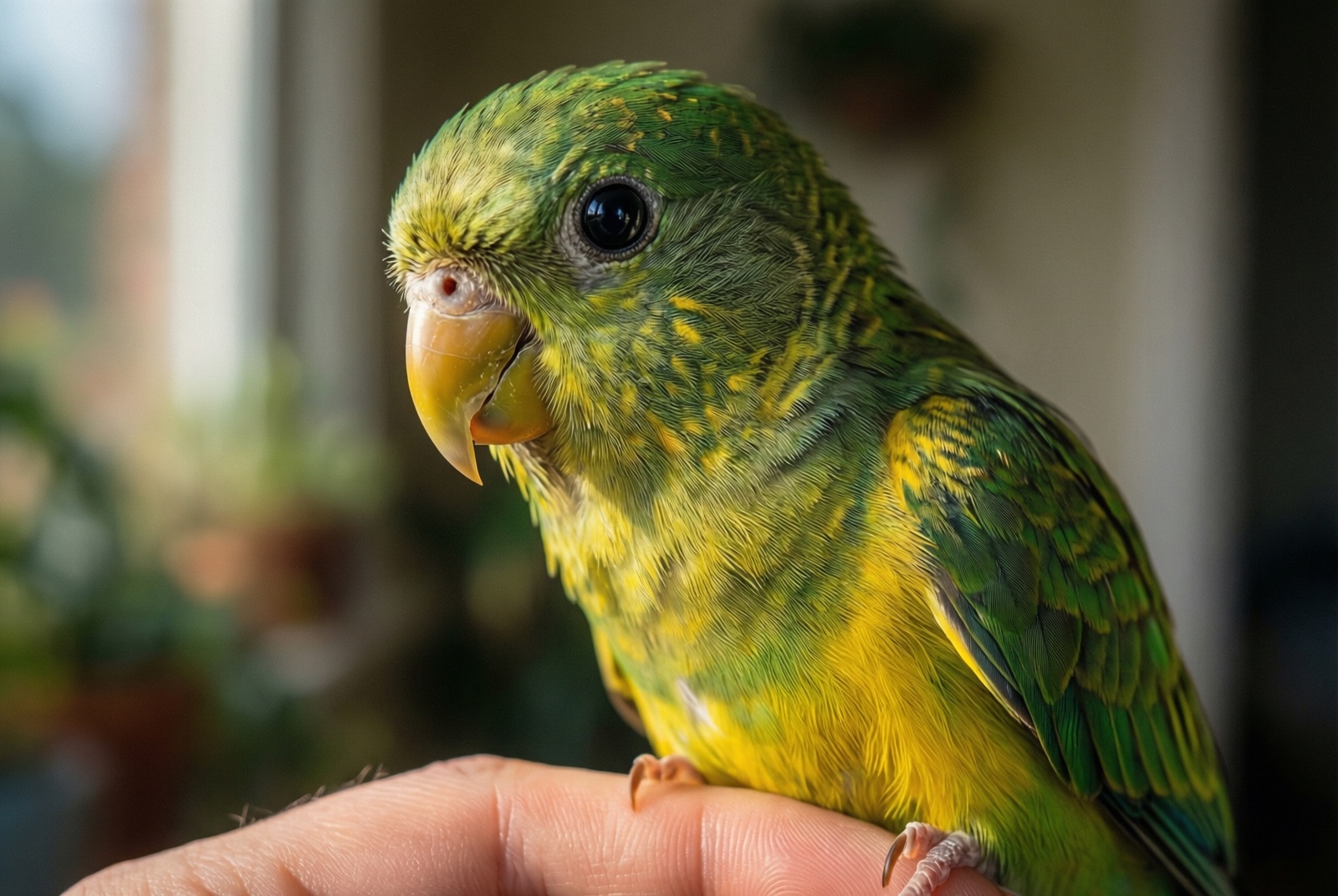
Parakeets — or budgies, depending on where you live — are one of the best small pets you can bring home. They are intelligent, social, and surprisingly affordable to keep compared to larger parrots. But like any pet, they need more than just seed and a cage to thrive. Good parakeet care makes the difference between a bird that survives and one that truly flourishes.
I have seen too many new owners buy a parakeet on impulse, stick it in a tiny cage with nothing but a seed cup and a plastic toy, and then wonder why the bird plucks its feathers or stops eating. Good parakeet care is not complicated, but it does require understanding what these birds actually need. This budgie care guide covers everything: choosing the right cage, feeding a balanced diet, providing enrichment, recognizing health problems, understanding their lifespan, and even teaching them to talk.
Is a Parakeet Right for You?
Parakeet vs. Budgie — Same Bird, Different Name
A parakeet and a budgie are the same species — Melopsittacus undulatus. In the US, people call them parakeets. In the UK and Australia, budgie is the common name. There are two main varieties: the American budgie (smaller, more common in pet stores) and the English budgie (larger, bred for exhibition, with a slightly shorter lifespan).
Why Parakeets Make Great First Birds
Parakeets check a lot of boxes for first-time bird owners. They are small, social, and enjoy interacting with people once trust is established. They are also relatively quiet compared to larger parrots.
The biggest selling point for me is their intelligence — and intelligence is exactly why good parakeet care matters so much. Parakeets can learn to talk, recognize their owners, and perform simple tricks. Males tend to be better talkers, but I have met female budgies with impressive vocabularies too.
The Real Commitment
With proper parakeet care, parakeets live 5 to 10 years, and some reach 15 years (the record is 29). That is a decade-plus commitment. Budget for avian vet visits (specialists cost more than standard vets), quality food, and replacement toys. Plan for at least 30 to 60 minutes of daily interaction outside the cage — parakeets are flock animals, and a bird left alone all day will develop behavioral problems.
Parakeet Cage Setup & Size Requirements
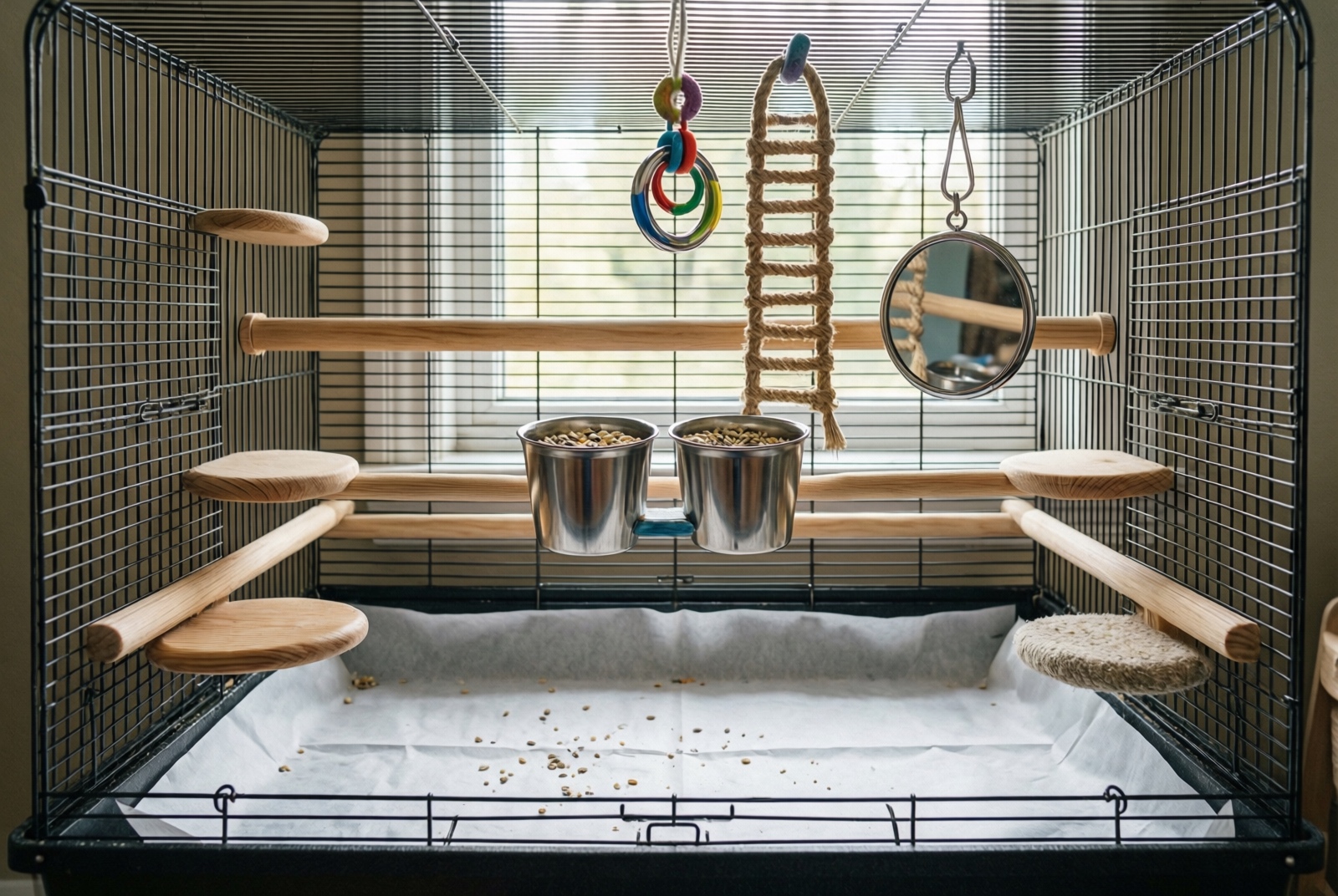
Getting the cage right is one of the most important parts of parakeet care — your bird will spend most of their life inside it. Getting this wrong is the single biggest mistake new owners make.
Minimum Cage Size
For a single parakeet, the absolute minimum is 18 inches wide × 18 inches deep × 24 inches tall. I would not keep a bird in anything smaller than 24 inches wide. When it comes to parakeet cage size, width matters more than height — parakeets fly horizontally. A tall, narrow cage does not give a bird room to stretch its wings.
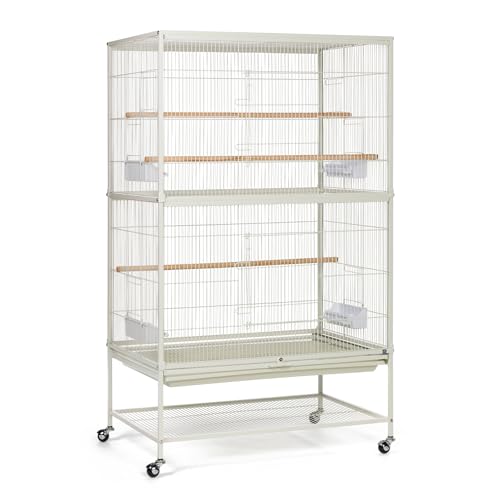
For a pair, jump to at least 30 inches wide. Flight cages — wide enclosures that allow actual flight — are ideal. The Prevue Pet Products Wrought Iron Bird Flight Cage is a solid option at 31 inches wide with 1/2-inch bar spacing, rolling casters, and multiple access doors. Assembly is easier with two people.
| Bird Count | Minimum Width | Recommended Width | Bar Spacing |
|---|---|---|---|
| 1 parakeet | 18 inches | 24+ inches | 1/2 inch max |
| 2 parakeets | 24 inches | 30+ inches | 1/2 inch max |
| 3+ parakeets | 30 inches | 36+ inches (flight cage) | 1/2 inch max |
Bar spacing wider than 1/2 inch is a serious hazard — parakeets can squeeze through or get their heads stuck. I always check bar spacing before buying any cage.
Cage Placement
Keep the cage away from kitchens (Teflon fumes from non-stick pans are lethal to birds), drafty windows, and direct sunlight. The ideal spot is a well-lit room where the family spends time. Avoid floor level — birds feel vulnerable on the ground. Eye level or slightly above is best.
Perches, Feeding Stations & Accessories
Standard cages usually come with thin plastic dowel perches — replace these with natural wood perches of varying diameters. Constant gripping on the same-size perch causes foot problems. An 8 PCS Natural Bird Perch Set gives you apple wood branches and platforms in different sizes for healthy foot exercise.
For feeding cups, stainless steel clamp-on bowls are far more practical than plastic — they do not tip, harbor less bacteria, and detach for easy washing. The Tfwadmx Stainless Steel Feeding Cups come in a two-pack and clamp onto most cage bars.
For cage liners, plain newspaper or unprinted paper towels work well. Avoid cedar or pine shavings — the oils are toxic to birds. For more detail, see our bird cage setup guide.
Parakeet Care: What Do Parakeets Eat?
Diet is where most parakeet care routines fall short. The old “cup of seeds” approach is outdated and leads to malnutrition, fatty liver disease, and shortened lifespans.
The Right Diet Breakdown
A healthy parakeet diet should consist of:
- 60–70% pellets — formulated food with balanced nutrition in every bite
- 20–30% fresh vegetables — leafy greens, carrots, broccoli, bell peppers
- 5–10% seeds — as a supplement or training treat, not the main course
- Small amounts of fruit — apples (no seeds), berries, melon, mango
- Fresh water — changed daily
The problem with seed-only diets is that parakeets pick their favorite seeds (usually high-fat sunflower) and leave the rest, ending up with an imbalanced, fat-heavy diet. Pellets prevent this because every piece has the same nutritional profile.
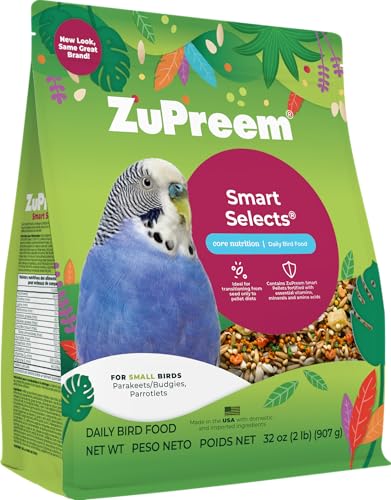
ZuPreem Smart Selects Parakeet Food is a vitamin-fortified blend with fruits, seeds, vegetables, prebiotics, and probiotics. It is a reasonable option for transitioning a seed-addicted bird — the variety keeps them engaged. Just monitor what they actually eat, since birds may still pick favorites.
Safe and Dangerous Foods
| Safe Foods | Feed Frequency | Dangerous Foods (Never Feed) |
|---|---|---|
| Dark leafy greens (kale, spinach) | Daily | Avocado (toxic — can be fatal) |
| Carrots, bell peppers, broccoli | 3–4x per week | Chocolate, caffeine, alcohol |
| Apples (no seeds), berries | 1–2x per week | Onion, garlic, chives |
| Cooked plain pasta, brown rice | Occasionally | Fruit seeds and pits (contain cyanide) |
| Millet spray | Training treat only | Sugary or salty human food |
Calcium and Beak Health
A calcium source should be in the cage at all times. The PINVNBY Cuttlebone 2-Pack with Beak Grinding Stone provides calcium for bone and beak health while giving your bird something to gnaw on. If your bird ignores it at first, scrape the surface to release the scent and make it more appealing. For a complete breakdown of avian nutrition, check out our complete bird diet guide.
Parakeet Toys & Enrichment
Enrichment is an underrated part of parakeet care — a bored parakeet is an unhappy parakeet. In the wild, these birds spend most of their day foraging, flying, socializing, and chewing. A cage with nothing to do leads to feather plucking, screaming, and depression.
Why Enrichment Matters
Parakeets need at least 3 to 5 toys in their cage at any time, rotated every one to two weeks. Once a bird gets used to a toy, it becomes less interesting. Swapping keeps their environment novel.
Types of Toys Parakeets Need
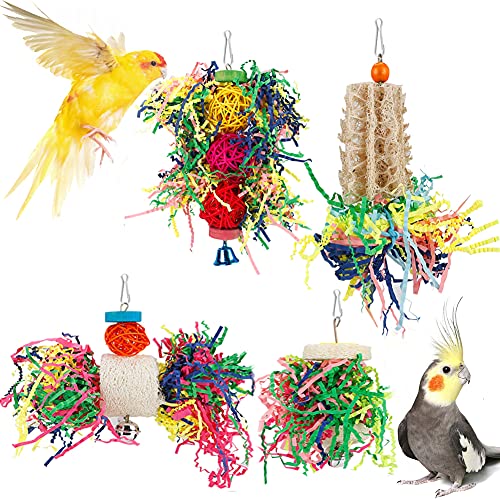
Foraging toys are the most important category. In the wild, parakeets spend hours searching for food. Foraging toys recreate this by hiding treats inside shreddable materials. The Foraging Toys for Parakeets — Chewing Hanging Toy come ready to hang and are stuffed with shredded paper that parakeets love to pull apart. Owners consistently report their birds destroying these within days — a sign the birds are engaged.
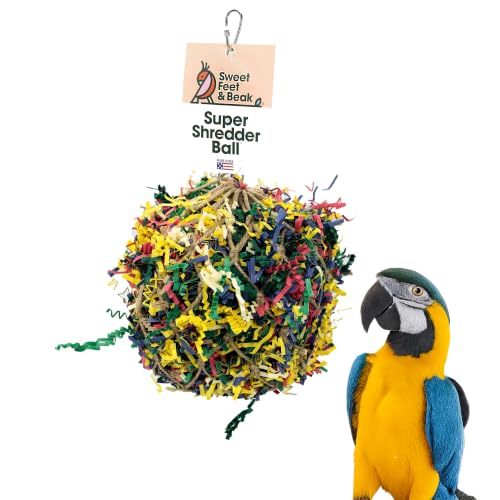
Shredding toys satisfy the natural chewing instinct. The 3-inch Super Shredder Ball is an award-winning option stuffed with colorful paper streamers and wooden pieces. It creates a mess on the cage floor, but that mess means your bird is actively playing. You can refill it with your own materials when the original stuffing runs out.
Swings and ladders provide physical exercise. Most parakeets love swings — the gentle motion seems to relax them.
Introducing New Toys
Some parakeets are wary of new objects. Place the new toy near the cage (not inside) for a day or two, then move it inside but away from their favorite perch. Give them time to investigate on their own terms.
Simple DIY Toy Ideas
You do not need to buy everything. Safe DIY options include:
- Paper chains from plain, unprinted paper
- Cardboard toilet paper tubes stuffed with millet
- Safe wood branches (apple, willow, elm — avoid cedar and oak)
- Leafy greens clipped to the cage bars for shredding
Parakeet Care: Common Health Problems
Learning to recognize parakeet health problems early is one of the most valuable parakeet care skills you can develop. Parakeets are good at hiding illness — a survival instinct from their wild ancestors. By the time a bird shows obvious symptoms, the problem is often advanced. Learning to spot early warning signs is critical.
Warning Signs of a Sick Parakeet
Watch for these red flags:
- Fluffed feathers that stay puffed up for extended periods
- Lethargy — sitting on the cage bottom, not moving
- Loss of appetite — food dish stays full, weight loss
- Changes in droppings — color, consistency, or frequency
- Sneezing, wheezing, or nasal discharge
- Crusty buildup around the beak, eyes, or feet
- Tail bobbing while breathing (respiratory distress)
If you notice any of these, contact an avian vet immediately. Birds go downhill fast — waiting even a day can be fatal. I recommend finding an avian vet before you need one.
Common Health Issues
Respiratory infections are the most frequent problem I see in parakeets. Drafts, poor ventilation, and airborne irritants (scented candles, aerosol sprays, cigarette smoke) all contribute. Keep the cage in a well-ventilated area and never use scented products near birds.
Feather plucking is usually behavioral — caused by stress, boredom, poor diet, or lack of social interaction. Evaluate enrichment, diet, and interaction time first if your bird starts plucking.
Scaly face mites cause a white, crusty buildup around the beak, eyes, and feet. It is treatable with anti-parasitic medication from a vet — do not try to scrape the crusts off yourself.
Psittacosis (parrot fever) is a bacterial infection that can spread to humans. Symptoms include lethargy, breathing difficulty, and greenish droppings. If you suspect it, handle your bird minimally and see a vet promptly.
Egg binding in females is a life-threatening emergency where an egg gets stuck. If a female is straining, fluffed up, and on the cage bottom, get veterinary help immediately.
Preventive Care
Clean the cage weekly with daily spot-cleaning, provide a balanced diet, avoid airborne toxins, and schedule annual vet checkups. Teflon fumes from overheated non-stick cookware can kill a bird within minutes — this is one of the most important safety facts to know.
How Long Do Parakeets Live?
The answer depends heavily on parakeet care quality. A parakeet on a seed-only diet in a cramped cage might live 3 to 5 years. With a pellet-based diet, a spacious cage, regular vet care, and daily social interaction, a bird can easily reach 8 to 10 years, and some reach 15.
English vs. American Budgies
English budgies (exhibition type) tend to have slightly shorter lifespans — typically 5 to 7 years compared to 7 to 10 years for American budgies. Selective breeding for size and feather quality can introduce health vulnerabilities.
Factors That Affect Lifespan
| Factor | Impact | What You Can Do |
|---|---|---|
| Diet quality | High | Switch to pellets, add fresh vegetables daily |
| Cage size | Medium–High | 24-inch wide minimum; flight cages are ideal |
| Social interaction | High | 30–60 minutes daily; consider a pair |
| Air quality | Critical | No Teflon fumes, scented candles, aerosols, or smoke |
| Vet care | Medium | Annual avian vet checkups |
| Mental stimulation | Medium | Rotate toys, provide foraging, train regularly |
The record for the oldest parakeet is 29 years, set by a bird named Charlie in the UK — proof of what excellent lifelong care can achieve.
Training Your Parakeet
Training is an essential part of parakeet care that builds trust, provides mental stimulation, and strengthens your bond with your bird. Parakeets are fast learners — with consistent, short sessions, you will be surprised how quickly they pick things up.
Building Trust First
Before formal training, your parakeet needs to trust you. Sit near the cage and talk softly for the first few days. Offer millet spray through the bars. Let the bird approach you on its terms.
Once your parakeet takes food from your hand, start step-up training — gently press your finger against their lower chest and say “step up.” Most parakeets figure this out within a few sessions.
Teaching Your Parakeet to Talk
Yes, parakeets can talk — they are among the best small talkers. Males generally learn more words and speak more clearly, but females can learn too.
Start with simple words: “hello,” “pretty bird,” the bird’s name. Repeat clearly in the same tone during a quiet moment. Sessions should be 5 to 10 minutes. Some birds learn 10 to 20 words; exceptional birds can learn over 100. Not all parakeets talk, and a quiet bird can still be a wonderful companion.
For more detailed training techniques, see our bird training tips.
Do Parakeets Need a Friend?
Parakeets are highly social flock animals. A single bird can be happy with plenty of human interaction, but if you work long hours or travel, getting a pair is the kinder choice. Two birds keep each other company and display fewer behavioral problems.
The trade-off is that bonded birds may be less interested in bonding with you. If you want a hand-tamed companion, a single bird with lots of daily attention is the way to go.
Frequently Asked Questions
How do you take care of a parakeet for beginners?
If you are wondering how to take care of a parakeet for beginners, start with a properly sized cage — the foundation of good parakeet care — (at least 18” × 18” × 24” for one bird), feed a pellet-based diet with fresh vegetables, provide 3 to 5 toys and rotate them regularly, and spend at least 30 minutes daily interacting with your bird. Find an avian vet before you need one, and avoid Teflon fumes, scented candles, and drafty locations.
Can parakeets talk?
Yes. Parakeets are among the best small talking birds. Males tend to be better talkers, but females can learn too. Start with simple words like “hello” during short 5-minute sessions. Consistency matters more than session length — repeat the same words daily at the same time. Some birds start talking within weeks, others take months, and some never talk at all. Talking ability is not a measure of intelligence or happiness.
Do parakeets need a friend?
It is highly recommended. Parakeets are flock animals and can become depressed alone. If you cannot commit to at least an hour of daily interaction, get a pair. If you want a bird that bonds closely with you, a single bird with plenty of attention works.
What toys do parakeets like best?
Foraging toys and shredding toys are the two categories parakeets engage with most, and they make the biggest difference in your parakeet care routine. Anything they can destroy or hunt through for hidden treats will hold their attention. Swings, bells, and chewable wood are also popular. Rotate toys every one to two weeks to prevent boredom.
How do you know if a parakeet is sick?
Early signs are subtle: sleeping more than usual, fluffed feathers that do not smooth out, reduced appetite, or sitting on the cage bottom. More obvious signs include sneezing, eye or nasal discharge, crusty buildup on the face or feet, changes in droppings, and tail bobbing while breathing. Because parakeets instinctively hide illness, any noticeable change from normal behavior warrants a vet visit — do not wait to see if it improves on its own.
How big should a parakeet cage be?
For proper parakeet care, minimum 18” × 18” × 24” for one bird, but I would start at 24 inches wide for a single and 30+ inches for a pair. When it comes to parakeet cage size, width matters more than height — parakeets fly horizontally, not vertically. Flight cages (30+ inches wide) are the best choice because they allow the bird to actually fly short distances inside the cage. Bar spacing must not exceed 1/2 inch to prevent escape or injury.