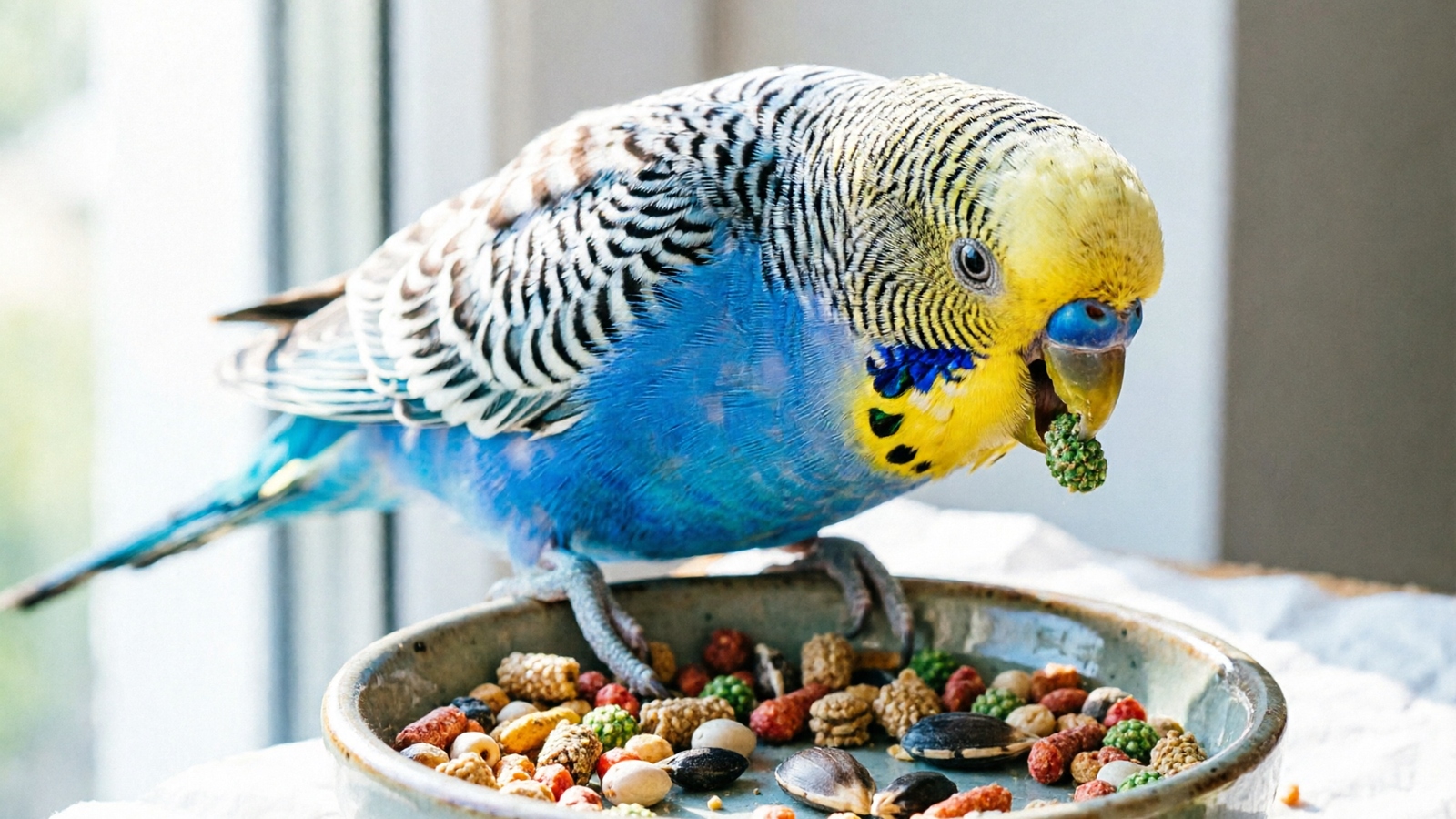
Budgies are the world’s most popular pet bird — but most owners feed them wrong. A seed-only diet leads to obesity, vitamin deficiencies, and a shortened lifespan. The ideal budgie diet is 60-80% pellets, 15-20% fresh vegetables, and only 10-15% seeds.
Most pet store budgies come home eating 100% seeds. Finding the best budgie food means understanding this transition and choosing products that support long-term health.
The right food adds years to your budgie’s life. A budgie on a proper pellet-and-vegetable diet can live 8-15 years, while a seed-only budgie often develops health problems by age 3-5. The best budgie food is an investment in your bird’s future.
We researched 8 products across seed mixes, pellets, and transitional blends to find the top options. Whether you are a new budgie owner or upgrading to organic pellets, this guide covers it all.
For a complete feeding schedule and safe foods list, see our budgie diet guide.
Quick Answer — Top 3 Picks
| Pick | Product | Type | Price | Best For |
|---|---|---|---|---|
| Best Overall | Kaytee Forti-Diet Pro Health | Fortified Seed | $10.94 | Daily feeding — probiotics, thousands of reviews |
| Best Pellets | Harrison’s Adult Lifetime | Organic Pellets | $24.76 | Vet gold standard — USDA organic |
| Best Transition | ZuPreem Smart Selects | Seed + Pellet Blend | $5.95 | Converting seed-eaters to pellets |
Pellets vs Seeds: Which Is Better for Budgies?
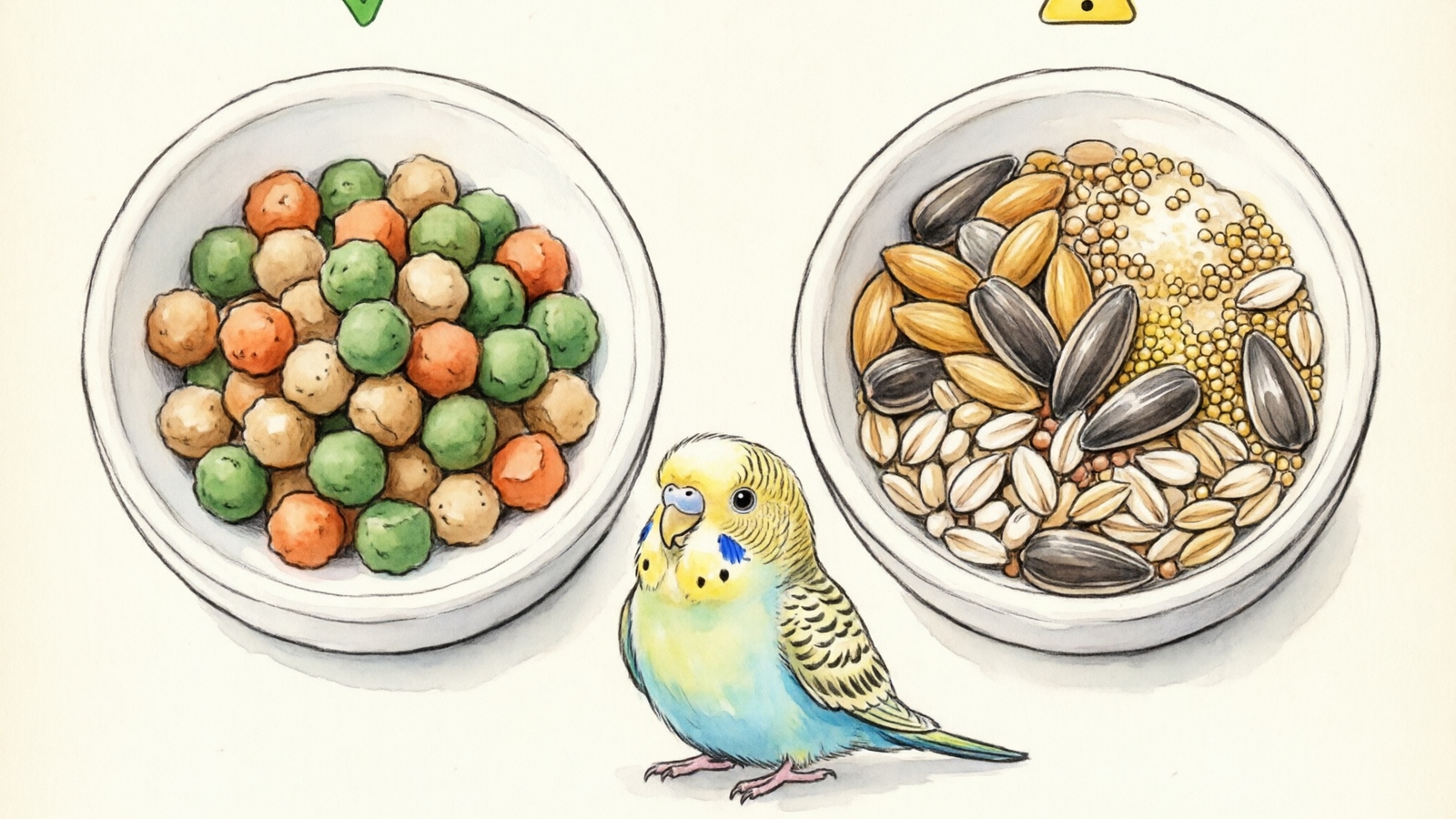
Hepatic lipidosis (fatty liver disease) is a life-threatening condition where excess fat accumulates in a bird’s liver, impairing its ability to filter toxins and metabolize nutrients. In budgies, the primary cause is a seed-only diet — sunflower and safflower seeds contain 40–60% fat, far exceeding what a small parrot’s liver can process. According to the Association of Avian Veterinarians (AAV), hepatic lipidosis is one of the most commonly diagnosed diseases in pet budgies, and converting to a pellet-based diet is the single most effective preventative measure. The AAV recommends that pellets constitute 60–80% of a budgie’s daily caloric intake, with fresh vegetables (15–20%) and seeds reserved as treats (10–15%). Left untreated, fatty liver disease causes lethargy, overgrown beak, respiratory distress, and eventually liver failure.
The number one debate in budgie nutrition. Here is the verdict from avian veterinarians:
| | Seeds | Pellets | |---|---| | Nutrition | Incomplete — birds pick favorites | Complete — every bite is balanced | | Fat content | High (40-60% fat in some mixes) | Low (4-8% fat) | | Vet recommendation | Treat only (10-15% of diet) | Base diet (60-80% of diet) | | Bird preference | Budgies love seeds (high-fat) | Many reject pellets initially | | Cost | Cheap ($3-10 for 2-10 lbs) | More expensive ($15-25 for 1-2 lbs) | | Health risks of sole diet | Obesity, fatty liver, vitamin A deficiency | Virtually none when fed as directed |
Avian veterinarians overwhelmingly recommend pellets as the base diet. Seeds should be treats or a small portion, not the main course. The Reddit r/budgies community echoes this in a thread with over 80 comments — the consensus strongly favors pellets.
Seeds are not evil. The problem is when they are 100% of the diet. A quality fortified seed mix with added probiotics and vitamins is far better than a cheap unfortified mix.
The best approach: use a blend to transition gradually, then move to quality pellets. I’ve helped dozens of budgie owners make this switch, and patience is the key. The best budgie food strategy is not about finding one miracle product — it is about building a balanced diet from quality pellets, fresh vegetables, and controlled seed portions.
What to Look for in Budgie Food
Choosing the best budgie food starts with understanding what makes a product nutritionally sound. Here are the six criteria that matter most.
Buying Criteria
- Complete nutrition: Look for “complete diet” or “nutritionally balanced” on the label. Seed-only is not complete.
- Pellet base: Vets recommend pellets as 60-80% of daily food intake.
- No artificial colors: Natural products like Harrison’s and Dr. Harvey’s avoid unnecessary additives. Colored pellets like ZuPreem FruitBlend can help with transition but are not ideal long-term.
- Probiotics: Beneficial for digestive health. Kaytee Forti-Diet includes these.
- Freshness: Bird food loses nutrients quickly. Buy smaller bags, store in a cool dry place, and check expiration dates.
- Species-appropriate size: Budgies need “parakeet” or “small bird” sized pellets. Some “mini” pellets are actually too large.
For the nutrition science behind these recommendations, see our bird diet guide. For a complete feeding schedule tailored to budgies, our budgie diet guide covers daily portions and safe foods.
8 Best Budgie Foods Reviewed
Every product on this list was selected based on verified owner feedback, nutritional profile, and value. Here are the best budgie food options across three categories: seed mixes, seed-plus-pellet blends, and pure pellets.
Kaytee Forti-Diet Pro Health Parakeet Food — Best Overall Seed Mix
The Kaytee Forti-Diet Pro Health ($10.94, 2 lbs) is the most reviewed parakeet food on Amazon and one of the best budgie food options for daily feeding. It combines natural seeds with probiotic fortification.
The formula includes omega-3 fatty acids for skin and feather health plus prebiotics and probiotics for digestion. Thousands of verified owner reviews back this product.
One owner said: “I have been buying this for my budgie for 8 years — zero health complications.”
The main drawback is that birds pick favorite seeds and ignore others. This creates nutritional imbalances over time.
It also contains artificial colors. Forti-Diet is a strong daily seed mix but should be supplemented with pellets and fresh vegetables for a complete diet.
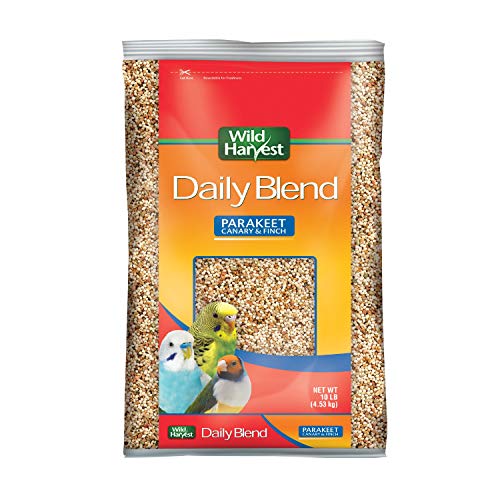
Wild Harvest Daily Blend Parakeet Food — Best Bulk Value
The Wild Harvest Daily Blend ($5.95, 10 lbs) offers the best price per pound on this list — under sixty cents per pound.
This is a simple seed blend with a vitamin coating. It works for parakeets, canaries, and finches. One owner noted: “A cheap and practical option — the birds seem to love it, feeder always empty!”
The bulk size is ideal for multi-bird households.
The nutrition is basic. No added vitamins or minerals beyond the surface coating. The seeds themselves provide protein and some fats, but the vitamin coating washes off quickly when exposed to moisture.
A seed-only diet with this product will lead to deficiencies over time. The large 10-pound bag is also hard to store fresh once opened — transfer to an airtight container immediately. Use this as a budget seed option alongside pellets and fresh vegetables.
Kaytee Fiesta Parakeet Food — Best Variety Blend
The Kaytee Fiesta ($5.95, 2 lbs) adds fruits, vegetables, and varied shapes to the seed mix for mental stimulation.
The colorful blend provides different textures and flavors that keep birds interested. It includes DHA omega-3 for brain and heart health plus prebiotics and probiotics.
One happy owner said: “Keeps my parakeet singing — he is so happy and healthy.”
The trade-off is sugar content from dried fruits and artificial colors. Birds selectively eat their favorite pieces, which defeats the nutritional balance. Fiesta is a great enrichment seed mix but not a complete diet on its own.
Dr. Harvey’s Our Best Parakeet Food — Best Premium Natural Seed
The Dr. Harvey’s Our Best ($28.50, 4 lbs) is an all-natural seed mix with whole nuts, fruits, and vegetables. Zero artificial colors, preservatives, or fillers.
This is a holistic brand that many avian vets approve. The varied ingredients encourage natural foraging behavior.
One owner shared: “My avian vet approved this food. Along with fresh veggies and egg food, my budgies are in peak health.”
The premium price reflects the quality — at over seven dollars per pound, it costs more than any other seed mix on this list.
It requires refrigeration after opening. Some fruit chunks are too large for small budgies. This is best paired with pellets rather than used as the sole food.
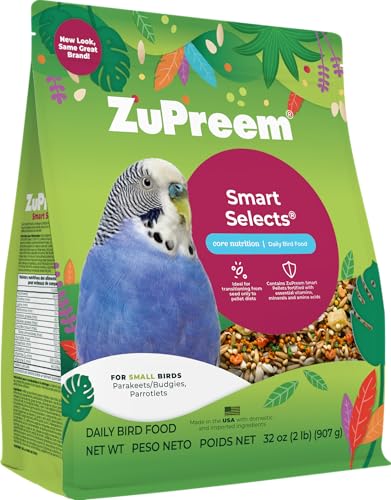
ZuPreem Smart Selects Parakeet Food — Best for Transition
The ZuPreem Smart Selects ($5.95, 2 lbs) is a seed and pellet blend designed specifically for converting seed-eaters to pellets.
This is the easiest transition path available. The mix combines familiar seeds with pellets so birds gradually accept the new food.
It provides complete daily nutrition without supplements needed. One owner confirmed: “My birds were started on this when I adopted them and I continue to feed them it.”
Some clever birds still pick out the seeds and ignore the pellets. The pellet size may be too large for very small budgies. But at under six dollars, it is a low-risk way to start the seed-to-pellet transition.
ZuPreem FruitBlend Bird Pellets — Best for Picky Eaters
The ZuPreem FruitBlend ($16.64, 2 lbs) is one of the best budgie food pellets for picky eaters. Fun fruit shapes and colors encourage pellet acceptance in reluctant birds.
The colorful pellets provide complete and balanced daily nutrition with no supplements needed. The shapes and colors make pellets look more like food and less like medicine to skeptical budgies. One owner said: “My little parakeet loves this food — pleasant smell, fresh every time.”
The artificial colors and flavors are the main downside. Some birds refuse pellets entirely regardless of shape.
The pellets also crumble, creating cage dust. For birds that accept them, FruitBlend is a solid complete diet.
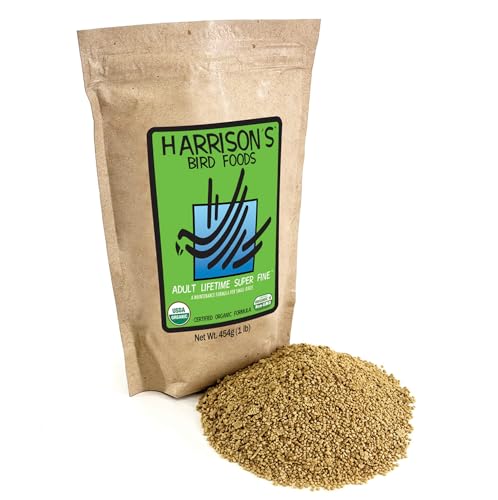
Harrison’s Adult Lifetime Small Bird Food — Vet Gold Standard
The Harrison’s Adult Lifetime ($24.76, 1 lb) is the best budgie food for owners who want the highest quality. It is USDA certified organic and non-GMO.
Developed by avian vets specifically for small birds, these pellets contain zero artificial colors, flavors, or preservatives. The superfine size is perfect for budgies.
One owner with 20 years of experience said: “Best if you want your bird to be healthy. Easy to convert them from seed.”
The price is steep — nearly twenty-five dollars per pound. The 1-pound bag is small and requires refrigeration after opening.
Birds accustomed to seeds may refuse initially. Starting with ZuPreem Smart Selects for the transition makes sense — then moving to Harrison’s once your bird accepts pellets.
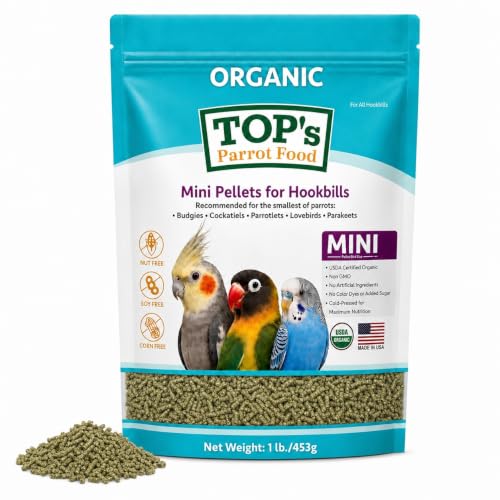
TOP’s Parrot Food Mini Pellets — Best Allergy-Friendly
The TOP’s Mini Pellets ($15.00, 1 lb) is the only option on this list that is peanut-free, soy-free, and corn-free. It is USDA organic and cold-pressed to preserve nutrients.
The ingredient list is impressive — no fillers, no artificial anything. One owner praised it: “The ingredients are simply amazing! No soy, no corn, full of greens and vitamins.”
For birds with food sensitivities, this is the go-to choice.
However, there is a significant size issue. Multiple owners report these “mini” pellets are too large for budgies.
One detailed review noted: “50-70% sails to the cage floor.” Another owner’s veterinarian found the formula does not meet nutritional requirements for budgies specifically.
If you want to try TOP’s, break the pellets into smaller pieces with a mortar and pestle or by crushing them in a ziplock bag. Some owners report success this way, though it adds an extra preparation step to daily feeding. The cold-pressed formula crumbles fairly easily.
This is the most controversial product on our list — excellent ingredients but potentially unsuitable for the smallest birds without manual size adjustment.
How to Transition Your Budgie from Seeds to Pellets
Most pet store budgies arrive eating 100% seeds. Converting to pellets takes patience over 2-6 weeks.
Week 1-2: Introduction
Start with 75% seeds mixed with 25% pellets. ZuPreem Smart Selects makes this easy since it is already a blend. Offer pellets in a separate small dish alongside the seed mix. Birds will investigate the new food out of curiosity.
Week 3-4: Shifting the Ratio
Move to 50% seeds and 50% pellets. Crush some pellets and sprinkle them on favorite seeds to associate smells. Moisten pellets slightly with water or fruit juice to soften them, then gradually reduce moisture.
Week 5-6: Final Conversion
Move to 25% seeds and 75% pellets. Eventually reach the goal of 60-80% pellets, 15-20% fresh vegetables, and 10-15% seeds as treats.
Some budgies convert in two weeks. Others take two months. Factors that affect conversion speed include the bird’s age (younger birds adapt faster), how long they have been on a seed-only diet, and their individual temperament. Hand-fed budgies often accept pellets more readily because they are already familiar with novel food textures.
A helpful trick: offer pellets first thing in the morning when your budgie is hungriest. Place them in the same dish your bird is used to. Remove seed bowls at night and replace with pellets so the bird wakes up to the new food. This mirrors the approach recommended by the Association of Avian Veterinarians.
Never remove seeds entirely until you are sure your budgie is eating pellets. Budgies can starve themselves if they do not recognize pellets as food — they may sit next to a full bowl of pellets and refuse to eat. This is why gradual transition is essential for the best budgie food results.
Monitor weight daily during the transition. A drop of more than 5-7% body weight means you should slow down and consult an avian vet. A gram scale is your best friend here.
For a detailed feeding schedule, see our budgie diet guide.
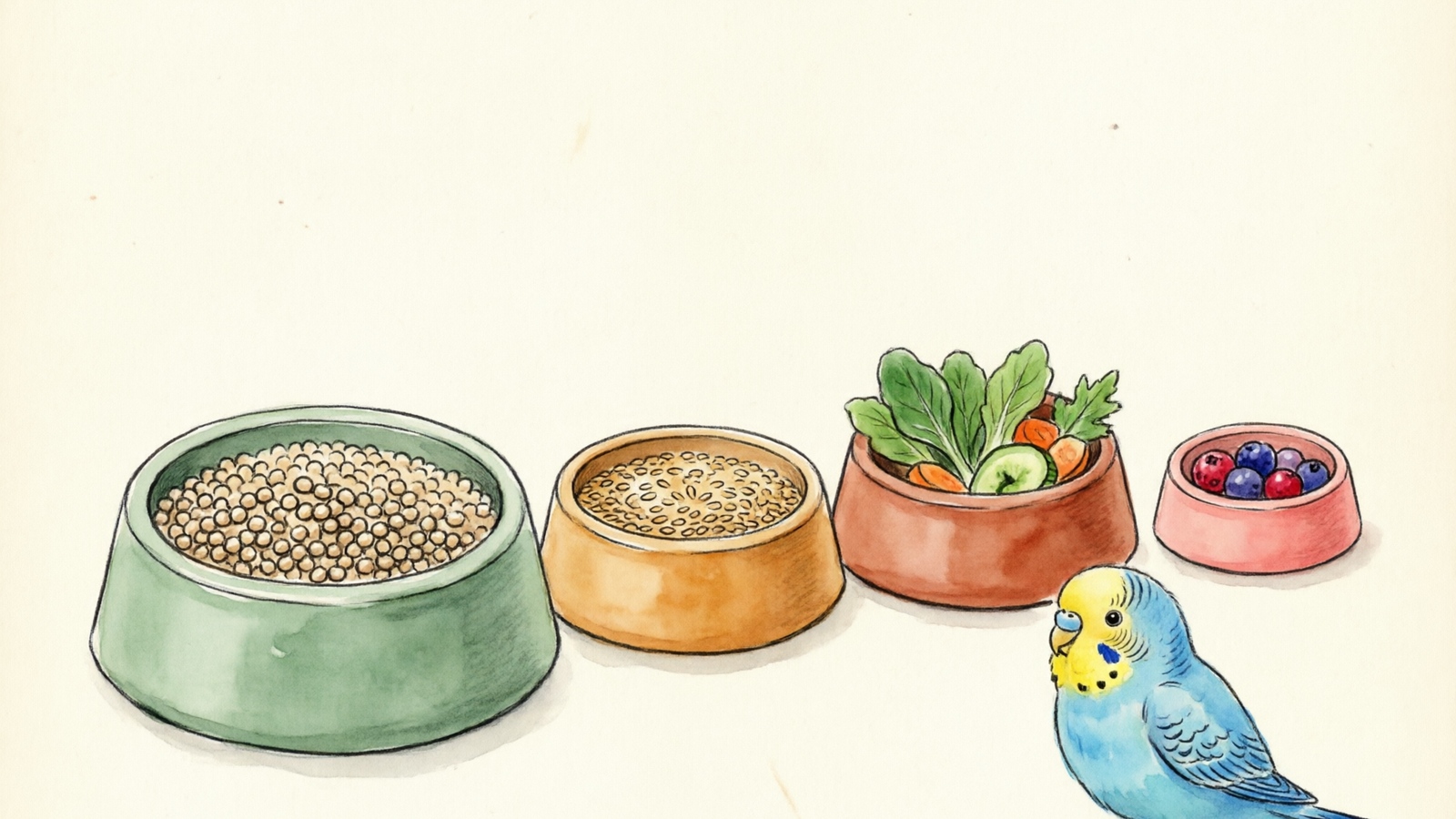
Budgie Diet Breakdown: The Ideal Daily Menu
Based on avian veterinarian recommendations:
| Food Type | % of Daily Diet | Examples | Notes |
|---|---|---|---|
| Pellets | 60-80% | Harrison’s, ZuPreem FruitBlend | Base diet — complete nutrition |
| Fresh vegetables | 15-20% | Spinach, broccoli, carrots, kale | Dark leafy greens for vitamin A |
| Seeds | 5-10% | Millet, canary seed, sunflower | Treat only, not main diet |
| Fruits | 5% (2-3x/week) | Apple, banana, berries, melon | High sugar — limit frequency |
| Fresh water | Always | Clean, changed daily | Essential — budgies dehydrate fast |
A healthy budgie also needs a spacious cage for exercise. See our best parakeet cage guide for recommendations.
For owners wondering about seasonal diet changes, the best budgie food approach stays consistent year-round. In winter, you can slightly increase fat intake with an extra teaspoon of seeds, but the pellet-to-vegetable ratio should not change significantly. Avoid the common mistake of overfeeding seeds during cold months — indoor heating keeps budgies at stable temperatures, so they do not need extra calories for warmth.
Toxic foods to never feed: Avocado, chocolate, onion, garlic, caffeine, alcohol, fruit seeds and pits, xylitol. These apply regardless of which best budgie food product you choose.
Budgie diet safety checklist:
- Pellets make up 60–80% of daily food — complete nutrition in every bite (AAV recommendation)
- Fresh vegetables (15–20% daily) — dark leafy greens, carrots, broccoli provide vitamin A
- Seeds limited to 10–15% as treats — prevents hepatic lipidosis from excess fat
- Transition from seeds to pellets over 2–6 weeks — gradual ratio shift prevents starvation
- Monitor weight daily during pellet transition — gram scale catches problems early
- Fresh water changed daily — budgies dehydrate quickly
- Store food in cool, dry place — nutrients degrade with heat and moisture exposure
- Buy smaller bags for freshness — bird food loses nutritional value within 2–3 months of opening
- Never feed a seed-only diet — #1 cause of hepatic lipidosis in pet budgies (AAV)
- Never feed avocado, chocolate, onion, garlic, caffeine, or alcohol — all acutely toxic to birds
- Never feed fruit seeds or pits — contain cyanide compounds
- Never remove seeds entirely before confirming pellet consumption — budgies will starve themselves
Frequently Asked Questions
What is the best food for budgies?
The best daily food for budgies is a high-quality pellet formulated for small birds, making up 60-80% of their diet. Harrison’s Adult Lifetime ($24.76) is the vet-recommended gold standard — USDA organic and developed by avian veterinarians. Supplement pellets with fresh vegetables and small seed portions as treats.
Can budgies eat only seeds?
No. A seed-only diet is one of the most common mistakes budgie owners make. Seeds are high in fat (40-60%) and lack essential vitamins.
This leads to obesity, fatty liver disease, and vitamin A deficiency. Seeds should make up only 10-15% of the diet, with pellets forming the nutritional base.
What vegetables can budgies eat daily?
Dark leafy greens like spinach, kale, and broccoli are the best daily vegetables. Carrots, peas, corn, and sweet potato are also safe and nutritious.
Avoid avocado, onion, and garlic — these are toxic. Wash all vegetables thoroughly and remove uneaten portions after 2-3 hours.
How do I get my budgie to eat pellets?
Start by mixing pellets into their regular seed mix at a 25:75 ratio. Gradually increase the pellet percentage over 2-6 weeks. ZuPreem Smart Selects ($5.95) is ideal for this transition because it combines seeds and pellets in one bag. You can also moisten pellets slightly or crush them over seeds.
How much should I feed my budgie per day?
A budgie eats approximately 1-2 teaspoons of pellets per day (15-20 grams), plus a small portion of fresh vegetables.
Seeds should be limited to 1 teaspoon as a treat. Always provide fresh water in a clean dish. Adjust portions based on your bird’s activity level and weight.
Do budgies need supplements if they eat pellets?
No. Quality pellets like Harrison’s and ZuPreem are formulated as complete diets with all necessary vitamins and minerals.
If your budgie eats primarily seeds, you should add a bird-specific vitamin supplement. Fresh vegetables should always be offered regardless of the base diet.