Introduction
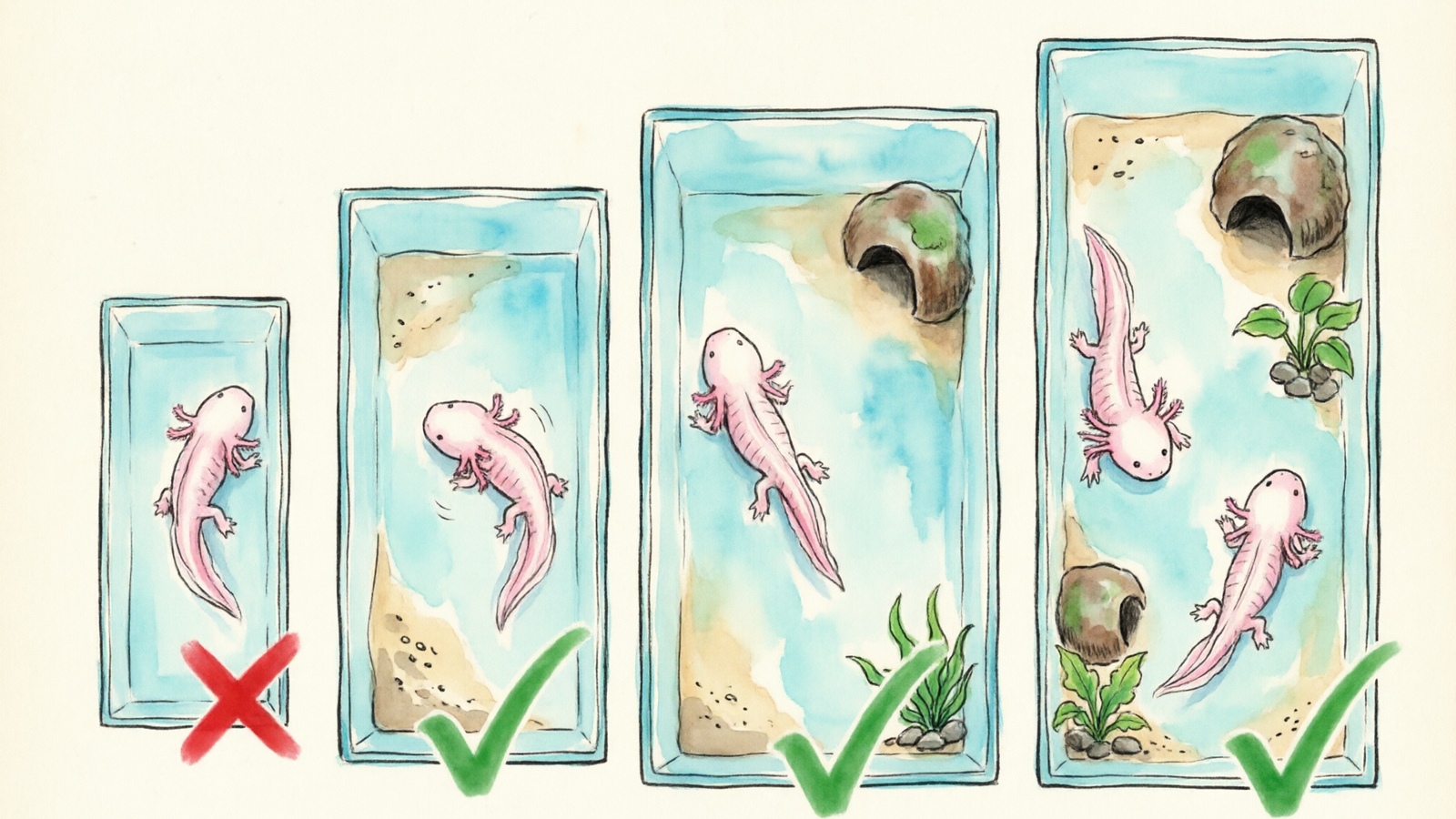
Choosing the right axolotl tank size is the single most important decision you make as an axolotl owner. A tank that’s too small causes chronic stress, poor water quality, stunted growth, and dramatically shortens your axolotl’s lifespan. A tank that’s the right size gives your axolotl room to walk, swim, and behave naturally — and keeps your water parameters stable enough to avoid the ammonia spikes that kill most captive axolotls.
This guide covers everything you need to choose the right tank size for your axolotl — minimum gallons, tank dimensions, why long tanks beat tall tanks, how to size for multiple axolotls, and how to plan for juveniles that will grow into adults. For a full walkthrough of all tank equipment after you pick a size, see our axolotl tank setup guide.
Why Tank Size Matters More Than Anything Else
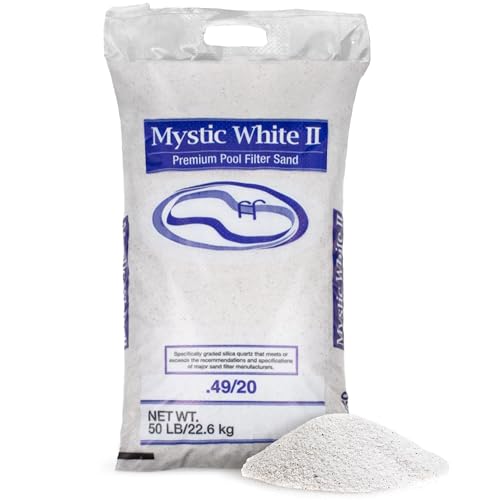
U.S. Silica Mystic White II is a quality option worth considering for your setup.
Tank size affects every aspect of axolotl health. Here’s what happens when you get it wrong:
- Water quality crashes in small tanks. Axolotls produce a lot of waste for their body size. A small tank with an undersized filter cannot process ammonia and nitrite fast enough, leading to toxic spikes. Even with frequent water changes, a 10-gallon tank for an adult axolotl is a constant battle against poor water quality.
- Floor space is limited. Axolotls are bottom-dwellers — they walk along the substrate, not swim through the water column. A 10-gallon tank has only 110 sq in of floor space, which barely fits an adult axoll’s body (axolotls reach 9-12 inches). The axolotl can’t turn around, find a hiding spot, or escape from bright light or filter flow.
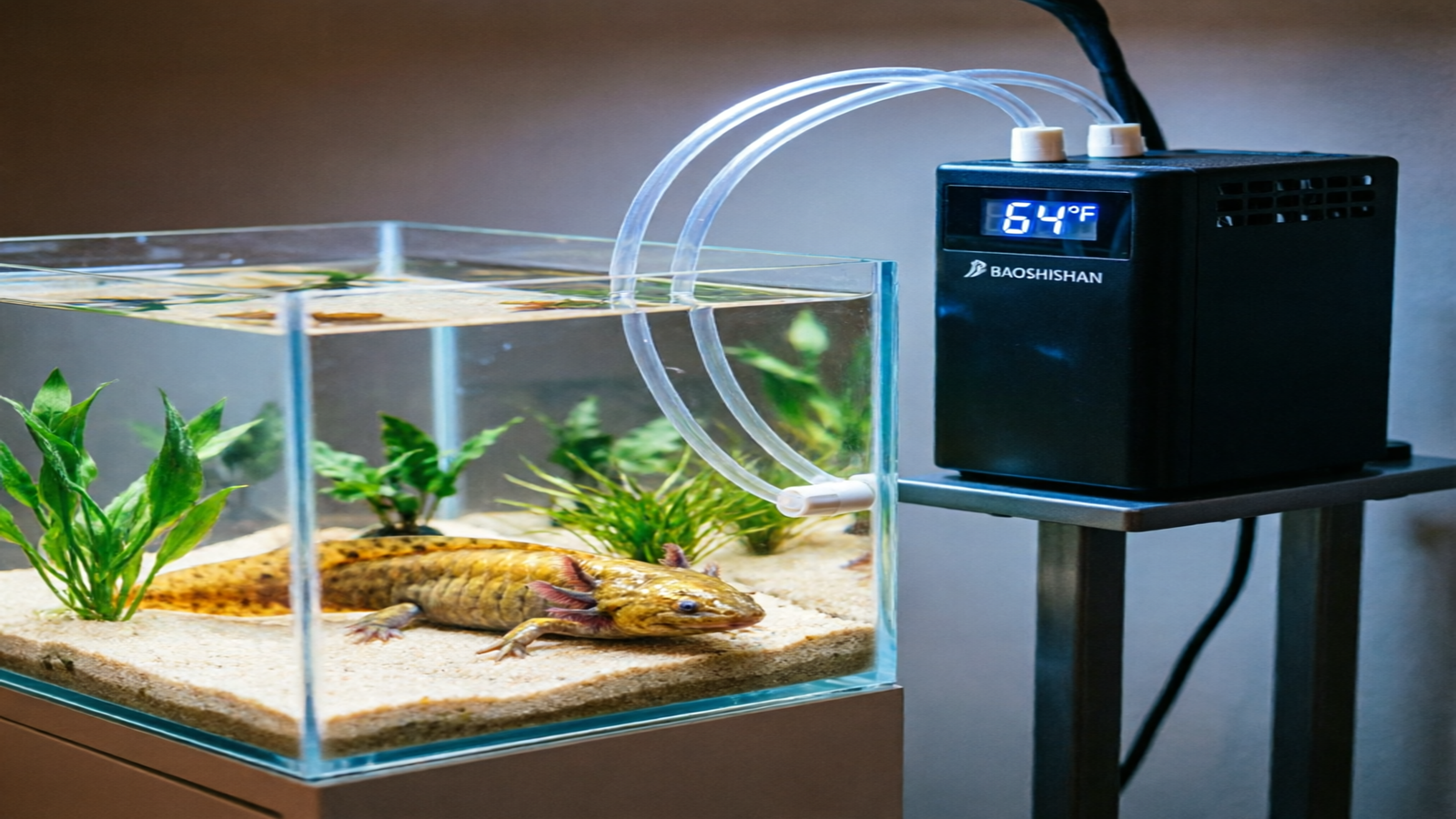
- Temperature stability is harder. Smaller volumes of water heat up and cool down faster. A 10-gallon tank can swing 5°F in a few hours when the room temperature changes. A 20-gallon tank swings 1-2°F in the same period. Axolotls need stable cold water (60-64°F), and small tanks make this impossible.
- Stress shortens lifespan. Chronic stress from cramped quarters suppresses the immune system. Stressed axolotls lose appetite, develop fungal infections, and refuse to eat. A properly sized tank is the single biggest factor in whether your axolotl reaches 10+ years or dies at 2-3.
Most “mystery” axolotl deaths trace back to a tank that’s too small. Sizing the tank correctly is non-negotiable.
Minimum Tank Size by Life Stage
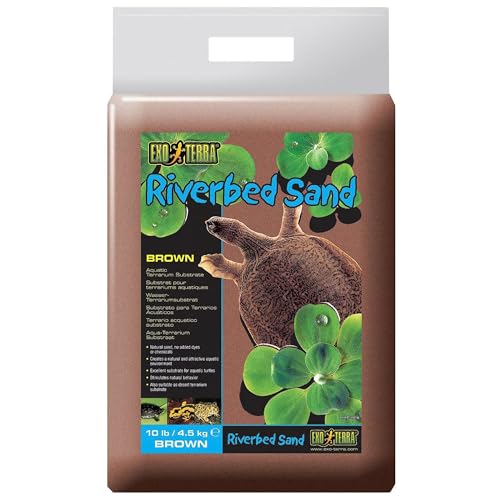
Many owners find that Exo Terra Riverbed Sand works well for their pet’s needs.
Axolotl tank size requirements change as your axolotl grows. Here’s what each life stage needs:
Juveniles (Under 4 Inches)
A 10-gallon tank works temporarily for juveniles under 4 inches. The minimum floor space is 110 sq in, which fits a small axolotl with room for a single hide and one piece of decor. Use this stage to set up the nitrogen cycle, observe your axolotl’s behavior, and save for an upgrade.
Important: Most axolotls reach 4 inches within 2-3 months. Plan the upgrade before this happens.
Juveniles (4-6 Inches)
At 4-6 inches, juveniles need a 15-gallon tank minimum. This stage lasts roughly 3-6 months. Floor space of around 170 sq in lets the axolotl turn around, find a hide, and develop natural walking patterns.
If you started with a 10-gallon tank for a juvenile, upgrade to a 15-gallon at 4 inches and then to a 20-gallon long at 6 inches. Two upgrades in 12 months is normal — most axolotl keepers do this.
Sub-Adults (6-9 Inches)
At 6 inches, your axolotl is ready for the adult tank: a 20-gallon long minimum. This is the standard adult tank size and where your axolotl will live for the rest of its life. Most axolotls reach 6 inches within 6-9 months.
Adults (9-12+ Inches)
Adult axolotls need a 20-gallon long tank minimum, with 29 gallons recommended for axolotls over 10 inches. A 29-gallon tank measures 30″×12″×18″, giving 360 sq in of floor space and 18 inches of water depth for stable temperature.
Some adult axolotls (especially males) reach 12+ inches. These large adults benefit from a 40-gallon breeder tank (36″×18″×16″) with 648 sq in of floor space — luxury accommodations that reduce stress and improve activity levels.
Tank Size Chart by Axolotl Length
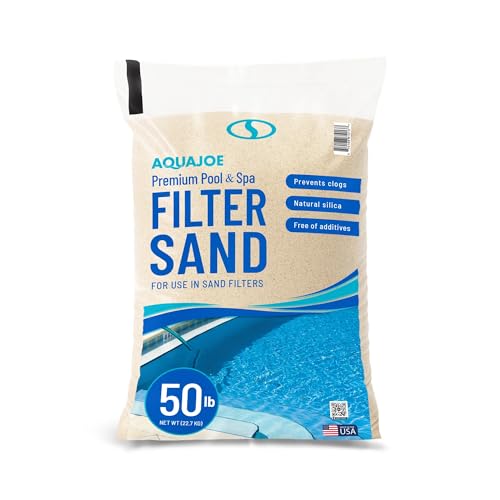
For this purpose, Aqua Joe Premium Pool Filter Sand is a popular choice among pet owners.
Use this chart to size your tank correctly:
| Axolotl Length | Minimum Tank | Recommended Tank | Floor Space Needed |
|---|---|---|---|
| 2-3 inches | 5 gallons | 10 gallons | 80-100 sq in |
| 4-5 inches | 10 gallons | 15 gallons | 130-170 sq in |
| 6-8 inches | 20 gallons | 20 gallons | 280+ sq in |
| 9-10 inches | 20 gallons | 29 gallons | 360+ sq in |
| 11-12+ inches | 29 gallons | 40 gallons (breeder) | 500+ sq in |
For tank dimensions, here are the standard sizes to look for:
| Tank Size | Dimensions (L×W×H) | Floor Space | Best For |
|---|---|---|---|
| 10-gallon | 20″×10″×12″ | 200 sq in | Juvenile only |
| 15-gallon | 24″×12″×12″ | 288 sq in | Sub-adult |
| 20-gallon long | 30″×12″×12″ | 360 sq in | Single adult (minimum) |
| 29-gallon | 30″×12″×18″ | 360 sq in | Single adult (recommended) |
| 30-gallon breeder | 36″×18″×16″ | 648 sq in | Single large adult or pair |
| 40-gallon breeder | 36″×18″×16″ | 648 sq in | Pair or large single |
| 55-gallon | 48″×13″×21″ | 624 sq in | Pair or community |
Always choose “long” or “breeder” tanks over “tall” tanks. The floor space is what matters for axolotls.
Why Long Tanks Beat Tall Tanks
This is the single most common mistake new axolotl owners make: buying a tall tank because it looks more impressive. Axolotls don’t use vertical space — they walk along the floor. A 20-gallon tall (24″×12″×16″) has only 288 sq in of floor space, while a 20-gallon long (30″×12″×12″) has 360 sq in. That’s 25% more floor space in the same water volume.
Long tanks also have better gas exchange at the water surface. Tall tanks have less surface area relative to depth, which can lead to lower oxygen levels — axolotls need well-oxygenated water to breathe properly through their gills and skin.
When shopping for an axolotl tank, look for these keywords:
- “Long” — preferred for axolotls
- “Breeder” — preferred for axolotls (low height, large floor)
- “Tall” — avoid for axolotls
- “Hexagonal” — avoid (awkward floor shape)
- “Round bowl” — never (no floor space, no filter capacity)
Sizing for Multiple Axolotls
Multiple axolotls need more space, but the calculation is straightforward:
Rule of thumb: 20 gallons for the first axolotl, plus 10 additional gallons per extra axolotl.
- 2 axolotls: minimum 40 gallons (often 40-gallon breeder or 55-gallon)
- 3 axolotls: minimum 50 gallons (consider 75-gallon for floor space)
- 4 axolotls: minimum 60 gallons (75-gallon recommended)
More space is always better. Multiple axolotls in a cramped tank show aggression, refuse to eat, and develop stress-related illness fast.
Critical warning: Never house axolotls of different sizes together. A larger axolotl will bite, injure, and sometimes eat a smaller axolotl — even siblings raised together from birth. Cannibalism is normal axolotl behavior in confined spaces. If you must house multiple axolotls together, ensure they are within 1 inch of each other in length and the tank is at least 40 gallons.
For most axolotl keepers, housing one axolotl per tank is the safest and easiest setup. It eliminates aggression risk, simplifies feeding, and makes water quality management much simpler.
Tank Size Mistakes to Avoid
These are the most common sizing mistakes that shorten axolotl lifespans:
Using a 10-Gallon Tank for an Adult
The most common mistake. A 10-gallon tank works for a juvenile but is far too small for an adult axolotl. Floor space of 110 sq in is less than 1 square foot — barely fits an adult axolotl’s body. Water quality crashes within days without constant maintenance. Upgrade to a 20-gallon long before your axolotl reaches 6 inches.
Choosing a Tall Tank Instead of Long
A tall tank looks more impressive but gives less usable floor space for axolotls. A 20-gallon tall has 25% less floor space than a 20-gallon long. If a store only has tall tanks in stock, order the long version online or wait.
Overstocking with Multiple Axolotls
Two axolotls in a 20-gallon tank is asking for trouble. The bioload doubles, the filter can’t keep up, and the axolotls compete for floor space. Stick to 40+ gallons for any pair, or house them separately.
Forgetting to Plan for Growth
A 2-inch juvenile axolotl grows to 9-12 inches within 12-18 months. Many new owners buy a 10-gallon tank for the juvenile and never upgrade. Plan for the adult size from the start — the cost difference is small, and you’ll avoid the stress of moving your axolotl to a new tank.
Using a Fish Tank Designed for Tropical Fish
Tall aquascaping tanks (like the popular 12-gallon “nano” cube tanks) look beautiful but are terrible for axolotls. They have minimal floor space, low oxygen surface area, and small filter capacity. Stick to standard rectangular tanks.
How to Choose the Right Tank When Shopping
Here’s what to look for when buying an axolotl tank:
Tank specifications:
- Long or breeder shape
- At least 20 gallons for an adult (29+ recommended)
- Standard rectangular dimensions (no curves or hexagons)
- Glass or acrylic (both work; glass is cheaper)
- Includes or fits a secure lid (axolotls can jump)
Filter capacity:
- Filter rated for 2-3× the tank volume (a 20-gallon tank needs a filter rated for 40-60 gallons)
- Adjustable flow (axolotls need gentle flow)
- Sponge filter or canister filter preferred
Lighting:
- Low-wattage LED or no light at all
- Axolotls prefer dim environments
- If the tank comes with bright lights, replace them or use a dimmer
Cost considerations:
- A 20-gallon long tank: $25-50
- A 29-gallon tank: $40-70
- A 40-gallon breeder: $70-130
- Used tanks from Facebook Marketplace or Craigslist: 50% off retail
For the complete equipment list (filter, substrate, hide, thermometer, water testing kit) and step-by-step setup instructions, see our axolotl tank setup guide.
Tank Size and Water Quality
Larger tanks are more forgiving of water quality mistakes. Here’s why:
- Ammonia dilution: A 20-gallon tank dilutes axolotl waste over twice the volume of a 10-gallon tank. The same amount of waste produces half the ammonia concentration.
- Temperature stability: A 20-gallon tank changes temperature 50% slower than a 10-gallon tank. This matters for axolotls, which need stable cold water.
- Filter capacity: A larger tank can support a larger, more effective filter. Small tanks limit filter options.
- Water change forgiveness: If you miss a water change in a 20-gallon tank, the water quality stays acceptable for an extra day or two. In a 10-gallon tank, missing a water change can be lethal.
This is why even though the “minimum” tank size for an adult axolotl is 20 gallons, a 29- or 40-gallon tank is much easier to keep stable — especially for beginners.
Tank Size for Different Axolotl Types
Axolotl types (leucistic, golden albino, melanoid, wild type, copper, GFP) all have the same tank size requirements. Color morph doesn’t affect size or space needs. All adult axolotls reach 9-12 inches regardless of morph.
Summary: Picking the Right Axolotl Tank Size
Quick reference for choosing the right tank:
- Juvenile (under 6 inches): 10-15 gallon tank, plan to upgrade at 6 inches
- Single adult (9-12 inches): 20-gallon long minimum, 29-gallon recommended
- Two adults: 40+ gallons (40-gallon breeder or 55-gallon)
- Three or more adults: 50+ gallons, more is better
Always choose long or breeder tanks over tall tanks. Always plan for the adult size before buying a juvenile tank. And remember — a properly sized tank is the foundation of every other aspect of axolotl care.
For the complete walkthrough of all axolotl equipment and how to set up the tank once you’ve picked a size, see our axolotl tank setup guide. For water temperature requirements after setup, see axolotl tank temperature. And for information on whether your axolotl needs tank mates, see axolotl tank mates.